Choosing Customer Contact Solutions

A customer contact solution centralizes all your customer interactions onto one platform. You must first understand the two main types. A multichannel approach uses separate, siloed channels. An omnichannel strategy integrates them for a seamless customer experience. Choosing the right path is crucial for your business.
The contact center market is projected to grow at a compound annual growth rate (CAGR) of 8.09% through 2035, making this a critical area for investment.
An effective multi-channel communication plan from Sobot, using customer contact solutions like a Sobot call center powered by Sobot AI, helps you manage all your communication channels. This guide will help you select the best solution to improve customer satisfaction and operational efficiency.
Core Types of Customer Contact Solutions
Choosing the right approach starts with understanding your options. Your business can use a multichannel or omnichannel strategy. Each offers a different way to manage customer interactions.
Defining Multi-Channel Communication
Multi-channel communication means you offer customers several ways to contact you. These channels, however, operate independently. An interaction on social media does not connect to a later phone call. A multichannel strategy focuses on giving customers choices. Many successful companies use this type of multichannel communication.
- The Home Depot uses personalized email marketing and a mobile app to help you plan projects. These digital channels work alongside their in-store services.
- Under Armour builds a community through its fitness apps. It also uses social media to showcase fashion, creating separate but effective touchpoints for multichannel communication.
Effective multi-channel communication solutions allow you to be present where your customers are. A good multichannel contact center manages these separate interactions efficiently.
Understanding Omnichannel Solutions
Omnichannel solutions take a different approach. They integrate all your communication channels into one seamless experience. This creates a single, continuous conversation with your customer. An omnichannel contact center ensures that context and history travel with the customer from one channel to the next. Businesses that adopt this model see powerful results.
| Business | Solution | Results |
|---|---|---|
| Danone Actimel | Integrated omnichannel ad campaigns | 6-point lift in brand perception |
| Sephora | AI-powered Virtual Artist tool | 25% increase in sales |
| Zara | Smart fitting rooms | 80% of users made a purchase |
These customer contact solutions focus on creating a unified journey.
Multi-Channel vs. Omnichannel: Key Differences
The main difference lies in the customer journey. A multichannel communication strategy optimizes each channel by itself. This can create a disconnected experience. You might have to repeat your issue when you switch from a chatbot to a live agent.
In contrast, an omnichannel strategy maps the entire customer journey. It connects every touchpoint. This approach provides a consistent and personalized experience. Good multi-channel communication solutions can be a starting point, but a true omnichannel platform elevates the experience. This is the core of modern multichannel communication. You should evaluate which of these multi-channel communication solutions best fits your long-term goals.
Business Benefits of a Modern Contact Solution

Investing in modern customer contact solutions offers significant advantages for your business. You can transform your customer service from a cost center into a powerful driver of growth. These platforms help you build stronger relationships and operate more efficiently.
Enhance the Customer Experience
You can create a seamless journey for your customers. An integrated platform connects every interaction, so customers never have to repeat themselves. This consistency builds trust and improves customer engagement. For example, financial service platform Opay used Sobot’s omnichannel solution to unify its support channels.
This change boosted Opay's customer satisfaction from 60% to 90% and cut overall costs by 20%.
A positive experience encourages loyalty and increases customer lifetime value. When you remove friction, you make it easy for customers to keep doing business with you.
Improve Agent Productivity
You can empower your agents to work more efficiently. A unified workspace, like the one offered by Sobot, brings all customer information and communication tools into a single view. Agents no longer need to switch between different applications, which can save 10-15 seconds per switch. This allows them to resolve issues faster. Automating routine tasks also frees up agents to handle more complex problems, which can reduce agent turnover by up to 30%.
Gain Data-Driven Insights
You can make smarter decisions with powerful analytics. A modern multichannel contact center tracks important metrics in real-time. Key performance indicators you can monitor include:
This data helps you understand customer behavior and personalize interactions. Better data leads to more effective communication and stronger customer engagement.
Achieve Greater Business Scalability
You can grow your business without limits. Modern platforms are built in the cloud, making it easy to add new agents, channels, or markets. As your business expands globally, you can support customers in different languages and time zones. This flexibility is essential for scalable business communication and ensures you can meet customer needs no matter how large you grow.
Essential Channels for Your Contact Strategy
A strong communication strategy includes multiple communications channels to meet customers where they are. You need to understand the role each one plays in your business communication plan.
Voice and Intelligent IVR
Voice remains a vital channel, handling approximately 65% of contact center interactions. You can use an intelligent IVR to improve this classic channel. Smart IVRs automate simple tasks like account verification and route calls to the right agent. This improves first-contact resolution and provides effective communication.
Email and Ticketing Systems
You can manage high volumes of customer emails with a ticketing system. These systems turn each email into a ticket. You can then automate routing and set priorities based on service level agreements (SLAs). This approach ensures your team responds to every inquiry on time, forming a key part of your communication strategy.
Live Chat and AI Chatbots
Live chat offers immediate, real-time support. It boasts one of the highest customer satisfaction scores among all communication channels.
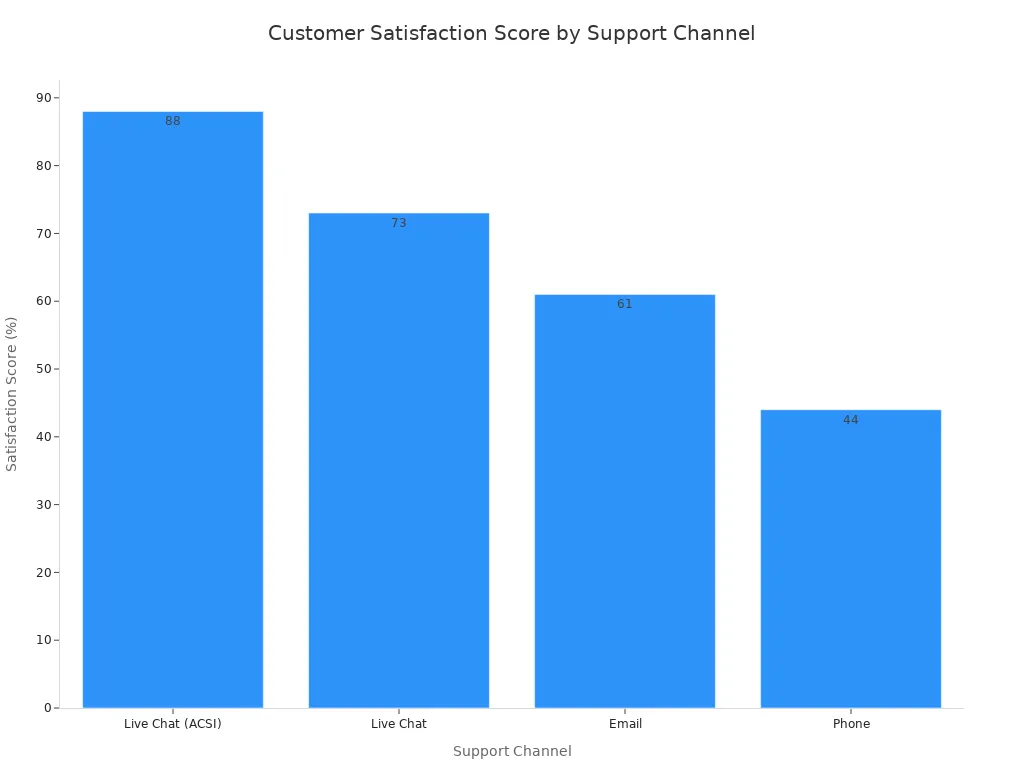
You can enhance this channel with AI chatbots. Chatbots provide 24/7 support, answer common questions instantly, and reduce costs. This frees up your agents to handle more complex issues.
SMS and Mobile Messaging
SMS is a powerful tool for quick updates and alerts. It has a 98% open rate, and most messages are read within three minutes. You can use SMS for appointment reminders, shipping notifications, and promotions. This direct line to your customers is a valuable part of any modern communication strategy.
Social Media and WhatsApp
Your customers are active on social media. You should be too. Platforms like WhatsApp are great for customer support in industries like retail and airlines. They allow for personal conversations and quick problem-solving, which boosts customer engagement.
How to Choose the Right Multi-Channel Communication Solutions
Selecting the right platform is a strategic decision. You need a structured process to find the best fit for your company. Following these five steps will guide you toward the ideal multi-channel communication solutions for your business needs.
Step 1: Assess Business and Customer Needs
Before you look at any software, you must first look inward. A deep understanding of your own operations and customer expectations is the foundation of a successful communication strategy. You need to map out your current processes to identify what works and what does not. This audit helps you define clear goals for your new multi-channel communication solutions.
You can map your internal workflows with this simple process:
- Audit your current state and define goals. Analyze your existing customer journeys. Find the friction points for both customers and employees. You can then set measurable goals, like improving first-contact resolution rates or reducing abandoned calls.
- Design the workflow logic. Translate your goals into a clear plan. Map the ideal customer journey from their perspective. You should anticipate different scenarios and design rules for every interaction, such as call routing or ticket prioritization.
- Select and configure your tools. Choose technology that supports your new workflow. Your chosen multi-channel communication solutions must scale with your team and integrate with your existing systems to give agents a complete customer view.
This initial assessment ensures your multichannel communication plan aligns with your business objectives.
Step 2: Compare Multichannel vs. Omnichannel
Your next step is to decide between a multichannel and an omnichannel approach. While both involve using multiple channels, the level of integration creates a very different experience for your customers and agents. A multichannel approach can be a good starting point, but an omnichannel platform offers a more connected and powerful experience.
This table breaks down the key differences to help you make an informed choice for your multi-channel communication solutions.
| Feature | Multichannel | Omnichannel |
|---|---|---|
| Customer Experience | Interactions are siloed. Customers must repeat information when switching channels. | Provides a seamless experience. Customer history is shared across all channels for smooth transitions. |
| Agent Experience | Agents have limited visibility into past interactions, leading to inefficiency. | Agents get a complete view of the customer journey, enabling personalized and effective communication. |
| Data Integration | Data is stored in separate systems, making a holistic customer view difficult. | All customer data is integrated into a single platform, providing unified insights. |
| Cost | Lower initial cost as channels are added independently. Higher long-term operational costs. | Higher initial investment for integration. Leads to long-term savings through efficiency. |
| Customer Loyalty | The disjointed experience can hinder long-term loyalty. | Significantly boosts loyalty due to a personalized and effortless experience. |
| Business Insights | Provides limited insights due to fragmented data. | Offers comprehensive insights into customer behavior for data-driven decisions. |
Choosing the right model is a critical part of your communication strategy. Your decision will shape your customer relationships for years to come.
Step 3: Evaluate Critical Platform Features
Once you have a strategy, you can evaluate specific platforms. The right features will empower your team and streamline your operations. Look for multi-channel communication solutions that offer both flexibility and power.
Tip: Focus on features that directly address the friction points you identified in Step 1. A feature is only valuable if it solves a real problem for your team or your customers.
For example, a platform like Sobot's Voice/Call Center offers a drag-and-drop IVR builder. This tool lets you design and update call flows without any coding. You can use historical call data to prioritize common inquiries in your IVR menu, ensuring customers get help faster. If 55% of your callers have technical issues, you can make that option one.
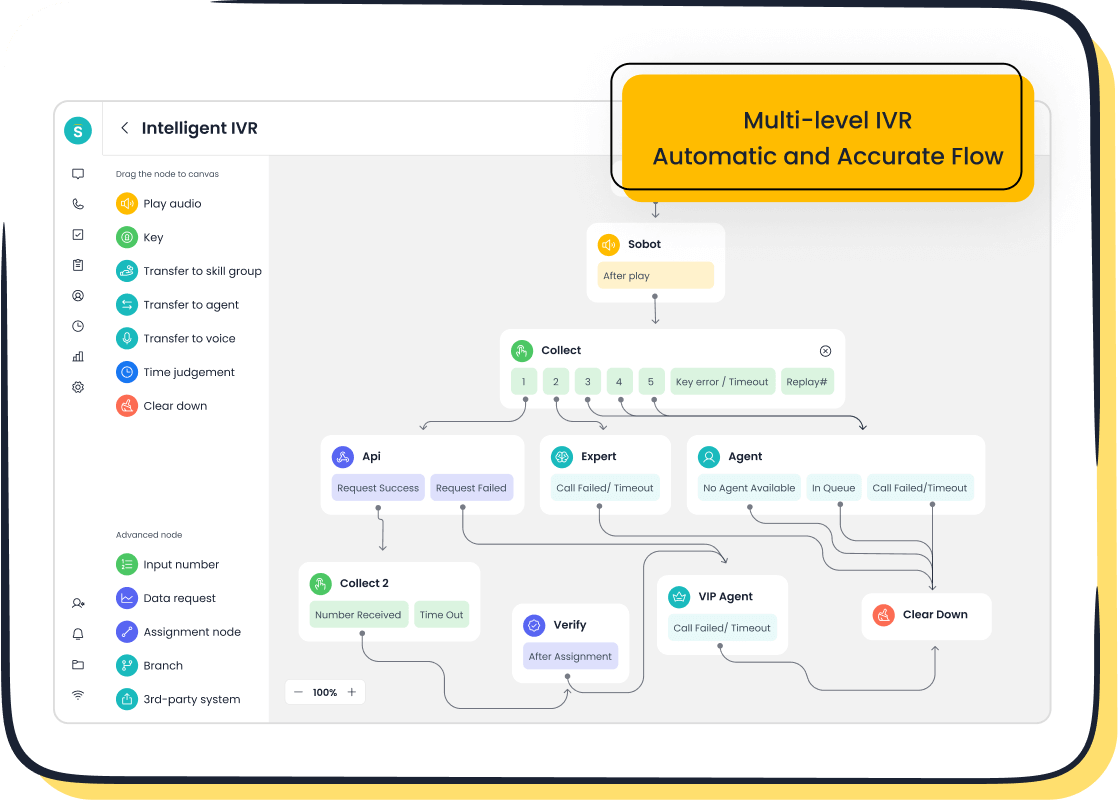
Also, look for a unified agent desktop and robust analytics. A unified workspace, found in Sobot's Omnichannel Solution, consolidates all customer data and channels into one view. This saves agents time and improves multichannel communication. Powerful analytics help you track metrics like call volume and wait times, giving you the data to continuously improve your multichannel contact center.
Step 4: Check for Integration Capabilities
Your multichannel communication platform should not exist in a vacuum. It must connect seamlessly with your other business systems. Poor integration creates disconnected experiences and inefficient workflows. Customers may have to repeat information, and your teams will work with incomplete data, leading to slower resolutions and frustration.
Your multi-channel communication solutions must integrate with key software, especially your CRM and e-commerce platforms. Common systems that require integration include:
- Salesforce
- Shopify
- Microsoft Dynamics 365
- Zendesk
- Pipedrive
A platform that offers pre-built, seamless integrations is essential. For instance, solutions like Sobot provide robust integration with major platforms like Salesforce and Shopify. This ensures your agents have a complete customer profile during every interaction, which is key to effective communication and a successful multichannel communication strategy.
Step 5: Review Security and Future Scalability
Finally, you must verify that the platform is secure and can grow with your business. Protecting customer data is non-negotiable. Your chosen customer contact solutions must comply with data privacy regulations like GDPR and CCPA. This includes securing all collected data and allowing customers to exercise their data rights.
Look for providers that demonstrate a commitment to security through industry-standard certifications like SOC 2 or ISO 27001. These certifications show that a provider follows best practices for managing information security. Features like encrypted data transfer are also critical. For example, Sobot ensures all data is encrypted and provides a 99.99% uptime SLA, guaranteeing both security and reliability. This level of stability is vital for any growing business that relies on its multi-channel communication solutions.
You must choose the right customer contact solutions for your business. Your decision between a multichannel or omnichannel approach for your multi-channel communication depends on your goals. Your multichannel communication plan shapes customer loyalty. Effective multi-channel communication requires the right tools. Your multichannel communication must align with customer expectations. A basic multichannel setup can be a starting point for better multichannel communication. This multichannel approach evolves with your business.
Embark on your contact journey with Sobot. Request a demo to see our omnichannel solution in action.
FAQ
What is the main difference between multichannel and omnichannel?
You offer separate channels with a multichannel approach. You connect all channels for a seamless journey with an omnichannel strategy. Customer context moves with them in an omnichannel setup, creating a unified experience for them.
How can I measure the success of my contact solution?
You measure success by tracking key metrics. Look at First Contact Resolution (FCR) and Customer Satisfaction (CSAT). These numbers show your team's performance and help you improve your multi-channel communication solution.
Do I need to offer every communication channel?
You do not need every channel. You should focus on where your customers are most active. Start with essential channels like voice and email. You can expand your multi-channel communication solution as your business grows.
How secure is a cloud-based solution like Sobot?
You can trust a secure platform. Sobot protects your data with features like encrypted data transfer. We also guarantee reliability with a 99.99% uptime Service Level Agreement (SLA), ensuring your system is always available.
See Also
A 10-Step Guide to Deploying Omnichannel Contact Center Solutions Effectively
Comprehensive Review of Leading Contact Center Solutions for the Year 2024
Essential Tips for Selecting Social Media Customer Service Software Wisely
Your Definitive Guide to Understanding Omnichannel Call Center Software
Evaluating the Best Cloud Contact Center Services: A 2024 Review

