A Guide to Finding the Best Inbound Contact Center Solution


Finding the best inbound contact center solution starts with knowing what your business really needs. You want a provider that matches your goals and helps you deliver top-notch customer service. Many companies in North America now use cloud-based inbound call center platforms with AI and omnichannel tools. In Asia Pacific, growing demand for better inbound call center experiences drives rapid change. Sobot leads the way with Sobot AI and Sobot call center technology that adapts to your needs. Let’s make your next step clear and confident.
What Is an Inbound Contact Center Solution?

Definition and Purpose
An inbound contact center solution helps your business manage all the calls and messages that come from your customers. You use it to answer questions, solve problems, and make sure people feel heard. When someone calls your company, this system makes sure they reach the right person fast. You can set up automatic greetings, route calls to the right department, and even use AI to answer simple questions. This makes your team more efficient and keeps your customers happy.
Here’s a quick look at what an inbound contact center solution does for you:
| Function | Description |
|---|---|
| Customer Service | Handles incoming calls to address customer inquiries and provide solutions. |
| Technical Support | Assists customers with technical issues related to products or services. |
| Operational Efficiency | Uses tools like automatic call routing and real-time analytics to improve performance. |
| Appointment Management | Manages scheduling and confirmation calls for customers. |
| Feedback Collection | Gathers customer feedback and conducts surveys to gain insights. |
You can also connect your contact center with your CRM tools. This helps your team see customer details right away and respond faster. AI features, like chatbots, can handle simple requests so your agents can focus on more complex issues.
Common Business Applications
You’ll find inbound call center services in almost every industry. Companies use them to help customers, collect feedback, and manage appointments. Here are some ways businesses use inbound call center solutions:
- Healthcare: Patients call to book appointments or get help with medical questions.
- Retail: Shoppers ask about orders, returns, or product details.
- Financial Services: Customers need support with accounts or have questions about transactions.
- Education: Students and parents call for information or support.
- Government: Citizens reach out for help with services or to give feedback.
You might also use inbound call center solutions to handle order changes, cancellations, or to route sales inquiries to the right team. Automatic call routing and self-service options make it easy for customers to get what they need without waiting.
Tip: If you want to boost efficiency, look for solutions that offer AI-powered features and easy integration with your existing systems.
Why Inbound Call Center Solutions Matter
Customer Experience Impact
You want your customers to feel valued every time they reach out. An inbound call center helps you create a smooth customer service experience. When people call, they expect quick answers and friendly support. If you use a smart inbound call center, you can greet callers with automated messages, route them to the right agent, and even use AI to answer simple questions. This makes every interaction easier.
Here’s how inbound call center solutions boost customer experience:
- Improved customer satisfaction: You can track scores like CSAT and Customer Effort Score to see how well your team is doing.
- Increases customer retention: When you solve problems fast, people come back again.
- Creates customer-centric culture: You can use feedback from calls to make your service better.
Net Promoter Score (NPS) is another way to measure how happy your customers are. You ask a simple question, and their answers show if they are likely to recommend your business. If your NPS goes up, you know your customer service is working. You can also use a Voice of the Customer program to collect feedback from every call and message. This helps you make smart changes that improve your service.
Tip: Happy customers talk about your business and bring in new ones. A great inbound call center makes this possible.
Business Efficiency and Growth
An inbound call center does more than help customers. It makes your business run better. You can train agents faster, solve problems on the first call, and save money by using smart tools. When you use automation and data analytics, you see where you can improve and grow.
Check out these results from businesses using inbound call center solutions:
| Evidence Type | Statistic/Result |
|---|---|
| Agent Onboarding Improvement | 41% faster onboarding for agents |
| First-Contact Resolution Improvement | 29% improvement in first-contact resolution rates |
| Inbound Call Volume Reduction | 24% reduction in inbound call volume |
| Cost Savings per Deflected Interaction | $5.50 average savings per deflected interaction |
| Operating Cost Reduction | 22% reduction in operating costs within the first year |
| Customer Retention Increase | 42% increase in customer retention |
| Customer Satisfaction Improvement | 33% improvement in customer satisfaction |
| Cross-Selling and Upselling Opportunities | 32% increase in cross-selling and upselling |
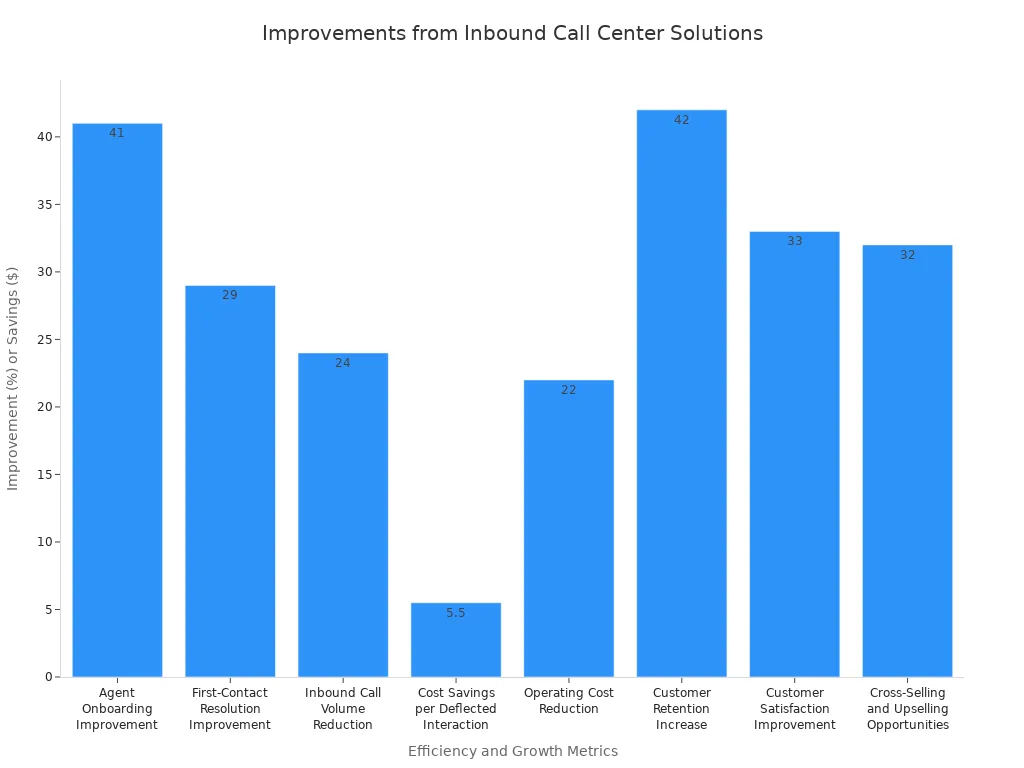
You can see how these numbers make a difference. Faster onboarding means your team gets to work quickly. Better first-contact resolution keeps customers happy. Lower call volume and cost savings help your business grow. When you use a strong inbound call center, you get more chances to cross-sell and upsell, which means more revenue.
Note: If you want to grow your business and keep customers coming back, investing in a smart inbound call center is a smart move.
Key Features of Inbound Call Center Services
Technology and Integration
You want your inbound call center to work smoothly with your business tools. Modern inbound call center services use advanced technology to make this happen. With the right call center platform, you can connect your CRM, helpdesk, and even e-commerce systems. This means your agents see customer details right away and can help faster.
Here’s a quick look at the most advanced technologies you’ll find in inbound call center services:
| Technology Type | Description |
|---|---|
| Automation | Integrates with business tools to track customer interactions and automate tasks. |
| Cloud Solutions | Uses cloud call center software for reliable and flexible service delivery. |
| Omnichannel Support | Combines phone, chat, email, and social media for a unified customer experience. |
| AI and Automation | Blends AI with live agents for smarter, faster responses. |
| Contact Center Automation | Includes managed IVR and CRM telephony integration for efficient call handling. |
| Natural Language Processing | Lets AI understand and respond to customers in natural language. |
Sobot stands out with its all-in-one call center platform. You get seamless integration with your CRM and other business systems. Sobot’s AI-powered chatbot, live chat, and voicebot work together to handle simple questions, so your agents can focus on complex issues. The platform supports WhatsApp Business API, ticketing, and more, making it easy to manage every customer interaction in one place. You can learn more about these features on Sobot’s official website.
Tip: When you choose inbound call center software, look for easy integration and AI features. This saves time and helps your team deliver better service.
Scalability and Flexibility
Your business changes over time. You might see more calls during holidays or special events. A good inbound call center grows with you. Scalability means you can add more agents or handle more calls without slowing down. Flexibility lets you adjust your services as your needs change.
Here are some ways top inbound call center services help you scale and stay flexible:
- Call volume analysis helps you plan for busy times and allocate resources.
- Agent utilization metrics, like average handle time, show how well your team works.
- Quality monitoring and training tools let you record calls and review agent performance.
- Call center consultants can help you create custom strategies to improve efficiency.
- Advanced call routing and omnichannel integration reduce wait times and boost customer satisfaction.
- You can scale services up during peak times and down when things are quiet.
- Sophisticated inbound call center software routes calls to the best agent, using intelligent routing.
- The system adapts to business growth or seasonal changes, so you never miss a beat.
Sobot’s call center platform makes scaling easy. You can add agents quickly, manage global numbers, and use real-time analytics to spot trends. Sobot’s 99.99% uptime means your service stays reliable, even when call volumes spike.
Note: If you want to grow your business, pick a call center platform that scales with you and adapts to your needs.
Security and Compliance
Keeping customer data safe is a top priority. Inbound call center services must follow strict security standards and compliance rules. This protects your business and builds trust with your customers.
Here’s a table of important certifications and what they mean:
| Certification | Description |
|---|---|
| HIPAA | Protects health information in the U.S. |
| HITRUST | Sets a framework for managing data security and privacy. |
| PCI DSS | Secures credit card transactions. |
| GDPR | Protects personal data in the EU and EEA. |
| SOC 2 | Focuses on data security and privacy controls. |
| ISO 27001 | International standard for information security management. |
You also need to follow regulations like CCPA in California. These rules give people control over their personal data. Sobot’s call center platform uses encrypted data transfer and secure dialing. The system supports compliance with global standards, so you can serve customers worldwide with confidence.
Technology helps with compliance, too. Automated call tracking and transcription create a record of every call. AI tools review these records to make sure your team follows the rules. This makes it easier to monitor compliance, even if your agents work remotely.
Tip: Always ask about security and compliance when you choose an inbound call center. Your customers will thank you for keeping their data safe.

Sobot Voice/Call Center Advantages
Sobot’s voice and call center platform gives you a powerful set of tools to handle every customer interaction. You get more than just phone support. You get a complete solution for inbound call center needs.
Here’s what makes Sobot special:
- 99.99% uptime keeps your service running smoothly, even during busy times.
- Global reach with phone numbers in over 50 countries and 110 network points.
- AI-powered voicebot answers simple questions and recognizes customer intent.
- Intelligent call routing sends each call to the right agent or team.
- Real-time analytics help you track performance and spot trends fast.
- Unified workspace lets agents manage calls, chats, and tickets in one place.
- Easy integration with your CRM and business tools.
- Mobile compatibility means your team can work from anywhere.
- Secure, encrypted data transfer protects your business and your customers.
Sobot’s omnichannel solution brings all your channels together. You can manage voice, chat, email, and WhatsApp from one dashboard. This makes customer engagement easy and personal. Agents see the full history of customer interactions, so they can help faster and avoid repeating questions.
Samsung’s story shows what Sobot can do. Samsung used Sobot’s all-in-one call center platform to unify its communication channels. The result? A 30% boost in agent efficiency and a 97% customer satisfaction rate. You can read more about Samsung’s success on Sobot’s website.
Note: Sobot’s inbound call center services help you deliver fast, reliable, and secure support—no matter where your customers are.
How to Evaluate Inbound Contact Center Providers
Choosing the right inbound call center provider can feel overwhelming. You want a solution that fits your business, supports your team, and keeps your customers happy. Let’s break down how you can evaluate providers step by step.
Assess Business Needs
Start by looking at your business goals. You need to know what you expect from your inbound call center. Make a clear plan that includes your budget, the number of calls you handle, and your goals for customer service. Think about the channels you want to use. Do you need phone support, live chat, email, or social media? Decide which services matter most for your customers.
Here’s a simple way to assess your needs:
- Establish clear business expectations. Write down what you want your inbound contact center solution to achieve. Include your budget and goals.
- Decide what services you need. List the types of customer support you want, like technical support, live chat, or email.
- Establish how you will monitor success. Pick metrics such as customer satisfaction scores, first-contact resolution, or average speed to answer.
- Do your research. Look for providers that match your needs. Check user reviews and compare different inbound call center services.
If you want a provider that understands different industries, look for one with a proven track record. Sobot serves retail, financial services, gaming, education, and more. Sobot’s customer-centric approach means you get solutions tailored to your business. Samsung’s story is a great example. Samsung used Sobot to unify its channels and boost agent efficiency by 30%. Their customer satisfaction rate reached 97%. You can read about it here.
Tip: Write down your top three goals for your inbound call center. Use these goals to guide your search.
Compare Features and Pricing
Not all inbound call center platforms offer the same features. Some focus on basic call routing, while others provide advanced tools like AI-powered voicebots, omnichannel support, and real-time analytics. Pricing can vary a lot, so you need to compare what you get for your money.
Check out this table to see how top providers stack up:
| Provider | Key features | Pricing | Pros | Cons |
|---|---|---|---|---|
| Voiso | Omnichannel communication, intuitive workflow builder, AI-predictive dialer, speech analytics, real-time dashboards. | Starts at $24/user/month. | Cost-effective, strong outbound tools, powerful analytics, AI-driven insights. | Limited workforce management tools. |
| Talkdesk | AI-powered automation, seamless integrations, and omnichannel capabilities. | Starts at $85/user/month. | User-friendly interface, seamless CRM integrations, scalability to accommodate growing businesses. | Pricing can be steep, support quality varies depending on the service tier. |
| Five9 | AI-driven automation, predictive dialing, and omnichannel contact center solutions. | Starts at $119/user/month with a 36-month contract. | Powerful call center tools, seamless CRM integrations, excellent scalability for growing teams. | Steep learning curve, premium features can be expensive, limited flexibility for small businesses. |
| Aircall | Cloud-based VoIP, user-friendly interface, and team collaboration features. | Starts at $30/user/month. | User-friendly, quick setup, strong integration options. | Limited scalability, higher cost per user. |
| Zendesk | Seamless integration with Zendesk products, call management, and ticketing features. | Starts at $19/user/month. | Ideal for Zendesk users, excellent for customer support teams. | Lacks advanced telephony features for non-Zendesk use cases. |
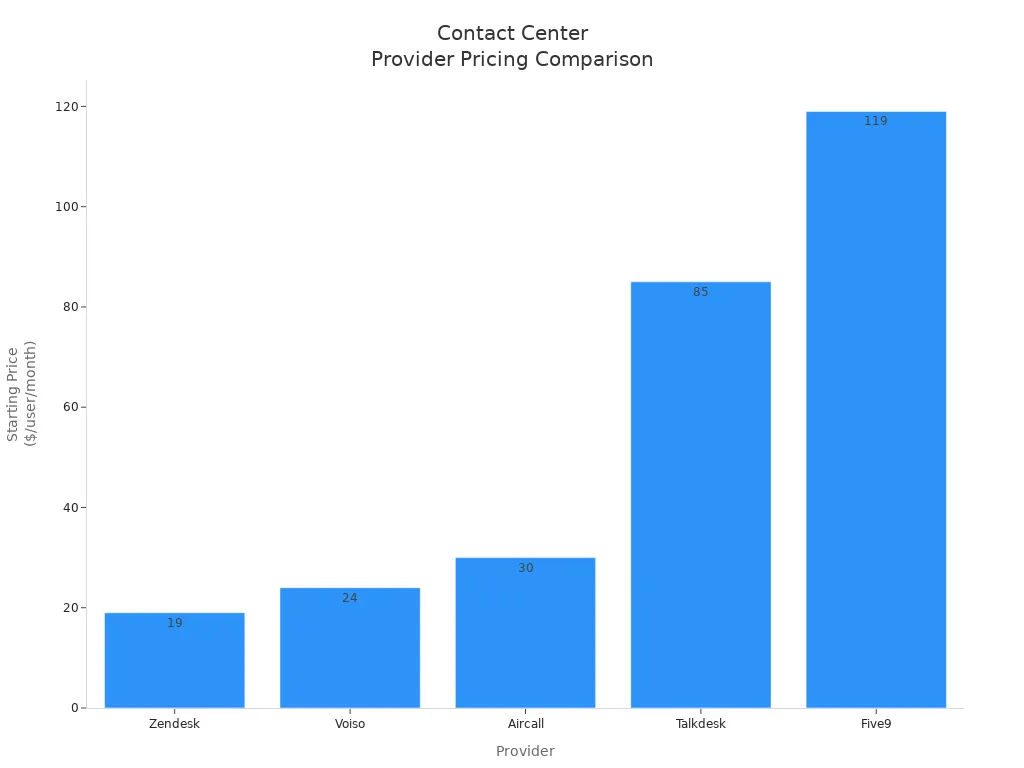
When you compare inbound call center platforms, look for features that match your needs. Sobot’s platform offers intelligent routing, global number availability, and a unified workspace for agents. You get AI-powered voicebots, smart call routing, and seamless integration with your CRM. Sobot’s pricing is flexible, and you only pay for what you use. You can find more details on Sobot’s website.
Note: Don’t just look at price. Make sure the features help you deliver great customer service and technical support.
Check Security and Compliance
Security matters. You need to protect customer data and follow all regulations. If a provider fails at compliance, you risk losing trust, facing disruptions, or damaging your reputation.
Here’s a table showing common pitfalls:
| Pitfall | Description | Example |
|---|---|---|
| Loss of trust | Clients may lose trust if regulations are not followed, leading to attrition. | Facebook’s Cambridge Analytica scandal caused significant trust erosion due to compliance violations. |
| Operational disruptions | Compliance violations can disrupt normal operations, affecting productivity. | British Airways faced operational chaos after a breach that compromised personal details. |
| Reputational damage | Public compliance incidents can severely damage a company's reputation. | Wells Fargo faced backlash and fines after unauthorized accounts were created by employees. |
Ask providers about their security certifications. Look for encrypted data transfer, secure dialing, and compliance with standards like GDPR, HIPAA, and PCI DSS. Sobot’s inbound call center solution offers encrypted data transfer and supports global compliance. You can serve customers worldwide and keep their data safe.
Tip: Always check for compliance certifications before you sign up. Your customers trust you to keep their information secure.
Review Customer Support and SLAs
Customer support is key. You want a provider that helps you when you need it. Look for 24/7 live agent support, especially if you operate in different time zones. Proven staffing depth and multiple contact centers help handle high call volumes and keep service running smoothly.
Check the provider’s Service Level Agreements (SLAs). SLAs set the standards for uptime, response times, and issue resolution. Sobot offers a 99.99% uptime SLA, so you know your inbound call center stays reliable. You get fast technical support and clear escalation paths.
Metrics like average speed to answer and abandonment rates show how well a provider handles calls. Sobot’s platform tracks these metrics and helps you improve service quality. You can monitor customer satisfaction scores and make changes to boost performance.
Note: Reliable customer support and strong SLAs keep your inbound call center running smoothly.
Analyze User Reviews and References
User reviews and industry references give you real insight into how providers perform. Look for feedback on features, call quality, integration, and customer support. Here’s what users say about inbound call center services:
| Pros | Cons |
|---|---|
| Feature-rich platform | Higher pricing tiers |
| Easy integration | Limited customer support |
| Good call quality | Occasional bugs |
| Scalable plans | Basic reporting tools |
| User-friendly interface | No free trial |
- 24/7 live agent support is crucial for businesses operating across multiple time zones.
- Proven staffing depth and multiple contact centers are necessary to handle high call volumes and ensure service continuity.
- Average speed to answer and abandonment rates are important metrics to assess provider reliability.
Use customer stories as benchmarks. Samsung’s experience with Sobot shows how a strong inbound call center can transform customer service. Samsung unified its channels, improved data connectivity, and boosted agent efficiency. Their customer satisfaction scores reached 97%. Sobot’s customer-centric approach and industry expertise set a high standard for service quality.
Tip: Read reviews and case studies before you choose a provider. Real stories show how inbound call center solutions work in practice.
Final Thoughts
Evaluating inbound call center providers takes time, but it pays off. Focus on your business needs, compare features and pricing, check security and compliance, review customer support, and analyze user reviews. Sobot’s inbound contact center solution stands out for its reliability, intelligent routing, and customer-centric approach. Use benchmarks like Samsung’s story to guide your decision. You’ll find a provider that helps you deliver great customer experience and technical support every day.
Matching Inbound Call Center Solutions to Your Business
Customization Options
Every business is unique, so your inbound call center should fit your needs—not the other way around. You might want to greet callers with a custom message or route calls based on the time of day. Maybe you need to handle a high volume of calls or want to give your team access to call logs for training. The best inbound call center platforms let you pick and choose features that work for you.
Here’s a table showing some popular customization options:
| Feature | Description |
|---|---|
| Auto Attendant | Lets you set up menus and route calls based on time or agent availability. |
| Receptionist Console | Handles many calls at once, perfect for busy days. |
| Call Queues | Keeps callers in a virtual line until an agent is free. |
| Custom Hold Music | Lets you upload your own music or choose from presets. |
| Local Business Numbers | Helps you appear local to your customers. |
| Call Recording | Saves calls for training and quality checks. |
| Business Phone App | Gives your team mobile and desktop access. |
| Virtual Extensions | Directs calls to mobile phones for remote workers. |
| Call Logs | Tracks call details for better decision-making. |
You can also work with your provider to analyze your current process, design a custom plan, and make sure everything runs smoothly when you switch over.
Industry-Specific Needs
Different industries have different needs when it comes to inbound call center solutions. If you run a retail store, you might get lots of questions about products or returns. In banking, people call about accounts or transactions. Your inbound call center should help you solve the problems that matter most in your field.
Check out this table to see what matters in different industries:
| Sector | Common Needs |
|---|---|
| Travel & Hospitality | Customer engagement, booking help |
| Real Estate | Handling inquiries, scheduling |
| Airlines | Flight info, customer support |
| eCommerce | Order tracking, customer service |
| Retail | Product questions, returns |
| Banking | Account help, transaction support |
If you know what your customers need, you can set up your inbound call center to deliver the right kind of customer service every time.
Planning for Growth
Your business will change, and your inbound call center should keep up. You want a solution that grows with you. Automation can handle simple tasks, so your agents focus on helping people. Flexible staffing lets you add more agents during busy times. Outsourcing gives you access to experts without hiring a big team.
Here’s a quick look at how you can plan for growth:
| Strategy | Benefit |
|---|---|
| Automation | Frees up agents for personal service. |
| Flexible Staffing | Matches support to busy or slow periods. |
| Outsourcing | Brings in experts without big investments. |
Customer demands change fast. You need to prepare for new trends and higher expectations. Using resources wisely helps you stay ahead. Outsourcing your support team can help you scale up without losing quality. This way, your inbound call center always delivers great customer service, even as you grow.
Tip: Choose an inbound call center that adapts to your business, not the other way around. That’s how you keep your customers happy and your business ready for anything.
Decision Checklist for Inbound Contact Center Solution
Essential Questions to Ask
Before you pick an inbound call center, you need to ask the right questions. These questions help you find a solution that fits your business and keeps your customers happy. Here’s a checklist to guide you:
- What are your main customer-service goals?
- How much can you spend on the software and per agent?
- Which communication channels do your customers use most?
- How complex are your routing needs between teams or departments?
- Where can you offer self-service options to save time?
- What kind of support do your administrators and agents need?
- Does the platform give you helpful analytics and reports?
- Can the system integrate with your current tools and software?
These questions help you focus on what matters most. You want an inbound call center that supports your team and improves customer satisfaction.
Red Flags to Avoid
Some warning signs can tell you if a provider is not the right fit. Watch out for these red flags when you review inbound call center options:
- Vague answers about performance metrics
- No clear access to reporting or analytics
- Poor communication during the sales process
- Contracts that are hard to understand or change
- Weak employee training programs
- High staff turnover rates
- Weak data security measures
If you spot any of these, it’s smart to keep looking. You want a partner who values service quality and keeps your business safe.
Final Steps
You’re almost ready to choose your inbound call center. Take these last steps to make sure you get the best results:
- Set and track key performance indicators (KPIs) to measure success.
- Use customer surveys to get feedback and find ways to improve.
- Review your goals and adjust your plan as your business grows.
A good inbound call center helps you boost customer satisfaction and keeps your service quality high. When you follow this checklist, you set your business up for long-term success.
Choosing the right inbound contact center solution means you look for fast setup, easy use, and smart automation. You want a system that helps your team deliver great customer service every day. When you match provider strengths to your business, you get better results and long-term success.
- Quick deployment and automation reduce wait times and call volume.
- User-friendly tools and real-time analytics help your team work smarter.
- AI-driven features boost customer service and let agents focus on complex needs.
| Practice | Benefit |
|---|---|
| Aligning with business needs | Improves performance and meets customer expectations |
| Using data and feedback | Helps you adjust and grow |
Ready to upgrade your customer service? Explore Sobot’s inbound contact center solution or request a free consultation today!
FAQ
What is an inbound contact center solution?
An inbound contact center solution helps you manage customer calls, chats, and messages. You use it to answer questions, solve problems, and improve customer satisfaction. Sobot’s platform makes this process simple and efficient.
How does Sobot’s inbound call center improve customer experience?
Sobot’s inbound call center uses AI, smart routing, and a unified workspace. You get faster answers, personalized service, and less waiting. Samsung saw a 97% customer satisfaction rate after switching to Sobot.
Can I integrate Sobot’s inbound contact center solution with my CRM?
Yes! You can connect Sobot’s inbound contact center solution with your CRM. This lets your agents see customer details instantly and respond faster. Integration is quick and easy.
Is Sobot’s inbound call center secure?
Absolutely. Sobot’s inbound call center uses encrypted data transfer and follows global compliance standards. You keep customer information safe and build trust with every interaction.
How do I scale my inbound contact center as my business grows?
You can add agents, phone numbers, and channels anytime with Sobot’s inbound contact center solution. Real-time analytics help you spot trends and plan for busy periods. The system adapts as your needs change.
See Also
Best Reviewed Contact Center Solutions for the Year 2024
A Comprehensive Guide to Implementing Omnichannel Solutions
Essential Guide for Choosing Omnichannel Call Center Software

