Cut E-commerce Returns With Chatbots in 2026

Retail returns cost businesses a staggering $890 billion in 2024. Modern AI chatbots are a strategic tool for your e-commerce business, not just for simple queries. What if you could use automation to handle 80% of returns requests, turning a cost center into a loyalty driver? This guide shows how a return and exchange chatbot from a provider like Sobot improves the customer experience. You will see how chatbots ecommerce reduce returns, giving each customer a smooth experience.
What is a Modern Return and Exchange Chatbot?

A modern return and exchange chatbot is much more than a simple FAQ tool. It is a smart, AI-powered assistant. It guides your customer through the entire post-purchase experience. These advanced chatbots use automation to handle returns, process exchanges, and answer complex questions instantly. This creates a smooth process for every customer.
The Shift from Basic Bots to AI Conversations
You may remember older chatbots. They followed rigid scripts and only understood specific keywords. They could handle simple tasks like providing an order status or basic shipping information. Today’s AI-powered assistants are completely different. They understand what a customer means, not just what they type. This shift from basic rules to true conversations is a game-changer.
| Feature | Rule-Based Chatbots | Modern Conversational AI Chatbots |
|---|---|---|
| Core Technology | Decision trees, keyword matching | Natural Language Processing (NLP), Machine Learning |
| Conversation Flow | Linear, rigid, FAQ-style | Dynamic, multi-turn, human-like |
| Understanding Input | Limited to predefined keywords | Understands intent, context, and sentiment |
| Adaptability | Does not learn or adapt | Continuously learns from data to improve |
| E-commerce Use Case | Simple order status, basic FAQs | Intelligent support, personalized help, dynamic returns |
Core AI Capabilities for E-commerce
Modern chatbots use powerful AI to understand customer needs. Natural Language Processing (NLP) helps the bot grasp nuances in language. Sentiment analysis allows the bot to detect a customer's feelings, like frustration or happiness. This makes the automation feel more human and empathetic. A better experience reduces the chance of future returns.
For example, sentiment analysis can flag an angry message about a delayed shipping update. Your team can then prioritize that customer to resolve the issue quickly and maintain their trust.
How Chatbots Proactively Prevent Returns
The best way to cut down on returns is to prevent them from happening. A smart return and exchange chatbot helps you do just that. Before a purchase, these chatbots act as expert sales guides. They learn your entire product catalog to give instant, accurate answers 24/7. This builds customer confidence and reduces purchase anxiety.
- Provide Expert Advice: For technical products, the bot can confirm compatibility. This ensures the customer buys the right item the first time.
- Clarify Product Details: The bot can answer questions about size, material, or features, preventing mismatches between expectation and reality.
- Offer Real-Time Order Tracking: After purchase, clear updates on order status and shipping reduce customer worry and unnecessary support tickets.
This level of support, powered by refund chatbot automation, ensures your customers make informed decisions they won't regret.
Why Chatbots Ecommerce Reduce Returns: The Business Case
Adopting a smart returns chatbot is not just a tech upgrade; it is a powerful business decision. The right automation strategy directly protects your profits, strengthens customer loyalty, and gives your e-commerce business a competitive edge. Let's explore the clear financial and operational benefits.
Drastically Cut Operational Costs
Your support team's time is valuable. Every minute they spend on repetitive return requests is a minute they could have spent on high-value tasks. Chatbots change this equation by handling the bulk of these queries through automation. This leads to massive cost savings. An interaction with a human agent can cost around $6.00, while a chatbot can handle the same task for as little as $0.50.
| Agent Type | Cost per Interaction |
|---|---|
| Human Agent | $6.00 |
| AI Chatbot | $0.50 |
By automating returns and support queries 24/7, platforms like the Sobot AI Chatbot can save you up to 50% on agent costs. This isn't just a theory. Global logistics leader J&T Express implemented Sobot's solution and achieved a 50% reduction in overall costs. This efficiency gain allows you to reallocate your budget to growth initiatives instead of operational overhead.
Accelerate Refund and Exchange Processing
In e-commerce, speed is everything. A customer waiting days for a return approval or shipping label becomes frustrated. Chatbots eliminate this waiting period entirely. They can instantly verify an order, process a return request based on your policies, and issue a shipping label in seconds. This immediate service transforms the customer experience.
This automation also makes your human agents more effective. By handling simple requests for order status or returns, chatbots free up your team to focus on complex issues. This synergy dramatically improves efficiency.
For example, Sobot's AI-powered chatbots can improve agent productivity by 70%. Companies see major improvements in key metrics:
- Etekcity reduced its average time to resolution by 60%.
- Beeline cut its time to resolution by over 52%.
When your team can resolve issues faster, you process refunds and exchanges quicker, getting your customer a resolution without delay.
Deliver a Superior 24/7 Customer Experience
A great returns experience can turn a disappointed customer into a loyal advocate. The key is providing effortless, on-demand support. Today, 60% of shoppers prefer using a digital self-service tool over talking to a support agent. Chatbots meet this demand perfectly. They are always available, day or night, to help a customer with their return or answer a question about shipping.
This instant, 24/7 support has a direct impact on customer satisfaction. Instead of waiting for an email response, your customer gets an immediate answer. This removes frustration and builds trust. AI chatbots deliver a consistent and professional experience every time, which reinforces your brand's commitment to quality service. This is how chatbots ecommerce reduce returns by preventing a poor service experience from compounding an initial product issue.
Gather Actionable Data to Lower Return Rates
The best way to manage returns is to prevent them. Chatbots are not just for processing returns; they are a powerful data collection tool. Every conversation a chatbot has with a customer provides valuable insight.
Your chatbot can ask for the reason behind each return. Over time, this data reveals patterns you can act on.
- Is a specific shirt always returned for being "too small"? You can update the product page with a note to "size up."
- Are customers confused about the shipping policy for a certain item? You can clarify the information on your website.
This feedback loop is essential. By analyzing chatbot conversations, you can identify product flaws, improve descriptions, and refine your marketing. This proactive approach is how chatbots ecommerce reduce returns in the long term. You stop solving the same problems over and over and start eliminating them at the source.
How to Implement Your Returns Chatbot: A 5-Step Guide
Putting a returns chatbot to work is a straightforward process. You can build a powerful automation system that saves money and delights your customers. This five-step guide will walk you through the entire journey, from planning your policies to launching your bot.
Step 1: Define Clear Return and Exchange Policies
Your chatbot is only as smart as the rules you give it. Before you build any automation, you must create a clear and fair return policy. This policy is the foundation of your entire returns management process. A confusing policy leads to frustrated customers and lost sales.
Your policy should answer three questions for any customer: 'Can I return this?', 'How long do I have?', and 'Will it cost me anything?'. To make your policy effective, you should:
- Set a clear return window. A 30-day window starting from the delivery date is a common and fair standard.
- Define product conditions. State that products need original tags attached and must be unworn and undamaged.
- List non-returnable items. Clearly mark items like final sale or personal hygiene products as ineligible for returns.
- Explain the process. Give step-by-step instructions on how the customer can start a return.
- Use plain English. Avoid complex legal language. Your policy should be easy for everyone to understand.
An unclear policy creates a poor experience. It can lead to negative reviews and customer disputes. Many shoppers check the return policy before buying. If it is confusing or strict, they may abandon their cart, costing you a sale.
Step 2: Choose the Right AI Platform like Sobot
The right platform makes all the difference. You need a solution that is both powerful and easy to use. Modern AI platforms do not require a team of developers to get started.
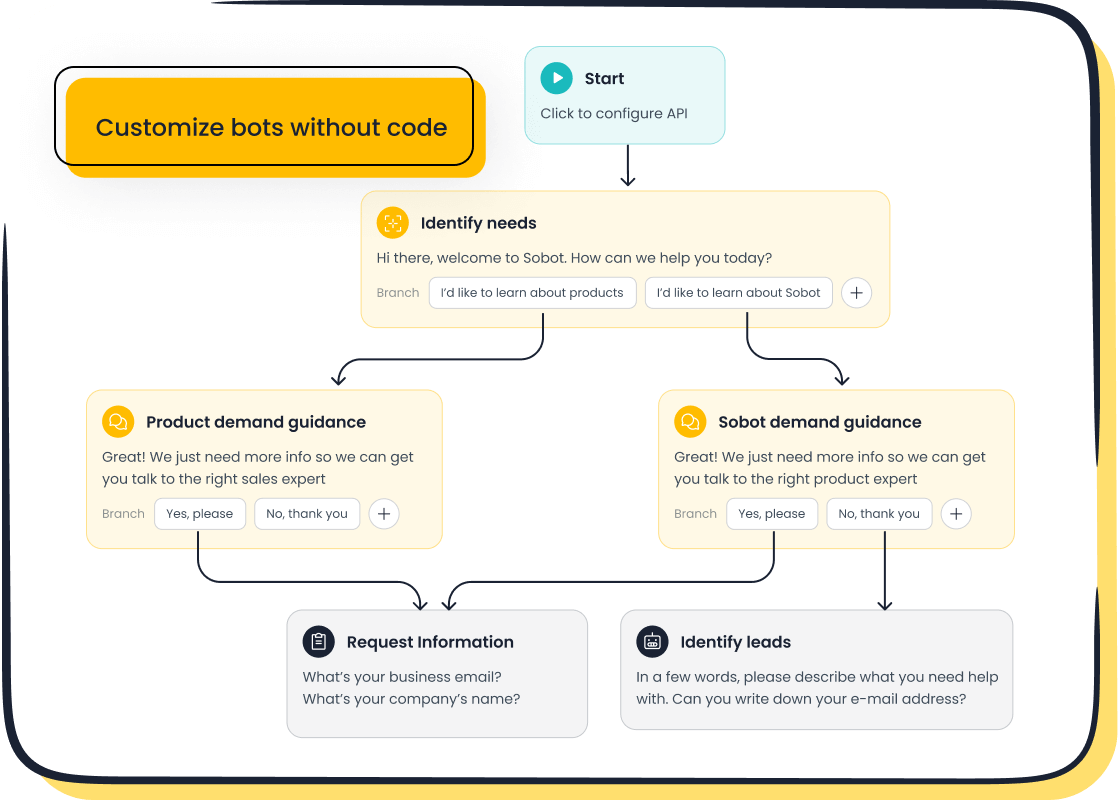
Look for a no-code solution with a simple visual builder. Platforms like the Sobot AI Chatbot use a point-and-click interface. This makes it easy for you to design and launch your return and exchange chatbot without writing any code. This is perfect for businesses without a large IT department. A great platform offers more than just chatbots. Sobot provides a complete contact center solution, including:
- AI Chatbots to handle requests 24/7.
- Live Chat for seamless handoffs to human agents.
- Ticketing System to track complex issues.
- Voice and Voicebot capabilities for phone support.
This unified approach ensures a consistent customer experience across all channels. Choosing the right platform delivers significant strategic benefits.
| Benefit | Strategic Impact |
|---|---|
| 24/7 Service Without Staffing Costs | Provides instant, accurate answers around the clock. |
| A 50%+ Faster Refund Cycle | Reduces manual return processing time from days to hours. |
| Fewer “Where Is My Refund?” Tickets | Eliminates repetitive queries with proactive notifications. |
| Actionable Data to Reduce Future Returns | Tags and categorizes return reasons to fix root causes. |
Step 3: Integrate with Your E-commerce Systems
Your chatbot needs access to your store's data to be truly helpful. A critical step is integrating your AI platform with your e-commerce systems. This connection powers the automation. Your chatbot must connect with platforms like:
- Shopify
- WooCommerce
- Magento
- Amazon
This integration allows the chatbot to instantly pull up a customer's order history. It can verify purchase dates, check the order status, and see what items were bought. Without this connection, the chatbot cannot process returns or provide accurate updates. This backend connection is the engine of your refund chatbot automation. It enables the bot to check inventory for exchanges and process refunds directly through your payment gateway.
Step 4: Design Your Refund Chatbot Automation Workflow
Now you can design the conversation. A workflow is a step-by-step map that guides the customer through the returns process. You can build this visually in a no-code platform. A typical workflow for returns follows these steps:
- Gather Information. The bot asks for an order number and email to find the customer's order.
- Verify Eligibility. The bot checks the purchase date against your return policy and confirms the item is returnable.
- Understand the Reason. The bot asks why the item is being returned. This data is valuable for improving your products.
- Offer Alternatives. Before processing a refund, the bot can offer better options. This is a key moment to retain revenue.
- Process the Outcome. If a return is the final choice, the bot generates a return shipping label and provides shipping instructions. It can also update the order status automatically.
You can design your chatbot to actively encourage exchanges over refunds. For example, the bot can instantly check inventory for a different size or color. You can also program it to offer a small bonus credit if the customer chooses an exchange, turning a potential loss into a positive experience.
Step 5: Test, Launch, and Continuously Optimize
Your work is not done after you launch your return and exchange chatbot. The final step is to test, monitor, and improve its performance. Before going live, run tests to find any bugs or confusing parts of the conversation.
After launch, you need to track key metrics to measure success. Important KPIs include:
- Resolution Rate: What percentage of return requests does the bot handle without human help?
- Human Takeover Rate: How often does a human agent need to step in? A high rate means your bot needs improvement.
- Customer Satisfaction (CSAT): Are customers happy with the bot experience? Ask for a quick rating after the conversation.
Use this data to make your automation better. You can A/B test different conversation prompts to see what works best. For example, try different ways of offering exchanges to see which one is most effective. Continuous optimization ensures your chatbot provides the best possible service and maximizes your cost savings from returns.
Mitigating Risks and Overcoming Common Pitfalls
Implementing a chatbot is a powerful move, but you must also plan for potential challenges. A smart strategy anticipates risks and builds safeguards. This ensures your refund chatbot automation enhances the customer experience, rather than creating new problems.
Designing Human-Centric, Empathetic Conversations
Your chatbot's tone is a reflection of your brand. A robotic, unhelpful bot can frustrate a customer and make a bad situation worse. You should design conversations that feel natural and show empathy.
- Use conversational language. Write responses that sound human. Avoid jargon and overly formal words.
- Acknowledge the customer's feelings. A simple phrase like, "I understand this is frustrating, and I'm here to help," can make a big difference.
- Personalize the interaction. Use the customer's name to create a stronger connection.
This approach makes the entire experience feel more supportive and less transactional.
Creating a Seamless Handoff to Human Agents
Even the best chatbots cannot handle every situation. You need a clear plan for escalating issues to your support team. The chatbot should automatically trigger a handoff when it detects certain cues.
For example, if a customer uses angry language, asks for a human directly, or repeatedly rephrases a question, the bot should offer to connect them with an agent.
When the handoff occurs, the chatbot must pass along a summary of the case. This allows the human agent to step in without asking the customer to repeat themselves.
Implementing Safeguards Against Return Fraud
Fraudulent returns can hurt your profits. Your chatbot can act as a first line of defense by flagging suspicious patterns. Common types of fraud include:
- Wardrobing: Buying an item, using it once, and then returning it.
- Switch Fraud: Returning a counterfeit or damaged item in place of the real one.
- Empty Box Fraud: Claiming the shipping box arrived empty.
Your bot can identify accounts with unusually high rates of returns or exchanges. It can also flag orders where the shipping weight doesn't match the product weight, helping you catch fraud before it costs you money.
Managing Chatbot Errors and Escalation Paths
Chatbots can fail when they encounter a situation outside their training, such as complex returns. You must have clear escalation paths for when the bot gets stuck. If a bot fails to understand a query after two attempts, it should immediately offer a human handoff. This prevents a frustrating loop for the customer. Regularly review conversations where the bot failed. This data helps you identify gaps in its knowledge and improve its performance over time, ensuring a smooth process for all shipping and returns inquiries.
By 2026, your business cannot afford to ignore returns automation. Failing to act is a major competitive risk, as AI is projected to save contact centers $80 billion. A return and exchange chatbot delivers cost savings and operational efficiency. More importantly, it builds customer loyalty. The data from these chatbots helps you understand your customer better. This is how chatbots ecommerce reduce returns for good. The future of managing returns is proactive, not reactive.
Don't just manage returns—eliminate them. The time to build your 2026 returns strategy with AI chatbots is now.
FAQ
How quickly can I set up a returns chatbot?
You can launch your chatbot very quickly. Platforms like Sobot use a no-code, point-and-click interface. This allows you to design and deploy your returns workflow in just a few hours without needing any coding experience.
Can a chatbot handle returns in different languages?
Yes. Modern AI chatbots are multilingual. A platform like Sobot can interact with your customers in their preferred language. This ensures a smooth and clear returns process for your global customer base, building trust and satisfaction.
What if a customer's issue is too complex for the bot?
The chatbot will not leave your customer stuck. It is designed to recognize complex issues or frustration. The bot then automatically offers to connect the customer to a live agent, ensuring a seamless handoff for expert help.
How do chatbots for e-commerce return and exchange automation improve my business?
They operate 24/7 to cut your support costs and speed up the refund process. The bots also gather data on why customers make returns. You can use this valuable insight to improve your products and reduce future return rates.
See Also
Best Live Chat Solutions for Online Stores This Year
Elevating E-commerce Customer Happiness With Smart Chatbots
Driving E-commerce Sales Growth Through Live Chat Platforms

