AI Voice Analysis Software Hits and Misses


Call center voice analysis software turns raw call center data into valuable business insights. Its power is often challenged by implementation complexity. This creates a hurdle for any call center. The market for speech analytics is growing fast, driven by AI.
| Metric | Value | Year |
|---|---|---|
| Projected Market Size | USD 3.5 billion | 2031 |
| CAGR | 15.9% | 2025-2031 |
AI helps speech analytics tools process vast customer data. This analytics process uncovers hidden customer insights. The Sobot call center uses Sobot AI for advanced voice analytics. This AI technology helps teams understand customer needs from speech analytics data, improving speech analytics and overall analytics.
The Hits of Call Center Voice Analysis Software

Modern call center voice analysis software offers huge benefits. It transforms a call center from a cost center into a hub of business intelligence. AI is the engine driving this change. It gives companies the power to analyze every customer conversation. This process reveals valuable insights that were previously hidden. Let's explore the biggest "hits" of this technology.
Uncover Actionable Customer Insights
AI speech analytics helps companies truly understand the voice of the customer. AI analytics tools go beyond just words. They analyze tone, sentiment, and emotion in real-time. This helps agents understand customer feelings and adapt their approach. For example, if a customer sounds frustrated, the AI can alert the agent to offer a solution. This improves the overall customer experience.
Understanding customer sentiment is critical. A rise in negative feelings often signals that a customer might leave. AI speech analytics tracks these trends across all calls. This allows businesses to spot problems early. They can then take action to keep the customer. This proactive approach strengthens customer relationships and reduces churn. Companies using sentiment analytics have seen customer satisfaction scores improve by 15-20%.
Key insights from AI speech analytics include:
- Customer Pain Points: Identifies common issues customers face with products or services.
- Buying Signals: Flags when a customer shows interest in making a purchase.
- Competitor Mentions: Tracks when and why customers talk about competitors.
Boost Agent Performance and Training
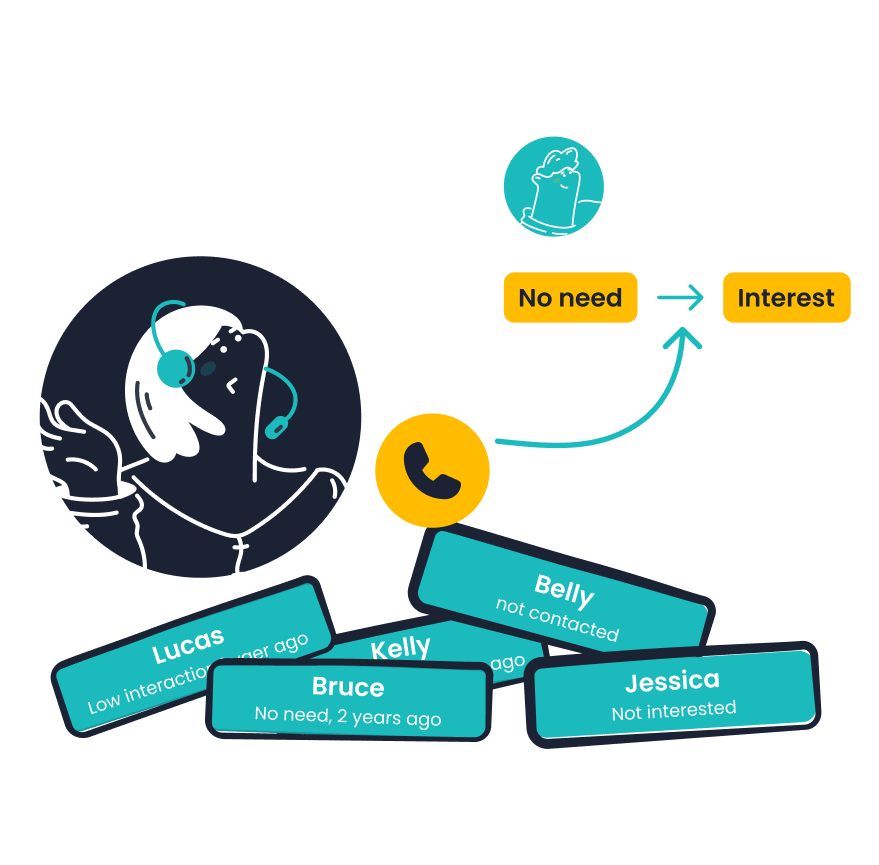
Great agent performance is key to a successful call center. AI-powered tools provide powerful support for training and daily work. They act like a copilot for every agent. Integrated solutions like Sobot's Voice for Sales offer real-time monitoring and call whispering. These features allow managers to guide agents during live calls without the customer knowing. This boosts agent confidence and productivity.
AI also makes training much faster. AI-driven coaching can cut agent ramp-up time significantly, in some cases from 21 days down to just 11 days. The AI identifies the behaviors of top-performing agents. It then uses these insights to create targeted training for new or struggling agents. This data helps every agent improve their skills. Better agent performance leads to higher customer satisfaction.
Real-World Success: America's largest online Asian supermarket, Weee!, used Sobot's voice product to transform its customer service. The company increased agent efficiency by 20% and achieved an impressive 96% customer satisfaction score. You can read more about their experience here.
This level of detailed feedback improves agent performance across the board. The result is a more skilled and effective call center team.
Automate Quality and Compliance Checks
Traditional quality assurance in a call center is a difficult task. Managers can only listen to a small fraction of calls, usually around 2%. This small sample size can lead to inconsistent and biased evaluations. AI changes this completely.
Call center voice analysis software automates quality assurance. It analyzes 100% of customer interactions. This is a feat no human team could ever achieve. The AI scores every call against the same set of rules. This removes human bias and ensures every agent receives a fair evaluation. The analytics are also more accurate, often by 20% or more compared to manual sampling.
| Feature | Manual Quality Assurance | AI-Powered Quality Assurance |
|---|---|---|
| Call Coverage | Reviews only 1-3% of calls | Reviews 100% of interactions |
| Consistency | Subjective and varies by manager | Objective and consistent for all agents |
| Efficiency | Slow and labor-intensive | Fast, automated, and in real-time |
This comprehensive approach to quality assurance improves both compliance and the customer experience. The AI can automatically flag calls where agents fail to follow required scripts, ensuring the call center meets industry regulations.
Enhance Decisions with AI Speech Analytics
The data from AI speech analytics does more than improve call center operations. It provides strategic insights for the entire business. AI analytics tools process huge volumes of call data. They identify emerging trends, customer needs, and product issues. This information is pure gold for leadership.
The process works in a few steps:
- Capture and Transcribe: The AI captures call audio and converts it to text.
- Analyze: AI algorithms analyze the text for topics and the audio for emotion.
- Deliver Insights: The system presents the findings in easy-to-read reports and dashboards.
This data analysis helps different departments make smarter, data-driven decisions.
- Product Teams can use the insights to identify features customers want.
- Marketing Teams can craft messages that connect with customer pain points.
- Executives can get a clear view of brand perception directly from customer conversations.
By leveraging AI speech analytics, a company can improve operational efficiency and align its strategy with what the customer truly wants. This creates a powerful competitive advantage.
Common Pitfalls of AI Implementation
While the benefits of AI are clear, the path to successful implementation has its challenges. These are not failures of the technology itself. Instead, they are common hurdles that any business can overcome with the right strategy and partner. Understanding these pitfalls is the first step toward a successful rollout.
The 'Garbage In, Garbage Out' Problem
The most fundamental challenge in speech analytics is data quality. The principle is simple: if the AI receives poor-quality audio, it will produce poor-quality analytics. This is often called the "garbage in, garbage out" problem. Low-quality call recordings can cripple the effectiveness of even the most advanced AI.
Factors like background noise, overlapping voices, and strong non-native accents can significantly increase transcription errors.
- With poor audio, AI transcription accuracy can drop to the 60–70% range, meaning nearly a third of the words are wrong.
- Overlapping speakers can reduce accuracy by up to 25%.
- Heavy accents or regional dialects can cause error rates between 16% and 28%.
When the transcription is inaccurate, the subsequent sentiment and topic analytics will also be wrong. This leads to flawed business insights.
💡 A Solvable Challenge: This problem is entirely fixable. Businesses can ensure their AI has clean data to work with by following audio preparation best practices. Key steps include:
- Noise Reduction: Using filters to remove background hums and chatter.
- Volume Normalization: Adjusting all call recordings to a consistent volume level.
- Format Standardization: Converting all audio files to a single, high-quality format (e.g., WAV, 16 kHz).
By cleaning audio data before analysis, a call center provides its speech analytics tools with the quality input needed for accurate results.
High Costs and Complex Setup
Many businesses worry that implementing call center voice analysis software is too expensive and complicated. Traditionally, on-premise solutions required significant upfront investment in hardware and a lengthy setup process that could take months. This created a high barrier to entry for many companies.
However, the rise of cloud-based platforms has changed the game. Cloud solutions eliminate the need for costly on-site hardware and offer much faster implementation timelines. While an on-premise deployment can be a long, manual process, a cloud-based system can be configured and launched in a fraction of the time.
This makes powerful AI analytics tools far more accessible. For example, vendors like Sobot offer cloud-based solutions that dramatically lower the barrier to entry.
- Rapid Deployment: Most teams can deploy the platform in under one week.
- Proven ROI: Nearly 90% of sales teams achieve a return on their investment within six months.
Choosing a cloud-based provider with a proven track record helps companies access the benefits of speech analytics without the high initial costs and complexity.
Navigating Customer Privacy Concerns
When a call center records and analyzes customer conversations, it handles sensitive personal data. Protecting this data is not just good practice; it is a legal requirement. Navigating the complex web of privacy regulations is a major challenge for any company using speech analytics.
Different regions have different laws, and companies must comply with all of them.
- GDPR (General Data Protection Regulation) in Europe sets strict rules for data processing and consent.
- CCPA (California Consumer Privacy Act) gives California residents rights over their personal data.
- BIPA (Biometric Information Privacy Act) in Illinois requires express consent to collect "voiceprints" for identification.
A critical part of compliance is obtaining proper customer consent. Simply having a general privacy policy is not enough. Businesses must clearly inform every customer that the call may be recorded and analyzed by an AI. The best practice is to get explicit consent before the recording begins.
A trustworthy vendor will provide robust security features to help a business meet these obligations.
| Compliance Standard | Security Features Enabled |
|---|---|
| PCI-DSS | Automatic redaction of credit card numbers |
| HIPAA | Protection of health information (PHI) |
| SOC 2 Type II | Comprehensive security and data handling audits |
| GDPR | Tools for data erasure and minimization |
Working with a compliant partner is essential for using AI analytics tools responsibly and protecting customer trust.
Overlooking the Need for Human Oversight
A common mistake is to view AI as a complete replacement for human managers. In reality, AI-powered tools are most effective when they act as a copilot, empowering managers with better data to make smarter decisions. Relying on AI analytics alone without human review can lead to significant problems, including algorithmic bias.
AI models learn from the data they are given. If that data contains hidden biases, the AI will learn and amplify them. A Stanford study, for instance, found that speech recognition systems misidentified words from Black speakers almost twice as often as from white speakers. This kind of bias can have real-world consequences.
- It can cause an AI to unfairly score agent performance based on accent or dialect.
- It can lead to a frustrating experience for a customer whose words are not understood correctly.
This is why human oversight is critical. Managers should use the insights from speech analytics as a starting point for investigation, not as a final verdict. The AI can flag a call with negative sentiment, but a manager needs to listen to the call to understand the context. The AI can identify top agent performance behaviors, but a manager must use that data to create effective training. AI provides the data; humans provide the wisdom.
The Verdict: Is AI Analysis Right for You?
Deciding to invest in AI speech analytics requires a careful look at your organization's needs and readiness. This checklist helps a business determine if the technology is a good fit for its call center.
Assess Your Call Volume and Data Quality
Effective speech analytics needs enough data to find meaningful patterns. A business should first evaluate its call volume. For example, many businesses handle between 800 and 1,000 calls per month. AI analytics tools are most valuable when analyzing a consistent flow of customer interactions. A good starting point for a small business is often in the range of 1,000 to 5,000 minutes of calls per month. This volume provides sufficient data for the AI to deliver reliable analytics. Equally important is the quality of your audio data. Clear recordings are essential for accurate speech analytics.
Evaluate Your Team's Technical Readiness
A team's technical skill level is another key factor. Some leaders worry about complex integrations. However, modern platforms can simplify this process. For instance, solutions from vendors like Sobot lower the technical barrier significantly. They offer seamless integrations with major CRMs like Salesforce and HubSpot that can be completed in under 30 minutes. This quick setup means a call center team does not need deep technical expertise to start using powerful speech analytics.
Define Clear Business Goals and Metrics
A company must define what it wants to achieve with speech analytics. Vague goals lead to poor results. Clear objectives guide the implementation and measure success. Key Performance Indicators (KPIs) help track progress toward these goals.
Key Metrics to Track:
- Operational: First Call Resolution (FCR), Task Completion Rate
- Financial: Cost Savings, Return on Investment (ROI)
- Customer Experience: Customer Satisfaction (CSAT) Scores, Wait Time Reduction
Defining these metrics helps a business focus its speech analytics efforts on what matters most to the customer and the bottom line.
Calculate the Potential Return on Investment
Finally, a business should estimate the potential ROI. This calculation compares the value gained against the cost of the AI software. The formula is: [(Value Gained – AI Cost) ÷ AI Cost] x 100. Value can come from improved efficiency, reduced errors, or shorter call times. By quantifying these benefits, a company can build a strong business case for adopting AI speech analytics. Using data analysis tools to track these numbers makes the value of AI analytics tools clear.
Best Practices for a Successful Rollout

Adopting AI speech analytics is a journey, not a single step. A strategic rollout plan is essential for success. Following best practices helps a call center avoid common pitfalls and maximize its return on investment. This ensures the technology empowers the team and improves the customer experience.
Start with a Focused Pilot Program
A business should begin with a small, focused pilot program. Many AI projects fail due to poor execution, not flawed technology. A pilot program allows a call center to test the speech analytics software in a controlled environment. This approach helps manage expectations and provides valuable learnings. A successful pilot often follows a clear roadmap:
- Assessment: Evaluate current processes and identify 1-2 roles for the test.
- Pilot: Run the AI in parallel with human processes to gather data.
- Optimization: Analyze the results to refine the AI models and workflows.
- Scaling: Expand the use of the AI to more roles after proving its value.
This phased approach minimizes risk and builds a strong foundation for a full-scale deployment.
Choose a Vendor that Elevates the Customer Experience
Selecting the right vendor is critical. The partner's technology should not only provide powerful analytics but also enhance every customer interaction. A business must look for a vendor whose platform demonstrates high technical quality and a deep understanding of the customer journey. Key criteria include:
| Selection Criterion | Key Considerations |
|---|---|
| Technical Quality | Voice clarity, high accuracy for speech analytics, and multilingual support. |
| System Interoperability | Seamless integration with existing CRM and call center software. |
| Compliance & Ethics | Strong data security, privacy features, and tools for bias mitigation. |
A vendor committed to these standards helps ensure the AI provides a positive experience for both the agent and the customer.
Train Your Team to Leverage AI Insights
The most advanced AI is only effective if the team knows how to use its insights. Proper training is essential for turning raw data into better performance. Modern training moves beyond simple manuals.
💡 Pro Training Tip: Use AI-powered tools to make training more effective. Interactive simulations can create realistic scenarios for agents to practice handling a difficult customer. AI coaching bots can also provide real-time feedback, acting as a personal trainer for customer satisfaction.
This hands-on experience helps agents build confidence. It teaches them to use speech analytics to understand customer needs and adapt their approach during live calls.
Establish a Feedback Loop for Improvement
AI speech analytics is not a "set it and forget it" tool. Continuous improvement is necessary for long-term success. A call center must establish a feedback loop. This process involves regularly reviewing the analytics and the AI's performance. Managers should discuss the data with agents to understand the context behind the numbers. This collaboration uncovers new opportunities and identifies areas where the AI or processes need adjustment. This cycle of analysis, action, and review ensures the speech analytics system evolves with the business and continues to deliver valuable insights.
Call center voice analysis software is a powerful tool, not a magic bullet. Success with speech analytics depends on a clear strategy. A business must leverage its strengths, like gaining deep customer insights, while managing its challenges, such as data quality and the need for human oversight. Use the checklist in this guide to assess your readiness. Start by defining one specific problem your customer faces. Then, use voice analytics to find a solution and unlock powerful insights from your speech analytics data.
FAQ
How does AI voice analysis software work?
This software records calls and converts speech into text. It then analyzes the words, tone, and emotion to find patterns. This process gives businesses valuable insights into customer feelings and agent performance from every conversation.
Is AI voice analysis software expensive?
Costs have become much more accessible. Modern cloud-based platforms eliminate the need for expensive hardware. For example, vendors like Sobot offer solutions where nearly 90% of teams achieve a return on investment within six months.
How long does it take to set up?
🚀 Setup is faster than you might think. A cloud-based system avoids long, complex installations. A platform like Sobot's Voice for Sales can integrate with major CRMs in under 30 minutes and be fully deployed in less than a week.
Will AI replace our call center managers?
No. The technology acts as a copilot, not a replacement. It empowers managers by providing them with comprehensive data. This allows them to coach agents more effectively and make smarter, data-driven decisions for the team.
See Also
Comparing Leading Voice of Customer Software Solutions for Your Business
Automated Voice Calling Software: A Comprehensive Review of Top 2024 Options
Understanding the Mechanics of IVR Voice Recognition Software Functionality
Exploring Call Center Voice Analytics Technology: A Deep Dive Explained
Voice Over Software: Deciding Between Free and Premium Tools

