Call Center Monitoring A Complete Guide 2025


Call center monitoring is the systematic process of reviewing agent-customer interactions to enhance quality. Its primary purpose is to improve the customer experience and boost agent performance. This guide helps you build a successful call center monitoring program for 2025, ensuring a positive experience for every customer. Effective quality monitoring is key to this program's success.
💡 Tip: Modern platforms from Sobot, like the Sobot call center, leverage Sobot AI for advanced call monitoring. This helps agents elevate their performance and deliver consistent quality, creating a superior customer experience.
Why Monitoring is a Business Imperative
Effective call center monitoring is not just a best practice; it is a fundamental pillar of a successful business strategy. When you systematically review interactions, you unlock powerful insights that drive growth, protect your brand, and elevate the customer experience. This process transforms your contact center from a cost center into a value-generating powerhouse.
Boost Customer Satisfaction
Happy customers are loyal customers. Call monitoring is your direct path to improving customer satisfaction. The primary goal is to align your quality assurance scores with customer satisfaction (CSAT) scores. This alignment ensures that the actions you measure are the ones that truly create a positive customer experience. For example, by unifying fragmented feedback systems, Four Seasons Hotels increased its Net Promoter Score (NPS) by +7. This shows that listening to and analyzing customer interactions directly boosts satisfaction and loyalty. A strong quality program helps you understand what your customer wants, enabling your agents to deliver it consistently.
Improve Agent Performance
Your agents are the voice of your brand. Investing in their performance is an investment in your business. Consistent monitoring provides the data needed for targeted coaching and agent performance improvement. With the right management and tools, you can significantly shorten the learning curve for new hires.
| Metric | Before Monitoring Program | After Monitoring Program |
|---|---|---|
| New Agent Ramp-Up Time | 21 days | 11 days |
This 50% reduction in ramp-up time means your agents become productive faster, delivering high-quality service sooner. Effective performance management turns good agents into great ones.
Ensure Compliance and Consistency
Failing to monitor for compliance can have devastating financial consequences. Regulators can issue massive fines for non-compliance. Dish Network, for instance, faced a $280 million fine for violating telemarketing rules. Under GDPR, penalties can reach up to 4% of your company's global annual revenue. Call center quality management is your first line of defense. It ensures agents adhere to scripts and make required disclosures, protecting your business from liability and preserving customer trust. This level of quality assurance is essential for risk management.
The Role of Call Center Quality Management
Call center quality management is the strategic framework that makes all these benefits possible. It is a continuous cycle of improvement. A modern contact center quality assurance team has several key responsibilities:
- Developing Evaluation Programs: They create the scorecards to measure performance.
- Monitoring Interactions: They gather insights to guide agent improvement.
- Training and Coaching: They educate agents on quality policies.
- Ensuring Compliance: They use contact center quality assurance to reduce business risks.
Ultimately, call center quality management and call center quality control are about more than just scoring calls. This quality management process drives customer experience management, enhances agent performance, and ensures the long-term health of your customer relationships through diligent quality assurance.
Building Your Call Center Monitoring Program
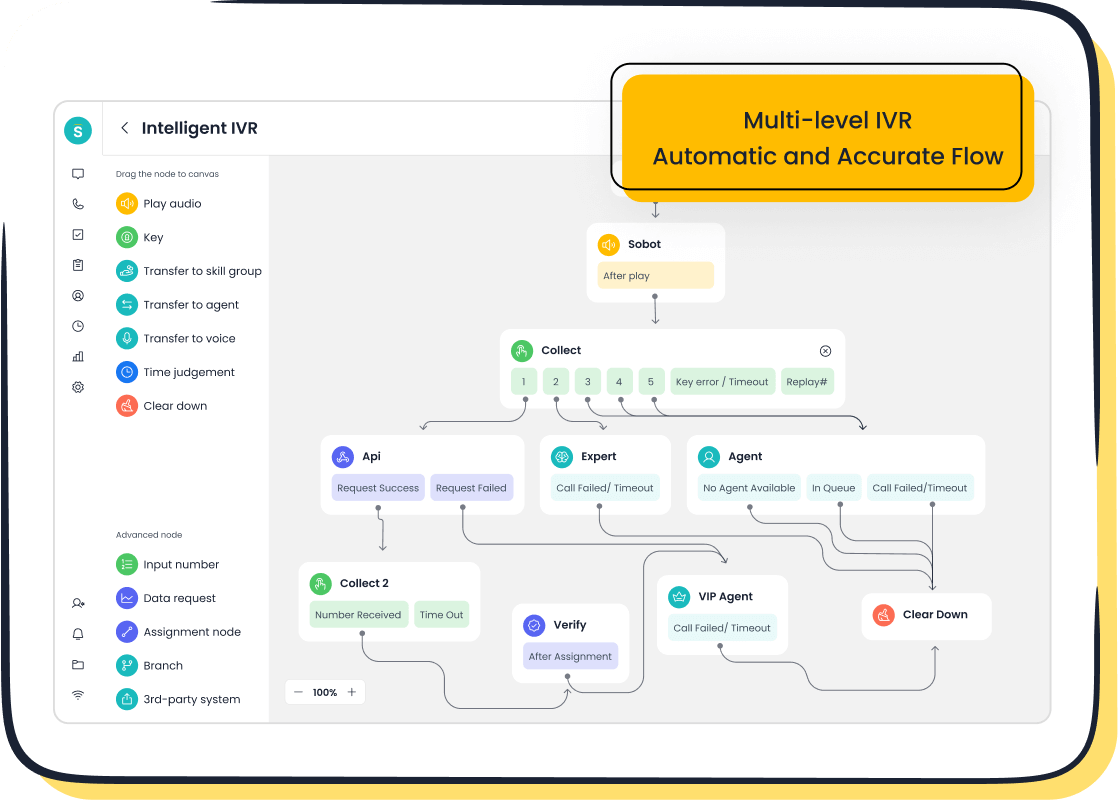
A successful call center monitoring program doesn't happen by accident. You build it with a clear, methodical plan. This framework transforms your quality assurance efforts from a simple checklist into a powerful engine for growth. By following these four steps, you can create a sustainable quality management program that elevates agent performance, delights your customer base, and achieves your business goals.
Step 1: Define Clear Objectives
Before you review a single call, you must know what you are trying to achieve. Your objectives are the foundation of your entire call center monitoring program. Without clear goals, your quality assurance process lacks direction and purpose. The best way to set effective goals is to use the SMART framework: Specific, Measurable, Achievable, Relevant, and Time-bound.
Vague goals like "improve customer satisfaction" are not enough. You need concrete targets that guide your team's efforts. Here are some examples of strong, SMART objectives for your quality management program:
- Increase CSAT score by 15% over the next quarter. You can break this down into smaller weekly or monthly milestones to track progress.
- Decrease average call wait times by 30% within eight weeks. This goal is specific, measurable, and has a clear deadline.
- Reduce support call volume by 20% in six months. You can achieve this by using monitoring insights to build out your self-service resources, directly addressing common customer issues.
Setting these objectives gives your quality and training efforts a clear purpose. Every evaluation and coaching session should connect back to these goals, ensuring your management activities directly contribute to business improvement.
Step 2: Create Standardized Scorecards
Scorecards are the primary tool you will use for agent evaluation. They translate your objectives into measurable criteria. A well-designed scorecard ensures that every evaluation is fair, consistent, and focused on the behaviors that matter most to your customer. Effective contact center quality assurance depends on the quality of this tool.
Building a reliable scoring system requires a solid data foundation. Your evaluation should pull from multiple sources to get a complete picture:
- Call recordings and transcripts
- Customer satisfaction feedback (CSAT, NPS)
- Agent performance history and training records
- Business outcomes, such as first contact resolution
Your scorecard should be tailored to the interaction type. The criteria for a technical support call are very different from those for a sales call. A focus on call center quality management means recognizing these differences.
For example, a technical support scorecard prioritizes accuracy and problem-solving.
| Criteria | Score (1–5) |
|---|---|
| Greeted and verified identity | |
| Clarified and documented the issue clearly | |
| Applied correct troubleshooting steps | |
| Explained resolution in user-friendly language | |
| Followed security/compliance protocols | |
| Demonstrated empathy and professionalism |
In contrast, an inbound sales scorecard would focus more on product knowledge, needs discovery, and identifying upsell opportunities. By standardizing scorecards for each interaction type, you create a fair and effective evaluation process. This is a cornerstone of good call center quality control and assurance.
💡 Tip: An omnichannel solution like Sobot's Omnichannel platform unifies customer data from all channels. This gives evaluators the full context behind an interaction, leading to a more accurate and holistic quality assessment.
Step 3: Implement a Feedback Schedule
Gathering data through scorecards is only half the battle. The real improvement comes from sharing that information with your agents. A consistent feedback schedule is essential for your quality management program. It ensures that coaching is a continuous process, not a rare event. You can combine different feedback models for maximum impact.
- Weekly One-on-Ones: These recurring 30-45 minute meetings between a manager and an agent are perfect for in-depth coaching. They provide a dedicated space to review performance, discuss goals, and build a strong working relationship. This structured time is vital for meaningful agent development and performance management.
- Real-Time Alerts: Modern contact center platforms can provide immediate notifications for performance issues. For example, an early warning system can use machine learning to detect a decline in an agent's quality scores, allowing a manager to intervene before the problem grows. This proactive approach to management helps maintain a high standard of quality.
A combination of scheduled, in-depth feedback and immediate, data-driven alerts creates a comprehensive feedback loop. This ensures agents get both the big-picture guidance and the in-the-moment support they need to succeed. This level of management is key to effective contact center quality assurance.
Step 4: Provide Actionable Coaching
The final and most important step is coaching. This is where you turn feedback into tangible agent performance improvement. The goal of coaching is not to criticize but to empower. Effective coaching is always specific, supportive, and focused on future behavior.
Avoid vague feedback that leaves agents confused.
-
Vague: "You need to be better with customers."
-
Actionable: "I noticed you interrupted the customer a few times. Let's work on letting the customer finish their thoughts. This will help them feel heard and understood."
-
Vague: "Your calls are too long."
-
Actionable: "Your thoroughness is great, but some calls exceed our average handle time. Let's work on guiding conversations more effectively to keep calls within our target."
To structure these conversations, you can use a proven coaching model like GROW:
- Goal: What does the agent want to achieve?
- Reality: What is the current situation?
- Options: What are the possible actions the agent could take?
- Will: What will the agent commit to doing?
This model empowers agents to find their own solutions and take ownership of their development. Combining this with behavior-based coaching and positive reinforcement creates a powerful culture of continuous improvement. This approach to management and training transforms contact center quality assurance from a scoring exercise into a true driver of excellence and quality. Ultimately, great coaching is the heart of any successful call center quality management program.
Essential Monitoring Metrics for 2025
You need the right metrics to measure your program's success. These key performance indicators (KPIs) show if your quality management efforts are working. They turn abstract goals into concrete numbers. Focusing on these four metrics will give you a clear view of your contact center's performance and the quality of the customer experience.
First Contact Resolution (FCR)
First Contact Resolution measures how often you solve a customer issue on the very first try. A high FCR means your team is efficient and your customer is happy. This is a top indicator of operational performance. The industry benchmark average is around 71%, but this rate can vary. Your quality management should aim to meet or exceed the standard for your specific industry.
| Industry | Average FCR Rate |
|---|---|
| Retail | 78% |
| Insurance | 76% |
| Financial | 71% |
| Technology | 65% |
Improving FCR directly boosts customer satisfaction and reduces operational costs. Effective management focuses on empowering agents with the knowledge to solve problems quickly.
Customer Satisfaction (CSAT)
Customer satisfaction tells you how happy a customer is with a specific interaction. You usually measure this with a post-call survey. This metric is a direct reflection of the quality of service your agents provide. While a good score is great, top-performing call centers now aim for a customer satisfaction score of 85% or higher. Achieving this level of satisfaction requires excellent performance management and a deep focus on the customer experience. This is a core goal of quality management.
Average Handle Time (AHT)
Average Handle Time is the average duration of a single customer interaction. This includes hold time, talk time, and follow-up work. A good AHT is around six minutes, but it depends on your industry. The goal is efficiency, not speed. Rushing a customer creates a poor experience. Your management team should balance AHT with customer satisfaction and quality.
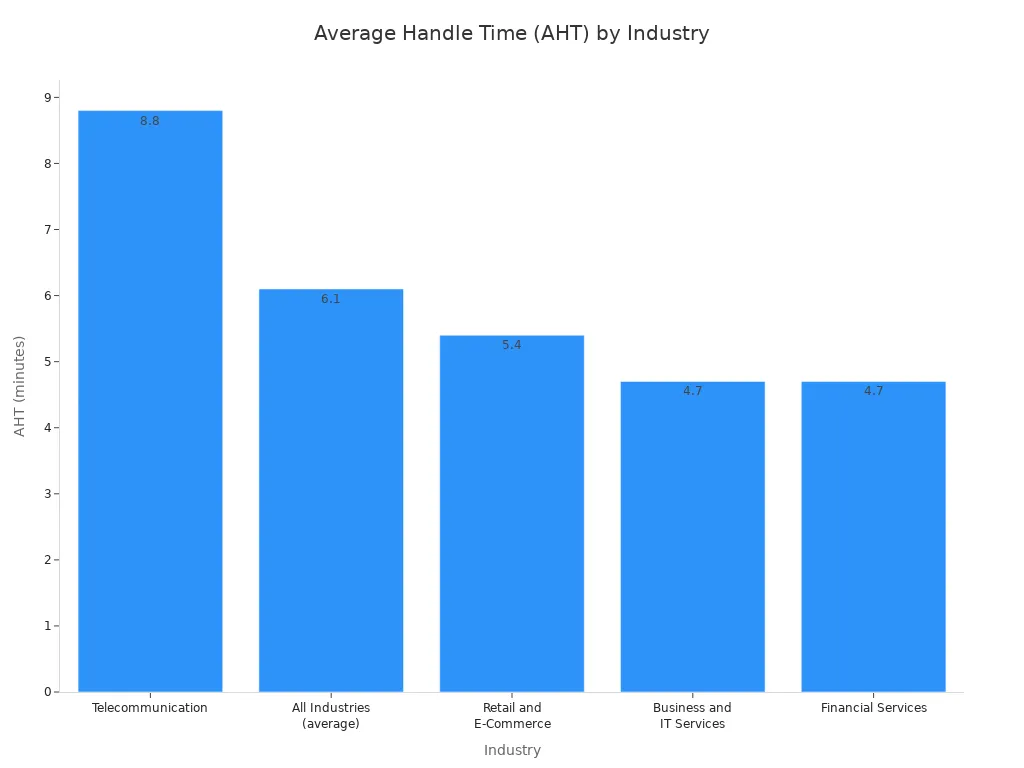
Good management ensures agents have the tools to be effective without sacrificing quality.
Compliance and Script Adherence
This metric tracks how well agents follow required scripts and legal regulations. It is essential for risk management. Failing to adhere to compliance rules can lead to large fines and damage your brand's reputation. Your quality management program must include regular checks for adherence. This protects your business and ensures a consistent, high-quality experience for every customer. Strong management makes compliance a priority in all performance evaluations.
Best Practices for Contact Center Quality Assurance
Building a monitoring program is the first step. Applying quality management best practices turns that program into a system for continuous improvement. Modern contact center quality assurance is not about catching agents making mistakes. It is about developing their skills, streamlining processes, and creating a consistently excellent customer journey. You can elevate your entire operation by focusing on these five core strategies. This approach transforms quality assurance from a simple audit into a powerful driver of agent engagement and business growth.
Adopt an Omnichannel Approach
Your customers interact with you across many channels: voice, chat, email, and social media. A disconnected quality assurance process misses the full story. An omnichannel approach is essential for modern quality management. It gives you a complete view of the customer journey.
You need a platform that unifies these channels into a single workspace. For example, Sobot's Omnichannel platform brings all communications together. This allows your quality assurance team to see the full context of an interaction. Did a customer email before they called? Did they try the chatbot first? This information is vital for a fair and accurate evaluation.
When your systems are integrated, you see incredible gains in efficiency and quality.
- Companies with integrated tools reduce customer wait times by 39%.
- They also lower service costs by as much as 35%.
- Smooth omnichannel support can lift customer satisfaction to 67%, compared to just 28% for disconnected support.
The Asian supermarket Weee! is a perfect example. By implementing an integrated workbench with Sobot, they overcame challenges with inflexible systems. This change increased agent efficiency by 20% and helped them achieve a 96% satisfaction score. This shows how the right solutions directly improve both performance and customer happiness. A holistic view is the foundation of effective contact center quality assurance.
Combine AI Automation with Human Insight
Manually reviewing interactions is time-consuming. Most teams can only listen to a small fraction of calls, often just 1-3%. This leaves huge blind spots in your quality management program. AI automation solves this problem by analyzing 100% of your customer interactions.
AI gives you the power to see the big picture. It can automatically score calls, identify trends, and flag conversations that need human review. This data-driven approach is far more comprehensive. In fact, among contact centers that analyze over 80% of their calls, 30% use AI, while only 13% rely on manual listening.
However, AI is not a complete replacement for human evaluators. The best contact center quality assurance strategy combines both.
- AI provides the "what." It gives you quantitative data and broad insights across all interactions.
- Humans provide the "why." A quality assurance specialist can understand nuance, empathy, and complex customer emotions that an algorithm might miss.
This combination allows your management team to focus its efforts where they matter most. AI handles the heavy lifting of analysis, freeing up your quality team to provide targeted coaching and deep-dive feedback. This synergy is key to a scalable and effective quality assurance process.
Focus on Coaching for Quality Assurance
The purpose of quality assurance is agent development, not punishment. A program focused on catching mistakes creates fear and defensiveness. A program focused on coaching builds trust and empowers agents to grow. This shift in mindset is crucial for long-term success. The entire quality management process should be supportive.
When you use evaluation insights to guide coaching, you create a positive feedback loop. This developmental approach has clear benefits:
- Higher Agent Engagement: Agents feel valued when you invest in their growth.
- Improved Retention: People stay longer at companies that help them build their skills.
- Less Defensiveness: Agents are more open to feedback when it is framed as a collaborative effort to improve.
Modern call center quality management has moved away from a top-down, punitive model. Instead, it is about partnership. Your quality assurance team and managers should work together to identify specific skill gaps and provide the right training. This turns feedback from a critique into a tool for career development, which is the true goal of quality assurance.
Involve Agents in the QA Process
The most effective quality assurance programs involve agents directly. When agents take part in their own evaluation, they become more invested in the standards and their own performance. This sense of ownership is a powerful motivator. Self-scoring is an excellent way to foster this engagement.
In this model, agents use the same scorecard as the quality team to review their own interactions. This practice encourages personal reflection and helps them understand expectations more clearly. The benefits are significant.
Highly engaged agents are 8 times more likely to stay with your company and 16 times more likely to refer their friends. They also feel more empowered to resolve customer issues on their own.
Involving agents in the quality assurance process changes their perception of management and feedback.
- It makes them more receptive to improvement initiatives.
- It reinforces positive behaviors through self-discovery.
- It builds trust and transparency between agents and management.
When you give agents a voice in the call center quality control process, you are not just improving scores. You are building a stronger, more committed team. This collaborative approach to call center quality management is a hallmark of a high-performing contact center.
Regularly Calibrate Your Scorecards
Your scorecards are only useful if everyone uses them the same way. Without consistency, your quality scores are meaningless. Calibration is the process of getting all your evaluators on the same page. It ensures that a "5-star" interaction is rated the same way by every member of your quality assurance team. This is a critical component of fair and objective call center quality management.
A typical calibration session follows a clear process:
- Preparation: A facilitator selects a few representative interactions to review.
- Blind Scoring: Each evaluator scores the interactions independently, without discussion.
- Discussion: The group compares scores. The facilitator leads a discussion about any differences to understand the reasoning behind them.
- Consensus: The team agrees on a final score and clarifies the definitions for any confusing criteria. All decisions are documented.
Your goal is to keep the difference in scores below a set baseline, typically around 5%. If the variance is higher, more discussion and training are needed. Regular calibration sessions—held weekly or monthly—are essential for maintaining a high-quality, consistent evaluation program. This disciplined management practice ensures your quality data is reliable and your feedback is always fair.
Key Technologies and Tools for Monitoring
The right tools are critical for an efficient and accurate call monitoring program. Technology transforms your quality management from a manual task into a strategic, data-driven operation. You can use these tools to scale your quality assurance efforts, gain deeper insights, and empower your management team to drive real improvement.
Speech and Text Analytics
Speech and text analytics technology automatically analyzes 100% of your customer interactions. This gives you a complete view of performance and sentiment. The technology uses Artificial Intelligence (AI) and Natural Language Processing (NLP) to understand not just what was said, but how it was said.
This process helps your quality management by:
- Converting audio to text for analysis.
- Identifying keywords and phrases to spot call drivers or emerging issues.
- Analyzing vocal cues like pitch and volume to determine customer emotion.
- Assigning a sentiment score (positive, negative, or neutral) to each interaction.
This powerful analysis provides the data needed for effective contact center quality assurance.
Automated Scoring and Dashboards
Automated scoring and dashboards bring your monitoring data to life. These tools provide real-time visibility into performance, helping your management team track progress against goals. Instead of manually reviewing a small sample of calls, you get comprehensive quality metrics across your entire team.
Modern solutions like Sobot's Voice Call Center offer powerful real-time monitoring and data analytics. Its dashboards give you an at-a-glance view of key quality metrics. Features like the AI-powered Voicebot even help with intent recognition, providing deeper context for every call. This seamless integration with your existing CRM ensures your quality assurance process has all the information it needs.
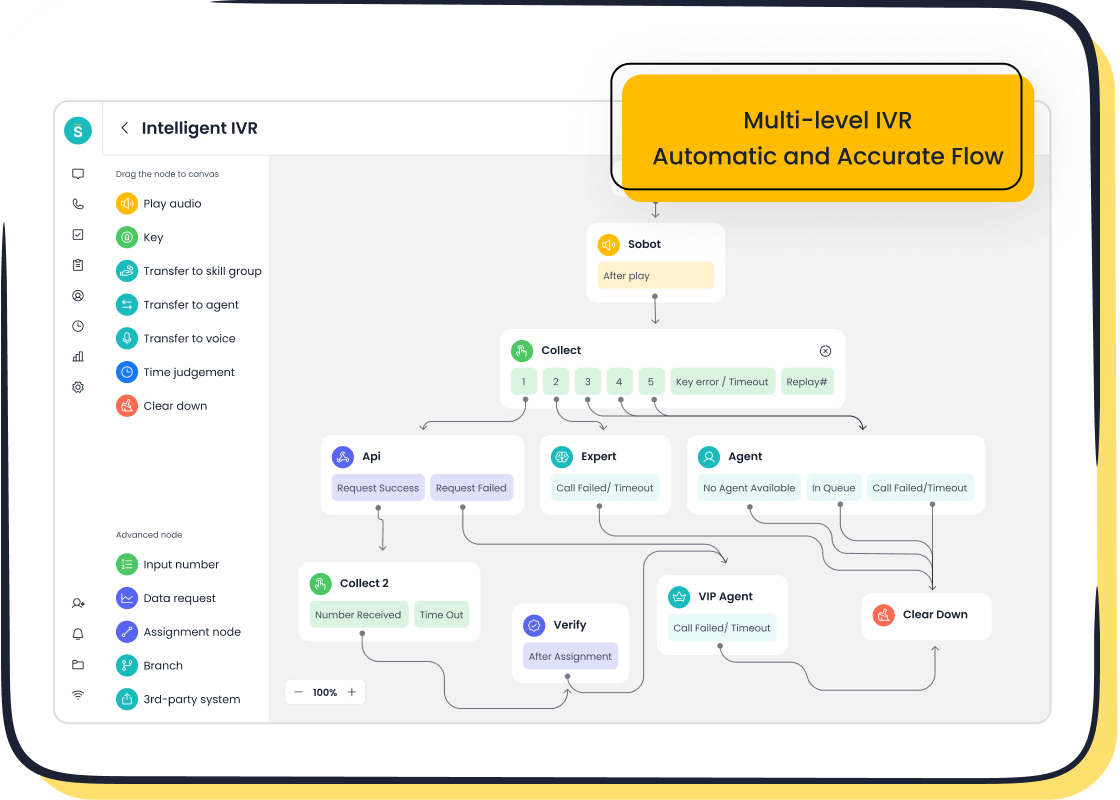
Call and Screen Recording Software
Call and screen recording software is the foundation of any monitoring program. This technology captures the raw agent-customer interactions that you will analyze. High-quality recordings are essential for fair evaluations, targeted coaching, and compliance verification. This software provides the undeniable proof needed for effective contact center quality assurance and management.
Unified Agent Workspaces
A unified agent workspace brings all communication channels into a single interface. This tool is vital for omnichannel quality assurance. It allows evaluators to see the full customer journey, from an initial chat to a follow-up phone call. This context is crucial for a fair and accurate quality assessment. These solutions support better management by providing a complete picture for every interaction, which is a key part of modern contact center quality assurance.
Your call center monitoring program is a continuous cycle. You define goals, measure quality, and coach agents. This management process creates a better customer experience. A strong quality assurance strategy improves customer loyalty and agent retention. This management boosts your overall business health. Investing in a modern call center monitoring program with solutions like Sobot is essential. It helps you build a customer-centric brand for 2025. This quality assurance program ensures a superior customer experience. Your management and quality assurance efforts deliver a great customer experience. This management ensures quality for every customer.
FAQ
What is call center monitoring?
Call center monitoring is the process of reviewing agent-customer conversations. You use it to improve service quality, boost agent performance, and meet business goals. It helps you understand what happens during interactions and find areas for improvement.
Why is call center monitoring important?
Monitoring is vital for your business success. It helps you increase customer satisfaction and loyalty. You can also improve agent skills through targeted coaching. It ensures your team follows important rules, which protects your company from risks.
How can technology help with monitoring?
Technology makes monitoring more efficient and accurate.
- AI tools can analyze 100% of your interactions.
- Dashboards show you performance data in real time.
- Unified platforms like Sobot provide a complete view of the customer journey for better quality assurance.
How do I start a monitoring program?
💡 You can start a program in four simple steps:
- Define clear, measurable goals.
- Create fair scorecards for evaluations.
- Set a regular schedule for feedback.
- Provide supportive, actionable coaching to help agents grow.
See Also
Optimizing Call Center Excellence: Proven Strategies for Quality Management Success
Elevating Call Center Performance: Leveraging Effective Monitoring for Enhanced Results
Mastering Call Center Quality: A Comprehensive Guide to QMS Principles
Discovering the Best Contact Center Solutions: An In-Depth Review for 2024
Selecting Superior Call Center Quality Assurance Software: Your Essential Guide

