10 Call Center Improvement Strategies for Better Customer Service 2025


You want real results from your call center, right? Many call centers now use AI and automation to boost customer service and agent satisfaction. According to recent stats, 62% of centers see higher customer satisfaction when agents feel motivated. Tools like Sobot AI help you streamline operations, while 70% of customer interactions now involve chatbots. Take a look at how call center improvement strategies and call center tips can make a difference:
| Customer Satisfaction Metric or Behavior | Percentage / Value |
|---|---|
| Contact centers measuring Customer Satisfaction (CSAT) score | 44% |
| Customers likely to share positive service experience with 6+ people | 72% |
| Improvement in customer satisfaction scores linked to agent satisfaction | 62% |
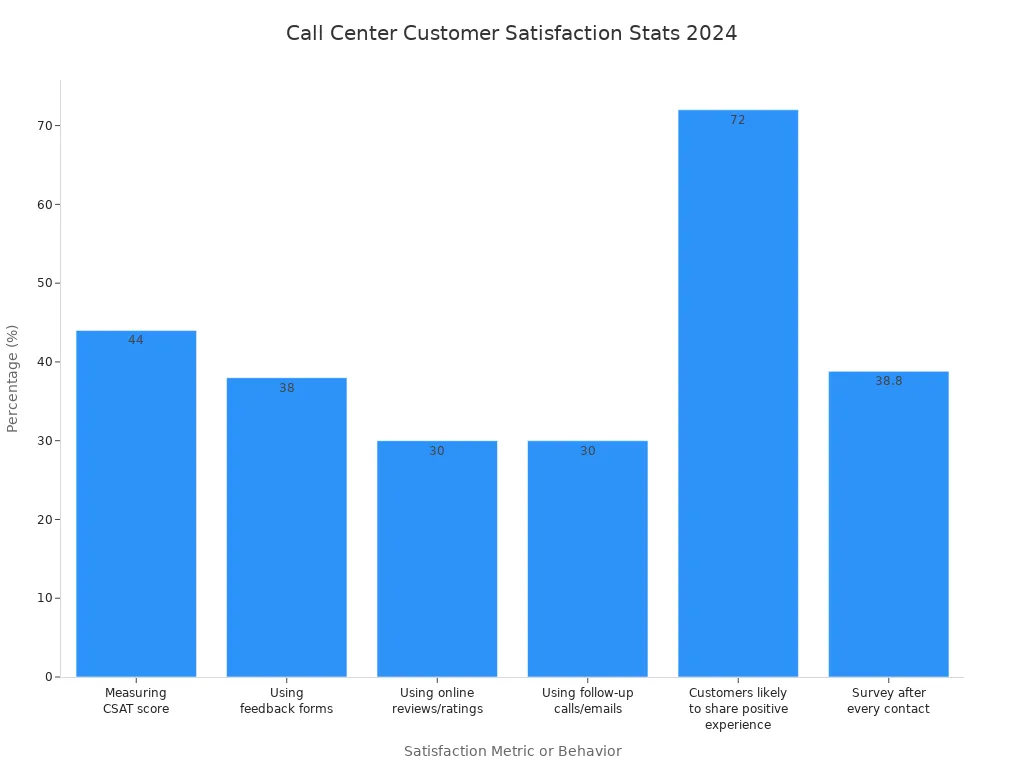
If you want to improve customer service fast, start exploring which call center improvement strategies fit your team. Sobot call center solutions work across industries, so you can find a strategy that suits you.
Agent Training

Skills Development
You want your agents to shine on every call. That starts with strong skills. In 2025, the most in-demand skills for call center agents include emotional intelligence, adaptability, resilience, and social interaction. You need agents who can handle tough calls and connect with customers. AI now takes care of simple questions, so your team faces more complex and emotional situations. That’s why you should focus on agent training and development that builds these skills.
Here’s a quick look at what works best:
| Evidence Aspect | Description | Outcome/Impact |
|---|---|---|
| Communication Skills | Agents maintaining positive tone, active listening, clear and empathetic communication | Noticeable increase in customer satisfaction scores |
| Problem-Solving Abilities | Agents promptly addressing issues and proposing effective solutions | 20% decrease in repeat customer issues |
| Customer Satisfaction | Agents going above and beyond, receiving positive customer reviews | Overwhelmingly positive customer feedback highlighting dedication to satisfaction |
| Performance Reviews | Structured reviews providing feedback, goal setting, and recognition | Enhanced employee motivation, engagement, and improved service quality |
| Feedback Utilization | Collecting and analyzing customer feedback to tailor training programs | Continuous improvement in customer service quality |
| Training Impact | Targeted development plans based on reviews and feedback | Increased employee engagement scores and reduced turnover rates |
You want your agents to practice active listening every day. That means listening closely, asking questions, and showing empathy. When you encourage agents to listen and summarize the customer's concern, you help them solve problems faster. Sobot’s unified workspace makes it easy for agents to see all customer info, so they can focus on listening and responding with care.
Tip: Run regular coaching sessions to help agents improve active listening and enhance communication. This keeps your team sharp and ready for any challenge.
Product Knowledge
You can’t expect agents to solve problems if they don’t know your products inside and out. Comprehensive product knowledge is key for first-call resolution. When agents get ongoing training and have access to up-to-date info, they resolve more issues on the first call. This means fewer transfers, less waiting, and happier customers.
Research shows that agents with strong product knowledge and good listening skills handle calls faster and with better results. Sobot’s knowledge base and real-time agent assist tools help your team stay updated. Agents can quickly find answers, troubleshoot, and deliver accurate solutions. This boosts first-call resolution rates and keeps customers coming back.
If you want to see real improvement, make product training a regular part of your call center tips. Encourage agents to keep learning, practice active listening, and use every tool available to enhance communication.
AI and Automation
AI and automation are changing the way you run your call center. You can now handle more calls, solve problems faster, and make your team’s job easier. According to the 2024 CallMiner CX Landscape Report, 87% of customer experience leaders say generative AI is essential for their teams. Even more—91%—believe AI will help them improve customer experience strategies. This shows that almost every call center is moving toward smarter, faster service.
Sobot Voice/Call Center
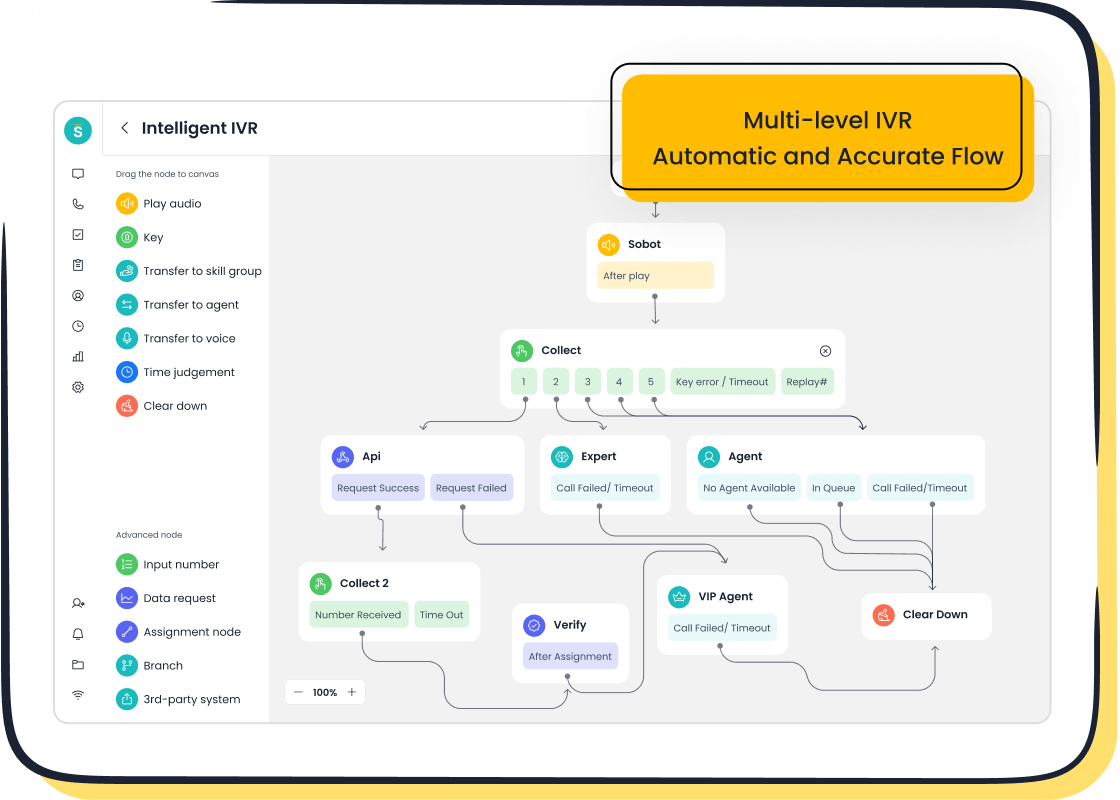
You want your call center to work smarter, not harder. Sobot Voice/Call Center gives you tools like AI-powered voicebots, smart call routing, and real-time analytics. These features help you manage high call volumes and keep customers happy. With Sobot, you can automate outbound marketing, track calls, and even monitor agent performance.
Here’s what other call centers have achieved with Sobot:
| Improvement Area | Measurable Outcome |
|---|---|
| AI-powered voicebots | Handle over 50% of customer interactions independently |
| Sales performance | Increased by over 30% through automated outbound marketing |
| Customer query resolution rates | Improved by 20%, especially for high-volume routine requests |
| Agent productivity | Reduction in repetitive tasks, enabling focus on impactful work |
| Operational efficiency | Enhanced via AI tracking of agent adherence and optimized shift scheduling |
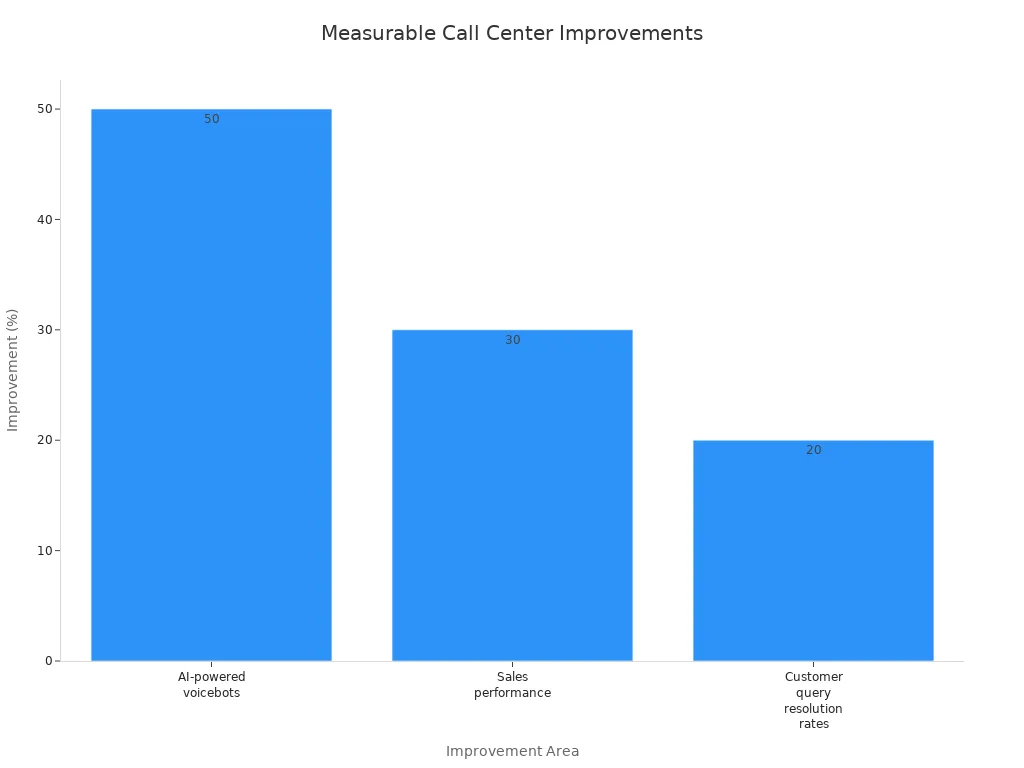
You can see how these tools help your team focus on what matters most—solving real customer problems.
Chatbots
Chatbots are now a must-have in any modern call center. About 65% of call centers use chatbots to handle basic questions. You can use chatbots to answer order status, billing, or appointment questions. This means your customers get answers fast, and your agents can focus on more complex issues.
- Chatbots cut down wait times by handling routine queries right away.
- Many people get frustrated if they wait more than 15 minutes. Chatbots help you avoid this.
- You can use chatbots to schedule appointments or process orders, making your call center more efficient.
- Key metrics like Customer Satisfaction Score (CSAT), First Call Resolution (FCR), and Average Handle Time (AHT) help you track chatbot success.
- Higher containment rates mean chatbots solve more problems without needing a human agent.
You should always monitor chatbot performance. Look at missed chats and how often agents need to step in. This helps you keep your customer support strong and your call center running smoothly.
Quality Assurance
QA Standards
You want your call center to deliver great service every time. That’s where quality assurance comes in. Quality assurance means you check and improve how your agents handle calls. You look at things like how well they follow scripts, use soft skills, and keep customers happy. A clear qa strategy helps you set the rules and goals for your team. You can use scorecards and KPIs to measure agent performance across all channels.
Here’s what a strong quality assurance program does for you:
- Boosts customer satisfaction and loyalty.
- Finds performance gaps early so you can fix them fast.
- Makes sure your team follows company rules and industry standards.
- Reduces customer churn by solving problems before they grow.
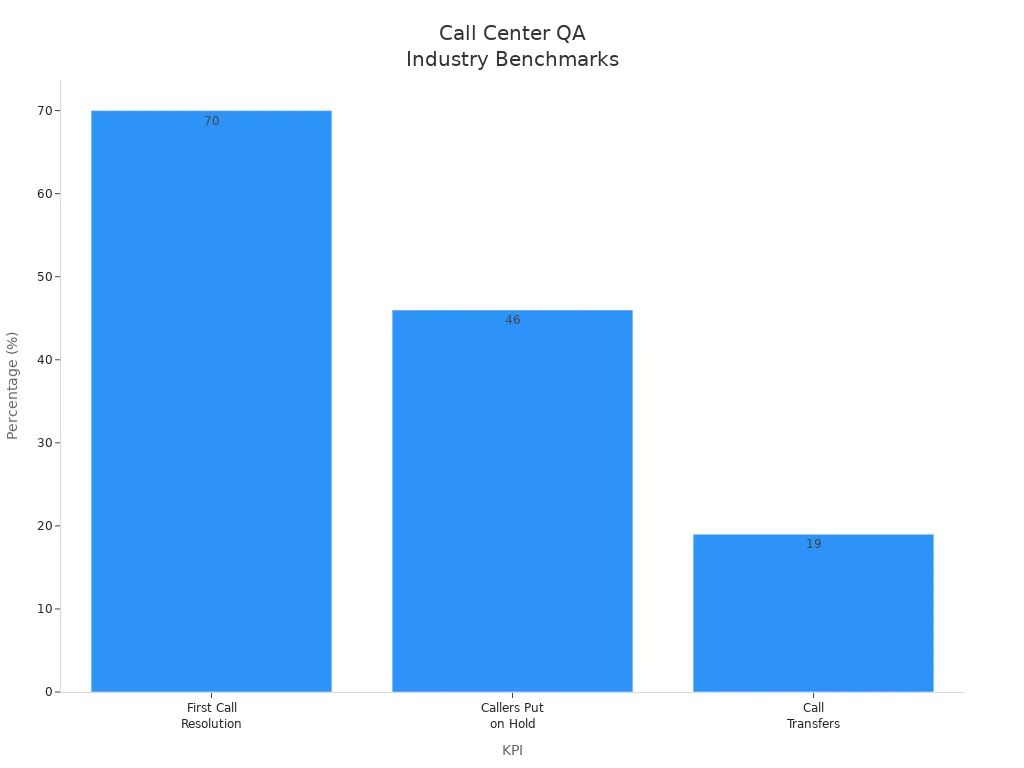
Many call centers use quality assurance software to track these things. You can monitor calls, coach agents, and run calibration sessions to keep everyone on the same page. About 75% of companies even outsource some quality assurance tasks to get expert feedback. If you want to start improving quality score, focus on first call resolution. The industry benchmark for first call resolution is 70% to 79%. World-class centers hit 80% or more.
| KPI | Industry Benchmark / Standard | Notes |
|---|---|---|
| First Call Resolution | 70% - 79% (good standard), 80%+ (world-class) | Average is 70%; below 70% needs improvement; varies by call type and industry |
| Callers Put on Hold | 46% (industry average) | Indicates call handling efficiency |
| Call Transfers | 19% (industry average) | Reflects call routing effectiveness |
Real-Time Monitoring
Real-time monitoring takes your quality assurance to the next level. You can listen to calls as they happen and spot issues right away. Supervisors and quality teams use quality assurance software to track live calls and give instant feedback. This means you can correct mistakes on the spot and help agents stick to scripts.
With real-time call monitoring, you get:
- Instant feedback for agents during calls.
- Live prompts and guidance to help agents resolve issues faster.
- Data on call quality and agent performance as it happens.
- Fewer call handling errors and faster resolutions.
AI-powered quality assurance software, like Sobot’s Voice/Call Center, uses speech recognition to catch problems such as filler words or customer frustration. Supervisors can jump in and support agents right away. This proactive approach helps you keep improving quality score and deliver better service. If you invest in quality assurance, you make sure every customer gets the best experience possible. A clear qa strategy, strong call monitoring, and the right tools will help you reach your goals for call quality and customer satisfaction.
Personalization
Customer Data
You want every customer to feel special when they reach out. That starts with using the right customer data. Today, you can gather information from many sources. Real-time conversation intelligence gives you live transcripts and shows how customers feel during calls. You also get insights into why people contact you and how your agents perform. When you combine this with data from your CRM and call center systems, you see the full picture.
Here are some top data sources that help you personalize customer interactions:
- Real-time conversation intelligence that captures and analyzes calls.
- Sentiment and effort scores from speech analytics.
- Agent performance tracked by quality assurance tools.
- Historical data that predicts customer satisfaction and future needs.
- Centralized platforms that bring together data from all your systems.
Sobot’s unified workspace lets you see all this information in one place. You can quickly access customer history, preferences, and past issues. This helps you respond faster and build trust with every call. When you use these tools, you enhance customer interactions and make each experience feel unique.
Tailored Interactions
Personalized service makes a big difference in customer satisfaction. When you use customer data to address people by name and offer solutions that fit their needs, you show that you care. Customers notice when you remember their preferences or reach out on special occasions. This builds trust and keeps them coming back.
Let’s look at some ways you can tailor your customer interactions:
- Segment customers by their interests or habits to send messages they care about.
- Offer special deals or discounts based on what they like.
- Use their name and remember important dates, like birthdays.
- Suggest products or services that match their past choices.
- Reward loyal customers with points or perks.
Sobot’s platform helps you do all this by connecting your CRM, chat, and call data. You can track customer behavior and act fast. Studies show that tailored interactions boost customer retention and loyalty. When you personalize each touchpoint, you improve customer satisfaction and create a better customer experience. Customers who feel valued are more likely to trust your brand and stay with you for the long term.
Employee Engagement
Motivation
You want your call center team to feel excited about their work. When agents feel motivated, they do a better job and help customers faster. Gallup’s research shows that companies with strong employee engagement see 41% lower absenteeism and almost 30% less turnover. That means your team shows up more often and stays longer. Engaged agents also boost productivity by 21%. They solve problems quickly and make customers happy.
Motivated agents care about their work. They connect with customers, use active listening, and build trust with every call. If you recognize good work and offer rewards, your team feels valued. A SHRM study found that companies with recognition programs have turnover rates 23% lower than those without. You can also help agents by giving them the right tools and training. Sobot’s unified workspace and AI-powered support make it easier for agents to find answers and focus on helping customers.
Here are some ways to keep your team motivated:
- Celebrate achievements with shout-outs or small rewards.
- Offer clear paths for career growth.
- Give regular feedback and coaching.
- Set realistic goals and support agents with training.
Wellbeing
Call center work can be stressful, especially during busy times. You need to support your team’s wellbeing so they can do their best. Simple things like deep-breathing exercises or short breaks help agents stay focused. Studies show mindfulness can improve focus by 23%. Good time management also helps reduce stress. You can use AI tools, like Sobot’s smart call routing, to balance workloads and prevent burnout.
| Strategy | Benefit |
|---|---|
| Mindfulness | Improves focus and reduces stress |
| Time Management | Lowers work stress and improves workflow |
| AI for Stress Reduction | Prepares agents and reduces burnout |
| Support Programs | Boosts retention and morale |
| Flexible Scheduling | Supports work-life balance |
You can also offer mental health days or counseling. When agents feel supported, they stay positive and help customers better. Flexible schedules and open-door policies show you care about their wellbeing. When you invest in your team’s health, you see better service, lower turnover, and a happier workplace.
Omnichannel Support
Sobot Omnichannel Solution
You want your call center to keep up with what customers expect in 2025. Most people now want to reach you on any channel—phone, chat, email, or social media. In fact, 70% of customers worldwide prefer brands that offer support across many channels. Even more, 71% expect the same service no matter where they contact you. If you want to meet these needs, you need a solution that brings everything together.
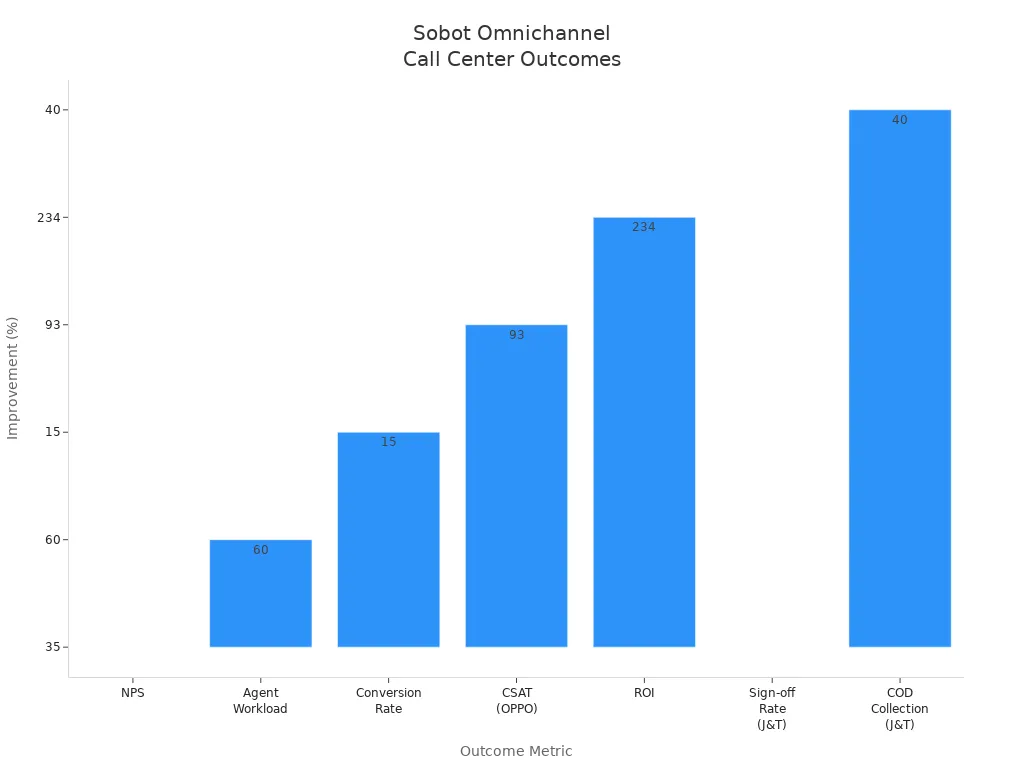
Sobot’s Omnichannel Solution does just that. It connects all your customer touchpoints into one smart platform. You can manage calls, chats, emails, and social messages from a single place. This makes it easy for your team to see every conversation and respond fast. With Sobot, you also get AI-powered tools that handle simple questions, so your agents can focus on bigger problems. Companies using Sobot have seen big results:
| Outcome Metric | Documented Improvement / Result |
|---|---|
| Net Promoter Score (NPS) | Improved by 35% |
| Agent Workload | Reduced by 60% through AI Copilot |
| Conversion Rate | Increased by 15% |
| Customer Satisfaction (CSAT) | Achieved 93% CSAT by OPPO |
| Return on Investment (ROI) | 234% ROI |
| Resolution Time | Under 1 minute resolution time |
| Customer Engagement | Enhanced across multiple channels |
| Service Availability | 24/7 service enabled via AI agents |
Tip: Start by mapping out all the channels your customers use. Then, use Sobot to connect them. This helps you answer questions faster and keeps your service consistent.
Unified Workspace
A unified workspace changes how your call center works. Instead of jumping between apps, your agents see everything in one dashboard. They can check order details, past chats, and tickets without asking other teams or searching different systems. This saves time and helps your team solve problems quickly.
When you use a unified workspace, you give your agents the tools to deliver better customer experience. They see the full story for each customer, so they don’t have to ask the same questions again. AI-powered guidance and automation help agents work faster and make fewer mistakes. You also get real-time updates and reminders, so nothing slips through the cracks.
Here’s how you can make the most of a unified workspace in your call center:
- Bring all your channels—phone, chat, email, and social—into one platform.
- Make sure agents can see customer history and notes right away.
- Use AI to suggest answers and next steps.
- Set up alerts for urgent tickets or VIP customers.
When you put everything together, your team works smarter and your customers get the help they need—fast. That’s how you build trust and keep people coming back.
Real-Time Analytics
Performance Metrics
You want to know how your call center is doing at any moment. That’s where real-time analytics comes in. With the right tools, you can see what’s happening right now and make quick decisions. This helps you boost call center performance and keep customers happy.
Here are some of the most important metrics you should track:
- Average Handle Time (AHT): Shows how long agents spend on each call. Shorter times mean more efficiency.
- First Call Resolution (FCR): Tells you how many problems get solved on the first try. Higher FCR means better customer satisfaction.
- First Response Time (FRT): Measures how fast you answer a customer’s question.
- Customer Satisfaction Score (CSAT): Direct feedback from customers after a call.
- Call Arrival Rate: Lets you see how many calls come in, so you can adjust staffing.
- Average Speed of Answer (ASA): Tracks how quickly agents pick up calls.
- Call Abandonment Rate: Shows how many customers hang up before getting help.
- Active Waiting Calls: Tells you how many people are waiting in line.
- Agent Effort Score (AES): Measures how hard agents work to solve problems.
Sobot’s real-time analytics dashboard puts all these numbers in one place. You can spot issues fast and help your team improve call center performance on the fly.
Actionable Insights
Numbers alone don’t tell the whole story. You need to turn data into action. Actionable insights help you see trends, fix problems, and plan for the future. For example, if you notice a spike in call volume during a sale, you can schedule more agents next time.
Here’s how you can use insights from real-time analytics:
- Predict busy times and adjust staffing.
- Find out which questions come up most and update your knowledge base.
- Track customer sentiment to spot pain points.
- Use dashboards to monitor agent performance and give feedback right away.
- Combine data from calls, chats, and emails for a full view of customer needs.
Sobot’s analytics tools help you do all this. You get clear reports and alerts, so you can make smart choices every day. When you act on these insights, you improve call center performance, boost customer satisfaction, and keep your team running smoothly.
Process Optimization
Workflow Automation
You want your call center to run like a well-oiled machine. Workflow automation helps you get there. By using AI and smart tools, you can automate routine tasks and free up your agents for more important work. This is one of the most effective call center improvement strategies you can use right now.
Here are some common bottlenecks that slow down call centers:
- Long wait times for customers.
- High call abandonment rates.
- Backlogs of unresolved tickets.
- Too many handoffs between agents.
- Unnecessary steps in your process.
- Repeated mistakes that waste time.
When you use workflow automation, you cut out these problems. AI tools like Sobot’s Voice/Call Center automate repetitive tasks, such as call routing and ticket assignment. This reduces human error by up to 66% and lets your agents focus on solving complex customer issues. You also see higher first call resolution rates and lower operational costs. Automated coaching and performance scoring help your team improve every day.
Tip: Start by automating simple, repetitive tasks. You’ll see faster response times and happier customers.
SOP Adherence
Standard Operating Procedures (SOPs) keep your call center running smoothly. When your team follows clear steps, you get better results. Strict SOP adherence means your agents know exactly what to do in every situation. This boosts compliance, reduces mistakes, and improves quality.
Here’s how SOPs help your call center:
- Provide step-by-step guidance for agents.
- Ensure consistent, high-quality service.
- Improve key metrics like First Call Resolution (FCR) and Customer Satisfaction (CSAT).
- Reduce Average Handle Time (AHT).
- Lower legal and financial risks by enforcing compliance.
Sobot’s unified workspace makes it easy for agents to access SOPs and knowledge bases during calls. You can track SOP compliance and set clear goals for your team. When you involve experienced agents in creating SOPs, everyone feels more confident and prepared. This is a key part of call center improvement strategies that leads to real, measurable results.
Note: Regular training and easy access to SOPs help your team stay on track and deliver top-notch service every time.
Customer Feedback
Feedback Loops
You want to know what your customers think, right? Collecting feedback is the best way to find out. When you listen to your customers, you can spot problems and fix them fast. This helps you boost customer satisfaction and keep people coming back.
Here are some smart ways to collect feedback in your call center:
- Use call scripts that match your brand’s voice to get clear and useful answers.
- Train your agents to listen for clues and ask follow-up questions. This makes customers feel heard.
- Try real-time tools like Sobot’s analytics to gather and sort feedback as soon as a call ends.
- Let live agents ask for feedback. People often share more when talking to a real person.
- Show empathy, especially if someone gives negative feedback. This builds trust.
- Call customers in different time zones to reach more people than just using online forms.
- Connect your feedback tools with your CRM. This helps you act on feedback faster.
You can also use customer satisfaction surveys after each call. These surveys help you measure how happy your customers are and spot trends. When you make feedback a normal part of your process, you create a culture where everyone wants to improve.
Tip: Make feedback easy and safe to give. When customers trust you, they share more honest thoughts.
Service Improvement
Feedback is only useful if you act on it. You want to turn those comments into real changes. This is where feedback loops help you shine. Here’s how the process works:
- Customers talk to your team by phone, chat, or email.
- They share their thoughts about the service.
- You collect this feedback using surveys, social media, or direct chats.
- Your team reviews the feedback and finds patterns.
- You make changes, like updating training or fixing call routing.
- Customers notice the improvements and respond.
- You repeat the cycle to keep getting better.
When you use feedback to guide your changes, you see big results. For example, one call center used feedback to fix call routing. They cut wait times by 45% and saw a 30% jump in customer satisfaction. That’s a huge win! You can also track key numbers like Net Promoter Score (NPS) to see if your changes work.
Sobot’s platform helps you collect, analyze, and act on feedback quickly. You can spot issues, improve first-call resolution, and boost customer satisfaction. When you focus on what customers say, you make your service better every day. This leads to faster resolution, happier customers, and a stronger business.
| Step | What You Do | Result |
|---|---|---|
| Collect Feedback | Use surveys, calls, and chats | Get real customer opinions |
| Analyze Responses | Look for common issues | Find what needs fixing |
| Take Action | Update training or processes | Improve first-call resolution |
| Measure Results | Track NPS and satisfaction scores | See if changes worked |
Note: Keep the feedback loop going. The more you listen and act, the higher your customer satisfaction will climb. 😊
Data Security
Keeping your customers’ data safe is more important than ever. In 2025, call centers face new threats every day. You need strong call center improvement strategies to protect sensitive information and keep your business running smoothly.
Compliance
You must follow strict rules when handling customer data. Regulations like GDPR, HIPAA, and PCI DSS set high standards for privacy and security. Here are some key compliance steps for call centers:
- Encrypt customer data both at rest and in transit using secure protocols like TLS and AES.
- Use role-based access controls so only the right people see sensitive data.
- Set up multi-factor authentication and run regular access audits.
- Get clear consent before recording calls and always inform customers.
- Train your team on security best practices and compliance rules.
- Run regular security audits and monitor for any issues.
- Let customers access their data and honor deletion requests quickly.
Sobot’s call center solutions help you meet these requirements. With 99.99% uptime, you can trust that your system stays available and reliable. Sobot also uses encrypted data transfer, so your customer information stays safe at every step.
Secure Systems
Cyber threats keep getting smarter. You need to stay ahead with strong call center improvement strategies. Here are some of the latest risks:
- Advanced Persistent Threats (APTs) target call centers for long-term data theft.
- Hybrid work and cloud systems make it harder to control access.
- Supply chain attacks can happen if a third-party vendor gets hacked.
- Insider threats grow as more agents work remotely.
- New regulations require you to prove your AI tools are safe and ethical.
To protect your call center, you should:
- Use end-to-end encryption for all communications.
- Monitor systems in real time for unusual activity.
- Update software and run vulnerability tests often.
- Train agents to spot phishing and follow security steps.
Sobot’s secure systems and compliance features give you peace of mind. You get a stable platform, encrypted calls, and tools to help your team follow best practices. When you focus on data security, you build trust and keep your call center running strong. 🛡️
You can boost call center customer service by using these 10 call center improvement strategies. When you focus on agent training, stress management, and personalized communication, you see higher customer satisfaction and loyalty. Sobot’s Voice/Call Center and Omnichannel Solution help you track performance and automate tasks, making every customer service moment count. Keep listening to feedback and adapting your strategy. Small changes today lead to long-term gains in customer satisfaction and trust.
FAQ
What are the fastest call center improvement strategies I can try?
You can start with workflow automation, real-time analytics, and agent training. These call center improvement strategies show results quickly. Sobot’s unified workspace helps you see changes fast. Many teams report a 30% boost in productivity within weeks.
Tip: Focus on one strategy first, then add more.
How does Sobot help with call center improvement strategies?
Sobot offers AI-powered voicebots, omnichannel support, and real-time analytics. These tools make your call center run smoother. You can track performance, automate tasks, and improve customer satisfaction. Sobot’s solutions work for many industries, including retail and finance.
Why is agent training important for call center improvement strategies?
Agent training builds skills and product knowledge. Well-trained agents solve problems faster and keep customers happy. Studies show that strong training programs can raise customer satisfaction by 20%. Sobot’s platform gives agents easy access to training materials and customer data.
Can call center improvement strategies really boost customer satisfaction?
Yes! When you use call center improvement strategies like feedback loops, SOP adherence, and omnichannel support, you see real results. For example, OPPO used Sobot’s solutions and reached a 94% positive feedback rate. Customers notice when you improve your service.
Note: Keep tracking your progress with CSAT and NPS scores.
See Also
Effective Strategies For Managing Call Center Quality
A Step-By-Step Guide To Omnichannel Contact Centers
Best Call Center Analytics Tools To Use In 2024
Comprehensive Reviews Of Leading Contact Center Solutions
Improving Call Center Efficiency Through Performance Monitoring

