Complete Guide to Call Center and Customer Service Roles


You play a vital part in call center and customer service by connecting with every customer, understanding their needs, and solving their issues quickly. Most call centers today use omnichannel support, so you handle voice, chat, email, and social media to create seamless customer experiences. High-performing teams use metrics like Net Promoter Score and Customer Satisfaction Score to measure service results. Sobot leads the way with AI-powered solutions, helping you boost customer satisfaction and efficiency. With Sobot AI, you access advanced tools that make every customer interaction smarter and faster.
Call Center Operations

What Is Call Center Operations
You manage call center operations to ensure every customer receives fast, accurate, and helpful service. Call center operations cover all activities that help you handle customer inquiries, solve problems, and deliver support across channels like phone, chat, and email. Today, you see AI agents handling up to 80% of routine customer questions. By 2027, experts predict AI will resolve almost all simple calls, leaving only 1-2% of complex cases for human agents. This shift lets you focus on higher-level customer support and oversight.
- Over half of contact centers now use conversational AI, and nearly all plan to adopt it soon.
- AI-driven call center operations have improved Net Promoter Scores by 17% and pushed first-contact resolution rates close to 95%.
- Companies save millions each year because AI calls cost less than $1, while human agent calls cost $6–$7 each.
Importance in Customer Service
Call center operations play a key role in customer service. You help customers get answers quickly, which keeps them satisfied and loyal. The table below shows how important call center operations are for customer service:
| Metric | Description | Impact on Customer Service Experience |
|---|---|---|
| Average Speed of Answer | 80% of calls answered within 30 seconds | Reduces wait times, meets customer expectations |
| Average Handle Time | Time from pick-up to resolution | Shows efficiency in solving customer issues |
| Call Abandon Rate | Should be under 5% | High rates mean poor customer satisfaction |
| Customer Retention | 40% may leave after one poor experience | Shows high stakes for call center performance |
You see that 91% of customers will not return after a bad call center experience. Most customers expect immediate help, and positive service makes them more likely to recommend your business. When you use best practices in call center operations, you improve customer satisfaction and loyalty.
Sobot’s Voice/Call Center Overview

Sobot stands out as a leader in modern call center operations. You get a stable, AI-powered platform that supports global customer service. Sobot’s Voice/Call Center product gives you smart inbound and outbound calling, intelligent IVR, and a unified workspace for agents. You can manage customer support across channels, automate routine tasks, and access real-time analytics. Sobot’s omnichannel and AI-driven approach helps you boost efficiency, reduce costs, and deliver excellent customer service. With 99.99% uptime and seamless integration, Sobot empowers you to meet every customer’s needs and improve your call center operations.
Key Roles in Call Center and Customer Service

Call center and customer service teams rely on a clear structure of roles and responsibilities. Each role focuses on specific tasks to ensure smooth operations and excellent customer experiences. When you understand these roles, you can see how every team member contributes to service quality and efficiency. Sobot’s unified workspace brings all these roles together, making it easier for you to collaborate and manage customer interactions across channels.
Agents
As a call centre agent, you are the first point of contact for customers. You answer calls, respond to chats, and solve problems. Your main responsibilities include listening to customer needs, providing accurate information, and resolving issues quickly. You also document each interaction in the system. Sobot’s unified workspace helps you by showing all customer data and conversation history in one place. This makes it easier for you to deliver fast, personalized service. With AI-powered tools, you can handle routine questions efficiently and focus on more complex customer support needs.
Tip: Use Sobot’s real-time analytics to track your performance and improve your service skills.
Supervisors
Supervisors guide small teams of agents. You monitor calls, review performance, and provide coaching. Your responsibilities include handling escalated issues, ensuring agents follow procedures, and managing schedules. You also help agents develop their skills through feedback and training. Sobot’s platform gives you access to live monitoring and call recordings, so you can support your team in real time. You can use dashboards to spot trends and address problems before they affect customer satisfaction.
- You help agents stay motivated and focused on service goals.
- You use Sobot’s unified workspace to assign tasks and track progress.
Managers
As a call center manager, you oversee supervisors and the daily operations of the call center. Your responsibilities include setting targets, managing budgets, and analyzing performance data. You make sure your team meets service standards and customer expectations. Sobot’s management tools let you view reports, monitor key metrics, and adjust workflows as needed. You can integrate Sobot with your CRM to get a full view of customer interactions. This helps you make better decisions and improve overall service delivery.
| Manager Tasks | How Sobot Helps |
|---|---|
| Set goals | Use analytics to track progress |
| Manage resources | Assign tasks in unified workspace |
| Improve performance | Access real-time data |
Directors
Directors lead at a senior level. You set the strategy for customer service and call center management. Your responsibilities include defining long-term goals, aligning service with business objectives, and leading change initiatives. You work closely with managers to ensure the team delivers high-quality service. Sobot’s analytics and reporting features give you insights into trends and customer needs. You use this data to shape strategy and drive continuous improvement.
Note: Directors often use Sobot’s performance dashboards to present results to executives and stakeholders.
Supporting Roles
Supporting roles include trainers, resource planning analysts, HR, and operations managers. You provide specialized support to keep the call center running smoothly. Trainers help agents learn new skills. Resource planning analysts forecast call volumes and schedule staff. HR manages hiring and employee well-being. Operations managers oversee technology and process improvements. Sobot’s unified workspace connects all these roles, making it easy to share information and coordinate efforts. With AI and automation, you can streamline tasks and focus on delivering better service.
- 88% of call centers now use AI-powered solutions to support specialized roles and improve customer experience.
- Specialized roles help reduce customer defections and increase satisfaction by aligning teams around customer needs.
When you use Sobot’s platform, you empower every role to work together for better customer service and efficient call center management.
Responsibilities and Skills
Core Responsibilities
You play a crucial role in shaping the customer experience in every interaction. As a call centre agent, you handle a wide range of responsibilities that go beyond answering calls. You respond to chats, emails, and social media messages, ensuring each customer receives timely and accurate support. Your responsibilities include documenting customer interactions, updating records, and following up on unresolved issues. Supervisors and managers oversee team performance, set targets, and resolve escalated cases. Directors focus on strategy and long-term goals, while supporting roles like trainers and analysts help maintain smooth operations.
Recent years have brought significant changes to these responsibilities. You now work in virtual or hybrid environments, using cloud-based systems and AI tools. Your responsibilities have expanded to include empathy, cultural sensitivity, and resilience. You use data-driven decision-making, relying on metrics like Average Handling Time and Net Promoter Score to guide your actions. Automation supports you by handling routine tasks, allowing you to focus on complex customer needs. Organizations also prioritize your well-being, offering support programs to help you adapt to new challenges.
Studies show that structured roles and responsibilities improve team coordination and operational outcomes. When you have clear responsibilities and communication tools, you work more efficiently and deliver better results. Teams with defined structures experience higher predictability and sustained performance, which leads to a better customer experience.
Tip: Use Sobot’s unified workspace to manage all your responsibilities in one place, from tracking customer interactions to accessing real-time analytics.
Essential Skills
You need a mix of soft and hard skills to excel as a call centre agent. Communication stands at the top of the list. You must listen actively, speak clearly, and adapt your style to each customer. Empathy helps you understand customer emotions and build trust. Problem-solving skills allow you to resolve issues quickly and efficiently. Patience and adaptability help you stay calm during high-pressure situations.
Technical proficiency is also essential. You must navigate call center software, manage customer databases, and use analytics dashboards. Being organized helps you handle multiple tasks and keep accurate records. As you advance, leadership and operational knowledge become more important, especially if you move into supervisory or management roles.
Here is a table summarizing essential skills for different roles:
| Role | Essential Skills |
|---|---|
| Call Centre Agent | Communication, empathy, active listening, technical proficiency, organization |
| Supervisor | Coaching, performance monitoring, conflict resolution, adaptability |
| Manager | Data analysis, resource management, leadership, decision-making |
| Director | Strategic thinking, trend analysis, change management, business alignment |
| Supporting Roles | Training, forecasting, HR management, process improvement |
Note: Sobot’s platform supports you with AI-powered tools that enhance communication and streamline technical tasks, making it easier to deliver a great customer experience.
Sobot’s Training and Support
You benefit from Sobot’s comprehensive agent training resources and ongoing support. Sobot provides onboarding programs that teach you how to use the unified workspace, manage customer interactions, and leverage AI features. You access tutorials, FAQs, and live support to solve technical issues quickly. Supervisors and managers use Sobot’s analytics to identify skill gaps and recommend targeted training.
Sobot’s training covers both soft and hard skills. You learn how to communicate effectively, handle difficult situations, and use advanced features like intelligent IVR and AI-powered chatbots. Regular updates keep you informed about new tools and best practices. Sobot’s support team remains available to answer your questions and help you maximize your performance.
Pro Tip: Take advantage of Sobot’s agent training modules to improve your skills and deliver a better customer experience every day.
Role Hierarchy and Collaboration
Typical Structure
You find many types of structures in call center operations. Each structure shapes how you work and how teams interact. Here are some common models:
- Vertical structure: You see executives, managers, supervisors, and agents in clear layers. This model gives you strong oversight and accountability.
- Horizontal structure: Teams work with fewer layers. You get more flexibility and faster decisions.
- Hybrid structure: Combines vertical and horizontal elements. You balance control with agility.
- Functional structure: Groups focus on sales, customer service, or technical support. You specialize in your area.
- Geographical structure: Teams serve customers in different regions. You adapt to local needs.
- Customer-centric structure: You group agents by customer type, such as business or retail.
Most call center operations include agents, senior agents, team leaders, call centre managers, and directors. Specialized departments like training, quality assurance, and technical support support your daily operations. You see this structure in both large and small organizations.
Note: The right structure depends on your company size, customer needs, and technology. Sobot’s unified workspace adapts to any structure, making management easier.
How Roles Interact
You rely on strong collaboration to deliver great customer service. Agents handle customer inquiries and solve problems. Senior agents support training and help with complex issues. Team leaders guide agents and monitor daily operations. Call centre managers oversee teams, set targets, and manage resources. Directors set strategy and align operations with business goals.
When you understand each role, you avoid confusion and work more efficiently. Clear workflows and open communication channels help you resolve customer issues faster. Research shows that ongoing team interactions and adaptive functioning improve quality and productivity. You see better results when everyone knows their responsibilities and communicates openly.
- Defined roles reduce duplication of effort.
- Specialized groups enable quick problem-solving.
- Open channels let you share information and support each other.
Tip: Use Sobot’s real-time dashboards to monitor team performance and keep everyone aligned.
Sobot Customer Story: Agilent
Agilent, a leader in life sciences, improved its call center operations by partnering with Sobot. You can learn from their experience. Agilent faced high volumes of customer inquiries and needed both speed and accuracy. By using Sobot’s omnichannel workbench and AI-powered chatbot, Agilent increased efficiency sixfold and reduced costs by 25%. The solution allowed agents to focus on complex cases while the chatbot handled routine questions. Agilent achieved a 95% customer satisfaction score.
Sobot’s unified workspace helped Agilent’s teams collaborate across roles. Managers tracked performance with analytics. Agents accessed customer data quickly. Directors used insights to guide strategy. This real-world example shows how Sobot supports every level of call center management and drives better customer outcomes.
Learn more about Agilent’s success with Sobot here.
Best Practices for Call Center and Customer Service
Performance Management
You drive call center performance by focusing on clear goals and continuous improvement. Effective call center management starts with a quality management framework. This framework helps you make data-driven decisions about agent performance, training, and process optimization. You track key metrics like Average Handle Time, First Call Resolution, and Customer Satisfaction Score. Regular call evaluations ensure agents meet your brand standards and deliver a consistent customer experience.
You see real-world success when you design scorecards focused on customer outcomes and involve agents in defining quality. Companies like Discover Card have saved millions by using speech analytics to identify pain points. Sobot’s analytics tools let you monitor trends, coach agents, and connect quality evaluations directly to training. This approach boosts performance, increases satisfaction, and supports continuous improvement in every customer interaction.
Technology Integration
You elevate customer experience by integrating advanced technology into your service operations. AI and omnichannel solutions automate routine tasks, reduce errors, and improve efficiency. For example, companies using AI-powered platforms have achieved 100% call automation, reduced manpower needs by 90%, and cut operational costs by 60%. Customer satisfaction scores rise by 27% when you use these tools, and agents can focus on complex customer interactions.
Sobot’s unified workspace brings together voice, chat, email, and social media, giving agents a complete view of every customer. Real-time analytics and AI-driven insights help you resolve issues faster and improve call center performance. Industry reports confirm that AI and analytics drive measurable gains in compliance, quality, and agent performance, making technology integration a best practice for effective call center management.
| Metric | Improvement |
|---|---|
| Call Automation | 100% |
| Manpower Requirement | 90% reduction |
| Customer Satisfaction Score | 27% increase |
| Operational Costs | 60% reduction |
Employee Engagement
You create a high-performing team by investing in employee engagement. Engaged agents deliver better customer service, resolve issues faster, and stay with your company longer. Research shows that engaged employees are 12% more productive and 8 times more likely to remain with your organization. When you recognize achievements, offer growth opportunities, and maintain open communication, you improve both performance and satisfaction.
Sobot supports engagement with training modules, real-time feedback, and a collaborative workspace. You empower agents to take ownership of their performance and contribute to a positive customer experience. High engagement leads to lower turnover, higher customer satisfaction, and stronger call center performance.
Tip: Use Sobot’s analytics to identify top-performing agents and share best practices across your team.
Challenges and Solutions
Common Challenges
You face many challenges in call center operations today. High agent burnout affects 74% of staff, leading to attrition rates between 30% and 40% over the past two years. Compliance grows more complex as regulations change, such as the FCC’s closure of the ‘Lead Gen Loophole.’ Customer expectations rise each year, and call blocking technology makes it harder to reach people. Many centers struggle to scale because inefficiencies slow down operations and reduce agent productivity. These issues impact your ability to deliver a great experience, maintain compliance, and achieve growth. Low contact rates and high turnover can hurt both customer satisfaction and call center performance.
Sobot’s Solutions
You can overcome these challenges with Sobot’s intelligent solutions. Sobot’s unified workspace streamlines operations by bringing all channels—voice, chat, email, and social media—into one platform. AI-powered automation handles routine tasks, reducing agent workload and burnout. Real-time analytics give you deep insights into performance, helping you spot trends and address issues quickly. Sobot’s smart IVR and call routing ensure customers reach the right agent fast, improving their experience. Secure integration with your CRM and global telephony support help you scale operations efficiently. With Sobot, you boost agent productivity, meet compliance needs, and deliver consistent, high-quality service.
Sobot’s platform helps you reduce average handle time, increase first call resolution, and improve overall performance across every customer interaction.
Continuous Improvement
You drive continuous improvement by tracking key metrics and adapting your strategies. Focus on first call resolution, average handling time, and customer satisfaction scores to measure your success. Regular training and feedback help agents stay sharp and motivated. Use AI and analytics to monitor real-time data and identify areas for growth. Customer feedback tools reveal service gaps, while cross-team collaboration ensures a holistic approach to performance enhancement. By benchmarking against industry standards and updating training programs, you keep your operations agile and your customer experience strong.
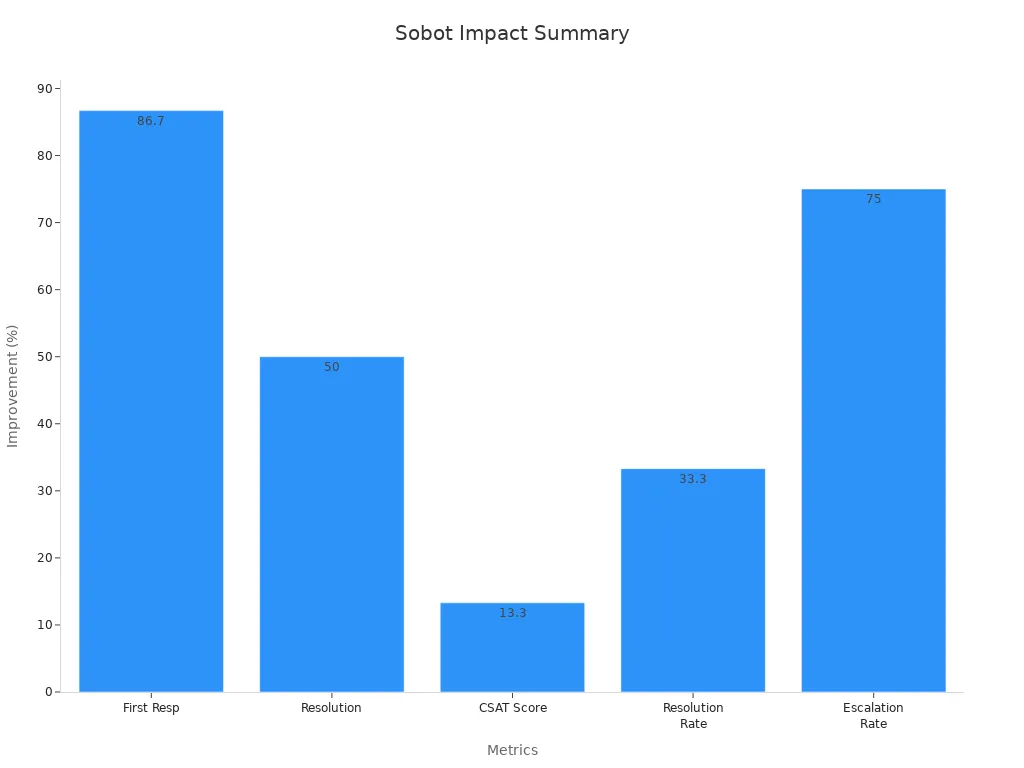
Understanding each role in call center and customer service helps you deliver better results and drive customer satisfaction. Sobot’s AI-powered platform empowers your team to work smarter and faster. You see real gains in customer satisfaction, with companies like OPPO reaching a 93% CSAT score and J&T Express boosting sign-off rates by 35%. Sobot’s solutions reduce agent workload by 60% and cut resolution time to under one minute.
Explore Sobot’s offerings to improve satisfaction and transform your customer service operations.
FAQ
What are the main roles in a call center and customer service team?
You find agents, supervisors, managers, directors, and supporting roles in most call center and customer service teams. Each role focuses on specific tasks. Sobot’s unified workspace helps you manage these roles efficiently and improves collaboration across your team.
How does Sobot improve call center efficiency?
Sobot uses AI-powered automation and a unified workspace to streamline your call center operations. You can reduce average handle time by up to 60% and boost customer satisfaction scores. Sobot’s analytics help you track performance and make data-driven decisions.
Why is omnichannel support important in customer service?
Omnichannel support lets you help customers on voice, chat, email, and social media. You provide a seamless experience. Sobot’s omnichannel solution increases productivity by 30% and helps you deliver consistent service across every channel. Learn more.
What skills do you need to succeed in a call center role?
You need strong communication, empathy, and technical skills. Problem-solving and adaptability help you handle customer issues. Sobot’s training modules teach you these skills and keep you updated on best practices in customer service.
Can Sobot integrate with my existing systems?
Yes, Sobot offers seamless integration with CRM and technology management systems. You can connect your call center and customer service tools easily. Sobot supports global telephony and encrypted data transfer for secure, efficient operations.
Tip: Visit Sobot’s website for more details on integration and product features.
See Also
Comprehensive Overview Of Quality Management Systems In Call Centers
Key Responsibilities And Skills Of IT Call Center Agents
Essential Insights Into Omnichannel Software For Call Centers
Top Strategies For Ensuring Quality In Call Center Operations
Step-By-Step Approach To Deploy Omnichannel Contact Center Systems

