Call Center and Customer Care Explained Against Contact Center Options


Call center and customer care demand clear communication and rapid solutions. The Sobot call center specializes in handling voice calls efficiently, while its comprehensive contact center supports customers across multiple channels, including chat and social media. Businesses worldwide are shifting from traditional call centers to advanced contact centers powered by Sobot AI, enhancing customer satisfaction significantly. The chart below illustrates this trend across various regions:
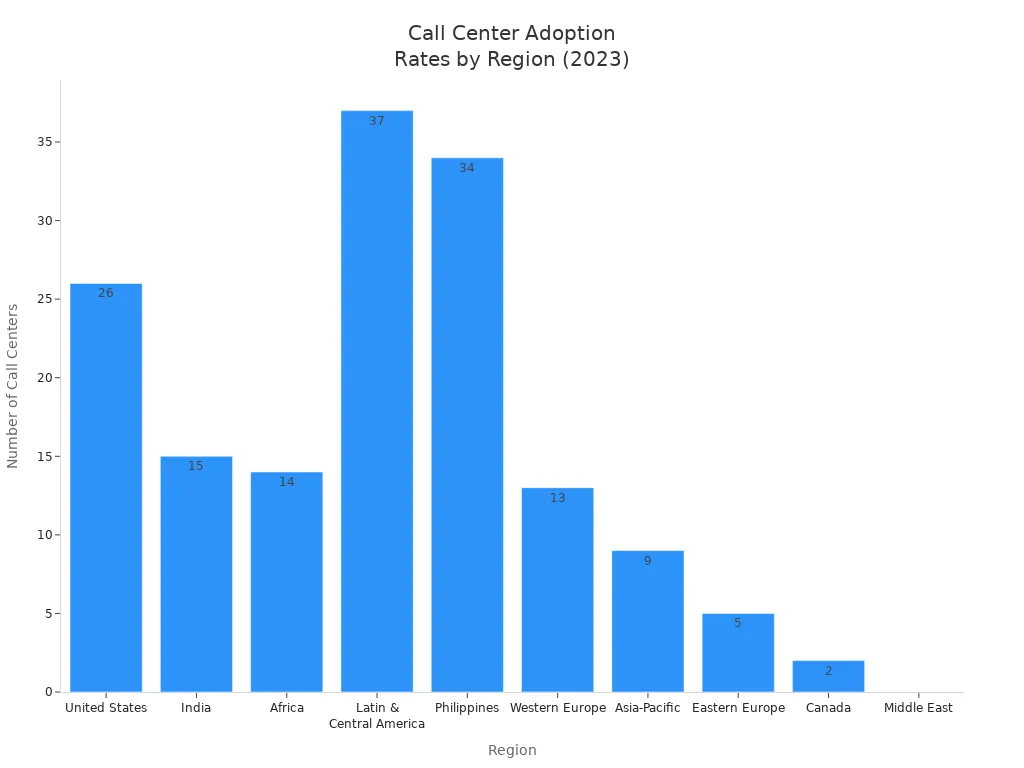
Deciding between a call center and an omnichannel contact center depends on customer expectations and business requirements. Sobot provides both solutions, empowering companies to deliver outstanding call center and customer care experiences.
Call Center and Contact Center Basics

Call Center Defined
A call center is a centralized hub where agents handle customer interactions, mainly through phone calls. Companies use call center services to manage both inbound call centers, which receive customer inquiries, and outbound call center operations, which reach out to customers for sales or support. The core functions of a call center include:
- Clear objectives and strategy: Call centers set goals like improving customer satisfaction or increasing first-call resolution rates.
- Technology integration: Modern call centers use CRM systems, automated call routing, and workforce management tools to streamline operations.
- Data analysis and continuous improvement: Managers monitor key metrics such as average response time and customer satisfaction to refine processes.
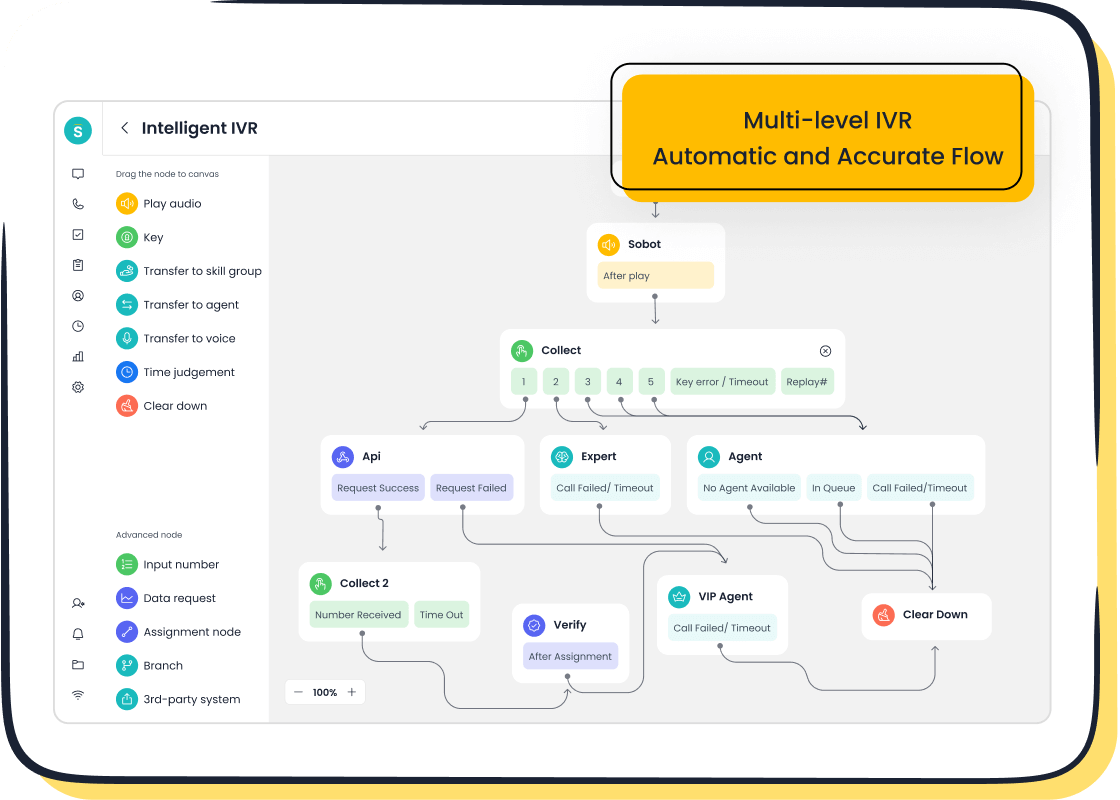
Sobot provides advanced call center solutions that support global telephony, intelligent IVR, and AI-powered voicebots, ensuring reliable and efficient customer service.
Contact Center Defined
A contact center expands on the call center model by supporting multiple communication channels. Customers can reach a contact center through phone, email, live chat, SMS, social media, and even video chat. The customer service contact center integrates tools like CRM, analytics, and AI automation to deliver seamless experiences. Key features include:
- Call management systems
- CRM integration for unified customer data
- Analytics and reporting
- Workforce and quality management
- Omnichannel communication capabilities
The table below summarizes the primary features and channels:
| Primary Features | Communication Channels |
|---|---|
| Automatic Call Distribution (ACD) | Phone |
| Interactive Voice Response (IVR) | |
| Omnichannel capabilities | Live Chat |
| AI and automation | Social Media |
| Reporting and analytics | SMS/Text Messaging |
| CRM integration | Video Chat |
Sobot’s contact center platform unifies all these channels, helping businesses deliver consistent and personalized support.
Key Differences
The main differences between a call center and a contact center involve the range of channels, technology, and customer experience. Call centers focus on phone-based interactions, while contact centers offer multichannel support. Contact centers use advanced technology stacks, including digital behavior analytics and unified CRM systems, to provide a 360-degree view of customers. Agents in a contact center multitask across platforms, delivering proactive and personalized service. Sobot stands out by offering both call center and contact center solutions, allowing businesses to choose the best fit for their needs and customers.
Omnichannel Communication with Sobot
Channels Supported
Sobot’s omnichannel contact center brings together all major communication channels into one seamless platform. Customers can reach businesses through voice calls, live chat, email, social media, and WhatsApp. The platform also supports messaging apps, SMS, and web chat, ensuring that customer support teams never miss an inquiry. Sobot’s integration of these channels allows agents to manage customer communications from a single interface, making it easier to deliver consistent service. The system includes features such as intelligent call routing, IVR, and WhatsApp Business API for bulk messaging and secure interactions. Multi-language support and centralized processing help businesses serve global customers efficiently.
Tip: Integrating all channels into one platform helps companies improve first-contact resolution rates by up to 25%.
Unified Workspace
A unified workspace is at the heart of Sobot’s cloud contact center. Agents access customer profiles, interaction history, and knowledge bases from a single dashboard. This setup reduces the need for agents to switch between applications, which increases productivity and accuracy. The unified workspace preserves customer context across channels, so agents can continue conversations without losing information. This approach streamlines workflows and minimizes training time for new agents. As a result, customer support teams resolve issues faster and provide more personalized service.
AI and Automation
Sobot leverages intelligent automation and advanced AI to transform customer support. The platform uses automation technology to handle routine queries, freeing agents to focus on complex issues. AI-powered chatbots, enhanced by ChatGPT, provide 24/7 support and integrate with FAQs and knowledge bases. Intelligent automation improves agent productivity by 30% and reduces average handling time by 25%. Companies also see a 40% reduction in quality monitoring costs and a 50% drop in compliance risks.
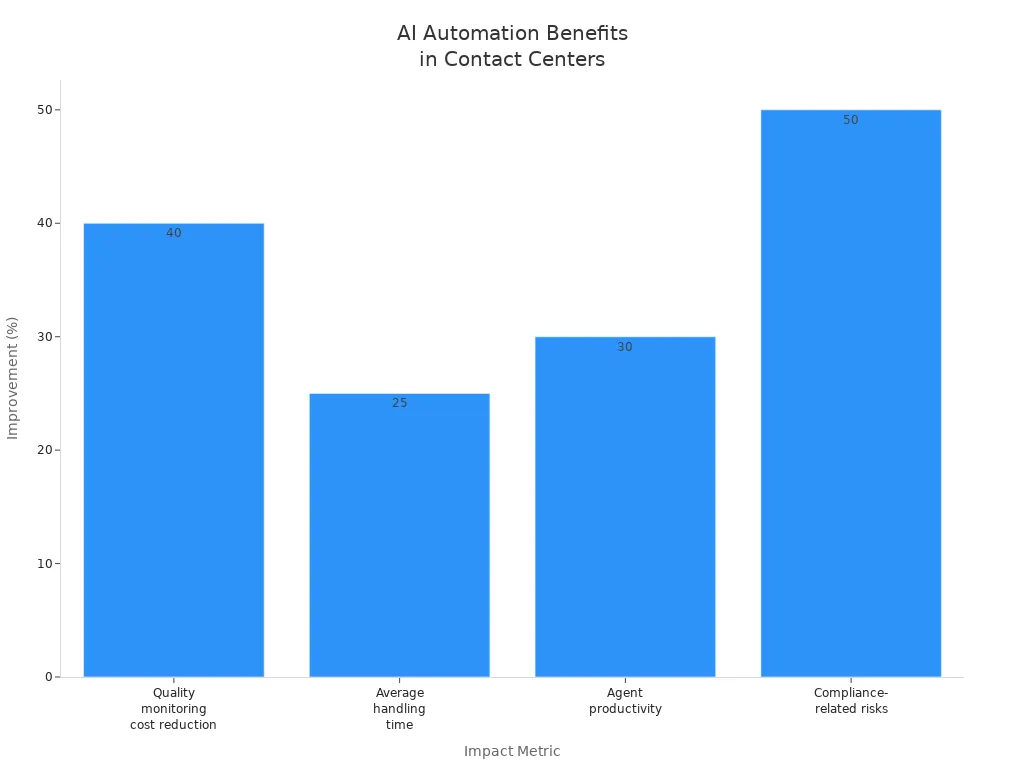
Sobot’s cloud contact center delivers measurable benefits, helping businesses enhance customer experience and operational efficiency.
Call Center and Customer Care Impact
Customer Experience
Call center and customer care play a vital role in shaping customer experience. Customers expect quick answers, personalized service, and easy resolution of complaints. In a call center, operational metrics such as Average Speed of Answer (ASA) and First Call Resolution (FCR) directly affect customer satisfaction. Lower wait times make customers happier, while resolving issues on the first call reduces frustration. These factors influence both CSAT and Net Promoter Score (NPS), which measure immediate satisfaction and long-term loyalty.
Contact centers expand these benefits by supporting multiple channels. Customers can reach support through voice, email, chat, or social media, making interactions more convenient. Multichannel support allows agents to address customer complaints faster and more efficiently. Contact centers also track key performance indicators (KPIs) such as Customer Effort Score (CES), Service Level, and Abandonment Rate. These metrics help businesses monitor and improve customer interactions, leading to higher retention rates.
Note: Customers feel valued when their complaints are resolved quickly and with empathy. Contact centers with omnichannel capabilities meet rising expectations for convenience and personalization.
Personalized service and seamless communication drive customer loyalty. Contact centers use AI and analytics to predict churn risks and proactively engage customers. This approach helps businesses retain customers and build lasting relationships. While call centers focus on voice interactions, contact centers offer flexibility and consistency across all touchpoints.
Agent Efficiency
Agent efficiency determines the success of call center and customer care operations. Efficient agents resolve customer complaints quickly, reduce wait times, and improve overall customer satisfaction. Traditional call centers often struggle with fragmented customer journeys, long hold times, and frequent call transfers. These issues cause agent frustration and burnout.
Contact centers address these pain points by integrating multiple channels and consolidating customer data. Agents access real-time insights, enabling them to personalize interactions and resolve issues faster. AI-powered call routing reduces Average Handle Time (AHT) by 15%, increasing agent productivity by up to 20%. Centralized knowledge bases improve productivity by 25%, providing immediate access to updated procedures and answers.
- Automation of repetitive tasks leads to 89% of agents feeling more fulfilled and 84% happier.
- Real-time analytics enable supervisors to reduce handle time by 40% through faster interventions.
- Efficient call routing reduces transfer rates by up to 90%, keeping agents focused on customer interactions.
- AI-driven tools allow agents to concentrate on complex tasks, improving first-contact resolution.
Contact centers also support agent well-being by reducing stress and improving job satisfaction. Standardized customer interactions and real-time feedback help agents deliver consistent service. Data-driven decisions optimize scheduling and workflows, further enhancing efficiency.
Real-World Example: Samsung & Sobot
Samsung, a global leader in technology, faced the challenge of managing a high volume of customer complaints and inquiries across multiple channels. The company needed a robust platform to unify customer interactions and improve service quality. Samsung partnered with Sobot to implement an all-in-one contact center solution.
Sobot’s platform integrated voice, chat, email, and social media into a single workspace. Agents accessed comprehensive customer profiles and interaction history, enabling them to resolve complaints without repetitive questioning. The solution connected with Samsung’s internal systems, such as ERP and ticketing, ensuring data connectivity and team collaboration.
| Impact Area | Before Sobot Implementation | After Sobot Implementation |
|---|---|---|
| Customer Satisfaction | 85% | 97% |
| Agent Efficiency | Baseline | +30% |
| First Contact Resolution | Moderate | High |
| Channel Integration | Fragmented | Unified |
Samsung saw a 30% increase in agent efficiency and achieved a customer satisfaction rate of 97%. The integration of data systems allowed agents to access complete customer histories, reducing repetitive interactions and improving service quality. VIP customers received customized video support, further strengthening loyalty.
Tip: Unified contact center solutions like Sobot help businesses resolve customer complaints faster and improve both customer experience and agent efficiency.
Samsung’s experience demonstrates the value of advanced contact center technology. By leveraging Sobot’s omnichannel platform, Samsung transformed its call center and customer care operations, delivering seamless support and building stronger relationships with customers.
Choosing Between Call Center and Contact Center
Business Needs
Every business has unique requirements for customer service. Some companies need to handle high volumes of voice calls, while others must manage interactions across multiple channels. Decision-makers should start by identifying their main service types, such as inbound support, outbound sales, or specialized multilingual assistance. The following table outlines key factors to consider when choosing between a call center and a contact center:
| Factor | Explanation |
|---|---|
| Scalability | Ability to adapt to market changes and seasonal spikes. |
| Technology & Infrastructure | Integration with CRM, automation, and AI tools. |
| Agent Training & Support | Ongoing training and resources for agents. |
| Data Security & Compliance | Protection of customer data and regulatory adherence. |
| Performance Analytics | Advanced reporting to track and improve service. |
| Customization & Flexibility | Tailoring services to business needs and branding. |
| Multilingual Support | Serving customers in multiple languages. |
Sobot’s solutions fit a wide range of industries, including retail, finance, gaming, and enterprise services. The platform allows businesses to customize workflows and communication channels to match their brand and customer expectations.
Scalability
Scalability is essential for growing businesses. Companies must ensure their customer service operations can handle fluctuating demand, especially during peak seasons or rapid growth. Sobot’s cloud-based contact center offers flexible capacity, allowing businesses to scale up or down without major investments. The platform supports global operations, multilingual service, and seamless integration with existing systems. This flexibility helps companies maintain high-quality service as they expand into new markets or launch new products.
Tip: Scalable solutions help businesses avoid service disruptions and maintain customer satisfaction during busy periods.
Cost and ROI
Cost and return on investment play a major role in the decision-making process. The average cost per live agent call ranges from $6 to $12, while self-service options can reduce this to as low as $0.10 per transaction. Investments in automation and AI can lower call handling costs by up to 80%, with ROI often realized within 12 to 18 months. Omnichannel contact centers may have higher initial costs, but they improve efficiency and first contact resolution, leading to long-term savings.
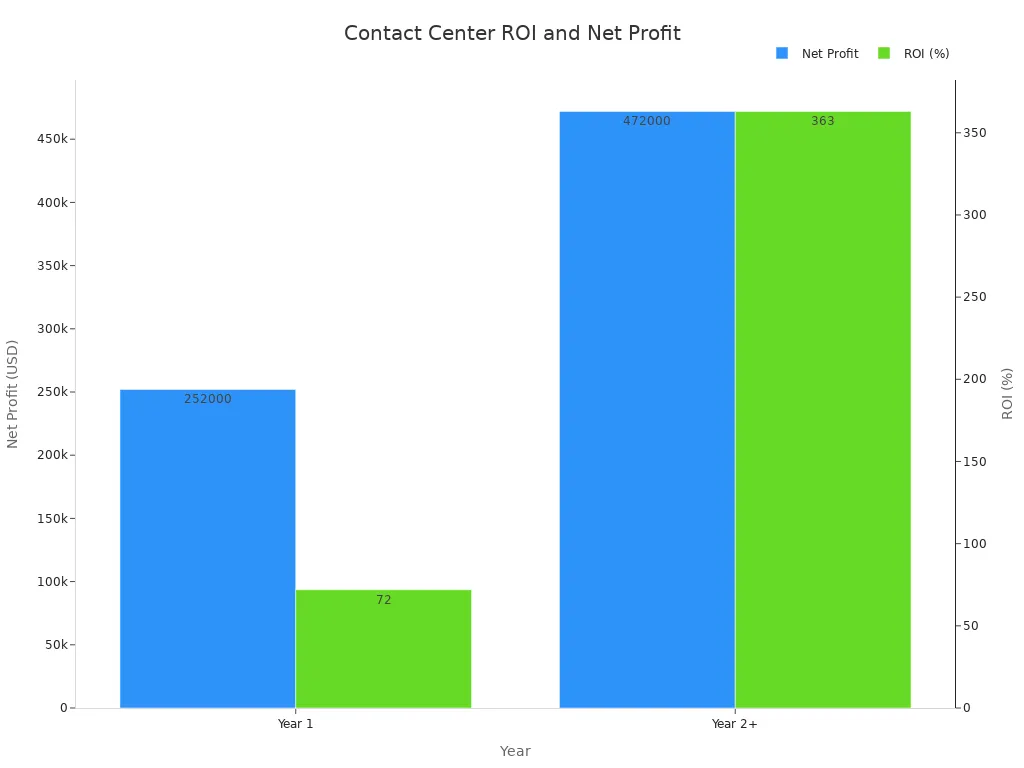
Sobot’s flexible pricing and advanced technology help businesses maximize value and achieve strong ROI, regardless of industry or company size.
Future Trends in Customer Experience
Digital Transformation
Digital transformation is reshaping how companies interact with customers. Businesses now rely on cloud-based platforms to support hybrid work models and reduce operational costs. Omnichannel solutions unify customer experiences, connecting every touchpoint and maintaining context throughout the journey. AI and automation streamline routine tasks, enabling agents to focus on complex interactions. Advanced conversation analytics convert customer interactions into actionable insights, helping companies improve feedback implementation and meet evolving expectations for recognition and personalization. Companies balance automation with human empathy, focusing on agent wellbeing and ensuring security and compliance. The global contact center market is projected to grow at a compound annual growth rate of 14.59% from 2024 to 2031, driven by technological advancements such as AI, machine learning, and cloud-based solutions.
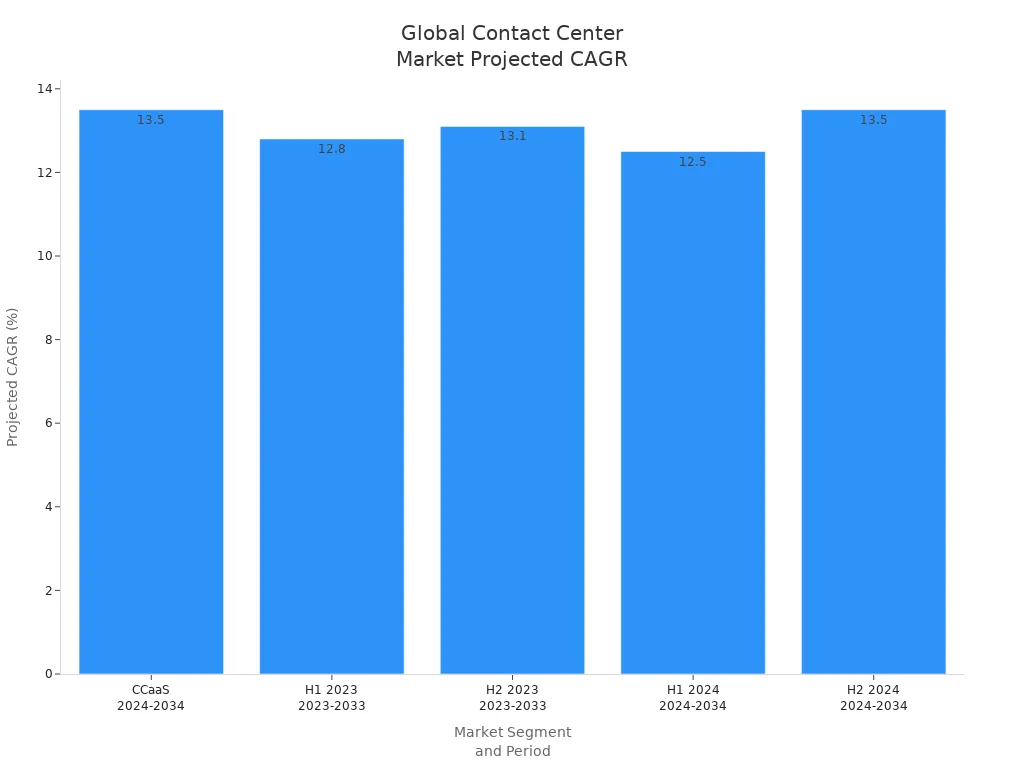
Digital transformation enables centralized data collection and analysis, improving operational agility and customer satisfaction. Companies move away from legacy systems to integrated, data-driven platforms that support seamless, personalized customer experiences.
AI and Self-Service
Artificial intelligence is transforming customer service delivery in the modern contact center. AI enables omnichannel self-service by linking customer journeys across platforms and routing customers to preferred channels. Virtual agents handle common requests, such as password resets and order status, reducing agent workload. Real-time AI support provides agents with live coaching, automatic call summaries, and customer context, improving resolution speed and quality. AI-driven workforce optimization aligns staffing with demand, reducing wait times and overtime costs. Sentiment monitoring allows early escalation, improving customer experience.
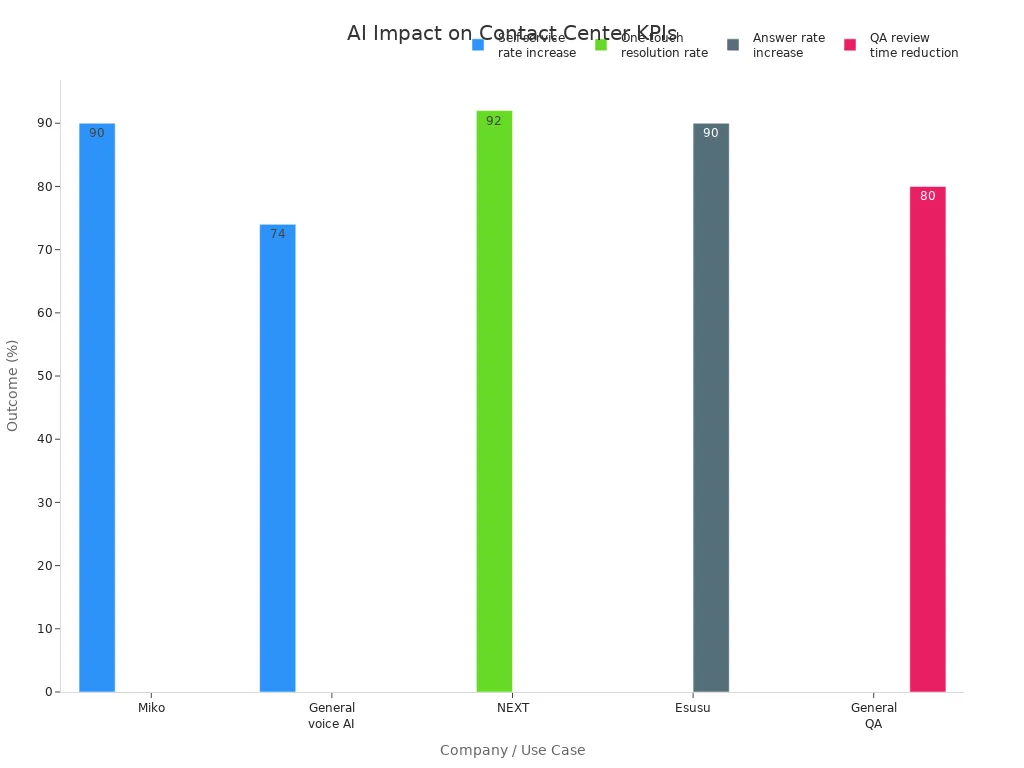
| Company | AI Use Case | Measurable Outcomes |
|---|---|---|
| Miko | AI-powered self-service and ticket automation | Self-service rate increased from 75% to over 90%, reducing tickets needing human agents |
| Esusu | AI consolidation of support tools and AI agents | 90% increase in answer rate, improved workflow efficiency |
| NEXT | AI implementation for contact center operations | 92% one-touch resolution rate, 15% reduction in average handling time |
| General | AI agents handling up to 80% of requests | Faster, accurate responses freeing human agents for complex tasks |
| General | AI-powered voice and NLP | Improved call response times, 74% of consumers report better experience with voice AI |
| General | Intelligent routing with machine learning | Reduced transfers, increased first-contact resolution, scalable service quality |
| General | AI-driven quality assurance | 80% reduction in QA review time, consistent high-quality support |
| General | AI workforce management | Reduced overtime costs and wait times through predictive staffing |
AI adoption in contact centers delivers measurable improvements, including higher self-service rates, faster resolution, and increased scalability. Companies using AI report a 304% ROI over three years, improved first-call resolution, and shorter handling times.
Sobot’s Vision
Sobot’s vision centers on leveraging AI-powered customer service tools to automate repetitive tasks, improve productivity, and enhance decision-making. Sobot automates tasks and saves up to 2.5 billion hours annually, supporting multichannel customer journey management. By 2025, AI is projected to handle 95% of all customer interactions, including voice and text. Nearly two-thirds of senior executives identify AI and predictive analytics as primary contributors to growth. Sobot aligns with industry priorities by establishing dedicated AI teams, adopting scalable cloud-based AI solutions, and prioritizing data privacy and ethical AI use. The company balances automation with human oversight, ensuring customer engagement remains empathetic and secure.
Sobot offers AI-powered tools that reduce resolution times and staffing needs. Approximately 80% of customers who interact with AI-powered customer service report positive experiences. The chatbot market is expected to grow by $1.34 billion in 2025, driven by advancements in natural language processing and machine learning. Voice commerce is projected to reach $40 billion in sales by 2025, with 30% of online purchases made through voice assistants. Visual AI technologies, such as visual search and facial recognition, are becoming mainstream, with 80% of customers expecting to use visual search by 2025.
Note: Sobot’s digital first omnichannel contact center supports secure, scalable, and personalized customer engagement, preparing businesses for the next wave of transformation in customer experience.
Call centers focus on voice calls, while contact centers support multiple channels for customer care. Omnichannel solutions deliver seamless experiences, improve satisfaction, and boost operational efficiency. Sobot’s platform uses AI and unified workspaces to help businesses meet rising expectations.
To choose the right solution, companies should:
- Assess customer communication habits.
- Evaluate call flow complexity.
- Prepare for scaling and train staff for omnichannel support.
Future trends highlight the value of integrated, AI-powered customer care for lasting success.
FAQ
What is the main difference between a call center and a contact center?
A call center handles only voice calls. A contact center manages customer interactions across multiple channels, such as phone, chat, email, and social media. Sobot offers both solutions to fit different business needs.
How does Sobot improve customer care?
Sobot unifies all communication channels into one platform. Agents access customer data and history in a single workspace. This setup helps resolve issues faster and improves customer satisfaction.
Can Sobot integrate with existing business systems?
Yes. Sobot integrates easily with CRM, ERP, and ticketing systems. This integration ensures agents have up-to-date customer information and can deliver personalized service.
Is Sobot’s platform secure and reliable?
Sobot provides 99.99% uptime and uses encrypted data transfer. The platform supports global operations and meets high standards for data security and compliance.
What industries benefit most from Sobot’s solutions?
Retail, finance, gaming, education, and enterprise services see strong results with Sobot. The platform adapts to different industries, helping companies improve customer care and operational efficiency.
See Also
Best Contact Center Platforms Evaluated For The Year 2024
Leading Cloud-Based Contact Center Services Rated In 2024
Effective Strategies For Managing Call Center Quality Standards
Comprehensive Overview Of Omnichannel Software For Call Centers

