Improving Call Center Agent Performance with a Structured Plan

You can transform your team by using a structured call center agent performance improvement plan. When you set clear performance expectations and use Sobot’s voice, chatbot, and ticketing tools, you give managers the power to boost results and help agents grow. Check out these key metrics that track your progress:
| Metric | Description |
|---|---|
| Customer Satisfaction Score | Measures customer satisfaction after interactions, indicating overall service quality. |
| First Call Resolution | Indicates the percentage of calls resolved on the first contact, reflecting efficiency. |
| Average Handling Time | Measures the average duration of calls, impacting operational efficiency and customer experience. |
| Net Promoter Score | Gauges customer loyalty and likelihood to recommend the service, linking to overall satisfaction. |
| Customer Effort Score | Assesses how easy it is for customers to get their issues resolved, influencing satisfaction. |
When you build a plan, you help agents succeed, improve retention, and create more satisfied customers.
What Is a Performance Improvement Plan?
Defining a Call Center Performance Improvement Plan
A call center performance improvement plan gives you a clear path to help agents grow and reach their goals. You use this plan to address gaps in performance and set a standard for success. The plan includes several important parts that guide you and your team. Here is a table that shows the main components of a call center performance improvement plan:
| Component | Description |
|---|---|
| Employee information | Details about the employee involved in the PIP. |
| Reason for the PIP | Specific performance issues supported by data. |
| Performance expectations table | A table outlining current performance, expected standards, and needed improvements. |
| Improvement action plan | Specific actions to be taken, responsibilities, and deadlines. |
| Monitoring and evaluation | Methods to track progress, including QA reviews and meetings. |
| Expected outcomes and consequences | Outcomes based on whether goals are met or not. |
| Acknowledgment and signatures | Space for employee comments and signatures from involved parties. |
You use a call center performance improvement plan to make expectations clear. You show agents where they stand and what they need to do. This plan helps you track progress and keep everyone accountable. You can use Sobot’s analytics and unified workspace to collect data and monitor each step.
When to Use a Performance Improvement Plan
You should use a call center performance improvement plan when you want to boost agent performance and align results with business goals. Here are some key times to start a plan:
- You see gaps in key metrics like customer satisfaction or first call resolution.
- You want to set SMART goals for agents and track their progress.
- You need to address ongoing performance issues with clear actions.
- You want to engage agents in their own development and motivate them.
- You aim to keep your improvement process strategic and data-driven.
A call center performance improvement plan works best when you use industry benchmarks to set targets. You can compare your team’s results to these benchmarks and adjust your plan as needed. This approach keeps your goals realistic and helps you measure success. By using a call center performance improvement plan, you create a culture of growth and accountability in your contact center.
Setting Performance Expectations for Agents
Key Metrics in Call Centers
You need clear standards to help your team succeed. When you set performance expectations, you give agents a target to reach. The most important metrics in a call center show how well agents serve customers and how they help your business grow. Here is a table that explains the key metrics and how they connect to customer satisfaction:
| Metric | Description | Correlation with Customer Satisfaction |
|---|---|---|
| First Call Resolution (FCR) | Measures the percentage of customer issues resolved during the first contact | Higher FCR typically indicates better customer experiences. |
| Customer Satisfaction (CSAT) | Quantifies customer satisfaction with service interactions | Directly reflects customer perception of service quality. |
| Net Promoter Score (NPS) | Measures customer loyalty and likelihood to recommend the service | High NPS scores correlate with long-term customer retention. |
| Average Handle Time (AHT) | Total time spent on customer interactions | Lower AHT often leads to higher FCR and better service. |
Tip: High-performing call centers focus on First Call Resolution and Customer Satisfaction. These metrics link directly to happier customers and better results.
You can also improve these numbers with regular training. Studies show that training can boost FCR by up to 25%. This means fewer repeat calls and lower costs for your business.
Aligning Expectations with Sobot Voice/Call Center

You can use Sobot’s Voice/Call Center to set clear goals for your agents. The platform gives you real-time data and analytics, so you always know how your team performs. You can track every call, measure key metrics, and compare results to your targets. Sobot’s unified workspace lets you see all agent activity in one place. This makes it easy to spot trends and address gaps quickly.
With Sobot, you can build a call center agent performance improvement plan that matches your business needs. You set benchmarks for FCR, CSAT, and AHT. You use Sobot’s monitoring tools to give agents feedback and support. When you align expectations with data, you help agents understand what success looks like. This approach creates a culture of growth and accountability in your contact center.
Assessing Agent Performance and Identifying Gaps
Gathering Data and Customer Feedback
You need to collect the right data to understand how your agents perform. Start by reviewing key metrics like Service Level, Net Promoter Score, Average Handling Time, and Customer Satisfaction scores. These numbers show you where agents excel and where they may need help. You can also record and monitor calls to spot customer pain points. Use side-by-side sessions to observe agents in action. This helps you see if underperformance comes from skill gaps or process issues.
Customer feedback gives you direct insight into agent strengths and weaknesses. When you look at Customer Satisfaction (CSAT) scores, you see how customers feel about their experience. High or low CSAT scores point to areas where agents may need more training or support. Combine these scores with performance reviews to get a full picture. Use both numbers and comments from customers to guide your improvement plans.
Tip: Mix quantitative data like AHT and CSAT with qualitative feedback for a well-rounded view of agent performance.
Using Sobot Analytics for Insight
Sobot Analytics gives you powerful tools to uncover performance gaps. You can track real-time and historical data on response times, resolution rates, and call outcomes. The platform’s speech analytics feature scans call recordings for keywords, helping you find patterns in agent interactions. If you notice repeated issues, you can address underperformance quickly.
With Sobot, you can set up customer surveys to gather feedback after each call. The unified workspace lets you compare agent results and spot trends over time. For example, if one agent’s CSAT drops, you can review their call data and provide targeted coaching. Sobot’s analytics help you design training programs based on real needs, not guesswork. This approach leads to better service and happier customers.
Root Cause Analysis in Performance Improvement
Common Challenges for Call Center Agents
You face many challenges in a call center. These issues can affect your performance and the customer experience. Here are some common challenges you might see:
- High call volume and long wait times can overwhelm you and frustrate customers.
- Burnout and attrition often happen because of repetitive tasks and difficult customers. This leads to low morale.
- Inadequate knowledge management makes it hard for you to find up-to-date information. This causes inconsistent responses.
- Lack of personalization in customer interactions can lower satisfaction.
- Variations in quality assurance and monitoring create inconsistent service.
- Language and cultural barriers make communication with customers harder.
- Technology issues, such as glitches or outdated systems, disrupt your workflow.
- Data security and compliance add complexity when you handle sensitive information.
- Measuring performance can be difficult because of too much data.
- Adapting to omnichannel communication is a challenge when you want to provide a seamless experience.
You can see these challenges in many real-world examples. For instance, when agents cannot access the latest product details, customers may get different answers. Other examples include agents feeling stressed during peak hours or struggling with new communication channels. These examples show why it is important to look deeper and find the real reasons behind performance issues.
Techniques for Identifying Root Causes
You need the right tools to find out why performance problems happen. Here are some proven techniques you can use:
| Technique | Description |
|---|---|
| Monitor Customer Feedback | Analyze feedback from customers to identify recurring complaints or suggestions, highlighting issues. |
| Analyze Performance Metrics | Evaluate key metrics like customer satisfaction scores and call resolution percentages for insights. |
| Identify Patterns and Trends | Examine data over time to uncover recurring issues and anomalies affecting service quality. |
You can use these techniques with real examples from your call center. For example, you might review customer feedback to spot repeated complaints about wait times. Other examples include tracking satisfaction scores to see if certain shifts have more issues. You can also look for patterns in call data to find out if technology problems happen at the same time each day. These examples help you focus your improvement plan on the real issues, not just the symptoms.
Tip: Always look for patterns in your data. Real examples from your daily work can reveal the root causes of performance gaps.
Collaborative Planning with Agents

Involving Agents in the Improvement Process
You can achieve better results when you involve agents in the performance improvement process. Open communication helps you address performance gaps quickly. When you include agents in decision-making, you keep them engaged and motivated. Here are some ways involving agents makes a difference:
- You foster open communication, which helps you solve problems together.
- You boost morale by recognizing agents’ contributions regularly.
- You encourage ongoing commitment, which leads to higher engagement.
- You support agents, so they engage more actively and improve performance.
- You see better customer interactions and higher satisfaction scores.
When you invite agents to share their ideas, you create a team environment. Engaged agents often deliver better service, which raises customer satisfaction and first call resolution rates. You can use regular meetings to discuss challenges and brainstorm solutions. This approach also supports coaching and development, helping agents grow in their roles.
Communication and Ownership
Clear communication builds trust and helps agents take ownership of their goals. You can use several strategies to foster ownership and accountability:
| Strategy | Description |
|---|---|
| Set SMART Goals | Make goals specific, measurable, achievable, relevant, and time-bound. |
| Collaboratively Set Goals | Involve agents in goal-setting to increase motivation and ownership. |
| Provide Context and Purpose | Show how individual goals connect to the company’s mission. |
| Implement Visual Metrics | Use dashboards to track progress in real time. |
| Foster a Culture of Accountability | Hold regular check-ins and encourage open feedback. |
| Celebrate Milestones and Achievements | Recognize achievements to boost morale and productivity. |
| Seek Agent Feedback | Ask for agent input to improve the goal-setting process. |
You can set SMART goals together, such as “Increase Net Promoter Score by 10 points in three months.” When agents see their progress on dashboards, they feel more accountable. Regular check-ins and celebrating achievements keep everyone motivated. Asking for agent feedback helps you refine your approach and ensures continuous improvement.
Setting Goals in a Call Center Agent Performance Improvement Plan
SMART Goals for Agent Development
You need clear goals to help agents grow and succeed. A call center agent performance improvement plan works best when you use SMART goals. SMART stands for Specific, Measurable, Attainable, Relevant, and Time-Based. These goals give agents a clear path and help you track progress.
Here is a table that shows the key characteristics of effective SMART goals for agent development:
| Characteristic | Description |
|---|---|
| Specific | Goals are clear and well-defined. Agents know exactly what to achieve. |
| Measurable | You set milestones that you can count or measure. |
| Attainable | Goals are realistic and possible for agents to reach. |
| Relevant | Each goal connects to your business objectives. |
| Time-Based | You set deadlines to create urgency and focus. |
| Empowerment | You involve agents in setting their goals. This increases engagement and accountability. |
| Transparency | Dashboards show real-time progress. Everyone understands how they are doing. |
| Real-Time Feedback | You give feedback right away. Agents can adjust and improve quickly. |
| Training Integration | You include goals in training sessions. Agents keep learning and improving. |
You can use these characteristics to build a strong call center agent performance improvement plan. For example, you might set a goal like, “Reduce average handle time by 15% in two months.” This goal is specific, measurable, and time-based. You can track progress with Sobot’s real-time dashboards. You can also give agents feedback after each call. This helps agents see their results and stay motivated.
When you involve agents in setting their own goals, you build trust. Agents feel empowered and take ownership of their work. You can use Sobot’s unified workspace to show agents their progress. This makes it easy for everyone to understand what success looks like.
Tip: Use training sessions to review goals and celebrate progress. This keeps agents focused and helps them improve faster.
Linking Goals to Business Outcomes
You want your call center agent performance improvement plan to drive real results for your business. You can do this by linking agent goals to business outcomes. When agents see how their work connects to company success, they feel more motivated.
Here are some ways you can connect agent goals to business outcomes:
- Define clear KPIs. Set key performance indicators that matter for both agents and your business. For example, you might track first call resolution, customer satisfaction, or average handle time. Show agents how these KPIs help the company grow.
- Regularly communicate objectives. Keep agents updated on company goals. Explain how their daily work supports these targets. Open communication helps agents understand their role in the bigger picture.
- Offer targeted training. Give agents training that matches business needs. For example, if your goal is to improve customer satisfaction, focus on communication skills and empathy. This helps agents develop the right skills and supports your business strategy.
You can also follow these steps to make your call center agent performance improvement plan even stronger:
- Involve agents in the goal-setting process. When agents help set their own goals, they feel more motivated to achieve them.
- Share the company’s mission. Show agents how their goals support the mission. This builds pride and ownership in their work.
You can use Sobot’s analytics to track how agent goals impact business outcomes. For example, if you set a goal to increase Net Promoter Score, you can see the results in your dashboard. You can adjust your plan as needed to keep improving.
Note: When you link agent goals to business outcomes, you create a team that works together for success. Agents see the value of their work, and your business grows stronger.
A call center agent performance improvement plan gives you a roadmap for agent growth and business success. You set SMART goals, track progress, and connect daily actions to company results. You use Sobot’s tools to support agents every step of the way. This approach builds a culture of accountability, motivation, and continuous improvement.
Action Steps and Support Resources
Training and Coaching with Sobot Solutions
You can boost agent skills and confidence with the right training and coaching. Sobot offers tools that make learning engaging and effective. You can use gamified microlearning modules and AI-powered coaching insights. These resources adapt to each agent’s needs and keep training interesting. Shadowing sessions let new agents watch experienced team members handle real calls. Role-playing exercises help agents practice communication and solve problems before they talk to customers.
You can also use feedback calls with managers. These sessions give agents clear, actionable advice based on real call data. Sobot’s system supports call reviews, so you can combine praise with tips for improvement. Real-time coaching prompts appear during live calls, guiding agents through tough situations. Scripts and talking points are always available in the workspace, giving new agents extra support.
Tip: Regular coaching works best when you focus on both technical and communication skills. This approach helps agents improve customer satisfaction and handle time.
Leveraging Sobot’s Unified Workspace
Sobot’s unified workspace brings all your tools together in one place. You can manage calls, messages, and customer data without switching screens. This setup saves time and keeps your team focused. The workspace supports multiple languages, so you can help customers from around the world. Intelligent routing sends each call to the right agent, making service faster and more personal.
Automation handles repetitive tasks, letting agents spend more time on complex issues. You can track performance with built-in analytics. This helps you spot trends and make smart decisions for your call center agent performance improvement plan.
| Feature | Benefit |
|---|---|
| Centralized communication | Agents respond quickly and stay aligned with the team. |
| Multilingual support | You serve a diverse customer base with ease. |
| Intelligent routing | Customers get the right help the first time. |
| Automation workflows | Agents focus on important tasks, not busywork. |
| Performance tracking | You monitor progress and adjust plans for better results. |
You can use Sobot’s workspace to give agents instant access to resources, feedback, and support. This makes every step of your improvement plan easier and more effective.
Timelines and Regular Check-Ins
Structuring the Improvement Timeline
You need a clear timeline to keep your call center agent performance improvement plan on track. Start by setting specific milestones for each stage of the plan. Define when you will review progress, such as daily, weekly, or monthly. Weekly check-ins work well for most teams because they give you enough time to see changes but are frequent enough to catch problems early. Assign responsibility for each check-in, so everyone knows who will monitor progress and provide feedback.
Regular evaluations help you measure both numbers and agent experiences. Use close rates, customer satisfaction scores, and call monitoring results to guide your reviews. Involve agents in these sessions to build ownership and commitment. When you recognize small wins during weekly check-ins, you boost motivation and keep agents focused on their goals. If you notice issues, address them right away to prevent bigger problems later.
Tip: Always set a backup plan in case agents do not meet their goals. This keeps everyone accountable and supports continuous improvement.
Monitoring Progress with Sobot Tools
Sobot’s real-time monitoring tools make it easy to track agent progress and give feedback. You see live coaching prompts on the agent’s screen during calls. These prompts help agents handle tough situations and learn new skills right away. The system uses performance data to personalize feedback, so each agent gets the support they need.
You can use the centralized coaching hub to review call recordings, transcripts, and training results in one place. Automated quality management tools analyze every interaction, giving you fast and unbiased feedback. This saves you time and lets you focus on helping agents improve. With Sobot, you always have up-to-date information for your regular check-ins, making your improvement plan more effective.
Measuring Success in a Call Center Performance Improvement Plan
Evaluating Outcomes and Adjusting Plans
You need to measure results to know if your performance improvement plan works. Start by comparing current numbers to your expected targets. Use a table to track progress in key areas:
| Performance Area | Current | Expected | Improvement Needed |
|---|---|---|---|
| QA Score | 70% | ≥ 85% | Improve call/chat handling quality |
| AHT (Avg. Handle Time) | 7 mins | ≤ 5 mins | Improve efficiency |
| CSAT Score | 72% | ≥ 80% | Improve customer satisfaction |
| Attendance/Adherence | 82% | ≥ 95% | Reduce absenteeism and tardiness |
| Call Wrap-Up Notes | Often incomplete | 100% complete & accurate | Improve documentation |
You should review these numbers often. Look for patterns in call data and customer feedback. If you see agents struggle with long handle times or low satisfaction scores, adjust your plan. Use both data and agent input to find pain points. For example, you might notice that incomplete wrap-up notes slow down follow-up calls. You can then focus training on better documentation.
Here are steps you can follow to keep your plan effective:
- Review performance targets regularly.
- Adjust goals based on customer feedback.
- Make sure goals stay relevant and realistic.
Tip: Always involve agents in the review process. This helps you find real challenges and keeps everyone engaged.
Using Sobot Analytics for Continuous Improvement
Sobot Analytics gives you the tools to measure success and drive ongoing growth. You can track agent efficiency, productivity, and customer issue resolution speed in real time. For example, Samsung saw a 30% boost in agent efficiency after using Sobot Analytics. Many businesses also reported a 94% increase in agent productivity and a 92% improvement in how fast they solved customer issues.
You can use Sobot Analytics to:
- Save time with automation.
- Easily manage and review agent performance.
- Integrate data from all channels for a complete view.
The platform lets you analyze call transcripts and survey results. You can spot trends, such as common customer frustrations or repeated questions. This helps you focus your training and support where it matters most. When you use Sobot Analytics, you make your performance improvement plan stronger and more effective.
Note: Continuous improvement means you never stop looking for ways to help agents grow and serve customers better.
Common Mistakes and Best Practices
Pitfalls to Avoid in Performance Improvement
You want your call center agent performance improvement plan to succeed. Many teams make the same mistakes when they try to improve. If you know these pitfalls, you can avoid them and help your agents grow.
- Lack of empathy or poor customer soft skills can hurt customer satisfaction.
- Unclear or unprofessional communication confuses both agents and customers.
- Providing inaccurate or inconsistent information leads to customer frustration.
- Frequent absenteeism or tardiness disrupts team flow and lowers morale.
- Resistance to coaching or feedback stops agents from getting better.
- Negative attitude or poor team collaboration makes the work environment stressful.
Tip: Always encourage open communication and teamwork. When you support your agents, you build a stronger call center.
You can use Sobot’s unified workspace to track attendance and communication. This helps you spot problems early and keep your call center agent performance improvement plan on track.
Best Practices for Sustained Success
You can achieve long-term results with your call center agent performance improvement plan by following proven best practices.
- Monitor and evaluate calls regularly. This helps you find skill gaps and address them quickly.
- Develop coaching and feedback programs based on real data. Use Sobot’s QA tools to create personalized coaching sessions.
- Invest in quality assurance training. Well-trained QA specialists give better feedback and support agent growth.
- Build a supportive culture. When agents feel valued, they stay motivated and improve faster.
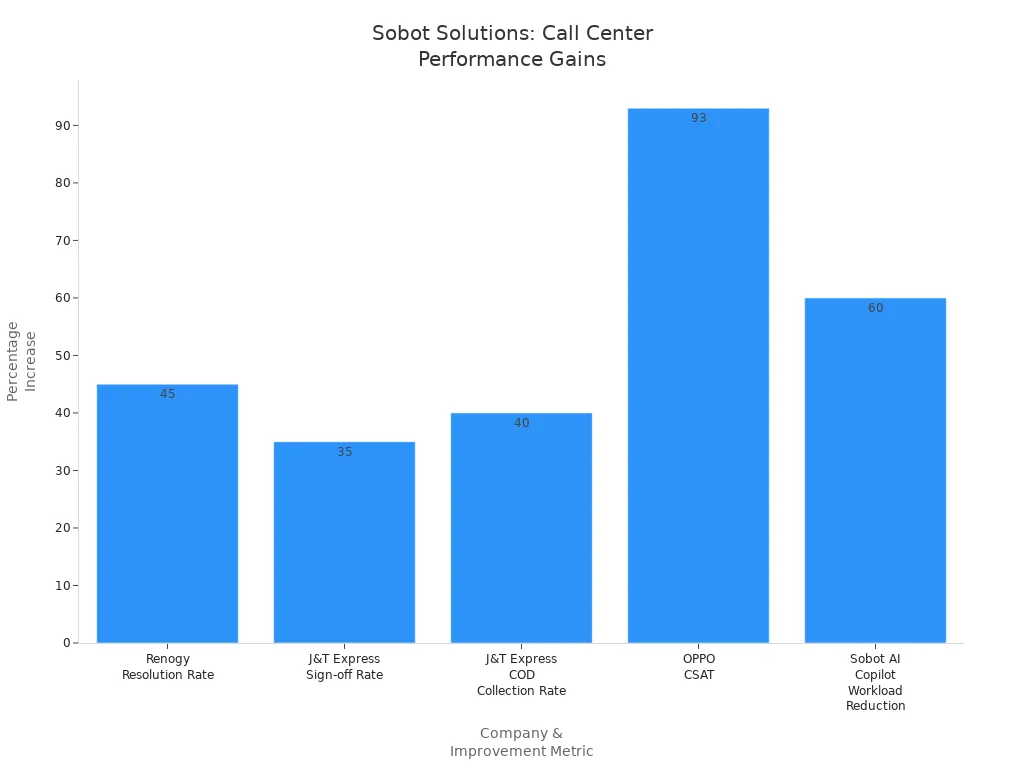
You can see these best practices in action with Sobot customers like OPPO. OPPO used Sobot’s solutions to combine chatbot automation with human coaching. This approach raised their positive feedback rate to 94% and boosted repurchase rates by 57%.
Note: When you follow these steps, your call center agent performance improvement plan becomes a tool for growth and success.
A structured call center agent performance improvement plan gives you many benefits. See how it helps your team:
| Benefit | Description |
|---|---|
| Continuous Improvement | You build a learning culture with regular feedback. |
| Early Intervention | You solve problems before they grow. |
| Recognition and Reward | You motivate agents with praise for progress. |
| Holistic Support | You support agents in every area of their work. |
| Regular Review | You keep your plan effective with frequent updates. |
“Using Conversation Intelligence, we’ve seen real improvements at the agent level. Someone who was a 6 out of 10 in July is now at a 7.9 out of 10 in September by using both the scorecard and Talk to Your Data." — Danielle Palmiero, Vice President of Customer Experience at Century Support Services
Sobot’s solutions and analytics help you track progress and support agents every day. You can create a coaching culture that lifts performance and keeps your team strong. Start your journey with Sobot’s Voice/Call Center to see real results in your call center agent performance improvement plan.
FAQ
What is a call center agent performance improvement plan?
A call center agent performance improvement plan is a structured guide. You use it to help agents meet clear goals. This plan includes steps, timelines, and support tools. It helps you track progress and boost customer satisfaction.
How does Sobot support a call center agent performance improvement plan?
Sobot gives you real-time analytics, unified workspaces, and coaching tools. You can monitor agent calls, set goals, and review progress. These features make your call center agent performance improvement plan more effective and easier to manage.
When should you start a call center agent performance improvement plan?
You should start a call center agent performance improvement plan when you see gaps in key metrics. For example, low customer satisfaction or high average handle time. Early action helps you solve problems before they grow.
What results can you expect from a call center agent performance improvement plan?
You can expect higher customer satisfaction, better agent skills, and improved business outcomes. Many Sobot users see faster issue resolution and more positive feedback after using a call center agent performance improvement plan.
Can you customize a call center agent performance improvement plan with Sobot?
Yes, you can customize every part of your call center agent performance improvement plan with Sobot. You set your own goals, choose metrics, and adjust timelines. Sobot’s flexible tools fit your team’s unique needs.
See Also
Effective Ways To Improve Call Center Performance Monitoring
Strategies For Successfully Managing Live Chat Support Agents
Top Best Practices For Managing Call Center Quality
Understanding The Efficient Operation Of Call Center Automation

