5 AI Chatbots for Sales A Brutal Review


Most AI sales chatbots are glorified auto-responders. With 41% of businesses now using chatbots for sales, the AI market is exploding. This article provides a brutally honest review of the top 5 platforms. We judge each AI platform on what truly matters for sales: qualifying leads, pipeline impact, and the daily experience for a sales rep. We tested every type of AI sales assistant, from basic chatbots to an enterprise ai chatbot service for ecommerce from Sobot. Do these AI-powered chatbots and ai sales tools really find quality leads? Is this AI sales assistant just more AI noise for your sales team?
What a Real AI Chatbot for Sales Should Do

Many so-called AI chatbots are not truly intelligent. They are simple auto-responders following a script. A real AI sales assistant does more than just answer questions. It actively helps your sales team close deals. This section defines what separates powerful AI sales tools from basic bots. We will also outline the criteria for our brutal review.
Beyond Auto-Responders: Defining a True Sales Bot
A true AI sales assistant is not a glorified FAQ page. It is an intelligent partner for your sales process. Basic chatbots follow pre-set rules. An advanced conversational AI platform understands context and intent. This allows for meaningful, conversational interactions that guide a prospect toward a purchase. The difference between a basic bot and a true AI-powered sales chatbot is stark.
| Feature | Basic Auto-Responder | True AI-Powered Sales Chatbot |
|---|---|---|
| Functionality | Follows pre-defined rules and scripted answers. | Analyzes conversations and makes context-based decisions. |
| NLP/LLM Use | Basic NLP for keyword recognition. | Built on LLMs to interpret nuance and adapt. |
| Personalization | Cannot personalize beyond explicit programming. | Connects to tools like your CRM for personalized responses. |
| Autonomy | Relies on static rules and requires manual updates. | Learns and improves independently from new information. |
This leap in capability is powered by Natural Language Processing (NLP). It is the core technology that makes these AI-powered chatbots genuinely useful for sales.
The Brutal Review Framework: Our Judgment Criteria
To cut through the hype, we judged each of these chatbots on four key metrics. These are the factors that directly impact your bottom line.
-
Lead Qualification Accuracy: An intelligent bot must identify serious buyers. AI chatbots use NLP to understand open-ended answers, not just multiple-choice options. This allows them to ask targeted qualifying questions like a human sales rep.
"The future of lead qualification lies in the ability of chatbots to understand and respond to human emotions and intents, making interactions more meaningful." - Dr. Emily Chen, NLP Researcher, AI Innovations
-
Impact on Pipeline Velocity: We measure how fast the AI helps close deals. Pipeline velocity shows the health of your sales pipeline. We calculate it with a simple formula:
Pipeline velocity = (Opportunities x Average Deal Size x Win Rate) ÷ Length of Sales CycleEffective AI powered sales solutions can dramatically shorten sales cycles and boost win rates.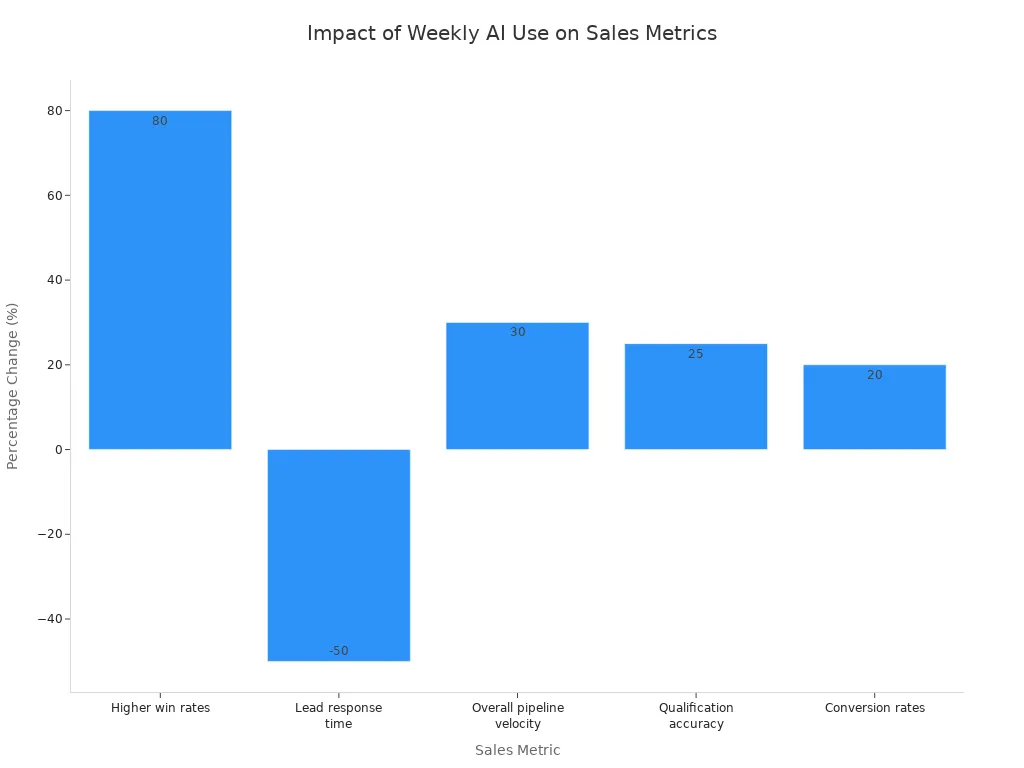
-
Quality of CRM Integration: The AI must work seamlessly with your existing systems.
-
Day-to-Day Rep Experience: The tool must empower your sales team, not create more work.
Review 1: The Enterprise Powerhouse
Enterprise-level AI chatbots are the heavyweights of the sales world. These platforms are built for large organizations with complex sales processes. They promise deep intelligence and unmatched power. This type of ai sales assistant uses advanced AI to deliver powerful insights. We tested this category to see if the performance justifies the price tag.
The Good: Unmatched Integration and Customization
The primary strength of an enterprise platform is its deep integration. These intelligent chatbots connect directly to your CRM. They leverage real-time data for highly personalized sales conversations. This AI can recognize returning customers and reference their case histories. The level of intelligence is impressive. The AI sales intelligence tools can automate complex, multi-step jobs. For example, the bot can qualify a lead, enrich the record in your sales system, and route it to the correct rep. This creates powerful insights for your team. The key features include:
- Strong natural language processing for human-like chats.
- Full customization of models and chat flows for specific business needs.
- Enterprise-grade data governance and security.
- Seamless handoffs to human agents when the AI encounters a complex request.
This level of intelligence provides deep insights into customer behavior.
The Bad: The Steep Price and Learning Curve
This power comes at a cost. Enterprise AI chatbots are expensive. The implementation process is often long and requires dedicated technical resources. This is not a plug-and-play solution. Your team will need significant training to use the platform effectively. The extensive customization options can be overwhelming for smaller sales teams. The sheer complexity makes these chatbots a poor fit for businesses without a dedicated RevOps or IT department to manage the system. The intelligence is vast, but harnessing it requires a major investment.
The Verdict: A Must-Have for Enterprise, Overkill for Others
For a large enterprise with a mature sales operation, this type of ai sales assistant is a game-changer. The ability to generate deep insights and automate complex sales workflows is invaluable. The AI provides a level of ai sales intelligence that smaller chatbots cannot match. However, for small to medium-sized businesses, this platform is overkill. The high cost and steep learning curve outweigh the benefits. These intelligent chatbots are designed for enterprise-scale problems and budgets.
Review 2: Sobot, The All-in-One for Growth
While specialized bots have their place, many growing businesses need a single platform that unifies sales, marketing, and customer service. Sobot positions itself as this central hub. It is an AI-powered solution designed to manage the entire customer lifecycle. This approach moves beyond simple sales chatbots to create a cohesive experience for customers. We evaluated if this all-in-one model delivers on its promise of boosting ai driven sales productivity.
The Good: A True Omnichannel Experience
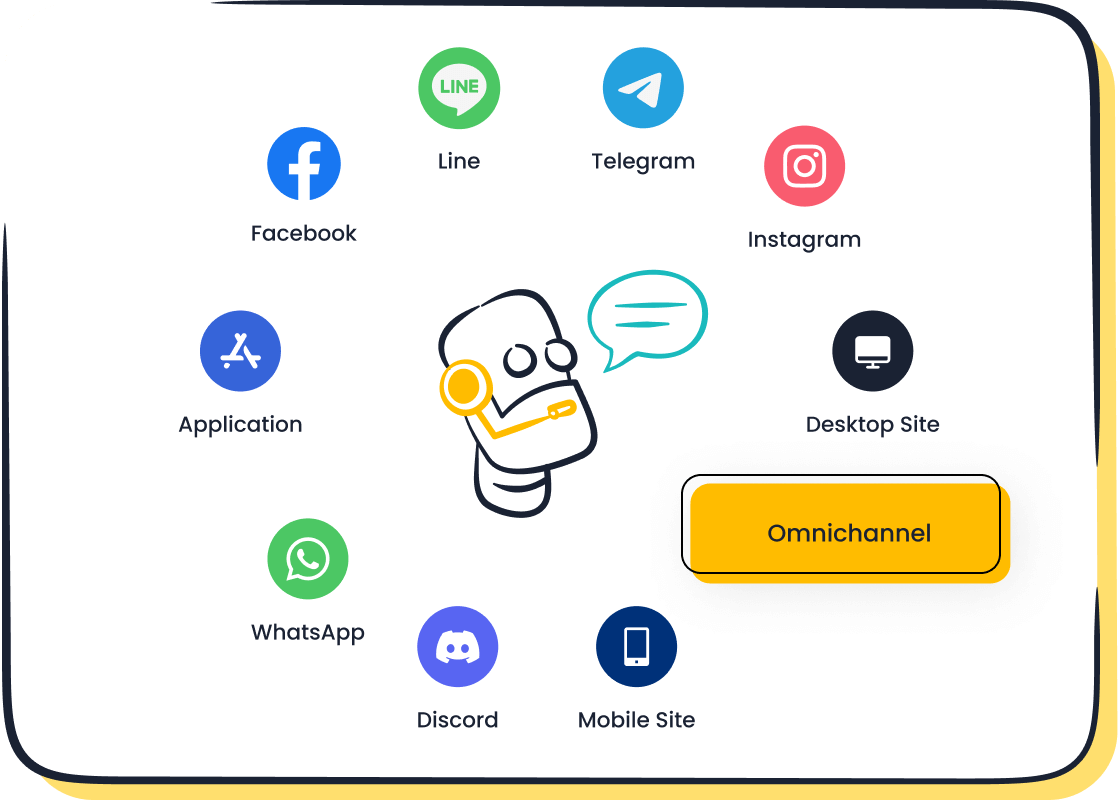
Sobot’s primary strength is its powerful omnichannel architecture. The platform seamlessly integrates every customer touchpoint. This creates a single, unified view of all customer interactions. This AI sales assistant connects your sales efforts across multiple channels.
- Website and Apps: Engages visitors with intelligent chatbots.
- Social Media: Manages conversations on platforms like WhatsApp and Facebook.
- Traditional Channels: Integrates a full voice call center and email ticketing system.
This comprehensive platform ensures no lead falls through the cracks. The AI provides consistent and contextual engagement whether customers are browsing your site or calling your support line. This level of integration is critical for businesses looking to provide a superior customer service experience. The AI chatbots are designed for continuous customer engagement.
The Ideal Use Case: An Enterprise AI Chatbot Service for Ecommerce
Sobot shines as an enterprise ai chatbot service for ecommerce. Retail businesses need to convert browsers into buyers while managing post-sales support. Sobot’s AI platform is built for this exact scenario. It automates the full journey, from proactive engagement with potential customers to resolving customer service inquiries 24/7.
The results are compelling. Financial services leader Opay used Sobot to unify its customer contact channels. The impact was immediate and significant.
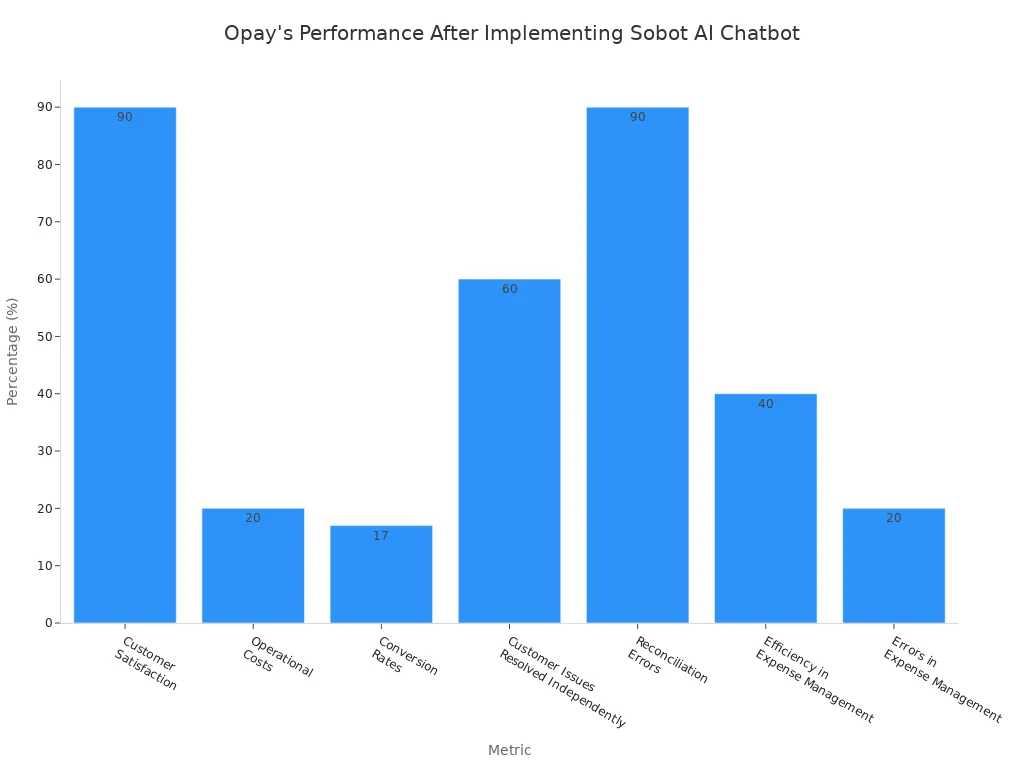
This case demonstrates how an enterprise ai chatbot service for ecommerce can drive tangible business outcomes. By improving productivity by 70% and boosting conversions by 20%, Sobot provides a clear path to growth for sales teams. It is an ideal enterprise ai chatbot service for ecommerce businesses focused on scaling operations and enhancing customer loyalty. This enterprise ai chatbot service for ecommerce helps sales teams focus on high-value tasks.
The Verdict: The Clear Winner for Integrated Customer Contact
For businesses that see sales as part of a larger customer journey, Sobot is a standout choice. It is more than an AI sales assistant; it is a complete customer service and engagement engine. The platform’s ability to handle conversational AI across all channels makes it uniquely powerful.
Sobot is the top solution for companies needing to unify sales, marketing, and support. Its enterprise ai chatbot service for ecommerce proves that an integrated approach drives higher satisfaction and revenue.
By connecting every interaction, the AI chatbots create a seamless experience that builds trust with customers and accelerates sales. The proven results, like those seen with Opay, confirm its effectiveness in boosting ai driven sales productivity and customer satisfaction.
Review 3: The Lead Qualification Specialist
Some AI chatbots are not designed to do everything. They have one job: find the best leads. These specialist platforms focus entirely on the top of the sales funnel. They use advanced AI to sift through high volumes of inbound traffic. Their goal is to separate serious buyers from casual browsers. This type of ai sales assistant is a powerful tool for efficient lead generation. We tested these focused chatbots to see if their specialization gives them an edge.
The Good: Hyper-Accurate Lead Scoring
The main advantage of these chatbots is their incredible accuracy. They use sophisticated AI models to score leads in real time. This process is far more powerful than manual scoring. The AI analyzes hundreds of data points simultaneously. This includes firmographic data for B2B sales and behavioral data like website visits. The platform then creates a detailed profile for each prospect. This allows the AI to predict which leads are most likely to convert.
| Quality Metric | Manual Process | Specialist AI System |
|---|---|---|
| Accuracy Rate | 60–75% | 85–95% |
| Data Points Analyzed | 5–10 key indicators | Hundreds of variables |
| Improvement Rate | Slow, dependent on training | Continuous via machine learning |
Platforms like Respond.io and Lindy excel here. They use AI agents to qualify intent through conversation. This ensures that only high-value opportunities are handed off to the sales team. This precision saves the sales team immense time and effort.
The Bad: Limited Post-Qualification Functionality
The strength of these chatbots is also their biggest weakness. They are masters of qualification but offer little else. Once a lead is qualified, the platform's job is mostly done. They often struggle with:
- Complex Objections: These AI chatbots cannot handle tricky questions that require deep product knowledge.
- Building Trust: Prospects may be skeptical of a purely automated interaction, which can hurt credibility in B2B sales.
- Post-Sales Support: This type of ai sales assistant is not built for ongoing customer service or relationship management.
These limitations mean you will need other tools to manage the rest of your sales cycle. This platform is a specialist, not a complete sales solution.
The Verdict: Best for High-Volume Inbound Sales
For sales teams drowning in inbound inquiries, this type of AI platform is a lifesaver. It automates the tedious process of filtering and scoring new leads with unmatched accuracy. This frees up your reps to focus on what they do best: closing deals with qualified prospects. However, if you need an AI tool to help with the entire sales journey, from initial contact to closing and support, you should look elsewhere. These chatbots are the perfect front-line filter for a busy sales operation.
Review 4: The Rep-First Assistant
Not all AI sales tools are built for the data scientist. Some chatbots prioritize the end-user: the sales representative. This category of ai sales assistant focuses on simplicity and usability above all else. The core design philosophy is to create a tool that reps will actually want to use every day. These ai based sales assistants aim to reduce friction in the sales process. We examined whether this focus on user experience comes at the expense of powerful intelligence.
The Good: The Most Intuitive User Interface
The standout feature of this type of ai sales assistant software is its simplicity. These platforms are designed for rapid adoption with minimal training. They empower sales reps to build and manage their own chatbots without writing a single line of code. This hands-on approach gives your sales team direct control over their AI tools. The intelligence is geared towards immediate tasks, not complex analysis. Many of these chatbots offer excellent no-code builders.
- Tidio provides a very intuitive interface that makes it easy for sales teams to get started.
- Landbot focuses on conversational design with a simple drag-and-drop builder.
- Jotform AI Agents allows users to easily customize AI chatbots to fit their internal sales processes.
This ease of use makes the ai sales assistant software a favorite among sales professionals who need a practical tool, not another complex system to learn.
The Bad: Weaker Analytics and Reporting
The trade-off for a simple user interface is a lack of analytical depth. These chatbots are not built for complex data analysis. The reporting features are often basic, providing surface-level metrics like chat volume and lead counts. They lack the sophisticated ai sales intelligence needed to generate deep strategic insights. You will not get granular performance breakdowns or predictive insights from this platform. This limited intelligence makes it difficult for RevOps or sales leadership to make data-driven decisions. The platform provides few insights into the "why" behind sales performance.
Note: While these chatbots excel at task execution, they offer limited intelligence for strategic planning. The lack of deep insights is a significant drawback for data-focused teams.
The Verdict: Your Reps Will Love It, RevOps May Not
This type of AI platform is a fantastic choice for empowering your sales team. Reps will appreciate the intuitive design and the ability to quickly automate parts of their workflow. The AI helps them engage more leads with less effort. However, the lack of robust ai sales intelligence and deep insights means it may not satisfy the needs of a data-driven leadership team. If your primary goal is high user adoption and immediate productivity gains for your sales reps, these chatbots are an excellent option. If you need deep analytics, look elsewhere.
Review 5: The Outbound Prospecting Bot
The final category of AI sales tools focuses on proactive outreach. These outbound prospecting chatbots are designed to initiate contact and generate new leads at scale. Unlike their inbound counterparts, these bots do not wait for prospects to come to them. This type of ai sales assistant uses sales automation to engage potential customers who have not yet shown interest. We tested these sales engagement tools to see if their aggressive approach generates quality engagement or just digital noise.
The Good: Powerful Sales Automation Sequences
The core strength of these AI chatbots is their sophisticated sales automation. They can execute complex, multi-step outreach campaigns that would overwhelm a human sales team. The AI platform can manage thousands of prospects simultaneously. This level of automation is a game-changer for high-volume sales.
These AI systems use advanced logic to optimize engagement. For example, they can analyze replies to categorize prospects as 'Interested' or 'Not Now,' routing them accordingly. This ensures reps only speak to warm leads.
Powerful sales force automation features include:
- Timing Optimization: The AI determines the best day and time to email specific prospects for maximum engagement.
- Automated A/B Testing: The platform constantly tests different subject lines and messages, automatically deploying the winning version.
- Intelligent Cadences: The AI runs sequences across email and social media, like the systems used by Outreach.io and Persana AI.
This intelligent sales force automation allows sales teams to connect with more prospects with less manual effort.
The Bad: Risks Feeling Impersonal to Prospects
The biggest danger with these chatbots is their potential to feel robotic. Mass outreach without proper personalization can damage your brand's reputation. Prospects are quick to ignore generic, automated messages. This lack of a human touch can destroy any chance of meaningful engagement. If the AI contacts prospects with outdated or incorrect information, it can alienate them permanently.
Successful engagement with these AI chatbots requires careful strategy. You must segment your contact lists and research your prospects. The AI needs good data to create relevant messages. Without this effort, your outreach will feel impersonal and ineffective. The goal is to use automation to deliver a personal message at scale, which is a difficult balance to strike.
The Verdict: Use With Caution for High-Volume Prospecting
An outbound ai sales assistant is a powerful tool for sales teams that need to contact a large number of prospects. The automation capabilities are impressive and can significantly increase outreach volume. However, these chatbots must be used with caution. The risk of alienating prospects with impersonal messages is very high.
These AI tools are not a "set it and forget it" solution. They require constant oversight and a strong personalization strategy to be effective. For sales teams willing to invest the time in research and segmentation, these chatbots can be a valuable source of new leads. For others, they risk becoming a high-tech spam cannon that hurts more than it helps.
Head-to-Head: The Final Verdict on Sales Chatbots
Choosing the right AI platform is critical for your sales success. The market offers many types of chatbots, each with different strengths. This final verdict cuts through the noise. We compare the five categories directly to help you make an informed decision. The right AI sales assistant depends entirely on your team's specific needs.
The Brutal Comparison Table
This table summarizes our findings. It provides a clear, side-by-side look at what each type of AI platform offers. Use it to quickly identify which category aligns with your sales goals.
| Chatbot Category | Best For | Core Strength | Key Weakness | Intelligence Level |
|---|---|---|---|---|
| The Enterprise Powerhouse | Large, data-driven sales teams | Deep CRM integration & customization | High cost & complexity | 🧠🧠🧠🧠🧠 |
| Sobot (All-in-One) | Growth-focused ecommerce | Unified omnichannel experience | Requires commitment to one platform | 🧠🧠🧠🧠 |
| The Lead Qualifier | High-volume inbound sales | Hyper-accurate lead scoring | Limited post-qualification features | 🧠🧠🧠 |
| The Rep-First Assistant | Sales teams needing high adoption | Intuitive, no-code user interface | Weak analytics & reporting | 🧠🧠 |
| The Outbound Prospector | High-volume prospecting | Powerful sales automation sequences | Risks feeling impersonal | 🧠🧠🧠 |
Comparing Key Automation Features
Not all automation is created equal. Basic chatbots follow simple scripts. Truly intelligent ai-powered chatbots use AI to drive revenue. Key automation features separate the best ai sales tools from the rest. These include AI-driven conversation flows that guide users to a purchase and behavior-based messaging that targets users who abandon carts. The intelligence of these ai-powered chatbots allows for a level of personalization that simple automation cannot match.
Our Final Recommendation for Your Sales Team
The "best" AI sales assistant does not exist. The right choice depends on your business.
- For the Data-Driven Enterprise: You need the deep intelligence of an enterprise platform. These systems offer unmatched analytics and integration, giving your sales team powerful insights.
- For the Budget-Conscious Startup: A rep-first assistant like Tidio is a great start. These chatbots are affordable and easy to use, empowering small sales teams quickly.
- For the Growth-Focused Business: An all-in-one platform like Sobot is ideal. It unifies sales, marketing, and support, creating a seamless customer journey that boosts conversions and satisfaction.
Ultimately, the goal is to find a platform that amplifies your sales efforts. Choose the AI with the right intelligence and automation capabilities for your unique process.
The search for the single best AI platform for sales is misguided. The right choice depends on your team's unique needs. A startup may prefer a simple ai sales assistant, while an enterprise needs a powerful data platform. For growth-focused businesses, an all-in-one solution like Sobot unifies sales and support. Ultimately, AI chatbots are powerful tools for ai sales enablement. These AI systems amplify your sales team's efforts, not replace them. With AI driving a 10-20% increase in sales ROI, these chatbots empower reps to focus on what matters: closing deals.
FAQ
How does AI intelligence help qualify customers?
AI intelligence analyzes conversations to understand a prospect's needs and intent. This intelligence allows the bot to ask relevant questions and score leads. It separates serious customers from casual browsers. This ensures your sales team only engages with high-potential customers, saving valuable time and focusing on qualified customers.
Will an AI chatbot replace my sales team?
No. An AI chatbot is a tool to amplify your team's efforts, not replace them. Its intelligence automates repetitive tasks like initial lead qualification. This frees up your reps to focus on building relationships and closing deals with the best customers. The goal is to support your best customers.
What is the real cost of an AI sales platform?
Costs vary widely. A simple rep-first assistant can be affordable. An enterprise platform requires a significant investment in licensing and implementation. Your total cost depends on the system's intelligence and complexity. Consider both the subscription fee and the internal resources needed to manage the technology for your customers.
How do I choose the right bot for my business?
Your choice depends on your goals and the types of customers you serve.
- High-volume inbound: A Lead Qualification Specialist is best.
- Growth-focused ecommerce: An all-in-one solution like Sobot provides the most value.
- Large enterprise: A powerhouse with deep intelligence is necessary for managing complex data from many customers.
See Also
Elevating E-commerce Customer Happiness: The Chatbot Advantage Explained
Discovering the Ten Leading Website Chatbot Solutions for 2024
Driving E-commerce Revenue: The Power of Live Chat Software
Comparing the Top Ten Live Chat Tools: Shopify and Rivals
Simple Steps to Implement Effective Website Chatbot Examples Today

