Actionable Feedback Insights for Modern Customer Communication


You shape every customer interaction when you listen and act on feedback. Customers today expect more than just quick answers—they want to feel heard and valued. Sobot leads with innovation and puts the customer at the center of every solution. Studies show that:
- 57% of customers stop buying when a competitor delivers a better experience.
- Companies using feedback to improve see a 15% lower churn rate.
"When customers feel heard, they’re more likely to remain loyal and become brand advocates. Listening to their feedback and responding actively can give a sense of partnership, rather than a transactional relationship."
You can discover the best ways to collect user feedback without annoying customers by focusing on genuine communication. When you prioritize actionable feedback, you create a cycle of continuous improvement for every customer.
Why Actionable Feedback Matters
Impact on Customer Experience
You shape the customer experience every time you collect and act on feedback. When you listen to feedback at each stage of the customer journey, you gain a clear view of what customers feel and need. This approach helps you spot gaps in the customer experience and fix them before they cause problems. You can see how feedback influences customer experience in many ways:
| Key Aspect | Impact on Customer Experience |
|---|---|
| Action on Feedback | Increases user engagement by 54% and speeds up feature validation by 50%. |
| Comprehensive Feedback | Provides a full picture of customer perception across all touchpoints. |
| Continuous Improvement | Acts as the backbone of customer-centric strategies, driving loyalty and success. |
You can use feedback to understand how each touchpoint affects the overall experience. This method lets you detect friction points early. You improve customer service by making changes that matter most to your customers. When you act on feedback, you show customers that their voices matter. This builds a better customer experience and helps your business grow.
- Customer journey feedback captures insights at multiple stages, enhancing understanding of customer experiences.
- It helps identify gaps between touchpoints and improves consistency across the customer journey.
- This approach allows organizations to detect friction points before they lead to customer churn.
Building Trust Through Feedback
You build trust when you show customers that you value their feedback. Companies like Atlassian set up listening programs to collect and analyze feedback. They made sure no feedback was ignored. This open approach helped rebuild trust with customers who felt unheard. When you address feedback and share updates, you prove your commitment to customer needs.
Apple also keeps high customer satisfaction by closing the feedback loop before releasing updates. They adjust products based on feedback, which helps keep trust strong. Real-time feedback channels let you respond quickly and show customers that you care. When you use feedback to improve customer service, you create trust and loyalty. Customers stay with brands that listen and act on feedback. You can use feedback to turn every customer interaction into a chance to build trust and improve the customer experience.
Understanding the Customer Service Feedback Loop
What Is a Feedback Loop?
You use a customer service feedback loop to improve your business every day. This loop is a cycle that starts when you collect feedback from your customers. You analyze this feedback to find out what works and what needs to change. You then act on the feedback to make your service better. After you make changes, you ask for more feedback. This process repeats, creating a loop that never ends.
A customer service feedback loop has two main parts. First, you gather feedback in many forms, such as surveys, calls, or chats. Second, you start the loop by capturing feedback data. This data gives you a clear view of your customers’ experiences. You see what makes them happy and what causes problems. You use this information to improve your service. The loop helps you stay connected to your customers and their needs.
Customer feedback loops help you keep your business relevant. You do not guess what your customers want. You listen, learn, and act. This loop is the heart of modern customer communication. You use it to make sure your service matches what your customers expect.
Benefits for Customer Experience
You gain many benefits when you use a customer service feedback loop. The loop helps you improve quality, boost trust, and increase satisfaction. You see the main benefits in the table below:
| Benefit | Description |
|---|---|
| Improve quality | Collecting customer insights helps you find key issues and improve your service. |
| Facilitates better communication | The loop lets customers share their thoughts and helps your team talk better inside your company. |
| Increases engagement | Customers feel heard, so they stay loyal and excited about your brand. |
| Encourages continuous learning | The loop shows you trends and pain points, guiding your team to learn and grow. |
| Boosts morale and motivation | Clear goals from feedback make your team feel motivated and happy. |
| Builds trust | Acting on feedback shows you care, which builds trust with your customers. |
| Improves customer satisfaction | Fixing problems from feedback makes customers happier and keeps them coming back. |
You also build trust and loyalty when you use customer feedback loops. Customers feel respected when you listen. The loop boosts satisfaction, even for those who had problems before. Your team becomes more accountable. You increase engagement by showing you value every piece of feedback, even if you cannot fix everything right away. The customer service feedback loop is your tool for creating a better experience every day.
Gathering Customer Feedback Effectively
You need to master the best ways to collect user feedback without annoying customers if you want to improve your service. Gathering customer feedback is not just about sending out surveys. You must use smart strategies and the right tools to make sure you get honest answers without disrupting the customer experience. Let’s explore how you can do this across different channels and see how Sobot’s solutions help you every step of the way.
Best Ways to Collect User Feedback Without Annoying Customers
You want to know what your customers think, but you do not want to overwhelm them. The best ways to collect user feedback without annoying customers focus on respect, timing, and convenience. Here are some practical strategies:
- Keep surveys short and focused. Aim for surveys that take less than 30 seconds to complete. Customers appreciate quick and easy questions.
- Offer incentives. About 13% of people are more likely to complete surveys if you give them a small reward.
- Plan survey timing and frequency. Do not send surveys too often. Choose the right moment, such as after a service interaction or product delivery.
- Coordinate survey efforts across your company. Make sure customers do not receive multiple surveys from different teams at the same time.
- Focus on essential questions. Only ask what you need to know to improve your service.
You can use Sobot’s chatbot, live chat, and AI Agent to deliver quick surveys right after a customer finishes a chat or call. These tools help you gather feedback while the experience is still fresh in the customer’s mind. You can also use Sobot’s ticketing system to send follow-up surveys after resolving a service request. This approach keeps the process smooth and non-intrusive.
You should also consider the challenges that come with gathering customer feedback. Many businesses struggle with too much feedback, making it hard to spot trends. You may also find it tough to decide which feedback to act on first. Sometimes, surveys can interrupt the customer experience, which can lead to lower response rates. By using the best ways to collect user feedback without annoying customers, you can avoid these problems and get better results.
Using Sobot Voice/Call Center for Feedback Collection

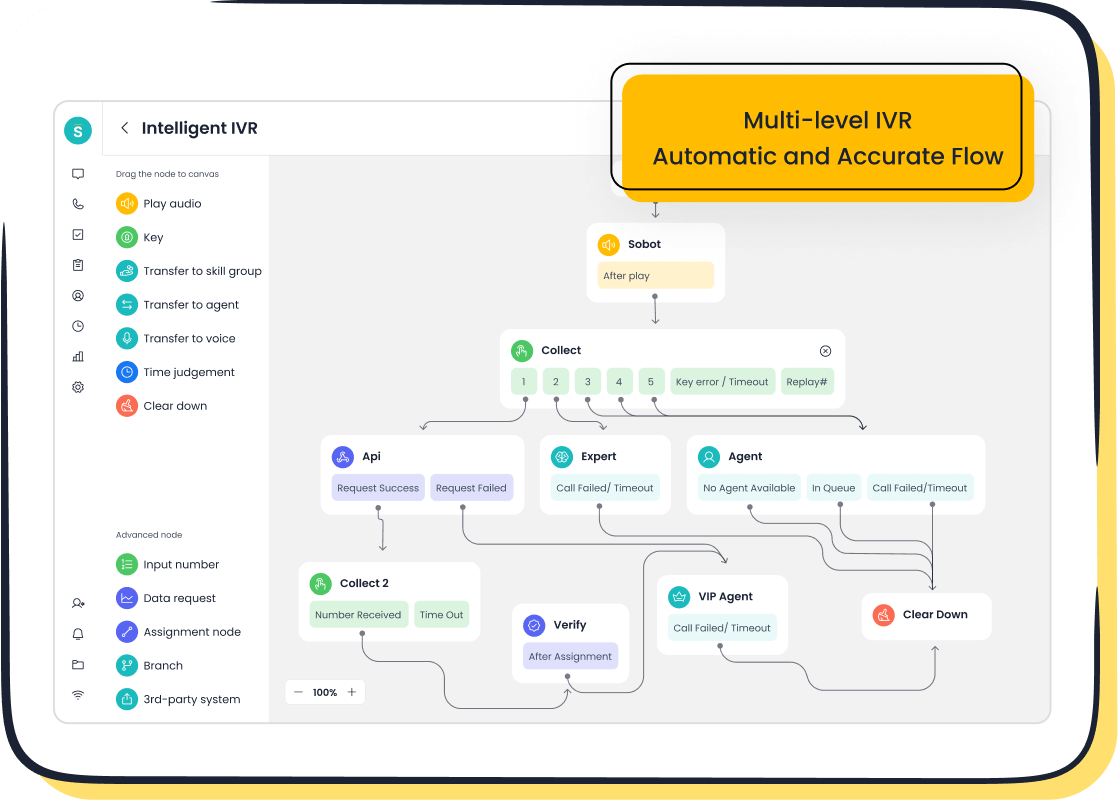
Many customers still prefer to share their thoughts through voice channels. Phone calls remain a popular choice, especially for older customers or those who want a personal touch. The Sobot Voice/Call Center gives you a powerful way to collect feedback through calls. You can use features like smart IVR menus, AI-powered voicebots, and call recording to gather insights during or after service interactions.
| Communication Method | Percentage |
|---|---|
| Phone Calls | 29% |
| Emails | 16% |
You can set up automated post-call surveys that ask customers to rate their experience or leave a comment. Sobot’s voicebot can guide customers through quick surveys, making the process easy and efficient. You can also analyze call recordings to spot common issues and improve your service. The unified workspace in Sobot’s Voice/Call Center lets your team track feedback and follow up with customers when needed.
You should remember that different customers have different preferences. Younger customers may prefer chat or social media, while older customers often choose phone calls or email. Outgoing people like chat or video, while introverts may prefer email or text. By using Sobot’s Voice/Call Center, you can meet the needs of all customer types and make sure everyone has a chance to share feedback.
You must also protect customer privacy and data security. Sobot’s platform uses encrypted data transfer and follows strict privacy rules. This keeps customer information safe and builds trust.
Leveraging Omnichannel Solutions
You can reach more customers and get better feedback when you use an omnichannel approach. Sobot’s Omnichannel Solution lets you collect feedback across all channels—chat, email, social media, voice, and more. This gives you a complete view of the customer journey and helps you spot trends that you might miss if you only use one channel.
| Evidence | Explanation |
|---|---|
| 73% of customers use multiple channels throughout their purchasing journey | Omnichannel feedback helps you capture insights from every interaction, giving you a full picture of the customer experience. |
| 80% of consumers are more likely to make a purchase when given personalized experiences | Personalization, powered by omnichannel feedback, boosts satisfaction and feedback quality. |
| Brands with strong omnichannel customer engagement grow revenue 9.5% annually | Omnichannel strategies improve feedback collection and drive business growth. |
You can use Sobot’s live chat to review transcripts for common issues and send quick surveys after each chat. On social media, you can monitor comments, run polls, and use hashtags to gather feedback. In your app, you can use pop-up surveys right after a customer tries a new feature. Email follow-ups work well for older customers or those who prefer written communication. You can personalize these messages and offer incentives to increase response rates.
Here are some best practices for gathering customer feedback across channels:
| Channel Type | Best Practices |
|---|---|
| Social Media | Monitor comments and engage with customers; use polls and dedicated hashtags for feedback. |
| Live Chat | Review chat transcripts for common issues; use AI agents for instant responses and feedback collection. |
| In-app Feedback Tools | Use pop-up surveys during product use; ask for feedback immediately after feature launches. |
| Customer Interviews | Conduct one-on-one interviews for qualitative insights; allow open-ended discussions for detailed feedback. |
| Heatmapping and Analytics | Analyze user behavior through heatmaps and click tracking to identify usability issues. |
| Email Follow-ups | Personalize messages, keep them short, and offer incentives for feedback after key interactions. |
You should always respect customer privacy and follow data protection laws like GDPR and CCPA. Make sure you store feedback data securely and give customers control over their information. This builds trust and encourages more people to share honest feedback.
You can boost your response rates by using SMS and chatbots for surveys. Texting surveys often get better results than email. Chatbots can ask for feedback right after a service interaction, while the experience is still fresh. You can also use Sobot’s ticketing system to automate follow-up surveys and track responses.
Tip: Use a mix of channels to reach all customer types. Personalize your approach based on age, personality, and communication preferences.
You can see that gathering customer feedback is not just about sending out surveys. You need to use the best ways to collect user feedback without annoying customers. Sobot’s tools make it easy to collect, track, and analyze feedback across all channels. This helps you improve your service, boost customer satisfaction, and drive business growth.
Analyzing Feedback for Actionable Insights
You collect feedback every day, but the real value comes from analyzing feedback and turning it into actionable insights. You need to look beyond numbers and words. You must combine data, use smart tools, and involve your team to get the most out of your customer feedback program. This section will show you how to unlock the power of feedback and support your business goals.
Combining Data for Deeper Insights
You gather feedback from many sources. You might use surveys, social media, chat, calls, and emails. Each channel gives you a piece of the story. When you combine these pieces, you get a full picture of your customer’s overall experience. You see what works and what needs improvement.
You can use Sobot’s omnichannel platform to bring all your feedback together. The system collects structured data from surveys and unstructured data from chats, calls, and social media. This mix helps you spot trends and patterns that you might miss if you look at each channel alone.
- Combining structured (survey) and unstructured (external) data gives you a competitive advantage. You get a clearer view of market dynamics and customer sentiment.
- Merging data sources helps you check if your survey results match what you see in other channels. This makes your insights more reliable.
- The integration of social data with surveys reduces memory bias errors. You get more accurate feedback from your customers.
You can use Sobot’s ticketing system to track feedback from every interaction. The system links feedback to customer profiles, so you see the full customer journey. You can filter feedback by product, service, or channel. This helps you find the root cause of problems and plan your next steps.
You should always look for patterns in your feedback. For example, if you see many customers mention slow response times in both chat and email, you know this is a real issue. You can use these insights to support your team and improve your service.
Tip: Use dashboards to visualize feedback trends. Sobot’s analytics tools let you see feedback volume, sentiment, and common topics at a glance.
You can also compare your feedback with external data. For example, you can check if your Net Promoter Score (NPS) matches what customers say on social media. This helps you validate your findings and make better decisions.
You need to remember that feedback is not just about numbers. You must read comments, listen to calls, and look at chat transcripts. This gives you deeper insights into what your customers feel and need.
AI and Human Oversight in Feedback Analysis
You can use artificial intelligence to make analyzing feedback faster and smarter. Sobot’s AI Agent reads and sorts feedback from all channels. The AI can spot trends, group similar comments, and highlight urgent issues. This saves you time and helps you focus on what matters most.
- AI automates the analysis of customer feedback. You get results quickly and with high accuracy.
- The system categorizes feedback data. You spend less time sorting and more time acting on insights.
- AI tools give you deeper insights into customer behavior, preferences, and pain points. You can use this information to support your team and improve your service.
You should not rely on AI alone. You need human oversight to make sure your insights are accurate and relevant.
"The key to more effective, risk-averse, and beneficial AI decision-making is to ensure that human-in-the-loop processes are in place. These frameworks maintain human judgment at critical decision points while leveraging AI's processing capabilities." – Jason Yau, Partner & Head of Technology, Hong Kong
You can see this in action when companies like H&M combine human expertise with AI tools. Their merchandisers work with pricing algorithms to get better results than either could alone.
You should set clear protocols for your team. Prepare your staff to step in when needed. You must develop continuous feedback loops for regular audits and performance reviews. Collaboration between AI and your team leads to the best outcomes.
- Set clear protocols and prepare your team for necessary human intervention.
- Develop continuous feedback loops for regular audits and performance reviews.
- Emphasize collaboration between AI and human capabilities.
You can use Sobot’s platform to assign feedback analysis tasks to both AI and human agents. The AI flags urgent issues, but your team reviews and decides on the next steps. This approach ensures you do not miss important details.
You should also use Sobot’s ticketing system to track how feedback leads to action. The system logs every step, so you can review what worked and what needs improvement. This supports a culture of learning and growth.
Turning Feedback into Action
You need to turn feedback into real change. Analyzing feedback is only the first step. You must use your insights to support your team and improve your service. Sobot’s solutions help you close the loop and show customers that you value their input.
| Strategy | Description |
|---|---|
| Create a feedback loop | Set up a system for ongoing feedback and review it regularly. |
| Use feedback for product innovation | Make small, quick changes based on suggestions to enhance the overall experience. |
| Personalize customer experiences | Tailor your service based on individual feedback and preferences. |
| Turn negative feedback into opportunities | Use criticism to find and fix gaps in your service or product. |
| Foster a customer-centric culture | Encourage everyone in your company to focus on feedback in their daily work. |
| Use predictive analytics | Study past feedback to predict future needs and improve service before problems arise. |
| Celebrate innovation successes | Share stories of improvements made from feedback to build goodwill and encourage more input. |
You can use Sobot’s AI Agent to spot trends and suggest changes. For example, if many customers mention a confusing feature, the AI can flag this for your product team. You can use the ticketing system to assign tasks and track progress. This keeps everyone accountable and ensures feedback leads to action.
You should personalize your responses. If a customer gives feedback about a late delivery, you can send a follow-up message with an apology and a solution. This shows you care and builds trust.
You can also use feedback to support innovation. Small changes, like updating a chatbot script or changing a menu option, can make a big difference in the overall experience. You should share these wins with your team and your customers. This encourages more feedback and creates a positive cycle.
You must turn negative feedback into opportunities. If a customer complains about long wait times, you can use this insight to adjust staffing or improve your workflow. This leads to better service and happier customers.
You should foster a customer-centric culture. Encourage your team to ask for feedback and use it in their daily work. This makes feedback a natural part of your company’s DNA.
You can use predictive analytics to look for patterns in past feedback. This helps you anticipate problems and fix them before they affect the customer journey. Sobot’s analytics tools make this easy by showing you trends and suggesting next steps.
You should celebrate your successes. When you make an improvement based on feedback, share the story with your team and your customers. This builds goodwill and encourages more people to share their thoughts.
Note: Actionable Feedback Insights for Modern Customer Communication are not just about collecting data. You must analyze, act, and share results to create real value.
You can see how Sobot’s solutions support every step of this process. The AI Agent, ticketing system, and omnichannel platform work together to turn feedback into actionable insights. You get a clear view of the customer journey and can make changes that improve the overall experience.
You should remember that analyzing feedback is an ongoing process. You must keep looking for new insights and ways to support your team. Actionable Feedback Insights for Modern Customer Communication help you stay ahead and deliver the best service possible.
You can use these strategies to build a strong customer feedback program. You will see better results, happier customers, and a more successful business.
Actionable Feedback Insights for Modern Customer Communication give you the tools and knowledge to turn every interaction into an opportunity for improvement. You can support your team, delight your customers, and grow your business with the right approach to analyzing feedback.
Implementing Changes and Closing the Loop

Prioritizing Actions from Feedback
You need to decide which feedback to address first. Not all suggestions have the same impact. Use clear criteria to help you choose. Look at how each idea affects your unique value, customer satisfaction, and market fit. This table shows how you can prioritize:
| Criteria | Description |
|---|---|
| Unique Value Proposition (UVP) | Evaluates if the feedback enhances or detracts from the product’s UVP. |
| Customer Satisfaction | Assesses if addressing the feedback can significantly boost customer happiness or retention. |
| Market Fit | Determines if the feedback aligns with current market trends and demands. |
You can see this in action with Samsung. Samsung used Sobot’s platform to collect and analyze feedback. They focused on changes that improved satisfaction and matched market needs. This led to a 97% satisfaction rate and a 30% increase in agent efficiency.
Communicating Improvements to Customers
You must tell customers about the improvements you make. This builds trust and shows you value their feedback. Use these strategies:
| Strategy | Description |
|---|---|
| Embrace Transparency | Being open and honest with customers fosters trust and ensures everyone is on the same page. |
| Keep Customers Informed | Regularly update customers about changes made based on their feedback to enhance satisfaction. |
| Implement Feedback Loops | Develop a structured process for reviewing and acting on customer feedback to improve satisfaction. |
| Communicate Changes | Inform customers about the changes made based on their feedback to build trust and satisfaction. |
When you close the feedback loop, you increase loyalty and satisfaction. Companies that do this see higher survey response rates and better results.
Monitoring Customer Experience Impact
You need to measure the effect of your changes. Use these common metrics:
| Metric | Description |
|---|---|
| Net Promoter Score (NPS) | Measures customer loyalty and likelihood to recommend the product. |
| Customer Satisfaction Score (CSAT) | Assesses customer satisfaction with a product or service. |
| Sentiment Scores | Evaluates the overall sentiment of customer feedback, indicating positive or negative feelings. |
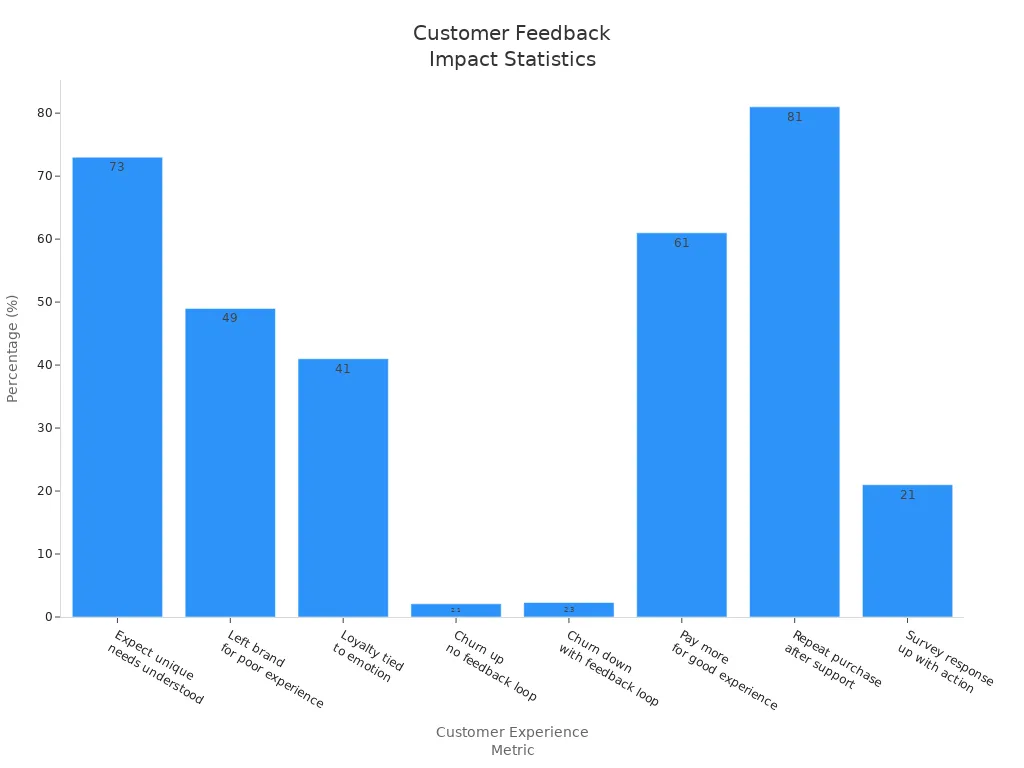
You should follow up with customers after you make improvements. This step is important. Most customers expect you to understand their needs. If you do not close the feedback loop, you risk losing them. When you do, you see higher satisfaction and more repeat purchases. Companies that use Actionable Feedback Insights for Modern Customer Communication often see a 15% rise in satisfaction scores.
You should review your feedback process every quarter and analyze results each month. This keeps your Actionable Feedback Insights for Modern Customer Communication fresh and effective. You can adapt quickly and keep your feedback program strong.
Tip: Actionable Feedback Insights for Modern Customer Communication help you build trust, drive improvement, and boost satisfaction. Make feedback a regular part of your business.
You can transform every customer interaction by using actionable feedback. The table below shows steps that help you improve customer communication and experience:
| Actionable Step | Description |
|---|---|
| Partner with front-line employees | Use insights from customer-facing staff to improve customer experience. |
| Personalize the experience | Create unique customer journeys using feedback. |
| Close the loop | Respond to customer feedback and follow up on issues. |
| Use feedback for improvement | Fix problems for every customer, not just one. |
| Monitor changes | Collect feedback before and after updates for better customer satisfaction. |
Sobot’s Voice/Call Center and Omnichannel Solution help you centralize customer interactions, automate responses, and improve customer satisfaction. These tools support continuous improvement and build customer loyalty.
- Work with all teams to address customer feedback.
- Act quickly on customer suggestions.
- Always tell customers how their feedback led to change.
You gain higher productivity and stronger relationships when you keep listening to the customer. Make feedback a regular part of your customer strategy.
FAQ
What are Actionable Feedback Insights for Modern Customer Communication?
You use Actionable Feedback Insights for Modern Customer Communication to improve every customer interaction. These insights help you understand what your customer wants and needs. You can use them to make changes that boost satisfaction and loyalty.
How does Sobot help you collect customer feedback?
You use Sobot’s tools to gather feedback from every customer. The Voice/Call Center lets you ask questions during or after calls. The Omnichannel Solution helps you reach your customer on chat, email, or social media. This makes feedback collection easy and smooth.
Why is closing the feedback loop important for customer experience?
You close the feedback loop to show your customer that you listen and care. When you act on feedback, your customer feels valued. This builds trust and keeps your customer coming back.
How do you keep customer data safe when collecting feedback?
You protect customer data by using secure systems. Sobot uses encrypted data transfer and follows privacy rules. This keeps every customer’s information safe and builds trust.
Can you use feedback to personalize the customer journey?
You can use feedback to create a unique journey for each customer. Actionable Feedback Insights for Modern Customer Communication help you understand what your customer likes. You can then adjust your service to fit each customer’s needs.
See Also
Comparative Analysis of Leading Customer Feedback Tools
Ten Strategies to Enhance Live Chat Customer Experience
Transforming Customer Support with AI Service Agents

