Best Tools for Customer Service Process Optimization Compared

In 2025, customer expectations are higher than ever. You need to deliver fast, personalized, and seamless support to stay competitive. Customer service process optimization plays a critical role in achieving this. By streamlining workflows and automating repetitive tasks, you can reduce response times and improve operational efficiency. Tools like customer service software empower your team to manage multiple inquiries simultaneously while accessing customer histories instantly. This not only enhances satisfaction but also boosts retention by ensuring consistent, high-quality interactions.
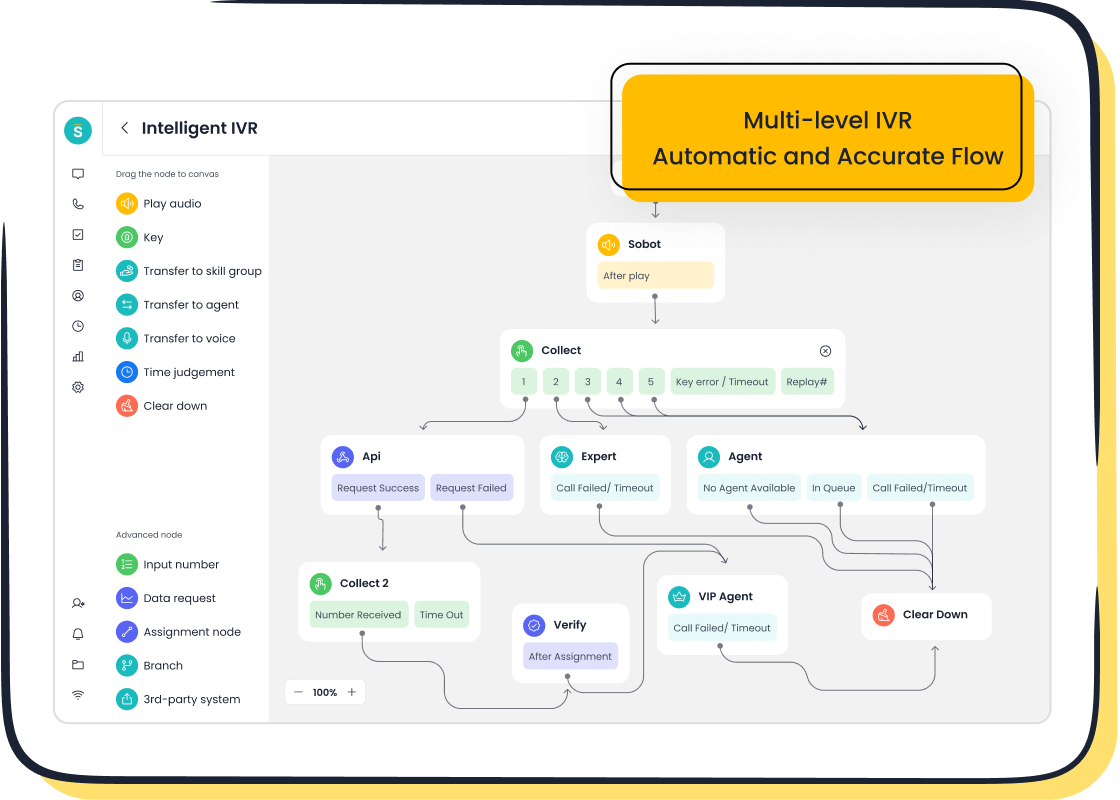
For example, Sobot’s solutions integrate advanced technologies like AI-powered voicebots and intelligent IVR systems. These features help businesses handle complex customer needs efficiently, ensuring every interaction adds value. With such tools, you can transform your service processes into a competitive advantage.
💡 Did you know? Companies that optimize their customer service processes see up to a 57% increase in repurchase rates, as demonstrated by brands like OPPO.
Key Benefits of Customer Service Process Optimization Tools
Enhanced Efficiency
Streamlined workflows and faster response times.
Customer service software transforms how you handle inquiries. By automating workflows, you can reduce response times and ensure your team focuses on high-priority tasks. For example, AI-powered tools like Sobot's Voice/Call Center use intelligent IVR and smart call routing to connect customers to the right agents instantly. This reduces wait times and enhances the overall customer experience.
Efficient processes also lead to measurable benefits. Companies lose over 20% of their productive capacity to unproductive processes. By adopting customer service tools, you can improve productivity, foster collaboration, and reduce errors. Here's a quick breakdown:
| Benefit | Description |
|---|---|
| Improved productivity | Happier customers and motivated employees through streamlined workflows. |
| More agile workforce | Enhanced communication and collaboration for better project management. |
| Fewer errors | Real-time monitoring and automation reduce human errors significantly. |
| Reduced operational expenses | Cost savings from fewer errors and streamlined hiring and budgeting processes. |
Automation of repetitive tasks for better resource allocation.
AI-driven automation eliminates repetitive tasks like ticket categorization and FAQ responses. This frees up your team to focus on complex issues, improving customer satisfaction. Tools like Sobot's AI-powered Voicebot provide real-time assistance, ensuring seamless customer engagement. Self-service options, such as knowledge base software, empower customers to resolve issues independently, further enhancing efficiency.
Cost Reduction
Lower operational costs through AI-driven automation.
AI-driven automation reduces costs by minimizing the need for manual intervention. For instance, Sobot's omnichannel communication tools integrate seamlessly with existing systems, cutting down on operational expenses. By automating outbound tasks and call tracking, you can optimize resource allocation and achieve lower operational costs.
Reduced dependency on manual processes.
Manual processes often lead to inefficiencies and higher costs. Customer service software replaces these with automated workflows, reducing errors and improving accuracy. Sobot's help desk platforms, for example, streamline ticket management and SLA tracking, ensuring consistent service delivery. This not only saves money but also boosts customer satisfaction scores.
Improved Customer Retention
Personalized customer interactions and faster resolutions.
Personalized customer support is key to retaining customers. AI tools analyze customer data to deliver tailored experiences. Sobot's customer service platform integrates customer feedback collection, enabling you to address concerns proactively. Metrics like Net Promoter Score (NPS) and Customer Satisfaction Score (CSAT) help you measure the impact of these efforts.
Consistent service quality across multiple channels.
Multi-channel support ensures customers receive the same high-quality service, whether they contact you via phone, email, or chat. Sobot's omnichannel communication solutions unify customer interactions, providing agents with a 360-degree view of customer histories. This consistency builds trust and drives customer retention.
💡 Pro Tip: Use metrics like customer retention rate and repeat customer rate to evaluate the success of your customer service strategies.
Criteria for Choosing the Best Customer Service Software
Ease of Use
Intuitive interfaces requiring minimal training.
When selecting the best customer service software, ease of use should be your top priority. A user-friendly interface ensures your team can quickly adapt to the platform without extensive training. This saves time and boosts productivity. Look for tools that simplify complex workflows with intuitive features like drag-and-drop functionality or customizable dashboards.
For example:
- CRM Creatio offers a drag-and-drop process designer, perfect for creating custom workflows.
- LiveChat provides a straightforward interface for managing live customer interactions.
- HappyFox includes a customizable customer portal, making it easy for your team to navigate.
Sobot’s Voice/Call Center also excels in this area. Its unified workspace consolidates customer data and communication channels into one platform, enabling agents to manage calls effortlessly. This simplicity empowers your team to focus on delivering exceptional service rather than struggling with software complexities.
💡 Pro Tip: Choose software that minimizes the learning curve to maximize your team's efficiency from day one.
Integration Capabilities
Compatibility with existing systems like CRMs and ERPs.
The best customer service software integrates seamlessly with your existing tools. Compatibility with CRMs, email platforms, and ERPs ensures smooth data flow across systems, saving you time and reducing disruptions. This integration allows your team to access customer information instantly, leading to faster resolutions and improved satisfaction.
Key integration capabilities to look for include:
- Connections with CRMs like Salesforce or HubSpot for centralized customer data.
- Integration with marketing automation tools to align service and sales efforts.
- Compatibility with accounting and HR software for streamlined operations.
Sobot’s solutions stand out with their seamless integration capabilities. For instance, the Voice/Call Center integrates effortlessly with CRMs and other business systems, ensuring a unified workflow. This feature eliminates data silos, enabling your team to deliver consistent and personalized support.
Scalability
Adapting to growing business needs and customer demands.
Your business needs will evolve, and your customer service software must grow with you. Scalable solutions ensure you can handle increasing customer demands without compromising service quality. Whether you're expanding your team, adding new channels, or managing higher inquiry volumes, scalability is essential.
Top scalable solutions include:
- Salesforce and HubSpot for CRM scalability.
- Twilio for communication needs at scale.
- Stripe for handling growing online payment transactions.
Sobot’s Voice/Call Center is designed with scalability in mind. Its global network and 99.99% uptime ensure reliable performance, even as your business grows. Features like bulk outbound tasks and AI-powered Voicebots allow you to manage high call volumes efficiently, making it an ideal choice for businesses aiming to scale.
🚀 Did you know? Scalable software like Sobot can help you maintain service excellence as your business expands.
Pricing
Transparent pricing models and ROI considerations.
Choosing the right pricing model for customer service software can significantly impact your budget and return on investment (ROI). Transparent pricing ensures you know exactly what you're paying for, helping you plan effectively and avoid unexpected costs. Understanding the pros and cons of various pricing models can guide you toward the best choice for your business.
Here’s a quick comparison of common pricing models:
| Pricing Model | Pros | Cons |
|---|---|---|
| Subscription-Based | Predictable costs, Consistency | Scaling costs can become expensive |
| Usage-Based | Cost efficiency, Scalability | Budgeting challenges, Potential for overage costs |
| Freemium | Lower barrier to entry, Wider reach | Potential limitations, Conversion dependence |
| Per-User | Easy to understand, Scalable | High costs for larger teams, Usage imbalance |
| Tiered Pricing | Flexible options, Increased revenue potential | Complexity, Locked features |
| Flat-Rate Pricing | Simplicity, Predictability | Limited scalability, Reduced customization |
For example, Sobot offers custom pricing tailored to your business needs. This approach ensures you only pay for the features and services you use, maximizing ROI. With Sobot’s Voice/Call Center, you benefit from a cost-effective SaaS rental model that includes global telephony, AI-powered tools, and seamless integration. This flexibility allows you to scale your operations without worrying about hidden fees or escalating costs.
Transparent pricing also helps you measure ROI more effectively. By investing in customer service software with clear pricing, you can track how features like automation and omnichannel support reduce costs and improve efficiency. Businesses that adopt such tools often see measurable gains, such as higher customer retention rates and reduced operational expenses.
💡 Tip: Always evaluate the scalability and hidden costs of a pricing model before committing. A transparent plan ensures your investment aligns with your long-term goals.
Comparison of Top Tools for Customer Service Process Optimization
Sobot Voice/Call Center
Features: Intelligent IVR, AI-powered Voicebot, global number availability.
Sobot Voice/Call Center offers a robust suite of features designed to optimize your customer service processes. With intelligent IVR, you can customize call flows and route customers to the right agents instantly. The AI-powered Voicebot handles inquiries with precision, providing 24/7 support. Additionally, global number availability ensures seamless communication across borders, making it ideal for businesses with international operations.
Pros: Unified workspace, seamless integration, 99.99% uptime.
Sobot stands out with its unified workspace, which consolidates customer interactions and data into one platform. This simplifies workflows and boosts agent productivity. Its seamless integration with CRMs and other systems eliminates data silos, ensuring smooth operations. With a 99.99% uptime, you can rely on Sobot for uninterrupted service, even during peak times.
Pricing: Custom pricing based on business needs.
Sobot offers flexible pricing tailored to your specific requirements. This ensures you only pay for the features you need, maximizing your return on investment. Its SaaS rental model provides a cost-effective solution for businesses of all sizes.
🚀 Fun Fact: Sobot handles over 6 million online communications daily, showcasing its reliability and scalability.
Zendesk
Features: Ticketing system, AI-powered chatbots, analytics.
Zendesk excels in providing advanced customer support tools. Its ticketing system streamlines issue tracking, while AI-powered chatbots handle routine inquiries efficiently. Predictive analytics offer insights into customer behavior, helping you make data-driven decisions.
Pros: User-friendly, robust integrations, scalable.
Zendesk’s intuitive Agent Workspace centralizes all support channels, reducing clutter and enhancing agent performance. Its scalability makes it suitable for growing businesses, while robust integrations ensure compatibility with existing systems.
Pricing: Starts at $49/month.
Zendesk’s pricing begins at $49 per month, offering a range of features to meet your customer service needs. However, costs may increase as your team scales.
Freshdesk
Features: Omnichannel support, automation, self-service portals.
Freshdesk simplifies customer service with its omnichannel support and automation tools. Self-service portals empower customers to find answers independently, reducing agent workload. Its AI-powered chatbot operates 24/7, addressing common inquiries effectively.
Pros: Affordable, easy to set up, good for small businesses.
Freshdesk is an excellent choice for small businesses. Its user-friendly interface and free plan for unlimited agents make it accessible. Automation tools save time by streamlining repetitive tasks, while reporting features provide valuable insights into performance metrics.
Pricing: Starts at $15/month.
Freshdesk offers competitive pricing, starting at just $15 per month. This affordability makes it a popular choice for startups and small teams.
💡 Tip: Freshdesk’s free plan supports unlimited agents, making it a cost-effective option for small businesses.
Salesforce Service Cloud
Features: AI-driven insights, case management, omnichannel support.
Salesforce Service Cloud offers a comprehensive suite of features designed to elevate your customer service processes. Its AI-driven insights provide actionable data, enabling you to make informed decisions and improve service quality. The case management system ensures efficient tracking and resolution of customer issues, while omnichannel support allows you to deliver consistent service across multiple platforms. These features make it a powerful tool for businesses aiming to enhance their customer interactions.
Pros: Highly customizable, excellent analytics.
Salesforce Service Cloud stands out for its high level of customization. You can tailor workflows, dashboards, and automation to meet your unique business needs. Its analytics capabilities are equally impressive, offering valuable analytics and insights into customer behavior and service performance. However, customization can require extensive training, which may slow down implementation for some teams.
💡 Did you know? Businesses using Salesforce Service Cloud report significant improvements in customer satisfaction due to its robust analytics and omnichannel capabilities.
Pricing: Starts at $75/month.
Salesforce Service Cloud pricing begins at $75 per month, making it a premium option. While it offers extensive features, smaller businesses may find the cost challenging. Alternatives like Sobot’s Voice/Call Center provide similar benefits with flexible, custom pricing, ensuring you only pay for what you need.
HubSpot Service Hub
Features: Customer feedback tools, ticketing, live chat.
HubSpot Service Hub combines essential customer service software features into one platform. Its customer feedback tools help you gather insights directly from your audience, enabling you to refine your strategies. The ticketing system organizes customer inquiries, ensuring timely responses. Live chat functionality allows real-time communication, fostering stronger relationships with your customers.
Pros: Seamless integration with HubSpot CRM, user-friendly.
HubSpot Service Hub integrates seamlessly with HubSpot CRM, creating a unified customer database. This integration enhances productivity by streamlining processes and providing a 360-degree view of customer interactions. Its user-friendly interface ensures your team can quickly adapt, reducing the learning curve.
| Benefit | Description |
|---|---|
| Enhanced Productivity | Increases team efficiency through automation and streamlined processes, allowing agents to focus on service. |
| Authentic Engagement | Provides tools for omnichannel support, fostering meaningful interactions with customers. |
| Unified Customer Database | Offers a comprehensive view of customer interactions across all departments, enhancing relationship management. |
| Ticketing System | Organizes customer requests effectively, enabling prioritization and collaboration among agents. |
Pricing: Starts at $50/month.
HubSpot Service Hub pricing starts at $50 per month, offering a cost-effective solution for businesses seeking robust customer service software. Its integration with HubSpot CRM adds significant value, making it a strong contender for businesses already using HubSpot’s ecosystem.
🚀 Pro Tip: If you’re looking for a scalable and user-friendly platform, HubSpot Service Hub is a great choice. However, for businesses requiring advanced AI features and global scalability, Sobot’s Voice/Call Center offers a compelling alternative.
Trends in Customer Service Software for 2025
AI and Automation
The rise of AI-powered chatbots and predictive analytics.
AI is revolutionizing customer service software by enabling faster, smarter, and more efficient interactions. In 2025, AI-powered chatbots are no longer just answering FAQs—they're providing enhanced self-service options, offering instant multilingual support, and even summarizing conversations automatically. These advancements save time for both customers and agents, improving the overall customer experience.
Predictive analytics is another game-changer. AI tools now analyze customer sentiment in real time, helping agents adjust their tone and approach. For example, Sobot’s AI-powered Voicebot not only recognizes intent but also detects emotional cues, ensuring every interaction feels personal and empathetic. This level of automation reduces response times and boosts satisfaction rates.
💡 Fun Fact: Businesses using AI-driven knowledge bases report a 90% reduction in manual effort, allowing agents to focus on complex issues.
Omnichannel Support
Unified communication across multiple customer touchpoints.
Modern customer service software thrives on omnichannel support. Customers expect seamless communication, whether they reach out via email, chat, or phone. Omnichannel platforms unify these touchpoints, ensuring no inquiry slips through the cracks. This integration leads to faster responses and a smoother customer experience.
Sobot’s unified workspace exemplifies this trend. Agents manage all interactions from a single interface, eliminating the need to toggle between tabs. Automation further streamlines workflows, allowing teams to prioritize complex issues. Customers benefit from consistent service quality, regardless of the channel they choose.
🚀 Did you know? Companies with omnichannel support see a 91% higher customer retention rate compared to those without it.
Personalization
Leveraging customer data for tailored experiences.
Personalization is the cornerstone of exceptional customer service. AI-driven tools analyze customer data to deliver tailored solutions, making every interaction meaningful. For instance, Sobot’s customer service software integrates feedback tools to gather insights and refine strategies. This proactive approach enhances the customer experience and builds loyalty.
Imagine a scenario where a returning customer contacts support. With AI, agents can instantly access their purchase history, preferences, and past interactions. This data empowers agents to provide solutions that feel personal and relevant, fostering trust and satisfaction.
💡 Pro Tip: Personalized experiences can increase customer satisfaction by up to 80%, according to recent studies.
Optimizing your customer service processes is no longer optional—it’s essential for staying competitive in 2025. The right customer service software can transform your operations, enabling faster resolutions, personalized interactions, and consistent service quality. Tools like Sobot Voice/Call Center stand out with features like intelligent IVR, AI-powered Voicebots, and global scalability, ensuring your team delivers exceptional support every time.
When comparing tools, consider these factors to make an informed decision:
| Factor | What to Consider |
|---|---|
| Scalability | Choose software that grows with your business and adapts to increasing demands. |
| Ease of Use | Opt for intuitive platforms that minimize training time for your team. |
| Integrations | Ensure compatibility with existing systems like CRMs for seamless workflows. |
| Budget | Align costs with your financial goals, avoiding hidden fees or unnecessary upgrades. |
| Security Safeguards | Look for robust data protection measures like encryption and compliance standards. |
To select the best tool for your business, follow these actionable steps:
- Identify your specific needs and customer inquiry volumes.
- Determine which channels (e.g., phone, email, social media) you need to support.
- Prioritize ease of use and scalability for future growth.
- Evaluate integration capabilities with your current systems.
- Assess analytics and reporting features for tracking performance.
Sobot Voice/Call Center offers a tailored solution that checks all these boxes. Its unified workspace, AI-driven automation, and global reach make it a reliable choice for businesses of all sizes. By investing in the right customer service software, you can enhance efficiency, reduce costs, and build lasting customer loyalty.
💡 Remember: The right tool doesn’t just solve today’s challenges—it prepares you for tomorrow’s growth.
FAQ
What is customer service process optimization?
Customer service process optimization involves improving workflows, automating repetitive tasks, and enhancing communication to deliver faster, more personalized support. Tools like Sobot’s Voice/Call Center streamline operations with features like intelligent IVR and AI-powered Voicebots, helping businesses reduce response times and improve customer satisfaction.
💡 Example: Companies using optimized processes see up to a 57% increase in repurchase rates.
How does AI improve customer service?
AI enhances customer service by automating tasks, analyzing data, and providing real-time assistance. For instance, Sobot’s AI-powered Voicebot recognizes customer intent and offers instant solutions. This reduces agent workload and ensures faster resolutions, leading to higher customer satisfaction.
🚀 Fun Fact: AI-driven tools can reduce manual effort by 90%, allowing agents to focus on complex issues.
Why is omnichannel support important?
Omnichannel support ensures consistent service quality across all communication channels, such as phone, email, and chat. Sobot’s unified workspace integrates these channels, giving agents a 360-degree view of customer interactions. This consistency builds trust and improves retention rates.
💡 Did you know? Businesses with omnichannel support achieve a 91% higher customer retention rate.
How do I choose the right customer service software?
Identify your needs, such as scalability, ease of use, and integration capabilities. Consider tools like Sobot’s Voice/Call Center, which offers custom pricing, global scalability, and seamless CRM integration. Evaluate features like automation, analytics, and omnichannel support to ensure the software aligns with your goals.
What are the benefits of using Sobot’s Voice/Call Center?
Sobot’s Voice/Call Center improves efficiency with intelligent IVR, AI-powered Voicebots, and global number availability. Its unified workspace simplifies workflows, while 99.99% uptime ensures reliability. Businesses benefit from reduced costs, faster resolutions, and enhanced customer satisfaction.
🚀 Pro Tip: Sobot handles over 6 million communications daily, showcasing its scalability and reliability.
See Also
Comparing Leading Customer Feedback Software Solutions Today
The 10 Most Effective Customer Support Tools for 2024
Enhancing Productivity with AI-Driven Customer Service Tools
Improving Call Center Efficiency Through Effective Monitoring

