10 Best Multichannel Contact Center Software


This guide reviews the best multichannel contact centre software, including Talkdesk, Five9, NICE CXone, Genesys Cloud CX, Sobot, Zendesk, RingCentral, 8x8, Nextiva, and LiveAgent. The right software unifies all customer communication channels. It brings phone, email, and chat into one platform. This improves the overall customer experience. This guide helps businesses compare top contact center vendors. They can choose the best fit to boost efficiency and customer satisfaction. The market for call center software is growing fast. Projections show it could reach $109.7 billion by 2028. This growth highlights the importance of a strong multichannel strategy. The Sobot call center, powered by Sobot AI, offers a unified solution.
1. Talkdesk
Best For
Talkdesk is an excellent choice for businesses that want to use artificial intelligence for quality assurance and automation. The platform's strength lies in its advanced AI capabilities. It helps companies improve customer support quality and operational efficiency. This call center software is designed for organizations looking to build a modern, AI-powered CX strategy.
Key Features
Talkdesk offers a robust set of features that enhance the customer experience. Its AI-powered virtual agents handle many customer inquiries around the clock. This ensures no call goes unanswered. The system also automates routine tasks, which frees up human agents to focus on more complex problems.
Key features include:
- AI Agents: These agents manage appointment scheduling and other transactions, reducing agent workload.
- Real-time Information: The platform accesses live data through APIs. This gives agents the most current customer information during interactions.
- Multichannel Analytics: It assesses interactions across all channels to ensure quality and compliance.
- Seamless Integration: The software connects with other Talkdesk products to create a unified customer service platform.
Note: The platform's AI capabilities are central to its design, aiming to improve every aspect of the customer journey and agent workflow.
Pros and Cons
Businesses should consider the advantages and disadvantages of this multichannel platform. Talkdesk provides powerful tools, but some users report challenges.
| Pros | Cons |
|---|---|
| Intuitive Platform: Agents find the desktop easy to learn and use. | Limited Customization: Users cannot customize some features themselves. |
| Strong AI Capabilities: It offers excellent self-service tools and customer insights. | Unresponsive Support: Some users report slow responses from the support team. |
| Many Integrations: It has over 70 pre-built integrations with apps like Salesforce and Zendesk. | Poor Audio Quality: Call recordings can have unbalanced audio, making reviews difficult. |
Overall, Talkdesk is a leading call center software that excels in delivering a powerful multichannel CX.
2. Five9
Best For
Five9 is an excellent solution for large enterprises that need a scalable and intelligent CX platform. Its architecture is designed to handle high volumes of customer interactions, making it a strong choice for businesses with extensive support operations. The platform helps organizations deliver a more connected and personalized customer experience.
Key Features
The Five9 cloud contact center provides a comprehensive suite of tools to enhance both agent performance and customer satisfaction. This call center software uses AI to automate tasks and provide real-time assistance to agents. This focus on intelligent automation helps improve the overall multichannel CX.
Key features include:
- AI and Automation: The platform offers AI-powered tools like Agent Assist, AI Summaries, and Workflow Automation to streamline operations and reduce agent workload.
- Employee Engagement: It includes features such as Workforce Management, Quality Management, and Gamification to keep agents motivated and effective.
- Digital Engagement: Five9 supports a wide range of communication channels, including voice, email, chat, social media, and SMS, creating a unified multichannel environment.
- Analytics and Reporting: Businesses get detailed insights into performance and customer sentiment, which helps them make data-driven decisions to improve the CX.
Note: Five9 is particularly useful for companies in regulated industries like healthcare and finance that require secure customer interactions.
Pros and Cons
Organizations should weigh the benefits and drawbacks of this call center software before making a decision.
| Pros | Cons |
|---|---|
| Feature-Rich Platform: Offers a wide array of well-executed features. | Higher Price Point: Can be more expensive than some competitors. |
| Strong AI Tools: Provides sentiment analysis and real-time agent prompts. | Add-On Costs: Many useful features, like CRM connectors, cost extra. |
| Highly Customizable: The system can be tailored to specific business needs. | No Free Trial: Does not offer a free trial to test the software. |
3. NICE CXone
Best For
NICE CXone is ideal for businesses seeking a unified, cloud-native platform to manage customer interactions. This call center software excels for companies that want to combine omnichannel routing, analytics, and AI into a single solution. It helps organizations improve their overall CX strategy by connecting with customers across their preferred channels.
Key Features
NICE CXone provides a comprehensive set of tools designed to enhance both agent productivity and the customer journey. The platform uses AI trained on a massive CX dataset to power its features. This focus on intelligent automation helps create a seamless multichannel experience.
Key features include:
- Journey Orchestration: The system uses AI-powered omnichannel routing across voice, email, chat, SMS, and social media apps.
- AI-Powered Assistance: Tools like Enlighten Copilot offer agents real-time guidance, while Enlighten AutoSummary creates automatic notes after interactions.
- Intelligent Self-Service: The platform supports conversational AI and chatbots, allowing customers to resolve issues on their own.
- Workforce Engagement: It includes integrated tools for scheduling, forecasting, and monitoring agent performance to optimize productivity.
Note: This cloud contact center is built for scalability and security, making it a reliable choice for businesses of all sizes that need to adhere to compliance standards like GDPR and HIPAA.
Pros and Cons
Organizations should evaluate the strengths and weaknesses of this call center software. NICE CXone offers powerful multichannel capabilities, but some users find it complex.
| Pros | Cons |
|---|---|
| Unified Platform: Integrates multiple communication channels into one system. | Steep Learning Curve: The user interface can be complex and requires significant training. |
| AI-Driven Automation: Boosts efficiency with chatbots and predictive routing. | Difficult Reporting: The reporting tools are powerful but can be hard to navigate. |
| Highly Scalable: The cloud-native design adapts to changing business needs. | Limited Mobile App: The mobile app has fewer features than the desktop version. |
4. Genesys Cloud CX
Best For
Genesys Cloud CX is an excellent choice for businesses of any size that need a scalable, all-in-one platform. This call center software is designed to grow with a company, from small startups to global enterprises. It excels at creating personalized customer experiences by unifying interactions across all channels. Organizations looking for a single solution to manage voice, digital, and AI-powered engagement will find it highly effective for improving their overall CX.
Key Features
Genesys Cloud CX delivers a powerful suite of tools to manage the entire customer journey. The platform uses intelligent routing to connect customers with the best agent based on intent and skills. This creates a more efficient and satisfying multichannel experience. The system also provides a unified agent desktop, giving agents a complete view of customer history for more personalized support.
Key features include:
- Omnichannel Support: It seamlessly manages interactions across voice, email, chat, SMS, and social media, ensuring a consistent experience.
- AI and Automation: The platform leverages AI for speech-enabled IVR, chatbots, and predictive routing to help customers resolve issues independently and streamline workflows.
- Digital Engagement: Agents can engage customers with web chat, co-browsing, and video chat to provide enhanced, real-time support.
- Workforce Engagement: It includes tools for quality assurance and performance management to optimize agent productivity and improve the customer CX.
Note: This cloud contact center offers different subscription packages. Businesses can start with voice-only features and scale up to a full omnichannel solution with advanced AI and journey management tools.
Pros and Cons
This call center software provides a comprehensive multichannel solution, but its extensive capabilities come with some considerations.
| Pros | Cons |
|---|---|
| All-in-One Platform: Combines digital, voice, and AI into a single solution. | Complex for New Users: The wide range of features can have a steep learning curve. |
| Highly Scalable: Adapts to business needs, from small teams to large enterprises. | Pricing Can Be High: Advanced features are available in higher-tier plans, which may be costly. |
| Powerful AI Features: Offers advanced automation and predictive capabilities to enhance the CX. | Customization Requires Expertise: Tailoring the system to specific needs may require technical knowledge. |
5. Sobot
Best For
Sobot is an excellent choice for businesses of all sizes. It provides a stable, all-in-one omnichannel solution. Companies use it to unify sales, marketing, and support teams. This platform helps organizations create a seamless customer journey. It is ideal for those wanting to improve efficiency and deliver a superior CX across every touchpoint.
Key Features
This call center software offers a powerful suite of tools to enhance customer interactions. Its features provide comprehensive omnichannel support. The platform helps businesses connect with customers on their preferred channels.
Key features include:
- Voice Call Center: The system manages inbound and outbound calls with features like call recording and monitoring tools. Its AI-powered Voicebot uses technologies like ASR, NLP, and LLM to handle over 50% of customer interactions, creating human-like conversations.
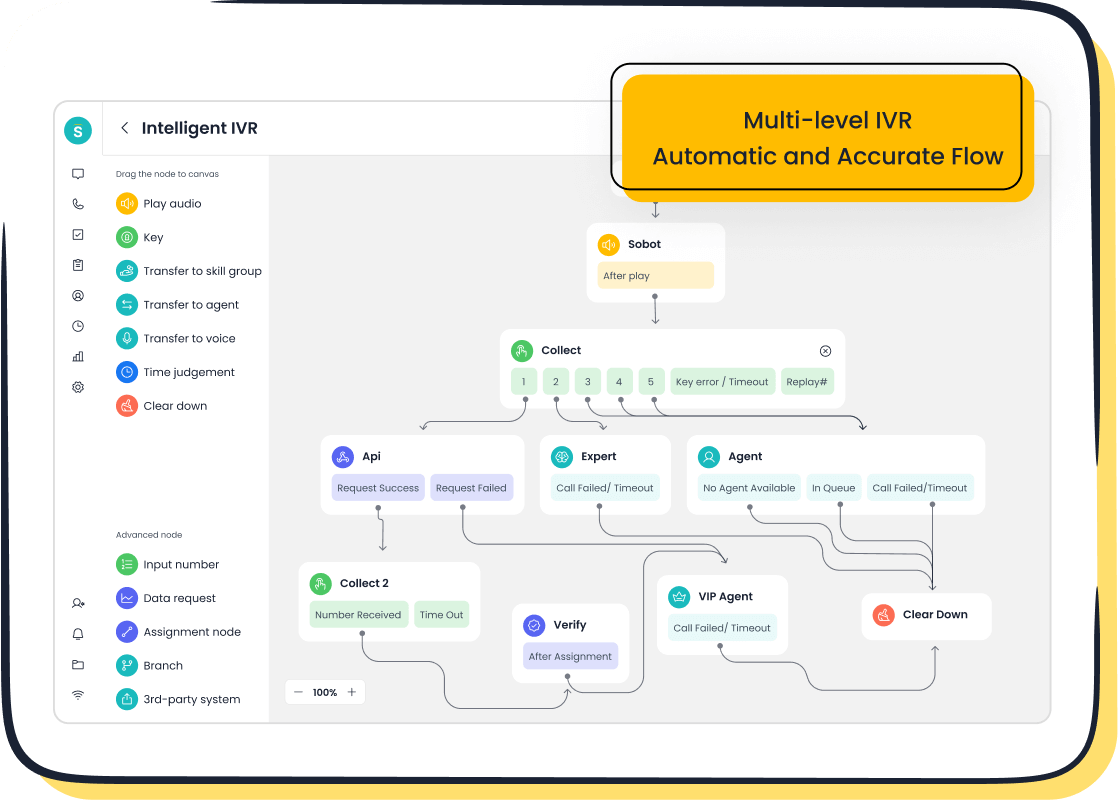
- Intelligent IVR: Businesses can easily build custom call flows with a visual, drag-and-drop IVR tool. This feature routes customers efficiently, improving the overall CX.
- Unified Workspace: Agents get a single view of all customer communications. This workspace combines messages from every channel, including voice, email, and chat, for more effective support.
- Official WhatsApp BSP: As an official WhatsApp Business Solution Provider, Sobot enables direct, scalable communication for marketing and support on one of the world's most popular messaging apps.
Note: Sobot's focus on a unified platform makes it a strong multichannel solution for improving team productivity and customer satisfaction.
Pros and Cons
This call center software delivers significant advantages for businesses looking to scale their operations and improve their multichannel CX.
| Pros |
|---|
| Exceptional System Stability: Guarantees 99.99% uptime for reliable, uninterrupted service. |
| Seamless CRM Integration: Connects easily with existing CRM systems to keep customer data synchronized. |
| Proven Business Results: A case study with Opay showed a customer satisfaction increase from 60% to 90% and a 20% reduction in costs. |
6. Zendesk
Best For
Zendesk is the top choice for businesses already invested in the Zendesk support ecosystem. Its strength lies in seamlessly integrating voice and other channels into its existing platform. Companies looking to expand their support capabilities without leaving their current environment will find this call center software highly effective. It unifies all customer interactions for a consistent multichannel CX.
Key Features
Zendesk provides a robust suite of tools designed to streamline support operations. The platform converts all customer queries into centralized tickets. This process helps teams manage and prioritize issues effectively. Its features work together to improve the overall customer CX.
- Unified Ticketing System: It consolidates requests from email, chat, phone, and social media into a single agent workspace. This ensures no customer inquiry is lost.
- Omnichannel Support: Agents can manage conversations from multiple communication channels in one interface. This creates a seamless multichannel experience for customers.
- AI and Automation: The system uses AI-powered bots to handle common questions. It also automates workflows and ticket routing to improve team efficiency.
- Self-Service Help Center: Businesses can build a knowledge base with articles and FAQs. This empowers customers to find answers on their own, reducing agent workload.
Note: Zendesk's mobile apps for iOS and Android allow agents to manage tickets and respond to customers from anywhere, supporting remote team productivity.
Pros and Cons
This call center software offers powerful tools, but organizations should consider its benefits and drawbacks. Its comprehensive features can enhance the multichannel CX, but may also present challenges for new users.
| Pros | Cons |
|---|---|
| Powerful Ticketing: The system excels at organizing and tracking customer issues. | Steep Learning Curve: New users may find the extensive features overwhelming. |
| Strong Integrations: It connects with hundreds of apps like Salesforce and Slack. | High Cost: Pricing can become expensive as businesses add more features or agents. |
| Highly Scalable: The platform grows with your business, from startups to enterprises. | Complex Customization: Advanced customization often requires technical skills or a developer. |
7. RingCentral
Best For
RingCentral is an excellent option for businesses that need a unified communications platform. It combines phone, video, and messaging with contact center capabilities. This call center software is ideal for companies looking to streamline internal and external communications. It helps them manage a complete multichannel strategy from a single application.
Key Features
RingCentral provides a comprehensive set of tools to improve agent productivity and the customer experience. The platform uses intelligent routing to direct customer inquiries to the most qualified agent. This process ensures faster resolutions. This call center software supports a true multichannel environment.
Key features include:
- Omnichannel Routing: The system intelligently manages interactions across more than 30 digital channels. It uses an auto-attendant, IVR, and skill-based routing to connect customers with the right agent.
- AI and Automation: AI-powered tools provide agents with real-time recommendations. Chatbots handle simple queries, while post-call tools automatically generate transcripts and summaries.
- Workforce Engagement: Supervisors can monitor agent performance with detailed dashboards. They can also use quality management tools to provide coaching and improve the overall team effectiveness.
- Advanced Analytics: The platform tracks key metrics like call volume and queue times. It provides real-time and historical data, including sentiment analysis, to help businesses make informed decisions and enhance their CX.
Note: RingCentral's ability to integrate with popular CRM systems ensures that customer data is always available, allowing for more personalized interactions.
Pros and Cons
This platform offers a powerful solution for unified communications. Businesses should review its advantages and potential drawbacks.
| Pros | Cons |
|---|---|
| All-in-One Solution: Combines team messaging, video, and phone in one app. | Complex for Basic Needs: The extensive features may be too much for small teams. |
| Strong Reliability: Offers a financially backed 99.999% uptime SLA. | Higher Cost: Can be more expensive than competitors, especially for advanced features. |
| Extensive Integrations: Provides over 300 pre-built integrations with business apps. | Learning Curve: New users may need time to learn the full range of features. |
8. 8x8
Best For
8x8 is a strong choice for businesses that need a single, reliable platform for both internal communication and customer service. It combines contact center functions with unified communications like phone and video. This call center software is ideal for companies that want to manage all interactions from one place. Its 99.999% uptime guarantee also makes it a great fit for organizations that require high reliability.
Key Features
8x8 provides a wide range of features to create an effective multichannel environment. The platform uses smart tools to improve agent workflows and customer interactions. This helps businesses deliver a better overall cx.
Key features include:
- Omnichannel Routing: The system directs customer interactions from voice, email, chat, and social media to the best-qualified agent using Automatic Call Distribution (ACD).
- AI-Powered Support: Artificial intelligence helps agents with real-time assistance and language translation. It supports over 40 languages to simplify global operations.
- Predictive Dialing: This tool helps outbound teams increase their call volume and connect with more customers efficiently.
- Video Elevation: Agents can start a video call with customers, allowing them to share their mobile camera for visual support.
Note: This call center software also integrates with many CRM solutions and team collaboration apps, creating a unified workspace for agents.
Pros and Cons
This multichannel platform offers many benefits, but businesses should also consider its potential downsides.
| Pros | Cons |
|---|---|
| High Reliability: Offers an industry-leading 99.999% uptime SLA. | Complex for New Users: The extensive features can have a steep learning curve. |
| Strong Security: Provides robust security protocols for handling sensitive data. | Can Be Overwhelming: May offer more features than a small business needs. |
| Very Scalable: Businesses can easily add agents and upgrade plans as they grow. | Integration Setup: Some integrations may require technical help to configure properly. |
9. Nextiva
Best For
Nextiva is a great fit for businesses that want to unify all their communication tools onto a single platform. It combines contact center features with phone, video, and team messaging. This call center software is ideal for companies looking to streamline both internal collaboration and external customer interactions. It helps organizations manage a complete multichannel strategy from one provider.
Key Features
Nextiva offers a comprehensive suite of tools to improve agent performance and the customer journey. The platform provides robust features for both inbound and outbound communication. This creates an effective environment for customer support and sales teams.
Key features include:
- Intelligent Call Management: The system uses an advanced IVR and skills-based routing to direct customers to the right agent quickly.
- Omnichannel Support: It unifies interactions across voice, email, web chat, SMS, and social media. This gives agents a single view of the customer for a better cx.
- AI-Powered Assistance: The platform includes an AI assistant, sentiment analysis, and automated transcriptions. These tools help improve agent efficiency and provide deeper insights.
- Extensive Integrations: This call center software connects with popular CRM systems like Salesforce, HubSpot, and Zendesk to keep customer data synchronized.
Note: Nextiva's acquisition of Thrio added enterprise-level capabilities, including native process automation and proactive customer notifications, making it a scalable multichannel solution.
Pros and Cons
This platform offers a powerful all-in-one solution. Businesses should review its advantages and potential drawbacks before making a choice.
| Pros | Cons |
|---|---|
| Unified Platform: Combines contact center, phone, and team chat in one app. | Can Be Complex: The wide range of features may be overwhelming for small teams. |
| Strong Integrations: Offers many pre-built connections to popular CRM and business tools. | Higher Cost for Advanced Tiers: Enterprise features and AI tools are in premium plans. |
| Highly Scalable: The platform grows with a business from basic needs to enterprise-level automation. | Learning Curve: New users may need time to learn the full scope of the platform. |
10. LiveAgent
Best For
LiveAgent is a great choice for small and medium-sized businesses that need a feature-rich help desk at an affordable price. This call center software is particularly effective for companies focused on live chat and ticketing. It provides a comprehensive solution for managing customer inquiries. Organizations looking for an all-in-one platform to handle their multichannel support will find it very useful.
Key Features
LiveAgent offers a wide array of tools to create a unified customer service environment. The platform is built around a powerful ticketing system that organizes all communications. This approach helps teams deliver a better overall cx. Its features support a complete multichannel strategy.
Key features include:
- Universal Inbox: It combines messages from email, chat, phone, and social media into a single ticketing system.
- Live Chat: The software provides a fast and customizable live chat widget for websites.
- Call Center: Businesses can manage inbound and outbound calls directly within the help desk.
- Social Media Integration: It connects with platforms like Facebook and Twitter to manage customer interactions.
- Knowledge Base: Companies can create self-service portals to help customers find answers independently.
Note: LiveAgent boasts over 179 help desk features and more than 40 integrations, making it a highly versatile tool for support teams.
Pros and Cons
This platform provides many benefits for businesses seeking an affordable solution. However, companies should also consider its potential drawbacks.
| Pros | Cons |
|---|---|
| Affordable Pricing: Offers competitive plans suitable for small businesses. | Dated User Interface: Some users find the design less modern than competitors. |
| All-in-One Solution: Combines many support tools into a single platform. | Learning Curve: The extensive features can be complex to set up and master. |
| Fast Live Chat: The chat widget is known for its speed and reliability. | Limited Reporting: Basic plans have limited analytics and reporting capabilities. |
What is a Multichannel Contact Center?

A multichannel contact center uses a single platform to manage customer conversations from many places. It brings different communication channels together. This helps businesses improve their customer service environment and overall customer experience management. Instead of using separate tools for phone, email, and chat, companies use one system for everything.
A Unified Communications Hub
A multichannel contact center acts as a central hub for all customer interactions. Unified contact center platforms give agents a complete view of the customer's history. This creates a better customer experience environment. Key tools make this possible:
- Agent Dashboards: Agents use one screen to see all communication channels. They can access call logs, messages, and customer data in one place.
- Routing Tools: A cloud contact center uses smart technology to send customers to the right agent. This includes features like skills-based routing for a better multichannel experience.
This unified approach helps teams work more efficiently. It ensures a consistent response no matter how a customer reaches out.
Key Business Benefits
Using multichannel contact centre software provides many advantages. Advanced contact center solutions help businesses grow by improving customer engagement. The goal is to create positive omnichannel interactions. Key benefits include:
Improved Customer Satisfaction: Customers can use their favorite channel to contact a business. This flexibility leads to higher satisfaction. Offering omnichannel support meets customers where they are. Faster Support: Spreading requests across multiple channels prevents long wait times. Agents with a full customer history can resolve issues faster, which is a core part of customer experience management. Deeper Analytics: Cloud-based contact center solutions gather data from every multichannel interaction. This helps businesses understand customer behavior and improve their services. Increased Efficiency: Agents manage all conversations from a single application. This streamlined workflow boosts productivity and allows for better omnichannel support.
Essential Features to Look For
Choosing the right multichannel contact centre software requires a close look at its features. Businesses should evaluate how a platform handles different communication channels and uses technology to improve service. The best systems offer a blend of core capabilities, smart automation, and seamless integrations.
Core Multichannel Capabilities
Effective software unifies all customer interactions. It brings various communication channels into a single agent workspace. This creates a consistent multichannel experience. Core capabilities include:
- Voice: A key channel, often using AI-powered VoIP technology.
- Email: A simple way for customers to send inquiries.
- SMS: Useful for sending reminders and quick updates.
- Social Media: Manages messages from platforms like Facebook and Twitter.
A strong platform provides a complete history for each contact. This allows for personalized omnichannel support and better customer experience management.
AI and Automation Tools
AI tools and automation features help teams work more efficiently. They handle routine tasks, which frees up agents to focus on complex problems. Chatbots and AI agents provide 24/7 support and real-time responses. Other key AI-powered features include:
- AI Call Routing: Directs callers to the best agent based on their needs.
- Predictive Analytics: Forecasts customer behavior to offer proactive support.
- Robotic Process Automation (RPA): Automates tasks like updating customer records.
These AI capabilities improve workforce optimization and overall customer support quality.
CRM and Third-Party Integrations
A platform's ability to connect with other business tools is essential. Seamless integration with Customer Relationship Management (CRM) systems keeps data synchronized. This gives agents a full view of the customer's history. Popular integrations include:
- CRM Systems: Salesforce, HubSpot, and Zendesk.
- Collaboration Tools: Slack and Microsoft Teams.
Proper integration ensures that all teams, from sales to support, have the most current information. This alignment is critical for effective customer experience management and engagement.
Enhancing the Customer Experience
Advanced contact center solutions use technology to create better customer experiences. AI agents can understand natural language to provide relevant answers around the clock. This improves self-service options. Predictive analytics uses data to anticipate customer needs. This allows businesses to offer personalized recommendations and proactive omnichannel support. These features help turn every multichannel interaction into a positive one, which is vital for workforce optimization.
Comparing the Top Contact Center Vendors
Choosing the right multichannel contact centre software requires careful comparison. Businesses should look beyond features to find the best partner. Evaluating top contact center vendors on key criteria ensures a successful long-term investment. This process helps companies select the ideal platform for their needs. Comparing top contact center vendors involves a detailed review of their offerings and reputation.
Evaluation Criteria
When comparing top contact center vendors, businesses should use a clear set of standards. This helps identify the best fit. A thorough evaluation of top contact center vendors is critical.
- Vendor Expertise: Look at the vendor's industry experience and history of innovation. Top contact center vendors often have a proven track record.
- Reputation: Check independent sources to assess the reputation of top contact center vendors. Focus on reliability and customer feedback.
- Feature Alignment: Match the vendor's multichannel features to your business needs. Ensure the platform supports your required channels and integrations.
- Customer Support: Evaluate the quality of support services. Top contact center vendors provide strong implementation and ongoing assistance.
Scalability and Pricing Models
Scalability is crucial when comparing top contact center vendors. Many top contact center vendors offer scalable plans that grow with your business. Cloud-based solutions provide excellent flexibility. They allow companies to adjust resources for seasonal spikes or growth. This supports effective workforce optimization. Pricing models also vary among top contact center vendors. Some offer affordable plans, while others have higher tiers for advanced features. A cloud contact center often uses a pay-as-you-go model. This helps manage costs and supports workforce optimization by enabling remote teams. A good multichannel platform enhances customer engagement.
Implementation and Support
A smooth transition is vital. When comparing top contact center vendors, ask about their implementation process. The best partners offer dedicated support to get your team started. Continuous post-implementation support is also important for long-term success. This ensures your team can handle any issues that arise. Strong support contributes to better workforce optimization. It helps agents use the multichannel system effectively.
How to Choose the Right Multichannel Contact Centre Software
Choosing the right multichannel contact centre software is a critical decision. It requires a careful review of your company's unique needs and goals. Businesses should evaluate how different platforms align with their operations. This ensures the selected solution supports long-term growth and improves customer experience management. Comparing top contact center vendors on key criteria helps identify the best fit.
Define Your Business Needs
A business must first define its objectives. This step creates a clear roadmap for selecting a multichannel platform. Companies should outline their primary goals and the metrics that will define success.
- Identify Goals: Determine the main purpose of the contact center. Is it for customer support, sales, or technical help?
- Define Success Metrics: Choose key performance indicators (KPIs). These may include customer satisfaction scores (CSAT) or first-contact resolution rates.
- Select Channels: Decide which communication channels to support. Base this on customer preferences, such as voice, email, or live chat.
- Estimate Volume: Project the number of daily or weekly interactions. This helps determine staffing and technology needs for your multichannel strategy.
Evaluate Integration Capabilities
A comprehensive technology assessment is essential. Businesses must evaluate how a new multichannel platform will connect with existing systems. Seamless integration streamlines processes and reduces manual work. Top contact center vendors offer solutions that connect easily with tools like CRM software. This creates a unified view of the customer. A proper evaluation ensures the technology infrastructure is ready for a new multichannel system. Top contact center vendors can provide details on their integration options.
Compare Automation and Reporting
Businesses should compare the automation features of different top contact center vendors. Automation improves efficiency and frees up agents to handle complex issues. Reporting tools provide insights into performance. When comparing top contact center vendors, look at key metrics for their automation features.
| Metric | Description |
|---|---|
| Pass/Fail Rate | Shows the success rate of automated tasks. |
| Execution Time | Measures how quickly automated processes run. |
| Defect Density | Identifies the number of errors in a process. |
Strong reporting from top contact center vendors is vital for effective customer experience management.
Assess Scalability and Support
Scalability ensures the software can grow with the business. Top contact center vendors offer flexible plans that adapt to changing needs. This allows companies to add agents or features as they expand. Equally important is the quality of support. Look for top contact center vendors that provide excellent implementation assistance and ongoing technical help. Reliable support is crucial for maintaining a smooth multichannel operation.
Selecting the best software requires aligning features, integrations, and scalability with specific business goals. This alignment enhances customer journeys. Businesses should evaluate how each platform, including powerful all-in-one solutions like Sobot, can improve team efficiency and boost customer satisfaction.
Embark on Your Contact Journey today. Shortlist your top choices and schedule a personalized demo to see which platform best fits your team's workflow.
FAQ
### What is the difference between multichannel and omnichannel?
A multichannel contact center offers customers many ways to connect, like phone and email. An omnichannel contact center integrates these channels. It creates a single, seamless conversation for the customer across all touchpoints. This provides a more unified customer experience.
### Why is CRM integration important for contact center software?
CRM integration gives agents a complete view of the customer. It syncs all historical data and past interactions. This allows agents to provide personalized and efficient support. It helps improve first-contact resolution and overall customer satisfaction.
### Can small businesses use multichannel contact center software?
Yes, many vendors offer solutions for small businesses. Cloud-based platforms like Sobot provide scalable plans. Companies can start with essential features and add more as they grow. This makes advanced contact center software accessible and affordable for smaller teams.
### How does AI improve a multichannel contact center?
Artificial intelligence automates routine tasks. AI-powered tools like chatbots and voicebots handle simple customer questions 24/7. This frees up human agents to focus on more complex problems. AI also provides real-time data and insights to improve service quality.
See Also
Your Essential Handbook for Seamless Omnichannel Call Center Software Solutions
Discover the Top 10 AI Tools for Enterprise Contact Center Solutions
Mastering Omnichannel: A 10-Step Guide to Contact Center Implementation
Unveiling the Top 10 Call Center Analytics Software Solutions for 2024
The 10 Best Customer Service Software Platforms to Elevate Experiences in 2024

