7 Best AI Tools for Insurance Customer Experience


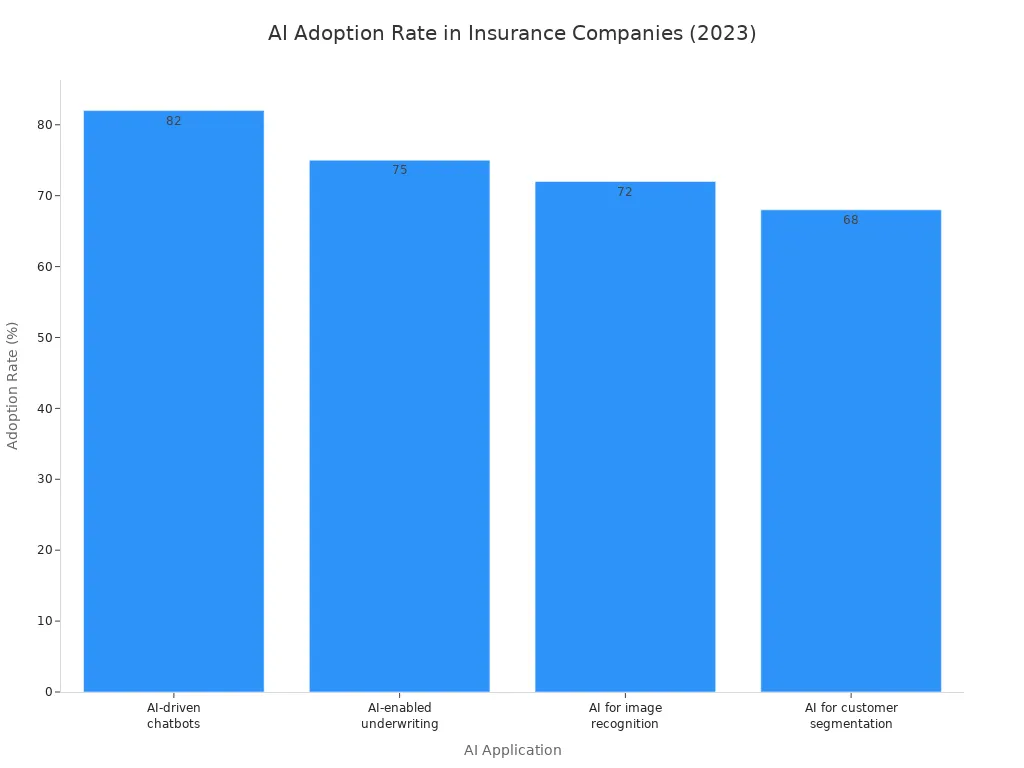
In the competitive insurance market, a superior customer experience drives growth, and AI is the key. Traditional customer service fails to meet modern customer expectations. AI tools for customer experience in insurance support provide 24/7 availability and customer service automation. This automation allows insurance providers to give all customers the instant, personalized service they demand. The adoption of AI in the insurance industry, especially AI-driven chatbots, is rising rapidly, as many customers now prefer this type of support.
Our Top Picks:
- Sobot: Best for omnichannel customer support
- Tractable: Best for AI claims automation
- Zendesk: Best for integrated service
Our Evaluation Criteria for AI Tools
Choosing the right AI tools for insurance requires a clear plan. A powerful tool should solve real problems for your agency and its customers. We evaluated each platform based on four key standards to ensure it delivers real value.
Core System Integration
An AI tool must work with your existing systems. The best platforms connect smoothly with your Customer Relationship Management (CRM) and other core insurance software. This integration creates a single source of truth for all customer data. It prevents agents from switching between multiple screens. A well-integrated AI solution makes your entire operation more efficient.
Impact on CX Metrics
The ultimate goal of AI is to improve the customer experience. We measured each tool's ability to positively affect key performance indicators (KPIs). A successful AI implementation should improve scores for customer satisfaction and loyalty.
Key metrics to watch include:
- Customer Satisfaction (CSAT) Score
- Net Promoter Score (NPS)
- First Contact Resolution (FCR)
AI helps insurance teams achieve these goals by making service faster and more accurate.
| KPI | How AI Improves It |
|---|---|
| Average Handling Time (AHT) | AI automates simple questions, which lowers the average time agents spend on each interaction. |
| First Call Resolution (FCR) | AI gives agents instant access to customer information, helping them solve problems on the first try. |
| Customer Churn Rates | AI can analyze data to predict which policyholders might leave, allowing for proactive outreach. |
Ease of Use for Agents
A tool is only effective if your team uses it. We prioritized platforms with simple, intuitive interfaces. Agents should not need extensive technical training to use the AI. A good design helps agents adopt the new technology quickly. This leads to better productivity and morale for your insurance team.
Security and Compliance
Insurance companies handle sensitive customer information. Therefore, security is not optional. The AI tools for insurance on our list must meet strict data protection standards. This includes compliance with regulations like GDPR for data privacy and HIPAA for health information.
Responsible AI in insurance must be:
- Transparent: The AI decision-making process should be clear.
- Accountable: There must be clear ownership for AI-driven outcomes.
- Fair: The AI must be tested to avoid bias against any group.
These standards ensure that the technology is both powerful and trustworthy.
Top AI Tools for Insurance Agencies

Finding the right AI tools for insurance agencies can transform your operations. The best platforms streamline workflows, reduce costs, and elevate the customer experience. We reviewed dozens of solutions to identify the top seven that deliver tangible results for insurance.
1. Sobot: Best for Omnichannel Insurance Support
Sobot provides an all-in-one customer contact center solution. It unifies all your communication channels into a single, powerful platform. This is ideal for insurance carriers and agencies that manage high volumes of customer interactions.
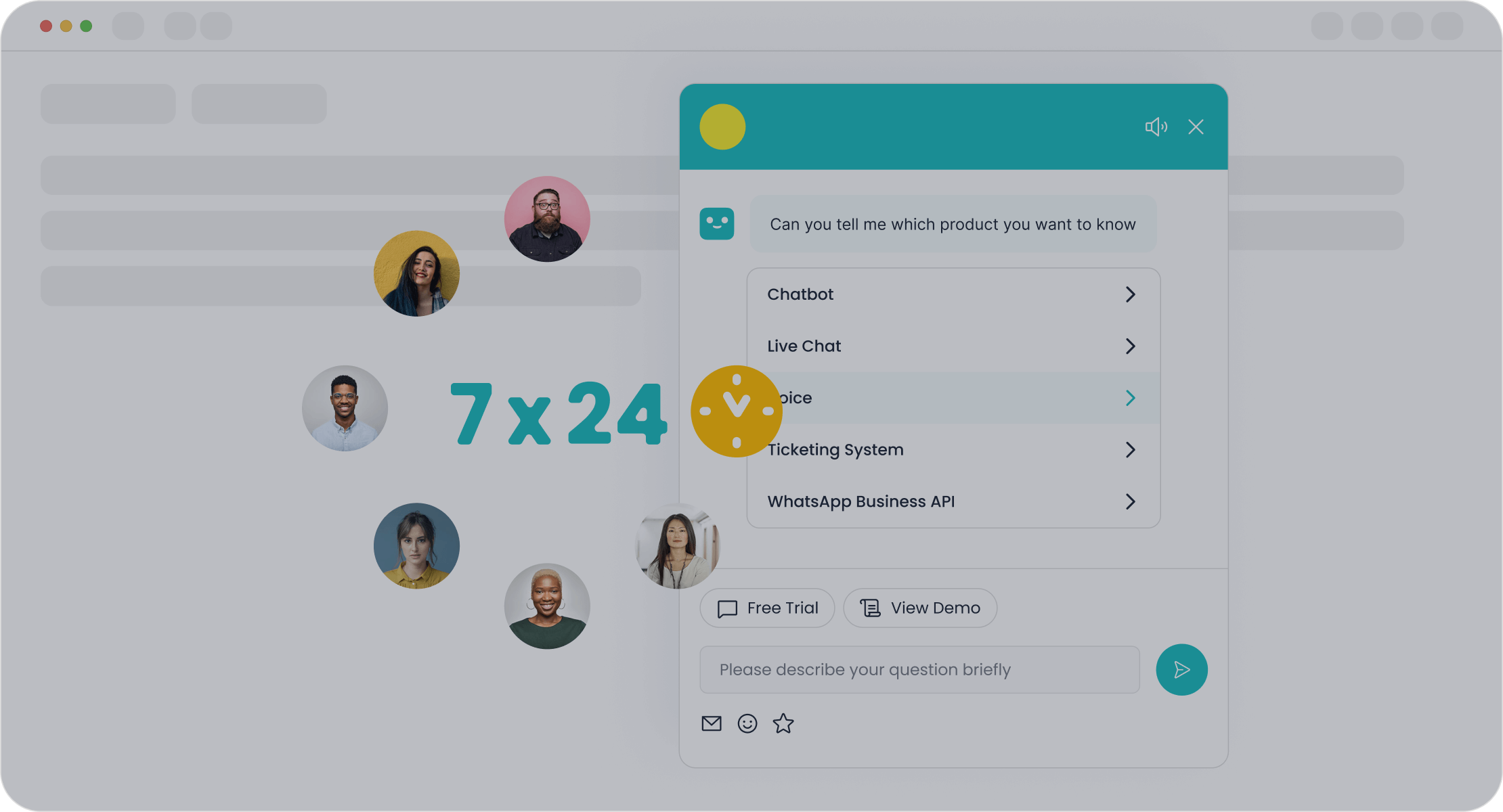
Key Features Sobot’s platform combines several powerful tools:
- AI Chatbot: An AI-powered chatbot, enhanced with ChatGPT, provides 24/7 multilingual support. It uses a knowledge base to answer common policy questions instantly.
- Live Chat: When a customer needs human help, the conversation moves smoothly to a live agent in the same window.
- Ticketing System: Complex issues that require follow-up are automatically converted into tickets. This ensures no customer request is lost.
- Voice and Call Center: The platform includes a complete voice solution with a voicebot for handling calls, an intelligent IVR, and call routing to the right agent.
The entire system is built on a no-code, point-and-click interface. This makes it easy for insurance teams to design and launch automation without needing IT support.
How It Improves CX Instant, 24/7 support is a game-changer for customer satisfaction. Policyholders no longer have to wait for business hours to get answers about their coverage or claims. Sobot’s AI tools for customer experience in insurance support provide immediate responses across channels like WhatsApp, email, and voice. This availability builds trust and loyalty. The platform also offers end-to-end encryption for sharing sensitive documents, a critical feature for financial and insurance services.
Pros
- Boosts agent productivity by up to 70%.
- Reduces customer service costs by as much as 50%.
- Increases conversion rates by 20% through proactive engagement.
Customer Proof: Opay, a major financial services company, used Sobot to unify its customer support. The company increased its customer satisfaction (CSAT) score from 60% to 90%. It also achieved a 20% cost reduction in customer service operations, showing the platform's value in a related industry.
2. Tractable: Best for AI Claims Damage Assessment
Tractable uses AI to "see" and assess damage to vehicles and property. This technology dramatically speeds up claims processing. It is one of the most effective AI tools for insurance agencies focused on claims automation.
Key Features Tractable’s AI uses computer vision to analyze photos and videos of damage.
- For vehicles, a user can upload a video of their car. The AI recognizes damaged parts and can even ask the user for more specific angles to ensure a complete assessment.
- For property, the AI breaks down damaged items like a fence into their components (panels, poles, etc.). It then assesses each part to determine the cause of damage and whether it needs repair or replacement.
How It Improves CX Faster claims processing is a major driver of customer satisfaction. Policyholders want their claims resolved quickly and fairly. Tractable’s AI makes this possible by providing an initial assessment in minutes, not days. This automation reduces the overall claim cycle time significantly. The system also includes comprehensive AI fraud detection tools to ensure the correct vehicle's condition is captured, protecting both the insurer and the customer. This level of fraud detection is crucial for maintaining trust.
Pros and Cons
| Pros | Cons |
|---|---|
| Reduces claim cycle times by an average of 8 days. | Requires high-quality images or video for accurate assessment. |
| Up to 10x faster than manual damage review. | Primarily focused on damage assessment, not the full claims workflow. |
| Improves assessment consistency and accuracy. | Integration with older agency management systems can be complex. |
3. Zendesk: Best for Integrated AI Customer Service
Zendesk is a well-known name in customer service, and its AI tools are designed to enhance existing support workflows. It is a strong choice for insurance agencies already using the Zendesk ecosystem or those looking for robust AI-powered ticket management and support solutions.
Key Features Zendesk’s AI is built directly into its support suite.
- Intelligent Triage: AI automatically categorizes and routes incoming tickets based on intent, sentiment, and language.
- AI-Powered Responses: The system suggests replies to agents, generates email drafts, and summarizes long ticket threads to save time.
- Knowledge Base Management: AI analyzes your help center's performance. It can suggest new articles to fill knowledge gaps or flag existing content that needs an update.
- 24/7 Service: Zendesk’s AI agents and chatbots use the knowledge base to provide customers with round-the-clock self-service options.
How It Improves CX Zendesk’s AI helps agents become more efficient and effective. By automating routine tasks, agents can focus on complex customer issues that require a human touch. This leads to faster response times and higher first-contact resolution rates. The sentiment analysis feature also helps agents understand a customer's emotional state, allowing for more empathetic engagement. This level of personalization improves customer satisfaction.
Pros and Cons
| Pros | Cons |
|---|---|
| Seamless integration with Zendesk’s popular ticketing system. | AI features are most powerful when used within the full Zendesk suite. |
| Strong tools for analyzing and improving knowledge base content. | Can be more expensive than standalone AI tools. |
| Provides multilingual support and sentiment analysis. | Some advanced AI features are only available on higher-tier plans. |
4. Voiceflow: Best for Building Voice AI Agents
Voiceflow is a collaborative platform for designing, testing, and launching advanced AI agents for both voice and chat. It is one of the best AI tools for insurance agencies wanting to build custom conversational experiences for tasks like claims intake or policy quotes.
Key Features Voiceflow provides a visual, drag-and-drop builder that makes AI agent creation accessible.
- No-Code Builder: Teams can design complex conversational flows without writing any code.
- Omnichannel Deployment: Build an agent once and deploy it across multiple channels, including phone systems (IVR), websites, and mobile apps.
- Deep Integration: Connects to your existing agency management systems and databases via APIs to pull policy information or update customer records.
- Advanced AI: Uses powerful Large Language Models (LLMs) and a vector-based knowledge base to understand and respond to customers naturally.
How It Improves CX Voiceflow allows insurance agencies to automate key customer journeys 24/7.
- Claims Intake (FNOL): A voice agent can gather incident details, collect documents, and route the case to the right adjuster, speeding up the first notice of loss.
- Policy Servicing: Customers can check coverage, change an address, or ask about policy status instantly without waiting for an agent.
- Lead Qualification: An AI agent can generate basic quotes, collect underwriting details, and schedule appointments with advisors.
This automation frees up human agents for high-value work and gives customers the immediate service they expect. The platform also has features for fraud detection, as AI can identify suspicious calling patterns or inconsistent claim descriptions in real-time. This makes it a valuable tool for fraud detection.
Pros and Cons
| Pros | Cons |
|---|---|
| Powerful and flexible no-code visual builder. | Credit-based pricing can become costly as usage scales. |
| Supports both voice and chat for true omnichannel experiences. | Frequent platform updates can sometimes require workflow adjustments. |
| Strong integration capabilities with existing tech stacks. | Advanced security and compliance features are reserved for enterprise plans. |
5. Hyperscience: Best for Intelligent Document Processing
Hyperscience specializes in intelligent document processing (IDP). It uses AI to read and understand complex insurance documents, automating data entry and validation. This is a critical tool for any insurance company looking to reduce manual paperwork.
Key Features Hyperscience’s platform automates the entire document workflow.
- Data Extraction: The document processing AI ingests documents from emails or other sources and extracts key data from claim forms, invoices, and policy applications. It works with structured, semi-structured, and unstructured formats.
- Data Validation: The AI applies business rules to validate the extracted data. For example, it can check if a policy number is active or if a submitted invoice date falls within the coverage period.
- Confidence Scoring: The platform provides a confidence score for all extracted data. Items with low confidence are flagged for a human to review, ensuring high accuracy.
How It Improves CX By automating document-heavy workflows, Hyperscience dramatically accelerates claims processing and underwriting. This speed translates directly to a better customer experience. Faster processing means quicker decisions on claims and policies, which is a key factor in customer satisfaction. The high accuracy of the AI also reduces errors that could lead to customer disputes.
Pros and Cons
| Pros | Cons |
|---|---|
| Achieves accuracy levels above 99% for data extraction. | Primarily focused on back-office document automation, not direct customer engagement. |
| Reduces document processing times by up to 85%. | Implementation may require significant workflow redesign. |
| Integrates with existing claims systems and agency management systems. | Can be a significant investment for smaller agencies. |
6. AgentFlow: Best for End-to-End Workflow Automation
AgentFlow is an AI platform designed to automate entire insurance workflows from start to finish. It combines document processing with decision-making logic to handle complex processes like underwriting and claims adjudication. This makes it one of the most comprehensive AI solutions for insurance companies.
Key Features AgentFlow provides "Agentic AI" to automate multi-step processes.
- FNOL Processing: Automates document intake, validates policy coverage, and generates immediate responses for first notice of loss.
- Underwriting Automation: Extracts data from submissions, applies risk scoring models, and can even generate draft policies.
- Claims Adjudication: Validates supporting documents, assesses signals for fraud detection, and issues explainable approval or denial memos.
How It Improves CX AgentFlow creates a faster, more transparent experience for customers. The AI automation ensures that processes move forward 24/7 without manual bottlenecks. For example, FORUM Credit Union used AgentFlow to accelerate its loan decisions, achieving 99% accuracy in document classification and 100% automated decisioning. This same speed and accuracy can be applied to insurance claims processing, giving customers faster resolutions and greater peace of mind. The platform's ability to handle fraud detection adds another layer of security.
Pros and Cons
| Pros | Cons |
|---|---|
| Automates complex, end-to-end insurance workflows. | May require more technical expertise to set up than simpler tools. |
| Designed specifically for insurance and financial services use cases. | Newer player in the market compared to more established platforms. |
| Strong results in customer case studies, showing high accuracy. | Focus is on workflow automation, not a full customer communication suite. |
7. Planck: Best for AI-Powered Underwriting Data
Planck is an insurance-specific AI platform that provides data and insights for commercial underwriting. It uses AI to scan the open web and thousands of other sources to create a complete picture of a business, enabling faster and more accurate risk assessment.
Key Features Planck’s platform is built for underwriting risk assessment.
- Real-Time Data Gathering: The AI continuously mines the web for information about a business, from its operations and location to customer reviews and online presence.
- Advanced AI Analysis: It uses computer vision and natural language processing to analyze images, videos, and text, turning unstructured data into actionable insights.
- Comprehensive Business Profiles: The platform delivers a complete profile of a business, highlighting risk factors and verifying submitted information. This is a powerful tool for fraud detection.
How It Improves CX While Planck is an underwriting tool, it has a direct impact on the customer experience. Faster, more accurate underwriting means quicker quotes and more precise pricing for business customers. This efficiency sets a positive tone for the entire customer relationship. By automating data gathering, Planck allows underwriters to focus their time on building relationships with clients and brokers, providing a higher level of service and engagement. This insurance-specific AI helps carriers write more policies with greater confidence.
Pros and Cons
| Pros | Cons |
|---|---|
| Provides deep, real-time insights for commercial underwriting. | Focused exclusively on commercial insurance underwriting. |
| Automates the manual data gathering process for underwriters. | Not a customer-facing communication tool. |
| Improves underwriting accuracy and reduces expense ratios. | Data is limited to what is publicly available online. |
Choosing the Right AI Tools for Insurance
Selecting the right AI tools for insurance requires a thoughtful approach. A successful implementation starts with understanding your specific needs. Following these four steps will help you choose a solution that delivers real value to your agency and your customers.
Step 1: Pinpoint Your CX Bottleneck
First, identify the biggest challenges in your customer experience. Many insurance agencies struggle with similar issues. These problems frustrate customers and create inefficiency for your team.
Common bottlenecks in the insurance industry include:
- Delayed response times, especially with email.
- Inconsistent customer service across different channels.
- Customers having to repeat information.
- A difficult sales and onboarding process.
Understanding your primary bottleneck helps you find an AI solution designed to solve that specific problem. This ensures the AI you choose will have an immediate impact.
Step 2: Map Your Integration Needs
Your new AI tools must work with your existing systems. A platform that cannot connect to your core insurance software will create more problems than it solves. Map out how a new tool would integrate with your CRM and other management systems. Proper integration creates a seamless flow of information. This gives agents a complete view of every customer interaction.
Step 3: Launch a Pilot Project
You do not need to transform your entire operation overnight. Start with a small-scale pilot project to test the value of new AI tools for insurance. Choose one specific task with a high potential for return on investment. For example, you could test an AI chatbot to handle routine policy questions. A successful pilot project provides clear evidence of how AI can benefit your business before you commit to a larger investment.
Step 4: Empower Your Team with AI
Technology is only effective if your team knows how to use it. Proper training is essential for empowering your agents. Training should focus on how AI enhances their work, not replaces it. Agents must learn how to collaborate with AI, interpret its insights, and understand its ethical use in insurance. Effective training ensures the ai tools for insurance agencies you adopt will boost both productivity and morale.
The Future of AI Tools for Customer Experience in Insurance Support
The future of the insurance industry is being reshaped by artificial intelligence. AI is moving from an experimental concept to a core business function. The right ai tools for customer experience in insurance support will soon become standard. These technologies will create faster, more transparent, and highly personalized services for every customer.
The Rise of Generative AI Co-pilots
Generative AI co-pilots are emerging as powerful assistants for insurance teams. These AI tools do not replace human agents. Instead, they enhance their abilities.
- Agent Assistance: AI co-pilots provide agents with quick answers and summarize long documents. This reduces the time agents spend searching for information.
- Administrative Automation: AI can draft policy documents and fill in standard forms automatically. This automation speeds up renewals and new applications.
- Personalized Support: These assistants help agents offer better customer support by analyzing policy details to provide personalized responses.
Proactive vs. Reactive Service Models
The insurance industry is shifting from a reactive to a proactive service model. In the past, companies waited for a customer to report a problem. Now, AI allows them to anticipate needs. For example, AI can analyze data to predict when a customer might leave for a competitor. The insurance company can then proactively offer a better deal. AI chatbots also contribute to this model by sending payment reminders and renewal notifications, improving the overall customer experience.
Hyper-Personalization at Scale
AI makes it possible to offer a unique experience to every policyholder. Insurers use AI and machine learning to analyze individual customer data. This enables new levels of personalization.
Examples of Hyper-Personalization:
- Behavior-Based Pricing: Telematics devices in cars monitor driving habits. This data allows for personalized insurance premiums.
- Customized Recommendations: AI tools for insurance can suggest tailored policies based on a person's risk profile and financial status.
- Personalized Communication: AI delivers relevant updates and offers through each customer's preferred channel, like email or SMS.
The Evolving Role of the Insurance Agent
AI is changing the daily work of an insurance agent. Repetitive tasks are becoming automated. This frees up agents to focus on more valuable work. The future agent will be a trusted advisor who builds strong client relationships. With AI handling data entry and document review, agents can spend more time providing expert advice and strategic guidance. This shift empowers agents to deliver higher-quality service and drive business growth.
In today's digital-first world, leveraging AI for customer experience is a fundamental requirement for staying competitive in the insurance industry. An IBM study found 77% of insurance leaders agree generative AI is necessary to keep pace. The speed and personalization offered by AI tools are now standard expectations from customers. These ai tools for insurance agencies provide the 24/7 support that modern customers demand. The right ai tools for customer experience in insurance support can transform your operations.
Start your own contact journey. Audit your current customer experience and identify one area where AI can make an immediate impact. Explore how Sobot's ai tools for insurance can help at https://www.sobot.io/.
FAQ
How does AI help small insurance agencies?
AI helps small insurance agencies compete with larger firms. An AI tool can handle many customer questions 24/7. This frees up agents to focus on selling policies and building relationships. It is a cost-effective way for any insurance business to improve service.
Will AI replace insurance agents?
No, AI will not replace insurance agents. Instead, AI acts as a powerful assistant. The technology handles simple, repetitive tasks. This allows agents to spend more time on complex problems and providing expert advice. The goal of AI is to support, not replace, human expertise in insurance.
What is the first step to using AI in insurance?
The first step is to find your biggest customer service problem.
For example:
- Are your response times too slow?
- Do customers repeat information often?
Identifying a key issue helps you choose the right AI tool for your insurance needs. This ensures the AI provides an immediate benefit.
How does AI improve security for an insurance company?
AI improves security by spotting unusual patterns. An AI system can analyze claims and customer data in real-time to detect potential fraud. This protects the insurance company and its honest policyholders. Many AI platforms also offer advanced encryption to keep sensitive information safe.
See Also
Leading AI Solutions for Enterprise Contact Centers: A Top 10 List
AI Customer Service Software: Maximizing Operational Efficiency and Performance
Essential Guide to Artificial Intelligence Software for Call Centers
An In-Depth Review of AI Solutions for Enterprise Call Centers
Best Speech Analytics Tools for Call Centers: The 2024 Ranking

