The Truth About AI Customer Service Tools

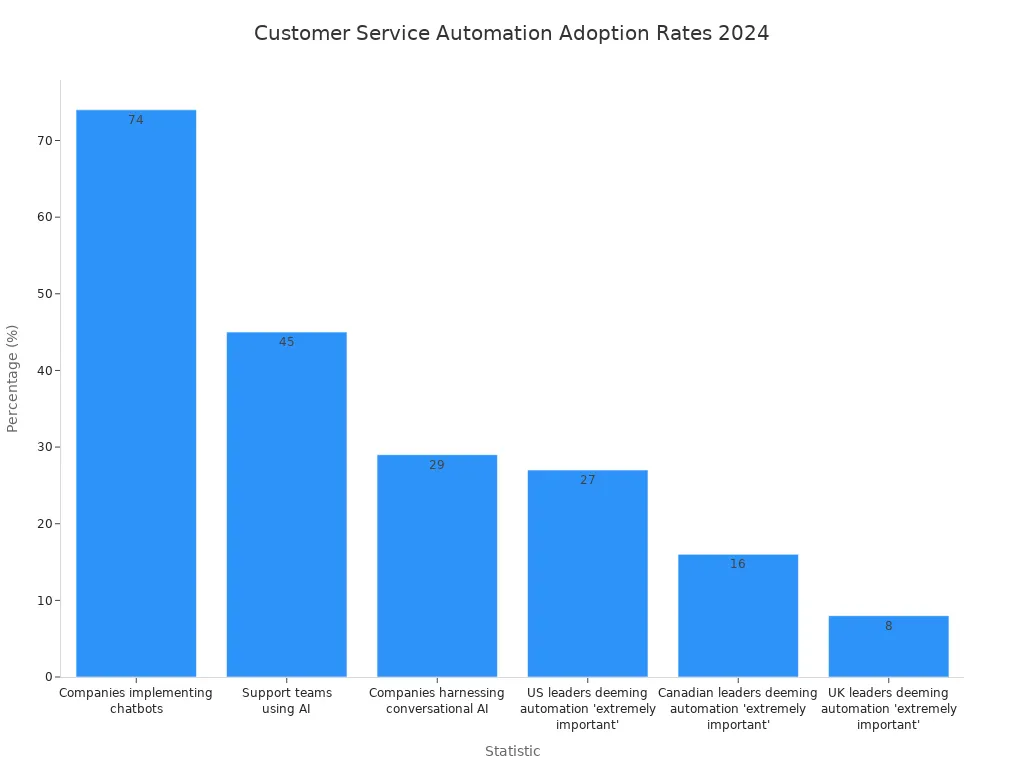
The rise of ai in customer service is clear, with 74% of companies now implementing chatbots. The real truth about using ai in customer service, however, is not a simple choice between technology and people.
The goal is creating a powerful partnership. This guide reveals a practical framework for a hybrid customer support model.
This approach leverages ai for speed and data, freeing human experts for complex issues. A strategy from Sobot using the best ai-powered customer service automation tools can boost efficiency. This enhances the overall customer experience and transforms your customer service.
The Key Advantages of AI in Customer Service
Understanding the advantages of AI is key to building a better support strategy. AI in customer service offers powerful benefits. These advantages help businesses improve operations and satisfy customers.
24/7 Availability and Instant Responses
Modern customers expect constant access. In fact, over half of all people believe a business must be available 24/7. AI meets this demand easily. AI-powered chatbots and virtual assistants never sleep. They provide instant answers to questions at any time of day or night. This increased availability is crucial because 77% of customers expect to interact with someone immediately. Quick responses make customers feel valued and build trust.
Reduced Costs Through Automation
Automated customer service leads to significant cost savings. An AI interaction can cost as little as $0.10. A human agent interaction averages around $8.01. This difference adds up quickly. AI handles common and repetitive questions. This frees your business from hiring and training a large team just for simple queries. The result is a more focused and cost-effective customer support department.
Boosting Efficiency with Sobot's AI Chatbot
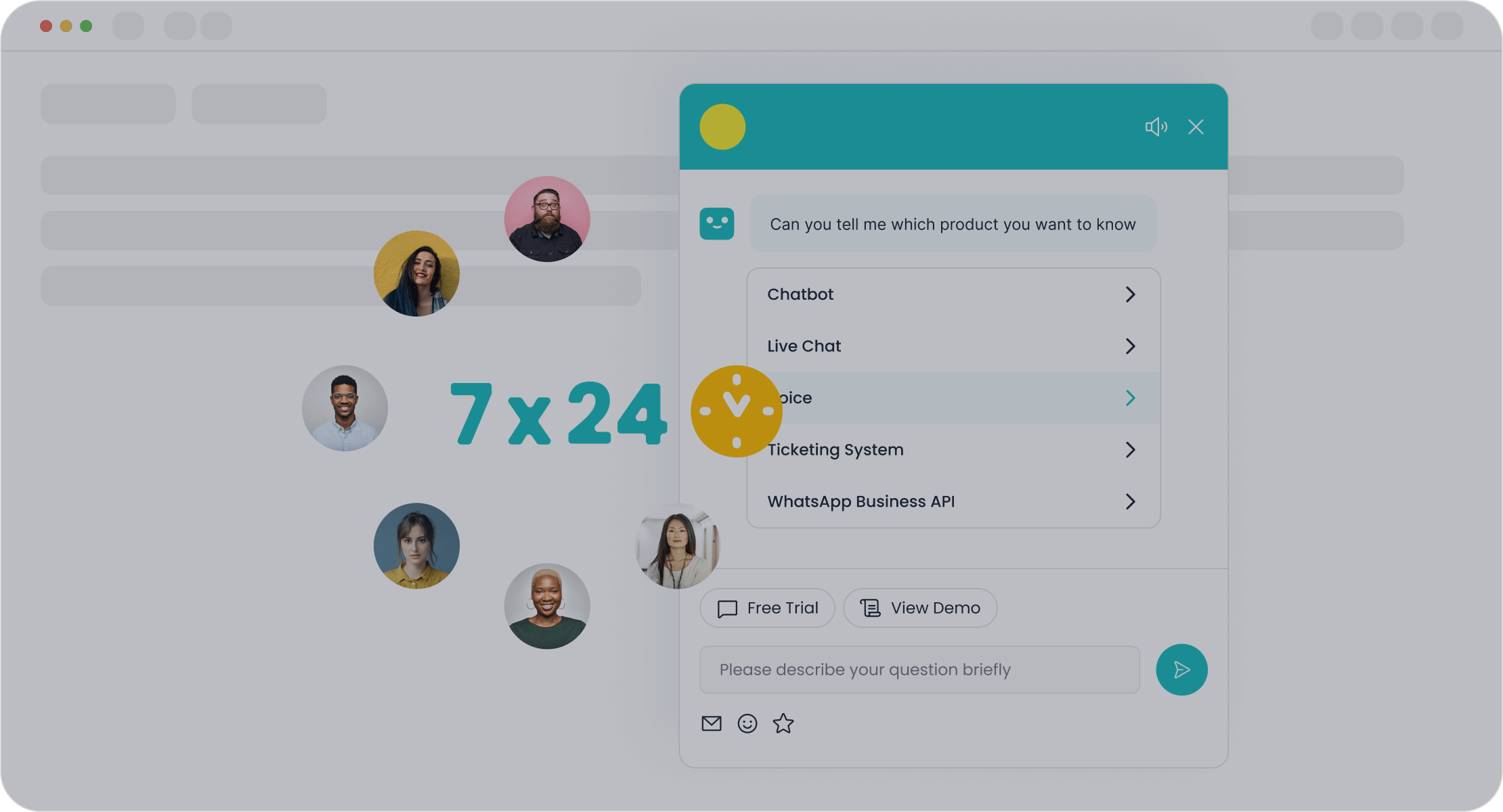
One of the main advantages of AI is improved efficiency and scalability. The right tools can transform your team's output. Sobot’s AI Chatbot, for example, improves productivity by 70% and can save up to 50% on agent costs. These chatbots handle routine inquiries around the clock. This allows human agents to focus on complex problems that require a personal touch. This is one of the core advantages of AI when using it in customer service.
Tip: A great AI platform combines chatbots, voicebots, and other tools. This creates a complete solution for your customer service needs.
Data-Driven Personalization and Insights
AI does more than just answer questions. It collects and analyzes data from every interaction. This process delivers advanced personalization. Research shows 80% of consumers are more likely to buy from brands that offer personalized experiences. AI helps create these experiences by understanding customer history and preferences. This technology also provides improved customer insights. It can spot emerging trends and customer pain points in real-time, helping you improve your overall customer experience.
AI in Customer Service: Pros and Cons
The rise of ai in customer service brings both powerful advantages and notable disadvantages. Understanding these pros and cons is essential for any business. A balanced view helps create a strategy that works for both the company and its customers. Let's explore the key pros and cons of ai.
Pro: Unmatched Scalability During Peak Demand
One of the biggest pros of AI is its ability to scale instantly. During busy times like holidays or sales events, customer inquiries can surge. AI handles this increased volume without needing more staff.
- Intuit scaled its support from 6,000 to 11,000 agents during peak seasons using AI-driven responses.
- Amazon uses AI to resolve over 75% of inquiries without human help, managing huge volumes efficiently.
This scalability ensures customers get fast answers even during peak demand, improving the overall customer experience.
Pro: Consistent and Standardized Service
AI ensures every customer receives the same, on-brand information. Human agents can sometimes give slightly different answers. AI follows a script. It uses an approved knowledge base for every response. This technology can automatically detect and correct inconsistencies in tone, terminology, and phrasing. This guarantees that your customer service messaging stays consistent across all interactions, reinforcing brand trust.
Con: Lack of Genuine Human Empathy
A primary disadvantage of AI is its lack of empathy. While AI can simulate politeness, it cannot truly understand human emotion. For sensitive or complex problems, customers often prefer a real person. One survey found that 49% of consumers prefer human interaction for customer support. This highlights one of the key disadvantages of AI: it struggles to build a genuine connection, which is crucial for resolving emotional customer issues.
Con: Struggles with Complex or Novel Issues
Another one of the disadvantages of AI is its difficulty with new or complicated problems. Chatbots are trained on existing data. When faced with a unique issue, they can fail.
Common failures include inventing facts (hallucinations), misunderstanding user intent, or getting stuck in a loop without escalating to a human. These disadvantages show that AI is not a complete replacement for human experts in customer service.
Con: Data Privacy and Security Risks
Finally, the disadvantages and risks of ai in customer service include major privacy concerns and ethical questions. AI systems collect and store large amounts of customer data. This creates significant risks. Your business must comply with strict regulations like GDPR and CCPA. A data breach can lead to massive fines and a loss of customer trust. These risks and disadvantages make strong security measures essential. The complexity of implementation for secure AI is a serious consideration.
Building a Hybrid AI Support Model

Knowing the pros and cons of AI is only the first step. The real goal is to create a smart system where technology and people work together. A hybrid model uses AI for what it does best, freeing human agents to handle what they do best. This approach creates a better customer experience and a more efficient team.
Use AI for First Contact and Triage
The best way to start a hybrid model is to use AI for first contact. AI-powered chatbots can handle a wide range of initial customer needs. This immediately reduces the workload on your human agents. AI is perfect for managing routine tasks that do not require human emotion or complex thinking.
Ideal queries for an AI to handle first include:
- Answering FAQs: Chatbots can instantly provide answers to common questions about shipping, return policies, or business hours.
- Order Status: Customers can get updates on their orders without waiting for an agent.
- Troubleshooting: AI can guide users through basic troubleshooting steps for common technical issues.
- Appointment Scheduling: Chatbots can book appointments and send reminders automatically.
- Account Management: AI allows customers to perform simple tasks like updating their records or checking balances.
Beyond answering questions, AI systems use natural language processing (NLP) to analyze and sort incoming requests. This intelligent triage system routes issues to the right department or agent based on urgency, topic, and customer sentiment. This ensures every issue gets to the right person quickly.
Design a Seamless Handoff to Human Agents
A hybrid model is only as good as its handoff process. A clumsy transfer from a bot to a person can frustrate customers. The goal is a smooth, invisible transition that preserves all context. The customer should never have to repeat themselves.
A successful handoff makes the customer feel like they are continuing one conversation, not starting a new one.
To achieve this, the AI must pass the entire conversation history to the human agent. This includes the customer's original question, any solutions the bot attempted, and the customer's details. A great handoff process follows three key phases:
- Pre-Handoff: The bot recognizes it cannot solve the issue and offers to connect the user to an agent. It clearly communicates that a transfer is happening.
- Wait Phase: The system informs the user of their place in the queue or the estimated wait time. This manages expectations and reduces frustration.
- Post-Handoff: The human agent receives the full chat transcript. Their first message should confirm they understand the issue, showing the customer they are prepared to help.
To measure the success of your handoff process, you can track key metrics.
| Metric | What It Measures | Why It Matters |
|---|---|---|
| Handoff Rate | Percentage of bot conversations escalated to humans | Shows how effective your bot is at resolving issues alone. |
| CSAT Scores | Customer satisfaction after a handoff | Measures the quality and smoothness of the transfer process. |
| Time to Resolution | Total time from first contact to final resolution | Reveals if handoffs are causing delays in customer support. |
| Containment Rate | Queries the bot handled without human help | Measures the overall capability of your AI. |
Choosing the Best AI-Powered Customer Service Automation Tools
Selecting the right technology is critical for building a successful hybrid model. The market is full of options, so it is important to know what to look for. The best ai-powered customer service automation tools offer a combination of power, flexibility, and ease of use.
When evaluating platforms, consider these key features:
- Multichannel Support: The tool should work across all the channels your customers use, including live chat, email, social media, and voice.
- Native Integrations: Look for out-of-the-box integrations with your existing CRM (like Salesforce) and ticketing systems. This ensures a unified data flow.
- Visual Workflow Builder: The best ai-powered customer service automation tools provide a no-code or low-code interface, allowing you to design and change bot conversations easily.
- Embedded Analytics: Your chosen tool must have dashboards to track key performance indicators (KPIs). This data is essential for continuous improvement.
- Enterprise-Grade Security: Since AI handles customer data, the platform must comply with standards like GDPR and offer robust security features.
Finding the best ai-powered customer service automation tools means balancing features with your specific business needs. The best ai-powered customer service automation tools will allow you to test the AI on your real data before you commit. This helps you forecast performance and savings. Ultimately, the best ai-powered customer service automation tools empower your team without creating new complexities.
Empowering Agents with an Omnichannel Solution
A true hybrid model unifies all customer interactions into a single workspace. This is where an omnichannel solution becomes essential for your customer service strategy. Instead of agents switching between different platforms for email, chat, and phone calls, everything is consolidated. This gives them a complete view of the customer's journey.
Sobot’s Omnichannel Solution is a powerful example of this principle in action. It brings together every customer touchpoint—from social media and messaging apps to voice calls and email—into one AI-enhanced contact center. This unified platform includes a ticketing system, live chat, and call center capabilities, ensuring no customer conversation gets lost. The AI handles routine tasks, while the system provides agents with the full context they need to solve complex problems.
A real-world case study shows the power of this approach.
OPPO, a leading smart device company, partnered with Sobot to manage huge inquiry volumes during peak shopping seasons. They implemented a hybrid model using Sobot's chatbot and ticketing system.
The results were remarkable.
- The AI chatbot handled initial queries, achieving an 83% chatbot resolution rate.
- This freed human agents to focus on complex issues, leading to a 94% positive feedback rate.
By integrating AI and human support on a single platform, OPPO not only improved its customer service efficiency but also saw a 57% increase in its repurchase rate. This success story demonstrates that the right hybrid model, powered by the right tools, transforms customer support from a cost center into a driver of growth. This is the future of ai in customer service.
The truth about AI in customer service is clear. AI and human agents are not rivals; they are powerful collaborators. A successful customer service strategy uses AI to manage high volumes and routine tasks. This approach frees your human experts to deliver exceptional, high-touch customer service where it matters most. This use of AI makes your customer support more effective. Sobot's solutions help you build this hybrid model, blending the best of AI and human skill.
Embark on your contact journey. Explore how Sobot can transform your customer service with a smarter AI partnership.
FAQ
What is the future of AI in customer service?
The future of AI in customer service is a stronger partnership between AI and humans. Expect more advanced chatbots and deeper system integrations. The future will focus on using AI to empower agents, not replace them, creating a more efficient and personalized customer service experience.
Will AI completely replace human agents in the future?
No, AI is unlikely to replace human agents entirely. The future of AI is to handle repetitive tasks. This allows human experts to focus on complex, emotional, or unique customer issues. The goal is collaboration, where AI enhances human capabilities.
How can I ensure my AI provides correct answers?
Ensuring accuracy and relevance of responses is crucial for any AI. You should build a strong knowledge base from verified company documents. Regularly review AI performance and customer feedback. This helps you update and refine the AI's knowledge, keeping its answers accurate.
What is the first step to implement AI in my support team?
Start by identifying high-volume, repetitive questions your team receives. Implementing an AI chatbot, like Sobot's, to handle these initial queries is a great first step. This provides immediate value and allows for more customization as your AI strategy grows.
See Also
Elevating Customer Service Efficiency Through Advanced AI Software Solutions
Discovering the Best 10 AI Tools for Enterprise Contact Centers
A Comprehensive Guide to Artificial Intelligence Software for Call Centers
An In-Depth Review of AI-Powered Enterprise Call Center Solutions
How AI Customer Service Agents Are Revolutionizing Modern Support Operations

