AI Ecommerce Support Service Provider Review

Here are our top recommendations for 2026. For Shopify stores seeking deep integration, Gorgias is our top pick. For an all-in-one contact center solution with powerful automation, Sobot is a leading choice. Zendesk excels for large enterprises.
These recommendations for the best ecommerce support service provider come from evaluating key criteria. We looked at AI automation, integration with ecommerce platforms, and the value of various AI tools.
The right AI tools are vital for ecommerce. The AI market is growing fast, showing the importance of these technologies.
| Year | Market Size (Global) |
|---|---|
| 2026* | $11.21 billion |
With 89% of shoppers expecting 24/7 support, AI platforms and AI tools are essential for modern ecommerce.
Why AI is Crucial for Ecommerce Success
Artificial intelligence (AI) is no longer a futuristic concept for ecommerce; it is a fundamental component of modern business strategy. The right AI tools provide a significant competitive advantage. These tools help ecommerce brands meet high customer expectations for speed and availability. AI transforms the customer journey from a simple transaction into a dynamic, supportive experience.
Automating Repetitive Support Queries
AI automation excels at handling common customer questions. This frees up human agents to focus on more complex problems. Customer support automation tools, like AI-powered chatbots, manage a high volume of inquiries efficiently. This automation is a key benefit for any ecommerce business.
- AI chatbots can handle up to 80% of repetitive customer service tasks.
- For simple questions like order tracking, AI tools can achieve an 80-90% resolution rate.
- This level of customer support automation allows a business to scale its support without a proportional increase in staff.
Providing 24/7 Instant Customer Assistance
Today's online shoppers expect immediate answers at any hour. AI makes 24/7 support a reality for every ecommerce store. This constant availability is crucial for a positive customer experience. AI-powered support provides a consistently high-quality experience for every customer. This builds trust and encourages repeat purchases. Research shows that customers receiving automated order updates report 23% higher satisfaction, proving the value of instant AI communication.
Personalizing the Support Experience
AI uses customer data to create a personalized shopping journey. Personalization goes beyond using a customer's name. AI tools analyze browsing history and purchase data to offer relevant product recommendations. This tailored approach makes customers feel understood.
Studies show a direct link between the quality of AI-based personalization and customer loyalty. When a customer receives helpful product recommendations, their connection to the brand strengthens, leading to a better personalized shopping experience.
Proactively Resolving Customer Issues
The best AI tools do not just react; they act proactively. AI can identify a customer who might be about to leave a site and intervene. For example, AI can detect when a customer is hesitating over a purchase. It can then trigger chatbots to offer a discount or a sizing guide. This proactive engagement is a powerful way to reduce cart abandonment. Many ecommerce brands see a significant drop in abandoned carts, with some fashion retailers reducing it by 22% using these smart AI tools and data. This shows how AI and data can turn a potential lost sale into a completed purchase.
Top AI Ecommerce Support Providers Reviewed
Choosing the right ecommerce support service provider is a critical decision. The best platforms use AI to improve customer satisfaction and operational efficiency. This section reviews the top providers. It examines their unique strengths, AI tools, and pricing models. These recommendations will help you find the perfect fit for your ecommerce business.
Gorgias: For Deep Shopify Integration
Best For: Ecommerce brands, especially those built on Shopify, that need a helpdesk deeply connected to their store's data.
Key AI Features: Gorgias offers a powerful AI Agent designed to manage customer conversations. This AI-powered software provides support before and after a sale.
- AI Shopping Assistant: This tool acts as a real-time sales guide. It gives product recommendations and offers discounts to reduce cart abandonment.
- Support Agent: It automatically answers common questions like "Where is my order?". The AI learns from your help center and Shopify data. It can even understand images of damaged products.
- Autonomous Ticket Resolution: The AI Agent can handle entire support tickets from start to finish. This frees up human agents for more complex issues.
Gorgias also provides traditional automation tools. Rules help organize tickets by tagging them or routing them to specific teams. Macros offer pre-written responses to common questions.
Integration Capabilities: Gorgias excels at Shopify integration. It pulls customer order history, shipping details, and other data directly into the support dashboard. This gives agents a complete view of the customer without switching tabs. It also integrates with other ecommerce platforms like Magento and BigCommerce, along with dozens of other popular apps.
Pricing Summary: Gorgias uses a ticket-based pricing model. The cost depends on your monthly ticket volume and the percentage of tickets you choose to automate. This pricing can be difficult to predict. Costs can rise quickly if your support volume increases or you use more automation.
| Plan | Starting Monthly Price | Tickets Included | Best For |
|---|---|---|---|
| Starter | $10 | 50 | Individuals, very small shops |
| Basic | $60 | 300 | Solo shops or early-stage teams |
| Pro | $360 | 2000 | Growing DTC brands |
| Advanced | $900 | 5000 | Established support teams |
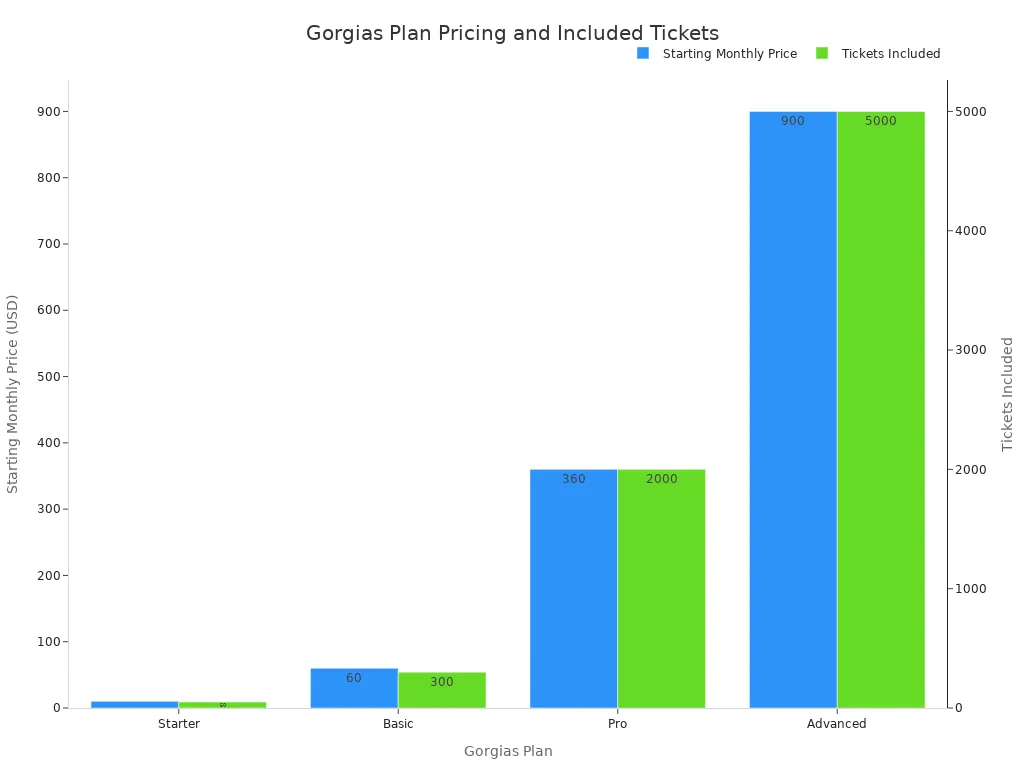
Note: The price increases further when you add automation. For example, the Basic plan at 30% automation costs $210 per month. This makes careful budget management essential for growing ecommerce stores.
Zendesk: For Large Enterprise Needs
Best For: Large ecommerce enterprises that require a scalable, customizable, and secure support platform with advanced AI capabilities.
Key AI Features: Zendesk embeds sophisticated AI directly into its suite of tools. Many features are standard, but an "Advanced AI add-on" unlocks enterprise-grade power. These AI tools are designed for high-volume, complex operations.
- AI Agent and Chatbot: These tools automate frontline support. They answer common questions and guide shoppers on your ecommerce site.
- AI Copilot: This feature assists human agents. It helps draft replies and provides instant answers for the internal team.
- AI Triage: It automatically routes, edits, and tags incoming tickets. This ensures inquiries get to the right person quickly.
Zendesk also offers powerful analytics. Businesses can track metrics like deflection rates and agent productivity. This helps them measure the return on their AI investment.
Integration Capabilities: Zendesk is one of the most flexible platforms available. It offers a massive marketplace with over 1,000 apps and integrations. This allows large businesses to connect their support software to virtually any other tool they use, from CRMs to internal communication systems.
Pricing Summary: Zendesk uses a predictable per-agent pricing model, which is ideal for large teams. The Enterprise plan is built for organizations needing extensive customization and security.
The Suite Enterprise plan costs $169 per agent per month (billed annually). This plan includes a sandbox environment for testing, custom agent roles, and advanced data protection. This clear pricing makes it easier for large businesses to budget for their support operations.
Sobot: For All-in-One Contact Center Automation
Best For: Businesses of any size seeking a unified, all-in-one contact center solution that combines powerful AI automation with omnichannel support.
Key AI Features: Sobot provides a comprehensive suite of AI-driven apps and services. It integrates all customer communication into a single platform. This eliminates the need to manage multiple systems. Sobot's AI solution is built for the modern ecommerce landscape.
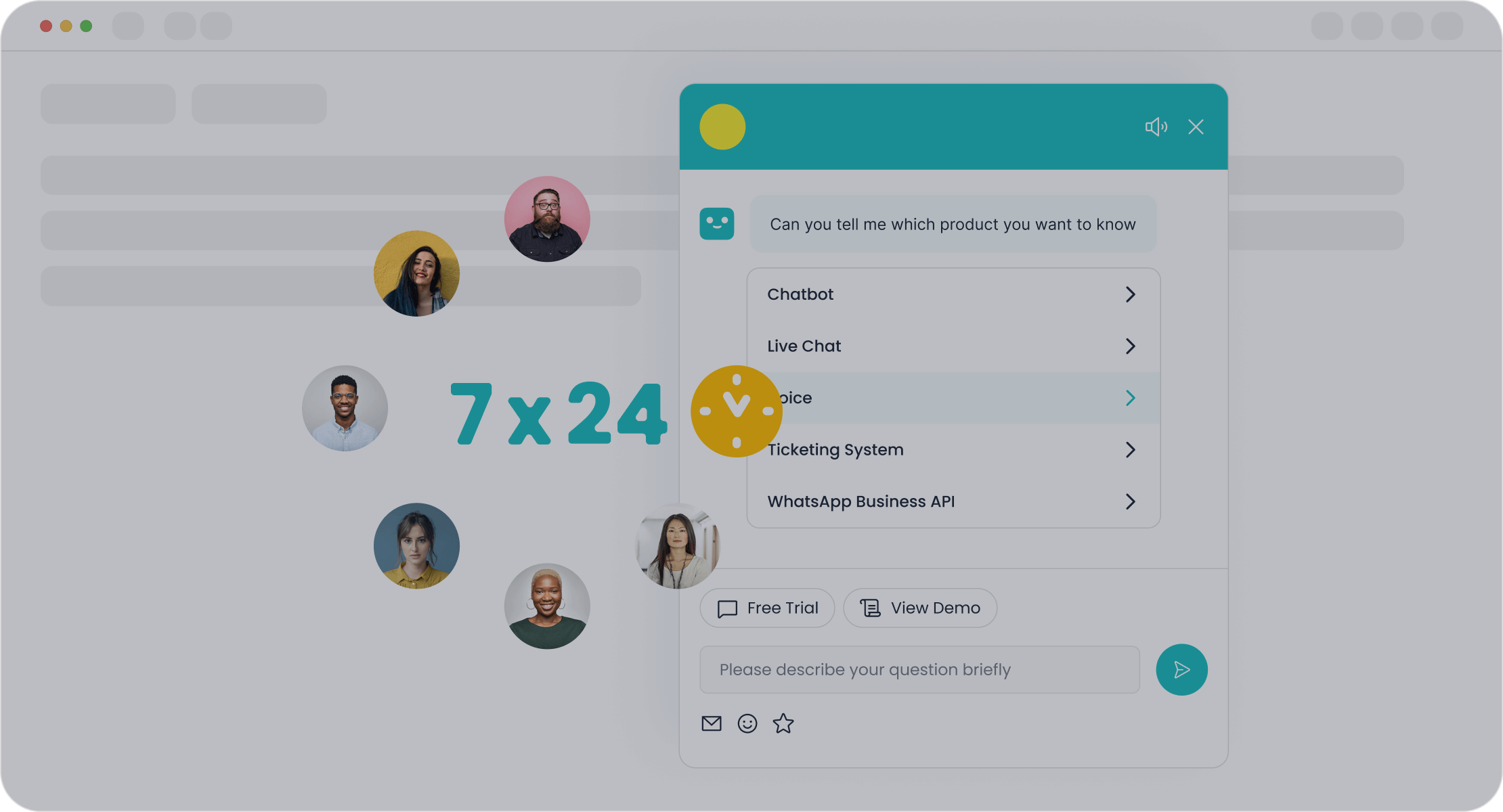
- AI Chatbot: The intelligent, multilingual chatbot provides 24/7 self-service. It uses a knowledge base to give instant, accurate replies, improving productivity by 70%.
- Live Chat: This tool unifies messages from all channels into one AI-enhanced workspace for agents.
- Voice Call Center: Sobot offers smart inbound and outbound call features, including an AI voicebot, IVR, and automatic call distribution.
- Ticketing System: This system automates workflows, manages service level agreements (SLAs), and streamlines issue resolution across channels like email.
As an official WhatsApp Business Solution Provider (BSP), Sobot enables businesses to engage customers at scale on one of the world's most popular messaging apps.
A great example of Sobot's impact comes from its partnership with global smart device innovator OPPO. By implementing Sobot's human-machine cooperation model, OPPO achieved an 83% chatbot resolution rate. This powerful automation led to a 94% positive feedback rate and a remarkable 57% increase in the customer repurchase rate.
Integration Capabilities: Sobot is designed to be the central hub for all customer interactions. It integrates seamlessly with global communication channels like WhatsApp, social media, email, and voice. It also connects with existing business systems, eliminating data silos and giving agents a complete customer view.
Pricing Summary: Sobot offers customized solutions tailored to the specific needs of each business. This ensures you get the right set of tools and capabilities for your scale and industry. For detailed pricing information and personalized recommendations, businesses should contact the Sobot sales team.
Intercom: For Proactive Customer Engagement
Best For: Tech-savvy businesses focused on using conversational AI to proactively engage, convert, and support customers throughout their journey.
Key AI Features: Intercom's platform combines a powerful AI chatbot, a help desk, and proactive support tools. Its main goal is to create a seamless conversational experience.
- Proactive Support: Intercom's AI tools can trigger messages based on user behavior. For example, it can engage a customer who is hesitating on the checkout page.
- Customer Engagement Automation: The software uses chatbots, routing rules, and article suggestions to manage interactions. This automation streamlines repetitive tasks.
- Fin AI Chatbot: Intercom's AI chatbot can hold natural conversations, answer complex questions, and hand off to human agents when needed.
These features help businesses build stronger relationships with customers by providing timely, personalized assistance.
Integration Capabilities: Intercom integrates with a wide range of sales, marketing, and analytics tools, including Salesforce, Marketo, and Stripe. This allows businesses to create a connected technology stack that supports a full-funnel conversational strategy.
Pricing Summary: Intercom's pricing is on the premium end and is highly customized. The Pro and Premium plans do not have fixed public prices. Costs are based on factors like the number of agent seats, monthly active people, and the number of AI resolutions required. Businesses can expect to pay between $500 to over $1,000 per month, making it a significant investment for companies committed to a proactive engagement model.
Tidio: For Small Business Live Chat
Best For: Small ecommerce businesses and solo entrepreneurs who need an affordable, easy-to-use live chat and chatbot solution.
Key AI Features: Tidio offers a set of practical AI tools designed to help small teams manage customer support effectively. Its AI focuses on improving agent productivity and automating simple queries.
- Lyro AI Chatbot: This AI chatbot can handle up to 70% of common customer questions. It learns from your FAQ data in minutes and provides natural, human-like conversations.
- FAQ Wizard: This tool builds a chatbot automatically by scraping question-and-answer pairs from your website pages.
- Reply Assistant: An AI feature that helps agents write more polished and professional responses quickly.
- Smart Views: Tidio's AI automatically categorizes incoming chats based on customer intent. This helps teams prioritize urgent messages.
Integration Capabilities: Tidio offers simple, one-click integrations with popular ecommerce platforms like Shopify, Wix, and WordPress. It also connects with email marketing services and social media, making it easy for small businesses to manage all their communications in one place.
Pricing Summary: Tidio's pricing is straightforward and affordable, making it one of the best recommendations for small businesses. It even offers a free plan with basic live chat. The paid plans unlock more powerful AI and automation features.
| Plan | Monthly Cost (Billed Annually) | Best For |
|---|---|---|
| Starter | $29/month | Small businesses enhancing customer service |
| Growth | $59/month | Scaling businesses with higher inquiry volumes |
This clear pricing structure allows small ecommerce shops to access powerful AI tools without the complex contracts or high costs of enterprise software.
A Comparative Analysis of Key Features
Evaluating different platforms requires a close look at their features. The right tools can transform your customer support from a cost center into a growth driver. This analysis compares the essential capabilities that define a modern ecommerce support service.
Core AI Features to Compare
The most innovative AI tools focus on creating a smarter shopping experience. Key features to compare include hyper-personalization at scale, where AI algorithms alter content and promotions for each visitor. This level of personalization makes product recommendations feel unique to each customer. Other essential AI features are:
- Conversational AI: Advanced chatbots use Natural Language Understanding (NLU) to support customers in their preferred language, breaking down communication barriers.
- Voice Assistant Integration: This AI feature offers hands-free shopping convenience and improves accessibility for every customer.
- AI-powered Video Support: Some tools use AI to analyze video calls for instant, context-aware assistance, enhancing technical support.
These AI tools help an ecommerce business automate routine tasks and improve conversion optimization.
Omnichannel Support Capabilities
Modern customers expect to connect with a business on any channel. Omnichannel support unifies conversations from platforms like WhatsApp, Facebook Messenger, and Instagram DMs into a single inbox. This integration gives agents a complete view of customer interactions. Some platforms specialize in conversational AI for messaging, while others, like Sobot, offer specialized ecommerce support with native Shopify integration and multilingual AI capabilities. This is crucial for international retail. Centralizing this data allows for better service and personalization.
Ticket and Workflow Automation
Effective automation goes beyond chatbots. The best software uses AI automation to streamline internal workflows. This ensures that support tickets are handled efficiently. Advanced tools offer features for this automation process.
For example, systems can use omnichannel routing to meet first-reply time goals or use skills-based routing to direct calls to specific agents. This automation also helps manage service level agreements (SLAs) and send automated ticket reminders to customers.
Optimizing Your Support Content for SEO
Your help center is a powerful SEO asset. Creating high-quality, original content is the first step in any SEO strategy. Good SEO blog writing for help articles involves structuring every article for search and scannability. Use clear, question-based titles and break up long text with lists and images. Other best practices for SEO optimization include:
- Building internal links between related articles to signal topical authority to Google.
- Using FAQ schema markup to help your content appear as rich results in searches.
- Balancing AI content generation with human editing to ensure accuracy and empathy.
Tracking analytics and data on your SEO efforts helps you measure what works and continuously improve your content for better visibility. This optimization makes your ecommerce support content a valuable customer acquisition tool.
Choosing Your Ecommerce Support Service Provider
Selecting the right ecommerce support service provider requires a careful review of your business. The best AI tools align with your specific needs, scale, and marketing goals. These recommendations will guide your decision-making process.
Assessing Your Business Needs and Scale
First, a business must understand its support volume. A simple framework helps forecast needs.
- Gather total sales transactions for a set period.
- Count the support tickets from that same period.
- Calculate the transaction-to-ticket ratio to predict future ticket volume based on sales forecasts.
The needs of an ecommerce business change with its size. Different platforms offer different levels of support.
| Feature | Small Business Ecommerce | Enterprise-Level Ecommerce |
|---|---|---|
| Complexity | Handles lower traffic and fewer complexities. | Requires advanced features for high traffic. |
| Support | Often has limited or no dedicated support system. | Comes with specific, advanced support plans. |
Evaluating Platform and Tool Integrations
Your chosen tools must work with your existing systems. The best platforms integrate smoothly with your ecommerce store, CRM, and other software. This creates a unified system for all customer data, which is essential for effective marketing and support.
Integrating with AI Marketing Tools
AI support platforms are powerful AI marketing tools. They gather valuable customer data that fuels marketing optimization. This data helps create personalized marketing campaigns. Integrating AI tools with your marketing strategy allows for better customer segmentation. AI marketing tools use support interactions to understand customer intent. This knowledge leads to more effective marketing. The synergy between support and AI marketing tools drives growth for any ecommerce business. These AI marketing tools are key for optimization.
Analyzing Scalability and ROI
A good platform grows with your ecommerce business. Many providers use flexible pricing models, like tiered plans or usage-based billing, to accommodate growth. The return on investment (ROI) from AI is significant.
Businesses using AI tools report impressive results. Some see a 70% autonomous resolution rate for customer queries. Others achieve a 25% increase in conversion rates during chatbot interactions. These outcomes show the clear value of investing in AI for marketing and support optimization. These recommendations highlight the power of AI.
To recap, these recommendations show Gorgias leads for Shopify, Sobot offers a powerful all-in-one ai solution, and Zendesk is built for enterprise scale. Readers should identify their top two contenders from these recommendations based on their specific needs. The best ecommerce support service provider uses ai to drive growth. Explore how Sobot's ai can transform your support. These ai recommendations highlight the power of modern ai.
Ready to see what AI can do for you? Schedule a demo or learn more about Sobot's solutions at sobot.io.
FAQ
How do AI tools improve ecommerce support?
AI tools enhance support by handling common questions 24/7. This frees up human agents for complex issues. The best AI tools provide instant answers. This improves customer satisfaction. An effective AI strategy uses these tools to create a better user experience. This AI approach is vital for modern business.
Can AI support tools also help with SEO?
Yes, AI support tools significantly boost SEO. A good help center created with AI tools becomes a great SEO asset. Quality content answers user questions, improving your site's SEO. These AI tools help you create content that ranks well. This SEO strategy drives organic traffic. Good SEO is essential.
What should a business consider when choosing AI tools?
A business should assess its specific needs and scale. The right AI tools integrate with existing platforms. Consider the provider's AI capabilities and how their tools support your goals. The best AI tools offer scalability. This ensures the AI solution grows with the business.
How do AI, SEO, and marketing tools work together?
AI, SEO, and marketing tools form a powerful combination. AI support tools gather customer data. Marketing tools use this data for personalization. This synergy improves your SEO. Better SEO brings more visitors. These integrated AI tools drive growth and enhance your overall SEO and marketing efforts.
See Also
Elevating Online Sales: The Power of E-commerce Live Chat Software
Best Live Chat Solutions for E-commerce Success in the Year 2024
Shopify Live Chat Experiences: Authentic Narratives from Real Users
Comparing Leading Live Chat Tools: Shopify's Edge Against Competitors
Optimizing Retail Operations: Shopify Live Chat's Impact on Industry

