Intercom vs Zendesk AI Which is Best for Your Team?

Choosing the best AI customer service tools for small businesses depends on your team's goals.
For teams that want proactive customer engagement, Intercom is a strong choice. For teams needing a robust ticketing system to manage high inquiry volumes, Zendesk is superior.
A third powerful option exists. Sobot offers a compelling all-in-one customer communication platform for cost-effective AI support. This article breaks down the key AI features, pricing, and use cases. You can use this information to decide which customer service platform is right for your team's specific service needs.
Intercom vs. Zendesk: Core AI Feature Showdown
Intercom and Zendesk use AI in different ways. Intercom focuses its AI on creating natural, personalized conversations. Zendesk builds its AI to organize and resolve high volumes of support requests efficiently. Understanding these core differences will help you choose the right platform for your team.
Intercom's Fin AI for Conversational Support
Intercom designed its AI chatbot, Fin, for proactive and personal engagement. Fin is powered by advanced technology like OpenAI's GPT-4. It uses your existing support content to answer questions. This makes its answers safe and accurate because it only uses information you provide. If Fin does not know an answer, it will tell the customer and pass the conversation to a human agent.
Fin's conversational functionality is built to feel more human. It remembers the context of a conversation, so your customers do not need to repeat themselves. The AI can even ask clarifying questions to better understand a customer's problem. This creates a better user experience.
You have control over how Fin interacts with users. These options help you customize the support experience:
| Follow up configuration options | Reason to use |
|---|---|
| Option 1: Have Fin check in with the customer (Default Setting) | Select this if you want Fin to handle as much as possible. |
| Option 2: Have Fin check in and offer escalation to human support | Select this if you want to involve human support more often. |
| Option 3: Turn it off entirely | Select this if you do not want Fin to send extra messages. |
Fin also offers powerful features for global teams:
- Multilingual Support: Fin automatically detects and replies in 45 languages. You can enable real-time translation so your content only needs to be in one language.
- Pronoun Formality: In languages like French or German, you can choose formal or informal pronouns. You can also let Fin decide based on how the customer writes.
- Complex Query Handling: Fin can understand and answer multi-part questions in a single response.
Zendesk's AI for Ticket Resolution
Zendesk focuses its AI on making your ticketing system smarter and faster. If your team handles a large number of inquiries through email, social media, or live chat, these features are designed to reduce manual work. The main goal is to organize, categorize, and route requests without human effort. This process saves agents 30-60 seconds on every request.
Zendesk's automated ticket routing is a key feature. It ensures requests go to the right agent the first time. The AI uses several factors to make this decision, including the customer's intent, language, and sentiment. This intelligent triage eliminates the need for a person to manually sort incoming tickets.
Here is how the AI processes an incoming ticket:
- Initial analysis: The AI examines the subject and content to identify topics, intent, and urgency.
- Context evaluation: It looks at past customer data and similar tickets to find patterns.
- Classification: The AI applies relevant tags and categories based on what it learned.
- Routing: It directs the ticket to the best team or agent for the job.
This system helps your team resolve issues faster. Companies using Zendesk AI see a 20 percent reduction in the time spent on each ticket. The AI can also proactively ask the customer for missing information, saving your agents even more time.
AI for Knowledge Base Management
A strong AI knowledge base is essential for great self-service. Both Intercom and Zendesk offer AI tools to help you build and maintain your help center.
Intercom's AI gives you data-driven insights into what your customers are looking for. Its "unresolved questions" report shows you where your knowledge base has gaps. You can use this information to create the articles your customers need most. Intercom also offers an "Article generator." You can paste a short summary, and the AI will write a full article for you to edit and publish.
Zendesk's generative AI is also very effective at creating content. You can give it a few key points, and the AI will expand them into a complete article. It can also adjust the tone to match your brand's voice. While you still need to identify the topics, Zendesk's AI does the heavy lifting of writing. This makes creating new support content much faster.
AI's Impact on Customer Service Agents
AI is not just for customers; it is also a powerful tool for your agents. Both platforms offer AI copilots that work alongside your customer service team to improve productivity and service quality.
Intercom's Copilot has a measurable impact on agent efficiency.
Agents using Copilot were able to close 31% more customer conversations every day.
The AI helps by summarizing long conversations, suggesting replies, and automating repetitive tasks. This frees up agents to focus on more complex problems. The return on investment for a single Copilot seat is estimated at 4.7x due to this boost in efficiency.
Zendesk's AI is designed to automate a huge portion of agent work. The company's goal is for AI to handle up to 80% of all customer interactions. This is achieved through advanced features that reduce manual tasks.
- Ticket Summarization: The AI reads long ticket histories and provides a short summary for the agent.
- Suggested Responses: AI suggests pre-written responses to speed up replies.
- Intelligent Routing: The comprehensive ticketing system sends tickets to the right agent, reducing transfers and internal questions.
By automating routine inquiries, Zendesk's AI allows your agents to focus on high-value work that requires a human touch. This not only improves efficiency but also makes the agent's job more rewarding.
An Alternative AI-Driven Support Solution: Sobot
While Intercom and Zendesk offer strong features, you might need a single platform that combines proactive engagement and high-volume resolution. Sobot provides powerful, all-in-one AI-driven support solutions designed for small and medium businesses seeking cost-effective efficiency.
The All-in-One Value of Sobot's Chatbot
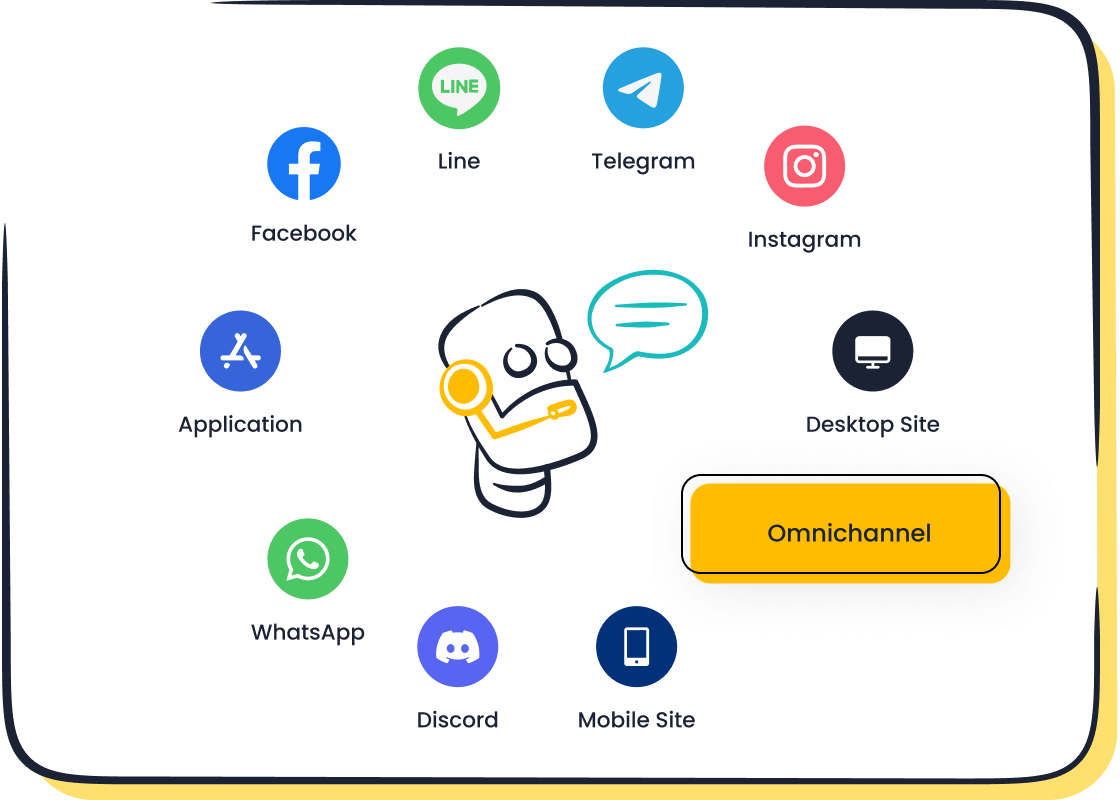
Sobot combines multiple tools into one unified platform. This approach helps you manage all customer interactions without switching between different software. The goal is to increase support efficiency and deliver a seamless experience. Sobot's solutions include:
- AI chatbots for 24/7 automated interactions
- Live chat for human support
- A cloud call center with voice capabilities
- A ticketing system for organized case management
- Omnichannel support across social media, email, and SMS
By using these integrated tools, you can improve productivity by 70% and save up to 50% on agent costs. This makes powerful AI support accessible for any business.
Proven Results with Human-Machine Cooperation
The combination of AI and human agents delivers impressive results. Global tech leader OPPO implemented Sobot to manage high inquiry volumes. The results were outstanding.
- 83% chatbot resolution rate
- 94% positive feedback rate
- 57% increase in customer repurchase rate
These outcomes show how effective human-machine cooperation can be. This technology is not just for large companies. Sobot provides affordable and user-friendly AI tools that help small businesses improve the customer experience and stay competitive.
Ease of Use with No-Code Automation
You do not need a team of developers to build powerful automation. Sobot uses a visual, point-and-click interface. This allows you to design and launch conversational workflows without writing any code. The platform’s straightforward automation capabilities empower your team to create effective chatbots and automated processes quickly. This focus on ease of use ensures you can adapt your support strategy without technical delays.
Head-to-Head AI Pricing Comparison
Understanding the cost of AI is crucial for your budget. Intercom and Zendesk approach pricing differently. Your team's needs and budget will determine which model offers better value.
Intercom's Pricing for Small Teams
Intercom prices its plans per agent seat, with costs that scale based on your needs. For small teams, the Essential plan is a common starting point. However, to access the Fin AI chatbot, you must pay per resolution.
| Name of the plan | Pricing if billed annually | Pricing if billed monthly |
|---|---|---|
| Essential | $29 per seat per month | $39 per seat per month |
| Advanced | $85 per seat per month | $99 per seat per month |
| Expert | $132 per seat per month | $139 per seat per month |
| Fin AI Agent | $0.99 per resolution | $0.99 per resolution |
This pay-per-resolution model means your costs can change each month. While powerful, this pricing structure can be unpredictable if you have high support volume.
Budgeting for Zendesk's AI Features
Zendesk bundles its AI tools into an add-on package. You can add these advanced AI features to the Professional or Enterprise Suite plans. This add-on gives you access to tools like intelligent triage and generative AI for a fixed monthly fee.
This approach provides more predictable costs. You know exactly what you will pay for AI each month, regardless of how many tickets the AI resolves. This makes budgeting simpler, especially for teams that need to manage a high volume of support requests without worrying about fluctuating costs.
Verdict on AI Value for Your Budget
Your choice depends on what you value most.
The Intercom platform offers a strong return on investment for customer engagement, with some users reporting a 40% reduction in resolution time. However, its per-resolution AI pricing can become expensive.
If you need predictable AI costs for your ticketing system, Zendesk offers a more stable solution. Its add-on model gives you powerful automation without the risk of unexpected bills. Ultimately, you must weigh the cost against the specific AI capabilities your team needs to succeed.
Which are the Best AI Customer Service Tools for Small Businesses?

Choosing the right platform comes down to your team's primary goal. Do you want to start conversations, resolve issues at scale, or find an all-in-one solution for maximum efficiency? The table below gives you a quick summary to help you find the best AI customer service tools for small businesses.
| Intercom | Zendesk | Sobot | |
|---|---|---|---|
| Best for (Team Type) | Proactive Engagement Teams | High-Volume Resolution Teams | All-in-One Efficiency Seekers |
| Core AI Strength | Conversational AI & Proactive Messaging | Intelligent Ticket Triage & Routing | Unified Omnichannel Automation |
| Pricing Structure | Per Seat + Per Resolution (AI) | Per Seat + Fixed AI Add-on | All-Inclusive Platform Pricing |
| Ease of Setup | Moderate; requires content for AI | Moderate; requires workflow configuration | Easy; no-code, point-and-click interface |
| Scalability | Good for engagement-focused growth | Excellent for high-volume support teams | Excellent for growing businesses needing a unified system |
At a Glance: Proactive Engagement Teams
If your goal is to actively engage visitors and turn them into loyal customers, Intercom is your strongest option. The platform uniquely combines an AI chatbot, help desk, and proactive support tools. This integration allows your business to create meaningful, real-time interactions.
Intercom's AI agent, Fin, excels at this. It can resolve a high percentage of initial queries on its own, freeing your team to focus on relationship-building. The platform's automation is designed to enhance the entire customer lifecycle. You can use features like chatbots and routing rules to offer timely support and personalized assistance.
For example, the "Outbound" feature lets you provide support before a customer even asks for it. Companies like GetAccept use these tools to deliver personalized campaigns, which helped them achieve an 8% boost in inbound lead requests. Similarly, Living Spaces uses custom bots to gather information and route users to the right team, improving both customer and employee satisfaction.
At a Glance: High-Volume Resolution Teams
If your team is drowning in support tickets, Zendesk offers the powerful tools you need. Its AI is built to bring order to chaos. The platform excels at managing a large volume of inquiries from email, social media, and other channels. The core strength of Zendesk lies in its intelligent ticketing system.
The AI automates many manual tasks to improve your team's efficiency.
- Automated Triage: The AI detects intent, language, and sentiment to route conversations to the right agent automatically.
- Ticket Summarization: It reads long message threads and provides a quick summary, so agents get up to speed instantly.
- Urgency Prioritization: The system surfaces critical tickets first, ensuring you address the most urgent issues without delay.
These features help you scale your support operations as ticket volume grows. For instance, by using Zendesk with integrated AI tools for prioritization, the travel company James Villas successfully reduced its response times by 46% during a period of high demand. This focus on resolution makes Zendesk the top choice for teams measured by speed and volume.
At a Glance: All-in-One Efficiency Seekers
If you are looking for the best AI customer service tools for small businesses that combine proactive engagement with powerful resolution, Sobot is the ideal solution. While other providers often specialize in one area, Sobot delivers a truly all-in-one customer contact platform. This integrated approach eliminates the need to buy and manage multiple systems.
Sobot centralizes all your customer service channels and tools into a single, AI-powered contact center. This includes:
- AI and automation to handle inquiries across all touchpoints.
- Omnichannel services for chat, email, voice, and social media.
- Proactive marketing to engage customers and improve conversions.
- A comprehensive ticketing and customer data management system.
This unified model provides incredible value. You can automate up to 70% of support tickets and reduce service costs by as much as 50%. Sobot's powerful automation capabilities are also easy to use. You can build complex AI workflows with a no-code, point-and-click interface, allowing you to adapt quickly without needing developers. For any business seeking a complete and cost-effective customer support tool, Sobot offers the perfect balance of power, simplicity, and efficiency.
Finding the best ai customer service tools for small businesses depends on your goals. Choose Intercom for proactive customer engagement and its sophisticated AI automation. Select Zendesk for its powerful ticketing system to manage high-volume support. For a cost-effective solution that balances both, Sobot offers all-in-one efficiency. Your final choice in customer service software hinges on whether your team prioritizes conversational marketing, scalable ticketing resolution, or unified service solutions.
Start Your Customer Journey
FAQ
What is the main AI difference between Intercom and Zendesk?
Intercom's AI focuses on proactive, human-like conversations to engage customers. In contrast, Zendesk's AI excels at organizing and resolving high volumes of support tickets. Your choice depends on your team's primary goal: engagement or resolution.
Do I need coding skills to use these AI tools?
No, you do not need coding skills. Sobot offers a simple, no-code, point-and-click interface. Intercom and Zendesk also let you configure their AI features without writing code. This makes advanced automation accessible for your non-technical team members.
Why should I consider Sobot over the others?
Consider Sobot for an all-in-one solution. It combines a chatbot, live chat, and ticketing into one platform. This unified approach provides some of the best AI customer service tools for small businesses seeking maximum efficiency and value from a single vendor.
Which AI platform is most budget-friendly?
Your budget determines the best choice. Zendesk offers a predictable AI add-on. Intercom's costs vary with usage. Sobot provides excellent value by bundling multiple tools into one cost-effective subscription, helping you manage expenses.
See Also
Leading AI Solutions for Enterprise Contact Centers: A Comprehensive Overview
Comparing Leading Interactive Voice Response Software for Optimal Performance
An In-Depth Review of AI-Powered Enterprise Call Center Solutions
Evaluating Premier Voice of Customer Software for Enhanced Business Insights
Exploring the Three Best Website Chat Software Options Available Today