B2B and B2C Ecommerce A Simple Breakdown for 2025


B2B and B2C ecommerce defines two distinct sales models. B2B ecommerce involves business-to-business transactions, while B2C ecommerce handles business-to-consumer sales. This core difference shapes the entire ecommerce approach.
For instance, a B2B company sells 500 office chairs to a corporation. A B2C store sells a single chair to a remote worker.
Understanding the B2B model is vital for building the right online store and marketing strategy. For 2025, a proper service approach, perhaps using tools like a Sobot call center or Sobot AI, is crucial for success in either ecommerce space.
Core Differences in B2B and B2C Ecommerce

The models for B2B and B2C ecommerce are fundamentally different. B2B ecommerce focuses on relationships and logic, while B2C ecommerce centers on transactions and emotions. These distinctions shape everything from the target audience to the sales approach in the ecommerce world.
B2B: Building Long-Term Partnerships
The B2B model is all about creating lasting, valuable partnerships. Companies aim for repeat business and mutual growth, not just a one-time sale. These relationships often become strategic alliances that benefit both parties.
A great B2B partnership creates a win-win situation. For example, IBM and Siemens combined their expertise to create smart grid solutions, driving innovation for both companies.
Successful B2B companies build ecosystems that support their partners.
- Squarespace connects businesses with professional designers, providing a steady stream of leads for the designers and expert help for the businesses.
- Virgin Wines partnered with a contact center to re-engage past customers, successfully rebuilding relationships and boosting growth.
This focus on partnership is a core element of B2B ecommerce.
B2C: Driving Individual Transactions
In contrast, B2C ecommerce is designed to drive individual sales. The goal is to persuade a single consumer to make a purchase. While loyalty is important, the immediate focus is on the transaction itself. B2C brands use several tactics to encourage purchases:
- Creating Urgency: Limited-time offers and flash sales motivate customers to buy now.
- Personalization: Tailored product recommendations and emails make the shopping experience more relevant.
- Appealing to Emotions: Brands use storytelling to build an emotional connection with consumers.
These strategies help convert a visitor into a customer for that specific sale.
B2B: Niche and Focused Audience
B2B companies typically serve a niche audience. They sell specialized products or services to a specific type of business. This focus allows a B2B ecommerce brand to become an expert in its field.
For example, some B2B businesses serve very specific needs:
- BulkBookStore sells books in large quantities to schools and organizations.
- Curbell Plastics supplies plastic materials to industrial clients.
This niche approach helps B2B companies face less competition and build greater brand loyalty. Marketing spend is also more efficient because it targets a very specific group.
B2C: Broad and Diverse Market
The B2C market is broad and diverse. A B2C company may sell to millions of people with different needs and interests. To manage this, businesses segment their audience into smaller groups. Johnson & Johnson, for instance, targets parents with its baby products and athletes with its sports-related items.
Common segmentation methods include:
- Demographic: Grouping by age, gender, or income.
- Behavioral: Grouping by purchase history or website activity.
- Geographic: Grouping by location, like country or city.
This strategy helps B2C brands tailor their marketing for different customer types, making their campaigns more effective across a wide market. Understanding the differences between B2B and B2C ecommerce is the first step to building a successful online strategy.
The Sales Cycle and Purchasing Decisions
The journey from interest to purchase looks very different in B2B and B2C ecommerce. B2B sales involve long, calculated processes. B2C sales are often quick and emotional. These differences in the sales cycle shape the entire ecommerce strategy.
B2B: Longer, Logic-Based Sales Process
The B2B sales process is a marathon, not a sprint. It involves significant research, negotiation, and a focus on return on investment (ROI). A B2B purchase must solve a clear business problem. Interestingly, while logic is the focus, studies show that up to 95% of B2B buying decisions still stem from emotion. Logic is then used to justify the choice.
The length of this cycle varies greatly by industry. A B2B ecommerce transaction can take months to complete.
| Industry | Average Sales Cycle (Days) |
|---|---|
| Technology | 121 |
| Construction | 134 |
| Energy | 155 |
| Non-profit | 162 |
This extended timeline reflects the high stakes and complexity of B2B deals.
B2C: Shorter, Emotion-Driven Purchases
In contrast, the B2C ecommerce journey is much faster. A customer might see a product and buy it within minutes. These purchases are often driven by emotion, desire, and immediate wants rather than long-term needs.
Tip: Marketers use tactics like flash sales and low stock alerts to create a sense of urgency. This "fear of missing out" (FOMO) encourages shoppers to make quick, impulsive decisions.
This model thrives on creating an emotional connection and a seamless checkout experience.
B2B: Group Decisions and Formal Approvals
A single person rarely makes a B2B purchase. Instead, a buying committee is involved. Research shows a typical B2B buying group includes 6 to 11 people from different departments like finance, IT, and legal. Each stakeholder has unique concerns.
This group decision-making leads to a formal approval process. Key steps often include:
- Procurement Review: The purchasing team checks the request.
- Compliance Check: Legal teams ensure the purchase follows company policy.
- Vendor Selection: The team chooses the best supplier.
- Final Approval: Leadership gives the final sign-off.
This structured approach ensures the purchase aligns with company goals.
B2C: Individual and Impulsive Choices
B2C purchases are typically individual choices. One person decides what to buy and when. This autonomy makes the B2C sales process simple and direct. The shopper is the decision-maker, user, and payer all in one. This is a key distinction in b2b and b2c ecommerce, as the focus for B2C is on persuading one person, not a committee. The ecommerce experience is designed to convert that single visitor into a customer.
Pricing Models and Order Value
Pricing strategies and order sizes are major differentiators in b2b and b2c ecommerce. The B2B model often uses complex, negotiated pricing for large orders. The B2C model relies on fixed prices for smaller, individual sales. These differences directly impact the value of each transaction in the ecommerce world.
Custom Pricing in B2B Ecommerce
In B2B ecommerce, prices are rarely fixed. Companies negotiate pricing based on order volume, contract length, and the customer relationship. This custom approach allows a B2B business to offer personalized quotes that reflect the scale of the partnership. This is especially common in industries dealing with large projects.
For example, a B2B supplier might offer a lower price per unit for a company ordering 10,000 parts versus one ordering 100.
Custom pricing is prevalent across many sectors, including:
- Aerospace & Defense
- Automotive
- Chemicals & Base Materials
- Industrial Goods & Machinery
- Wholesale & Distribution
This flexible pricing model is essential for building long-term B2B relationships.
Standard Pricing in B2C Ecommerce
B2C ecommerce uses a standard, transparent pricing model. Every customer sees the same price for a product. This simplicity builds trust and makes the buying process smoother. When customers see clear costs, they feel more confident in their purchase.
This transparency offers several benefits for an ecommerce brand:
- It builds customer trust and loyalty.
- It reduces the need for customers to ask about prices.
- It helps attract serious buyers.
Clear pricing simplifies the decision for the shopper, which is a key goal for any B2C business.
B2B: High Average Order Value
B2B transactions typically have a high average order value (AOV). A B2B company sells in bulk or provides high-value equipment and services. A single purchase can be worth thousands or even millions of dollars. These large orders are significant investments for the buying business. The high AOV reflects the scale and complexity of B2B partnerships.
B2C: Low Average Order Value
Conversely, B2C purchases have a much lower average order value. A typical B2C transaction involves one or a few items for personal use. While a B2C brand aims for repeat business, each individual sale is small. This ecommerce model focuses on a high volume of smaller transactions.
The AOV in B2C varies by industry, as shown below.
| Retail Sector | Average Order Value (June 2023) |
|---|---|
| Home and Furniture | $254 |
| Fashion, Accessories, and Apparel | $141 |
| Consumer Goods | $126 |
| Food and Beverage | $93 |
| Pet Care and Veterinary Services | $65 |
These figures highlight the transactional nature of the B2C ecommerce space.
Marketing and Customer Engagement Strategies

Marketing approaches in b2b and b2c ecommerce are tailored to their unique sales cycles and audiences. B2B marketing educates and builds trust over time. B2C marketing aims for immediate engagement and quick conversions. The right customer engagement tools are essential for success in either ecommerce model.
B2B: Content Marketing and Lead Nurturing
Effective B2B marketing focuses on content that educates and solves problems. This strategy positions a brand as an industry expert.
- Educational Content: Companies create whitepapers, case studies, and webinars to build credibility.
- Lead Nurturing: Businesses use email campaigns to guide potential customers through the long sales funnel.
This approach helps a B2B company build trust and nurture leads into long-term partners. The goal of b2b marketing is to establish authority.
B2C: Social Media and Mass Advertising
B2C marketing uses social media and mass advertising to reach a broad audience. Visual platforms like Instagram and Facebook are perfect for this. B2C brands often use influencer marketing, as 86% of consumers make purchases inspired by influencers. The goal of b2c marketing is to create an immediate emotional connection that drives a quick sale. This fast-paced strategy is designed for high-volume transactions.
B2B: Relationship-Focused Sales
The B2B sales process is built on strong, lasting relationships. It requires a deep understanding of the customer's business needs. Excellent service is key to fostering loyalty. For example, the smart device innovator OPPO needed to improve service efficiency.
By using Sobot's chatbot and ticketing system, OPPO strengthened its B2B partnerships. The company achieved an 83% chatbot resolution rate and saw a 57% increase in its repurchase rate, proving that great service builds long-term loyalty.
This focus on relationships is what separates a B2B transaction from a simple purchase.
B2C: Automated and Self-Service Sales
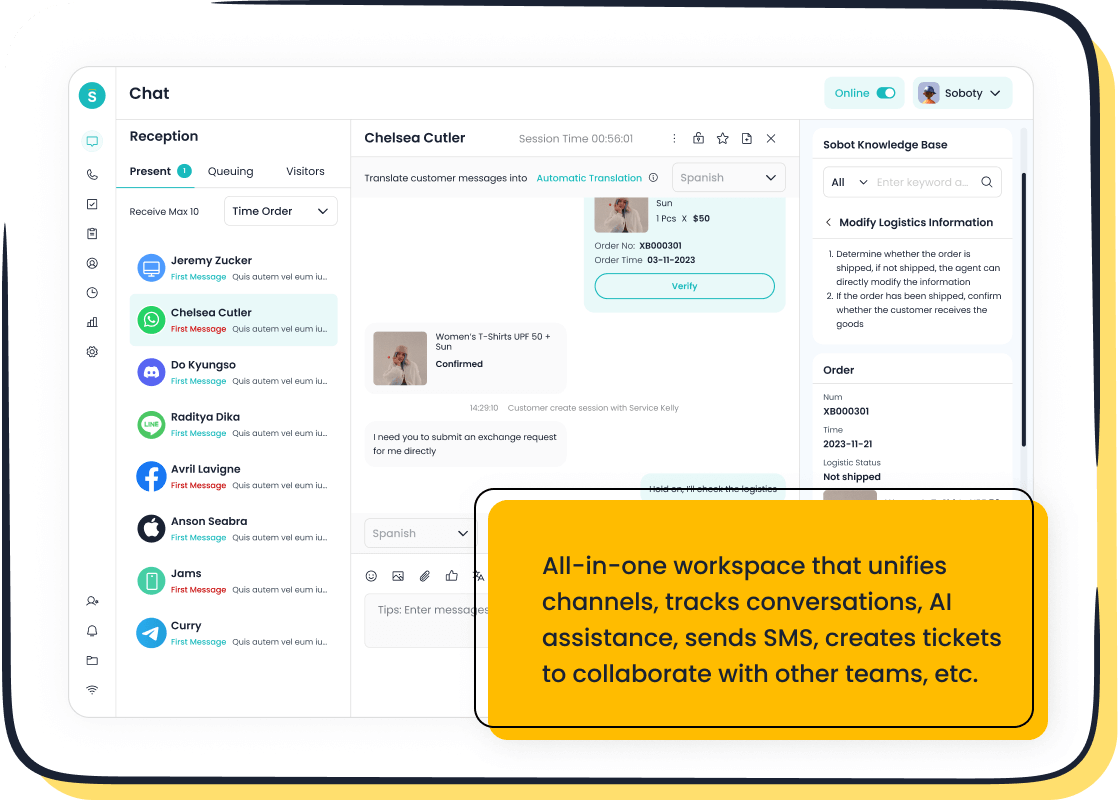
In B2C, speed and convenience are critical. Many customers—around 67%—prefer self-service options. B2C ecommerce platforms use automation to create a smooth, independent buying journey. Tools like Sobot's Live Chat help turn visitors into clients through precise profiling and timely interactions, which can increase conversion by 38%. For a truly modern experience, Sobot's Ecommerce & Retail solution unifies all channels, creating the seamless omnichannel support that both B2B and B2C customers now expect.
The B2B and B2C ecommerce models have key differences. B2B builds long-term partnerships, while B2C drives individual transactions. Neither model is superior; they just require different strategies. Looking ahead, B2B ecommerce will increasingly adopt B2C-like experiences for a smoother user journey. For any B2B business, success in ecommerce depends on the right tools. Leveraging an all-in-one contact center solution helps any B2B company master its chosen model and enhance the customer journey, which is vital for B2B growth.
FAQ
What is the main difference between B2B and B2C ecommerce?
B2B ecommerce involves businesses selling products or services to other businesses. B2C ecommerce involves businesses selling directly to individual consumers. The core difference is the customer type. This distinction shapes the entire sales and marketing strategy for any ecommerce business.
Can a business operate in both B2B and B2C ecommerce?
Yes, many companies serve both markets. This is called a B2B2C model. For example, a furniture maker might sell chairs in bulk to offices (B2B) and also sell single chairs to individuals online (B2C). This approach expands their customer base.
Why is the B2B sales process longer?
The B2B sales process takes longer due to several factors.
- Purchases involve larger investments.
- Multiple decision-makers must approve the deal.
- Buyers conduct extensive research to ensure ROI. This careful, logic-based approach is a key feature of B2B and B2C ecommerce differences.
Which model is better for a new business?
Neither model is inherently better. The right choice depends on your product, target audience, and business goals. A B2C model offers a broad market. A B2B model provides a niche audience with higher order values. Research is vital before choosing.
See Also
Best Live Chat Platforms for Online Stores This Year
Elevate Your Sales: The Power of Ecommerce Live Chat
Discovering the Premier Cloud Contact Center Solutions for Next Year
Enhancing Customer Engagement: Live Chat Strategies for Retailers

