Why AI Chatbots Beat IVR for Automation

For effective business automation, AI chatbots are the superior choice over outdated IVR technology. Frustrating IVR menus create a poor customer experience. This outdated IVR approach causes high abandonment as customers leave. In contrast, modern AI provides intelligent, 24/7 customer support. This powerful AI improves the user experience for every customer. Leading AI solutions like the Sobot AI chatbot redefine customer service. This technology can automate customer support without human agents, showing the future of customer service and support automation.
AI Conversation vs. IVR Menus: The Core Difference
The primary distinction between AI and IVR lies in intelligence and flexibility. AI engages in dynamic, two-way conversations, while IVR forces customers down a rigid, one-way path. This difference fundamentally changes the customer service experience.
How AI Understands Customer Intent
Modern AI understands what a customer wants. It uses a technology called Natural Language Processing (NLP) to interpret human language. This process allows AI to have truly conversational interactions. Key components include:
- Natural Language Understanding (NLU): The AI comprehends the user's goal, or "intent."
- Entity Recognition: The AI identifies key details, like order numbers or dates.
- Context: The AI remembers the conversation's flow to provide relevant follow-up answers.
This intelligence enables AI agents to handle complex queries, from technical support to multi-part questions, providing a seamless self-service experience.
Why IVR's Rigid Menus Frustrate Users
Traditional IVR systems operate on a fixed menu. Customers must listen to a long list of options and press buttons. This process is slow and often leads to dead ends. Many customers will press '0' repeatedly if they cannot find the right option quickly. This lack of flexibility creates a poor experience.
For example, the online supermarket Weee! struggled with an "inflexible IVR system" that could not adapt to its diverse customer needs. This rigidity was a major operational challenge, leading them to seek a more advanced solution. The old IVR could not provide the efficient service their customers expected.
The Rise of AI Voice Bots
The evolution of IVR is here: AI voice bots. These systems combine the power of conversational AI with voice channels. Unlike a basic IVR, AI voice bots listen to and understand natural language. This technology creates human-like interactions over the phone. AI voice agents can handle open-ended questions and complex requests without a rigid menu. The result is an AI-powered IVR that offers true self-service.
These conversational IVR systems are not just a concept; they are a reality. AI-powered voice bots and AI voice agents are transforming customer interactions. Voice AI agents provide a superior conversational experience. AI agents learn from every call, constantly improving their ability to resolve issues. This conversational IVR technology allows businesses to deploy powerful AI agents. Many industries now use AI voice bots for better service. AI-powered IVR is the new standard. These AI voice bots and AI voice agents deliver advanced self-service. The conversational IVR powered by AI agents makes old systems obsolete. Voice AI agents and AI voice bots are the future of phone support.
True Automation: Problem-Solving vs. Call Routing
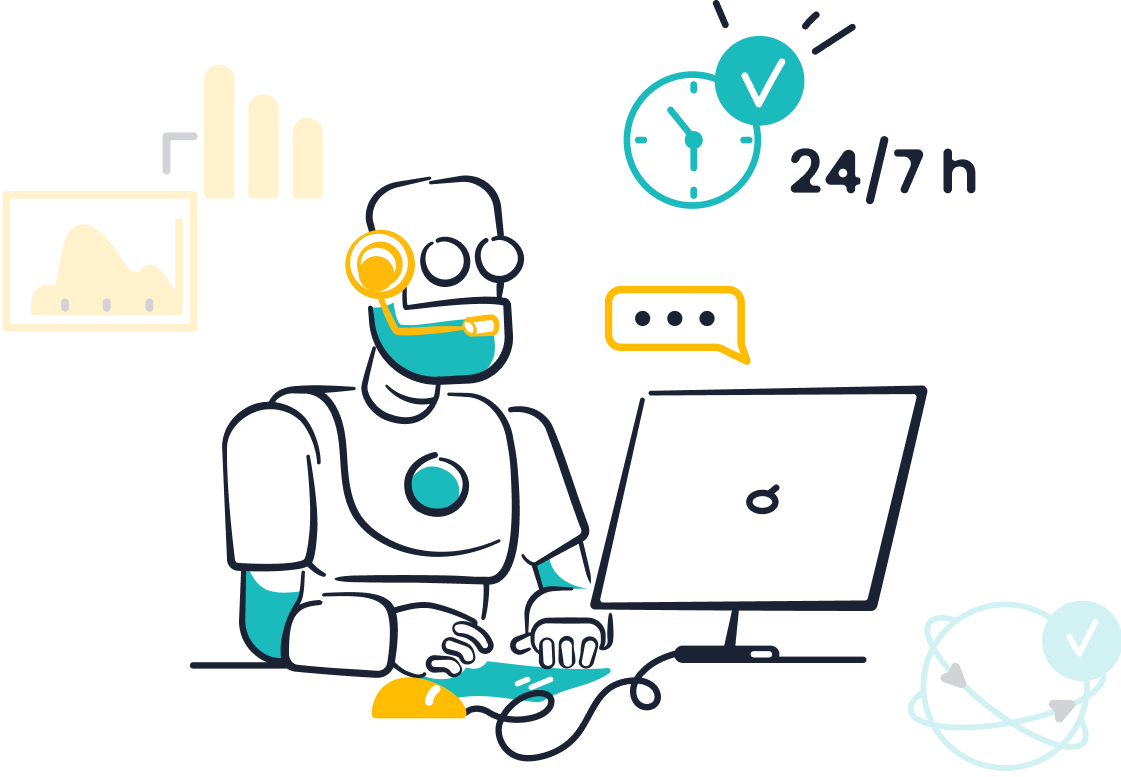
The real difference between modern AI and legacy IVR is their purpose. True automation solves problems from start to finish. Basic automation only directs traffic. An IVR system is a simple traffic cop, pointing callers to different departments. In contrast, AI agents are problem-solvers, equipped to handle tasks independently. This distinction is critical for businesses that want to scale their customer service effectively. The conversational IVR experience with AI is fundamentally different from a basic IVR.
Sobot's AI Chatbot: True Task Resolution
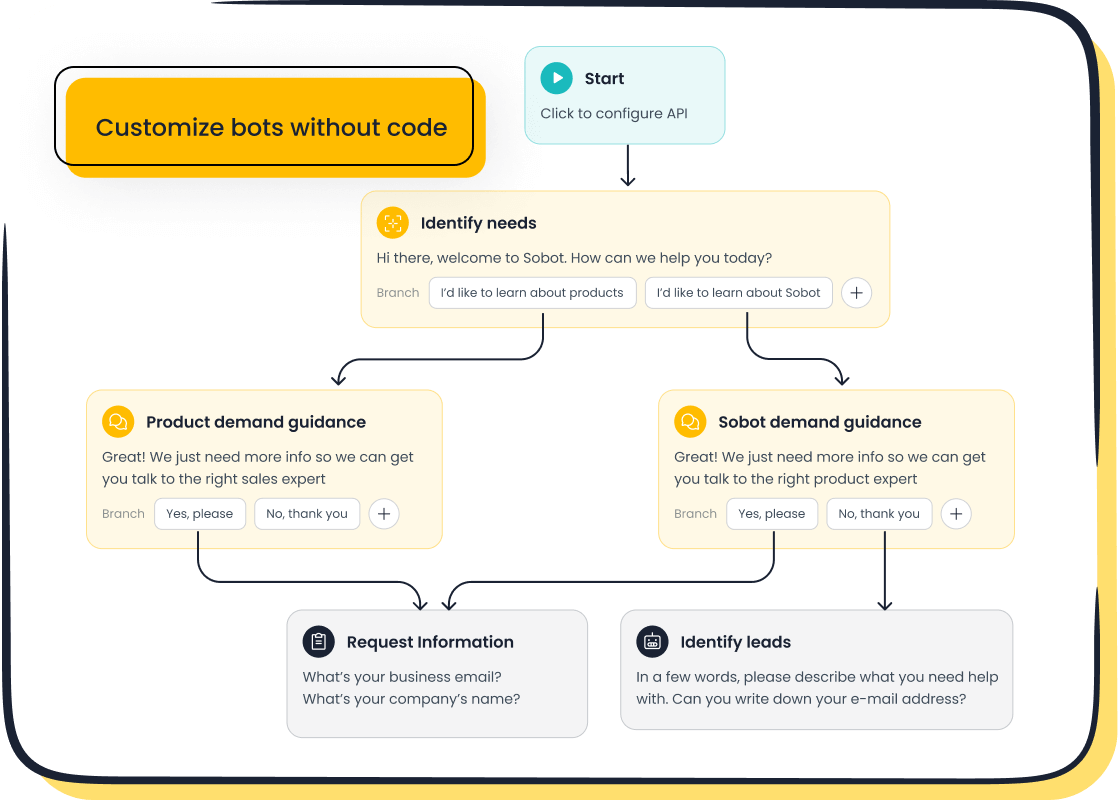
Sobot's platform provides end-to-end resolution, not just redirection. It empowers businesses to build powerful AI agents that truly help customers. A key feature is the no-code, point-and-click interface. This tool allows teams to design complex, conversational workflows without writing a single line of code. Users can drag and drop components to create automated processes, making advanced AI accessible to everyone. These AI agents and AI voice bots deliver a superior conversational experience.
These AI agents can manage a wide range of tasks, offering customers immediate self-service. This capability transforms the conversational IVR into a powerful support channel. Examples of tasks AI agents can resolve include:
- E-commerce Support: Processing returns, tracking deliveries, and handling refund requests by connecting to order management systems.
- Appointment Management: Booking, rescheduling, and sending reminders for appointments to reduce no-shows.
- Account Services: Assisting users with password resets and answering common account questions.
- Insurance and Finance: Facilitating insurance pre-authorizations or handling fraud alerts in real time.
Sobot's AI voice bots and AI voice agents bring this same intelligence to the phone, creating a conversational IVR that understands and acts. These AI agents provide a seamless self-service support experience. The conversational AI in these AI agents makes complex self-service possible.
IVR's Limitation to Basic Call Directing
Traditional IVR systems cannot solve problems. Their technology is outdated and limited to a few basic functions. An IVR forces a customer to navigate a rigid phone tree. The system's logic is pre-built and cannot adapt to a user's specific needs. This lack of flexibility is a major source of frustration.
Most IVR platforms fall short in several key areas:
- They cannot understand the natural flow of a conversation.
- Their speech recognition is often inaccurate, leading to errors.
- They force callers to select from a limited menu of options.
- They are unable to improve customer service because they cannot learn from interactions.
Ultimately, an IVR is a routing tool. It can identify that a customer needs to speak with the billing department, but it cannot answer the billing question itself. This limitation creates bottlenecks and forces customers to wait for a human agent, defeating the purpose of automation. A true conversational IVR powered by AI agents overcomes these issues. The old IVR model simply cannot compete with a modern conversational IVR.
Integrating Systems for Full Automation
The true power of AI is unlocked through integration. When AI agents connect to other business systems, they can perform actions, not just provide information. This creates a unified ecosystem for full automation. Sobot's platform achieves this by connecting its AI agents with essential tools like CRMs and its own Sobot Ticketing System. This integration allows a business to automate customer support without human agents for a wide range of queries.
Connecting a chatbot with a CRM platform enables automated updates to customer information and drives workflow automation for routine processes. This integration reduces manual work and creates a unified support ecosystem.
For example, when a customer interacts with one of Sobot's AI voice bots, the system can do more than just talk. By integrating with backend systems, the AI voice bots can:
- Create a Support Ticket: If an issue requires human follow-up, the AI agent can automatically generate a ticket in the Sobot Ticketing System with all the conversational context.
- Update Customer Records: The AI can log the interaction details directly into the company's CRM.
- Check Order Status: The AI agent can access the order management system to give the customer real-time updates.
This level of integration turns a conversational IVR from a simple answering machine into a dynamic, 24/7 service hub. The AI voice bots and AI agents work together within the conversational IVR to provide complete self-service. The flexibility of these AI agents allows for a truly conversational and helpful experience. The conversational AI behind the AI voice bots makes this deep integration possible, creating a powerful conversational IVR.
The Business Impact of AI Automation
Adopting AI automation delivers significant and measurable business results. Unlike a basic IVR, which often increases customer frustration, a modern AI solution generates a strong return on investment. This technology transforms customer service from a cost center into a value driver. The AI enhances efficiency, reduces expenses, and provides a superior service experience.
Driving Down Costs and Boosting ROI
The most immediate impact of AI automation is financial. Businesses can dramatically lower operational costs. For instance, Sobot's AI Chatbot saves up to 50% on agent costs. This happens because AI handles interactions far more cheaply than human agents. The cost difference is substantial.
| Cost Component | Human Agent Cost | AI Agent Cost | Savings |
|---|---|---|---|
| Basic Interaction | $3.00 - $6.00 | $0.25 - $0.50 | 85-92% |
| Complex Inquiry | $8.00 - $15.00 | $0.50 - $1.50 | 81-90% |
| After-Hours | $6.00 - $12.00 | $0.25 - $0.50 | 92-96% |
This cost efficiency means businesses often see a positive return on investment within 6 to 12 months. The AI voice bots and AI voice agents in a conversational IVR system handle tasks that previously required expensive human intervention, freeing up capital and resources. Replacing an old IVR with intelligent AI voice bots is a clear financial win. These AI voice agents deliver value quickly.
How to Automate Customer Support Without Human Agents
True automation means resolving issues, not just routing them. It is possible to automate customer support without human agents for a majority of common questions. Advanced AI can successfully resolve up to 86% of typical customer queries on its own. The system's AI voice bots and AI voice agents use a knowledge base to provide instant, accurate answers. This conversational IVR gives customers the help they need immediately.
A successful strategy also plans for complex issues. When an AI voice bot cannot solve a problem, it seamlessly transfers the conversation to a human agent. The AI voice agents provide the full context, so customers never have to repeat themselves. This smart process helps automate customer support without human agents for routine tasks while keeping experts available for difficult problems. This approach makes the entire customer support operation more efficient. The AI voice bots in the conversational IVR are key to this success. The AI voice agents are trained for this.
Achieving 24/7 Scalability and Consistency
Human teams have limits. They work in shifts and can get overwhelmed by sudden inquiry spikes. An outdated IVR offers 24/7 availability but provides little actual help. AI automation solves both problems. AI voice bots and AI voice agents offer round-the-clock service that is both scalable and consistent. This AI system can handle any volume of inquiries, from a slow Tuesday morning to a massive holiday rush.
This consistency improves the overall customer service experience. Every customer gets the same high-quality service, guided by the same logic. Sobot's AI platform improves productivity by 70% by ensuring this standard. The AI voice bots in a conversational IVR do not have bad days. These AI voice agents follow protocols perfectly every time. This reliability is something a simple IVR cannot offer. This is how you automate customer support without human agents effectively. The conversational IVR with its AI voice bots and AI voice agents ensures every interaction is a good one.
Enhancing the Customer Journey with AI
AI automation goes beyond cost savings. It actively improves the customer journey. An old IVR system creates a generic, one-size-fits-all process. In contrast, AI delivers a dynamic and responsive service. This enhances the overall user experience and builds stronger customer relationships. The conversational nature of AI makes every interaction feel more human, a stark difference from a robotic IVR menu.
Personalization at Scale
AI delivers a truly personalized experience for every customer. It connects with business systems like CRMs to understand a user's history. An AI can analyze past purchases and browsing behavior. This allows the AI to offer relevant product recommendations and custom discounts. This level of personalization makes a customer feel understood. A basic IVR cannot offer this. It treats every caller the same. This lack of flexibility in an IVR leads to poor customer satisfaction. AI-driven personalization creates better customer interactions and a superior customer experience. The conversational AI uses this data to tailor its support.
Omnichannel Support Across All Channels
Modern customers expect seamless support on any channel. An IVR traps a customer on the phone. AI offers true omnichannel service. Sobot's platform unifies interactions from channels like WhatsApp, SMS, and social media into a single workspace. This creates a consistent customer service experience everywhere. As an official WhatsApp Business Solution Provider (BSP), Sobot enables powerful conversational AI on the world's most popular messaging app. This integrated support system ensures that the conversational flow is never broken, unlike a disjointed IVR. This approach improves customer service efficiency.
Proactive Engagement to Boost Conversions
An IVR is a passive tool. It only reacts when a customer calls. AI can be proactive. It engages users at the perfect moment to guide them toward a purchase. For example, AI can send proactive push messages to visitors who linger on a product page. This strategy helps businesses get 30% more leads. This proactive support turns a simple website visit into a conversational sales opportunity. This intelligent engagement boosts conversions and revenue. An IVR system has no such capability. The conversational AI actively works to improve business outcomes, making it a much smarter investment than a simple IVR.
AI provides superior conversational support and solves real customer problems, unlike a basic IVR. This leads to a significant return on investment. Businesses using an outdated IVR system face a competitive disadvantage. The future of customer support is intelligent ai, and even the best IVR systems now try to copy these capabilities, showing the limits of any traditional IVR.
Ready to upgrade your customer support? Embark on Your Contact Journey by exploring Sobot's AI Chatbot and all-in-one contact center solutions.
FAQ
What is the main difference between an AI chatbot and an IVR?
An AI chatbot understands and solves customer problems through conversation. A traditional ivr system only offers a rigid menu of options. The chatbot provides true resolution, while the ivr primarily routes calls to different departments.
Is it difficult to set up an AI chatbot?
No, it is not difficult. Modern platforms like Sobot's AI Chatbot use a no-code, point-and-click interface. This allows businesses to design and launch complex automation workflows without any programming experience, making advanced AI accessible to everyone.
Can AI completely replace human agents?
AI automates most common queries, which improves productivity by 70%. It handles routine tasks so human agents can focus on complex issues. This creates a partnership where AI supports agents, rather than replacing them entirely.
How does an AI chatbot save a business money?
An AI chatbot operates 24/7 to answer customer questions. This reduces the need for a large support team. Sobot's AI Chatbot, for example, can save businesses up to 50% on agent costs by handling inquiries efficiently.
See Also
Elevating E-commerce Customer Satisfaction Through Intelligent Chatbot Solutions
Comparing Leading Interactive Voice Response Software for Optimal Performance
Your Essential Guide to Selecting the Ideal Chatbot Software Platform
Discovering the Top 10 AI Tools for Enterprise Contact Centers
The 10 Best IVR Interactive Voice Response Software Solutions for 2024

