Show off anticipating customer needs examples in interviews


When you hear “tell me about yourself” in an interview, you want to stand out by showing your customer service skills and how you anticipate customer needs. Sharing recent, tech-driven stories—like using Sobot AI or the Sobot call center—makes your answer shine. Companies that get proactive see big results:
| Statistic | Source |
|---|---|
| Customer-centric companies are 60% more profitable. | Deloitte Digital |
| Companies with a high Net Promoter Score (NPS) grow at twice the rate of competitors. | Bain & Company |
You help customers and your company win. You reduce customer effort, create memorable moments, and build lasting relationships. Check out the chart below to see how industries that focus on anticipating customer needs examples achieve higher satisfaction scores:
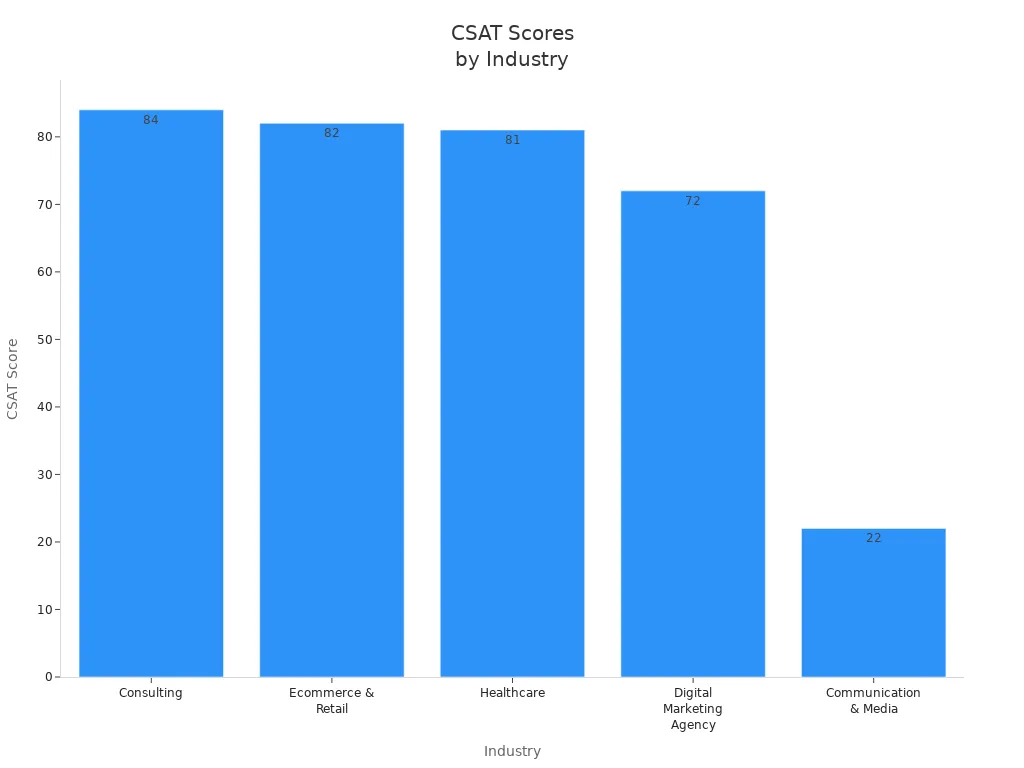
When you bring these skills into your “tell me about yourself” answer, you show you’re ready for the future of customer service in 2025.
Interviewer Expectations
Proactive Mindset
Interviewers want to see that you think ahead. You don’t just wait for problems to show up. You spot issues before they happen and take action. This approach makes customers feel valued and keeps things running smoothly. Here’s how you can show a proactive mindset:
- You anticipate customer needs and solve problems before they grow.
- You create smoother experiences and build stronger relationships.
- You help your company stand out by making customers feel important.
Tip: Shift your mindset from reactive to proactive. Train yourself to look for patterns and take initiative. If you use tools like Sobot’s AI or Voice/Call Center, mention how they help you predict what customers want.
Key Qualities
Interviewers look for specific qualities when you share anticipating customer needs examples. They want to know you can handle tough situations and keep customers happy. Check out this table to see what matters most:
| Competency | Description |
|---|---|
| Proactive problem-solving | You spot and fix issues before they get worse. |
| Genuine empathy | You understand how customers feel and respond with care. |
| Consistency under pressure | You keep service standards high, even when things get busy. |
| Balancing multiple stakeholder needs | You manage requests from different customers at the same time. |
| Long-term relationship building | You help customers come back again and again. |
Interviewers also want to know how you gather customer information, handle unclear requests, and turn insights into action. If you use Sobot’s unified workspace or AI insights, talk about how these tools help you collect data and respond quickly.
2025 Trends
Customer service is changing fast. In 2025, companies will expect you to anticipate customer needs even more. Here are the top trends:
- Proactive customer support is now a must-have, not just a bonus.
- Businesses use AI to predict what customers want and offer solutions before problems appear.
- Hyper-personalization means you deliver tailored experiences based on customer data.
- Companies integrate data from many systems to spot issues early.
- Customers expect advanced recommendations and fast, human-like responses.
If you show you understand these trends and use technology like Sobot’s AI solutions, you’ll impress interviewers and prove you’re ready for the future.
Answer Structure
STAR Method
You want your interview answers to be clear and memorable. The STAR method helps you do just that. It stands for Situation, Task, Action, and Result. This structure lets you tell your story step by step, so interviewers can follow along easily.
- Situation: Set the scene. Describe what was happening. For example, maybe a customer was upset about a delayed order.
- Task: Explain your responsibility. What did you need to do? Maybe you had to fix the problem and keep the customer happy.
- Action: Share what you did. Did you use Sobot’s Voice/Call Center to reach out fast? Did you use the AI chatbot to check order status or offer a solution?
- Result: Show what happened. Did the customer thank you? Did they leave a positive review or come back for more business?
The STAR method helps you show how you anticipate customer needs. You can highlight tools like Sobot’s unified workspace or AI Agent as part of your action or result. This makes your answer stand out and shows you use modern solutions.
The STAR method gives you a simple way to share your best stories and prove you know how to solve problems before they grow.
Tailoring to Role
Every customer service job is a little different. You want your answers to fit the role you want. Here’s how you can do that:
- Understand why the interviewer asks about anticipating customer needs.
- Think about common questions, like “Tell me about a time you helped an unhappy customer.”
- Use the STAR method for your answer.
- Show off your skills—problem-solving, empathy, and teamwork.
- Share positive results, like higher customer satisfaction or faster response times.
- Stay calm and professional in your answer.
- Practice your stories so you sound confident.
If you’re applying for a call center job, talk about using Sobot’s Voice/Call Center or voicebot. For an e-commerce role, mention Sobot’s AI or live chat. Match your examples to the job.
Common Pitfalls
Watch out for these mistakes when you talk about anticipating customer needs:
- Forgetting to learn about the company and its products.
- Not talking about teamwork or how you worked with others.
- Giving answers that are too general or not specific enough.
You want to share real examples. Show how you used tools like Sobot’s ticketing system or WhatsApp Business API to help customers. This proves you’re ready to handle real challenges and make customers happy.
Anticipating Customer Needs Examples

When you walk into an interview, you want to share anticipating customer needs examples that show you can spot what customers want before they even ask. Let’s break down how you can do this using real stories, smart technology, and a customer-first mindset.
Data-Driven Insights
You can’t guess what customers want. You need data. Companies today use powerful tools to collect and analyze information about customer behaviors, preferences, and trends. This helps you see patterns and predict what customers might need next.
- You can use data analytics to track what customers buy, when they shop, and what questions they ask most.
- By looking at purchase history and demographic data, you can build customer profiles. These profiles help you understand each person’s habits and needs.
- Predictive analytics lets you forecast future customer needs based on what happened before. This means you can reach out with solutions before a problem even pops up.

For example, Sobot’s Voice/Call Center gives you real-time call data and customer histories in one place. You can spot when a customer has called about the same issue more than once. With this insight, you can offer a solution before they even ask. Sobot’s AI-powered Voicebot can also recognize intent and suggest answers, making your job easier and boosting customer satisfaction.
Here’s a quick look at how top brands use technology to anticipate customer needs:
| Company | Technology Used | Purpose |
|---|---|---|
| Amazon | Mayday | Instant video support for Kindle users |
| Home Depot | Video chat | DIY project guidance |
| IKEA | AR app | Helps customers assemble furniture |
| Bank of America | Co-browsing | Assists with complex online banking |
| Domino’s Pizza | Chatbot | Smooth pizza ordering and tracking |
| Volvo | Predictive analytics | Early warning system for vehicle servicing |
Predictive AI helps companies like Volvo spot issues before they happen. This keeps customers happy and loyal. You can read more about predictive analytics in customer service here.
When you use data-driven insights, you don’t just react—you act. You show interviewers that you know how to use technology to meet customer needs and improve customer satisfaction.
Personalization
Personalization is the secret sauce for great customer service. When you tailor your approach to each customer, you make them feel special. This leads to higher customer satisfaction and more repeat business.
- You can use customer profiles to recommend products or services that fit their needs.
- AI-powered platforms like Sobot help you remember past conversations, preferences, and even birthdays.
- With Sobot’s unified workspace, you see all customer data in one place. This means you can greet customers by name, remember their last order, and offer solutions that fit their unique situation.
Smart personalization does more than just make people smile. It drives real results:
| KPI | Description |
|---|---|
| Customer retention rate | Measures the percentage of customers retained. |
| Conversion rates | Tracks the percentage of visitors who make a purchase. |
| Average order value | Calculates the average amount spent per order. |
| Customer lifetime value | Estimates the total revenue from a customer over their lifetime. |
| Customer satisfaction | Assesses how products and services meet customer expectations. |
| Call handle time | Measures the average duration of customer calls. |
| First-call resolution | Indicates the percentage of issues resolved on the first call. |
| Upsell/cross-sell rate | Tracks the success of selling additional products to existing customers. |
Did you know that 87% of consumers are likely to buy more after a good experience? On the flip side, 97% change their buying behavior after a bad one. Even a small increase in customer experience scores can mean millions in extra revenue (source).
When you use Sobot’s AI solutions, you can automate personalized messages, recommend products, and even predict when a customer might need help. This makes your service faster and more accurate, which leads to higher customer satisfaction.
About 80% of customers who talk to AI-powered customer service say they have a positive experience. Businesses using AI see up to a 68% drop in staffing needs during busy times, thanks to automation.
If you want to impress in your interview, share anticipating customer needs examples where you used personalization to solve a problem or delight a customer.
Real-World Story: Samsung & Sobot
Let’s look at a real story that brings all these ideas together. Samsung, a global leader in electronics, faced a big challenge. They had thousands of customer inquiries every day, coming from many different channels. They needed a way to keep up and keep customers happy.
Samsung turned to Sobot’s all-in-one contact center solution. Here’s what happened:
- Samsung unified all their communication channels—phone, chat, email, and more—using Sobot’s platform.
- Agents could see every customer’s history and needs in one place. This meant no more repeating questions or missing important details.
- Sobot’s AI-powered chatbots handled simple, repetitive questions. This freed up agents to focus on complex issues and VIP customers.
- For VIPs, Samsung even offered customized video support, making them feel truly valued.
The results speak for themselves:
- Samsung saw a 30% jump in agent efficiency.
- Customer satisfaction soared to 97%.
- Agents could solve problems faster and offer more personalized help.
- The company built stronger relationships with customers, leading to more loyalty and repeat business.
You can read the full story on Sobot’s website.
When you share anticipating customer needs examples like this in your interview, you show that you understand how to use technology, data, and empathy to deliver top-notch service. You prove that you can boost customer satisfaction and help your company grow.
Tip: Practice telling real stories like Samsung’s. Show how you used tools like Sobot’s Voice/Call Center or AI solutions to spot needs early and deliver amazing results.
Customer Service Interview Questions & Sample Answers

You want to walk into your next interview ready to answer any customer service interview questions with confidence. The best way to do this is by preparing real examples that show how you anticipate customer needs. Let’s look at some common interview questions and sample answers for different roles. You’ll see how to use Sobot’s solutions and your own experience to stand out.
Support Role Example
Support roles are all about helping customers solve problems and making their experience smooth. Interviewers often ask questions like, “Tell me about a time you anticipated a customer’s needs,” or “How do you handle unclear requests?” Here’s how you can structure your answer and what to include:
| Areas to Cover | Description |
|---|---|
| Context of the customer relationship | Share the background of your interaction with the customer. |
| Signals or information | Point out what clues helped you spot the customer’s future needs. |
| Analysis process | Explain how you figured out what the customer might need next. |
| Actions taken | Describe the steps you took to help the customer before they asked. |
| Customer approach | Talk about how you shared your insights with the customer. |
| Customer reaction | Tell how the customer responded to your proactive approach. |
| Results and impact | Highlight the positive outcome for the customer and your company. |
Here’s a sample answer you can use for support role customer service interview questions:
“In my last job as a Customer Service Representative, I noticed a customer had reached out several times about the same product. I checked their order history in our system and saw they often had sizing questions. Before their next call, I used Sobot’s unified workspace to pull up their past chats and purchase history. I sent them a detailed size guide and offered to answer any questions. The customer thanked me for being proactive and left a positive review. This approach helped us keep the customer and improved our retention rate.”
You can use this structure for other common interview questions like “why do you want to work here” or “why should I hire you.” Just focus on how you use data and tools to anticipate needs.
Quick Tips for Support Role Interviews
- Always mention how you use technology, like Sobot’s AI or ticketing system, to gather customer information.
- Show that you listen for clues and act before problems grow.
- Share results, like better reviews or higher customer satisfaction.
Ecommerce Example
Ecommerce jobs often focus on fast service and solving problems before they happen. You might get customer service interview questions like, “Can you give an example of how you improved the customer experience?” or “How do you handle frequent complaints?”
Here’s a strong sample answer for ecommerce:
“In my previous e-commerce role, I noticed many customers abandoned their carts on the shipping page. I used Sobot’s AI analytics to track user behavior and found that high shipping costs were the main reason. I suggested a tiered shipping strategy to my manager. After we made the change, cart abandonment dropped by 15%, and customer satisfaction scores went up. I always look for patterns in customer data so I can suggest improvements before customers complain.”
You can also use these steps to answer other common interview questions:
- Gather data on frequent complaints and questions.
- Use tools like Sobot’s customer experience scorecards to spot pain points.
- Suggest or implement solutions, such as onboarding programs or better guides, based on what you find.
If you get asked “what do you know about this company,” you can mention how Sobot helps brands like Samsung improve customer satisfaction by unifying communication channels and using AI to predict customer needs. This shows you’ve done your homework and understand how technology shapes great service.
Pro Tip
Interviewers love when you connect your answer to real business results. If you can, mention numbers—like a drop in complaints or an increase in sales. This makes your answer more convincing.
Call Center Example
Call center jobs require you to think fast and handle lots of calls. You’ll often get customer service interview questions like, “Describe a time you solved a problem before the customer asked,” or “How do you manage high call volumes?”
Here’s how you can answer:
- Share a specific story where you spotted a customer’s need early.
- Use the STAR method (Situation, Task, Action, Result) to organize your answer.
- Explain how you used Sobot’s Voice/Call Center features, like real-time monitoring or AI-powered Voicebot, to help.
Sample answer:
“At my last call center job, I noticed a customer called several times about billing issues. I used Sobot’s call tracking to review their history and saw a pattern. Before their next call, I set up an alert in the system and prepared a clear explanation of their bill. When the customer called, I greeted them by name and explained the charges before they even asked. The customer was surprised and grateful. This proactive approach reduced repeat calls and improved our first-call resolution rate.”
You can use this approach for other common interview questions, such as “why do you want to work here” or “why should I hire you.” Show that you use technology to make your job easier and help customers faster.
What Makes a Great Call Center Answer?
- Share how you gather customer insights using Sobot’s unified workspace or AI Voicebot.
- Explain the steps you take to act on those insights.
- Reflect on the impact—did you reduce call times, boost satisfaction, or help your team?
Remember, interviewers want to see that you don’t just react—you anticipate. You use the right tools, like Sobot’s solutions, to make every customer feel important.
Top Customer Service Interview Questions to Practice
Here are some of the most common interview questions you might hear:
- What do you know about this company?
- Why do you want to work here?
- Why should I hire you?
- Tell me about a time you anticipated a customer’s needs.
- How do you handle difficult customers?
- Can you give an example of how you used technology to help a customer?
- How do you stay calm under pressure?
Practice your answers using real stories and Sobot’s solutions. This will help you stand out and show you’re ready for any challenge.
Tip: Use the STAR method for every answer. Keep your stories short, clear, and focused on results.
Tips for 2025
Embracing Technology
You can’t deliver a great customer experience in 2025 without embracing new technology. AI and machine learning are changing the way you anticipate customer needs. These tools help you spot patterns, personalize every interaction, and solve problems before they even start. Imagine a hotel that knows you’ll arrive late and offers a snack before you ask. That’s the power of predictive technology.
Here’s a quick look at the top technologies shaping customer service:
| Technology | How It Helps You Improve Customer Experience |
|---|---|
| AI and Machine Learning | Automate tasks, personalize service, and boost empathy |
| Predictive Problem-Solving | Spot issues early and offer solutions before problems grow |
| Hyper-Personalization | Tailor every message and offer to each customer |
| Real-Time Engagement | Use chatbots for instant, empathetic communication |
You can use these tools to reach out before customers even know they need help. Send a “getting started” guide right after a purchase. Follow up on recent interactions to show you care about ensuring customer satisfaction. These small actions build trust and loyalty. For more on how AI is transforming service, check out Forbes’ insights.
Leveraging Feedback
Listening to feedback is one of the most important skills you can develop. Real-time feedback loops, like those in mobile apps or chatbots, let you adjust your approach instantly. When you use AI and predictive analytics, you collect feedback faster and more accurately. This helps you stay ahead of customer needs and deliver a better customer service experience.
Try these steps to make the most of feedback:
- Ask for feedback after every interaction.
- Use technology to analyze feedback and spot trends.
- Act quickly on suggestions to show empathy and commitment to ensuring customer satisfaction.
- Share what you learn with your team to improve everyone’s skills.
Continuous improvement keeps you agile and responsive. You can read more about feedback-driven growth at Harvard Business Review.
Continuous Learning
Customer service keeps changing, so you need to keep learning. Real-time data analysis helps you spot new trends. Collaborative workflows let you share insights and improve your communication skills. Ongoing training keeps your empathy sharp and your knowledge fresh.
Here’s how you can stay ahead:
- Join workshops and webinars to learn new skills.
- Work closely with your team to solve problems together.
- Review customer data often to spot changes in needs.
- Practice empathy every day to connect with customers.
Samsung’s agile approach shows how continuous learning leads to better customer success and higher satisfaction. When you focus on learning, you build the skills you need for any challenge.
Tip: The best customer service pros never stop learning. Stay curious, keep practicing empathy, and use every tool at your disposal to deliver an outstanding customer experience.
You can stand out in interviews by preparing your own anticipating customer needs examples. Here’s how to get started:
- Research the company’s industry and challenges so you can tailor your stories.
- Practice answers for common questions and show you understand what customers want.
- Ask open-ended questions and listen closely during your interview.
Want more real-world inspiration? Check out Sobot’s customer stories. You’ll see how the voicebot solves problems on its own and how the AI Agent predicts what customers need. Companies like Amazon and Apple also use predictive analytics to keep customers happy. Stay curious, keep your answers clear, and always look for new ways to use technology in customer service.
FAQ
What should you say if an interviewer asks how you anticipate customer needs?
You can share a real story from your last job. Explain how you noticed a pattern, used data, and acted before the customer asked. Mention any tools you used. Show how your actions helped the company and made the customer happy.
How do you prepare for customer service interview questions?
Start by learning about the company. Review common interview questions. Practice your answers out loud. Use the STAR method to organize your stories. Focus on how you help the customer and improve the company’s results. Bring examples that show you think ahead.
Why do companies care about anticipating customer needs in interviews?
Companies want to see if you can help them stand out. When you anticipate what a customer wants, you save time and build trust. This helps the company keep customers and grow. Interviewers ask these questions to find people who can make a difference.
What are the best ways to answer interview questions about difficult customers?
Stay calm and positive. Share a story where you listened to the customer, found out what they needed, and solved the problem. Explain how you used company tools or teamwork. Show how your actions helped both the customer and the company.
Can you use technology examples in your interview answers?
Yes! Interviewers love when you talk about using technology. You can mention how you used a call center, chatbot, or data tool to help a customer. Show how this made your work easier and helped the company. Real examples make your answers stronger.
See Also
Enhancing Live Chat Engagement for Retail Businesses
Comparative Analysis of Leading Customer Feedback Tools
Ten Strategies to Improve Live Chat Customer Experience

