AI vs Human Support The ROI Breakdown

Businesses can achieve dramatic AI customer support cost reduction, with some slashing operational costs by up to 90%. This article provides a financial breakdown of customer support options. It details the cost savings from the integration of AI and human agents. Leaders can use this guide to evaluate the integration of AI and human agents for their customer service. Sobot’s technology enables this integration, allowing human agents to focus on complex customer support needs. This approach enhances both customer service and overall customer support.
The Financial Case: AI vs Human Agents Cost Comparison

Evaluating the financial impact of AI versus human agents requires a detailed cost comparison. This goes beyond simple salary figures. It involves analyzing the cost per interaction, operational overhead, and other hidden expenses that shape the total cost of ownership. A clear understanding of these factors is crucial for making a strategic investment in customer support. The integration of AI and human agents presents a powerful opportunity for significant cost savings and improved efficiency.
Per-Interaction Cost Analysis
The most direct way to compare customer service economics is by looking at the cost per interaction. This metric reveals a stark difference between AI and human-powered support.
- Human Agents: A single interaction handled by a human agent can cost anywhere from $5 to $15. For more complex issues, this figure can rise to $25. This cost reflects not just the agent's time but also a fraction of their salary, benefits, and the infrastructure supporting them.
- AI Chatbots: In contrast, an AI-powered interaction is dramatically less expensive. Solutions like Sobot's AI Chatbot can handle a query for as little as $0.25 to $0.50. This efficiency stems from the AI's ability to manage thousands of conversations simultaneously without a corresponding increase in labor costs.
💡 A Clear Financial Advantage: The data shows that AI can reduce the cost of a basic interaction by 85-92%. This immediate cost reduction is a primary driver for businesses adopting AI in their customer support strategy.
This fundamental difference in customer service economics highlights the potential for substantial operational savings. By automating routine inquiries, businesses can achieve a significant AI customer support cost reduction while reallocating their valuable human agents to higher-impact tasks.
Operational and Hidden Costs
The true cost comparison between AI vs human agents extends far beyond the per-interaction price tag. Human agents come with a range of operational and hidden costs that accumulate over time. In contrast, AI systems, while having initial setup fees, offer more predictable and scalable pricing.
The Hidden Costs of Human Agents
Staffing a team of human agents involves significant ongoing expenses that are often overlooked in a basic cost comparison.
- Salaries and Benefits: The median annual salary for a customer service agent was around $31,549 in 2022. This figure does not include the substantial cost of benefits. Roughly 68% of agents receive medical benefits, 58% get dental, and 50% have vision coverage, adding thousands of dollars per employee annually.
- Hiring and Training: Bringing a new agent on board is a costly process. Expenses include administrative overhead ($125-$400), productivity loss during the ramp-up period (which can cost over $11,500 per hire), and the time senior team members spend training, which can amount to over $2,000.
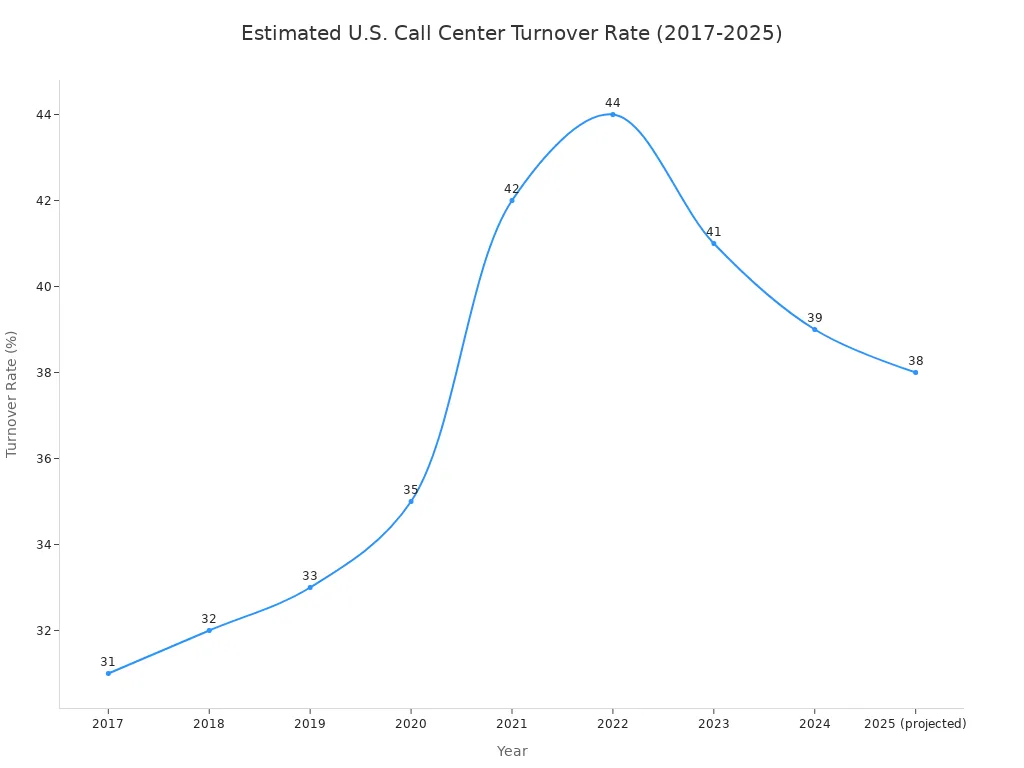
- High Turnover Rates: The customer support industry struggles with high employee turnover, with some reports showing attrition rates as high as 42%. Replacing an employee is expensive, involving recruitment, hiring, and retraining costs that disrupt service continuity and team morale. This cycle of hiring and training creates a significant and recurring financial drain.
The Costs of AI Support
AI platforms like Sobot have a different cost structure. The primary expenses are related to setup, subscription, and maintenance.
- Setup and Integration: Initial setup costs for an enterprise-level AI can range from a few thousand dollars for low-code solutions to much larger figures for highly custom development. However, platforms like Sobot are designed for efficient integration, minimizing these upfront costs.
- Subscription Fees: AI support is typically billed through a monthly or annual subscription. These fees are predictable and often based on usage volume, allowing costs to scale directly with business needs.
- Maintenance: Ongoing maintenance is minimal compared to the constant management required for a human team. AI systems are updated by the provider, and optimizations can be made without the need for retraining an entire workforce.
The integration of AI and human agents allows businesses to mitigate the high, unpredictable costs associated with a purely human-staffed customer service department.
A Detailed Cost Comparison Summary
When all factors are considered, the financial argument for the integration of AI and human agents becomes undeniable. The long-term cost savings are substantial, creating a clear path to a positive ROI.
The table below summarizes the cost comparison, illustrating how AI delivers superior value across different scenarios.
| Cost Component | Human Agent (Cost Range) | AI Agent (Cost Range) | Cost Savings (%) |
|---|---|---|---|
| Basic Interaction | $3.00–$6.00 | $0.25–$0.50 | 85-92% |
| Complex Inquiry | $8.00–$15.00 | $0.50–$1.50 | 81-90% |
| After-Hours Support | $6.00–$12.00 | $0.25–$0.50 | 92-96% |
| Peak Period Volume | $4.50–$9.00 | $0.25–$0.50 | 89-94% |
This cost comparison summary makes the financial benefits clear. For a mid-size organization handling 500,000 interactions annually, switching to an AI-hybrid model can generate annual cost savings between $1.3 million and $2.8 million. For large enterprises, these savings can reach tens of millions.
The debate of AI vs. human agents is not about replacement but about smart integration. By automating high-volume, low-complexity tasks, AI frees human agents to provide expert, empathetic support for the issues that truly require a human touch. This strategic approach to customer support doesn't just lead to cost reduction; it creates a more efficient, scalable, and effective customer service operation.
Performance Metrics That Drive AI Support ROI

While direct cost savings are compelling, the true return on investment from AI emerges from superior performance. Key metrics like speed, accuracy, and availability directly impact efficiency and customer satisfaction. These performance gains not only reduce operational friction but also create new opportunities for revenue and growth. AI-driven customer service solutions transform customer support from a cost center into a value driver.
Speed, Availability, and Scalability
Modern customers expect immediate answers. Speed is no longer a luxury; it is a core component of quality customer service. This is where AI automation provides a decisive advantage.
- Instantaneous Response: AI agents respond to inquiries in seconds. Some companies report a response time as low as 1-2 seconds. Human agents, in contrast, have an average response time of 5-10 minutes. This speed drastically improves the customer experience and boosts efficiency and customer satisfaction.
- 24/7 Availability: AI-powered chatbots operate around the clock, every day of the year. They provide continuous customer support without the high cost of overnight or holiday shifts for human agents. This ensures that customers receive help whenever they need it, regardless of time zones or business hours.
- Effortless Scalability: During peak shopping seasons or marketing campaigns, inquiry volume can surge unexpectedly. Scaling a team of human agents is slow and expensive. AI, however, scales instantly to handle thousands of simultaneous customer interactions without a drop in performance.
The integration of AI and human agents allows a business to offer instant, 24/7 support for common questions. This frees human agents to handle more complex issues during business hours, leading to better overall service.
Resolution Rates and Accuracy
Speed is meaningless without accuracy. A primary goal of any customer support interaction is to solve the customer's problem on the first try. This is measured by the First Contact Resolution (FCR) rate.
A high FCR rate is a strong indicator of efficiency and customer satisfaction. For AI-powered chatbots handling straightforward inquiries, an FCR rate exceeding 80% is a good benchmark. This rate is highly achievable for routine questions. Human agents typically aim for an FCR rate between 70% and 80%, often because they handle more complex and varied issues.
However, accuracy depends on the type of query.
- AI Agents: AI excels at providing accurate, consistent answers to structured and routine questions. By drawing from a pre-approved knowledge base, AI-powered chatbots eliminate the risk of human error for standard procedures. They are perfect for tasks like order tracking, password resets, and product information queries.
- Human Agents: Human agents demonstrate superior ability in complex or emotionally sensitive cases. They can understand nuance, handle unexpected challenges, and provide creative solutions that go beyond an algorithm. The integration of AI and human agents ensures that simple queries are resolved instantly by AI, while complex problems receive the expert attention of a person.
This strategic integration optimizes both resolution rates and accuracy across all types of customer interactions.
Boosting Conversions with Sobot's Chatbot
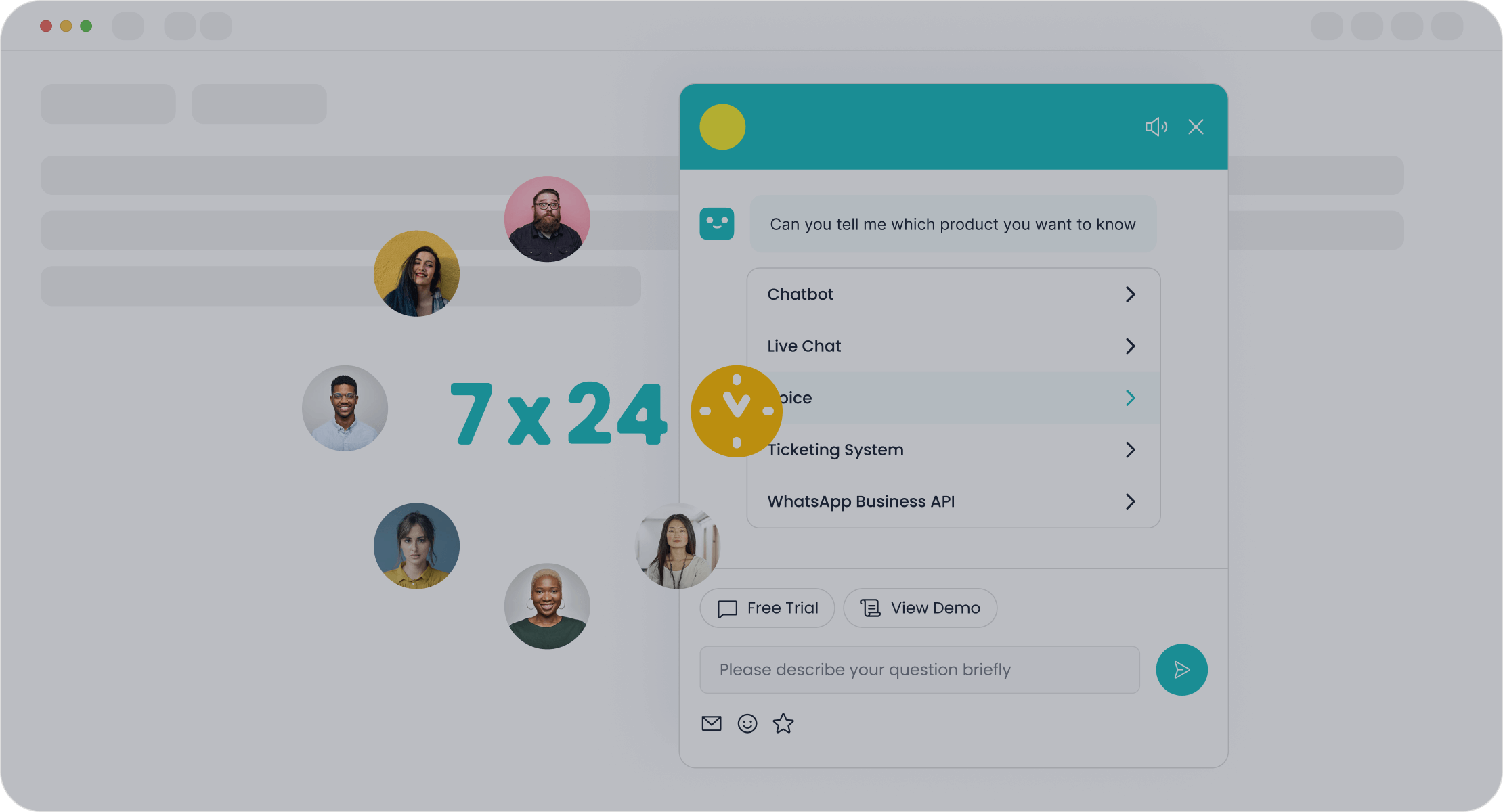
Performance metrics are not just about saving money; they are also about making money. An effective AI customer service strategy directly contributes to revenue growth. The Sobot Chatbot is a tangible solution designed to turn customer support into a sales engine. It achieves this by delivering personalized support and proactive personal interactions.
Sobot's platform delivers measurable results that boost ROI. Businesses using the Sobot Chatbot can:
- Improve productivity by 70% through powerful AI automation.
- Boost conversions by 20% with smart, personalized engagement.
- Save up to 50% on agent costs by triaging queries 24/7.
These results stem from specific, performance-driving features. Sobot’s AI-powered chatbots and AI voice bots use smart self-service and proactive push messaging to guide customers. They can offer personalized product recommendations, provide personalized support during checkout, and re-engage users who show signs of abandoning their cart. This level of personalization creates more meaningful personal interactions.
💡 From Support to Sales: By delivering instant, personalized support at critical moments in the customer journey, Sobot’s AI-driven customer service solutions do more than just answer questions. They build confidence, reduce friction, and actively convert browsers into buyers. This is a key factor in achieving AI customer support cost reduction and maximizing overall business value.
The integration of these tools creates a seamless experience. A customer might start with an AI voice bot for a quick question, move to an AI-powered chatbot for more details, and then get transferred to a human agent for a final, personalized consultation. This intelligent routing ensures maximum efficiency and customer satisfaction, turning every interaction into an opportunity.
Achieving AI Customer Support Cost Reduction in Practice
Achieving AI customer support cost reduction is not about choosing a winner in the AI vs human agents debate. It is about smart integration. A practical approach combines the strengths of both to enhance efficiency and customer satisfaction. This creates a superior customer service experience and drives a strong return on investment.
The Core Debate: AI vs. Human Agents
The discussion of AI vs human agents often misses the point. Each has unique strengths. AI-powered chatbots cannot replicate the human touch needed for complex personal interactions. Relying only on AI can lead to challenges.
- Lack of Emotional Intelligence: AI struggles to understand subtle emotional cues in customer interactions.
- Limited Context: AI may miss the full picture in nuanced situations.
- Market Alienation: Some customers simply prefer speaking with a person.
Human agents excel where AI falls short. They provide genuine empathy and can adapt to unexpected customer support needs. This human element is vital for building relationships and handling sensitive issues, which is crucial for customer loyalty.
The Hybrid Model: Maximizing Strengths
The optimal solution is a hybrid model. This hybrid approach creates a powerful customer support system. The integration of AI and human agents allows businesses to automate routine queries with AI-powered chatbots. This frees human agents to focus on high-value customer interactions. A successful hybrid model ensures a seamless handoff from bot to person. The hybrid system preserves the conversation history, so customers never repeat themselves. This hybrid strategy boosts efficiency and customer satisfaction. The hybrid model provides personalized support at scale. This hybrid approach is the future of effective customer service. A well-designed hybrid model is the key to excellent customer support. The hybrid model is a smart integration. This hybrid model builds customer loyalty.
Real-World ROI: The OPPO Case Study
OPPO, a leading smart device company, provides a powerful example of the hybrid model in action. By implementing Sobot’s AI Solution, including AI-powered chatbots and its ticketing system, OPPO transformed its customer support. This integration delivered impressive results.
💡 OPPO's Success with Sobot:
- 83% chatbot resolution rate for common questions.
- 94% positive feedback rate, boosting efficiency and customer satisfaction.
- 57% increase in repurchase rate, a direct indicator of improved customer loyalty.
- 90% reduction in knowledge base maintenance efforts.
These metrics demonstrate a clear path to AI customer support cost reduction. OPPO’s success shows how AI-driven customer service solutions, as part of a hybrid integration, deliver significant cost reduction and enhance the personalized customer experience. The use of AI-powered chatbots for initial personal interactions, followed by seamless escalation, creates a winning formula for customer loyalty.
Your Framework for Calculating Sobot's ROI
Calculating the return on investment for Sobot's AI solutions provides a clear business case. This framework helps leaders project financial gains and strategic advantages. It moves beyond simple cost comparisons to a full value assessment. A proper calculation shows the true impact of a hybrid customer support model.
Key Metrics for Your Calculation
Accurate ROI calculation begins with the right metrics. Businesses should track both direct operational savings and customer-centric data. The payback period is a key metric. It measures the time needed for the benefits of an AI chatbot to cover its initial cost. A shorter period is always better. Businesses can also quantify the value of improved customer satisfaction metrics.
To connect customer satisfaction to revenue, leaders can:
- Link customer satisfaction scores directly to financial data like customer spending.
- Use the standard ROI formula:
(Benefits – Investments) / Investments. - Analyze how many customers are lost at low satisfaction levels to find the revenue value of a one-point increase.
- Calculate the revenue saved from an improvement in satisfaction scores.
A Step-by-Step ROI Projection
Projecting ROI requires a structured approach. A template can help teams build a custom ROI sheet. This tool clarifies factors like time savings and error reduction. It streamlines decision-making for the integration of AI and human agents. The projection should model the financial impact of a hybrid customer support system. This hybrid model delivers significant operational savings. The hybrid approach enhances customer service. A well-planned hybrid system is essential for modern customer support. This hybrid model makes customer support more efficient. The integration of AI and human agents is a key part of this hybrid strategy.
Factoring in Long-Term Strategic Value
The full ROI of AI-driven customer service solutions extends beyond immediate savings. Long-term strategic value comes from deeper customer relationships. AI enables hyper-personalization for more effective personal interactions. It analyzes behaviors to create personalized experiences. This improves customer support and builds loyalty. Predictive analytics can also anticipate customer needs, reducing churn. This leads to better personal interactions.
Tesco uses AI to gamify its loyalty program challenges. This strategy led to higher interaction frequency and incremental sales increases. The personalized and achievable goals created stronger brand connections.
Data from AI customer support provides real-time insights. This information helps marketing and product teams make faster, better decisions. AI-driven customer service solutions help create personalized marketing campaigns and improve product strategy. These personalized personal interactions are vital. The hybrid model provides personalized customer support. This personalized approach enhances all personal interactions. The system delivers personalized service at scale. This personalized method improves customer service. The personalized experience is a core benefit. This personalized approach defines modern customer support.
The integration of AI and human agents is a competitive necessity. It delivers undeniable financial and performance ROI. While human agents are vital for complex customer support, AI drives significant cost savings. Businesses see an average return of $3.50 for every $1 invested in AI. This strategic integration creates powerful customer support.
Key ROI drivers for your customer support include:
- Direct cost savings from lower per-interaction costs.
- Efficiency gains from 24/7 AI availability.
- Proven results, like OPPO's 57% repurchase rate increase.
This approach delivers major cost savings and better customer support. Use the framework in this guide to calculate your potential ROI. Explore Sobot's AI Chatbot and solutions at sobot.io to start your journey.
FAQ
How does an AI chatbot reduce costs?
An AI chatbot reduces costs significantly. It operates 24/7 to handle common customer questions. This automation saves businesses up to 50% on agent costs. It also frees human agents to focus on more complex problems, which improves overall efficiency.
Is it difficult to set up an AI chatbot?
No, setting up a Sobot AI Chatbot is simple. The platform uses a point-and-click interface. Businesses can design and launch automated workflows without any coding experience. This makes the technology accessible to teams of all technical skill levels.
Can a chatbot support customers in different languages?
Yes, the Sobot AI Chatbot is multilingual. It can interact with customers from around the world in their preferred language. This feature helps businesses provide excellent global support and improve customer satisfaction across different regions.
How does the hybrid model improve customer service?
The hybrid model combines AI and human strengths. AI-powered chatbots instantly resolve simple queries. This allows human agents to dedicate their time to complex or sensitive issues. This integration ensures customers receive fast, accurate, and empathetic support when they need it.
See Also
Comparing Leading Interactive Voice Response Software Solutions for Businesses
Exploring the 10 Best AI Tools for Enterprise Contact Centers
An In-Depth Review of AI-Powered Enterprise Call Center Solutions
How AI Customer Service Agents Are Revolutionizing Support Experiences
