AI Tools for High Customer Resolution Rates

Achieving an elite resolution rate by 2026 hinges on a strategic shift in AI customer support. While a good first call resolution is 70-79%, AI tools for improving customer service resolution rate help top teams push past 80%. This transition moves your service from reactive problem-solving to a proactive, AI-driven customer support model. This model uses AI-powered automation to empower both customers and agents. It is built on three core pillars that enhance the entire customer experience:
- Intelligent Self-Service: Providing customers with powerful automated self-service capabilities.
- Real-Time Agent Augmentation: Equipping agents with AI tools for real-time assistance.
- Proactive Issue Automation: Using customer service automation to resolve problems before they escalate.
This approach, powered by AI customer service tools like Sobot, is key to boosting customer satisfaction and achieving superior resolution outcomes.
Core AI Capabilities for High Resolution
To achieve high resolution rates, your team needs the right AI capabilities. These tools form the foundation of a modern, efficient ai-driven customer support strategy. They empower both customers and agents, turning reactive problem-solving into a proactive service model.
AI-Powered Knowledge Bases
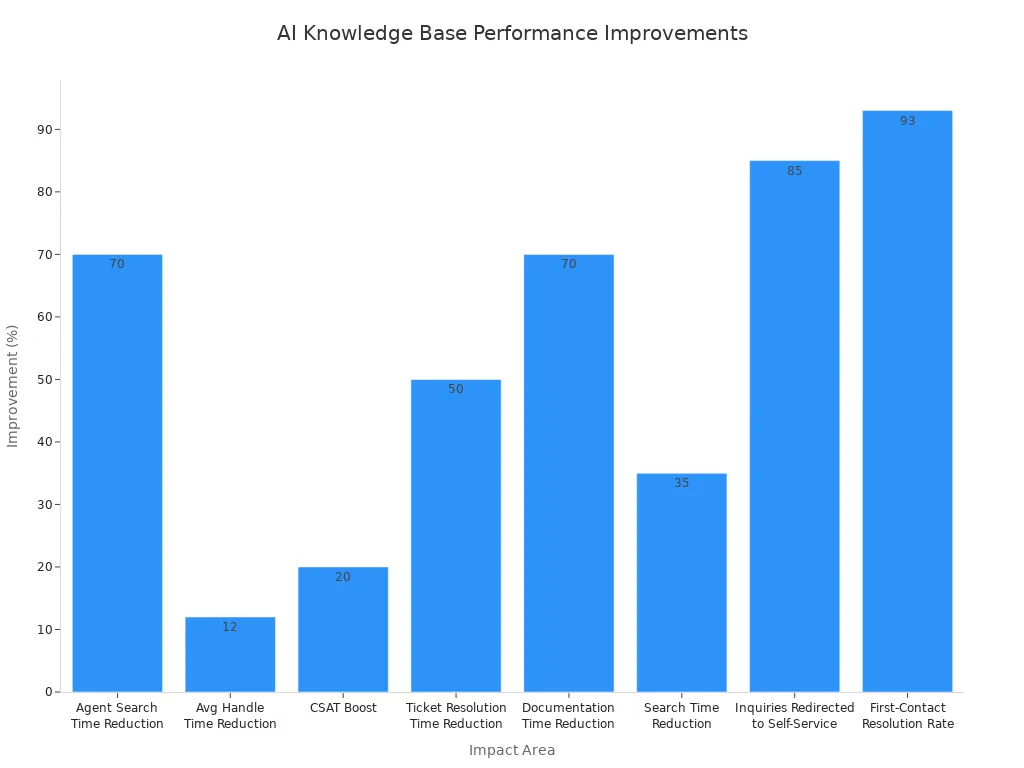
An AI-powered knowledge base is a smart, central hub for information. It uses AI to give agents and customers fast, accurate answers. This is a big upgrade from old FAQ pages. AI customer service tools analyze resolved tickets to draft new articles and find knowledge gaps. This creates powerful self-service capabilities. The impact on key metrics is significant.
| Impact Area | AI-Powered Knowledge Base Improvement | Traditional FAQ Limitation |
|---|---|---|
| First-Contact Resolution Rate | 93% (Achievers after using gap detection) | Outdated content reduces FCR |
| Inquiries Redirected to Self-Service | Up to 85% | Relies on basic keyword matching |
| Agent Search Time Reduction | Over 70% | Agents search across disconnected systems |
| Customer Frustration | N/A | 84% report high frustration with poor information |
Predictive Routing and Skill-Based Assignment
Predictive routing uses AI to send a customer to the best agent for their problem. The system looks at customer history and the type of question. It then matches the query to an agent with the right skills. This AI customer support process reduces wait times and avoids transfers. It ensures the first contact is the right one, which is key for a fast resolution.
A major telecommunications provider reported a 20% increase in customer satisfaction scores after implementing AI-powered routing.
This automation helps teams deliver better service and improve satisfaction.
Real-Time Agent Assist and AI Co-Pilots
AI co-pilots provide real-time help to agents during customer calls or chats. This real-time support is a core part of modern ai customer service. These tools can:
- Provide instant access to knowledge articles.
- Analyze customer sentiment to detect frustration in real-time.
- Suggest the best responses and next steps in real-time.
- Offer live transcription so agents can focus on the customer.
This real-time assistance makes agents more effective and confident. It also dramatically cuts down training time. For example, one company reduced new agent onboarding from six months to just a few weeks with an AI co-pilot, saving approximately 300 agent hours a month.
Automated Workflows for Repetitive Issues
Customer service automation handles common, repetitive tasks. This ai-powered automation frees up agents to focus on complex problems. Many simple issues can be solved with customer service automation, including:
- Automatic Ticket Sorting: AI can triage and route incoming support tickets without manual work.
- Collecting Key Details: Automation can gather order numbers or customer details before an agent joins.
- Proactive Outage Alerts: Send automatic alerts during a service outage to reduce ticket volume.
Using customer service automation for these tasks improves efficiency and allows for a more strategic use of your support team.
AI Tools for Improving Customer Service Resolution Rate

Selecting the right AI tools for improving customer service resolution rate is crucial. The best choice depends on your biggest challenges. Some teams need better knowledge access. Others need to empower agents in real-time. Many can benefit from smart customer service automation. Let's explore top customer support tools in each category.
Knowledge Management: Zendesk AI & Knowmax
A strong knowledge base is the backbone of high-resolution customer service. When customers and agents can find answers quickly, problems get solved on the first try.
Zendesk AI is a powerful option for teams already using its platform. The AI is highly optimized for data within its own ecosystem. This ensures accuracy for support-related information. Zendesk AI helps teams:
- Draft new content and improve search results for the help center.
- Automatically suggest relevant articles to agents while they work on tickets.
- Use generative AI to expand bullet points into full articles or summarize long documents.
- Scan incoming support requests to identify trending topics and knowledge gaps.
This AI customer support tool streamlines content creation. It helps your team build a self-service engine that truly works.
Knowmax is an AI-guided knowledge management platform. It is designed to help CX teams deliver mistake-proof customer service. Knowmax uses semantic search, which understands the meaning behind keywords. This allows agents to find relevant information much faster. Its AI capabilities empower agents with instant answers and provide insights to optimize content. Key features include:
- An AI-powered search engine for rapid information discovery.
- AI authoring tools to easily create agent scripts and decision trees.
- An AI translator for seamless multilingual support.
- Instant article summaries to give agents quick overviews.
These features reduce long search times and equip agents with perfect responses during real-time interactions.
Agent Assistance: Cresta & Kustomer
Agent assist tools act as a real-time co-pilot. They guide agents during live conversations to improve performance and resolution. This is a key part of modern ai-driven customer support.
Cresta provides real-time intelligence to contact center agents. It analyzes conversations as they happen and offers immediate guidance. This helps agents improve their skills on the fly. Cresta's real-time features include:
- Live Prompts: Suggesting what to say next to move the conversation toward a resolution.
- Behavioral Guidance: Offering real-time tips on tone and empathy based on customer sentiment.
- Generative Knowledge Assist: Pulling answers from the knowledge base directly into the conversation.
This real-time support helps agents handle calls more effectively and confidently.
Kustomer uses AI to give agents important contextual information. Its platform uses Natural Language Processing (NLP) to understand what a customer is saying, even if they use slang or informal language. The AI identifies the customer's intent and pulls their history. This gives the agent a complete view of the customer's journey in real-time. This real-time context means agents can:
- Understand the customer's issue without asking repetitive questions.
- See previous interactions and purchases.
- Provide a more personalized and efficient service.
By providing this deep insight in real-time, Kustomer's ai customer service helps agents solve problems faster and more accurately.
Intelligent Automation: Sobot AI Chatbot
Intelligent customer service automation is a game-changer for efficiency and resolution. AI-powered chatbots can handle a large volume of common inquiries. This frees up human agents to focus on complex issues that require their expertise.
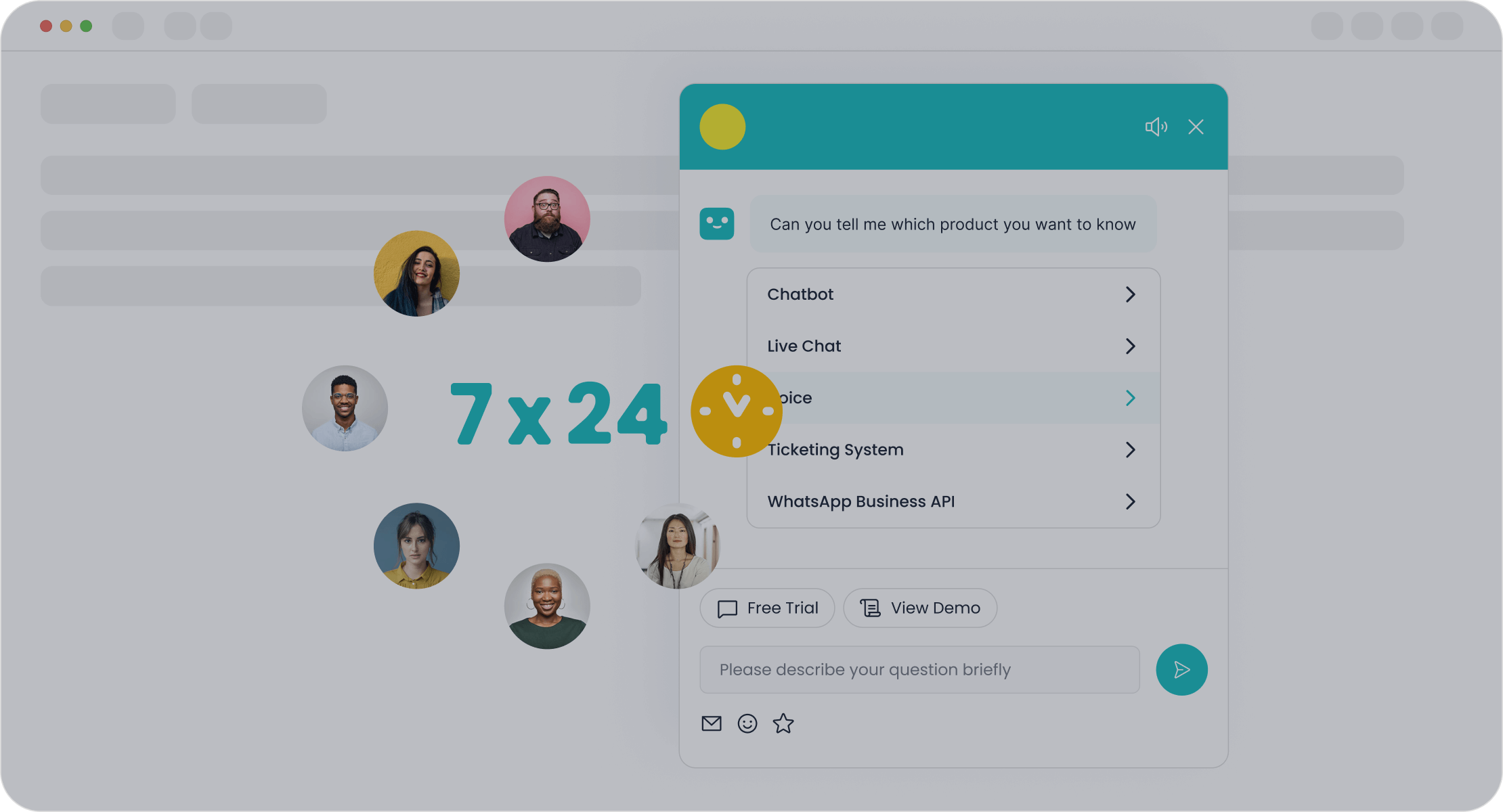
The Sobot AI Chatbot is an essential tool for businesses looking to enhance efficiency and boost conversions. It is one of the leading ai customer service tools designed to automate customer interactions 24/7. This provides immediate support and improves the overall customer experience. Key capabilities include:
- 24/7 Self-Service: The chatbot autonomously solves regular queries around the clock. This can save up to 50% on additional agent costs and ensures customers get instant answers.
- Proactive Engagement: Sobot's AI can detect when a user is struggling on your website. It then proactively offers assistance to guide them toward a solution or purchase.
- Multilingual Support: The chatbot interacts with customers in their preferred language, making your support accessible to a global audience.
- Seamless Agent Handoff: For complex problems, the chatbot gathers key details from the customer. It then ensures a smooth transition to a human agent, who has all the context needed for a quick resolution.
This level of automation improves productivity by up to 70%. It turns your website into a powerful channel for both support and sales.
Case Study: How OPPO Achieved 83% Resolution with Sobot
Real-world results show the impact of the right ai tools for improving customer service resolution rate. OPPO, a leading smart device innovator, faced huge increases in customer inquiries during peak shopping seasons. This led to long wait times and strained their support team.
OPPO partnered with Sobot to implement a comprehensive customer service software solution. They used Sobot's chatbot and ticketing system to create a human-machine cooperation model. The chatbot handled repetitive questions, while agents focused on complex cases. Sobot's AI also helped optimize OPPO's knowledge base, reducing maintenance efforts by 90%.
The results were transformative. By using Sobot's AI solutions, OPPO achieved:
- An 83% chatbot resolution rate.
- A 94% positive feedback rate from customers.
- A 57% increase in their repurchase rate.
This success story shows how integrating a powerful AI chatbot can dramatically improve resolution rates. Sobot's ability to provide real-time data access and integrate with existing workflows was critical. It proves that strategic customer service automation is a direct path to higher efficiency and customer satisfaction.
A Deep Dive into Leading AI Customer Service Tools
Choosing the right platform is a critical step toward better performance. The market offers many ai customer service tools, each with unique strengths. Some provide all-in-one solutions, while others specialize in specific areas like agent assistance or customer service automation. This deep dive explores leading options to help you find the best fit for your team.
Sobot: All-in-One AI Solution for E-commerce
Sobot offers a comprehensive, all-in-one customer service software solution built for the demands of e-commerce. It combines a powerful suite of products, including an AI Chatbot, Live Chat, Voice Call Center, and Ticketing System, into a single customer contact center. This unified approach is one of the best ai tools for improving customer service resolution rate because it eliminates data silos and creates a seamless experience.
The platform is designed to help businesses engage shoppers at every stage of their journey. Key functionalities tailored for e-commerce include:
- Omnichannel Integration: Sobot connects with major e-commerce platforms like Shopify, Amazon, and Lazada. This allows your support team to manage conversations from different storefronts in one place.
- Conversational AI Engagement: The system uses pre-designed, automated messages to interact with shoppers. This proactive support can guide a customer, answer questions in real-time, and prevent cart abandonment.
- Efficiency and Conversion: Sobot's AI is built to resolve up to 70% of common inquiries through automation. This frees up agents and has been shown to increase conversion rates significantly.
Sobot's AI-powered chatbot provides 24/7 service, handling routine questions and ensuring no customer is left waiting. For more complex issues, the system ensures a smooth handoff to a live agent. The agent receives the full context of the AI conversation, which is essential for a quick resolution. This human-machine collaboration makes the entire customer support process more efficient.
Zendesk AI: Extending a Robust Support Ecosystem
Zendesk AI is a powerful addition for teams already using the Zendesk platform. Its main strength lies in its deep integration within its own ecosystem. The AI works seamlessly with the Zendesk Help Center and ticketing data. This allows it to provide customers with precise information pulled directly from past tickets and knowledge base articles. This automation reduces queue times and helps solve problems quickly.
For businesses embedded in the Zendesk environment, the AI acts as a natural extension of their current setup. It can access the same information as human agents, update a ticket, and provide valuable context when an issue needs escalation. Zendesk has also expanded its capabilities through new integrations.
- Microsoft 365 Integration: Zendesk now works with Microsoft 365 Copilot. This brings AI-powered support directly into applications like Microsoft Teams. Employees can submit tickets, check statuses, and get help without leaving their workflow.
- Enhanced Security: These integrations allow IT and HR teams to manage AI services confidently. They offer secure and compliant management of AI assistants within Microsoft's governance frameworks, protecting sensitive data.
However, Zendesk's native AI is most effective for existing Zendesk users. Businesses not on the platform may find it less optimal, as its primary benefit comes from that unified experience. For the AI to perform well, it requires a well-organized knowledge base, ideally within the Zendesk Help Center.
Udesk: Generative AI for Omnichannel Support
Udesk specializes in using generative AI to create more natural, human-like service experiences. Its platform is designed to handle complex inquiries and provide personalized responses based on customer history. This approach moves beyond simple, scripted chatbots. Udesk's AI can understand conversational language and identify customer intent with high accuracy.
The platform offers several advanced features that drive a higher resolution rate.
- LLM-Powered Knowledge Base: Udesk's AI can automatically generate and optimize Q&A pairs. This reduces the time needed to build a comprehensive knowledge base by 70%.
- Real-Time Agent Assistance: During live interactions, the AI provides agents with dynamic script suggestions and real-time emotional sentiment alerts. This helps agents adapt their tone and approach.
- Cross-Channel Memory: Udesk supports 27 communication channels. It provides "memory continuity," giving agents the full conversation history even when a customer switches from chat to email to phone. This feature alone can boost customer satisfaction by over 40%.
- Post-Interaction Automation: After a conversation ends, the AI automatically generates a work order summary and a list of follow-up tasks. This customer service automation cuts down agent administrative time by 80%.
This level of intelligent customer service automation makes Udesk a strong choice for companies wanting to deliver a highly personalized and efficient omnichannel customer service.
Pylon: Automating Tickets with AI Customer Service
Pylon focuses on one of the biggest pain points for support teams: managing a high volume of tickets. It uses AI to automate the entire ticket lifecycle, from initial triage to final resolution. This customer service software is designed to understand, categorize, and route support requests automatically. The AI analyzes ticket content, customer history, and team expertise to assign each issue to the most qualified agent.
Pylon's AI is particularly effective at automating:
- Repetitive tasks and common questions.
- Intelligent routing to the correct agent or department.
- Automated triage and prioritization of incoming tickets.
By training its AI on knowledge bases and past resolved issues, Pylon delivers impressive results. One company using Pylon saw a dramatic improvement in its key support metrics.
| Metric | Impact |
|---|---|
| First Response Time | Decreased by 90% (from 35 mins to <3.5 mins) |
| Manual Support Hours | Reduced by ~35% |
| Business Growth Supported | 6x growth with the same size support team |
This shows how targeted AI automation can transform a support operation. The Head of Post-Sales at the company, Duke Puniani, noted the impact of this ai customer support tool.
“We’re still the same size team, but we’re supporting 6x the business volume. That kind of scale just isn’t possible without an AI and collaboration first system like Pylon.”
For teams overwhelmed by ticket volume, Pylon offers a focused solution that delivers measurable improvements in efficiency and response time. These customer support tools are vital for modern service teams.
How to Select the Right AI Tools for Customer Service
Choosing the right ai tools for customer service is a strategic decision. It requires a clear understanding of your specific needs. This four-step process helps you select the best platform to improve your resolution rate and overall service quality.
Step 1: Analyze Your Common Inquiry Types
First, you must understand your customer support workload. Review your current customer-agent interactions to find patterns. Look for simple, repetitive, or high-volume tasks that consume your team's time. This analysis helps you identify the best opportunities for automation.
- Identify bottlenecks and repetitive tasks within your current support processes.
- Examine customer feedback for frequently mentioned issues, like slow response times.
- Prioritize simple, time-consuming problems that do not require human empathy for resolution.
This initial review will show you where an AI tool can have the biggest impact on your ticket volume.
Step 2: Evaluating Customer Support Tools for Integration
Your new ai customer service tools must work with your existing systems. A tool’s ability to connect with your CRM or e-commerce platform is critical. Look for customer support tools with a flexible API and a strong integration ecosystem. Seamless integration ensures that data flows smoothly between platforms. This gives your team a unified view of the customer, which is essential for a fast resolution. The right customer service software should enhance your current workflow, not complicate it.
Step 3: Define Your Key Resolution Metrics (FCR, AHT)
You need to measure success. First Contact Resolution (FCR) and Average Handle Time (AHT) are two vital metrics for ai customer service. FCR measures the percentage of issues solved on the first contact. A high FCR is a strong sign of an effective ai customer support operation.
| FCR Rate Range | Description |
|---|---|
| 70% to 79% | Industry standard for a good FCR rate |
| 80% or higher | World-class FCR rate |
AHT is the average time an agent spends on a customer interaction. The goal is to find an AHT "sweet spot" where service is efficient but not rushed. The right AI can improve both metrics.
Step 4: Pilot a Tool with a Specific Use Case
Avoid a full-scale rollout at first. Instead, pilot a tool with a specific, measurable goal. For example, you could use an AI chatbot to automate "order status" inquiries. This allows you to test the technology in a controlled environment.
A pilot program lets you measure the impact on a small scale. You can see how the AI affects your key metrics before committing to a company-wide deployment.
This approach minimizes risk and helps you build a strong case for broader adoption of AI in your customer service.
The path to a higher resolution rate is not about replacing people. It is about empowering them. The best ai tools for improving customer service resolution rate augment your team. A strategic investment in ai-driven customer support directly improves the customer experience. This includes customer service automation for simple tasks and real-time assistance for agents. This approach leads to faster, more accurate resolution and greater customer satisfaction.
Ready to enhance your customer service? Explore Sobot's ai tools for customer service to see how our AI solutions can boost your resolution rate and transform your customer engagement.
FAQ
What is a good customer resolution rate?
A good resolution rate is typically between 70% and 79%. However, top-performing teams use AI tools to push this number above 80%. This shows a highly effective customer support operation that solves issues on the first contact, leading to greater customer satisfaction.
How does AI improve customer support?
AI improves customer support by handling common questions through automation. This frees up human agents for complex problems. AI also provides agents with real-time information and suggestions. This helps them resolve issues faster and more accurately, creating a better overall experience.
Can small businesses use AI for customer service?
Yes, many AI platforms are designed for businesses of all sizes. Tools like Sobot offer scalable solutions that do not require coding. This makes it easy for small businesses to implement powerful features like 24/7 self-service and automated workflows to improve their support.
Will AI replace human customer service agents?
No, the goal of AI is not to replace human agents. Instead, it empowers them. AI handles repetitive tasks, allowing agents to focus on high-value interactions that require empathy and critical thinking. This human-machine partnership is key to modern customer support.
See Also
Leading AI Solutions for Enterprise Contact Centers: A Top 10 Guide
Elevating Efficiency: The Impact of AI on Customer Service Software
Achieving Peak Customer Satisfaction: Ten Live Chat Strategy Tips
Essential Guide: Enhancing Call Center Quality with Assurance Software

