AI Outbound Calls vs Traditional A Full Comparison

Business leaders face a critical choice for optimizing outbound strategy ROI. The decision between AI outbound calls and traditional call centers is pivotal. AI excels at high-volume, routine tasks, while human agents master complex customer interactions. This analysis provides a direct head-to-head comparison. It helps leaders select the best model for their goals.
The right AI calling strategy can deliver significant returns. Some businesses see an average 8x ROI on their AI investment. Sobot AI enhances the Sobot call center with powerful AI calling capabilities. This AI voice calling technology transforms efficiency. In contrast, traditional call centers provide an essential human touch for high-value conversations. This makes AI voice calling a strategic tool for growth.
Cost Analysis: AI vs. Traditional Outbound
When evaluating outbound strategies, the most significant factor for any business is the bottom line. A detailed cost analysis reveals that AI-powered calling can be three to five times more cost-effective than traditional methods. The financial benefits extend beyond simple labor costs, creating substantial long-term savings. This section breaks down the expenses to show where AI delivers the most value.
Staffing and Labor Expenses
Labor is the largest and most persistent expense for traditional call centers. The cost of a human agent goes far beyond their hourly wage. Businesses must account for salaries, benefits, payroll taxes, and paid time off. These additional expenses can increase the total labor cost by 35-50% per employee.
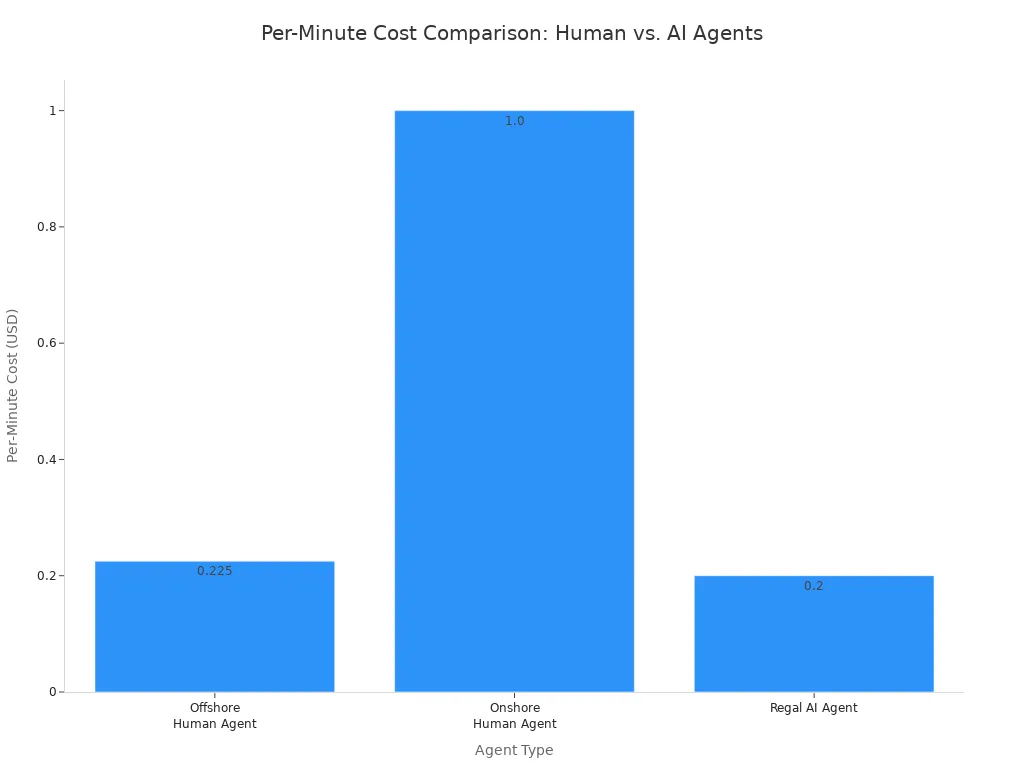
In contrast, AI calling operates on a predictable and scalable model. Instead of hiring more staff, businesses can increase their calling capacity with a simple subscription adjustment. This approach eliminates the overhead associated with human labor. The result is a dramatic reduction in the cost per call. An onshore human agent can cost around $1.00 per minute of talk time, while an AI agent costs a fraction of that.
The following table illustrates the stark difference in per-minute costs:
| Agent Type | Hourly Wage (Pure Labor) | Talk Time per Hour | Per-Minute Cost |
|---|---|---|---|
| Offshore Human Agent | ~$9-10 | 45 minutes | $0.20-0.25 |
| Onshore Human Agent | ~$37.50 | 36 minutes | ~$1.00 |
| AI Agent | N/A | 100% | ~$0.20 |
This data shows that AI voice calling provides a cost-effective alternative, especially when compared to onshore agents.
Technology and Operational Overhead
Traditional call centers require a massive upfront investment in physical infrastructure. These costs include:
- Office space and utilities
- Desks, computers, and headsets
- On-premise servers and network hardware
- Complex software for routing and CRM
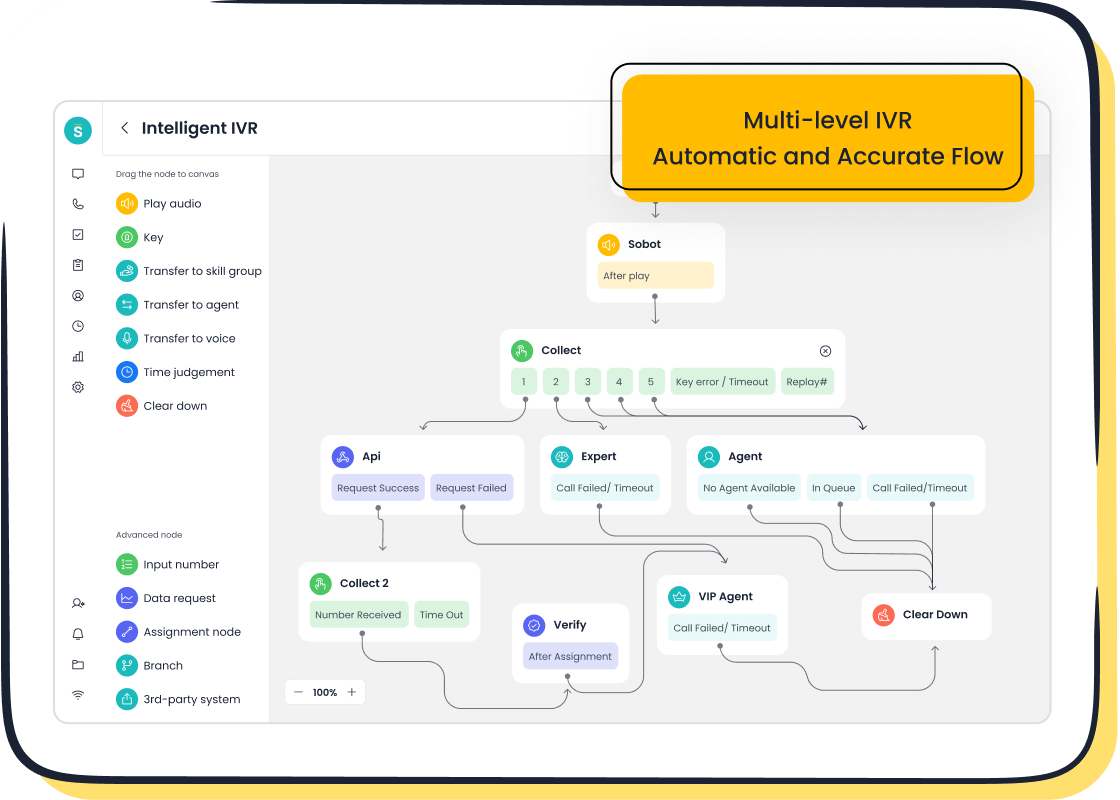
These systems also demand ongoing maintenance, security updates, and IT support, adding to the operational cost. AI solutions, like Sobot's Voice/Call Center, eliminate these expenses. Built on an economic SaaS rental model, these platforms bundle software, maintenance, and security into a single, low monthly fee. There are no significant setup fees or infrastructure investments. This lean operational model generates major call center cost savings. The AI handles calls 24/7 without needing a physical workspace, further reducing overhead.
Training and Onboarding Time
Time is money, and training human agents is a time-intensive process. New hires for traditional call centers need extensive instruction on scripts, compliance, and software systems. This period represents a significant cost with no immediate return.
A typical US-based call center requires 4 to 10 weeks to fully train an employee to perform their required tasks.
During this time, agents are on the payroll but not yet productive. AI voice calling platforms, however, are ready to deploy almost instantly. An AI can be configured with a new script and launched in a matter of hours, not weeks. This speed allows businesses to adapt quickly to market changes and scale campaigns without the delay and cost of human training. The AI is always consistent, eliminating the need for retraining or quality assurance monitoring related to script adherence.
Total Cost of Ownership (TCO)
The Total Cost of Ownership (TCO) provides the clearest picture of long-term financial impact. For traditional call centers, TCO includes salaries, benefits, infrastructure, software licenses, maintenance, and training. These compounding expenses create a high and often unpredictable long-term cost.
AI outbound calls offer a much lower and more predictable TCO. The primary expense is a transparent subscription fee. This model provides enormous savings by removing the largest cost drivers associated with human-led operations. By automating high-volume, repetitive calls, an AI frees up capital and allows human agents to focus on high-value tasks. This strategic use of AI calling not only reduces expenses but also maximizes the ROI of the entire outbound operation. Businesses that adopt AI see immediate call center cost savings and a sustainable financial advantage over time.
Boosting Efficiency with AI Outbound Calls
Beyond cost savings, the true power of AI lies in its ability to supercharge operational efficiency. Traditional call centers are limited by human capacity, fixed work hours, and manual processes. AI outbound calls shatter these limitations. An AI calling system delivers unparalleled speed, consistency, and scalability. This transforms a company's ability to connect with customers and drive results.
Call Volume and Dialing Speed
Human agents can only make one call at a time. They also need breaks between calls for notes and preparation. This reality caps the total number of dials a team can make per day. AI voice agents operate without these constraints. They can dial thousands of numbers simultaneously, dramatically increasing call volume.
Platforms like Sobot amplify this capability with features designed for mass outreach. The "Bulk Outbound Task" feature allows managers to upload and assign massive lead lists with ease. The AI then executes the campaign automatically. This automation removes manual dialing from the equation. The result is a massive boost in speed and efficiency, allowing businesses to reach more prospects in a fraction of the time. This process is supported by high system stability. For example, Sobot's platform guarantees 99.99% uptime, ensuring that high-volume campaigns run without interruption and maintain consistent operational efficiency.
24/7 Availability vs. Agent Shifts
Customers today expect immediate engagement. A traditional call center struggles to provide 24/7 service without significant cost and complexity. Staffing around the clock often requires:
- Leveraging global teams in different time zones.
- Implementing robust communication systems for collaboration.
- Managing complex shift rotations and higher labor costs.
AI voice calling offers a simple and effective solution. An AI works 24/7/365 without needing shifts, breaks, or overtime pay. This ensures that no lead goes cold, regardless of when it comes in. AI voice agents can instantly engage with prospects after hours or on weekends. This continuous availability maximizes opportunities and improves the customer experience. AI can handle a large volume of inquiries simultaneously, providing instant responses and reducing the burden on human agents.
Lead Qualification and Conversion Rates
Qualifying leads is a critical but often repetitive task. Human agents spend countless hours asking the same initial questions to separate interested prospects from dead ends. This is not the best use of their skills. AI voice calling automates this entire process with remarkable success.
AI voice agents can handle initial outreach, ask qualifying questions, and gauge interest levels. They then route only the warm, high-intent leads directly to the sales team. This focus allows human agents to spend their time on conversations that are more likely to convert. The data shows this approach works. AI-powered prospecting can dramatically improve conversion outcomes.
| Prospecting Method | Leads Converting to Opportunities |
|---|---|
| Manual Prospecting | 5% |
| Prospecting with AI | Up to 20% |
This shows that AI calling not only increases the quantity of leads processed but also enhances their quality. This improved efficiency directly translates to higher revenue.
Data Accuracy and Reporting
Accurate data is the foundation of any successful sales and marketing strategy. However, manual data entry is prone to human error. Even diligent agents can make mistakes, leading to flawed records and poor decision-making. Research by Gartner indicates that poor data quality costs organizations an average of $12.9 million annually. Manual data entry can have an error rate as high as 5%, creating significant downstream problems.
AI eliminates these risks. Every call detail, customer response, and outcome is logged automatically with perfect accuracy. An AI calling system ensures data is clean, consistent, and instantly available.
Modern AI platforms provide powerful real-time analytics. Managers can monitor performance through live dashboards that track key metrics. This level of insight allows for immediate strategy adjustments. For example, AI can offer:
- Live conversation monitoring to track sentiment trends.
- Predictive call scoring to forecast likely outcomes.
- Automated coaching prompts to guide agents.
This combination of flawless data accuracy and deep analytics gives businesses a clear view of their operations. It empowers them to optimize campaigns for maximum efficiency and impact. The superior accuracy of AI ensures that every decision is based on reliable information.
Scalability and Business Flexibility
A business's ability to adapt and grow is crucial for long-term success. Traditional call centers often struggle with rapid changes in demand and market conditions. AI calling provides unmatched scalability and flexibility. This allows companies to pivot strategies, handle volume spikes, and expand globally with minimal friction. The right AI platform empowers a business to stay agile in a fast-moving world.
Handling Peak Demand Instantly
Seasonal rushes or marketing campaigns can create sudden spikes in call volume. Hiring temporary staff is slow and expensive. AI offers instant scalability to manage these peaks without missing opportunities. An AI calling system can handle thousands of simultaneous calls, ensuring every lead is contacted promptly. This approach is far more cost-efficient than expanding a human team.
- AI handles outbound contact, freeing human agents for more productive inbound calls.
- AI-powered outreach is easier to scale for peak seasons, preventing missed sales.
- One client saw a 57% operational cost reduction by shifting outbound tasks to an AI.
This level of scalability ensures that businesses can maximize high-traffic periods without the high costs of temporary labor.
Adapting Scripts and Campaigns
Market conditions change, and so should your message. Retraining a team of human agents on a new script can take weeks. AI voice calling platforms allow for near-instant adaptation. New scripts and campaign logic can be built and deployed in just hours or days. This speed gives businesses a significant competitive advantage. An AI can learn new information in minutes, not weeks, ensuring it is always accurate from the first call. This rapid deployment cycle allows companies to test new messaging and respond to market feedback with unprecedented agility.
Global Expansion and Language Support
Expanding into new international markets presents language and time zone challenges for traditional call centers. AI calling breaks down these barriers. Modern AI platforms support a wide range of languages, with some offering over 30 distinct languages and dialects. This capability allows a business to launch outbound campaigns in new regions without hiring native-speaking agents. An AI can communicate fluently with customers across the globe, providing a localized experience that drives engagement and builds trust.
Ensuring Business Continuity
Unexpected events can disrupt business operations. A traditional call center is vulnerable to local outages, severe weather, or public health crises that prevent agents from working. Cloud-based AI voice calling ensures business continuity. These platforms are built on resilient, globally distributed networks. Leading providers guarantee 99.99% uptime, meaning your outbound operations continue running no matter what. This reliability protects revenue streams and maintains customer communication during unforeseen disruptions.
The Customer Experience Debate
The choice between AI and human agents often centers on the customer experience. While AI calling offers incredible efficiency, businesses must weigh it against the value of human interaction. The best strategy balances technological consistency with empathetic support, ensuring every customer feels heard and valued. AI voice agents are a powerful tool in this balance.
Consistency of AI Voice Agents
AI voice agents deliver perfect consistency in every interaction. Unlike human agents, an AI never has a bad day, forgets a compliance script, or deviates from brand messaging. This level of consistency ensures that every customer receives the same high-quality, on-brand information. For businesses in regulated industries, this flawless adherence to scripts is a major advantage. The AI guarantees uniformity, which builds brand trust and minimizes compliance risks. This consistency from AI voice agents is a core benefit of AI calling.
The Human Touch in Complex Interactions
While AI voice agents excel at routine tasks, they cannot replace human empathy. Certain situations demand a nuanced, personal touch that only a human can provide. AI calling is not suited for every scenario. Human agents remain essential for:
- Handling emotionally charged issues like complaints or account closures.
- Troubleshooting complex technical problems that require creative thinking.
- Managing conversations involving sensitive financial or medical data.
- Resolving critical issues that could impact brand reputation.
In these moments, human insight and understanding are irreplaceable.
Personalization at Scale
Modern AI voice agents offer more than just robotic responses. They achieve personalization at a scale that is impossible for human teams. By integrating with a CRM, an AI can tailor conversations using a customer's history and preferences. This allows AI voice agents to address customers by name and reference past interactions. The AI dynamically adjusts its responses based on real-time input, creating a more engaging and logical conversation flow. This capability allows AI voice agents to deliver a personalized experience to thousands of customers simultaneously.
After-Hours and Instant Engagement
Customers expect immediate answers, day or night. AI voice agents provide 24/7 availability, ensuring no lead is lost and no question goes unanswered. This instant engagement significantly improves the customer experience. Brands using automation see a clear rise in customer satisfaction. When a customer calls after hours, an AI voice agent can capture their information or resolve their issue on the spot. This continuous support from AI voice calling is crucial for lead capture and building a reputation for excellent service.
The Hybrid Model: How Sobot AI Enhances Agents
The most effective strategy often isn't a choice between AI and human agents, but a partnership between them. The hybrid model combines the speed of AI with the empathy of people. This approach creates a powerful and balanced customer support operation. Platforms like Sobot's unified workspace make this possible. They integrate all channels, allowing AI voice agents and human agents to work together seamlessly from a single interface. This synergy boosts overall team efficiency and effectiveness.
Automating Repetitive Pre-Qualification
A hybrid model uses AI voice agents to handle the time-consuming task of lead qualification. This initial screening is critical but repetitive. The AI can manage this front-line communication, freeing up human agents for more valuable work. This automation ensures every lead is vetted consistently.
For example, AI voice agents can ask targeted questions to qualify leads based on specific business rules. For a SaaS company, the AI might ask about team size and budget. For a real estate inquiry, it could verify location preference and financing readiness.
This process ensures that only warm, qualified leads are transferred to the sales team.
Real-Time Assistance with AI Copilots
During a live call, AI enhances agent performance by acting as a copilot. While a human agent speaks with a customer, the AI works in the background. This AI provides real-time support to improve the quality and speed of the interaction. This assistance from the AI can include:
- Response Suggestions: The AI generates relevant responses based on the conversation, which agents can use instantly.
- Information Retrieval: AI voice agents can pull up product details or policy information from a knowledge base on demand.
- Sentiment Analysis: The AI analyzes the caller's tone to help the agent adjust their approach.
This support empowers agents to resolve issues faster and more accurately.
Streamlining Post-Call Workflows
An agent's work doesn't end when the call does. Post-call tasks like summarizing conversations and updating CRM records are essential but time-consuming. An AI calling system automates these workflows. The AI generates accurate call summaries, logs outcomes, and updates customer data automatically. This removes the burden of manual data entry, reduces errors, and gives agents more time to handle the next high-value interaction. This boost in efficiency is a key benefit of using AI.
Focusing Agents on High-Value Conversations
By letting AI voice agents manage routine tasks, human agents can focus on what they do best: handling complex and sensitive conversations. These high-value interactions include resolving billing disputes, troubleshooting technical issues, and managing emotionally charged situations. This is where the hybrid model truly shines.
A great example is Weee!, America's largest online Asian supermarket. By implementing Sobot's solution, Weee! used AI to handle routing and provide agents with necessary data. This allowed their team to focus entirely on the customer. The result was a 20% increase in agent efficiency and a 50% reduction in resolution time. This proves that when AI voice agents and human experts collaborate, the entire operation becomes more powerful.
AI in Action: Industry Use Cases
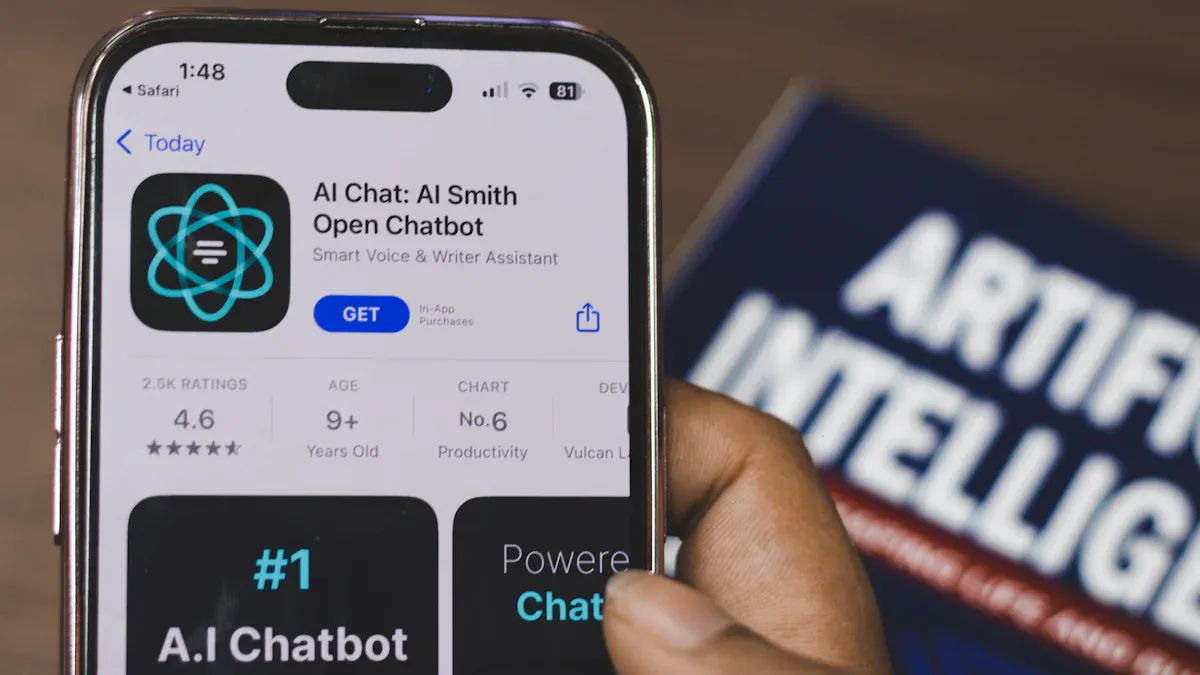
Theoretical benefits are one thing; real-world results are another. AI outbound calling is already transforming operations across various industries. From healthcare to e-commerce, automation delivers measurable improvements in efficiency and customer engagement. These use cases show how different practices apply AI to solve specific challenges.
Improving the Patient Experience in Healthcare
Healthcare practices use AI to enhance patient communication. Good communication is vital for a positive patient experience. AI helps practices manage this by handling routine calls. This frees up staff to focus on the patient in the office. Better communication helps the patient feel more supported. Many practices find this improves patient satisfaction. These practices see AI as a tool for better care. The goal for these practices is a healthier, happier patient.
Automating Patient Reminders and Follow-ups
Healthcare automation streamlines many tasks for medical practices. AI-powered systems can manage patient outreach effectively. This automation is key to medical practice efficiency.
- AI calls a patient to confirm appointments.
- It reminds a patient to refill prescriptions.
- It can conduct post-visit follow-ups with a patient.
This consistent patient communication reduces no-shows. It also ensures each patient receives timely information. These practices help a patient stay on track with their care plan. Such practices improve overall health outcomes.
Driving Sales in Retail and E-Commerce
In retail, AI drives sales and boosts efficiency. AI agents can contact thousands of customers about promotions or abandoned carts. This proactive communication recovers lost revenue. The AI can also gather feedback from a customer after a purchase. This data helps businesses improve their products and services. The right AI solution turns customer interactions into sales opportunities.
Increasing Efficiency for Weee! with Sobot
Leading online supermarket Weee! demonstrates the power of a hybrid model. The company implemented Sobot’s voice product and ticketing system to streamline its complex service operations. By using AI to manage call routing and data synchronization, Weee! empowered its agents to focus solely on customer needs. This strategic use of technology led to remarkable results. The company achieved a 50% reduction in resolution time, directly improving customer satisfaction and operational efficiency.
AI outbound calls provide superior cost-efficiency and scale for routine tasks. Human agents remain essential for complex problem-solving and building deep customer relationships. Businesses should evaluate their needs based on call volume, complexity, and strategic goals. For most, a hybrid model is the optimal strategy. A solution like Sobot's Voice/Call Center uses AI outbound calls for pre-qualification, freeing human agents to focus on high-impact, revenue-generating conversations.
FAQ
How does AI calling benefit a healthcare practice?
AI helps a medical practice by automating routine calls. This allows staff to give a patient in the office their full attention. The system can handle appointment reminders for each patient. This ensures every patient receives timely updates, improving the overall experience for the patient.
Is AI outbound calling only for large enterprises?
No, AI calling solutions are scalable for businesses of all sizes. Platforms like Sobot's Voice/Call Center operate on a flexible SaaS model. This allows small and medium-sized businesses to access powerful automation without a large upfront investment, leveling the playing field.
How does AI improve the patient experience?
AI improves the experience by providing instant, consistent information. A patient can get answers 24/7 without waiting for staff. For a patient, this accessibility is very valuable. Embracing the future of practice communication with AI shows a commitment to modern, efficient patient care.
Will AI completely replace human agents?
AI is a tool to enhance human agents, not replace them. The best strategy is a hybrid model. AI handles high-volume, repetitive tasks. This frees human agents to manage complex and high-value conversations that require empathy and critical thinking.
See Also
Exploring the Best Automated Voice Calling Software Solutions for 2024
A Comprehensive Comparison of Leading Interactive Voice Response Software Options
An In-Depth Look at AI-Powered Enterprise Call Center Solutions
Evaluating the Premier Contact Center Solutions Available in 2024
Your Essential Guide to Omnichannel Call Center Software Platforms