AI Outbound Calls vs Sales Calls

An ai outbound call is an automated, task-driven interaction. A sales call is a human-led, relationship-focused conversation. The market for ai outbound calling is surging, with projections showing 75% of B2B companies will use AI for some form of calling by 2025. This shift toward ai outbound calling enhances efficiency and the customer experience. A Sobot call center from Sobot uses advanced Sobot AI to optimize every calling touchpoint for each customer.
Core Distinctions: AI vs Human Calls

Understanding the fundamental differences between an AI outbound call and a traditional sales call is key to building an effective strategy. These two methods are not enemies. They are different tools for different jobs. Each has unique strengths in its agent type, primary goal, scalability, and cost structure. Exploring these distinctions reveals how a business can combine them for maximum impact.
Agent: AI vs Human Expertise
The most obvious difference lies in the agent handling the call. Human agents bring empathy, intuition, and complex problem-solving skills to every conversation. They can read social cues, navigate nuanced objections, and build genuine rapport. This expertise is invaluable for high-stakes negotiations and building long-term client relationships.
AI agents, on the other hand, operate on data and algorithms. A conversational ai agent offers unmatched processing power and consistency. Its expertise lies in executing tasks with speed and precision. While a human agent can only handle one call at a time, an AI system can manage a virtually unlimited number of calls simultaneously.
- AI bots provide immediate responses 24/7, reducing customer wait times.
- Human agents have limited capacity, which makes scaling difficult during peak periods.
- Mature enterprise AI deployments can achieve a semantic accuracy rate of over 90%, ensuring reliable interactions for defined tasks.
This makes AI the perfect agent for high-volume calling campaigns where consistency is crucial.
Goal: Task Completion vs Relationship Building
The primary goal of each call type also differs significantly. An ai outbound call is fundamentally task-oriented. Its purpose is to complete a specific action efficiently. This could be qualifying a lead, setting an appointment, or collecting survey data. Customers often prefer this speed for simple requests.
A task-oriented communication style enhances satisfaction when the customer's need is simple and direct. A social-oriented style, however, builds trust and loyalty when the situation is more complex or emotionally charged.
Human-led sales calls prioritize relationship-building. The goal extends beyond a single task. A sales representative aims to understand a customer's deep-seated needs, build trust, and create a lasting partnership. This human connection is essential for closing complex, high-value deals.
| Feature | AI Customer Service | Human Customer Service |
|---|---|---|
| Task Type | Repetitive, rule-based tasks | Complex, nuanced, emotion-rich issues |
| Empathy & Judgment | Limited emotional intelligence | Strong empathy and critical thinking |
| Relationships | Limited ability to build customer relationships | Builds trust, rapport, retention, and loyalty |
| Ideal Role | First-line triage, transactions, data capture | Escalations, personalized customer care, critical thinking |
These conversational two-way conversations create brand loyalty that automation alone cannot replicate.
Scalability Through Automation vs Personalization
Automation is the superpower of ai outbound calling. It allows businesses to scale their outreach efforts exponentially without a proportional increase in cost or staff. An AI system can make thousands of calls, send voicemails, and manage follow-ups in a single day.
| Agent Type | Daily Call Volume (Typical) |
|---|---|
| Human SDR | 30-100 |
| AI System | Thousands |
In contrast, the superpower of a human agent is personalization. While an AI can use a customer's name, a human can conduct deep research to tailor a conversation to a prospect's specific challenges, industry, and recent company news. This level of personalization drives engagement and success in high-value sales. Statistics show that:
- 72% of buyers are more likely to engage when outreach is personalized to their needs.
- Personalized cold calls have a 30% higher success rate than generic scripts.
AI provides the scale to reach a wide audience, while human agents provide the personalized touch needed to convert high-intent leads.
The Power of AI Outbound Calling
The efficiency gains from ai powered outbound calls are transformative. By handling repetitive and time-consuming tasks, AI frees up human agents to focus on revenue-generating activities. This automation leads to dramatic improvements across the board. For example, responding to a lead within five minutes can increase the likelihood of conversion by 21 times—a speed that is difficult for human teams to achieve consistently but simple for an AI.
Leading voice AI platforms now achieve quality scores in structured conversations that are indistinguishable from human agents. This reliability translates into measurable results. Companies using ai outbound calling see significant returns on their investment.
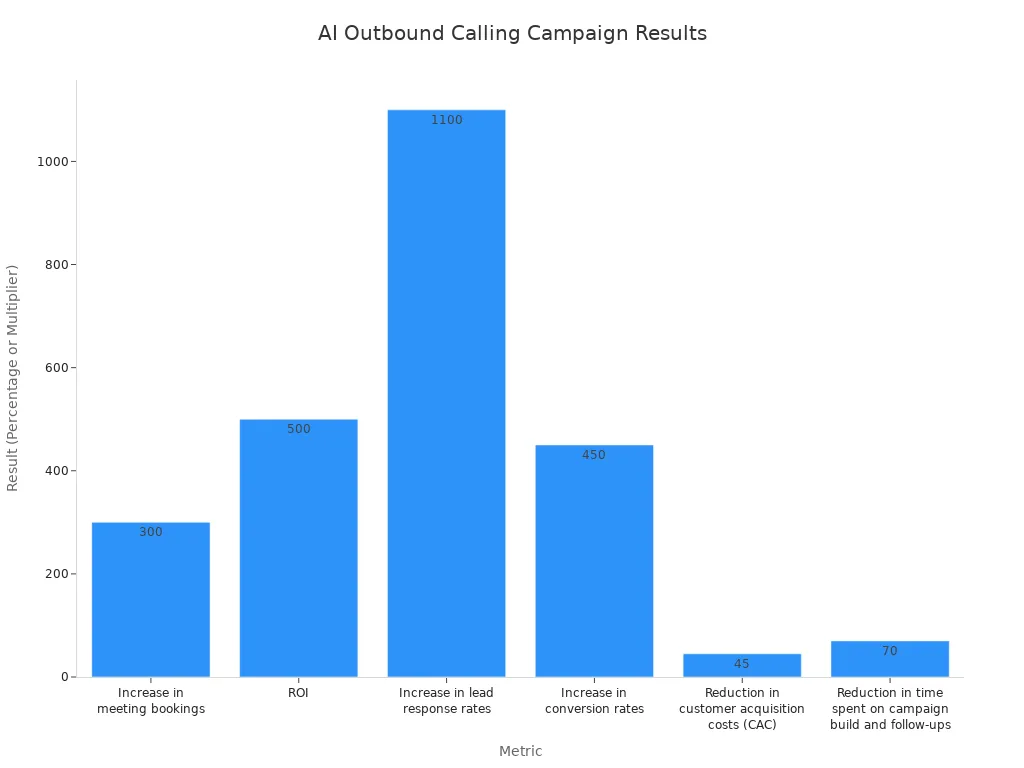
This data shows that ai outbound calling is not just about saving time. It is a powerful engine for booking more meetings, increasing conversion rates, and driving revenue growth.
Cost: Operational Expense vs Human Capital
Finally, the cost models for AI and human agents are fundamentally different. Hiring, training, and retaining a team of sales agents represents a significant investment in human capital. This includes salaries, benefits, commissions, and overhead.
An ai outbound calling system is an operational expense. It is a technology solution with a predictable, often subscription-based cost. This model provides enormous financial leverage, especially at scale. For high-volume calling, AI can achieve comparable or even better results at a fraction of the cost.
| Feature | Human Sales Reps (10,000 calls/month) | AI Solution (10,000+ calls/month) |
|---|---|---|
| Number of Agents Needed | ~15 dedicated agents | N/A (AI handles calls) |
| Monthly Cost | $45,000–$60,000 | Contact for pricing |
| Typical Conversion Rate | ~6% | 5.5–6.5% (often better) |
Furthermore, an AI agent is active 100% of the time it is working, whereas human agents spend time on breaks and other non-calling activities. This efficiency difference means AI can deliver a lower cost per call. For many businesses, implementing an AI solution can reduce the cost per lead by up to 65%, making it a financially astute choice for optimizing the sales funnel.
Top Use Cases for an AI Outbound Call
An ai outbound call excels at handling repetitive, high-volume tasks with speed and precision. This automation frees human agents to focus on more strategic work. From initial prospecting to post-sale follow-up, ai outbound calling transforms key business processes. Leading solutions like Sobot's Voicebot make this technology accessible and powerful.
Lead Qualification and Scoring
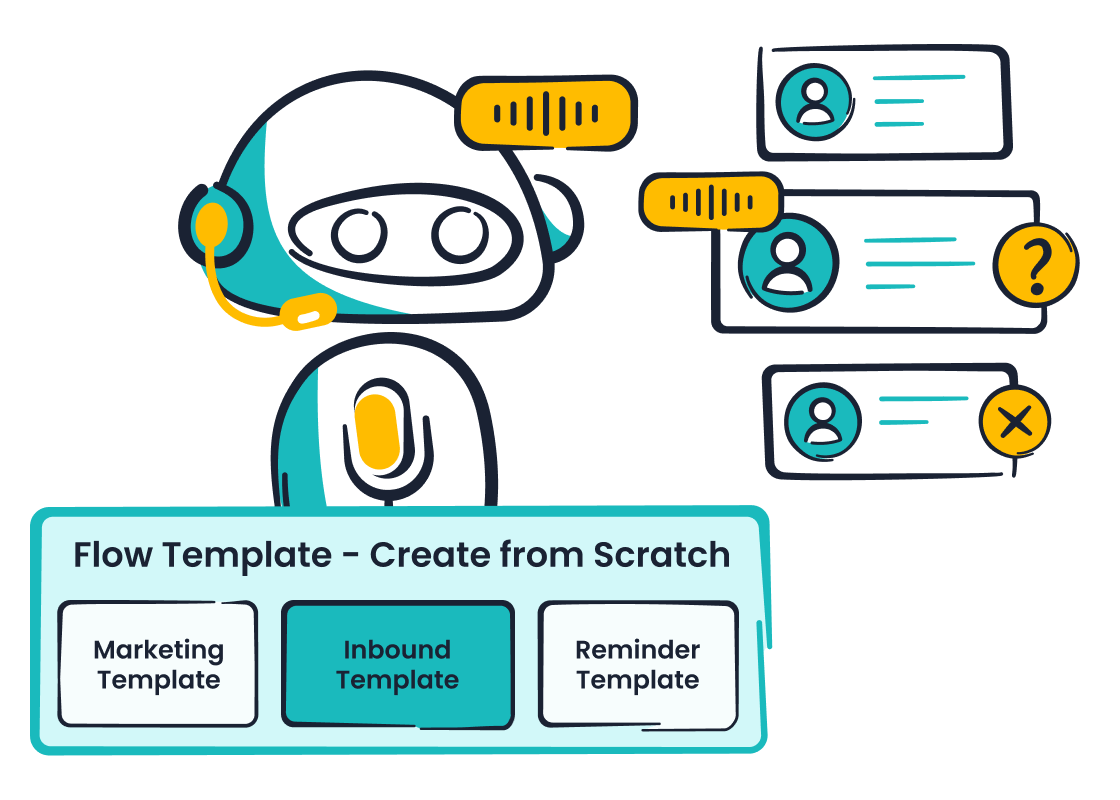
Sifting through hundreds of leads to find qualified prospects is a time-consuming part of prospecting. AI-powered automation in lead qualification changes this. An ai outbound call can engage new leads, ask targeted questions, and score them based on their responses. This process turns a task that once took hours into one that takes minutes. AI-driven scoring improves qualification accuracy by 40% over manual methods. Sobot's Voicebot simplifies this with a no-code visual flow builder, allowing businesses to design effective conversational scripts for automated prospecting without needing a developer.
Appointment Setting and Reminders
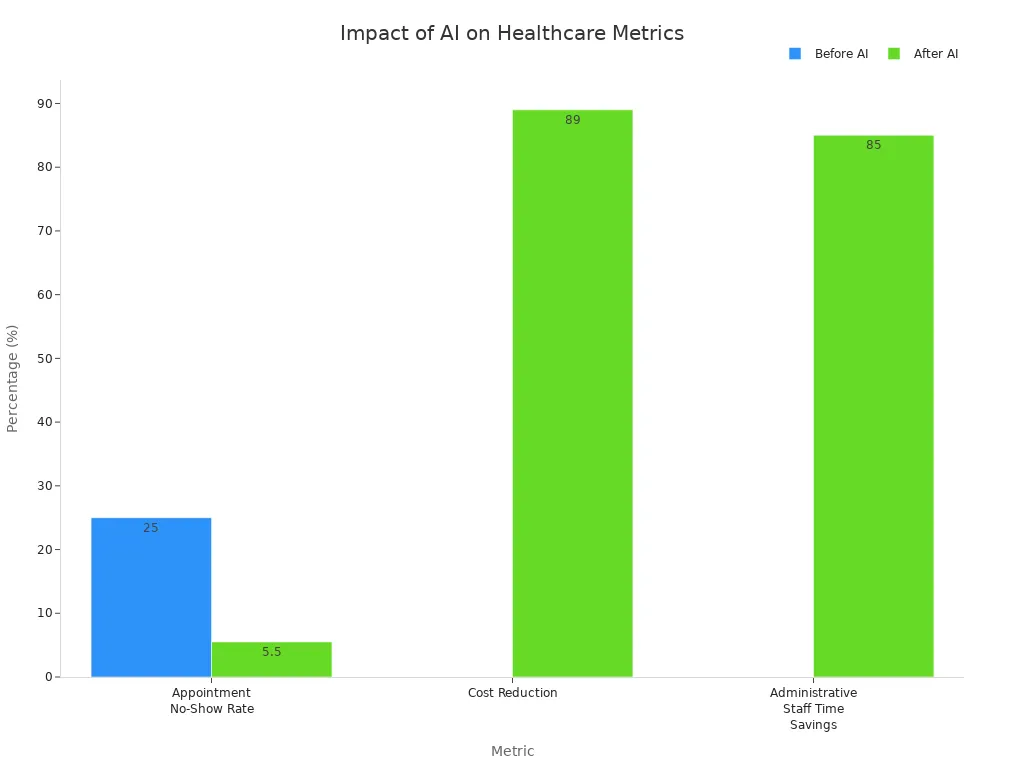
Scheduling meetings is another area where ai outbound calling shines. Instead of endless back-and-forth emails, an AI agent can handle the entire booking process. This automation saves sales reps an average of 8-10 hours per week. Furthermore, automated calling systems reduce appointment no-shows. Clinics using automated reminders see no-show rates drop by around 30%. This ensures that sales teams and service providers connect with more prospects and customers. This form of automated cold calling keeps calendars full and productive.
Streamlining Patient Communications
Healthcare providers use intelligent outbound dialing to improve patient communications. AI can handle appointment reminders, pre-visit instructions, and post-discharge follow-ups. This ensures patients receive timely information, which improves patient benefits and outcomes. Sobot's Voicebot offers multilingual support, making it an ideal tool for serving diverse patient populations and ensuring every customer receives clear communication. This use of ai calling software leads to significant operational savings.
Customer Surveys and Feedback
Gathering customer feedback is vital for improving the customer experience. However, email surveys often have response rates below 10%. A conversational ai outbound call achieves much higher completion rates. The interactive nature of a calling survey keeps the customer engaged.
Success Story: Weee!, America's largest online Asian supermarket, used Sobot's flexible IVR and integrated workbench to enhance its service. The solution streamlined their calling operations, leading to a 20% increase in agent efficiency and a 50% reduction in resolution time. This shows how intelligent outbound dialing and predictive dialing tools can directly improve customer satisfaction.
This approach to automated cold calling for feedback provides businesses with more data to refine their products and services.
Where Traditional Sales Calls Excel
While AI excels at scale, human agents remain essential for high-touch, high-value interactions. Traditional sales calling is irreplaceable where empathy, strategic thinking, and relationship-building are paramount. Human-led calling drives success in the most critical stages of the sales cycle.
Closing High-Value Deals
Closing a major deal requires more than a script. It demands trust and a deep understanding of a client's business. Human sales professionals excel at this strategic calling. They can tailor their pitch in real-time and build the rapport needed for large investments. Understanding a customer's long-term value is key. Sales teams use this knowledge to focus their calling efforts on nurturing the most profitable accounts, ensuring resources are spent wisely.
Complex Negotiation and Objection Handling
Negotiations are rarely straightforward. They involve nuanced objections and complex trade-offs that AI cannot navigate. A human agent can listen, empathize with concerns, and creatively problem-solve to find a win-win solution. This personal touch during a difficult calling process often makes the difference between a stalled conversation and a signed contract. Their ability to think on their feet is a core strength of human-led calling.
Building Strategic Client Relationships
Long-term business success depends on strong client relationships, not just one-time sales. Investing in these relationships significantly increases customer lifetime value (CLV). Effective calling strategies for retention include:
- Assigning dedicated account managers for personalized support.
- Engaging clients with regular, meaningful communication.
- Offering exclusive benefits to reward loyalty.
- Providing ongoing value through industry insights and training.
This consistent, human-driven calling effort fosters loyalty and turns clients into long-term partners.
Enterprise Account Management
Managing enterprise accounts is a strategic, long-term endeavor. It involves navigating complex organizations and building alliances with multiple stakeholders. Human account managers use strategic calling to maintain and grow these key relationships.
In B2B sales, procurement teams often focus on short-term savings. A skilled sales professional uses strategic calling to shift the focus toward long-term value and sustainable revenue growth, reducing the need for constant cold calling.
This approach maximizes the return on investment for each major account.
Building a Hybrid Outbound AI Contact Center

The debate is not about choosing AI or human agents. The modern approach combines them to create a powerful, hybrid outbound ai contact center. This model uses automation for scale and human expertise for high-value interactions. The two are not mutually exclusive but complementary partners in a successful sales strategy.
AI for Initial Outreach and Triage
An outbound ai contact center uses AI for the first touchpoint. AI-powered chatbots and voicebots can handle up to 80% of routine customer inquiries. This initial calling and triage process filters a large volume of prospects efficiently. A solution like Sobot's Voicebot handles this initial prospecting with conversational AI. It engages thousands of leads simultaneously, a task impossible for human teams. This ai outbound calling strategy ensures every lead receives an immediate response.
Qualifying Leads for Human Handoff
Once initial contact is made, the AI's next job is qualification. It asks targeted questions about budget, timeline, and needs to score each lead. This ai sales automation process is highly effective. Companies using AI for lead qualification see a 25-40% increase in qualified leads. The AI uses criteria to identify high-intent prospects for human handoff.
How AI Qualifies Prospects:
- Lead Scoring: Ranks prospects based on their conversational responses and behavior.
- Targeted Questions: Asks specific questions to determine if a lead is a decision-maker.
- Emotional Tone: Recognizes urgency or uncertainty to flag a lead for immediate human attention.
This intelligent calling process ensures that sales reps only receive prospects who are ready to talk.
Freeing Reps for High-Intent Conversations
Automating repetitive tasks significantly boosts sales team morale. When AI handles the initial prospecting and qualification, sales reps are free to focus on what they do best: building relationships and closing deals. This shift from mundane calling tasks to strategic conversational work improves job satisfaction. This automation allows reps to dedicate their time to high-intent conversational interactions that drive revenue. An ai outbound calling system empowers human agents to be more productive.
Automating Post-Call Follow-Up
The work does not end after a calling session. A hybrid model automates post-call follow-up. This includes sending summary emails, scheduling next steps, and updating the CRM. Sobot's Omnichannel Solution excels here. It unifies all tools into a single workspace. This workflow integration ensures a seamless transition from an ai outbound calling interaction to a human-led conversation. It creates a complete record for every customer, making the entire process efficient for both the sales team and the customer. This is where customer engagement platforms truly shine.
The modern sales strategy is not AI versus human but AI and human. AI excels at scalable, repetitive tasks, while human agents are essential for complex, high-touch sales. Companies using AI-powered sales strategies see up to a 50% increase in lead generation. Businesses should analyze their sales funnel to see where automation can help. An integrated solution like Sobot's Voicebot can optimize the process for each customer, reduce costs, and drive revenue. This hybrid approach creates a better experience for every customer.
FAQ
How quickly can a business set up an AI outbound call system?
Modern solutions make setup fast. For example, Sobot's Voicebot uses a no-code visual flow builder. This feature allows businesses to design and deploy conversational AI campaigns quickly. Teams can launch their system without needing extensive technical expertise or development resources.
Is an AI outbound call suitable for every industry?
Yes, AI is highly adaptable. Businesses in retail, healthcare, and finance use it for tasks like appointment setting and lead qualification. Sobot's Voicebot offers multilingual support and customizable scripts. This flexibility makes it a powerful tool for diverse industries and customer bases.
Does using AI replace the need for human sales agents?
No, AI complements human agents. An AI handles high-volume, repetitive tasks. This process frees human reps to focus on complex negotiations and building client relationships. The best strategy combines AI efficiency with human expertise for optimal results.
How does AI hand off a call to a human agent?
AI systems use predefined triggers for handoffs. An AI can transfer a call when it detects a high-intent lead, a complex question, or customer frustration. Sobot's Omnichannel Solution creates a seamless transition, providing the human agent with the full conversation history.
See Also
Optimizing Call Center Operations: Understanding Efficient Automation Mechanisms
A Comparative Look at Leading Interactive Voice Response Software Solutions
Your Comprehensive Guide to Omnichannel Call Center Software Solutions
Exploring the Advantages and Disadvantages of Remote Call Center Work
Comparing the Best Voice of Customer Software for Enhanced Insights

