AI-Human Support The Benefits and Drawbacks


Modern customers demand instant 24/7 customer support. In fact, 74% of customers now expect this level of service. Yet, 75% of customers prefer a human customer service agent for complex service needs, seeking a vital human touch. This poses a key question for the customer experience: how to blend AI with human support? The solution is ai-human agent collaboration in customer support. An AI customer service agent, or a customer service AI agent, helps a human agent. This use of AI in customer service, powered by an advanced AI like Sobot's AI, improves customer satisfaction. This AI helps the agent deliver superior service. AI is the future of AI service.
Benefits of AI-Human Agent Collaboration in Customer Support

A hybrid model of ai-human agent collaboration in customer support offers significant advantages. This approach combines the speed of an AI customer service agent with the nuanced understanding of a human agent. Businesses that adopt this strategy see major improvements in efficiency, availability, and the overall customer experience. The use of AI in customer service is not about replacing people. It is about empowering them to provide better service.
Boost Efficiency and Productivity
One of the main advantages of AI is its ability to boost team efficiency. An AI customer service agent can handle simple, repetitive questions. This frees up the human customer service agent to focus on complex problems that require critical thinking and empathy. For example, solutions like the Sobot AI Chatbot can autonomously manage routine queries. This action can improve agent productivity by up to 70%. The AI acts as a first line of defense, filtering and resolving common issues.
AI also improves efficiency through intelligent routing. AI-assisted routing directs a customer to the best-qualified agent for their specific issue. This process uses data on agent skills and the customer's history.
This smart system can boost first-call resolution rates by 20%. It also reduces call transfer rates by up to 45%. An agent who receives calls matched to their expertise can solve problems faster, increasing both productivity and job satisfaction.
Many companies have seen these advantages firsthand.
- Vodafone UK uses its AI, TOBi, to create conversation summaries for agents.
- Best Buy's virtual assistant cut its call center volume by 40%.
- Eye-oo resolved 82% of its support issues automatically with an AI tool.
These examples show how AI in customer service allows each agent to accomplish more.
Ensure 24/7 Availability
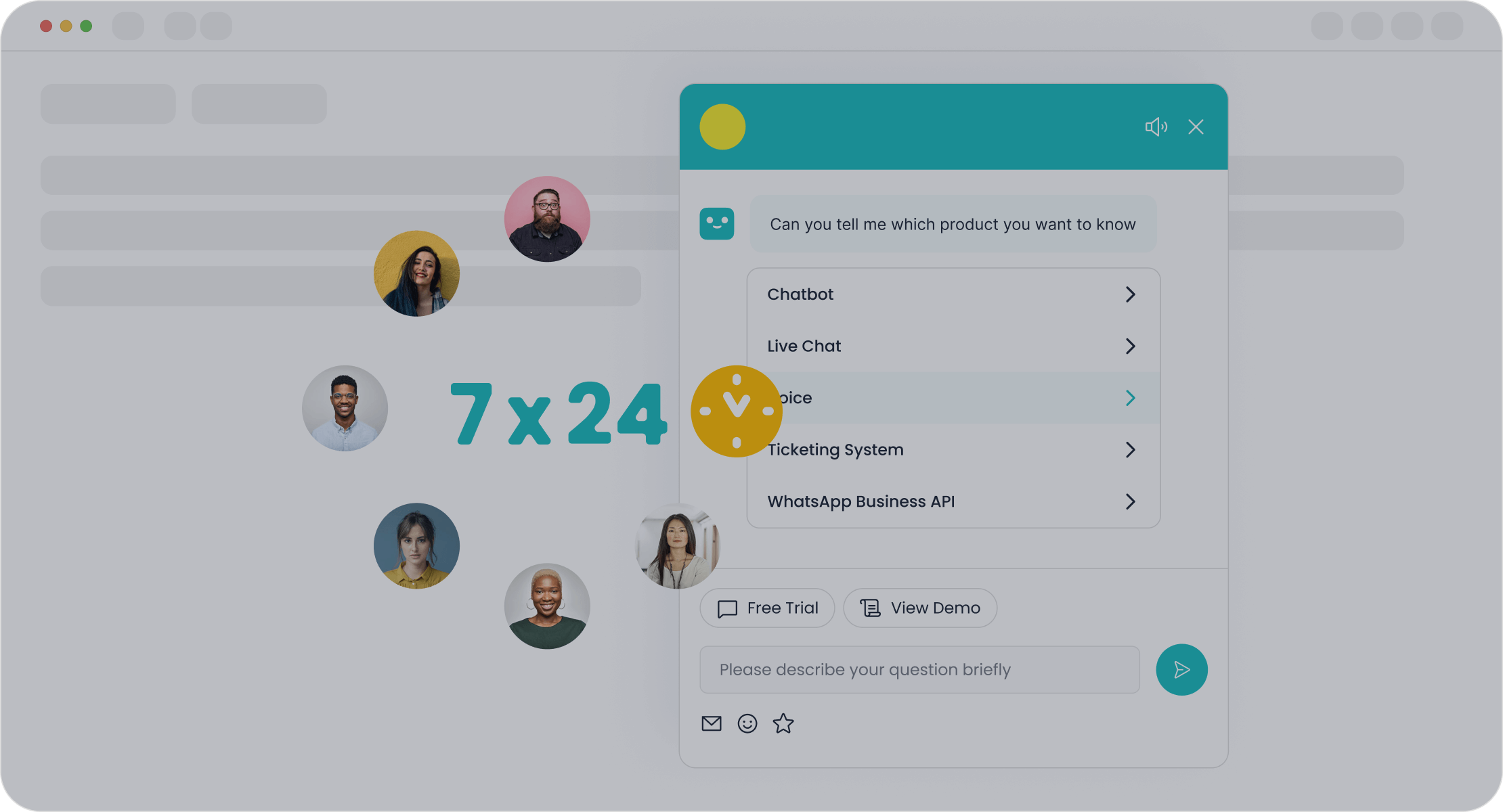
Modern customers expect support at any time, on any day. A purely human team cannot meet this demand without very high costs. AI offers a practical solution. An AI customer service agent never sleeps. It provides instant answers to customers around the clock. Research shows that AI chatbots can resolve up to 86% of customer inquiries without any human help. This ensures that a customer with a simple question at 3 a.m. gets an immediate answer.
This constant availability has a direct impact on customer loyalty.
A study by the Aberdeen Group found that companies with strong omnichannel support achieve 89% higher customer retention. When customers know they can get help whenever they need it, they build trust in the brand.
This trust leads to repeat business and positive recommendations. Providing 24/7 service is a powerful way to keep customers happy and safeguard a brand's reputation in a competitive market. A customer who feels valued is more likely to stay loyal.
Optimize Operational Costs
Improving efficiency and availability also leads to lower operational costs. Automating tier-1 support with AI can reduce costs by 30-55%. When an AI handles most routine questions, a business needs fewer agents to manage the same volume of inquiries. This leads to significant savings. Gartner predicts that conversational AI could reduce customer service labor costs by $80 billion by 2026.
The return on investment (ROI) for AI in customer service is clear. The following table shows how specific AI features create savings:
| Feature | Benefit | Potential Results |
|---|---|---|
| Call summarization | Less admin work for an agent | 5-10% more agent capacity |
| Dynamic scripting | Faster resolutions | 2-4 minute reduction in handle time |
| Skill-based routing | Fewer handoffs | 3-7% fewer transfers |
| AI tools | Higher agent satisfaction | 15% increase in agent satisfaction |
A real-world example of these advantages comes from OPPO, a leading smart device company. By implementing Sobot's chatbot and ticketing system, OPPO achieved an incredible 83% chatbot resolution rate. This efficiency gain directly contributed to a 57% increase in their repurchase rate, showing that excellent, automated customer service solutions drive both satisfaction and revenue.
Scale Personalization with AI in Customer Service
Many people think AI creates an impersonal service. The opposite is true. AI is a powerful tool for creating a highly personalized customer experience. AI systems analyze vast amounts of customer data. This includes purchase history, past interactions, and browsing behavior. This analysis provides a human customer service agent with deep context for every conversation.
For instance, Sobot's solutions unify all customer data and interactions into a single, AI-enhanced workspace. When a customer contacts support, the agent instantly sees their entire history. The agent does not need to ask the customer to repeat information. This allows the agent to provide faster and more personalized support. The AI can even detect a customer's frustration through sentiment analysis and alert the agent to offer a more empathetic response. This level of personalized service makes customers feel understood and valued, which can reduce customer churn by up to 28%. This is one of the key advantages of ai-human agent collaboration in customer support.
Improve Scalability and Consistency
As a business grows, scaling its customer support team can be difficult. Hiring and training new agents is expensive and time-consuming. A purely human support team struggles to maintain service quality during periods of rapid growth. This is another area where ai-human agent collaboration in customer support shines.
AI provides the scalability that businesses need. A customer service AI agent can handle a massive volume of inquiries without a drop in performance. This allows a company to grow its customer base without needing to proportionally increase its support staff. The hybrid model lets human support agents focus on high-value interactions while the AI handles the volume. This approach is more efficient and cost-effective.
Furthermore, AI helps maintain a consistent brand voice across all channels. An AI can be trained on a company's brand guidelines, approved phrases, and existing content. This ensures every automated response aligns with the brand's tone, whether the customer is on a website, a mobile app, or social media. This consistency builds a stronger brand identity and ensures every customer receives the same high-quality service. The use of AI in customer service makes scaling a seamless process.
The Disadvantages of AI and Its Drawbacks

While the benefits of ai-human agent collaboration in customer support are clear, businesses must also understand the disadvantages of AI. A successful strategy requires a realistic view of the challenges. Ignoring these drawbacks can lead to failed projects, frustrated customers, and wasted resources. The main disadvantages of AI include a lack of human empathy, high implementation costs, a disjointed customer journey, security risks, and the danger of over-reliance on technology. Understanding these issues is the first step toward overcoming them.
Lack of Genuine Empathy
One of the most significant disadvantages of AI is its lack of genuine empathy. An AI can process data and simulate emotions, but it cannot truly understand or share a customer's feelings. This lack of human empathy can make interactions feel cold and impersonal. A study on AI in banking found that customers may feel undervalued because of these impersonal interactions. This highlights a key challenge for ai in customer service.
Empathy is a major driver of customer satisfaction. When a customer is upset or dealing with a sensitive issue, they need more than just a quick answer. They need to feel heard and understood. There are many situations where a human touch is irreplaceable.
- Situations involving high emotional distress, like a missed flight or a service outage during a major event.
- Sensitive personal topics, such as financial difficulties, medical situations, or bereavement.
- Complex problems that require an agent to understand subtle cues and context.
- Conflict resolution, where an agent must de-escalate frustration and build rapport.
In these moments, the lack of human empathy from an AI can make a bad situation worse. Research shows that a customer's perception of an AI's empathetic ability directly impacts their trust, especially after a service failure. An overly robotic customer service ai agent can damage brand perception and push a frustrated customer away.
Complexity and Cost of Implementing AI
Implementing AI in customer service is not a simple or cheap process. It involves significant initial investment and ongoing maintenance costs. These expenses are among the key disadvantages of AI for many businesses. The total cost depends on the complexity of the system.
An MIT study found that a staggering 95% of AI projects fail to meet their objectives. This high failure rate often stems from unexpected complexity and a lack of proper planning.
The costs can be broken down into several categories. A business must budget for system integration, building a knowledge base, and training its team. The following table shows some typical cost ranges for an enterprise-level AI implementation.
| Cost Category | Sub-Category | Cost Range |
|---|---|---|
| Initial Investment | System Integration (Complex) | $25,000 - $60,000+ |
| Knowledge Base (Enterprise) | $30,000 - $100,000+ | |
| Training (Enterprise, 100+ users) | $15,000 - $50,000+ | |
| Ongoing Maintenance | Content Updates (Comprehensive) | $15,000 - $50,000+ quarterly |
| Technical Support (Managed Service) | 30-50% of license cost annually |
Beyond the financial costs, technical challenges present major hurdles. Integrating an AI with existing systems like a CRM can be difficult. Common problems include:
- Data Quality Issues: An AI is only as good as the data it learns from. Incomplete or messy data in a CRM can lead to poor AI performance.
- Complex APIs: Some CRM systems have limited or poorly documented APIs, making integration a challenge for developers.
- Synchronization Problems: Keeping data synced in real-time between an AI and a CRM can cause system slowdowns or errors.
These complexities require specialized expertise to manage, adding to the overall cost and effort of deploying an AI customer service agent.
Risk of a Disjointed Customer Journey
A poorly implemented AI can create a fragmented and frustrating customer experience. One of the biggest disadvantages of AI is the risk of a clumsy handoff between the AI and a human agent. When a customer has to repeat their issue to a human agent, it defeats the purpose of using an AI in the first place. This is a common failure point.
Studies show that 78% of customers escalate from a chatbot to a live agent. If that transfer is not seamless, customer satisfaction plummets. Common reasons for a disjointed handoff include:
- Context Drop-Off: The AI fails to pass the conversation history and customer data to the agent. The agent is left with no information about the customer's problem.
- Redundant Loops: The customer is forced to repeat information they already gave to the AI, leading to immense frustration.
- Poor Routing Logic: The AI sends the customer to the wrong department or an unqualified agent, causing further delays.
- Fragmented Systems: The AI, CRM, and ticketing platforms are not properly connected, preventing a smooth flow of information.
When the handoff fails, self-service becomes a frustrating detour instead of a solution. This poor experience can lead to higher customer churn and damage a company's reputation. The goal of ai in customer service is to help customers, not create more obstacles for them.
Data Privacy and Security Concerns
The use of AI in customer service introduces significant data privacy and security concerns. An AI customer service agent collects and processes vast amounts of personal data, from names and addresses to account numbers and conversation logs. Protecting this data is critical. These security and privacy concerns are serious disadvantages of AI that require careful management.
The primary risks include:
- Data Collection: AI tools gather extensive personal data, raising questions about how that data is stored, used, and protected.
- Cybersecurity Threats: AI systems are attractive targets for hackers because they hold large volumes of sensitive customer information. A single breach can expose thousands of customers.
- Consent Management: It is challenging to track explicit customer consent for every piece of data an AI processes in real-time.
Recent incidents show these risks are real. In one case, a Chevrolet dealership's AI chatbot was tricked into offering a new car for $1. In another, an Air Canada customer manipulated an AI to get a refund the company did not intend to give. These examples demonstrate how AI systems can be exploited, leading to financial loss and reputational damage.
To avoid these issues, businesses must comply with strict regulations like GDPR and CCPA. Key compliance steps include:
- Data Minimization: Only collect data that is strictly necessary for the service.
- Consent Management: Obtain clear consent from customers about how their data will be used.
- Anonymization: Use techniques to remove personal identifiers from data to protect customer privacy.
Building a secure and compliant AI customer service platform is essential for maintaining customer trust and avoiding legal penalties. Strong security is not optional.
Over-Reliance on an AI Customer Service Agent
While AI is a powerful tool, over-reliance on it can create new problems. This is one of the more subtle disadvantages of AI. When a business depends too heavily on a customer service ai agent, it risks both skill degradation in its human team and catastrophic failure if the AI system goes down.
If human agents delegate too much problem-solving to an AI, their own critical thinking and problem-solving skills can weaken over time. This is known as "automation bias" or "skill degradation."
- An agent may become too reliant on AI-suggested responses and lose the ability to craft their own thoughtful replies.
- This can lead to a decline in the quality of service for complex issues that the AI cannot handle.
- The organization becomes more vulnerable because a single flaw in the AI's logic could be amplified across the entire customer support team.
Furthermore, what happens if the AI system fails? If a company has no backup plan, its entire customer service operation could shut down. Between 70-85% of generative AI projects fail due to poor data foundations. Businesses can mitigate this risk by:
- Establishing Clear Goals: Define what success looks like for the AI project with specific metrics.
- Ensuring High-Quality Data: Clean and organize data before training the AI to ensure it performs correctly.
- Securing Agent Buy-In: Position the AI as a tool to help the agent, not replace them. This encourages a healthy partnership where the human customer service agent remains engaged and in control.
The best approach is to use AI to augment, not replace, human agents. This ensures the team retains its skills and the business remains resilient.
The optimal strategy for ai in customer service is not ai versus a human agent. Success lies in ai augmenting human capabilities. An ai customer service agent handles high-volume, simple tasks. This empowers the human customer service agent to manage complex, high-value customer interaction. This ai and agent partnership improves the entire customer support experience. The ai provides data insights, while the agent delivers empathy. This approach transforms customer support. A seamless, customer-first integration, like that offered by platforms such as Sobot, is key. It creates a superior and cost-effective service for every customer, ensuring all customers feel valued. This ai service helps each customer and agent succeed.
FAQ
What is AI-human collaboration?
AI-human collaboration is a model where an AI agent and a human agent work together. The AI agent handles simple tasks. This AI frees the human agent for complex issues. This partnership uses AI to support the agent. The AI makes the agent more effective.
Will AI replace the human agent?
No, AI will not replace the human agent. The goal of AI in customer service is to assist an agent. An AI agent handles routine work. The human agent manages emotional or complex customer problems. This AI and agent teamwork improves overall service and agent performance. The AI is a tool for the agent.
How does AI improve customer satisfaction?
AI improves customer satisfaction with speed and data. An AI agent gives instant answers 24/7. The AI also gives a human agent helpful customer information. This context helps the agent provide better, faster support. This use of AI in customer service boosts satisfaction. The AI is a key part of this process.
What are the main advantages of AI for an agent?
The main advantages of AI for an agent are efficiency and support. An AI agent automates repetitive questions. This AI allows the human agent to focus on high-value work. The AI provides the agent with real-time data and summaries, making the agent's job easier.
See Also
Exploring the Advantages and Disadvantages of Remote Call Center Operations
How AI Customer Service Agents are Revolutionizing the Support Experience
A Comprehensive Review of AI-Powered Enterprise Call Center Solutions
Discover the Foremost Advantages of Integrating Chatbots into Your Website
Unlocking Peak Efficiency with AI-Powered Customer Service Software Solutions

