AI vs Human Touch Which is Best for Your Customers?


The AI vs. human customer service debate is a key challenge for businesses focused on customer satisfaction. Many customers (75%) still prefer human agents for customer support. The best answer to the AI vs human agents and AI chatbots vs human agents question is not a choice, but a hybrid strategy. This hybrid model, centered on the integration of AI and human agents, is the key to AI enhancing customer experience. AI-driven customer service solutions like Sobot show how this integration of AI and human agents improves the customer experience and boosts customer satisfaction. The AI vs human debate is settled when human agents focus on complex issues, improving customer satisfaction for all customers. This approach to AI vs. human customer service shows the AI vs. human customer service model elevates CX and customer satisfaction. Human agents, supported by technology, are vital for customer satisfaction. These human agents and their collaboration with AI are the future of customer support, where human agents and human agents can thrive.
AI Chatbots vs Human Agents: A Direct Comparison

The debate over AI vs. human customer service often presents a false choice. Both AI-powered chatbots and human agents offer unique strengths. Understanding these differences is the first step toward building a strategy that boosts customer satisfaction. The real question is not which one is better, but how the integration of AI and human agents can provide better support for all customers.
The Strengths of AI Chatbots
AI chatbots provide incredible efficiency for any customer support team. They are a powerful tool in the AI vs human agents discussion because they excel at specific tasks. AI customer service offers several key advantages:
- 24/7 Availability: AI chatbots operate around the clock. They provide instant answers to customers, reducing frustration and wait times.
- High-Volume Efficiency: They can handle a massive number of simple inquiries at once. This prevents backlogs during peak times.
- Consistency and Accuracy: AI reduces human error by automating repetitive tasks. This builds trust with customers.
- Seamless Integration: AI-powered chatbots work across websites, apps, and social media, creating a unified experience.
The Value of Human Customer Service
While AI handles volume, human customer service delivers value through connection. Human agents bring qualities to customer support that technology cannot replicate. They excel at providing empathy and understanding, which is vital for customer satisfaction. Human agents can interpret a customer's tone and emotions, offering personalised help for complex problems. This ability to build trust through genuine conversation is a key differentiator in the AI vs. human customer service landscape. For difficult or sensitive issues, human support is essential for effective problem resolution and maintaining a positive brand reputation.
Why a Hybrid Approach Wins
The ultimate solution to the AI vs. human customer service debate is a hybrid model. This approach combines the speed of AI with the empathy and understanding of human agents. The integration of AI and human agents creates a superior system for AI enhancing customer experience.
Salesforce data shows that while 64% of customers expect real-time responses (an AI strength), 59% still prefer speaking to human agents for complex issues.
This highlights the need for a balanced strategy. AI chatbots can manage initial contact and simple questions. This frees up human agents to focus on high-value interactions that require critical thinking. This integration of AI and human agents ensures customers receive fast, efficient service for simple needs and thoughtful, expert help for complex ones, leading to greater overall customer satisfaction.
When to Use AI for Maximum Impact
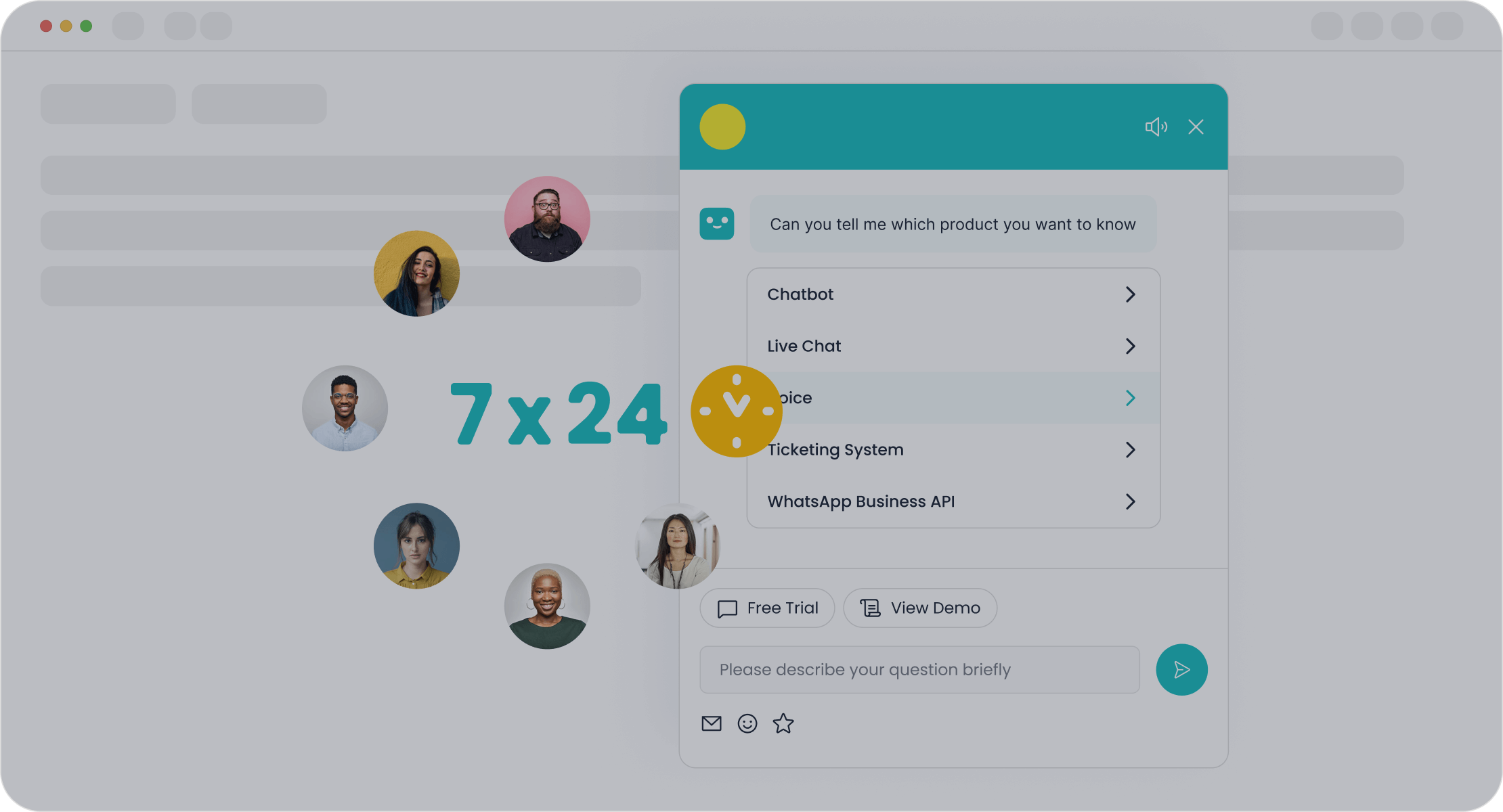
Understanding the right moments to deploy AI is crucial for AI enhancing customer experience. The debate of AI vs. human customer service becomes clearer when businesses use AI for specific, high-impact scenarios. AI-driven customer service solutions, like the Sobot Chatbot, are designed to handle these situations, freeing human agents to focus on what they do best.
For 24/7 Instant Support
Customers expect answers anytime, day or night. Providing 24/7 customer support is essential for customer satisfaction and retention. AI chatbots operate around the clock to answer questions and triage issues. This constant availability reduces wait times for customers. Sobot's AI, for example, works 24/7 to manage initial inquiries, cutting operational expenses by up to 50%. This approach ensures customers feel heard, even outside of standard business hours.
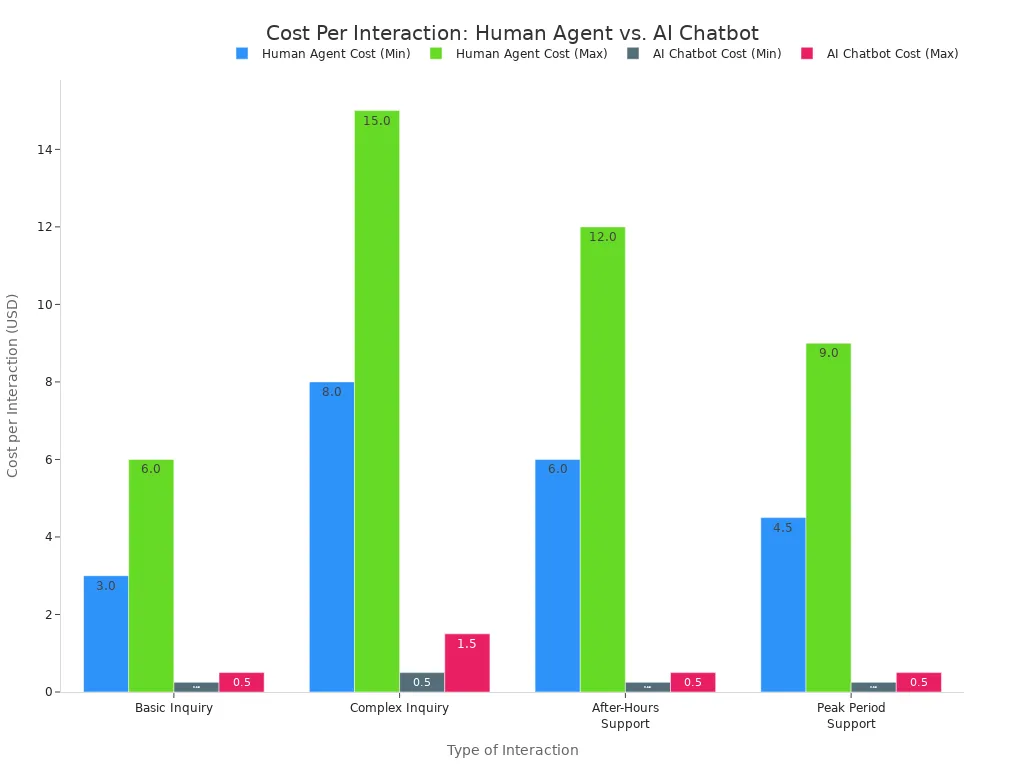
For High-Volume, Repetitive Tasks
Many customer support queries are simple and repetitive. Research shows that workers can spend hours each day on such tasks. This is where AI automation shines in the AI vs. human customer service model. AI-powered chatbots can instantly handle frequently asked questions about order status, return policies, or product details. Sobot's AI customer service automates these common questions, which can improve the productivity of human agents by 70%. This allows human agents to dedicate their time to more complex problems, providing better support for all customers and boosting team morale.
For Boosting Conversions and Lead Generation
AI chatbots can do more than just answer questions; they can actively drive sales. In the AI chatbots vs human agents comparison, AI offers a unique advantage in proactive engagement.
By using proactive messaging and smart self-service, Sobot's chatbot can increase conversions by 20% and help businesses generate more leads.
These customer service AI systems can greet website visitors, offer help, and guide customers toward a purchase. This turns a passive browsing experience into an active, engaging one, improving customer satisfaction while growing the business. This strategic use settles another part of the AI vs. human customer service puzzle.
For Data-Driven Triage with Sobot
Not all customer issues are equal. Some require immediate attention from experienced human agents. AI-driven customer service solutions excel at data-driven triage, analyzing a customer's query for urgency and sentiment. This ensures that complex or sensitive issues are escalated to the right human agents without delay. This process improves first-contact resolution and increases customer satisfaction. It empowers human agents with the context they need to solve problems effectively, creating a seamless partnership between technology and the human touch.
AI Enhancing Customer Experience: The Hybrid Model
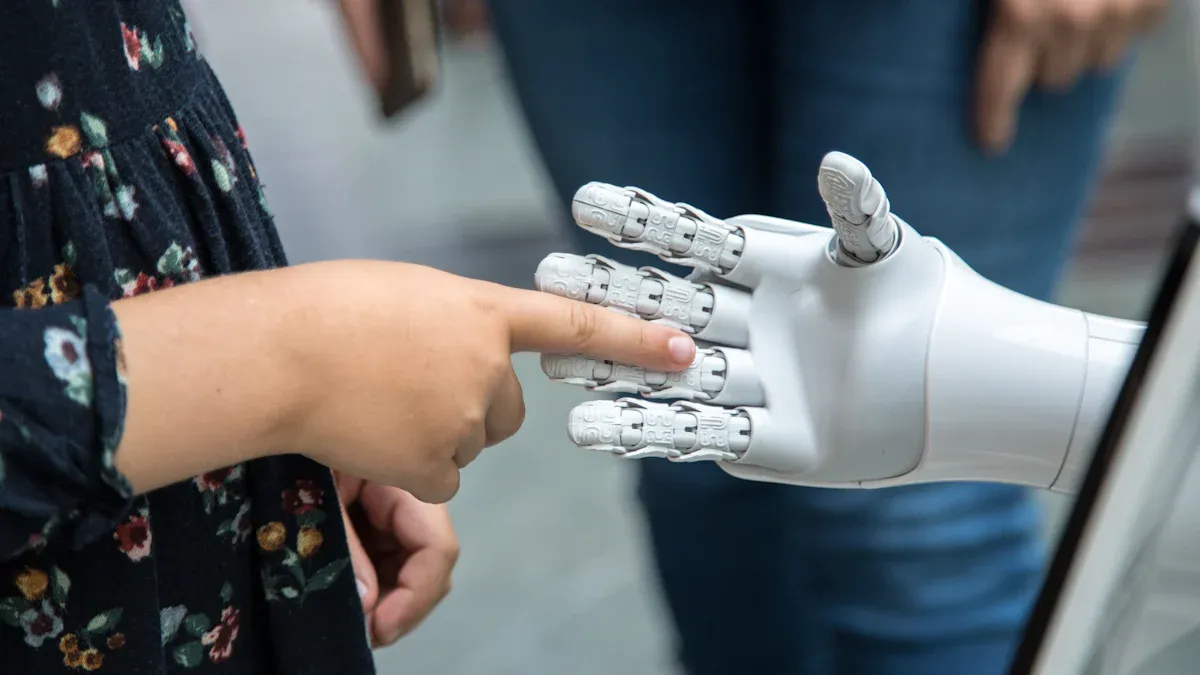
Building a successful hybrid customer service model is the key to AI enhancing customer experience. It moves beyond the theoretical AI vs. human customer service debate. It creates a practical framework for success. This approach requires a clear strategy. Leading companies like OPPO show how a well-executed hybrid model transforms customer support. They partnered with Sobot to manage high inquiry volumes during peak shopping times. This partnership demonstrates a four-step process for building a powerful integration of AI and human agents.
Step 1: Map Your Customer Needs
The first step is to understand what your customers need at each stage of their journey. A business must map out common scenarios to see where automation fits best. This analysis helps decide which interactions are right for AI and which require human agents.
Best practices for mapping customer needs include:
- Segment by Complexity. Categorize requests into different tiers. Simple, low-complexity tasks like password resets or order status checks are perfect for AI. High-emotion or complex issues should always go to human agents.
- Use Data as a Guide. Analyze support tickets and chat logs. This data reveals the most frequent questions and friction points. It shows where AI can have the biggest impact on customer satisfaction.
- Define Clear Escalation Paths. Customers should never feel trapped by a bot. Create an easy, obvious way for customers to connect with human agents. This builds trust and improves the overall customer experience.
Step 2: Ensure a Seamless Handoff
A smooth transition from AI to a human agent is critical in the AI vs. human customer service model. A poor handoff frustrates customers and defeats the purpose of the hybrid system. The goal is to eliminate data fragmentation. The human agent must have the full context of the conversation.
OPPO achieved this by using Sobot's AI-driven customer service solutions. Their AI chatbots handled frequently asked questions first. When a query became too complex, the system automatically escalated it to the right human agent. The agent received the entire chat history. This meant customers never had to repeat themselves. This seamless integration of AI and human agents improved efficiency and boosted customer satisfaction. This process provides better support and shows how the AI vs. human customer service challenge can be solved with the right technology.
Key to a Seamless Handoff:
- Preserve Context: The full conversation history must transfer to the human agent.
- Route Intelligently: Send the customer to the correct department based on their query.
- Set Expectations: Inform the customer that they are being transferred and provide an estimated wait time.
Step 3: Empower Human Agents with AI
The hybrid model is not about replacing human agents. It is about empowering them. AI tools can turn a good human customer service team into a great one. These tools work behind the scenes to provide agents with the information they need. This support helps them resolve issues faster and more accurately.
Sobot’s AI-optimized knowledge base was a game-changer for OPPO. It reduced the manual effort needed to maintain their product information by 90%. This allowed their human agents to find accurate answers instantly. Other powerful tools include:
- AI Copilots: Guide human agents through complex problems step-by-step.
- Sentiment Detection: Helps agents understand the customer's emotional state.
- Real-time Transcription: Converts voice calls into text for easy review.
These AI-driven customer service solutions give human agents superpowers. They reduce stress and allow agents to focus on providing empathetic, high-value support. This is a clear win in the AI vs. human customer service dynamic.
Step 4: Measure and Refine for Proven Results
A successful hybrid strategy requires continuous improvement. Businesses must track key metrics to understand what works and what does not. This data provides clear insights into performance and customer satisfaction. It is the final piece of the AI vs. human customer service puzzle.
The results from OPPO’s hybrid customer service model speak for themselves. After implementing Sobot’s solutions, the company achieved:
- An 83% chatbot resolution rate, showing the AI was effectively handling a high volume of queries.
- A 94% positive feedback rate from customers, proving high customer satisfaction.
- A 57% increase in repurchase rate, demonstrating that a superior CX directly impacts business growth.
These metrics prove the power of a well-executed integration of AI and human agents. By tracking performance and refining workflows, any business can find its perfect balance and deliver an exceptional experience for its customers.
AI vs. Human Customer Service: Finding Your Balance
Finding the right balance in the AI vs. human customer service debate is essential for creating effective customer support strategies. It involves a deliberate process of identifying where AI automation can provide efficiency and where human agents can deliver value. A successful integration of AI and human agents leads to higher customer satisfaction and a better overall CX. This balance is not static; it requires ongoing refinement.
Start with High-Frequency Queries
The best starting point for the AI vs. human agents model is to address high-volume, simple questions. Businesses can map their customer journey to find the right spots for AI intervention. This strategic approach ensures customers get instant help for common issues.
- Categorize Requests. Assign basic inquiries like order status checks to AI. Reserve complex or emotional problems for human agents.
- Use Data to Guide. Analyze support logs to find common friction points. This data shows where AI can improve customer satisfaction the most.
- Create Clear Escalation Paths. Design an easy way for customers to reach human agents. This prevents frustration and builds trust in your customer support.
Train Your Team to Collaborate with AI
Effective customer support strategies require human agents who can work with technology. Training should focus on making AI a helpful assistant. This empowers human agents and improves the quality of human customer service.
- Build AI Literacy. Human agents must understand how to use AI as a data retrieval tool, not a final decision-maker.
- Focus on Emotional Intelligence. AI handles data, freeing human agents to focus on empathy and understanding. Their role shifts from searching for information to listening to customers.
- Master the Tools. Training should help human agents master the specific AI interfaces that augment their daily workflow for better support.
Set Clear Performance Metrics
Measuring performance is critical for refining the AI vs. human customer service balance. Clear metrics show what is working and where improvements are needed. For example, Handle Time measures how quickly a chatbot resolves a query. The Agent Experience Score evaluates what happens when a conversation moves from AI to a person. These metrics provide insights into efficiency and customer satisfaction, helping to optimize the integration of AI and human agents. This data-driven approach is key to ai enhancing customer experience.
Maintain a Consistent Brand Voice
A consistent brand voice across all channels builds trust and strengthens brand perception. Both AI chatbots vs human agents interactions must reflect the brand's unique personality. A business can achieve this by defining its tone and messaging preferences. Creating response templates and training the AI with sample content ensures the brand voice remains steady. This consistency is vital for the customer experience. A steady brand voice can increase customer retention by 23%, proving that how a brand communicates is as important as what it communicates. This unified approach to human customer service and AI interactions ensures customers receive a familiar and reliable experience.
The AI vs. human customer service debate finds its answer in partnership, not opposition. A successful hybrid model uses AI-driven customer service solutions for efficiency, allowing human agents to improve customer satisfaction. This integration of AI and human agents empowers human agents to deliver the empathy that builds loyalty for all customers. The AI vs human question is solved when human agents use technology to boost customer satisfaction. The integration of AI and human agents means human agents can provide superior support.
Ready to build your powerful hybrid model? Explore how Sobot's all-in-one contact center solutions empower your human agents and enhance customer satisfaction.
FAQ
How does a hybrid model improve customer satisfaction?
A hybrid model boosts customer satisfaction by using AI for speed and human agents for empathy. AI handles simple queries instantly. This frees up human agents to solve complex issues, which improves overall customer satisfaction. The collaboration between AI and human agents ensures a better experience and higher customer satisfaction.
What is the main role of human agents in a hybrid system?
The main role of human agents is to manage complex or emotional customer interactions. Human agents provide the empathy and critical thinking that AI cannot. This focus allows human agents to build relationships and trust. The work of human agents is vital for customer satisfaction and loyalty.
Can AI replace human agents completely?
No, AI cannot completely replace human agents. AI excels at repetitive tasks, but human agents are essential for handling nuanced conversations and building emotional connections. A partnership where human agents are supported by AI delivers the best results for customer satisfaction. Human agents remain a critical asset.
How can a business start implementing a hybrid model?
A business can start by automating high-volume, simple queries with a chatbot. This allows human agents to focus on more valuable tasks. The next step is to ensure a seamless handoff from the bot to human agents. This strategy helps human agents improve their efficiency.
See Also
Comparing Leading Voice of Customer Platforms for Enhanced Business Insights
AI Customer Service Software: Maximizing Operational Efficiency and Support Quality
A Comparative Look at Leading Interactive Voice Response Solutions
Revolutionizing Customer Support with Advanced AI-Powered Service Agents
Ten Essential Tips to Elevate Live Chat Customer Satisfaction Levels