AI in Ecommerce Live Chat Trends for 2026


The future of e-commerce is no longer just transactional; it is conversational. This shift moves beyond simple reactive support, embracing proactive, intelligent AI engagement. Modern shopping demands conversational communication, and AI-driven communication is key for this conversational experience. Many customers prefer this method; 41% of shoppers choose live chat in ecommerce over other channels. In fact, 53% of customers use online chat before calling for support. This is the new world of conversational commerce. AI in e-commerce live chat is crucial for sales. A good chatbot, like the Sobot AI chatbot, can improve the customer shopping experience. This conversational approach builds satisfaction and drives sales. AI makes customer interactions more human. This human touch in AI in communication defines conversational commerce and boosts sales. This conversational model is the future.
The Rise of Conversational Commerce
Conversational commerce is reshaping the digital shopping landscape. It is a strategy that creates real-time, conversational interactions between brands and consumers. This new model is driven by customer demand for instant, relevant, and human-toned communication.
Defining the New Ecommerce Experience
The new ecommerce experience is defined by conversational engagement. It moves beyond a simple website to a dynamic, interactive space. Conversational commerce facilitates this through messaging apps and web chat. Today's customer expects a fast and personal shopping experience. This shift is a direct response to evolving consumer behavior.
Shoppers value speed and personalization. Statistics show that 64% of customers will spend more if a brand resolves their issues on their preferred platform. Furthermore, 76% are willing to manage returns using their phone's messaging apps. This highlights the power of a seamless, conversational experience.
This customer-centric experience is now a fundamental requirement for ecommerce success. It builds trust and fosters strong, long-term relationships that go beyond a single transaction.
The Role of AI in Live Chat in Ecommerce
AI is the engine powering modern conversational commerce. The role of AI in live chat in ecommerce is to automate and enhance customer interactions. AI improves efficiency by handling simple inquiries instantly, 24/7. A well-trained AI can achieve a high deflection rate, resolving many chats without human help. This frees up human agents to focus on more complex problems, boosting overall team productivity and customer satisfaction. The goal of AI is to increase both efficiency and customer engagement, leading to better sales outcomes.
Moving Beyond Simple Q&A Bots
The era of basic, single-answer chatbots is over. Advanced AI has transformed the chatbot into a powerful tool for conversational commerce. Modern AI in communication uses natural language processing (NLP) to understand context and provide a more human feel. An AI chatbot can now handle transactions, customize orders, and offer personalized recommendations. This evolution makes the shopping experience more interactive and helpful. This advanced AI makes the entire communication process smoother and more effective, driving engagement and sales.
Mapping the AI-Enhanced Customer Journey
AI maps across the entire customer journey to create a cohesive omnichannel customer experience. From the first moment of engagement, a conversational AI can guide a customer, answer questions, and assist with their shopping. This continuous support reduces friction and builds confidence. By leveraging AI for personalization and proactive communication, brands can increase sales and improve customer satisfaction. This complete, AI-enhanced journey is the future of conversational ecommerce.
Trend 1: Proactive AI Engagement
The future of conversational commerce is proactive, not reactive. Businesses are moving away from waiting for a customer to ask for help. Instead, they use AI to anticipate needs and start helpful conversations. This shift creates a superior shopping experience and drives sales. Proactive engagement turns passive browsing into an active, conversational customer journey. This is the core of modern conversational commerce.
From Reactive to Predictive Support
Predictive support is the foundation of proactive engagement. AI systems analyze vast amounts of data to forecast what a customer might need before they even ask. This is a key part of conversational commerce. AI achieves this by:
- Analyzing Purchase History: AI examines past purchases to find patterns. This helps predict future buying habits and create tailored promotions for each customer.
- Studying Browsing Behavior: AI watches how a customer moves through a website. This provides insights into their interests and helps optimize the shopping experience.
- Monitoring Social Media: AI tools gather information from social media. This helps businesses understand customer sentiment and adjust their communication strategy.
This intelligent analysis allows an ecommerce brand to be one step ahead, ready to offer the right help at the right time. This is how conversational commerce builds a better customer experience.
Using AI to Initiate Conversations
AI uses predictive insights to initiate valuable customer interactions. An AI chatbot can reach out to a customer who seems hesitant on a product page or confused during checkout. This conversational engagement makes the experience feel personal and supportive. The 24/7 availability of AI means this can happen anytime, generating leads even outside of normal business hours. Top ecommerce companies already see huge benefits from this approach.
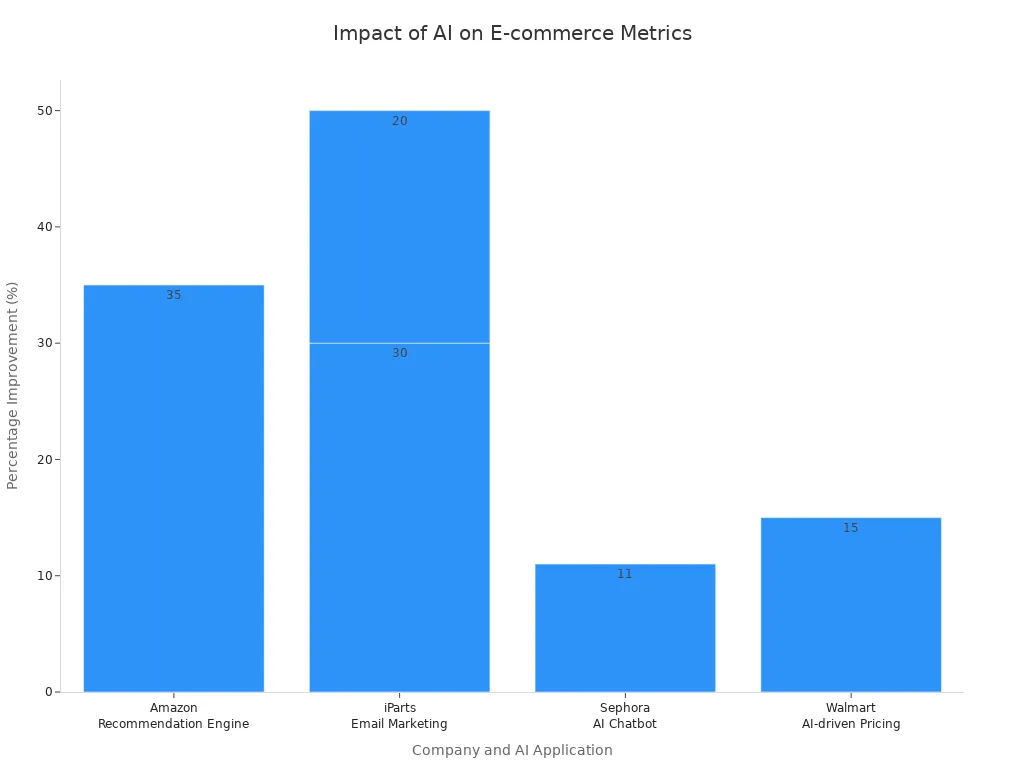
This proactive communication makes the shopping experience more human and guided, improving customer satisfaction. This is a powerful feature of conversational commerce.
Reducing Cart Abandonment
Cart abandonment is a major challenge in ecommerce. The average rate is around 70%, representing a huge loss in potential sales. Proactive AI is a powerful tool to combat this. When a customer is about to leave their cart, a chatbot can pop up with a helpful message. It might offer a discount, answer a last-minute question about shipping, or simply remind them of the items they chose. Studies show this type of conversational intervention can reduce cart abandonment by 20-30%. This direct engagement turns a lost sale into a completed purchase, showing the financial power of conversational commerce.
Boosting Conversions with Smart Self-Service

Proactive AI engagement directly boosts sales. Smart self-service, powered by AI, empowers the customer to find answers and make decisions quickly. This improves the overall shopping experience. For example, platforms like the Sobot Chatbot use proactive push messaging and real-time intent assistance to guide a customer toward a purchase. This intelligent support can increase conversions by up to 20%. By offering instant, relevant help, the AI chatbot builds trust and removes friction from the buying process. This seamless experience is what makes conversational commerce so effective for driving sales and creating a more human connection. The use of natural language processing (NLP) in a chatbot makes the communication feel more natural and less robotic, enhancing the entire live chat in ecommerce experience. This conversational approach is central to successful conversational commerce.
Trend 2: Hyper-Personalization with AI
Hyper-personalization is a key trend in conversational commerce. It uses AI to create a unique shopping experience for each customer. This conversational approach makes the customer feel understood. It is a powerful strategy for modern ecommerce. This level of personalization drives engagement and boosts sales. The future of conversational commerce is a truly individual customer journey.
Analyzing Customer Data in Real-Time
AI systems analyze customer data instantly. This is the first step in creating a personalized experience. The AI looks at browsing habits, purchase history, and past conversations. This real-time analysis allows a chatbot to understand a customer's needs during their shopping session. This is a core part of effective conversational commerce. Many top ecommerce brands already use this AI technique.
| Company | AI Application for Personalization |
|---|---|
| Amazon | Analyzes browsing and purchase history to suggest products, enhancing the shopping experience and driving sales. |
| Starbucks | Uses AI in its mobile app to analyze location and purchase history, offering tailored product recommendations and promotions. |
This data-driven approach makes every communication more relevant. It is the foundation of a successful conversational commerce strategy.
AI-Powered Product Recommendations
AI uses real-time data to offer smart product recommendations. This makes the conversational experience more helpful. For example, if a customer has bought skincare for sensitive skin before, an AI chatbot can suggest similar products. This proactive engagement can increase sales. The AI uses NLP to make the communication feel natural and human. This conversational method improves the entire shopping experience. This is how conversational commerce turns a simple visit into a sale.
Tailoring the Support Interaction
AI tailors the entire support interaction for each customer. A chatbot can provide a human-like, conversational experience based on a customer's goals. This makes the customer feel valued. This AI-driven engagement is a hallmark of modern conversational commerce.
- AI agents can guide a customer to the right product based on their needs.
- Financial assistants like Bank of America's Erica help a customer manage their finances.
- Food ordering bots like Domino's Dom provide a fun, conversational way to order.
These tailored customer interactions build trust and improve customer satisfaction. This is the power of AI in conversational commerce.
Impact on Customer Loyalty and Sales
A personalized experience has a huge impact on customer loyalty and sales. When a customer feels understood, they are more likely to return. AI-driven personalization can increase order value by up to 25%. This human touch in AI communication leads to better business results. This is the ultimate goal of conversational commerce.
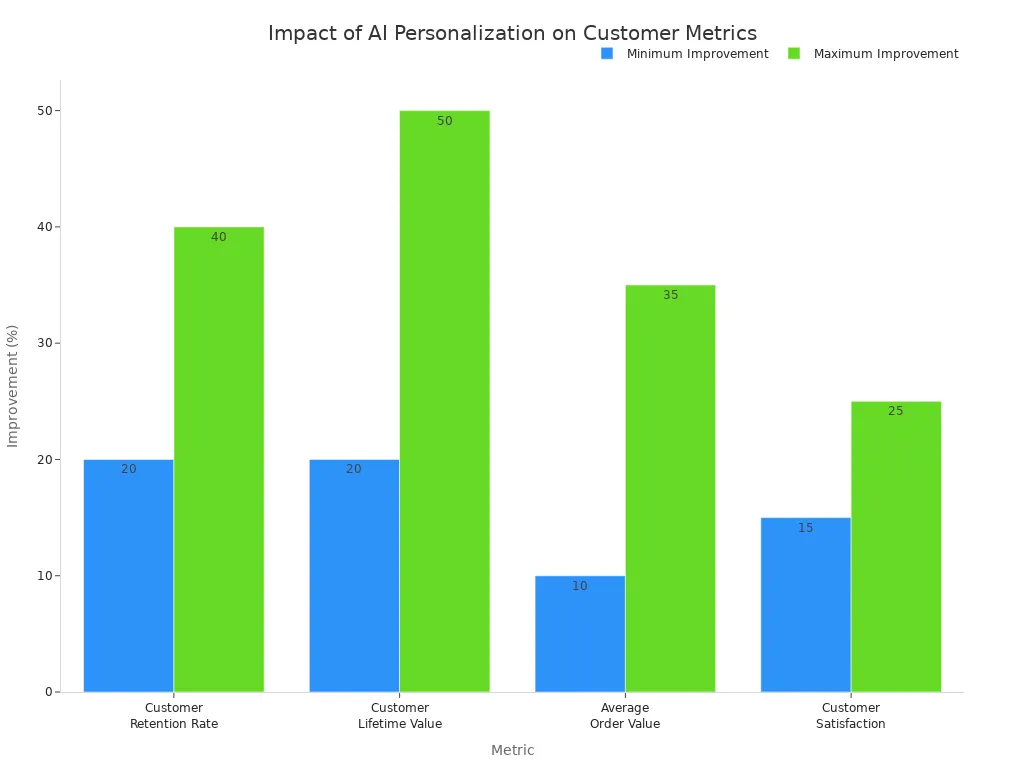
This chart shows how AI improves key business metrics. Better engagement leads to higher satisfaction and more sales. This is why conversational commerce is essential for any ecommerce business. A human-like AI makes the customer feel special.
Trend 3: Seamless AI-to-Human Collaboration

The best ecommerce experience combines the efficiency of AI with the empathy of a human touch. This partnership is a core part of modern conversational commerce. AI does not replace human agents. Instead, it empowers them. This collaboration creates a support system that is both fast and personal, leading to better engagement and higher sales. The future of conversational commerce is a team of AI and human experts working together.
The Future of Ecommerce Support Teams
The role of the human support agent is changing. AI handles the simple, repetitive questions. This frees up human agents for more important work. This new focus improves the entire shopping experience.
Human workers are free to focus on creativity, strategy and oversight, while agents take on repetitive or labor-intensive processes.
This shift creates new and exciting jobs within ecommerce support teams. These roles are essential for a successful conversational strategy.
- Knowledge Manager: Keeps all support content accurate for the AI.
- Conversation Designer: Maps the customer journey to create a smooth conversational flow.
- Conversation Analyst: Uses data to help the AI understand customers better.
AI for Triage and Escalation
AI is excellent at sorting customer questions. This process is called triage. In the past, a human agent had to read every message. This was slow and could lead to mistakes. Now, AI instantly understands a customer's problem. It can tell if the issue is urgent. The AI then sends the customer to the right place. Simple questions might go to a help article. Complex problems are sent to a human agent. This smart routing ensures every customer gets help quickly. This efficient engagement is a key benefit of conversational commerce.
Contextual Handoffs to Human Agents
Customers hate repeating themselves. A smooth handoff from an AI chatbot to a human agent is critical. When an issue needs a human touch, the AI must pass along all the important information. This is a key part of a good conversational experience. AI copilots can summarize the entire conversation for the human agent. This ensures a seamless transition. The summary includes:
- The customer's identity and chat history.
- A clear summary of the problem.
- The steps the chatbot already tried.
This level of communication makes the customer feel heard and valued.
Improving First-Contact Resolution
The goal of this collaboration is to solve the customer's problem on the first try. This is called first-contact resolution. A strong AI and human partnership makes this possible. For example, the electronics brand OPPO used Sobot's chatbot to improve its live chat in ecommerce. The chatbot achieved an 83% resolution rate on its own. This allowed human agents to focus on the most difficult issues. This improved customer satisfaction and led to a 57% increase in the repurchase rate, boosting sales. This shows how a powerful conversational commerce strategy, blending AI and human skill, creates a better shopping experience and drives business growth.
Implementing Your AI Strategy with Sobot
An AI strategy is essential for modern conversational commerce. Implementing this strategy requires a clear plan. This plan starts with choosing the right platform. It continues with integration, training, and measuring success. A strong AI implementation improves the customer shopping experience. It also drives sales and builds loyalty. This is the path to successful conversational commerce.
Choosing the Right AI Platform
Choosing the right AI platform is the first step. A good platform is the foundation of your conversational commerce strategy. It should offer a complete solution for customer communication. Look for a platform that combines an AI chatbot, live chat, and a ticketing system. Sobot provides an all-in-one contact center solution. This helps you build a powerful AI-powered customer experience. Key features to look for include:
- Security and Compliance: The platform must protect customer data.
- Scalability: The AI should grow with your business.
- Ease of Use: A no-code interface allows for quick setup.
A platform like Sobot offers these features. It ensures your conversational commerce efforts are secure and effective. This helps create a better shopping experience.
Integrating AI with Existing Channels
Your AI must work with your existing tools. A smooth integration creates a seamless conversational experience. The AI chatbot should connect with ecommerce platforms like Shopify or WooCommerce. This allows the AI to access order history and product information. Sobot makes this easy. It integrates with many platforms through simple plugins or code snippets. This creates a unified system for all customer communication. This integration is vital for effective conversational commerce. It ensures a consistent experience across all channels. This is how AI enhances the human touch in customer engagement.
Training and Optimizing Your Chatbot
A smart chatbot needs good training. The quality of your training data is very important. The AI learns from real customer questions. This helps the chatbot understand what customers want.
Training is an ongoing process. You should review unknown questions weekly. Update your chatbot with new product information. This keeps your AI sharp and helpful.
Use structured data for training. Focus on common customer intents like order status or return policies. This helps the AI provide accurate answers. This continuous optimization is a key part of conversational commerce. It ensures your chatbot delivers a great conversational experience. This human-like interaction improves customer satisfaction and drives sales.
Measuring Success and ROI
You must measure the success of your AI strategy. Key performance indicators (KPIs) show you what is working. This data helps you calculate your return on investment (ROI). Important metrics for conversational commerce include:
- Automation Rate: The percentage of questions the AI answers alone.
- Conversion Rate: How often a chat leads to a sale.
- Customer Satisfaction: How happy customers are with the AI interaction.
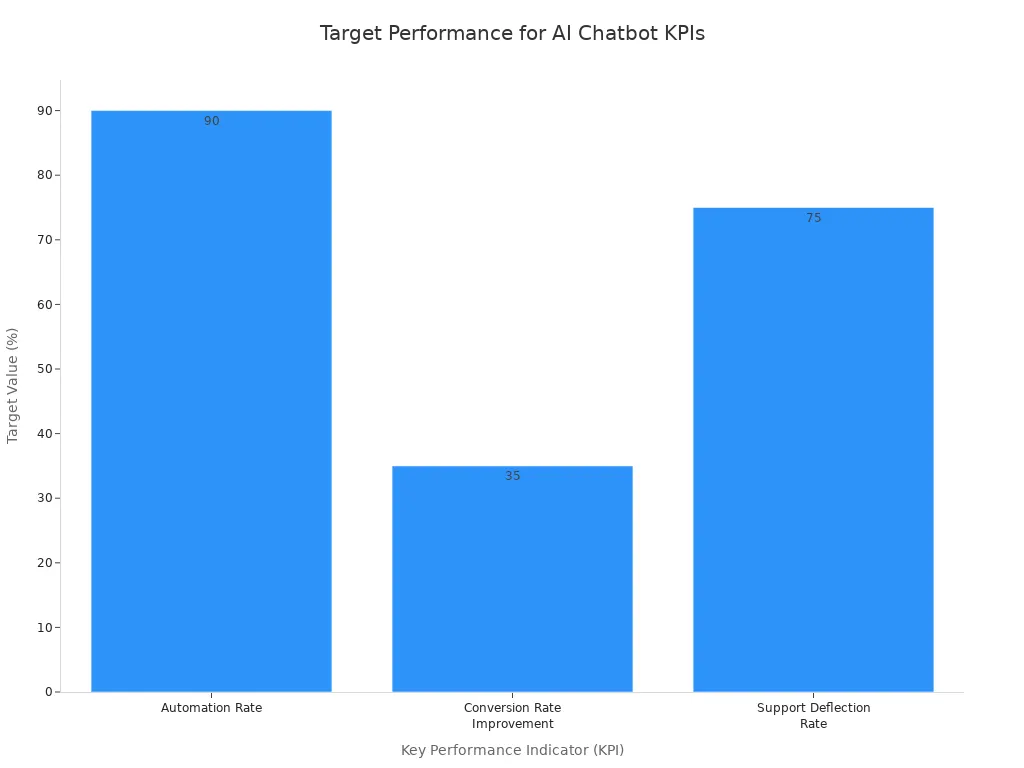
Tracking these numbers helps you improve your AI performance. A successful AI strategy will show clear improvements in sales and customer satisfaction. This proves the value of your conversational commerce efforts. This data-driven approach is essential for any ecommerce business. It ensures your AI delivers a superior shopping experience.
The future of ecommerce is conversational. Key trends like proactive engagement, hyper-personalization, and human-AI collaboration define modern conversational commerce. Adopting this conversational AI strategy is essential. The rise of agentic AI, where a personal AI chatbot handles a customer's shopping, makes this even more critical for future sales. This conversational experience improves customer satisfaction. A powerful AI chatbot enhances the human touch in customer communication. To begin your conversational commerce journey and improve the shopping experience, explore an all-in-one solution. Brands like Michael Kors use Sobot to drive conversational engagement across the entire customer lifecycle.
FAQ
What is conversational commerce?
Conversational commerce uses conversational tools to improve the shopping experience. This conversational approach helps businesses talk with customers. It drives sales and boosts customer satisfaction. This strategy is vital for modern ecommerce. Conversational commerce makes online shopping feel more personal and interactive.
How does conversational AI improve sales?
A conversational AI chatbot boosts sales in many ways. It offers product suggestions. It reduces cart abandonment. This conversational method creates a better shopping journey. This leads to higher satisfaction and more sales. Conversational commerce turns browsers into buyers, directly impacting sales.
Why is a conversational experience important for ecommerce?
A great conversational experience is key for ecommerce success. It builds trust with shoppers. This conversational interaction answers questions instantly. This improves the overall shopping journey. Good conversational commerce leads to happier customers and repeat business.
Can AI fully replace human support agents?
No, AI enhances human support, it does not replace it. AI handles simple questions. This frees up human agents for complex problems. This partnership creates a fast and helpful support system. This conversational collaboration is a core part of successful conversational commerce.
See Also
Best Live Chat Platforms for Online Stores This Coming Year
Elevate Your Sales: Live Chat Solutions for E-commerce Success
Comparing Leading Live Chat Tools: A 2024 Guide for Businesses
Enhancing Customer Engagement: Live Chat Strategies for Retailers
Selecting the Ideal Live Chat System for Your Retail Business

