The AI Chatbot for Customer Service Role

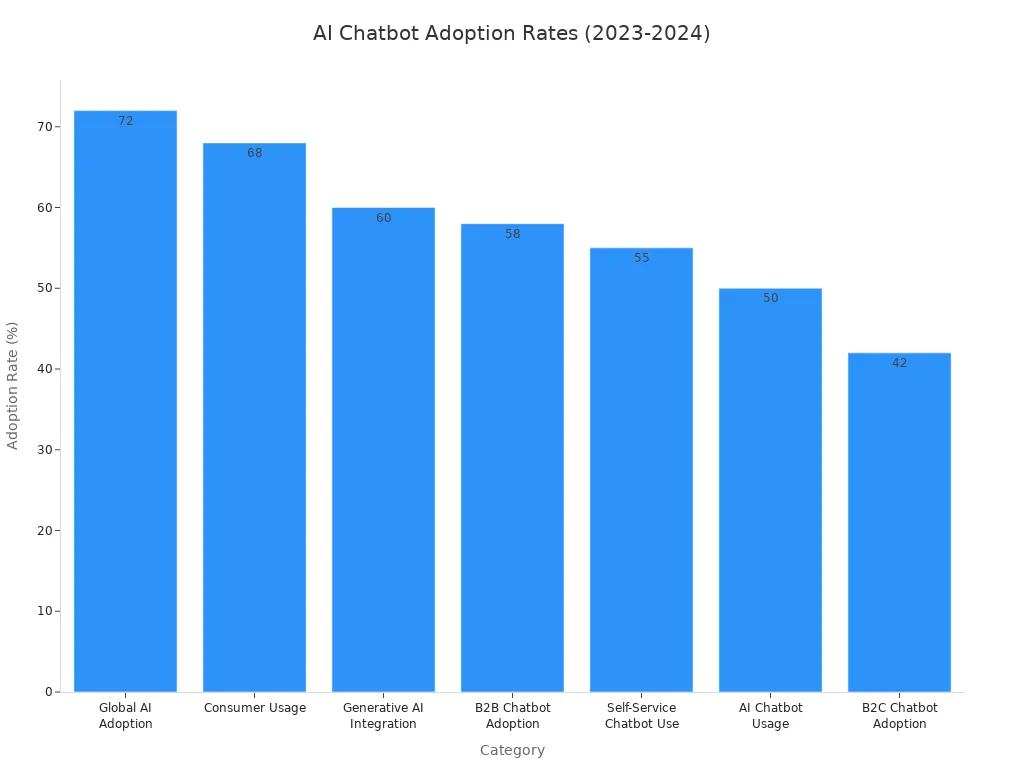
An AI chatbot is an essential tool for modern customer service. It uses AI to automate customer support and simulate human conversation. The adoption of customer service chatbots is rising, with the global market projected to reach USD 27.29 billion by 2030.
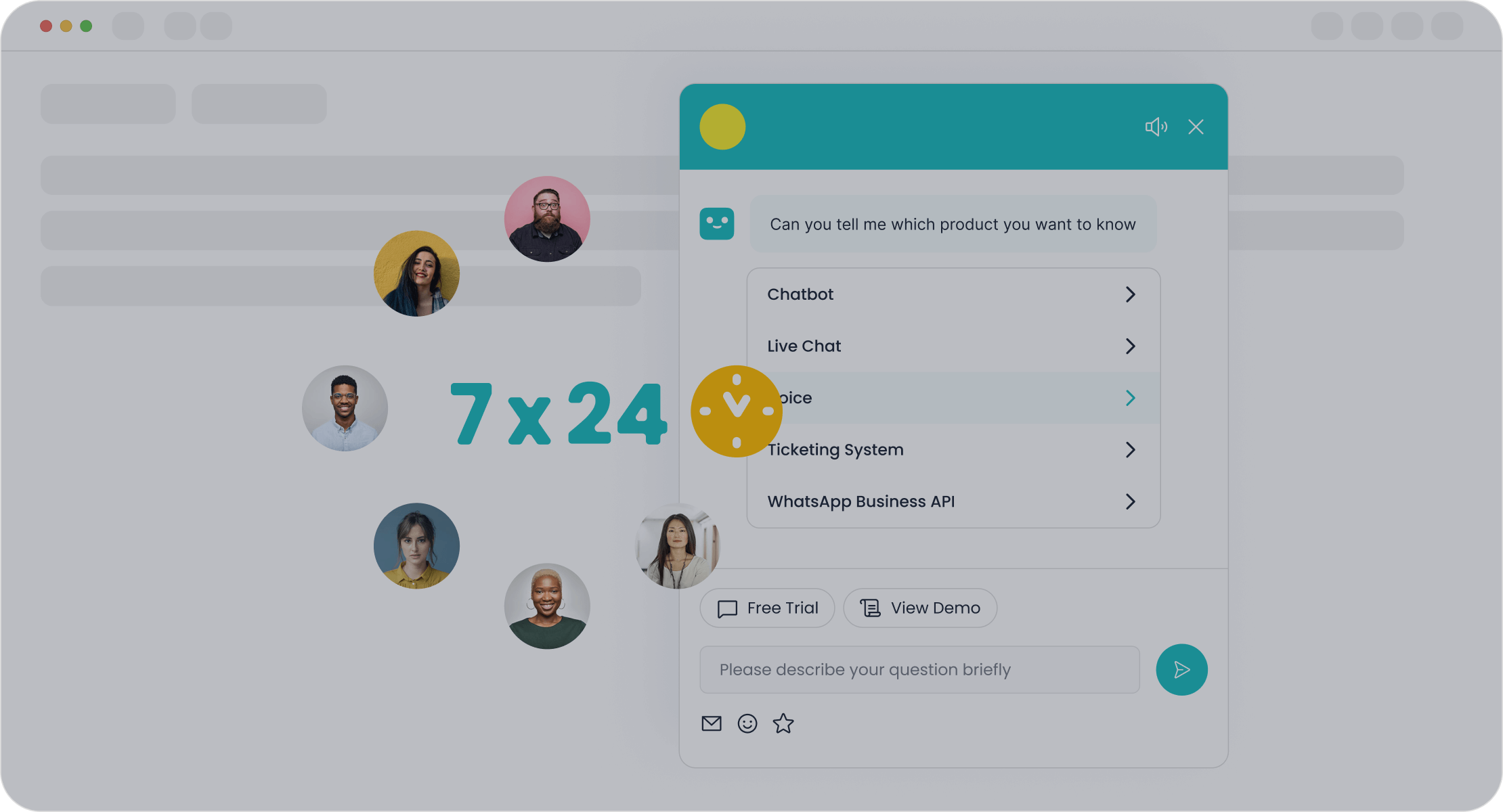
The primary role of this conversational AI is understanding a customer's needs for instant, 24/7 service. This is a key part of any customer service chatbot service for ecommerce. Sobot leads in providing all-in-one contact center solutions with powerful AI agents, enhancing these customer interactions. Our AI agents help every customer.
What is a Chatbot and How Does it Function?
Many people ask, what is a chatbot? A chatbot is a software application designed to simulate human conversation. It allows users to interact with digital devices as if they were communicating with a real person. An AI chatbot takes this a step further. It uses advanced technology to understand, learn, and respond in a more natural and intelligent way. These powerful AI agents are transforming customer service.
The Core Technology: NLP and Machine Learning
The brain behind an AI chatbot is a combination of Natural Language Processing (NLP) and Machine Learning (ML). These two fields of AI work together to create intelligent conversational experiences.
NLP is a branch of AI that helps machines understand human language. It breaks down what a customer says or types to figure out their goal. This process involves several key steps:
- Normalizing: The chatbot first cleans up the user's input. It might convert all text to lowercase and remove unimportant details.
- Tokenizing: Next, it breaks the sentence into smaller pieces, or "tokens," and removes punctuation.
- Intent Classification: The AI then analyzes these tokens to identify the user's core intent. It determines what the customer wants to achieve.
- Recognizing Entities: The chatbot can also spot important details, like an order number, email address, or product name.
- Generation: Finally, advanced AI agents generate the most appropriate and helpful response in natural-sounding language.
Machine learning allows the chatbot to improve over time. AI agents learn from past interactions to provide better answers in the future. This learning happens in a few ways:
- Supervised learning involves training a chatbot with labeled data. For example, developers provide the AI with a question and the correct answer, teaching it like a student.
- Unsupervised learning lets the AI find patterns on its own. An AI chatbot could analyze thousands of customer reviews to identify common topics without human guidance.
- Reinforcement learning helps AI agents adapt in real time. The system rewards successful interactions and corrects errors, which fine-tunes the chatbot's performance.
Through machine learning, AI-powered chatbots can also analyze the sentiment and emotion in a user's query. This allows the AI agents to provide more empathetic and suitable responses, improving the overall customer experience.
The Power of an AI Chatbot: Context and Conversation
A key strength of an AI chatbot is its ability to manage conversational context. This means the chatbot remembers what was said earlier in a conversation. This prevents the customer from having to repeat information. This capability makes the conversational AI feel more human and efficient.
AI agents use several mechanisms to handle complex, multi-turn conversations:
- Intent Recognition: The AI understands the user's goal and can adapt even if the conversation changes topics.
- Dialogue State Management: AI agents track the conversation's current state. They know what information has been collected and what still needs to be asked.
- Handling Interruptions: The system can manage off-topic questions or corrections from a customer without losing the main thread of the conversation. It can gracefully return to the original task.
This ability to maintain context leads to smoother, more natural interactions. It reduces customer frustration and makes the entire support process more personal and effective.
Integration with Business Systems like CRM
A truly powerful chatbot does not work alone. Integrating AI agents with other business systems, like a Customer Relationship Management (CRM) platform, unlocks immense value. This connection creates a central hub for all customer data and interactions.
The benefits of this integration are significant:
This automation creates a seamless flow of information between the chatbot and your teams. It provides a complete view of the customer journey, from the first question to the final purchase. Marketing and sales teams can use this data to create more targeted campaigns and improve the overall service experience.
Many popular CRM platforms offer easy API integrations for AI agents. This allows businesses to connect their conversational AI tools with systems they already use.
| Tool | Best for | CRM Integration Options |
|---|---|---|
| HubSpot CRM Chatbot Builder | Startups and SMBs | Direct integration with HubSpot CRM data |
| Tidio Live Chat & AI Chatbot | SMBs and e-commerce | Integrates with HubSpot, Zendesk, and Salesforce |
| Microsoft Dynamics 365 | Enterprise organizations | Native integration with Microsoft Dynamics 365 |
| Salesforce Einstein Bots | Midsized to large businesses | Native to Salesforce CRM |
| Zoho SalesIQ with Zobot | SMBs using Zoho tools | Seamless integration with Zoho CRM |
Connecting your AI agents to a CRM enhances data collection, improves lead generation, and ensures your support can scale effectively.
Key Benefits and Improved Customer Service
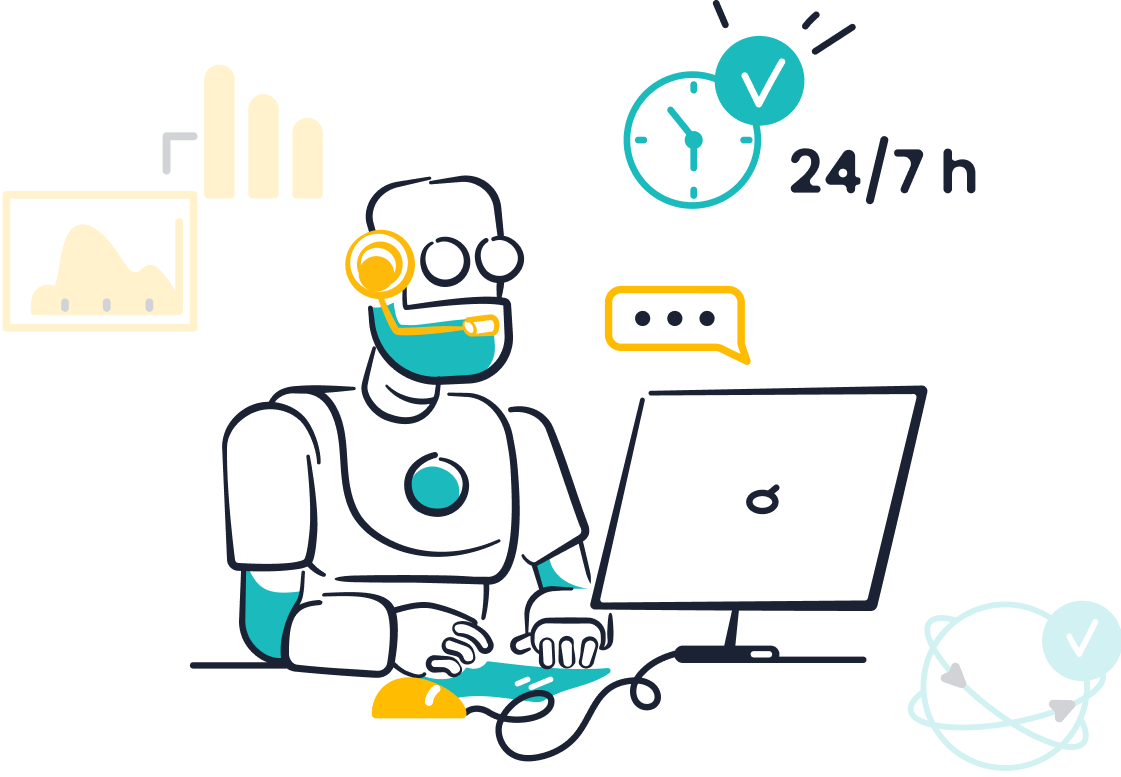
Adopting an AI chatbot provides significant advantages for any business. These AI agents are more than just automated responders. They are strategic tools that deliver improved customer service and operational excellence. The benefits of chatbots range from cost savings to enhanced customer satisfaction. Let's explore the key ways an AI chatbot transforms the customer experience.
24/7 Instant Support and Reduced Wait Times
One of the most immediate benefits of chatbots is their constant availability. Customers expect help whenever they need it, not just during business hours. An AI chatbot provides 24/7 availability, ensuring no customer query goes unanswered. This instant response capability is crucial for building trust and loyalty.
Traditional support systems often have long wait times. An email might take 12-24 hours for a first response. AI agents slash this time to mere seconds. This speed has a massive impact on the customer experience.
- Studies show 90% of businesses using an AI chatbot report faster complaint resolution.
- For example, financial service company Klarna used AI to cut its average query resolution time from 11 minutes down to under 2 minutes.
This level of service ensures every customer feels heard immediately. The 24/7 availability of AI agents means your business is always open to help, which is a powerful advantage in a competitive market.
Increased Agent Efficiency and Lower Operational Costs
AI agents do not replace human agents. They empower them. An advanced AI chatbot can handle up to 70% of routine customer inquiries on its own. This automation frees your human team to focus on complex, high-value customer interactions that require a human touch. This is a clear path to increased efficiency.
A peer-reviewed study in the Quarterly Journal of Economics found that generative AI assistance boosted support agent productivity by an average of 14%. Sobot’s AI agents take this even further, helping businesses improve productivity by up to 70%.
This efficiency translates directly into lower costs. By automating repetitive tasks, a chatbot reduces the need for a large support team. This can lead to significant savings.
- Businesses often see a 30-40% reduction in customer service costs in the first year.
- AI-powered chatbots can reduce support ticket volume by deflecting 40–70% of inquiries.
- With a powerful chatbot, businesses can save up to 50% on agent costs.
These savings allow companies to reinvest in other areas of the business, such as product development or marketing, driving further growth.
Personalized Self-Service for a Better Experience
Modern customers want to solve problems on their own. An AI chatbot offers a dynamic and personalized self-service experience. Unlike static FAQ pages, AI agents use machine learning to understand a customer's specific needs. This allows the chatbot to provide tailored answers and personalized support.
This approach directly improves customer satisfaction. Research from Harvard Business School found that AI agents reduced response times by 22% and improved customer sentiment. This is because the service feels more personal and effective. AI agents can offer many personalized self-service options:
- Real-time order tracking and status updates.
- Tailored product recommendations based on browsing history.
- Adaptive questions that change based on a customer's previous answers.
Leading companies use this technology to create amazing personalized customer experiences. For example, smart device innovator OPPO partnered with Sobot to enhance its customer service. By implementing Sobot's chatbot, OPPO achieved an 83% chatbot resolution rate and a 94% positive feedback rate. This improved experience led to a 57% increase in their repurchase rate, showing the direct link between great service and business growth. This is one of the most powerful use cases for chatbots.
Higher Conversion Rates and Lead Generation
A customer service chatbot is also a powerful sales tool. AI agents can engage website visitors proactively, turning browsers into buyers. This is a key function for any customer service chatbot service for ecommerce. The chatbot can qualify leads by asking strategic questions about a customer's needs, budget, and timeline.
This process helps identify high-intent leads for the sales team. The AI chatbot can then seamlessly hand off the conversation to a human agent with full context. This ensures a smooth transition and a better experience for the potential customer.
Effective strategies for using a chatbot for lead generation include:
- Initial Engagement: The chatbot greets visitors and offers personalized help to gauge interest.
- Qualifying Questions: It asks about needs and challenges to gather valuable information.
- Lead Scoring: The system assigns points to prioritize leads who are most likely to convert.
- Handoff to Sales: Promising leads are transferred to the sales team for a personal touch.
This proactive customer engagement helps guide users through the sales funnel. By providing instant answers and personalized recommendations, AI agents build trust and encourage purchasing decisions. This leads to higher conversion rates and a stronger sales pipeline.
Sobot's Customer Service Chatbot Service for Ecommerce
The retail and e-commerce industry faces high customer inquiry volumes and a growing need for personalization. Sobot’s customer service chatbot service for ecommerce is designed to solve these challenges. Our AI solutions provide a powerful platform for businesses to enhance customer interactions and drive growth. The Sobot AI chatbot is easy to set up, featuring a no-code, point-and-click interface that empowers any business to deploy advanced AI agents without a technical team.
Omnichannel Support for a Unified Experience
A modern customer expects a consistent experience everywhere they interact with your brand. Sobot’s AI agents deliver a unified service across all channels, including live chat, email, voice, and social media. This omnichannel approach solves a major industry problem: data silos. Our AI chatbot ensures a single, seamless customer journey.
- Retailers using an omnichannel strategy retain customer details across interactions.
- This consistency creates a unified brand experience and improves customer loyalty.
- Our AI agents help you provide the seamless experience customers want when they switch devices.
This integrated service is a core part of our customer service chatbot service for ecommerce, turning fragmented customer interactions into a cohesive and positive experience.
Proactive Engagement to Reduce Cart Abandonment
Shopping cart abandonment is a major challenge for e-commerce stores. Sobot’s AI agents can proactively engage customers to prevent lost sales. This is one of the most valuable use cases for chatbots. By using an AI chatbot, businesses can reduce cart abandonment rates by 15% to 40%. Our AI agents can:
- Offer help when a customer hesitates at checkout.
- Provide unique discount codes to encourage a purchase.
- Answer last-minute questions about shipping or payment options.
This proactive customer engagement turns potential issues into conversion opportunities, guiding the customer smoothly to complete their purchase. This is a key feature of our customer service chatbot service for ecommerce.
AI-Powered Insights for Performance Optimization
To improve your customer service, you need to understand what is working. Sobot’s AI solutions provide deep insights into chatbot performance and customer interactions. Our AI agents track key metrics, allowing you to see where the chatbot excels and where it needs improvement. You can analyze conversation data to identify common customer pain points. This data-driven approach helps you optimize the AI chatbot and the overall customer experience. Better AI agents lead to higher agent productivity and improved customer satisfaction.
Secure and Data-Compliant AI Solutions
Trust is the foundation of any good customer relationship. Sobot’s AI chatbot is built with security at its core. We understand the importance of data privacy. Our service complies with major data protection regulations like GDPR to ensure all customer data is handled responsibly. We use essential security measures to protect your business and your customer.
- Data Encryption: All data is encrypted both in transit and at rest.
- Access Controls: We implement strong authentication to prevent unauthorized access.
These measures ensure our AI agents provide a secure and reliable service, giving you and your customer peace of mind.
AI Chatbot vs. Rule-Based Chatbot
Not all chatbots are created equal. The technology powering a chatbot determines its capabilities. Understanding the difference between an AI chatbot and a rule-based chatbot is key to choosing the right solution for your customer service needs. The main distinction lies in flexibility and intelligence.
| Feature | Rule-Based Chatbot | AI Chatbot |
|---|---|---|
| Flexibility | Rigid structure, cannot manage new inputs. | Highly adaptive to varied and complex queries. |
| Intent Recognition | Based on exact keyword matching. | Uses AI to detect intent from free-form text. |
| Maintenance | Needs manual updates for every new query. | Improves with ongoing use, reducing manual work. |
| Personalization | Offers static responses with no memory. | Provides personalized replies using past context. |
AI Chatbots: Dynamic, Learning, and Human-like
An AI chatbot is a dynamic and intelligent tool. It uses advanced AI to understand, learn, and adapt. This type of chatbot becomes more human-like over time by learning from every conversation. The AI analyzes patterns and refines its responses based on past customer interactions. This continuous learning process allows the AI chatbot to handle a wide range of unpredictable customer queries with greater accuracy.
The core strength of this AI is its ability to understand context. It can interpret a customer's intent even if the phrasing is new or unusual. This makes the service feel more natural and helpful. An AI chatbot can manage complex, multi-turn conversations and provide a truly personalized customer experience.
Rule-Based Chatbots: Scripted, Limited, and Static
A rule-based chatbot operates on a simple, fixed script. It follows a predefined decision tree, much like a flowchart. This chatbot can only respond to specific commands or keywords it has been programmed to recognize. If a customer asks a question outside of these rules, the chatbot will fail.
These bots have several limitations:
- They cannot process complex or unexpected customer questions.
- They struggle to understand the nuances of natural language.
- They require constant manual updates to expand their knowledge.
This makes them unsuitable for dynamic customer service environments. However, a rule-based chatbot can be effective for very simple, repetitive tasks. They are a cost-effective option for answering basic FAQs, such as providing store hours or a return policy. For any service beyond that, their static nature becomes a major drawback.
The role of an AI chatbot is to provide intelligent, scalable, and immediate support. This service improves efficiency and the overall customer experience. A chatbot from Sobot is more than a tool; it is a strategic partner for growth. Our AI helps every customer. Ready to transform your customer service?
Embark on Your Contact Journey. Explore the Sobot Chatbot solution on our official website to see how our AI can fit your specific business needs.
FAQ
What is the main purpose of an AI chatbot?
An AI chatbot automates customer interactions. It solves common questions on its own. The chatbot also helps human agents. This teamwork improves productivity and makes customer service much faster.
How does a chatbot help reduce business costs?
A chatbot works 24/7 without needing extra staff. It handles many customer questions automatically. This reduces the workload on human agents. Businesses can save up to 50% on agent costs by using an AI chatbot for customer service.
Is it difficult to set up an AI chatbot?
No, setting up a Sobot AI chatbot is easy. It uses a simple point-and-click interface. You do not need any coding experience. Businesses can design and launch their chatbot quickly to start helping customers right away.
See Also
Elevating Efficiency: AI Customer Service Software Transforms Support Operations
Intelligent Agents: Revolutionizing Customer Support with Advanced AI Technology
Chatbots Elevate E-commerce: Enhancing Customer Satisfaction and Engagement
Essential Guide: Implementing Artificial Intelligence Software in Call Centers
In-Depth Review: Top AI Solutions for Enterprise Call Centers

