AI vs Human Support Reliability in 2026

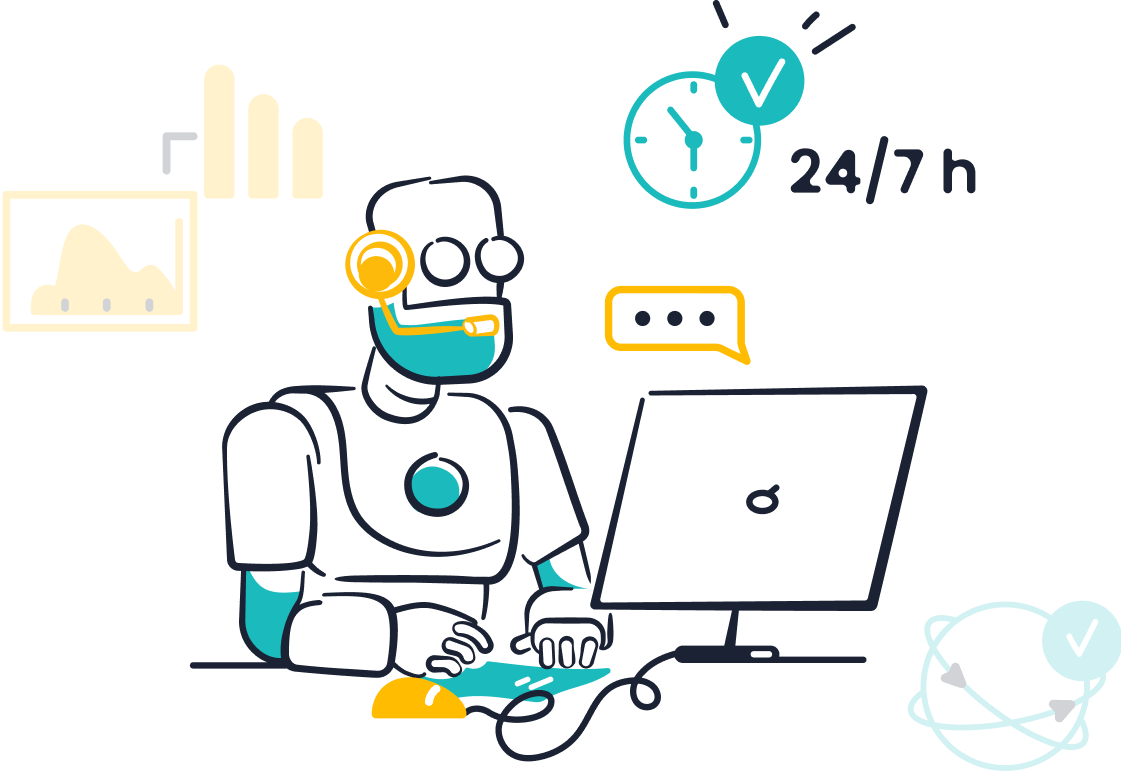
In 2026, true support reliability is not a choice between AI and human support; it is about smart integration. Leading brands already deliver better support and a superior customer experience by combining AI efficiency with empathetic human support.
Research shows 89% of customers want this hybrid approach for the best support.
This guide provides a strategy for building a future-proof customer support system. It shows how solutions from Sobot help merge AI and human support to achieve superior AI chatbot support reliability.
The Rise of AI Chatbot Support Reliability
The reliability of customer support in 2026 is increasingly defined by the strengths of artificial intelligence. AI-powered chatbots are no longer just a novelty; they are a core component of a dependable support strategy. These systems provide foundational stability that allows human agents to excel. The growing trust in AI chatbot support reliability comes from four key advantages.
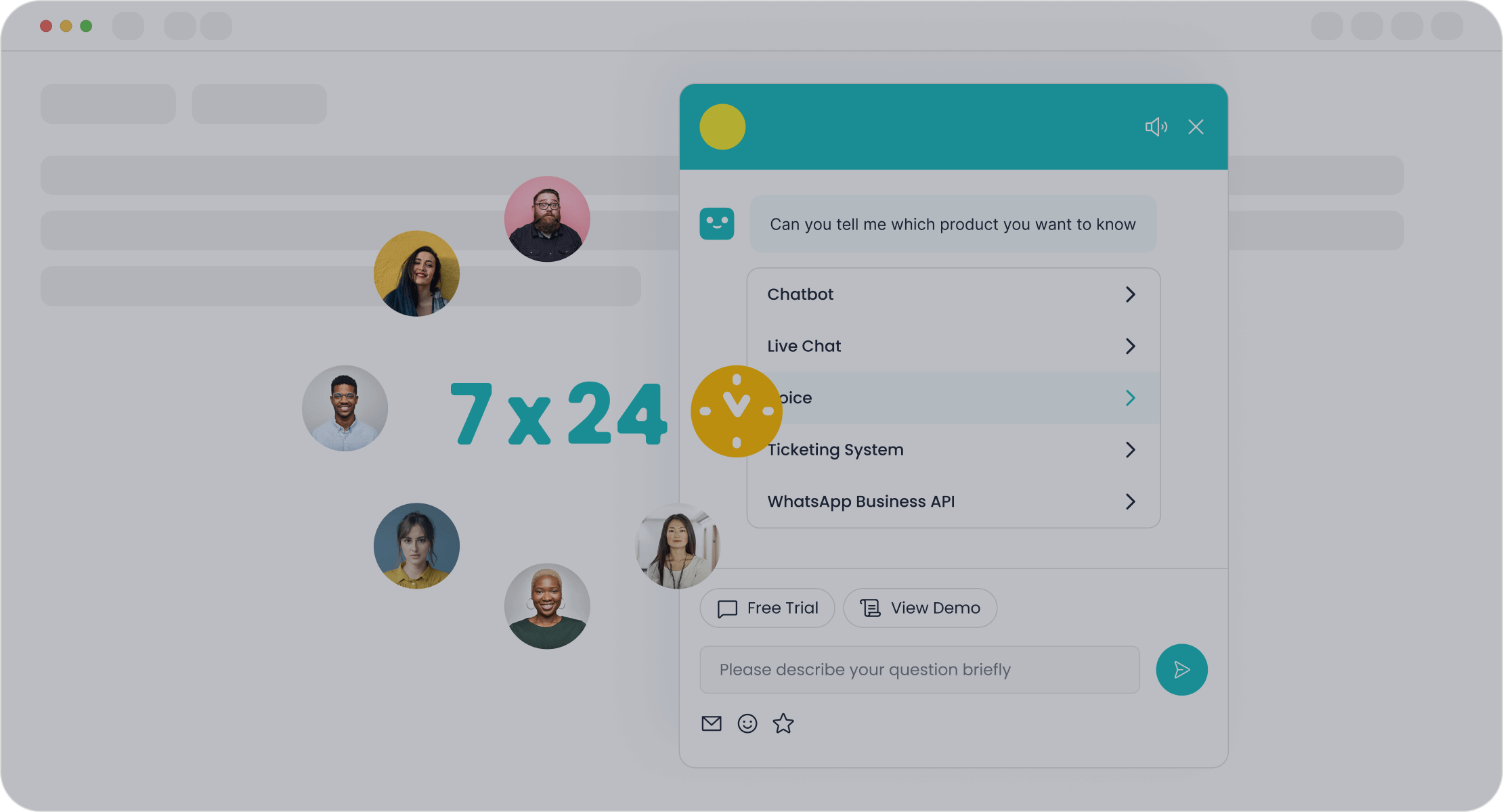
24/7 Availability and Instantaneous AI Responses
AI chatbots offer support around the clock. They never need a break. This means customers get help whenever they need it. The speed of AI responses is a major factor. AI chatbots can answer questions in seconds. This is much faster than typical human responses.
| Agent Type | Average Response Time |
|---|---|
| Human Agents | 5-10 minutes |
| AI Agents | Seconds |
This immediate support significantly reduces customer wait times and improves satisfaction.
Unwavering Consistency in Standard Procedures
AI chatbots deliver perfect consistency with every interaction. They pull information from a single, approved knowledge base. This ensures every customer receives the same correct answer for standard questions. This consistency eliminates problems like tired agents giving different human responses or forgetting policy details. In fact, studies show that chatbot-generated responses are often perceived as more complete (79.73%) than human responses. This level of customer service AI ensures a uniform brand voice.
Scalability to Flawlessly Manage High Volumes
Businesses often face sudden increases in support requests. AI-powered chatbots manage these high volumes flawlessly without extra costs. A single chatbot can handle ten or ten thousand conversations at once. This scalability is essential for growing companies. Sobot's AI Chatbot demonstrates this value. It enhances efficiency by 70%, cuts expenses by 50%, and boosts conversions by 20%. These AI-powered chatbots provide reliable support during peak times.
Proactive Support Through Data-Driven Insights
Modern AI chatbots do more than just answer questions. They use data to offer proactive support. The AI analyzes customer behavior and history to anticipate future needs. For example, an AI chatbot can automatically notify a customer about a shipping delay before they even think to ask. This turns a potential problem into a positive support experience. These intelligent responses build customer trust and loyalty, improving AI chatbot support reliability.
AI Chatbots vs Human Agents: Irreplaceable Skills
While AI-powered chatbots provide a strong foundation for support, human agents possess irreplaceable skills. The debate of AI chatbots vs human agents is not about replacement but about recognizing where each excels. AI handles the routine, but human support shines when interactions demand more than just data. These skills are what turn a good support experience into a great one.
Navigating Complexity with Critical Thinking
Human agents use critical thinking to solve complex problems. AI chatbots follow scripts and knowledge bases. They struggle with issues that require creative solutions. A human agent can analyze a unique situation, draw on experience, and find a custom resolution. This ability to think outside the box is a key differentiator in the AI chatbots vs human agents dynamic, ensuring even the most unusual problems get solved. This level of support builds confidence.
Building Trust with Empathy and Emotion
Empathy is a powerful tool for building customer trust. Human responses convey genuine care and understanding. AI-powered chatbots can simulate emotion, but they cannot truly feel it. This human touch is vital for customer satisfaction.
A PwC survey found that 59% of consumers feel companies have lost touch with the human element. Furthermore, research shows customer satisfaction is 35% higher when agents show genuine empathy.
This emotional connection makes customers feel valued, a task where human support consistently outperforms AI chatbots.
Adapting to Nuance and Unique Situations
Customers are not robots. Their situations are often filled with nuance. Human customer support agents excel at reading between the lines. They interpret a customer's tone of voice and subtle cues in their language. This allows them to adapt their responses and approach. AI-powered chatbots, in contrast, provide standardized responses that can feel impersonal in sensitive situations. The adaptability of human support is crucial for navigating delicate customer issues where chatbots might fail.
Creating Loyalty Through Personal Connection
A personal connection fosters long-term loyalty. When a human agent builds rapport with a customer, it creates a memorable and positive experience. This is a core advantage in the AI chatbots vs human agents comparison. These positive human responses make customers feel connected to the brand. AI-powered chatbots provide efficient support, but human customer support builds relationships. This personal touch is what encourages customers to return, proving the lasting value of human interaction in any support strategy.
Proof in Practice: How OPPO Uses AI-Powered Chatbots
Theory and strategy are valuable, but real-world results provide the ultimate proof. The story of OPPO, a leading global smart device innovator, shows how a hybrid support model works in practice. OPPO partnered with Sobot to transform its customer service, validating the power of integrating AI-powered chatbots with human expertise.
The Challenge: Managing High Inquiry Volumes
OPPO serves over 600 million users worldwide. This massive customer base generates a high volume of support inquiries. The company faced significant challenges, especially during peak shopping festivals. The surge in questions overwhelmed their human support teams. This led to several critical problems:
- Difficulty in handling a large volume of inquiries efficiently.
- Struggles with maintaining service quality amidst high demand.
- Challenges in providing timely responses to all customer queries.
Long wait times created poor experiences and risked customer dissatisfaction. OPPO needed a solution that could scale effectively without sacrificing the quality of its support.
The Sobot Solution: Human-Machine Cooperation
OPPO implemented a human-machine cooperation strategy using Sobot's technology. The solution centered on deploying AI-powered chatbots to act as the first line of support. These chatbots managed the high volume of repetitive questions instantly. This freed human agents to focus on complex issues that required critical thinking and empathy.
Sobot provided a comprehensive platform that included its advanced AI Chatbot and ticketing system. The AI-powered tools were customized to fit OPPO's specific needs. The chatbot was trained on OPPO's knowledge base, enabling it to provide fast and accurate responses. This integration of intelligent chatbots streamlined the entire support workflow, ensuring customers received immediate help for common questions. The system allowed for a seamless handover to a human agent when an issue became too complex for the chatbot, creating a smooth customer journey.
The Results: 83% Chatbot Resolution Rate
The results of the Sobot implementation were remarkable. The AI-powered chatbots achieved an impressive 83% resolution rate. This means the chatbots successfully resolved 83 out of every 100 customer inquiries without any human help. This high rate of autonomous resolution delivered faster support and lowered operational costs.
This 83% resolution rate is not just a strong number; it is future-ready. Gartner predicts that by 2029, AI will autonomously resolve about 80% of customer service interactions. OPPO is already exceeding that future benchmark today.
The new system produced other significant gains.
- 94% Positive Feedback Rate: Customers showed high satisfaction with the fast chatbot responses and consistent support.
- 90% Reduction in Maintenance: The AI helped optimize OPPO's knowledge base, drastically cutting the effort needed to keep it updated.
These metrics demonstrate the effectiveness of using chatbots for initial support. The quick and accurate responses from the AI chatbot improved the overall quality of service and customer satisfaction.
The Impact: 57% Increase in Repurchase Rate
The most powerful outcome was the impact on customer loyalty. OPPO saw a 57% increase in its customer repurchase rate. This shows that a better support experience directly translates to business growth. The increase was driven by the integration of Sobot’s AI-driven chatbot and marketing solutions.
This hybrid system did more than just answer questions. It created a seamless and positive experience across the entire customer journey. Fast and reliable support builds trust. When customers feel valued and heard, their satisfaction grows. This enhanced customer satisfaction encouraged them to purchase from OPPO again. The success story proves that investing in a smart support system with AI-powered chatbots is an investment in long-term customer relationships. The excellent responses from both the AI and human agents created a powerful combination for success.
The Hybrid Model: Unifying AI and Human Support
The ultimate strategy for peak reliability in 2026 is the hybrid model. This approach unifies the strengths of AI and human agents into a single, powerful system. It creates a support experience that is both efficient and empathetic. This is not a distant future concept; it is a practical strategy made possible by platforms like Sobot's Omnichannel Solution. This solution acts as the central hub, integrating every tool and channel to ensure a smooth flow between automated and human support.
The model works in three clear steps. It starts with AI, escalates to humans when needed, and uses AI to empower those humans.
Step 1: AI as the First Point of Contact
The journey for better support begins with AI. A well-designed chatbot serves as the initial point of contact for all customer inquiries. This digital front door is always open, ready to provide instant responses. The goal is to resolve common issues immediately, freeing up human agents for more valuable tasks. An effective AI handles up to 80% of routine interactions instantly.
This first step is crucial for managing volume and setting a positive tone. To make it effective, businesses should follow key practices:
- Be Transparent: Customers should know they are interacting with an AI. A simple message like, "You're chatting with our AI assistant," builds trust.
- Ensure Understanding: The AI must use Natural Language Understanding (NLU) to grasp customer intent, not just keywords. Sobot's Chatbot is trained on industry-specific language to provide accurate responses.
- Offer Proactive Support: The AI can use customer data to anticipate needs. It might greet a returning user by name or offer help based on their browsing history.
This initial interaction provides fast, consistent support and gathers important information before an issue ever reaches a human agent.
Step 2: Seamless Escalation to Human Agents
Not every problem can be solved by a chatbot. The hybrid model's strength lies in its ability to recognize when human support is necessary and make the transition seamless. Escalation should not be a point of friction for the customer. Instead, it should feel like a natural next step.
AI can proactively trigger this handoff. It monitors conversations for signs of complexity or customer frustration.
AI analyzes patterns like repeated questions, negative sentiment, or complex queries that exceed the chatbot’s capabilities. This allows the system to escalate the issue to a human agent before the customer becomes frustrated.
Effective triggers for escalation include:
- Customer Signals: The customer explicitly asks for a human, expresses confusion, or repeats the same question.
- AI-Initiated Scenarios: The chatbot fails to find an answer after a few attempts or detects a high-value customer who requires white-glove service.
When escalation occurs, Sobot's Omnichannel Solution ensures a smooth transition. The agent receives the full chat transcript and customer history in a unified workspace. This means the customer never has to repeat themselves, and the human support agent has all the context needed to provide effective help immediately.
Step 3: AI as a Co-pilot for Agent Support
The role of AI does not end when a human agent takes over. In the hybrid model, AI becomes a co-pilot, working alongside the agent to deliver faster, more accurate support. These "Agent Assist" tools operate behind the scenes during live interactions. This is a key component of modern customer service AI.
The AI co-pilot assists human support agents by:
- Suggesting Responses: The AI recommends the best answers based on the conversation's context.
- Retrieving Information: It instantly pulls up relevant knowledge base articles, customer data, or policy documents.
- Automating Tasks: It can handle post-call work like summarizing conversations and creating support tickets.
This partnership between AI and human agents dramatically improves efficiency and accuracy. For example, Wayfair's "Agent Co-Pilot" reduced handling time by 10% by providing real-time product specifications and policy information. The impact of these tools is clear, with data showing significant gains:
| Metric | Improvement |
|---|---|
| Average Handling Time (AHT) | 23% reduction |
| Wrap-up Times | Up to 8 times faster |
| Order Processing Time | 60% reduction |
| Agent Focus | Freed up for complex tasks |
This final step transforms the support team. It empowers agents with the speed and knowledge of AI, allowing them to focus on what they do best: building relationships and solving complex problems. This synergy is the key to achieving superior ai chatbot support reliability in 2026 and beyond.
Building Your Optimal Support Mix
Creating the right blend of AI and human support requires a clear strategy. A successful hybrid model balances efficiency with a personal touch to deliver better support. This process involves analyzing inquiries, setting goals, evaluating resources, and measuring performance.
Analyze Your Customer Inquiry Types
First, businesses must understand the types of questions they receive. A good approach is to map the entire customer journey and categorize inquiries.
- Transactional Inquiries: These are simple, high-volume tasks like checking an order status or resetting a password. AI is perfect for these because speed is the priority.
- Relational Inquiries: These are complex or emotional issues, such as handling a complaint or discussing a contract. These situations require human empathy and critical thinking.
By sorting inquiries, a business can decide where to apply automation for efficiency and where to direct customers to human agents for high-quality support.
Define Your Customer Experience Goals
Next, define what a great customer experience looks like for the brand. The goal is to use AI to enhance personal service, not replace it. Businesses should ask what pain points they want to solve. Is the top priority customer satisfaction, fast resolutions, or lower costs? Aligning these goals helps determine the right mix. For example, AI can handle data gathering and ticket routing. This allows human agents to focus on building relationships and solving complex problems, which boosts overall satisfaction.
Evaluate Your Budget and Team Capacity
A hybrid model offers a strong return on investment. Businesses often see operational cost reductions of 30-50% by blending AI and human support. When evaluating budget, consider that AI integration can cut interaction expenses significantly. This frees up funds and allows the human customer support team to focus on high-value tasks instead of repetitive ones. This strategic allocation of resources improves efficiency and supports sustainable growth.
Measure Key AI and Human Metrics
Finally, measuring performance is essential for optimizing the support system. Different metrics apply to AI and human agents.
For AI, key metrics include:
- Automation Rate: The percentage of queries the bot resolves alone.
- Human Takeover Rate: How often a conversation escalates to a human.
For human agents handling complex issues, the focus shifts. Instead of measuring speed, businesses should track their ability to resolve difficult problems and improve customer satisfaction. This ensures the entire system works together to meet customer needs effectively.
The future of reliable support is a smart system where AI empowers human support. This integrated approach delivers better support and a superior customer experience. Companies like OPPO prove this is a winning strategy. Their success shows how combining AI with human support boosts ai chatbot support reliability and customer loyalty. This model creates the most effective support system.
Ready to build your own reliable contact journey? Explore how Sobot's Omnichannel Solution can unify your support.
Embark on Your Contact Journey
FAQ
How does a hybrid model improve support reliability?
A hybrid model combines AI's speed with human empathy. AI handles simple, high-volume questions 24/7. This frees human agents to solve complex problems. This teamwork ensures customers always receive fast and effective support, boosting overall reliability and satisfaction.
Is it difficult to set up an AI chatbot?
No, modern platforms make it easy. For example, Sobot's AI Chatbot uses a point-and-click interface. Businesses can design and launch automated workflows without any coding experience. This allows for quick deployment and a faster path to more efficient support. (robot emoji)
Can a hybrid model really increase customer loyalty?
Yes. The OPPO case study showed a 57% increase in repurchase rates after implementing a hybrid model with Sobot. Fast AI responses and expert human help create a superior customer experience. This builds trust and encourages customers to remain loyal to the brand.
How does AI help human agents directly?
AI acts as a co-pilot for human agents. It suggests answers, finds information, and automates tasks during a conversation. This support helps agents resolve issues faster and more accurately. It empowers them to focus on delivering excellent, personalized service.
See Also
Optimizing Customer Support: AI Software Enhances Service Efficiency Significantly
Transforming Customer Interactions: AI Agents Revolutionize Support Experiences Effectively
Essential AI Tools: Elevating Enterprise Contact Center Solutions for Businesses
In-Depth Analysis: Evaluating Leading AI Solutions for Enterprise Call Centers
Discovering the Most Dependable Live Chat Software Options for 2024
