Top AI Chatbot Tools Beyond Chatbase

Finding the right Chatbase alternatives is simple. If you need an all-in-one AI chatbot builder for comprehensive customer support, choose Sobot. For developer-focused flexibility, Botpress is the top choice. For e-commerce growth, Tidio offers excellent no-code solutions. The market for AI-powered chatbots is expanding rapidly, making the right choice critical.
| Metric | Value |
|---|---|
| 2024 Market Size | USD 7.76 billion |
| 2030 Projected Market Size | USD 27.29 billion |
| CAGR (2025-2030) | 23.3% |
These AI chat platforms are key AI chatbot tools for customer service automation. This guide explores the best Chatbase alternatives to improve your customer support.
Why Look for Chatbase Alternatives?
While Chatbase is a useful starting point, many businesses find they quickly need more power and flexibility. Understanding its limitations helps you choose the right tool for long-term growth. Exploring Chatbase alternatives becomes necessary when your customer support needs evolve beyond basic question-answering.
Common Feature Limitations
Users often find Chatbase restrictive. The platform is not ideal for creating complex, multi-step conversations that guide users through a process. Key limitations frequently reported include:
- Limited Customization: You can only make basic changes, like adding a logo or changing colors. You cannot add custom images or buttons to create a fully branded experience.
- One-Bot Approach: Lower-tier plans restrict you to a single chatbot. This is a problem for businesses that need different bots for sales, support, or various user types.
- Reactive Only: The chatbots cannot start conversations or send proactive marketing messages. They only react to user questions.
The Need for Deeper Integrations
Modern customer support relies on connected systems. A chatbot should do more than just talk; it needs to take action. This is where Chatbase can fall short. It has fewer connections to other software compared to competitors. Without deep integrations, a chatbot cannot connect to your CRM or e-commerce store to perform tasks like:
- Checking a customer's order status
- Creating a new support ticket
- Updating customer information
This lack of connectivity means agents must still handle many tasks manually, which defeats the purpose of using ai chatbot tools for customer service automation.
Scalability and Pricing Models
A solution that works for a startup may not work for a growing business. As your company scales, your chatbot will face more users and more complex questions. According to a 2023 Gartner report, over 70% of businesses using AI chatbots face major scalability and integration challenges. An entry-level ai chatbot platform might struggle with heavy user loads.
Chatbase's pricing is also a factor. The cost can jump significantly between plans, making it difficult for a growing business to find an affordable option that meets its needs. Different pricing models exist, and what works best depends on your usage. A subscription model offers predictable costs, while a per-conversation model scales directly with your activity. Choosing the right model is key to managing your budget effectively as you grow.
Sobot: An All-in-One AI Chatbot Builder
Sobot is more than just an ai chatbot builder; it is a complete enterprise conversational ai platform. It unifies customer support channels into one powerful system. This makes it an excellent choice for businesses looking for a single solution to manage all customer interactions, from chat and email to voice calls.
Best For: Businesses Needing a Unified Customer Contact Solution
Sobot excels for companies that need a comprehensive contact center. It provides true omnichannel ai support by connecting with customers on their favorite platforms. This includes websites, apps, email, and social media like WhatsApp and Facebook. The platform offers deep integrations with internal systems like CRMs and ERPs. This multi-platform integration creates a seamless flow of data for better customer support. Key features that enable this unified approach include:
- Omni-channel Interconnection: Connects with customers across dozens of global platforms.
- System Integration: Links with your existing business software for a single source of truth.
- Multi-language Support: Offers multilingual capabilities with support for 19 visitor languages, creating effective multilingual support bots.
Key Product Features
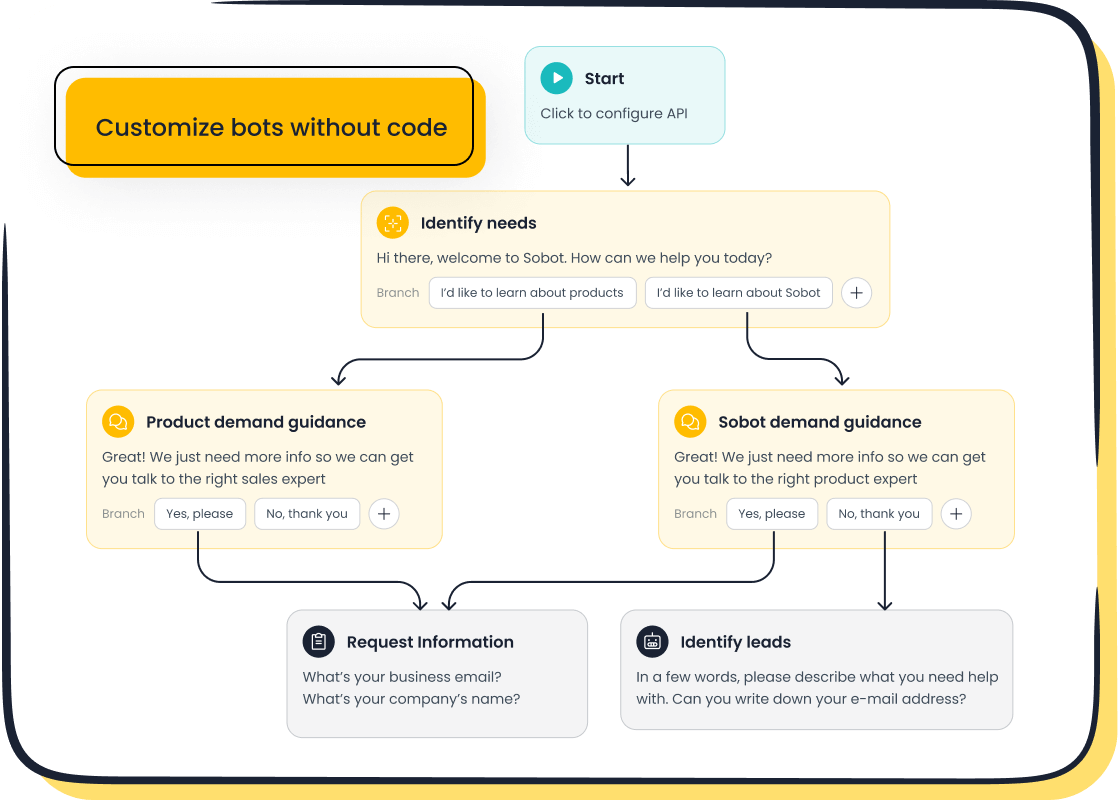
Sobot's automation capabilities are designed for efficiency and fast deployment. The platform provides advanced ai agents and custom ai agents tailored to specific industries. For example, financial services can use pre-built templates that handle compliance and secure data. The visual flow designer allows you to map out conversational paths easily. This makes it simple to create an interactive customer service chatbot for tasks like customer onboarding or checking account information.
Streamlined No-Code Chatbot Building
You do not need to be a developer to use Sobot. The platform offers streamlined no-code chatbot building with a point-and-click interface. Its visual bot builder uses a drag-and-drop system. This approach to no-code chatbot building allows anyone to design and launch custom ai chatbots quickly. This fast deployment means you can start improving your customer support right away. The focus on user-friendly no-code chatbot building makes powerful customer support automation accessible to all teams.
Pricing and Value
Sobot uses a flexible SaaS subscription model. Pricing is based on a per-agent monthly fee, with a free plan available to get started. This structure makes it one of the scalable ai chatbot tools for customer service automation. The platform delivers significant value by improving productivity and cutting costs.
Success Story: Global tech leader OPPO used Sobot to achieve an 83% chatbot resolution rate. This led to a 57% increase in their customer repurchase rate.
By handling routine questions, Sobot's conversational ai platform improves agent productivity by 70% and reduces operational costs by up to 50%. The platform's ai-driven insights also help boost conversions by 20%, proving its strong return on investment for enterprise conversational ai.
Botpress: The Open-Source AI Chatbot Tool
Botpress is a leading open-source conversational ai platform designed for developers. It offers maximum control and customization for building sophisticated chatbots. This makes it the ideal choice for technical teams who want to build and host their own solutions without vendor lock-in. Its powerful features support the creation of advanced enterprise conversational ai systems.
Best For: Developers and Technical Teams
Botpress is built for developers who need full control over their chatbot projects. The platform's open-source nature means you can access the source code, host it on your own servers, and customize every aspect of the experience. This is perfect for companies with strict data compliance needs. A strong developer community and extensive documentation provide excellent resources for technical teams to solve problems and innovate.
Core Platform Features
Botpress provides a rich set of tools for building powerful custom ai chatbots. The platform supports fast deployment with its visual builder and pre-built integrations. Key features include:
- Agent Studio: A visual, drag-and-drop canvas to design conversation flows quickly.
- Autonomous Engine: Uses Large Language Models (LLMs) to guide conversations and automate complex tasks.
- Centralized Knowledge Bases: Train your bot by uploading documents, PDFs, and websites for accurate answers.
- Extensive Integrations: Connects easily with messaging channels like WhatsApp and Slack, as well as business tools like HubSpot and Jira.
- Multi-LLM Support: Works with models from OpenAI, Anthropic, and others, giving you flexibility.
Pros and Cons
Botpress offers significant advantages but also has a learning curve.
Pros:
- Total Flexibility: Being open-source gives you complete control over customization and data.
- Powerful NLU: The built-in Natural Language Understanding engine has strong multilingual capabilities, helping you create effective multilingual support bots.
- Active Community: A large community on GitHub and Discord offers support and shared knowledge.
Cons:
- Technical Expertise Required: The setup and advanced customization can be complex for non-technical users.
- Potential for Hidden Costs: While the platform is open-source, costs for hosting, developer time, and API usage can add up.
Pricing Structure
Botpress offers a flexible pricing model. There is a free plan for individuals to start building. Paid plans are designed for teams and businesses, typically involving a monthly subscription plus AI spend. This usage-based pricing covers things like token consumption and extra messages. This structure allows the enterprise conversational ai solution to scale with your needs, but it is important to monitor usage to manage costs effectively. The ability to create custom ai agents for specific tasks provides a strong return on investment for customer support teams looking for a scalable solution that allows fast deployment and improves customer support.
Tidio: AI-Powered Chatbots for E-commerce
Tidio is a customer experience platform designed specifically for the needs of growing e-commerce stores and small businesses. It combines live chat, multichannel messaging, and AI automation into a single tool. This makes it a strong choice for teams that need an all-in-one solution to manage customer support and drive sales.
Best For: E-commerce and Small Business Growth
Tidio is ideal for online stores focused on increasing sales and providing excellent customer support. Its features are built to engage website visitors, capture leads, and recover lost revenue. Small businesses benefit from its user-friendly interface and scalable pricing. The platform allows even lean teams to offer responsive, 24/7 support without needing extensive resources. This focus on efficiency makes it a practical tool for growth.
Key Features Including Lyro AI
Tidio's standout feature is Lyro, an AI chatbot that provides human-like conversations. Lyro can handle up to 70% of common customer questions on its own. This frees up your team to focus on more complex issues. Tidio's automation capabilities extend to sales with features designed to reduce cart abandonment.
- Proactive Engagement: Use pre-built templates to offer discounts to visitors who are about to leave your site.
- Lead Generation: Capture visitor details automatically and qualify leads for your sales team.
- Order Management: Answer common questions about order status, shipping policies, and product availability instantly.
These tools are designed for fast deployment, helping you improve customer interactions immediately.
Pros and Cons
Tidio offers powerful features, but it is important to consider both its strengths and weaknesses.
Pros:
- Excellent Automation: Lyro AI significantly reduces agent workload and improves first response times.
- User-Friendly: The platform is known for its intuitive setup, enabling fast deployment for small teams.
- Multichannel Inbox: Manage conversations from your website, email, Messenger, and Instagram in one place.
Cons:
- Disconnected Feel: The AI features are split into different systems (Lyro, Flows), which can feel messy to manage.
- Learning Curve: Setting up advanced ai agents and custom ai agents can be complex for new users.
- Integration Model: Tidio often works best as a replacement for existing help desks, which may not suit all businesses.
Pricing Plans
Tidio offers flexible plans suitable for businesses at different stages. A robust free plan is available for those just starting out.
- Free: Includes live chat for up to 3 operators, 100 unique chatbot visitors, and basic integrations.
- Starter: Starts at $29/month. This plan offers a live visitors list and increases limits on chatbot conversations.
- Growth: Starts at $49/month. It adds features like viewing customer page history and more billable conversations for scaling customer support.
Add-ons for Lyro AI and Flows are also available, allowing you to customize your plan based on specific needs.
Comparative Summary of Top Chatbase Alternatives
Choosing the right tool depends on your specific business goals. A direct comparison of features, use cases, and pricing helps clarify which of the Chatbase alternatives is the best fit for your team.
Feature and Use Case Matrix
This table provides a quick overview of how each platform stacks up. No-code platforms allow you to go live in hours or days, a major advantage over custom development that can take weeks.
| Tool | Best Use Case | No-Code Friendliness | Key Integrations | Pricing Model |
|---|---|---|---|---|
| Sobot | Unified enterprise conversational ai for sales, marketing, and support. | High (Visual drag-and-drop builder) | WhatsApp, Salesforce, Shopify, Banking APIs | Per-agent subscription |
| Botpress | Developer-led projects needing full customization and open-source control. | Low (Requires technical expertise) | Slack, HubSpot, Jira, Custom APIs | Usage-based (AI spend) |
| Tidio | E-commerce and small businesses focused on sales and lead generation. | High (Intuitive setup for non-technical users) | Shopify, HubSpot, Messenger, Instagram | Per-operator subscription |
| Chatbase | Basic, reactive Q&A bots trained on a single data source. | High (Simple setup) | Limited native options | Usage-based (messages) |
Evaluating AI Chatbot Tools for Customer Service Automation
When you evaluate ai chatbot tools for customer service automation, look beyond the surface features. A powerful ai chatbot platform should have strong core capabilities.
Key criteria include:
- Natural Language Processing (NLP) to understand user intent.
- Omnichannel Support to meet customers on their preferred channels.
- Deep Integrations to connect with your CRM and other business systems.
These features are essential for a successful enterprise conversational ai strategy. The right tool improves customer support by providing instant, accurate answers and freeing up human agents for complex issues. Your choice should align with your operational flow and automation capabilities.
Pricing Model Comparison
Pricing models directly impact your budget and scalability. Most platforms offer either a subscription or a usage-based model.
- Subscription (Per-Agent): Models like Sobot's offer predictable monthly costs. This makes financial forecasting easier, as you pay a set fee for each agent. It is a stable choice for managing customer support team budgets.
- Usage-Based: Models like Botpress's are more variable. Costs can fluctuate based on the number of AI interactions or messages. This offers flexibility but requires careful monitoring to avoid unexpected expenses.
Ultimately, the best model depends on your business needs. Predictable subscriptions are great for stable teams, while usage-based plans can be cost-effective for businesses with fluctuating demand. Evaluating these options is a key step in selecting the right enterprise conversational ai solution from the available ai chatbot tools for customer service automation, whether you need simple bots or advanced custom ai agents.
Your final choice among these Chatbase alternatives depends on your core business need. For a powerful, integrated solution that unifies your entire customer service operation, Sobot is the clear frontrunner. For ultimate developer control and open-source flexibility, turn to Botpress. E-commerce businesses seeking to boost sales should consider Tidio's tailored ai chatbot builder. With 57% of companies seeing a positive ROI in the first year, selecting the right tool is a critical investment. Evaluate your team's skills, budget, and primary goal to select the perfect platform.
FAQ
What is the difference between a chatbot and an AI agent?
A basic chatbot follows pre-set rules or scripts. An AI agent uses advanced artificial intelligence to understand context, learn from conversations, and perform complex tasks. This makes an AI agent more powerful for automating customer service and improving user interactions.
Which tool is best for a business without a technical team?
Sobot and Tidio are excellent choices for non-technical teams. Both offer visual, no-code builders with drag-and-drop interfaces. This allows you to design and launch a powerful AI agent quickly without writing any code.
Why is omnichannel support important for chatbots?
Omnichannel support lets you connect with customers on their favorite platforms, like WhatsApp, email, or your website. It creates a seamless experience.
A single AI agent can manage conversations across all channels, providing consistent and efficient service everywhere.
Can I switch chatbot providers easily?
Switching providers can be complex. You may need to rebuild conversation flows and retrain your AI agent with your knowledge base. It is important to choose a scalable platform like Sobot that can grow with your business needs from the start.
See Also
Selecting the Optimal Chatbot Software: A Comprehensive Implementation Guide
Discovering the Premier Ten Website Chatbots for 2024
Effortlessly Deploying Effective Chatbot Examples on Your Website
Leading AI Solutions for Enterprise Contact Centers: A Top Ten List
Building a Successful Website Chatbot: A Step-by-Step Creation Guide

