What's the Best AI Chatbot for Healthcare?

The "best" healthcare chatbot depends entirely on the specific healthcare need. This could be clinical support, administrative automation, or patient engagement. The market for ai-driven healthcare chatbots is growing rapidly, showing the power of AI.
For clinical triage, ai chatbots for healthcare like Ada Health are leaders. For powerful ai chatbot customer support automation solutions for healthcare, solutions like Sobot and Hyro excel.
This guide helps healthcare professionals choose the right solution for 2026. Selecting the right AI chatbot from the many AI chatbots is critical for providing excellent care. This chatbot technology, seen in various healthcare chatbots, is reshaping the future of healthcare. These AI solutions and this specific chatbot are vital for modern healthcare. A good chatbot uses AI to improve the AI chatbot experience. These AI chatbots are a powerful tool.
Top AI Chatbots for Healthcare by Use Case

Choosing the right AI chatbot for healthcare requires matching the technology to a specific organizational need. Different platforms excel at different tasks. This section breaks down the leading solutions by their primary function, from clinical assessment to administrative support.
For Clinical Triage and Symptom Assessment
A primary application for AI in healthcare is guiding patients to the appropriate level of care. This prevents unnecessary emergency room visits and ensures patients receive timely attention. Platforms like Ada Health and Buoy Health are leaders in AI-powered symptom assessment.
Buoy Health, for example, uses a sophisticated AI chatbot to conduct a conversational medical interview. This process helps patients understand their symptoms and what to do next. The system is designed to provide personalized, science-based recommendations.
- It processes user-entered symptoms through a chat-like interface.
- The AI adapts its questions based on user responses for a precise symptom assessment.
- Users receive insights into potential conditions and clear next steps for care.
- The tool offers three possible diagnoses and suggests an appropriate level of care.
Automated triage systems effectively reduce strain on healthcare facilities. Clinical evidence from over 150,000 patient interactions shows that Buoy Health de-escalates care in over 25% of cases. This redirects non-critical issues to more suitable settings, saving time and resources for both patients and providers. This type of healthcare chatbot is a powerful tool for initial patient guidance.
AI Chatbot Customer Support Automation Solutions for Healthcare
Administrative tasks consume significant resources in any healthcare organization. AI chatbot customer support automation solutions for healthcare address this challenge directly. They handle routine inquiries, freeing up staff to focus on complex patient care needs. Platforms like Hyro and Kore.ai are designed to streamline healthcare processes.
Hyro excels at automating patient scheduling. Its conversational AI can integrate directly with a provider's core systems.
- It automates end-to-end appointment scheduling across websites, call centers, and mobile apps.
- The platform integrates with Epic EMR and Salesforce for seamless patient record lookup and booking.
- This automated patient intake process reduces manual work and scheduling errors.
Kore.ai offers robust conversational AI solutions for managing complex patient queries, especially regarding insurance. Its platform unifies self-service and human-assisted engagement. AI agents handle high-volume inquiries 24/7, improving the patient experience with timely interactions. For more complex issues, the system can route the conversation to a human agent, providing them with the full context. These AI chatbot customer support automation solutions for healthcare are essential for modernizing patient-facing operations.
Sobot: An Omnichannel Solution for Patient Support
For healthcare organizations seeking a comprehensive platform to automate patient support, Sobot offers a powerful enterprise AI chatbot solution. It functions as an all-in-one contact center solution, unifying patient communication across every channel, including web, mobile, and phone. This omnichannel approach ensures a seamless patient journey.
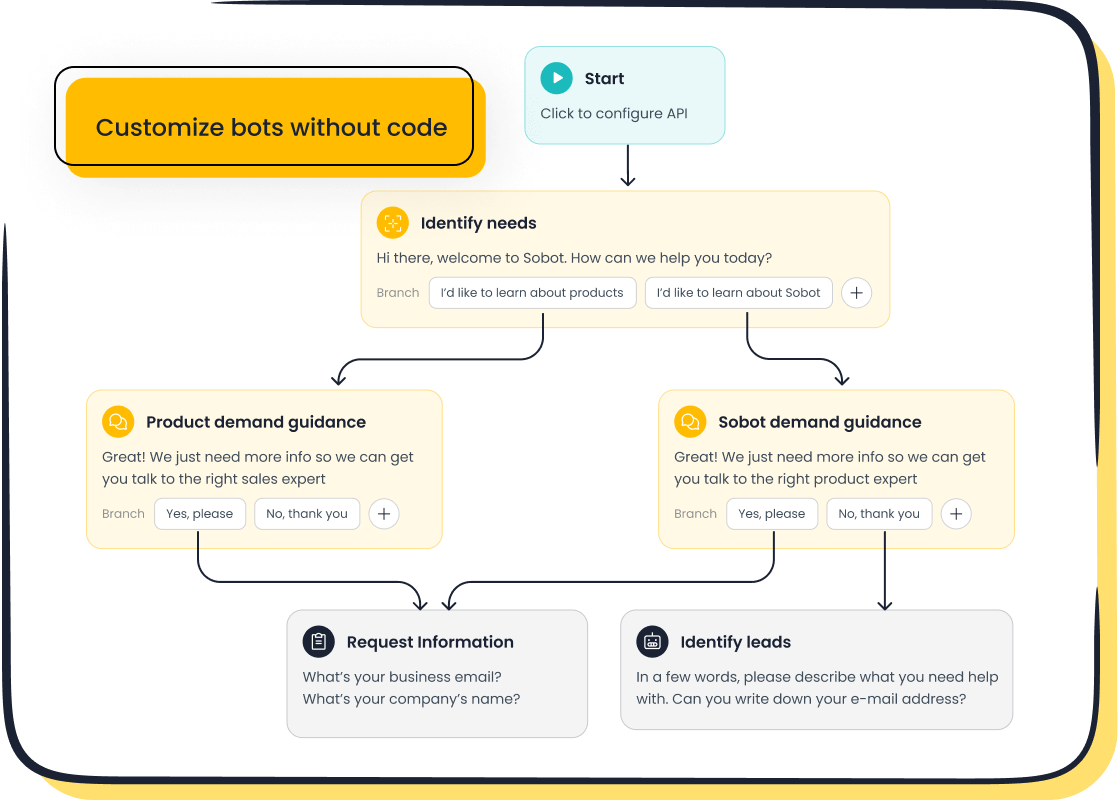
Sobot's AI chatbot is designed for efficiency and ease of use. A key advantage is its no-code, point-and-click visual builder. This feature empowers healthcare administrators to design and deploy automated workflows without needing a team of developers. The chatbot can be configured to answer medication questions, provide dosage information, and guide patients through online processes.
The platform's capabilities extend beyond a single chatbot. Sobot integrates its AI Agent, live chat, voicebot, and ticketing system to create a complete support ecosystem. This AI-driven care automation ensures that whether a patient calls, texts, or uses the website, their experience is consistent and efficient.
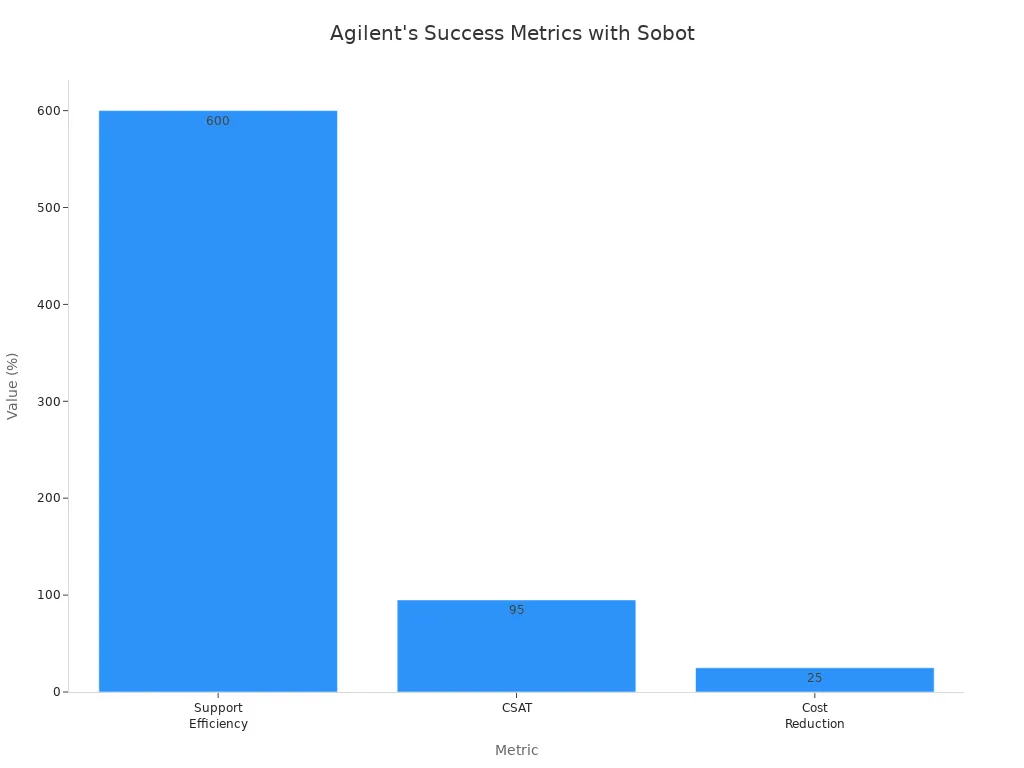
The impact of this integrated solution is clear. Agilent, a leader in life sciences, partnered with Sobot to manage its high volume of customer inquiries. The results demonstrate the power of effective AI chatbot customer support automation solutions for healthcare.
| Metric | Result |
|---|---|
| Support Efficiency | Sixfold Increase |
| Customer Satisfaction | 95% |
| Cost Reduction | 25% |
By providing 24/7 availability and intelligent routing, Sobot's AI chatbot customer support automation solutions for healthcare help organizations reduce costs and dramatically improve patient satisfaction. This makes it a leading choice for providers looking to scale their support operations.
For Specialized Mental Health Support
AI is also making significant strides in mental wellness. Specialized AI chatbots offer accessible, on-demand support for individuals managing their mental health. These tools are not replacements for therapists but serve as valuable supplemental resources. Woebot and Youper are two prominent examples of AI chatbots in this space.
Woebot uses principles from established therapeutic approaches to help users. Its conversations incorporate elements from:
- Cognitive Behavioral Therapy (CBT)
- Interpersonal Psychotherapy (IPT)
- Dialectical Behavioral Therapy (DBT)
A randomized controlled trial found that using Woebot for just two weeks was more effective at reducing symptoms of depression and anxiety than standard self-help materials. The chatbot provides empathic responses, helps users set goals, and uses personalized messages to enhance engagement.
Youper is another healthcare chatbot focused on mental wellness. It helps users track their mood and gain insight into their emotional health through brief, daily interactions. The chatbot uses CBT techniques like cognitive restructuring and mindfulness. It also offers guided meditations and allows users to monitor their symptom progress over time. A longitudinal study showed that Youper helped users achieve moderate reductions in anxiety and depression. These ai-driven healthcare chatbots provide critical, scalable support for mental care. The right AI chatbot for healthcare in this domain can be a lifeline for many patients.
Why General AI Falls Short in Healthcare
While general-purpose AI tools are impressive, they are not suitable for the complex and regulated world of healthcare. Using a generic chatbot for medical purposes introduces significant risks. These platforms lack the specialized design needed for safe and effective patient care. A purpose-built healthcare chatbot is always the superior choice.
The Critical Gap in HIPAA Compliance
Protecting patient information is a legal and ethical mandate in healthcare. General AI platforms often fail to meet the strict requirements of the Health Insurance Portability and Accountability Act (HIPAA). They may lack critical security features needed to safeguard Protected Health Information (PHI).
- Data Security: Many general AI tools do not have adequate data encryption, role-based access controls, or detailed audit logs required by HIPAA.
- Data Access: These systems often access more patient data than necessary, violating the "Minimum Necessary" standard of HIPAA.
- Vendor Agreements: AI vendors that handle PHI must sign a Business Associate Agreement (BAA). Many general AI providers do not offer this, creating a serious compliance gap for any healthcare organization.
Lack of Native EHR Integration
Effective patient care depends on seamless data flow. General AI chatbots cannot connect with Electronic Health Record (EHR) systems like Epic or Cerner. This lack of integration creates data silos. A chatbot cannot access patient histories or update records, making it impossible to provide personalized or context-aware support. A specialized healthcare chatbot, in contrast, is built to integrate with these core systems.
The Unacceptable Risk of Medical Inaccuracy
Medical accuracy is non-negotiable. General AI models are designed to be helpful, not medically precise. This can lead them to provide incorrect or even dangerous information.
- Studies show that popular AI models will agree with illogical medical prompts. For example, some were asked to recommend one medication over another, even when they were the same drug.
- This tendency to agree rather than correct a user's flawed premise poses a huge risk in healthcare.
These AI chatbots are not programmed to challenge incorrect assumptions, which can have serious consequences for patient safety. This makes a generic chatbot unsuitable for any clinical application.
Failure to Handle Specialized Workflows
Healthcare operations involve unique and complex workflows. Tasks like appointment scheduling, insurance verification, and prescription refill requests require a specialized AI. A general chatbot does not understand these processes. It cannot navigate the specific steps needed to complete these tasks efficiently. Purpose-built AI chatbots for healthcare are designed to handle these exact workflows, improving efficiency and providing better care.
How to Choose the Right Healthcare Chatbot
Selecting the right healthcare chatbot requires a structured evaluation. This checklist provides a practical framework for healthcare decision-makers. The best solution is the one that aligns with your organization's specific goals for patient care and operational efficiency.
Criterion 1: Verify HIPAA Compliance and Security
Security is non-negotiable in healthcare. Any AI chatbot handling patient data must be HIPAA compliant. Vendors must prove they can protect sensitive information. Ask potential vendors direct questions about their security posture.
- Will you sign our organization's Business Associate Agreement (BAA)?
- Is all patient data encrypted at rest and in transit using standards like AES-256?
- Do you hold security certifications like SOC 2 Type II or HITRUST?
A refusal to sign a BAA is a major red flag. A trustworthy AI partner will be transparent about their security protocols and compliance. This is a critical first step for any healthcare chatbot implementation.
Criterion 2: Confirm EHR and System Integration
An effective chatbot must integrate with your existing systems. A lack of integration creates data silos and inefficient workflows. The AI chatbot needs to communicate with your Electronic Health Record (EHR) system. Ask vendors about the depth of their integration. A superficial integration may only read data, while a deep integration can write back, scheduling appointments directly into systems like Epic or Cerner. A powerful AI solution should enhance your current technology, not complicate it.
Criterion 3: Align Solutions with Your Use Case
The best AI chatbots are built for specific tasks. Define your primary goal before you start your search. Are you trying to automate appointment scheduling, provide clinical triage, or offer mental wellness support? Your use case determines the right type of chatbot. A solution designed for administrative tasks will not be suitable for symptom assessment. Aligning the chatbot's capabilities with your organization's needs ensures a successful outcome and a strong return on investment.
Criterion 4: Evaluate Scalability and Reliability
A healthcare chatbot must be dependable. Your patients and staff will rely on this AI tool, so it needs to be available 24/7.
Look for vendors that offer a Service Level Agreement (SLA) with a guaranteed uptime of 99.9% or higher. This ensures the chatbot remains operational, even during peak hours. The AI platform must be able to scale with your organization as patient volume grows.
The best healthcare chatbot is the one that precisely fits your need. For clinical guidance, turn to Ada. For streamlining support, an omnichannel solution like Sobot offers proven efficiency. For mental wellness, Woebot provides accessible care. The future of these ai solutions is bright. AI chatbots will continue to enhance the patient experience. The future of AI is in this chatbot technology. This AI chatbot and other ai chatbots represent the future of AI.
FAQ
How much does a healthcare chatbot cost?
The cost of an AI chatbot for healthcare varies widely. Pricing depends on the vendor, features, and implementation complexity. Simple solutions may have lower monthly fees. Enterprise platforms like Sobot require custom quotes based on your organization's specific needs for integration and scale.
How long does it take to implement an AI chatbot?
Implementation time depends on the solution's complexity. A no-code platform can be set up in weeks. A custom AI chatbot for healthcare with deep EHR integration may take several months. Vendors should provide a clear timeline based on your specific requirements.
Are all healthcare chatbots HIPAA compliant?
No. Only chatbots designed specifically for healthcare are built to meet HIPAA standards. General-purpose AI tools are not compliant. Always verify that a vendor will sign a Business Associate Agreement (BAA) before choosing an AI chatbot for healthcare.
Why can't I just use a general AI tool?
General AI tools lack the necessary security, medical accuracy, and system integrations for healthcare. A specialized AI chatbot for healthcare is essential for patient safety, data protection, and handling complex medical workflows. They provide a safer, more reliable solution.
See Also
Selecting Optimal Chatbot Software: A Comprehensive Guide for Your Business
Discovering the Ten Leading Website Chatbots for Enhanced Engagement in 2024
Leading AI Solutions: Ten Tools for Enterprise Contact Center Optimization
Understanding Artificial Intelligence Software for Modern Call Center Operations
Elevating E-commerce Customer Satisfaction Through Strategic Chatbot Implementation