AI Chatbot Accuracy in Ecommerce Support

AI chatbot accuracy in ecommerce customer support is exceptionally high for specific, data-driven tasks. AI chatbots process these questions with great speed. A customer gets fast answers from the AI chatbot. However, this AI is less reliable for complex or emotional customer issues. A human provides better support in these cases. The key to great customer service is using the right tool for the right task. This method improves the customer experience and boosts customer satisfaction. Solutions from Sobot show how AI and human agents create a superior customer service team.
When AI Chatbot Accuracy Excels
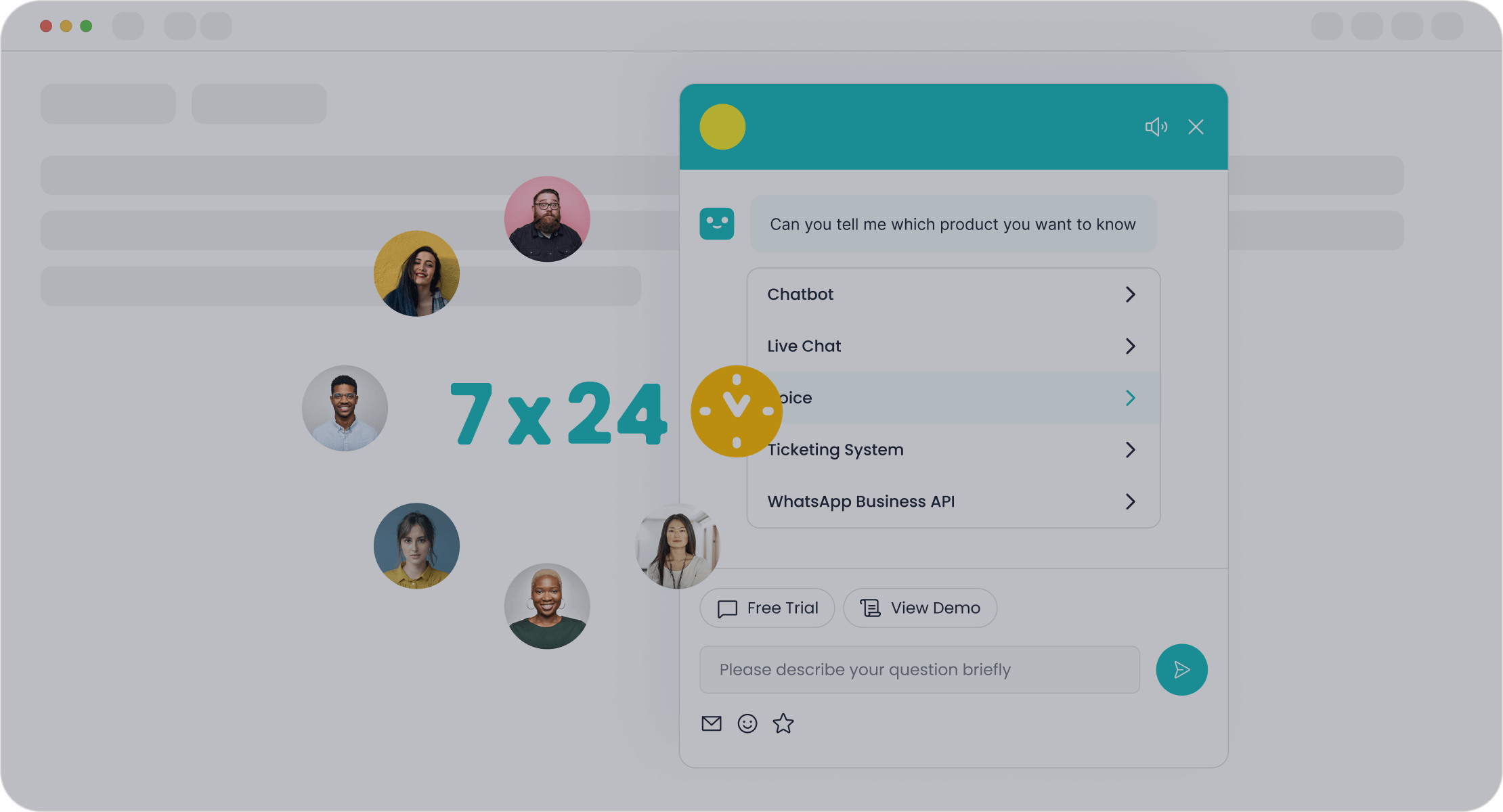
AI chatbots perform best in structured environments. They handle rule-based tasks with incredible speed and precision. Modern AI systems are designed for high efficiency. The Sobot Chatbot, for example, autonomously solves regular queries 24/7. This can improve a team's productivity by up to 70%. The AI acts as a tireless first line of defense for customer service teams. This allows human agents to focus their skills on more demanding issues. The result is a better overall customer experience and higher satisfaction.
Handling Factual and Repetitive Inquiries
A customer often asks the same questions. These include "What is your return policy?" or "Where is my order?". AI chatbots provide an instant response to these common queries. A human agent might get tired of answering the same question. An AI never does. It delivers a consistent and accurate answer every time. This consistency is a cornerstone of reliable customer service.
Advanced AI chatbots maintain high accuracy by using sophisticated technology. They do not simply guess answers. Instead, they use frameworks that ensure responses are grounded in facts.
- They use Retrieval-Augmented Generation (RAG) to pull information from a trusted knowledge base, like company policy documents. This minimizes the risk of providing incorrect information.
- The AI connects to real-time enterprise data. This prevents the chatbot from using outdated information for its answers.
- The system continuously learns from real customer interactions and feedback, improving its performance over time.
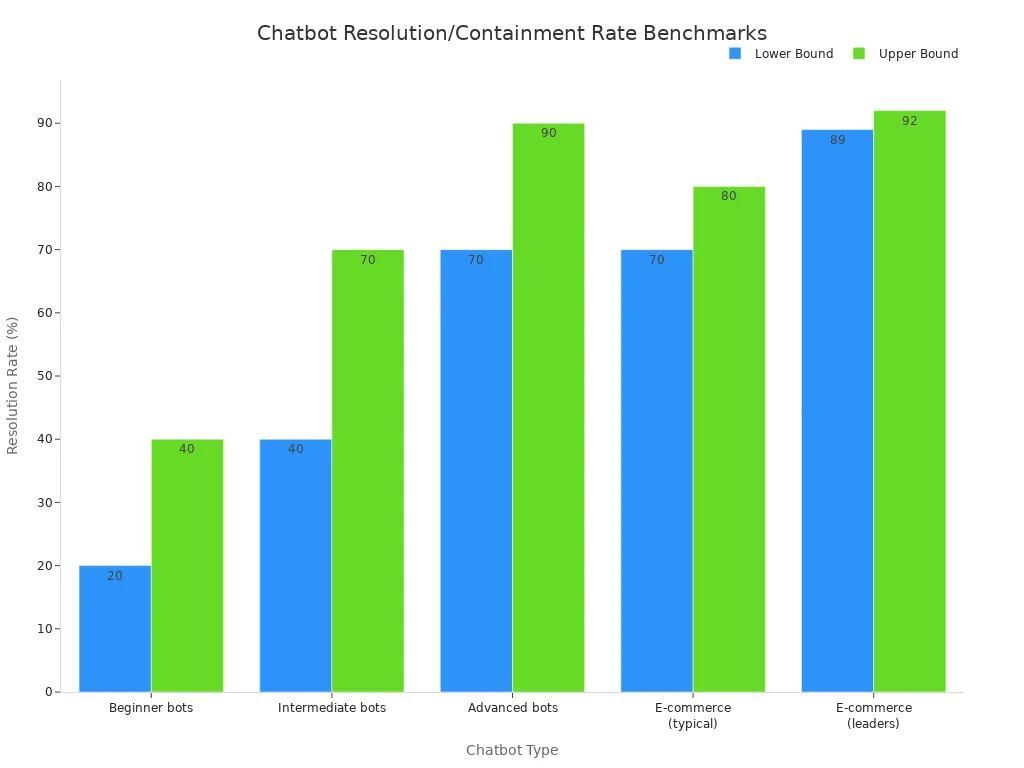
The resolution rate for these factual queries is a key metric. Industry benchmarks show how effective a well-implemented AI can be. Advanced AI chatbots in ecommerce can resolve a high percentage of inquiries without human help.
| Chatbot Type | Resolution/Containment Rate |
|---|---|
| Beginner bots | 20–40% |
| Intermediate bots | 40–70% |
| Advanced bots | 70–90% |
| E-commerce (typical) | 70–80% |
| E-commerce (leaders) | 89–92% |
Executing Data-Driven Processes
Beyond answering questions, AI chatbots excel at executing simple, data-driven tasks. These are processes that require the AI to access and use specific data from other systems, such as an order management or inventory system. This capability transforms the chatbot from a simple FAQ machine into a functional assistant for the customer. A human agent would normally perform these tasks. The AI handles them instantly, freeing up the human for more valuable work.
Here are some examples of data-driven processes that AI chatbots execute with high accuracy:
- Tracking orders: The AI can connect to a shipping system to give a customer real-time updates.
- Personalizing product suggestions: The AI analyzes a customer's browsing history to recommend relevant items.
- Handling payments: Secure AI can guide a customer through the checkout process.
- Providing omnichannel support: The AI offers a consistent experience across platforms like WhatsApp, Instagram, and Facebook Messenger.
Where AI Chatbots Achieve Peak Performance
AI chatbots reach their peak performance when deployed correctly. They are masters of efficiency for high-volume, low-complexity interactions. This is where ai chatbot accuracy in ecommerce customer support truly shines. By automating these tasks, businesses improve response times and boost customer satisfaction. The AI handles the predictable workload, which allows the customer support team to operate more effectively.
A real-world example demonstrates this power. The global smart device brand OPPO faced huge increases in customer inquiries during peak shopping seasons. They used Sobot's solution to create a human-machine partnership. The AI chatbot handled the flood of repetitive questions. This strategy produced outstanding results. OPPO achieved an 83% chatbot resolution rate and a 94% positive feedback rate. This success shows how a well-integrated AI can manage a massive scale of interactions while maintaining excellent service quality.
Understanding AI Chatbot Accuracy in Ecommerce Customer Support
While AI excels at simple tasks, its limitations become clear when facing more difficult situations. The true test of ai chatbot accuracy in ecommerce customer support happens when problems are not straightforward. A customer with a unique or complicated issue needs more than a pre-programmed answer. This is where the line between AI capability and the need for human intelligence becomes very important for good customer service.
The Challenge of Complex Problems
AI chatbots often fail when a customer presents a complex problem. These issues go beyond simple questions and require multiple steps or a deeper understanding of context. Many AI systems can only answer basic questions. They cannot perform complex actions. For example, an AI might state the return policy but cannot help a customer find a specific outfit for an event. This limitation turns a potentially helpful tool into a frustrating roadblock.
Real-world examples show the risks of relying too heavily on AI for complex issues. The financial company Klarna saw a 22% drop in customer satisfaction after replacing 700 human agents with a chatbot. The AI could not handle the empathetic needs of customers with disputes or refund issues. This forced the company to rehire human staff. These situations highlight several key challenges for AI:
- Multi-Step Tasks: A customer may have a request with several parts, like "I want to return this shirt from my last order and use the credit to buy a different size." An AI may struggle to process and execute both parts of this request correctly.
- Nuanced Queries: Shoppers use natural language, not database commands. A query like, "I need something chic for a party that hides my midsection," contains nuance and personal preference that rigid AI filters cannot understand.
- Edge Cases: Sometimes a customer has a very unusual problem that the AI was not trained to handle. Without a human to intervene, the customer can get stuck in a "loop of doom," where the chatbot keeps repeating the same unhelpful answers. This creates a terrible experience.
A significant challenge for ecommerce chatbots is their 'Inability to Understand Customers’ Questions'.
When an AI cannot resolve these complex issues, it leads to customer frustration and damages the brand's reputation. A human agent is necessary to navigate these intricate scenarios effectively.
The Limits of AI in Emotional Situations
A customer reaching out to support is often frustrated, confused, or angry. These situations require empathy, a quality that AI cannot genuinely possess. While an AI can be programmed to use emotional words, it does not feel or understand emotions. This lack of emotional intelligence is a major limit. Research shows that 86% of customers prefer human interaction for complaints or complex issues. People want to feel heard and understood by another person.
Modern AI uses several techniques to simulate understanding emotions:
- Sentiment Analysis: The AI analyzes a customer's words and emojis to detect a positive or negative mood.
- Tone Analysis: The system can identify aggression or frustration in a customer's writing style.
- Intent Recognition: The AI tries to classify the message as a complaint, question, or other category.
Even with these tools, the AI is only mimicking empathy. It cannot build a true connection. When a chatbot does not use emotion words, its attempts at showing empathy do not improve customer satisfaction. A human agent can listen, show genuine concern, and build rapport in a way an AI cannot. This human touch is critical for de-escalating tense situations and retaining a loyal customer. The goal of customer service is not just to solve a problem but also to manage the customer's emotional experience.
Issues with Ambiguous Customer Queries
Customers do not always speak in clear, precise terms. They often use vague language or ask multiple questions at once. This ambiguity can easily confuse AI chatbots, leading to low accuracy and unhelpful responses. An AI needs clear instructions to perform well. It struggles to interpret queries that are open to interpretation.
Here are common examples of ambiguous queries that challenge an AI:
- Vague or Incomplete Information: A customer might ask, "Do you have that blue jacket?" without specifying which jacket they saw. A human agent can ask clarifying questions, but a chatbot might provide an incorrect answer or a long list of every blue jacket available.
- Multifaceted Requests: A user might type, "Where is my order and can I add a gift note to it?" The chatbot must be smart enough to recognize two separate requests and address both. Many simpler AI systems can only handle one command at a time.
This inability to understand context or ask for clarification is a core weakness. The chatbot may default to a generic response or redirect the user to an FAQ page, which fails to solve the specific problem. This forces the customer to rephrase their question or abandon the chat in frustration. Effective customer support requires a system that can navigate ambiguity, a skill where human agents still far outperform their AI counterparts.
The AI vs Human Accuracy Showdown
The debate over AI vs human performance in customer service is not about choosing a winner. Instead, it is about understanding their unique strengths. AI and human agents excel in different areas. The best customer support strategy combines them to create a powerful team. This ai-human collaboration is key to modern customer service.
AI Strengths: Speed, Consistency, and Data Precision
AI chatbots offer unmatched advantages in specific areas. Their greatest strengths are speed, consistency, and precision with data. An AI delivers instant answers, which is a huge benefit for the modern customer. In fact, 82% of consumers prefer using a chatbot for an immediate response over waiting for a human agent. This speed directly improves the customer experience.
AI also guarantees consistency. A human agent's performance can vary, but an AI provides the same policy-aligned answer every time. This reliability builds trust. Furthermore, AI excels at processing information with high accuracy. This is why 44% of customer support professionals value AI for its precise data handling.
| Service Quality Factor | AI Agents | Human Agents |
|---|---|---|
| Consistency | Delivers steady performance 24/7 | Performance can vary by individual |
| Policy Adherence | Always follows guidelines to the letter | May interpret policies differently |
Human Strengths: Empathy, Judgment, and Complex Problem-Solving
While AI handles data, human agents manage emotions and complexity. Empathy is a uniquely human trait. It is essential for resolving a customer complaint. A human can show genuine concern, which helps a frustrated customer feel heard. This human interaction builds forgiveness and increases the chance a customer will make future purchases.
Human judgment is also irreplaceable. Human agents can understand nuance and context in ways AI cannot. They solve complex problems that go beyond a script. This ability is critical for sensitive issues or unique customer requests. For these situations, human-led support is not just better; it is necessary. The AI vs human discussion shows that human skills are vital for high-stakes customer service.
Defining Success Metrics for Both
Measuring success in the AI vs human comparison requires different metrics. For AI chatbots, success is about efficiency and containment. For human agents, it is about satisfaction and resolution of complex issues.
- AI Chatbot Metrics: Key indicators include the Bot Automation Score (how many issues are solved without a human) and the NLU Rate (how well the chatbot understands the customer).
- Human Agent Metrics: Success is often measured by Customer Satisfaction (CSAT) scores, especially after handling a difficult problem.
The ultimate goal is to improve overall ai chatbot accuracy in ecommerce customer support. The most effective teams integrate both AI and human strengths. This is the core of Sobot's Omnichannel Solution. It uses a chatbot for simple tickets and seamlessly passes complex issues to human agents. This blended approach ensures that every customer receives the right kind of support, maximizing both efficiency and satisfaction. The AI vs human dynamic becomes a partnership, not a competition.
The Hybrid Model: Maximizing Overall Accuracy
The best customer service strategy combines the strengths of AI and human agents. This ai-human collaboration creates a hybrid model. It maximizes overall accuracy and efficiency. The AI handles initial contact. Human agents then manage complex issues. This approach ensures every customer receives the right support quickly.
AI as the First Point of Contact
Using AI chatbots as the first point of contact dramatically improves customer service. The AI acts as a smart triage system. It filters and prioritizes customer requests 24/7. This automation significantly reduces wait times. For example, some businesses have cut customer response times by as much as 70% with AI. An AI can instantly handle common questions. This frees up human agents for more difficult tasks. The customer gets a faster resolution. The support team becomes more efficient. This process creates a better experience for every customer.
Seamless Escalation to Human Agents
A smooth transition from an AI chatbot to a human is critical for customer satisfaction. The escalation must feel effortless. The customer should not have to repeat information. A successful handoff depends on passing key data to the human agent.
The goal is to prevent customer frustration. The human agent needs the right information to solve the problem effectively. This makes human-led support more powerful.
Key data to transfer includes:
- The full conversation history between the customer and the chatbot.
- All details collected by the AI, such as order numbers or issue types.
- The AI's understanding of the customer's intent.
This seamless context transfer allows the human agent to pick up the conversation exactly where the AI left off. It is a vital part of excellent customer support.
Boosting AI Accuracy with a Knowledge Base
The accuracy of AI chatbots depends directly on their knowledge base. This is the library of information the AI uses to find answers. A high-quality, updated knowledge base enables the AI to provide precise and verified responses. An outdated one leads to incorrect answers and a frustrated customer. Companies that integrate their AI with a strong knowledge base see great results. Some achieve over 90% resolution rates for certain inquiries. This shows a direct link between knowledge quality and AI performance. Regular updates to the knowledge base are essential for maintaining high AI chatbot accuracy in ecommerce support.
AI chatbot accuracy is task-dependent. It is not a single metric. For rule-based tasks, AI chatbots offer unmatched speed and precision. A customer gets fast answers. However, a human provides the empathy and judgment a customer needs for complex problems. The best customer service strategy combines AI with human agents. This improves the overall customer experience and boosts customer satisfaction.
The optimal strategy for the highest ai chatbot accuracy in ecommerce customer support is a hybrid model. Solutions like Sobot's combine the strengths of an AI chatbot with the irreplaceable judgment of human agents. This partnership achieves the best customer satisfaction and overall satisfaction for any customer support team. This is the future of customer service.
FAQ
How does a hybrid model improve customer support?
A hybrid model uses AI for simple questions. This frees human agents for complex problems. A customer gets fast answers from the AI. A customer with a hard issue gets expert help from a person. This system improves efficiency and overall service quality.
Can an AI chatbot understand every customer question?
No, an AI cannot understand every question. It struggles with complex or vague language. A customer with a unique problem may confuse the AI. In these cases, a human agent is needed to provide a correct and helpful answer for the customer.
What is the best way to use an AI for a customer?
The best use for an AI is handling common, repetitive questions. This includes order tracking or policy questions. The AI gives a customer instant answers 24/7. This quick service helps improve customer satisfaction and makes the support process faster for everyone.
See Also
Elevating E-commerce Customer Happiness Through Intelligent Chatbot Solutions
Driving E-commerce Revenue Growth With Effective Live Chat Platforms
Achieving Excellence: Live Chat Strategies for the Retail Sector
Building Successful Websites: A Guide to Effective Chatbot Development
Leading Live Chat Software Solutions for E-commerce Businesses in 2024

