AI vs Traditional Support Pros and Cons


The rise of ai in customer service often frames a debate about its pros and cons. The most effective customer service strategy, however, is a strategic partnership. It combines the efficiency of artificial intelligence with human empathy.
💡 Did you know? Nearly half (45%) of all customer service teams are now using AI.
This AI-based customer support tools vs traditional solutions comparison is vital. The goal is to leverage AI for speed, reserving agents for complex customer problems. This method creates a superior service and customer experience, ensuring customers get the right support from solutions like Sobot.
AI-Based Customer Support Tools vs Traditional Solutions Comparison
The AI-based customer support tools vs traditional solutions comparison reveals clear differences. AI offers improved efficiency and scalability. Traditional methods provide a human touch. Understanding the pros and cons of each helps businesses build a better service strategy. The rise of AI in customer service is driven by its powerful advantages.
The Advantages of AI: Speed, Scale, and Savings
One of the main advantages of AI is its incredible speed. Traditional email support can take 12-24 hours for a first response. AI chatbots reduce this time to mere seconds. This increased efficiency transforms the customer experience. AI also offers unmatched scalability. Tools like the Sobot Chatbot provide 24/7 service to customers around the globe. They can handle many languages and save businesses up to 50% on agent costs. This makes AI a key part of any modern AI-based customer support tools vs traditional solutions comparison.
This AI-based customer support tools vs traditional solutions comparison shows how artificial intelligence modernizes customer interactions. AI offers advanced personalization that older systems cannot match.
| Feature | AI Chatbots (Conversational AI) | Traditional IVR Systems |
|---|---|---|
| Technology | Uses NLP and Machine Learning to understand natural language and intent. | Relies on rigid decision trees and simple keyword recognition. |
| Interaction | Allows for natural, human-like, two-way dynamic conversations. | Uses a linear, menu-driven interaction with key presses. |
| Capabilities | Manages complex queries and learns over time for better personalization. | Limited to simple, predefined queries and cannot learn or adapt. |
| User Experience | Speeds up issue resolution and enhances customer satisfaction. | Often causes frustration due to slow navigation and rigid menus. |
The Disadvantages of AI: The Empathy and Complexity Gap
Despite the benefits of AI, there are clear disadvantages. The biggest limitation is the empathy gap. AI cannot replicate genuine human emotion or understanding. This lack of human contact can be a problem. Studies show that 75% of consumers feel frustrated with ineffective AI support. This highlights one of the key disadvantages in the AI-based customer support tools vs traditional solutions comparison.
Another of the limitations of AI is handling complex issues. AI excels at routine questions. It struggles with nuanced problems that require creative thinking. These disadvantages show why a human-only or AI-only approach is not ideal. Privacy concerns and ethical questions also represent potential disadvantages. This AI-based customer support tools vs traditional solutions comparison proves that the best customer service balances AI efficiency with human expertise.
The Enduring Power of Traditional Human Support
While AI offers impressive efficiency, it cannot replace the core of great customer service: the human touch. The previous section highlighted the lack of human contact as a key AI drawback. This is where traditional support shines. Human agents provide the empathy and critical thinking that technology cannot replicate, making them essential for a complete service strategy.
The Irreplaceable Value of Human-Led Customer Service
Human agents excel at building genuine connections. A customer who feels understood is more likely to remain loyal. Empathetic customer service turns simple customer interactions into lasting relationships.
- Empathy builds trust, which is the foundation of customer loyalty.
- A single positive interaction can create a lasting impression on a customer.
- When customers feel a brand cares, they are more likely to recommend its service to others.
Humans also possess unique critical thinking skills. An AI can follow a script, but a person can devise creative solutions for complex problems. For example, a human agent can investigate the root cause of a shipping error in e-commerce or find an alternative way to verify a hotel guest's identity. This ability to think outside the box is vital for handling high-stress moments and satisfying the customer.
The Limitations of Human-Only Support Models
A human-only customer service model has significant limitations. The primary challenge is cost. A single interaction with a human agent can cost between $5 and $15, while an AI interaction is often less than a dollar. This cost difference makes scaling a human-only team very difficult.
Support teams also face limited resources and budget. Many agents waste time switching between different tools just to resolve one customer issue. This inefficiency, combined with rising query volumes, leads to agent burnout and slower service for all customers. Relying solely on human agents for every query is no longer a sustainable or efficient approach for modern businesses. This is where a balanced strategy incorporating AI becomes necessary.
Building a Hybrid Model Using AI in Customer Service
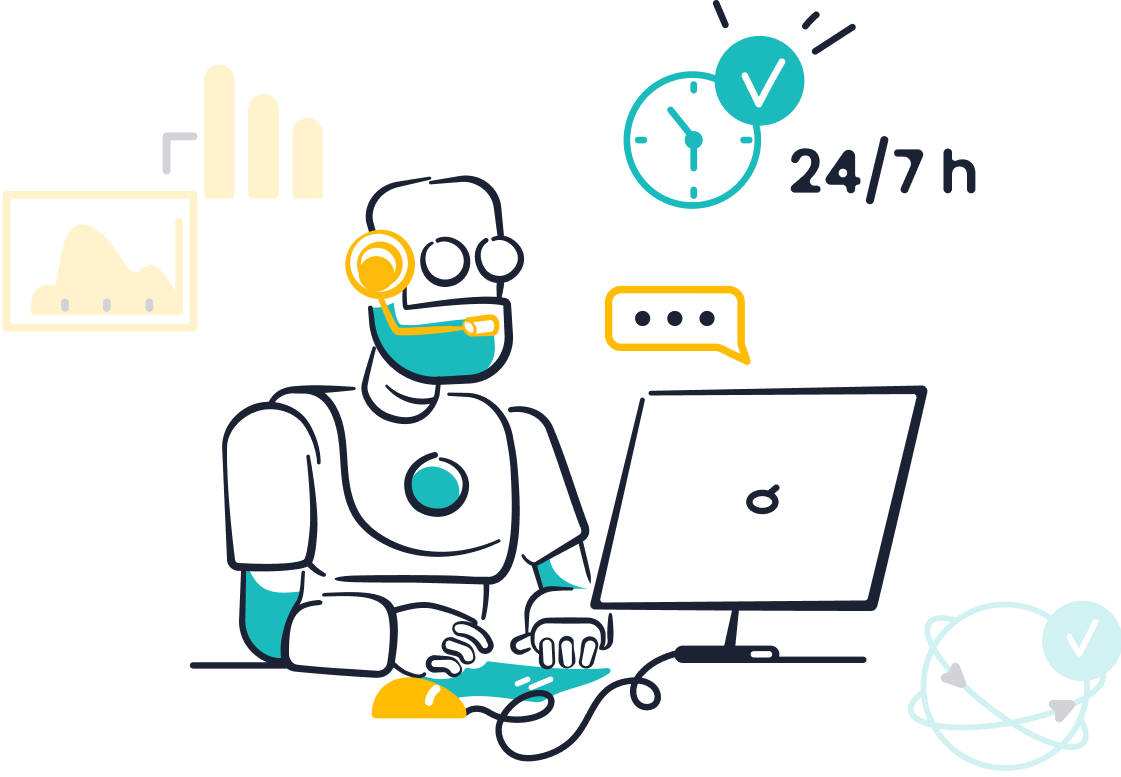
The debate is not about choosing between AI and humans. It is about creating a powerful partnership. A hybrid model combines the best of both worlds. It uses AI for efficiency and human agents for empathy. This approach to using ai in customer service creates a better experience for the customer and a more sustainable workflow for your team. Building this model involves a few key steps. It starts with a smart first point of contact and ends with empowering agents to handle what matters most.
Using Sobot AI as the First Point of Contact
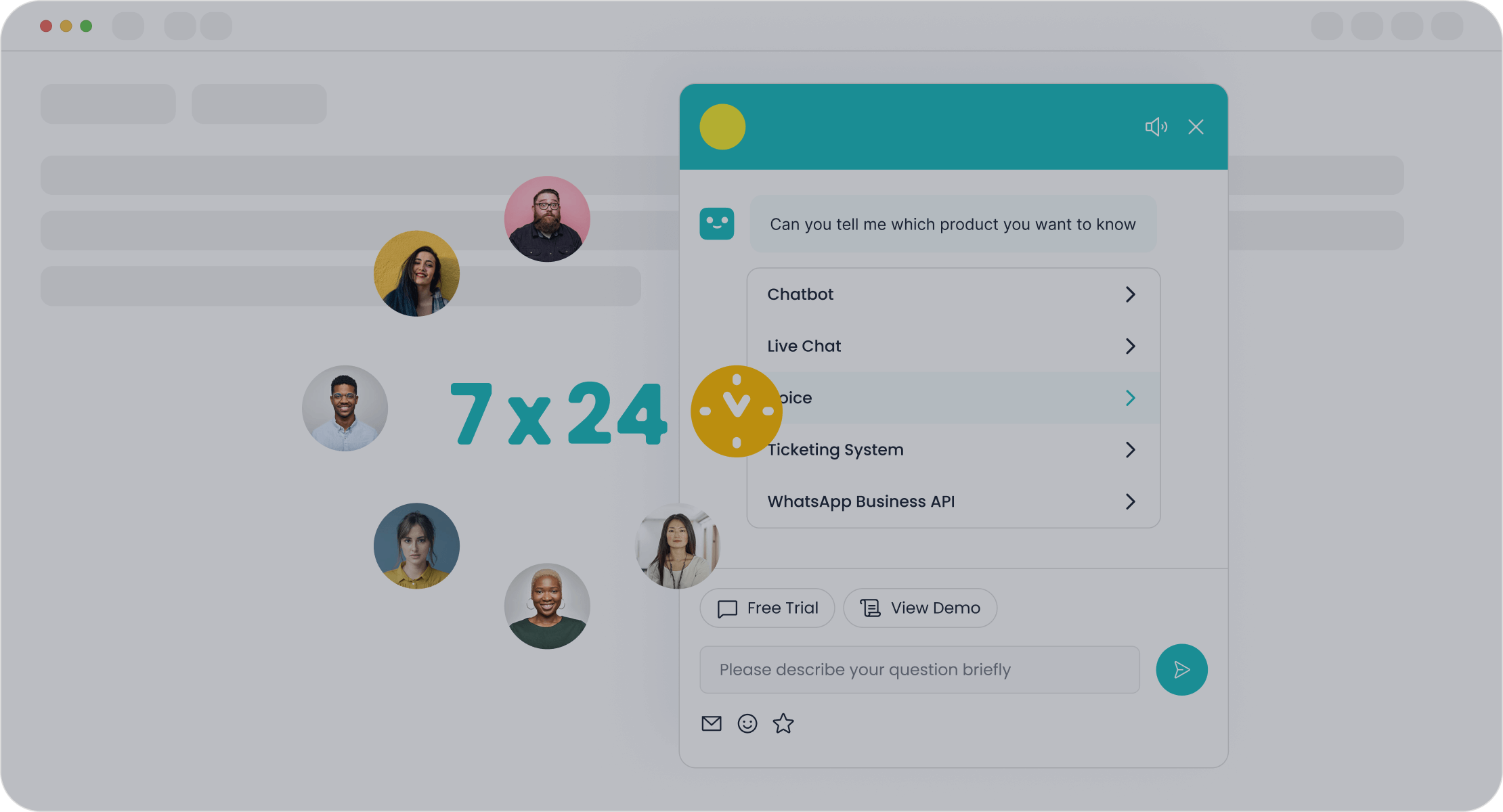
The first step in a successful hybrid strategy is to deploy an AI-powered tool as the frontline of your customer service. The Sobot Chatbot is designed for this role. It acts as an intelligent gatekeeper, available 24/7 to provide instant answers. This immediately improves service speed and availability.
Using ai in customer service this way frees up your team from repetitive work. The AI is best suited to handle a specific set of queries, including:
- Frequently Asked Questions (FAQs): Instantly answer common questions about business hours, shipping policies, or product details.
- Order and Account Management: Allow a customer to track an order, check an account balance, or reset a password without waiting for an agent.
- Appointment Scheduling: Automate the process of booking, rescheduling, or canceling appointments.
- Basic Troubleshooting: Guide users through simple, step-by-step solutions for common technical issues.
By resolving these routine requests, AI-powered chatbots filter the inquiry queue. This ensures that only more complex issues reach human agents.
Empowering Agents with AI-Powered Tools
A hybrid model does more than just deflect tickets. It actively helps human agents perform better. AI works as a copilot, providing real-time support during customer interactions. When an agent takes over a chat or call, AI tools can run in the background to enhance the service they provide.
Sobot's AI Solution equips agents with tools that turn them into super-agents. This integration of AI makes every interaction smoother and more effective.
These AI-powered tools provide several key advantages for agents:
- Real-Time Suggestions: AI can analyze a customer's question and suggest relevant answers or knowledge base articles instantly.
- Conversation Summaries: For long or complex conversations, AI can generate a quick summary, helping agents grasp the situation without reading the entire transcript.
- Sentiment Analysis: AI can detect a customer's emotional state (e.g., frustrated, happy, confused). This allows agents to adjust their tone and provide a more empathetic response.
- Recommended Actions: Based on the conversation, AI can recommend the next best action, such as processing a refund or escalating to a manager.
This level of support reduces agent stress and improves first-contact resolution rates.
Ensuring a Seamless Handoff from Bot to Human
The transition from a bot to a human is the most critical moment in a hybrid customer service model. If done poorly, it creates frustration and forces the customer to repeat themselves. A smooth handoff requires deep integration between your systems.
The key is to preserve context. The human agent must know everything that happened before they joined the conversation.
The live agent should see the full conversation history and any data the bot collected (like order numbers or email addresses). ... The agent should then acknowledge that context in their greeting ("Hi Sam, I see you were discussing a refund for order #1234…"). This way, the customer isn't asked to repeat themselves.
To achieve this seamless transfer, your platform must have a few technical capabilities:
- Deep Helpdesk Integration: The chatbot must connect directly to your live chat and ticketing systems. Sobot's platform unifies these tools, allowing the chatbot to create a ticket and pass the full chat transcript automatically.
- Smart Routing Rules: The system should route the customer to the right department based on data the bot collected. A sales query goes to the sales team, while a technical issue goes to tech support.
- Unified Customer View: When an agent receives a handoff, their screen should display all relevant customer data. This includes contact info, purchase history, and past service tickets, all in one place.
Reserving Agents for High-Value Interactions
With AI handling routine queries, human agents are free to focus on high-value interactions. These are the moments that define a customer's relationship with your brand. High-value interactions include:
- Complex Problems: Issues that have no scripted answer and require creative problem-solving.
- Emotional Customers: Situations where a customer is upset, confused, or anxious and needs empathy and reassurance.
- High-Potential Sales: Conversations with customers who are close to making a large purchase but have critical questions.
This strategy is used by leading companies across industries to improve both efficiency and the customer experience.
| Company | Hybrid AI Implementation | Benefits/Outcome |
|---|---|---|
| Amazon | AI tools handle basic inquiries, while human agents manage complex issues requiring empathy. | Efficiently scales customer service operations while maintaining a personal touch. |
| Spotify | AI analyzes listening habits, which is combined with human-curated playlists. | Provides a personalized experience blending AI speed with a human touch for music discovery. |
| IBM | Watson Health combines AI algorithms with human medical expertise for accurate diagnoses. | Helps healthcare providers make informed decisions more quickly by enhancing their abilities. |
The rise of ai in customer service is perfectly demonstrated by OPPO, a leading smart device company. By partnering with Sobot, OPPO built a powerful hybrid model. The Sobot Chatbot handled routine questions, achieving an 83% chatbot resolution rate. This allowed their human agents to focus on more complex issues, leading to a 94% positive feedback rate. The result was not just better service, but a stronger business. OPPO saw a 57% increase in its repurchase rate, proving that a well-executed hybrid strategy builds loyalty and drives revenue. This is the ultimate goal of ai-powered customer service: creating efficient, empathetic, and valuable personalized customer interactions.
Measuring the Success of Your Integrated Support Strategy
Implementing a hybrid model is only the first step. To know if your strategy is working, you must measure its success. A strong measurement plan uses a mix of AI-focused and human-centric metrics. This provides a complete picture of your customer service performance.
The Role of AI in Modern Customer Service Analytics
Modern customer service analytics are powered by artificial intelligence. AI plays a crucial role by analyzing every customer interaction. It gathers data from chats, emails, and calls. Then, using technologies like Natural Language Processing (NLP), the AI can understand what customers are saying and feeling.
This process allows AI to perform powerful analysis techniques. For example, sentiment analysis detects a customer's emotion, while topic modeling groups conversations by subject. This helps businesses spot trends and understand the root causes of customer issues without manual effort. This deep insight is a core benefit of using ai in customer service.
AI Metrics: Containment Rate and Resolution Rate
When measuring the AI component of your service, two key metrics are containment and resolution rate. The containment rate shows how many interactions your chatbot handles without needing a human agent. It is calculated with a simple formula:
(Number of interactions handled by chatbot / Total number of interactions) x 100
A well-designed AI chatbot often has a containment rate between 70% and 90%. A high rate means your AI is successfully resolving routine questions. This frees up your human agents for more complex problems. The success of this AI integration depends on a strong knowledge base and a good user experience for customers.
Human-Centric Metrics: CSAT and Net Promoter Score
While AI metrics measure efficiency, human-centric metrics measure the quality of the experience. The most important ones are Customer Satisfaction (CSAT) and Net Promoter Score (NPS).
- CSAT directly asks a customer how satisfied they were with an interaction. High CSAT scores are a strong predictor of customer retention. Happy customers are more likely to stay loyal to your brand.
- NPS asks customers how likely they are to recommend your company. This score reflects the overall relationship a customer has with your brand. It is a great way to measure how effectively your human agents create positive feelings and build loyalty.
Together, these metrics show how well your hybrid service is satisfying customers and driving business growth.
The future of customer service is not a choice between AI and humans. It is a collaboration. A well-designed hybrid model uses AI for efficiency. This allows AI to handle routine questions, freeing agents for complex problems. Solutions from Sobot create this powerful partnership. This integrated service leverages AI while deploying the human touch for moments that matter most to a customer. This approach is the key to creating a cost-effective and superior service. It builds lasting loyalty for every customer and defines modern customer service.
FAQ
What is the best customer service model: AI or human?
The best model is a hybrid approach. This strategy combines AI's speed with human empathy. AI handles simple, repetitive tasks. Human agents manage complex and emotional customer issues. This creates the most efficient and satisfying experience.
What tasks are best for an AI chatbot?
An AI chatbot excels at handling high-volume, routine questions. This frees up your human agents. Common tasks include:
- Answering frequently asked questions (FAQs) 24/7
- Tracking orders and checking account status
- Scheduling appointments
- Guiding users through basic troubleshooting steps
Will AI replace human customer service agents?
No, AI will not replace human agents. Instead, it empowers them. AI acts as a copilot, handling simple queries and providing agents with data. This allows agents to focus on high-value interactions that require empathy and creative problem-solving.
How can a business start using a hybrid support model?
A business can start by implementing an AI tool as the first point of contact. Solutions like the Sobot Chatbot can handle initial queries. The system then seamlessly transfers complex issues to a human agent, creating a powerful and efficient workflow.

