ACD vs IVR Key Differences and Use Cases Explained

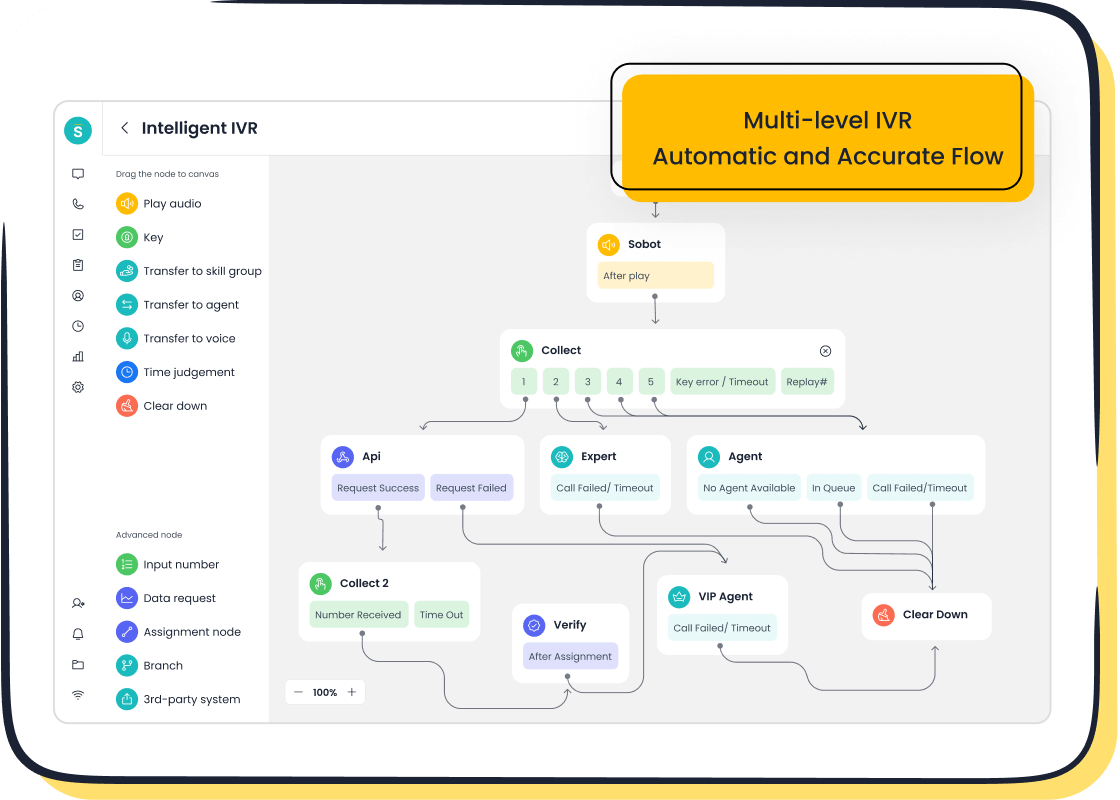
An Automatic Call Distributor (ACD) is a system that routes incoming calls to the most suitable agents, while an Interactive Voice Response (IVR) system interacts with callers through automated menus. The key distinction lies in their focus—ACD ensures efficient call routing, whereas IVR enhances caller interaction by offering self-service options.
Understanding these differences is crucial for optimizing call center operations. For instance, ACD improves agent workflow by distributing calls evenly, while IVR reduces costs by enabling customers to resolve routine issues independently. Together, they streamline processes, enhance customer satisfaction, and reduce operational costs. Sobot’s solutions integrate both systems seamlessly, ensuring businesses achieve these benefits effectively.
What is an Automatic Call Distributor (ACD)?
Definition and Overview
What does ACD stand for?
An Automatic Call Distributor (ACD) is a telephony system designed to manage and distribute incoming calls efficiently. It ensures that each call reaches the most appropriate agent or department based on predefined rules. This technology is a cornerstone of modern call centers, enabling businesses to handle high call volumes while maintaining customer satisfaction.
How ACD works in call centers
ACD systems operate by analyzing incoming calls and matching them with the best-suited agent. The process begins with call identification, where the system gathers information such as the caller's number or input from an IVR menu. Based on this data, the ACD uses intelligent routing algorithms to connect the caller to the right agent. If no agents are available, the system places the call in a queue, providing updates on wait times or offering a callback option. Real-time monitoring ensures that calls are distributed fairly, optimizing agent workload and reducing wait times.
Key Features of ACD
Intelligent call routing
ACD systems excel at intelligent call routing. They use real-time data analytics to assign calls to agents based on skills, availability, and other parameters. For example, a customer seeking technical support will be routed to a tech-savvy agent, ensuring faster resolution.
Skill-based agent assignment
Skill-based routing enhances efficiency by matching calls to agents with the right expertise. This approach not only shortens call durations but also improves first-call resolution rates. Research shows that specialized agents achieve up to 15% higher resolution rates compared to generalists.
Queue management and prioritization
Queue management is another critical feature of ACD systems. They organize calls in a queue when agents are busy, prioritizing them based on urgency or customer value. Features like estimated wait times and callback options improve the overall customer experience.
Benefits of ACD
Improved call handling efficiency
ACD systems streamline call handling by automating the routing process. This reduces manual errors and ensures that calls are directed to the right agents quickly. Businesses using ACD technology often report higher operational efficiency and better resource utilization.
Enhanced customer satisfaction
By connecting callers to the most suitable agents, ACD systems enhance customer satisfaction. They minimize the need for call transfers and repeated explanations, creating a smoother experience for the caller.
Reduced wait times
ACD systems significantly reduce wait times by efficiently managing call queues and routing calls in real-time. Features like callback options further ensure that customers aren't left waiting on hold, improving their overall experience.
Sobot's ACD Capabilities
Smart call routing in Sobot's Voice/Call Center
Sobot's Voice/Call Center takes ACD technology to the next level with its smart call routing capabilities. This feature ensures that every incoming call is directed to the most suitable agent or team based on predefined rules. For example, if a customer calls with a technical issue, the system routes the call to an agent with expertise in that area. This approach reduces resolution times and improves first-call resolution rates.
The platform uses advanced algorithms to analyze factors like agent availability, skill sets, and customer data. This ensures that calls are distributed evenly, preventing agent burnout and enhancing productivity. Additionally, Sobot's system supports global time zone settings, making it ideal for businesses with international customers. Whether you're managing a high-volume call center or a small team, Sobot's smart call routing optimizes your operations and enhances customer satisfaction.
Tip: Businesses using Sobot's ACD capabilities have reported up to a 20% increase in agent efficiency and a significant reduction in customer wait times.
Integration with existing CRM systems
Sobot's ACD seamlessly integrates with your existing CRM systems, creating a unified workspace for your agents. This integration allows agents to access customer information, interaction history, and preferences in real-time. For instance, when a call is routed, the agent can instantly view the customer's previous inquiries or purchases. This context enables personalized and efficient service.
The integration process is straightforward, thanks to Sobot's open API. It supports popular CRM platforms, ensuring compatibility and ease of use. By combining ACD with CRM data, you can gain deeper insights into customer behavior and improve decision-making. This feature not only enhances operational efficiency but also strengthens customer relationships.
Note: With Sobot's 99.99% system uptime, you can rely on uninterrupted access to your CRM data during peak hours.
What is IVR?
Definition and Overview
What does IVR stand for?
IVR stands for Interactive Voice Response. It is a technology that allows callers to interact with an automated system using voice commands or keypad inputs. This system provides pre-recorded responses and routes calls based on the information collected. IVR systems are widely used in call centers to handle high volumes of inquiries efficiently.
How IVR works in call centers
IVR systems operate by greeting callers with an automated menu. The system collects input through voice recognition or keypad entries. For example, a caller might press "1" for billing or say "technical support" to be routed accordingly. Advanced IVR systems use natural language understanding (NLU) to interpret spoken commands, creating a seamless experience. Once the system gathers the required information, it either resolves the issue or transfers the call to the appropriate agent. This process reduces the workload on live agents and ensures faster service.
Key Features of IVR
Automated menu navigation
IVR systems simplify customer interactions by offering multi-level menu options. These menus guide callers to the right department or service. For instance, a financial institution might use IVR to direct customers to check account balances or report lost cards. This feature ensures efficient navigation and reduces call handling time.
Voice and keypad input recognition
Modern IVR systems support both voice and keypad inputs. Voice recognition allows callers to speak their choices, making the interaction more natural. Keypad input remains an option for those who prefer traditional methods. This flexibility caters to diverse user preferences, enhancing the overall experience.
Self-service options for customers
IVR systems empower customers with self-service capabilities. They can perform tasks like tracking orders, scheduling appointments, or making payments without speaking to an agent. This feature not only saves time but also improves customer satisfaction by providing quick solutions.
Benefits of IVR
Reduced need for live agents
IVR systems handle repetitive inquiries, such as FAQs or account updates, without requiring human intervention. This reduces the need for a large support team and allows agents to focus on complex issues. Metrics like call containment rate highlight the effectiveness of IVR in managing calls independently.
24/7 customer support availability
IVR systems operate around the clock, ensuring customers can access support anytime. They provide pre-recorded responses, schedule callbacks, and even process transactions outside business hours. This availability enhances customer satisfaction and operational efficiency.
Example: A logistics company can use IVR to allow customers to track packages or report issues at any time, ensuring uninterrupted service.
Streamlined call handling
By automating call routing and providing self-service options, IVR systems streamline workflows. They reduce bottlenecks during peak hours and improve the overall efficiency of call centers. Features like advanced routing and fallback mechanisms ensure smooth operations even during disruptions.
Sobot's IVR Capabilities
Intelligent IVR in Sobot's Voice/Call Center
Sobot's intelligent IVR system transforms how you manage customer interactions. It allows you to create customized greetings and build dynamic menus that guide callers to the right department or agent. Using a simple drag-and-drop interface, you can design and implement your IVR workflows in real time. This flexibility ensures that your system adapts quickly to changing business needs.
For example, if your business experiences a surge in customer inquiries during a product launch, you can instantly update the IVR menu to prioritize those calls. The system also supports advanced routing, ensuring that customers with urgent issues reach the appropriate team without delays. By automating routine tasks like order tracking or appointment scheduling, Sobot's IVR reduces the workload on your agents and improves efficiency.
Did you know? Businesses using intelligent IVR systems report up to a 30% reduction in call handling times, according to industry studies.
Multilingual Support and Flexible Menu Design
Sobot's IVR system includes robust multilingual support, making it ideal for businesses with diverse customer bases. You can create IVR menus in multiple languages, ensuring that callers feel comfortable and understood. This feature is particularly valuable for global companies or those serving multicultural communities.
The flexible menu design allows you to tailor the IVR experience to your customers' needs. For instance, you can offer language options at the start of the call or customize menus based on regional preferences. Sobot's system also integrates seamlessly with your existing tools, enabling smooth transitions between automated responses and live agents. This ensures a consistent and professional experience for every caller.
Example: Weee!, an online Asian supermarket, used Sobot's multilingual IVR to overcome language barriers. This helped them achieve a 96% customer satisfaction score.
ACD vs IVR: Key Differences
Functionality
ACD focuses on routing calls to agents.
ACD, or automatic call distribution, ensures that every call reaches the most suitable agent or department. It uses advanced algorithms to analyze factors like agent availability, skills, and customer priority. For example, if a customer needs technical support, the system routes the call to a tech-savvy agent. This process optimizes call routing and ensures efficient resource allocation.
IVR focuses on interacting with callers.
IVR systems, on the other hand, engage directly with callers. They provide automated menus that allow customers to navigate options using voice commands or keypad inputs. For instance, a caller might press "1" for billing or say "technical support" to proceed. This interaction reduces the need for live agents and empowers customers with self-service options.
| Functionality | ACD | IVR |
|---|---|---|
| Primary Role | Routes calls to agents | Automates customer interactions |
| User Interaction | Operates behind the scenes | Customer-facing menus |
| Efficiency Goals | Optimizes resource allocation | Reduces human workload |
User Interaction
ACD operates in the background.
You won’t notice ACD working because it operates behind the scenes. It processes incoming calls, checks predefined rules, and connects customers to the right agents. This seamless operation minimizes wait times and ensures smooth call handling.
IVR directly engages with callers.
IVR systems interact with customers from the moment they call. They collect information, such as account numbers or service preferences, and guide callers through menu options. This direct engagement helps streamline the process before transferring the call to an agent or resolving the issue through automation.
Complexity and Setup
ACD requires integration with agent systems.
Setting up ACD involves integrating it with your agent systems and CRM tools. This integration allows the system to access real-time data, such as agent availability and customer history. For example, Sobot’s ACD integrates seamlessly with existing CRMs, ensuring smooth call routing and personalized service.
IVR requires voice recognition and menu design.
IVR setup focuses on designing menus and implementing voice recognition technology. You can customize greetings, create multi-level menus, and configure routing paths. Sobot’s drag-and-drop IVR builder simplifies this process, allowing you to go live in real time.
Efficiency Goals
ACD aims to optimize agent utilization.
ACD systems focus on ensuring that your agents work efficiently. By routing calls to the most suitable agent based on skills, availability, or customer priority, ACD reduces idle time and balances workloads. For example, if one agent specializes in billing inquiries, the system directs relevant calls to them, allowing others to handle different tasks. This targeted approach not only improves productivity but also enhances customer satisfaction by reducing wait times.
| Feature | ACD Systems | IVR Systems |
|---|---|---|
| Efficient call routing | Automatically routes calls to the right department or agent. | Allows customers to choose who they need to speak with, reducing errors. |
| Enhanced customer service | Faster response times lead to greater customer satisfaction. | Enables self-service options, allowing customers to resolve issues independently. |
| Real-time monitoring | Provides analytical tools for performance optimization. | Not directly applicable, but can enhance overall efficiency. |
| Workforce optimization | Reduces agents’ idle time and promotes fair workload distribution. | Not directly applicable, but can help agents focus on complex tasks. |
IVR aims to reduce agent dependency.
IVR systems empower your customers to resolve issues independently. By offering self-service options like account balance checks or order tracking, IVR reduces the number of calls that require live agents. This allows your team to focus on more complex inquiries. For instance, a logistics company can use IVR to let customers track packages without agent assistance. This approach not only saves time but also ensures that your agents are available for high-priority tasks.
How Sobot Combines ACD and IVR
Unified workspace for seamless call handling.
Sobot’s Voice/Call Center integrates ACD and IVR into a single platform, creating a unified workspace for your agents. ACD manages call routing, while IVR handles customer interactions through automated menus. Together, they streamline call management and reduce the need for additional staff. For example, Sobot’s system routes a technical support call to the right agent after the IVR collects details about the issue. This seamless transition ensures faster resolutions and a better customer experience.
Tip: Combining ACD and IVR allows you to handle high call volumes effectively, improving both agent productivity and caller satisfaction.
Real-time monitoring and analysis.
Sobot’s platform provides real-time monitoring tools that help you track performance metrics like call volume, wait times, and resolution rates. These insights enable you to optimize your operations and make data-driven decisions. For instance, if the system detects a spike in calls during a product launch, you can adjust your IVR menus or reassign agents to handle the increased demand. This proactive approach ensures that your call center runs smoothly, even during peak periods.
Example: Businesses using Sobot’s integrated ACD and IVR system have reported significant improvements in efficiency and customer satisfaction.
Use Cases for ACD and IVR
ACD Use Cases
High-volume call centers needing efficient routing
ACD systems are essential for managing inbound calls in high-volume call centers. They ensure that each call is routed to the most suitable agent, reducing wait times and improving efficiency. For example, a retail call center handling thousands of inquiries daily can use ACD to prioritize urgent calls, such as those related to order cancellations or refunds. This system also helps balance workloads among agents, preventing burnout and maintaining consistent service quality. By streamlining call distribution, ACD systems enable call centers to handle large call volumes without compromising customer satisfaction.
Businesses with specialized departments or teams
Organizations with multiple departments benefit significantly from ACD systems. These systems route calls to the most qualified agents, ensuring customers receive accurate and timely assistance. For instance, a financial services company can direct calls about loans to one team and investment inquiries to another. ACD also facilitates internal communication by efficiently routing calls between departments. Additionally, it provides insights into communication patterns, helping businesses identify bottlenecks and optimize processes. This capability enhances collaboration and ensures seamless operations across specialized teams.
Tip: Businesses using ACD systems often report higher customer satisfaction due to reduced wait times and improved call handling accuracy.
IVR Use Cases
Companies offering self-service options
IVR systems empower companies to provide self-service options, reducing the need for live agents. In retail and e-commerce, customers can track orders, initiate returns, or access support categories through automated menus. Healthcare providers use IVR to allow patients to schedule appointments or refill prescriptions. Similarly, financial institutions enable customers to check balances, make payments, or report lost cards without human assistance. These self-service features streamline operations and enhance customer satisfaction by offering quick and convenient solutions.
Organizations with multilingual customer bases
IVR systems with multilingual support help businesses cater to diverse audiences. They allow customers to interact in their preferred language, breaking down communication barriers. For example, a global travel agency can offer IVR menus in English, Spanish, and Mandarin, ensuring seamless service for international clients. This capability not only improves customer satisfaction but also expands the company’s reach. By providing services in multiple languages, businesses can engage with a broader demographic and build stronger relationships with their customers.
Example: Sobot’s IVR system supports multilingual menus, making it ideal for companies like Weee!, which serves diverse communities across the United States.
Combined Use Cases
Call centers handling both simple and complex queries
Combining ACD and IVR systems allows call centers to manage a mix of simple and complex queries efficiently. IVR handles routine inquiries, such as account updates or order tracking, through self-service options. For more complex issues, the system collects initial information and transfers the call to an agent via ACD. This collaboration ensures that agents focus on intricate tasks while customers with straightforward needs resolve their issues independently. The result is faster call resolution and improved resource allocation.
| Benefit | Description |
|---|---|
| Enhanced Call Handling Efficiency | ACD and IVR systems work together to route calls accurately and quickly. |
| Improved Customer Experience | IVR reduces wait times by offering self-service options for simple inquiries. |
| Better Management of Queries | Agents handle complex issues while IVR resolves routine tasks independently. |
Businesses aiming for seamless customer experiences
Integrating ACD and IVR systems creates a seamless customer experience. IVR gathers initial details, such as the reason for the call, and passes this information to ACD for precise routing. This process minimizes wait times and ensures customers connect with the right agent. Advanced IVR systems also use technologies like speech recognition to personalize interactions. For example, a logistics company can use IVR to let customers track packages, while ACD ensures that unresolved issues reach the appropriate team. Together, these systems enhance efficiency and build trust with customers.
Did you know? Businesses using integrated ACD and IVR systems often see higher customer satisfaction rates due to faster resolutions and personalized service.

Sobot's Success Story: Weee!
How Sobot's Voice/Call Center improved Weee!'s operations
Weee!, America’s largest online Asian supermarket, faced challenges in managing its growing customer base. The company struggled with an inflexible IVR system, language barriers, and time zone differences. These issues slowed down customer service and created inefficiencies. You can imagine how difficult it was for their agents to switch between systems while handling over 40,000 daily orders.
Sobot’s Voice/Call Center provided a tailored solution to address these challenges. The intelligent IVR system allowed Weee! to create flexible menus that adapted to customer needs. Multilingual support ensured that customers could interact in their preferred language, breaking down communication barriers. The ACD feature routed calls to the most suitable agents based on skills and availability. This reduced the time agents spent transferring calls or searching for information.
Sobot’s unified workspace also streamlined operations. Agents could manage calls, view customer data, and access interaction history from a single platform. This integration eliminated the need for system switching, saving valuable time. Additionally, Sobot’s open API enabled seamless integration with Weee!’s existing ticketing system, further enhancing efficiency.
Example: By using Sobot’s IVR and ACD features, Weee! ensured that customers with urgent issues reached the right agents quickly. This improved both response times and customer satisfaction.
Results: Increased efficiency and customer satisfaction
The results of implementing Sobot’s Voice/Call Center were remarkable. Agent efficiency increased by 20%, allowing Weee! to handle more inquiries without adding staff. Resolution times dropped by 50%, ensuring faster service for customers. The customer satisfaction score soared to 96%, reflecting the positive impact of these changes.
Weee! also benefited from the multilingual IVR system. It helped the company serve diverse communities across the United States more effectively. The flexible IVR menus and smart call routing ensured that customers received personalized and efficient service.
Did you know? Businesses like Weee! using Sobot’s Voice/Call Center often report significant improvements in operational efficiency and customer satisfaction. You can read more about Weee!’s success here.
Benefits of Integrating ACD and IVR
Enhanced Call Center Efficiency
Faster call resolution through combined routing and self-service.
Integrating ACD and IVR systems transforms how call centers operate. ACD ensures calls are routed to the most suitable agents quickly, while IVR provides self-service options for routine inquiries. This combination reduces wait times and minimizes unnecessary call transfers. For example, an IVR system can collect a customer's account details and reason for calling before transferring the call to an agent via ACD. This seamless process streamlines operations and boosts efficiency. Businesses using this integration often report faster resolutions and improved agent productivity. By handling simple tasks through IVR and routing complex issues with ACD, your call center can manage high volumes effectively without compromising service quality.
Improved Customer Experience
Reduced wait times and personalized interactions.
The integration of ACD and IVR systems significantly enhances the customer experience. ACD routes calls to the right agents, ensuring customers receive prompt and accurate assistance. IVR, on the other hand, empowers customers to resolve issues independently through self-service options. Together, these systems create a seamless journey for customers.
- ACD reduces waiting times by connecting customers to the most suitable agents.
- IVR allows customers to handle routine tasks, such as tracking orders, without waiting for an agent.
- The collaboration ensures customers reach the right agent efficiently, improving satisfaction.
For instance, an IVR system can gather initial details, such as a customer's preferred language or issue type, and pass this information to ACD for precise routing. This integration not only saves time but also personalizes interactions, leaving customers with a positive impression of your service.
Cost Savings
Optimized use of agent resources and automation.
Integrating ACD and IVR systems helps businesses save costs by optimizing resources. IVR reduces the need for live agents by handling repetitive tasks, such as answering FAQs or processing payments. This allows agents to focus on more complex customer interactions. ACD further enhances resource allocation by prioritizing important calls based on customer data.
- Boost efficiency and reduce costs by enabling customers to solve their own issues through IVR.
- Prioritize incoming calls to ensure critical issues are addressed promptly.
- Reduce labor costs by automating routine tasks and optimizing agent workloads.
For example, a retail business can use IVR to manage order inquiries while ACD routes high-priority calls, such as refund requests, to specialized agents. This approach not only cuts operational costs but also ensures efficient use of your workforce.
Sobot's All-in-One Solution

Integration of ACD and IVR in Sobot's Voice/Call Center
Sobot’s Voice/Call Center seamlessly integrates ACD and IVR systems into a unified platform, offering you a comprehensive solution for managing customer interactions. This integration ensures that your call center operates efficiently by combining the strengths of both technologies. ACD handles intelligent call routing, directing customers to the most suitable agents based on skills or availability. Meanwhile, IVR engages callers with automated menus, collecting essential information before transferring calls.
For example, when a customer contacts your business, the IVR system can gather details like account numbers or the reason for the call. This information is then passed to the ACD, which routes the call to the right agent. This process reduces wait times and ensures a smooth transition between automated and live support. By integrating these systems, Sobot helps you enhance customer satisfaction and optimize resource allocation.
Tip: Businesses using Sobot’s integrated ACD and IVR systems often report faster resolutions and improved agent productivity.
Scalable and secure system with 99.99% uptime
Sobot’s Voice/Call Center is designed to grow with your business while maintaining top-notch security. Its scalability allows you to easily expand your operations, whether you’re adding new channels or managing higher call volumes. The platform ensures a consistent experience across all touchpoints, making it ideal for businesses of any size.
Security is another cornerstone of Sobot’s solution. The system protects your data with advanced measures, ensuring operational integrity and compliance with industry standards. With a 99.99% uptime guarantee, you can rely on uninterrupted service even during peak periods.
| Feature | Description |
|---|---|
| Scalability | Sobot's solution allows easy access to channels and streamlines experiences across various operational areas, enhancing scalability. |
| Security | The solution emphasizes top security measures, ensuring data protection and operational integrity. |
This combination of scalability, security, and reliability makes Sobot’s Voice/Call Center a trusted choice for businesses aiming to deliver exceptional customer experiences.
Did you know? Sobot’s system handles over 3 million calls daily, demonstrating its ability to support high-volume operations with ease.
Understanding the differences between ACD and IVR helps you optimize your call center operations. ACD focuses on routing calls to the right agents, while IVR engages directly with customers through automated menus. Together, they create a seamless experience by combining efficient call distribution with self-service options.
Integrating these systems enhances efficiency, reduces wait times, and improves customer satisfaction. Sobot’s Voice/Call Center offers a unified platform that combines ACD and IVR, ensuring your business delivers exceptional service. Assess your needs and explore Sobot’s solution to elevate your operations.
FAQ
1. What is the main difference between ACD and IVR?
ACD focuses on routing calls to the most suitable agent based on predefined rules. IVR interacts directly with callers, offering automated menus for self-service or collecting information before routing. Together, they enhance call center efficiency by combining intelligent routing with customer interaction.
Example: Sobot’s Voice/Call Center integrates both systems for seamless call handling.
2. Can ACD and IVR work together in a call center?
Yes, ACD and IVR complement each other. IVR gathers caller information or resolves simple queries, while ACD routes complex issues to the right agent. This integration improves efficiency and customer satisfaction. Sobot’s platform combines these technologies into a unified solution.
3. How does IVR reduce the need for live agents?
IVR handles repetitive tasks like order tracking, appointment scheduling, or FAQs through automated menus. This reduces the workload on agents, allowing them to focus on complex issues. Businesses using IVR often report lower operational costs and faster query resolution.
4. Why is skill-based routing important in ACD?
Skill-based routing ensures that calls reach agents with the right expertise. This reduces call duration and increases first-call resolution rates. For example, a technical query gets routed to a tech-savvy agent, improving customer satisfaction and operational efficiency.
5. How does Sobot’s Voice/Call Center improve call center operations?
Sobot’s platform integrates ACD and IVR, offering features like smart call routing, multilingual IVR menus, and real-time monitoring. These tools streamline workflows, reduce wait times, and enhance customer experiences. With 99.99% uptime, Sobot ensures reliable and scalable operations.
Tip: Learn more about Sobot’s solutions here.
See Also
Understanding The Functionality Of IVR Voice Recognition Software
Comparative Analysis Of Leading Interactive Voice Response Software
Step-By-Step Guide For Setting Up IVR Software

