The top Intercom alternatives and competitors for 2026 include Sobot, Intercom, Zendesk, Freshdesk, Tidio, Gorgias, Help Scout, HubSpot Service Hub, Zoho Desk, LiveChat, Re:amaze, Front, Kustomer, Ada, and Gladly. Sobot is the best overall alternative when a team needs AI-powered customer service across live chat, WhatsApp, ticketing, voice, chatbot automation, and human handoff.
Intercom is a strong platform for AI messaging and customer communication, but it is not the only path. Some teams want broader omnichannel support, some need ecommerce depth, some want lower operational friction, and others need a simpler helpdesk or shared inbox. The best competitor depends on the workflow Intercom is expected to replace.
AI Summary
Sobot is the best overall Intercom alternative when support must extend beyond product messaging into AI omnichannel service. Zendesk and Freshdesk fit helpdesk-led teams, Tidio and LiveChat fit fast chat deployment, Gorgias, Re:amaze, Kustomer, and Gladly fit commerce support, Help Scout and Front fit shared inbox collaboration, HubSpot fits CRM-led service, and Ada fits AI self-service automation.
TL;DR: Top Picks
- Choose Sobot when Intercom is too narrow for AI omnichannel customer support across chat, WhatsApp, voice, and tickets.
- Choose Zendesk or Freshdesk when structured helpdesk operations matter more than product-led messaging.
- Choose Gorgias, Re:amaze, Kustomer, or Gladly when ecommerce or retail service workflows dominate.
- Choose Help Scout, Front, or LiveChat when the team wants a simpler shared inbox or chat-led workflow.
- Compare Intercom competitors by actual support journey, not by feature checklist alone.
What Is Intercom Alternative Software? A Clear Definition
Intercom alternative software helps businesses manage customer conversations, AI self-service, live chat, helpdesk tickets, knowledge base content, customer messaging, team collaboration, and escalation outside the Intercom ecosystem. The right competitor may be an AI omnichannel contact center, a helpdesk, an ecommerce support platform, a shared inbox, or a dedicated chat tool depending on how the company serves customers.
Quick Comparison Table
| Platform | Best For | AI / Automation | Channels / Workflow | Pricing or Cost Signal | Main Limitation |
|---|---|---|---|---|---|
| Sobot | growing support teams that want AI, live chat, voice, ticketing, WhatsApp, chatbot, and omnichannel workflows in one system | Its AI value is strongest when automation must connect self-service, assisted service, routing, multilingual support, and human handoff across multiple channels. | Live chat, voice, chatbot, WhatsApp, ticketing, and omnichannel service workflows are the core channel set. | Sobot uses custom, demo-led pricing, which lets buyers map cost to channel scope and automation depth. | Very small teams that only need a basic inbox may find the platform broader than necessary. |
| Intercom | digital and SaaS teams that want AI-first messaging, self-service, and proactive customer engagement | Fin is strong when the company has clean knowledge content and wants AI to resolve common questions before handing off to human teams. | Intercom is strongest in chat, in-product messaging, help center, and digital support journeys. | Buyers should model seat, platform, and AI resolution or usage costs before rollout. | It may not cover voice-heavy or contact-center-heavy operations as naturally as broader suites. |
| Zendesk | support organizations that want mature ticketing, ecosystem breadth, and enterprise service operations | Zendesk AI can support bots, agent assistance, knowledge suggestions, QA workflows, triage, and automation depending on package and add-ons. | Email, messaging, chat, social, help center, and phone options can be combined for complex support operations. | Costs may increase with suite tier, AI add-ons, advanced analytics, and support scale. | Teams seeking simplicity may feel the ecosystem is heavier than they need. |
| Freshdesk | SMBs and growing teams that want practical helpdesk coverage with optional AI and omnichannel expansion | Freddy AI can support ticket triage, agent productivity, self-service, summaries, and automation depending on plan and configuration. | Email and ticketing are central, with chat, phone, social, and messaging available through the broader suite. | Freshdesk has public tiers, while AI and omnichannel needs can affect total cost. | Teams that need one deeply integrated AI contact center may need more than a helpdesk-first setup. |
| Tidio | small ecommerce teams and startups that want fast live chat and AI chat automation | Lyro is useful for deflecting common questions from site visitors and ecommerce customers. | Website chat is the strongest channel, with email, Messenger, Instagram, and ecommerce integrations around that core. | Public plans and add-ons make cost easier to estimate, but AI usage and support volume still matter. | It is not designed as a full enterprise contact center or deep voice platform. |
| Gorgias | Shopify and DTC ecommerce teams that want support tied tightly to store workflows | AI is useful for repetitive order, shipping, return, and product questions when connected to commerce data. | Email, chat, social messaging, and ecommerce support workflows are the strongest areas. | Buyers should model costs around ticket or automation volume, add-ons, and ecommerce channel needs. | It is less ideal for teams that need deep voice, contact center, or non-ecommerce workflows. |
| Help Scout | SMBs that want a simple shared inbox, docs, and human support experience | AI is useful for drafts, summaries, and support productivity rather than heavy contact-center automation. | Email, live chat/Beacon, docs, and shared inbox workflows are the strongest fit. | Public plans are easier for SMBs to estimate than quote-only enterprise suites. | It is not designed for complex voice contact centers or deep omnichannel orchestration. |
| HubSpot Service Hub | teams already using HubSpot CRM for sales, marketing, and customer success | AI and automation are strongest when service actions use HubSpot customer data and lifecycle workflows. | Email, chat, knowledge base, customer portal, and CRM-driven service workflows are the primary fit. | Public HubSpot tiers exist, but advanced automation and service scale can require higher editions. | It is less compelling if the company does not want service tied to HubSpot CRM. |
| Zoho Desk | teams already invested in the Zoho ecosystem that want affordable helpdesk and ticketing workflows | Zia can support agent productivity, sentiment, reply assistance, and knowledge workflows, but buyers comparing AI depth should inspect what is included in their plan. | Email and ticketing are the center of gravity, with chat, phone, social, and messaging coverage depending on setup… | Zoho Desk is known for accessible tiers and transparent plan packaging, but AI availability can vary by edition… | Teams that need advanced AI agents, deep voice workflows, or large-scale omnichannel orchestration may outgrow a helpdesk-first model. |
| LiveChat | teams that want a polished website live chat tool with sales and support use cases | AI is strongest through chat automation and ecosystem add-ons rather than full-service contact center automation. | Website chat is the primary channel, with integrations into CRM, helpdesk, and ecommerce tools. | Public seat-based plans help teams estimate cost early. | It is not a standalone omnichannel contact center. |
| Re:amaze | small ecommerce and SMB teams that want affordable multichannel support | Automation and AI-oriented features can help with common questions and routing, but the main appeal is practical multichannel support. | Email, live chat, social, SMS-related workflows, and ecommerce support are common fit areas. | Public plans make it easier for small teams to estimate initial cost. | It may not provide enterprise-level AI operations or voice contact center depth. |
| Front | teams that want collaborative inbox workflows across support, success, and operations | AI can support productivity, but the main value is team collaboration around customer messages. | Email, SMS, social, chat, and internal collaboration are common fit areas. | Public plans exist, with cost depending on seats, integrations, and workflow depth. | It is not primarily a contact center suite with deep voice operations. |
| Kustomer | B2C teams that want customer-history-driven support across channels | AI can assist agents, automate repetitive service work, and surface customer context across conversations. | Email, chat, messaging, social, and customer-history workflows are common fit areas. | Pricing and packages should be checked against expected conversation volume, seats, and automation requirements. | Teams that only need a basic ticket queue may not use the full customer-history model. |
| Ada | teams that want an AI agent-led self-service layer for repetitive support questions | AI is the main product layer, making Ada relevant when containment, answer quality, and AI operations matter more than traditional helpdesk workflows. | Ada can support web chat, messaging, email, and voice-related automation depending on configuration. | Pricing is typically evaluated through a sales process and should be modeled around conversation volume and use case… | It is not a full helpdesk replacement for every team, especially if ticketing depth is the primary requirement. |
| Gladly | retail and B2C teams that want customer-centered conversations instead of ticket-centered queues | AI can help automate repetitive interactions while keeping customer context available to agents. | Email, chat, messaging, and voice-connected workflows are common evaluation areas for retail teams. | Pricing should be evaluated against seat count, channel mix, and B2C service volume. | It can be more specialized than teams that only need low-cost ticketing require. |
How We Evaluated These Platforms
We evaluated each option against eight buyer criteria: AI and automation depth, channel coverage, helpdesk or contact-center maturity, integration fit, implementation effort, pricing clarity, reporting and governance, and the trade-off a team should understand before shortlisting it. For this V1.5 rewrite, we prioritized current official product and pricing pages, then used third-party category sources such as G2 and Capterra only as category context.
We avoided brittle claims such as exact ratings, review counts, or hidden-cost calculations unless a current official source supported the statement. Where pricing is quote-led or usage-led, the article describes the cost structure instead of inventing a number.
How to Choose the Right Intercom Competitor
There is no single best Intercom competitor for every company. The best choice depends on what Intercom was supposed to solve: product messaging, customer support, ecommerce service, ticket operations, AI automation, shared inbox collaboration, or omnichannel contact center workflows.
A strong shortlist starts with the customer journey. Map where customers ask for help, what context agents need, which questions AI can answer safely, and which issues must move to humans. Then compare tools by how well they support that journey from start to finish.
- Need AI omnichannel service: Prioritize Sobot, Zendesk, Freshdesk, Kustomer, and Ada-style automation fit.
- Need ecommerce workflows: Prioritize Sobot, Gorgias, Re:amaze, Kustomer, Gladly, and Tidio.
- Need product messaging: Compare Intercom with Sobot, HubSpot, Tidio, and LiveChat by messaging depth.
- Need simple team collaboration: Compare Help Scout, Front, Zoho Desk, and Freshdesk before buying a broader suite.
1. Sobot: Best Overall for AI Omnichannel Customer Service
Best for: growing support teams that want AI, live chat, voice, ticketing, WhatsApp, chatbot, and omnichannel workflows in one system.
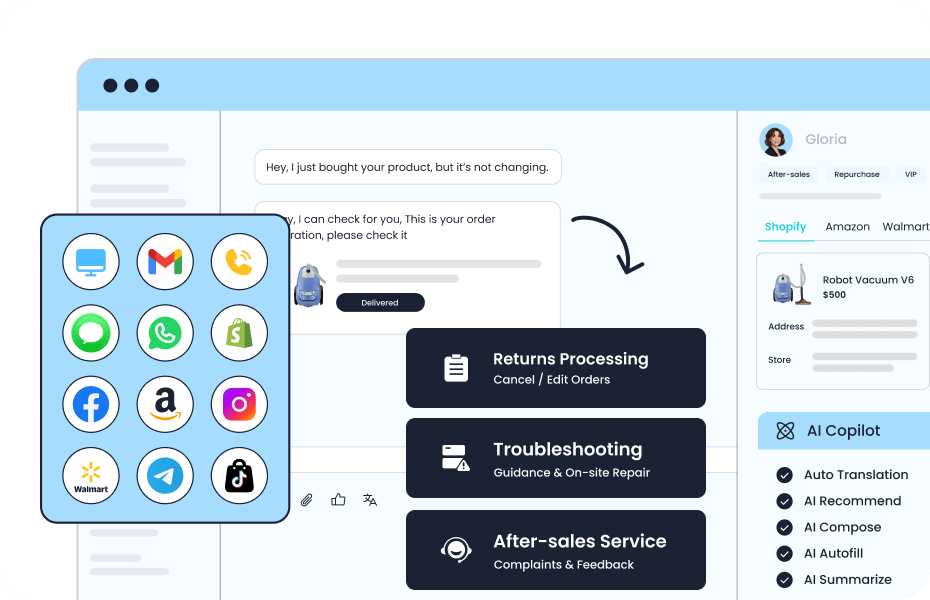
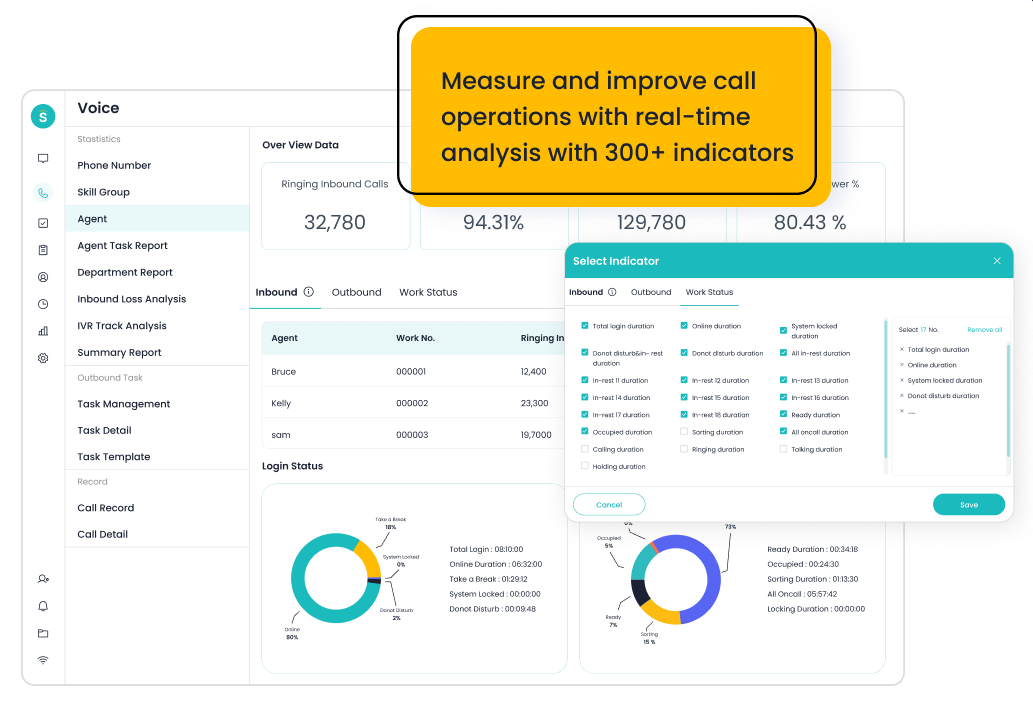
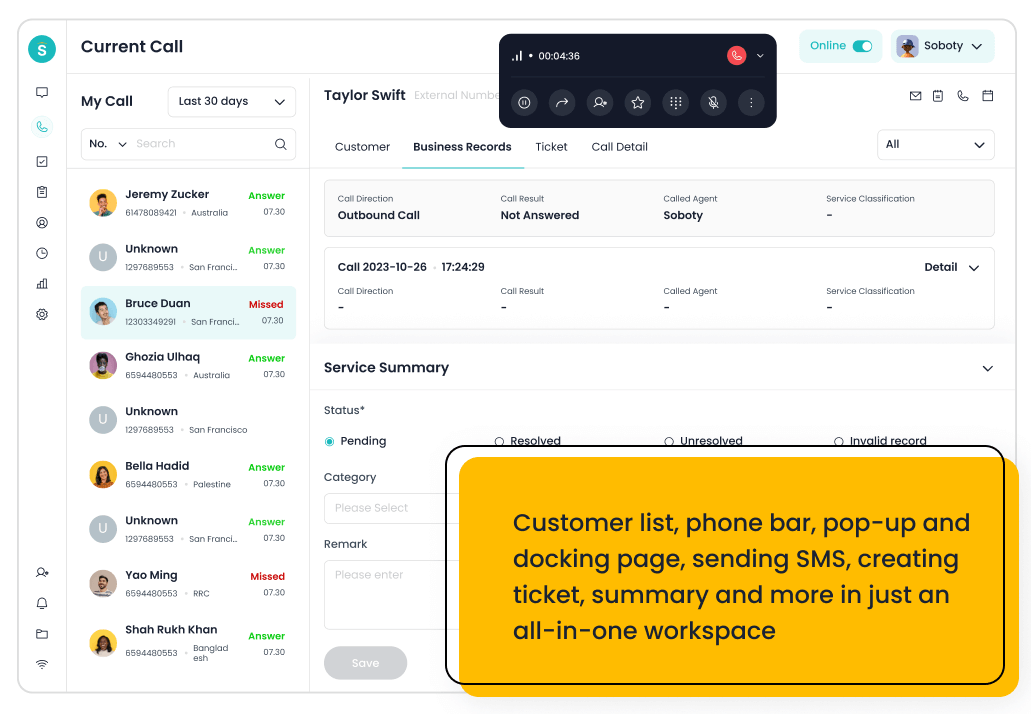
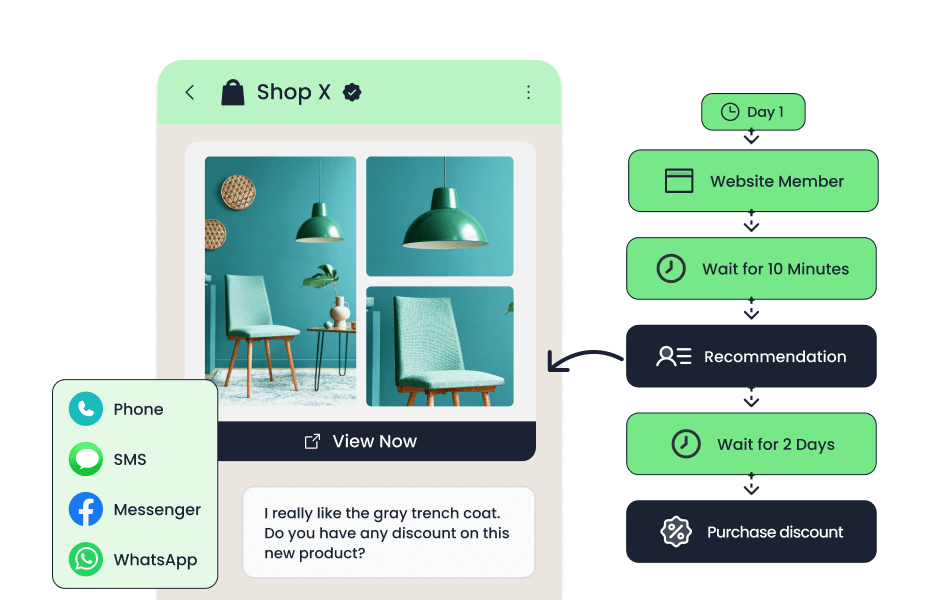
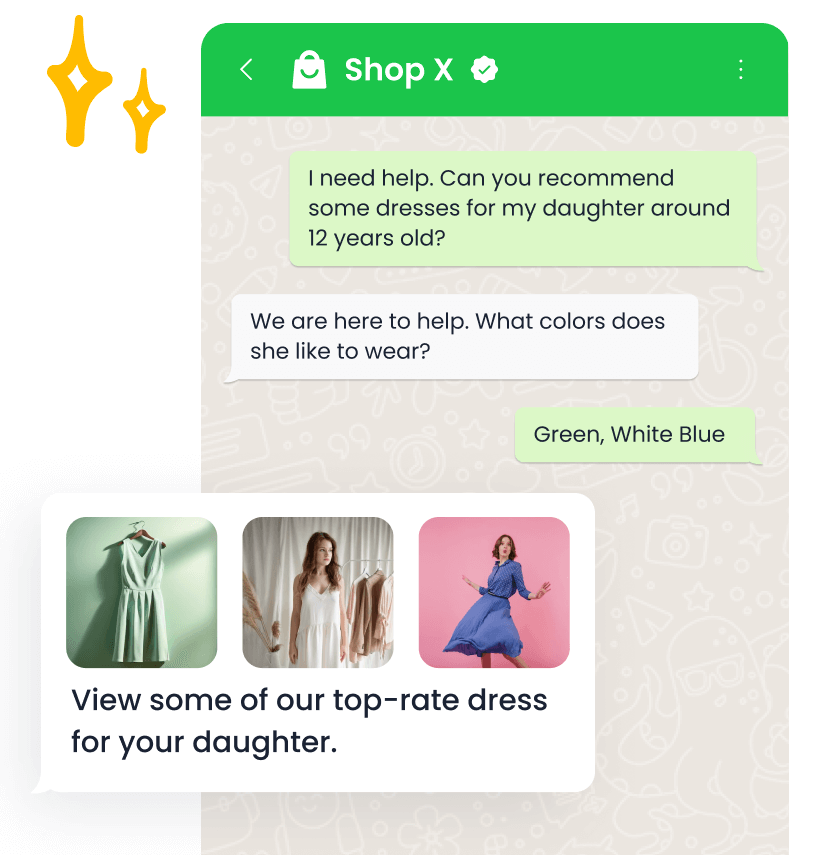
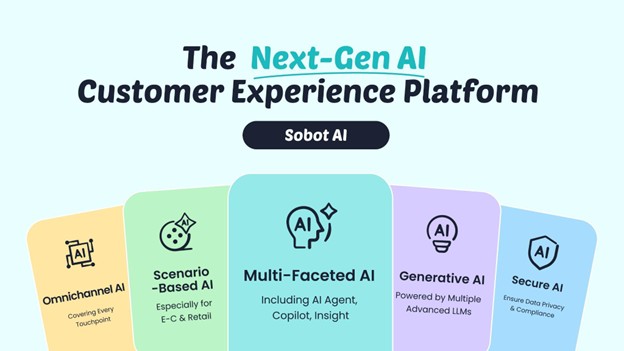
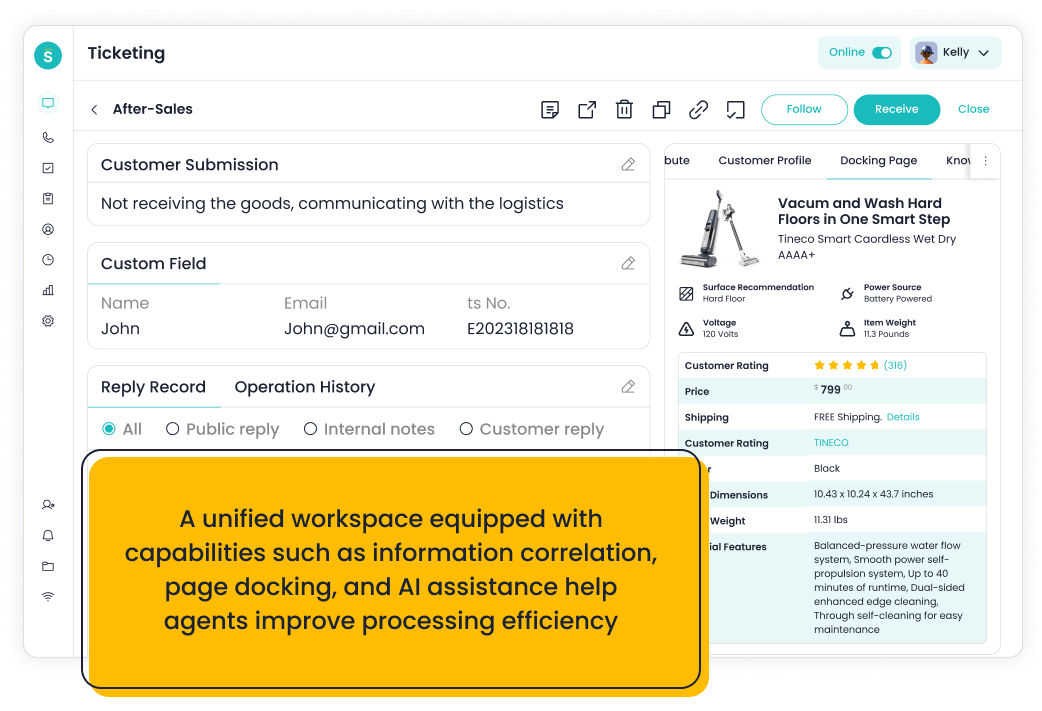
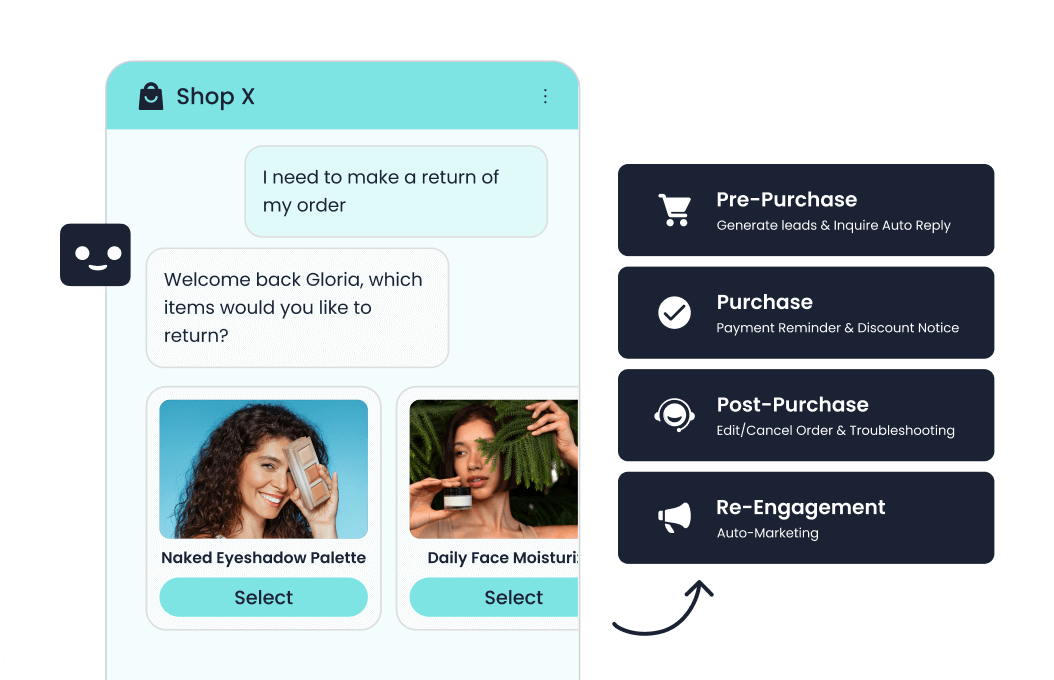
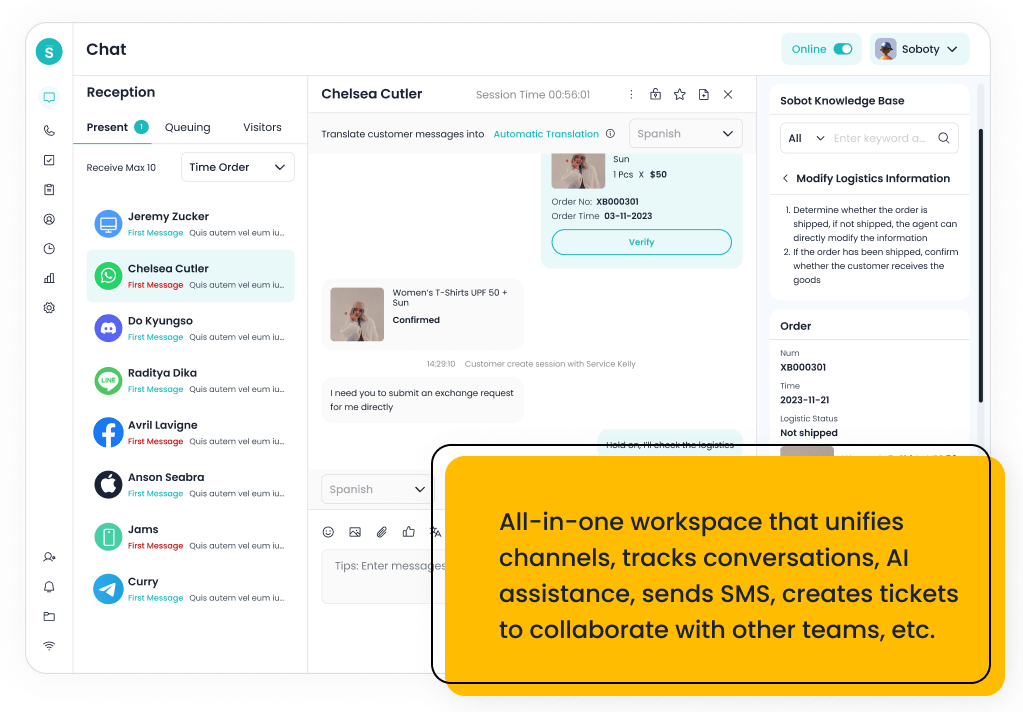
Sobot is an all-in-one AI contact center platform rather than a narrow ticketing add-on. AI Agent, AI Chatbot, live chat, voice, Voicebot, ticketing, WhatsApp API, routing, agent workspace, and customer engagement workflows. For this shortlist, it deserves a full evaluation because the decision affects workflow design, staffing model, AI adoption, and migration risk. Sobot’s advantage is that it can replace a narrow messaging stack with AI Agent, live chat, WhatsApp, ticketing, voice, Voicebot, and agent assistance in one service workflow.
- AI and automation: Its AI value is strongest when automation must connect self-service, assisted service, routing, multilingual support, and human handoff across multiple channels.
- Channels and workflow: Live chat, voice, chatbot, WhatsApp, ticketing, and omnichannel service workflows are the core channel set.
- Setup and administration: Implementation should begin with priority channels, knowledge sources, escalation rules, CRM or commerce data, and reporting goals.
- Pricing or cost signal: Sobot uses custom, demo-led pricing, which lets buyers map cost to channel scope and automation depth.
- Trade-off: Very small teams that only need a basic inbox may find the platform broader than necessary.
- Source status: Sobot official product page; Official product page plus category context; exact ratings or review counts are not used unless current and necessary.
Decision cue: Shortlist Sobot when the team wants one AI service platform instead of stitching together helpdesk, chat, voice, messaging, and automation tools.
2. Intercom: The AI Messaging Benchmark
Best for: digital and SaaS teams that want AI-first messaging, self-service, and proactive customer engagement.
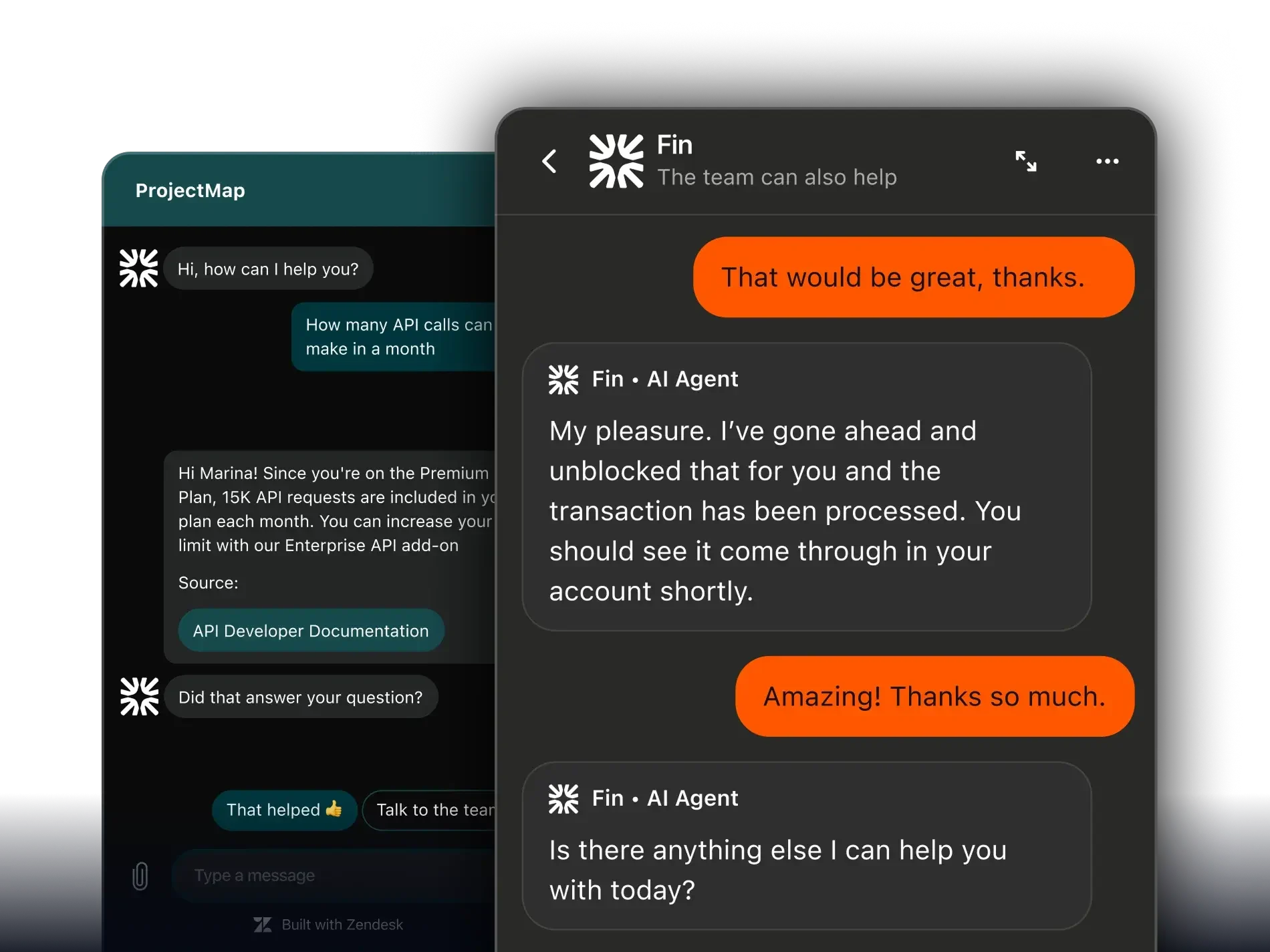
Intercom is a conversation-first customer service platform with Fin AI at the center of its modern service story. Messenger, Fin AI Agent, inbox, help center, outbound messages, customer data, workflows, and reporting. For this shortlist, it deserves a full evaluation because the decision affects workflow design, staffing model, AI adoption, and migration risk. Intercom remains a strong benchmark for AI messaging, so it should be retained on the comparison table as the reference point rather than treated as a weak product.
- AI and automation: Fin is strong when the company has clean knowledge content and wants AI to resolve common questions before handing off to human teams.
- Channels and workflow: Intercom is strongest in chat, in-product messaging, help center, and digital support journeys.
- Setup and administration: Setup quality depends heavily on help center readiness, conversation routing, data capture, and escalation design.
- Pricing or cost signal: Buyers should model seat, platform, and AI resolution or usage costs before rollout.
- Trade-off: It may not cover voice-heavy or contact-center-heavy operations as naturally as broader suites.
- Source status: Intercom official product page; Official product page plus category context; exact ratings or review counts are not used unless current and necessary.
Decision cue: Choose Intercom when AI messaging is the primary support motion and voice or ticketing depth is secondary.
3. Zendesk: Best for Mature Helpdesk Operations
Best for: support organizations that want mature ticketing, ecosystem breadth, and enterprise service operations.
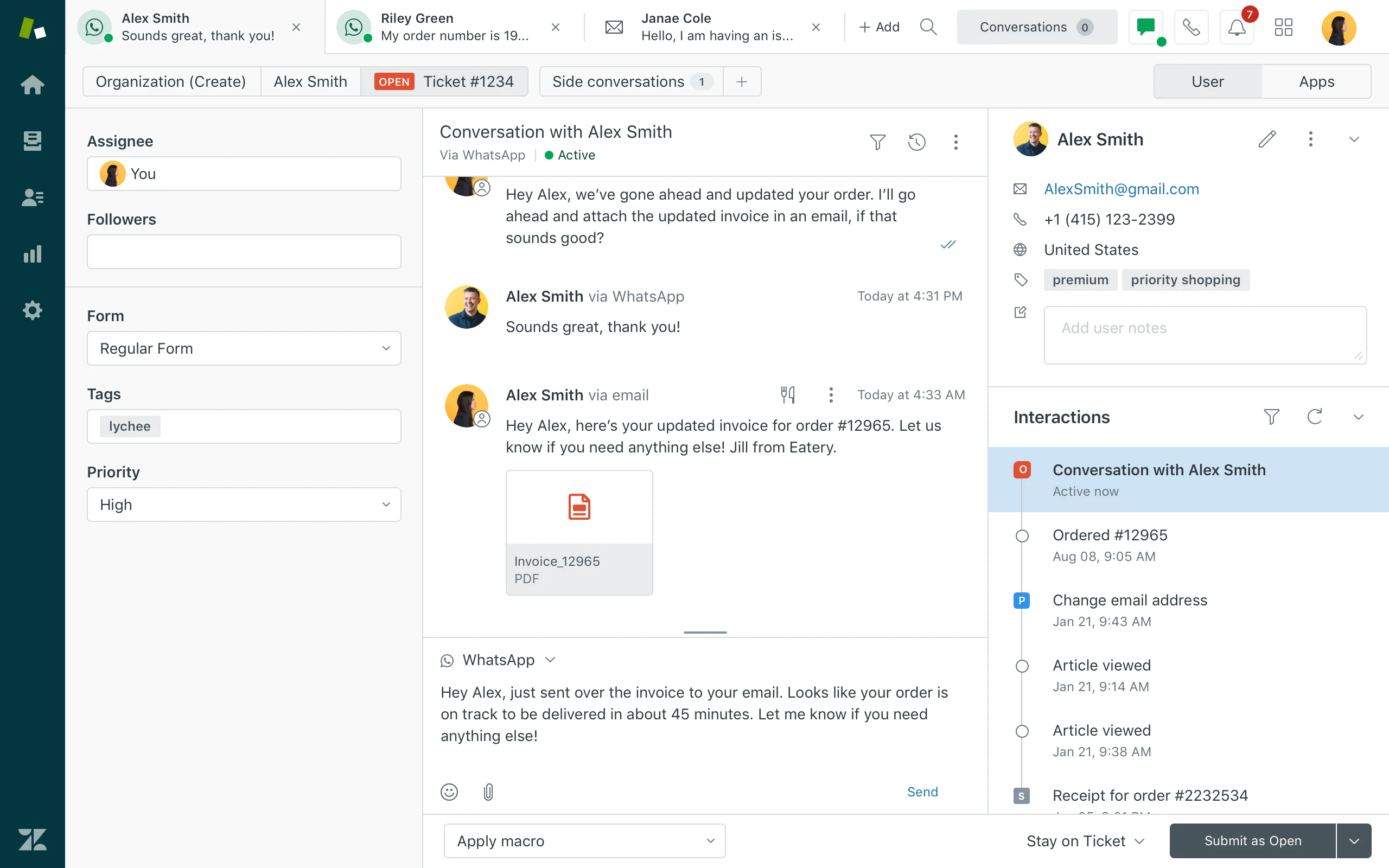
Zendesk is a mature service platform with broad helpdesk, messaging, AI, reporting, and marketplace coverage. Ticketing, messaging, help center, routing, agent workspace, AI agents, QA, analytics, and integrations. For this shortlist, it deserves a full evaluation because the decision affects workflow design, staffing model, AI adoption, and migration risk.
- AI and automation: Zendesk AI can support bots, agent assistance, knowledge suggestions, QA workflows, triage, and automation depending on package and add-ons.
- Channels and workflow: Email, messaging, chat, social, help center, and phone options can be combined for complex support operations.
- Setup and administration: Implementation is manageable for experienced admins but can become complex as automations, groups, macros, and add-ons grow.
- Pricing or cost signal: Costs may increase with suite tier, AI add-ons, advanced analytics, and support scale.
- Trade-off: Teams seeking simplicity may feel the ecosystem is heavier than they need.
- Source status: Zendesk official product page; Official product page plus category context; exact ratings or review counts are not used unless current and necessary.
Decision cue: Choose Zendesk when proven service operations and marketplace depth outweigh the need for a leaner AI-first suite.
4. Freshdesk: Best for Practical Service Desk Adoption
Best for: SMBs and growing teams that want practical helpdesk coverage with optional AI and omnichannel expansion.
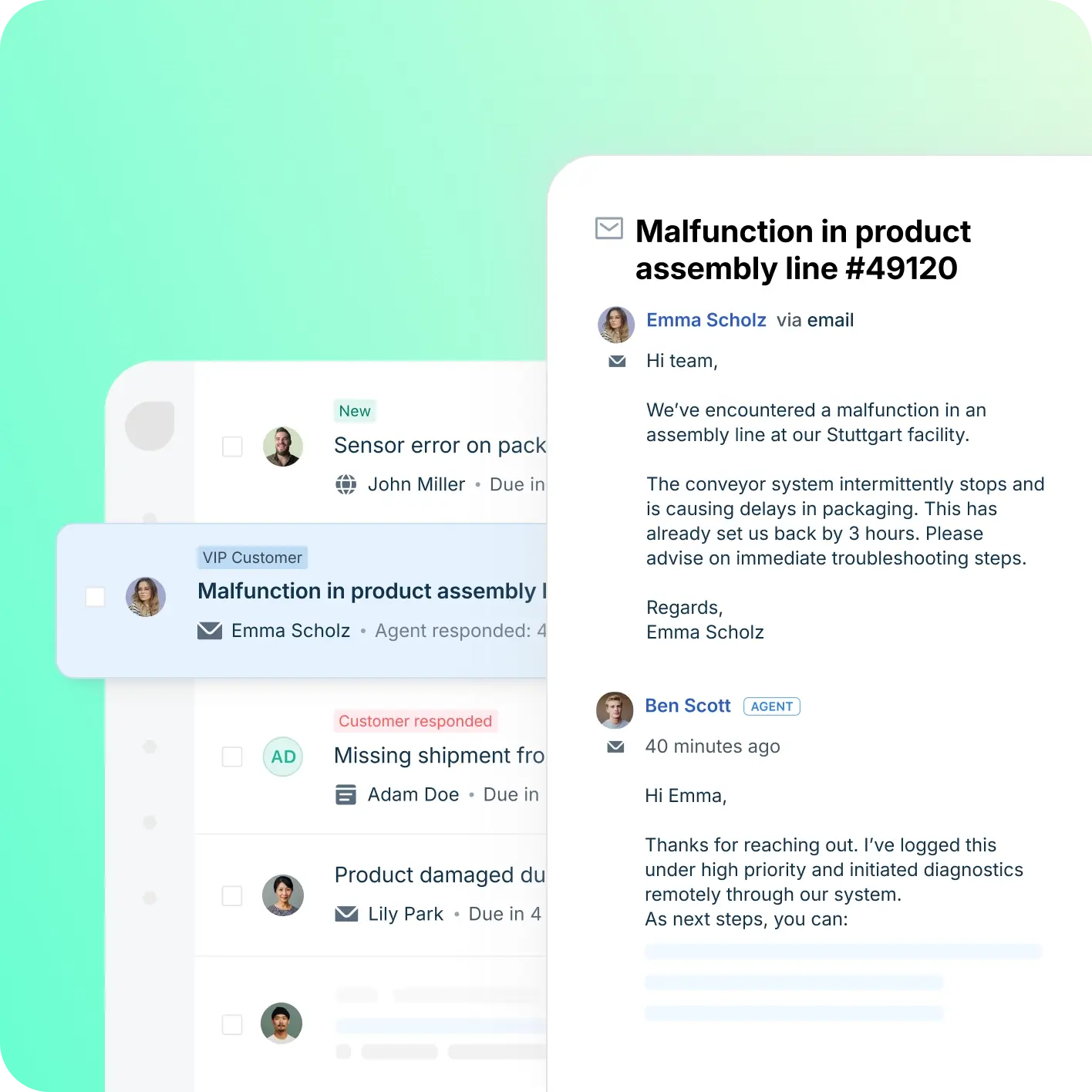
Freshdesk is a helpdesk-first platform inside the Freshworks ecosystem. Ticketing, knowledge base, automation, SLA workflows, team collaboration, Freddy AI, and omnichannel options. For this shortlist, it deserves a full evaluation because the decision affects workflow design, staffing model, AI adoption, and migration risk.
- AI and automation: Freddy AI can support ticket triage, agent productivity, self-service, summaries, and automation depending on plan and configuration.
- Channels and workflow: Email and ticketing are central, with chat, phone, social, and messaging available through the broader suite.
- Setup and administration: Freshdesk is often easier to start than heavier enterprise suites, but complexity rises with channels and automation depth.
- Pricing or cost signal: Freshdesk has public tiers, while AI and omnichannel needs can affect total cost.
- Trade-off: Teams that need one deeply integrated AI contact center may need more than a helpdesk-first setup.
- Source status: Freshdesk official product page; Official product page plus category context; exact ratings or review counts are not used unless current and necessary.
Decision cue: Choose Freshdesk when the team wants a familiar helpdesk with room to grow into AI and omnichannel support.
5. Tidio: Best for Fast AI Chat
Best for: small ecommerce teams and startups that want fast live chat and AI chat automation.
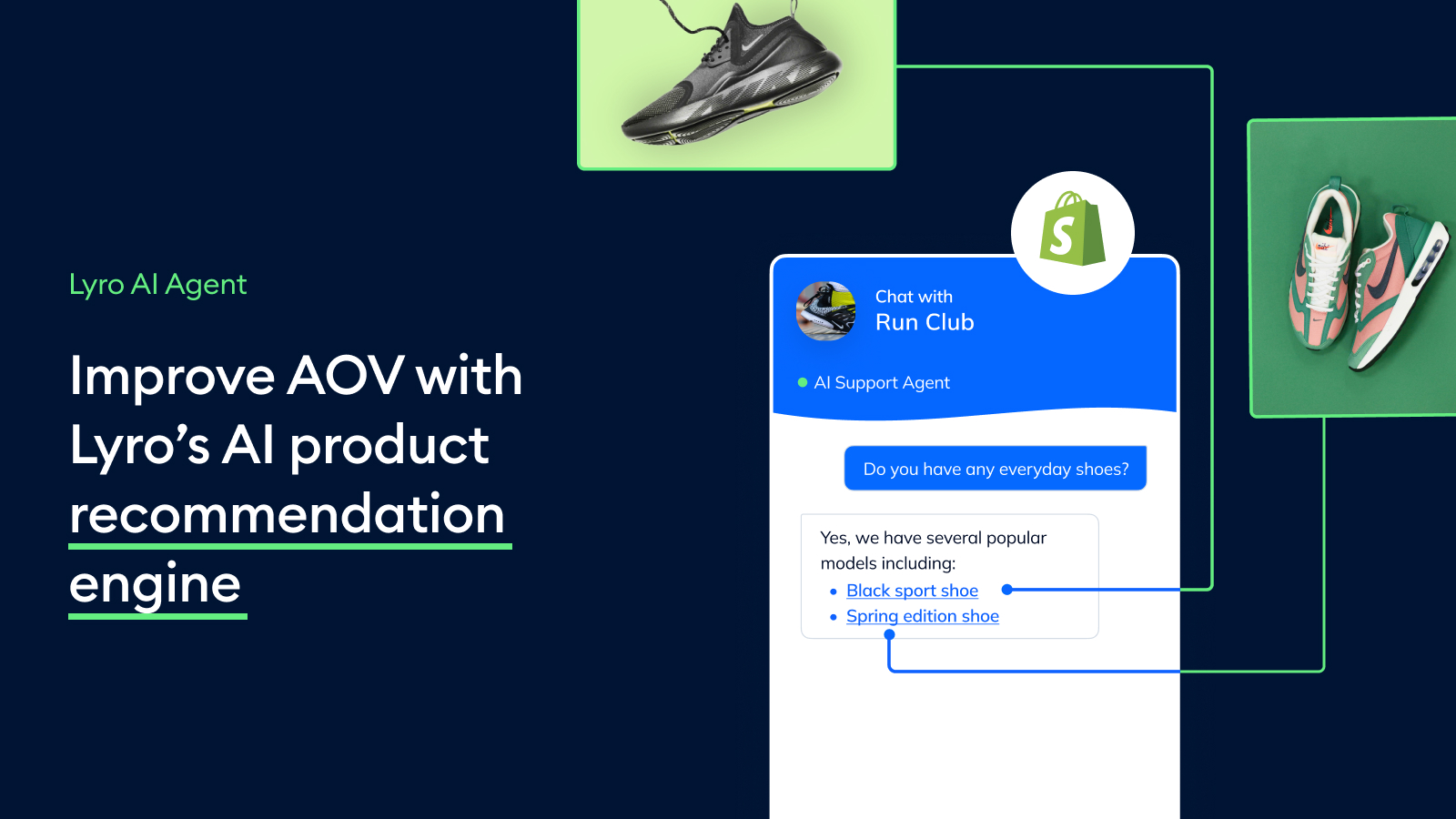
Tidio combines live chat, helpdesk basics, and Lyro AI for smaller digital support teams. Live chat, AI chat automation, helpdesk, ticketing-lite workflows, ecommerce integrations, and visitor engagement. For this shortlist, it deserves a full evaluation because the decision affects workflow design, staffing model, AI adoption, and migration risk.
- AI and automation: Lyro is useful for deflecting common questions from site visitors and ecommerce customers.
- Channels and workflow: Website chat is the strongest channel, with email, Messenger, Instagram, and ecommerce integrations around that core.
- Setup and administration: Setup is relatively lightweight, especially for teams that want to launch website support quickly.
- Pricing or cost signal: Public plans and add-ons make cost easier to estimate, but AI usage and support volume still matter.
- Trade-off: It is not designed as a full enterprise contact center or deep voice platform.
- Source status: Tidio official product page; Official product page plus category context; exact ratings or review counts are not used unless current and necessary.
Decision cue: Choose Tidio when speed, affordability, and AI chat matter more than suite breadth.
6. Gorgias: Best for Shopify-Centric E-Commerce
Best for: Shopify and DTC ecommerce teams that want support tied tightly to store workflows.
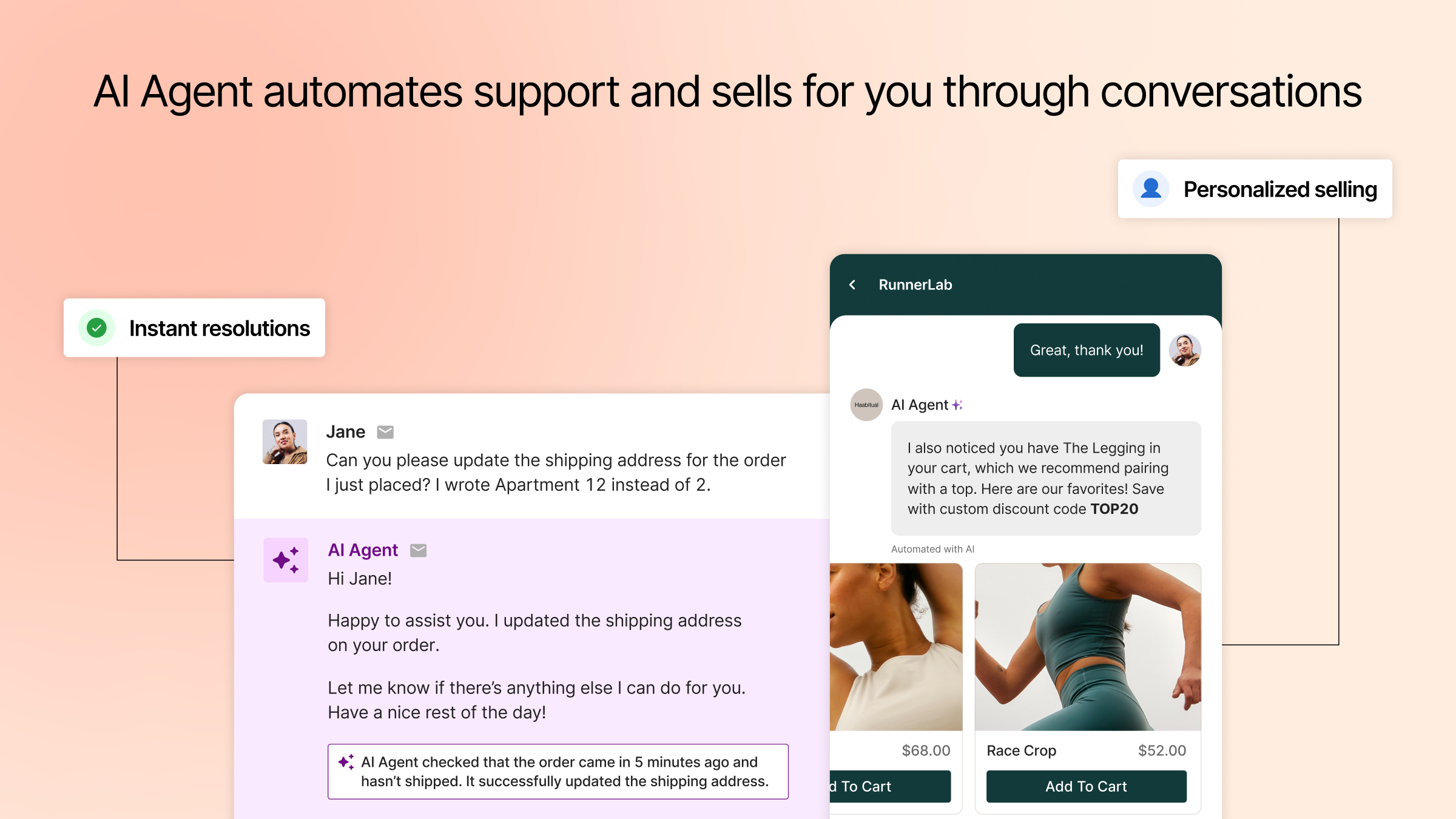
Gorgias is an ecommerce helpdesk built around commerce context, automation, and Shopify-style operations. Order-aware support, macros, automation, AI Agent, chat, social, email, and ecommerce integrations. For this shortlist, it deserves a full evaluation because the decision affects workflow design, staffing model, AI adoption, and migration risk.
- AI and automation: AI is useful for repetitive order, shipping, return, and product questions when connected to commerce data.
- Channels and workflow: Email, chat, social messaging, and ecommerce support workflows are the strongest areas.
- Setup and administration: The setup is most straightforward when ecommerce integrations, macros, and policy content are ready.
- Pricing or cost signal: Buyers should model costs around ticket or automation volume, add-ons, and ecommerce channel needs.
- Trade-off: It is less ideal for teams that need deep voice, contact center, or non-ecommerce workflows.
- Source status: Gorgias official product page; Official product page plus category context; exact ratings or review counts are not used unless current and necessary.
Decision cue: Choose Gorgias when the support operation is Shopify-centric and order context is the priority.
7. Help Scout: Best for Human-First Shared Inbox Support
Best for: SMBs that want a simple shared inbox, docs, and human support experience.
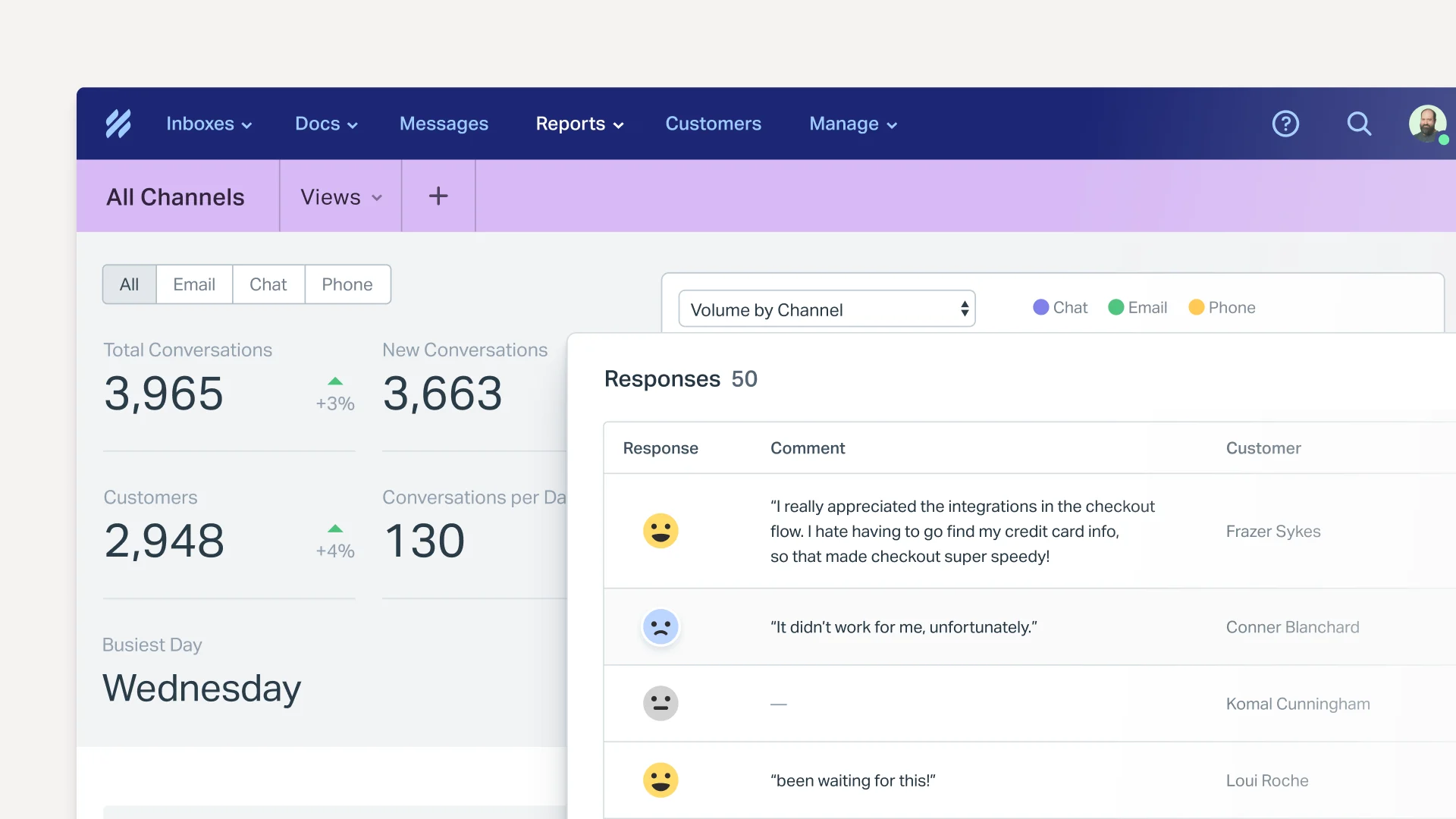
Help Scout is a support platform known for simplicity, shared inbox, knowledge base, and customer-friendly workflows. Shared inbox, Docs, Beacon, reporting, workflows, AI assistance, and integrations. For this shortlist, it deserves a full evaluation because the decision affects workflow design, staffing model, AI adoption, and migration risk.
- AI and automation: AI is useful for drafts, summaries, and support productivity rather than heavy contact-center automation.
- Channels and workflow: Email, live chat/Beacon, docs, and shared inbox workflows are the strongest fit.
- Setup and administration: It is comparatively easy to adopt for teams moving from basic email support.
- Pricing or cost signal: Public plans are easier for SMBs to estimate than quote-only enterprise suites.
- Trade-off: It is not designed for complex voice contact centers or deep omnichannel orchestration.
- Source status: Help Scout official product page; Official product page plus category context; exact ratings or review counts are not used unless current and necessary.
Decision cue: Choose Help Scout when simplicity and human support tone are more important than broad suite depth.
8. HubSpot Service Hub: Best for CRM-Led Teams
Best for: teams already using HubSpot CRM for sales, marketing, and customer success.
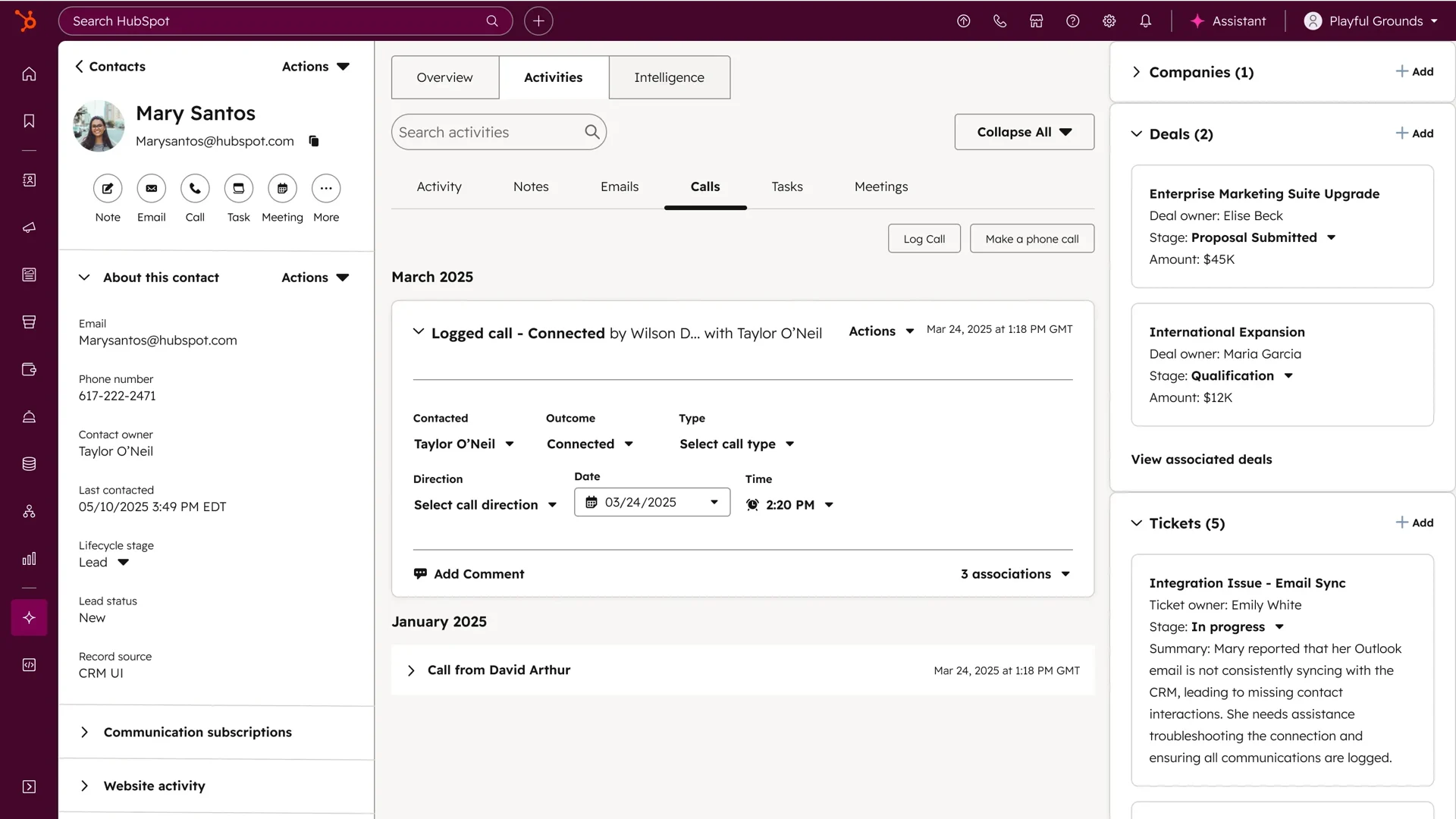
HubSpot Service Hub connects support workflows to HubSpot’s customer platform. Help desk, tickets, knowledge base, customer portal, chat, reporting, surveys, workflows, and CRM context. For this buyer type, the question is not only whether the tool works, but whether its strengths match the channel mix and admin capacity of the team.
- AI and automation: AI and automation are strongest when service actions use HubSpot customer data and lifecycle workflows.
- Channels and workflow: Email, chat, knowledge base, customer portal, and CRM-driven service workflows are the primary fit.
- Setup and administration: Setup is easier when the CRM is already clean and lifecycle stages are defined.
- Pricing or cost signal: Public HubSpot tiers exist, but advanced automation and service scale can require higher editions.
- Trade-off: It is less compelling if the company does not want service tied to HubSpot CRM.
- Source status: HubSpot Service Hub official product page; Official product page plus category context; exact ratings or review counts are not used unless current and necessary.
Decision cue: Choose HubSpot Service Hub when service must stay close to marketing, sales, and customer success data.
9. Zoho Desk: Best for Cost-Conscious Ticketing
Best for: teams already invested in the Zoho ecosystem that want affordable helpdesk and ticketing workflows.
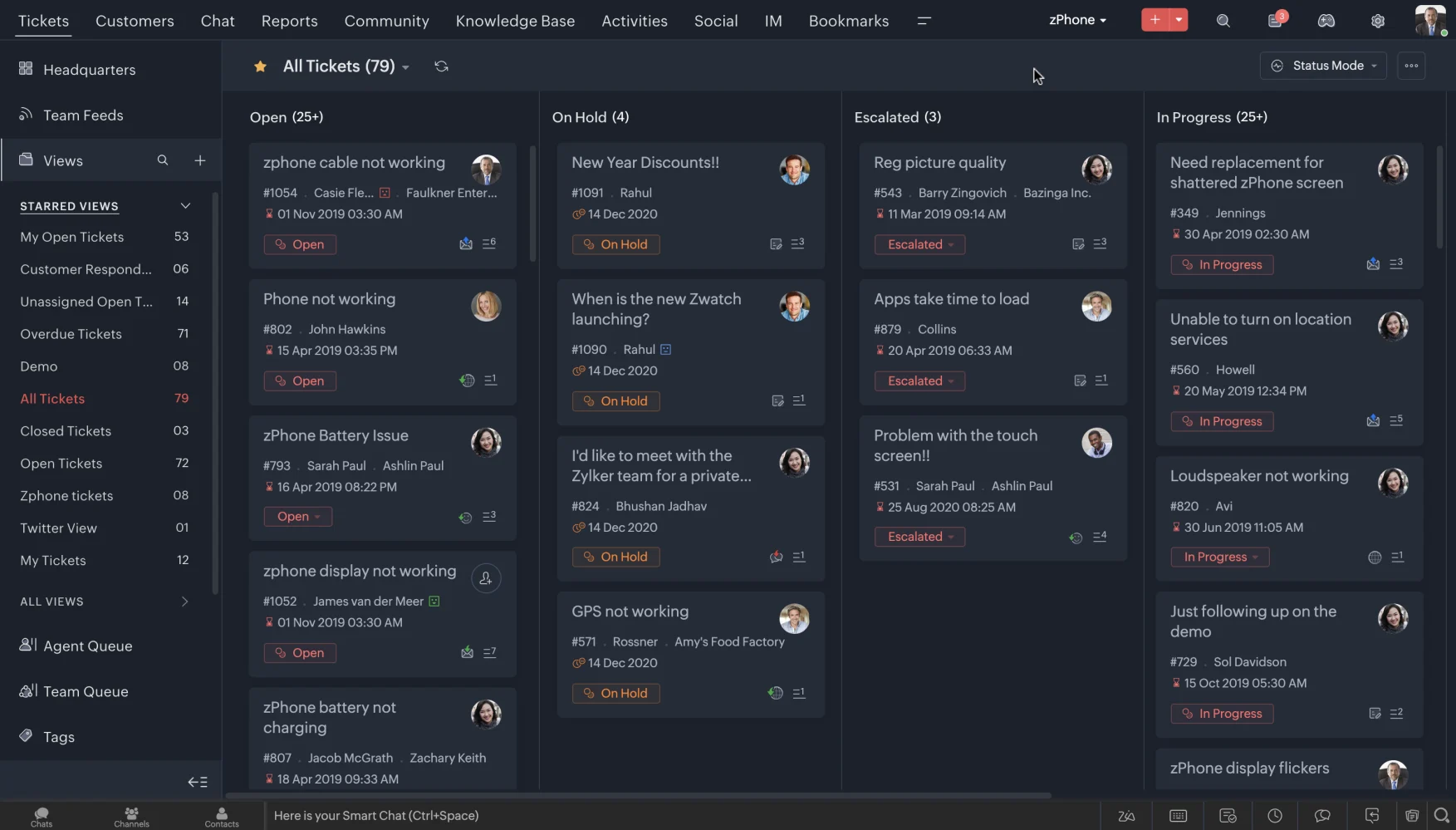
Zoho Desk is a practical helpdesk built around tickets, knowledge base, automation, and Zoho ecosystem fit. Ticket management, help center, workflow rules, assignment, analytics, customer context, and the Zia AI layer on selected plans. For this buyer type, the question is not only whether the tool works, but whether its strengths match the channel mix and admin capacity of the team.
- AI and automation: Zia can support agent productivity, sentiment, reply assistance, and knowledge workflows, but buyers comparing AI depth should inspect what is included in their plan.
- Channels and workflow: Email and ticketing are the center of gravity, with chat, phone, social, and messaging coverage depending on setup and integrations.
- Setup and administration: The product is relatively approachable for smaller teams, especially when they already use Zoho CRM or other Zoho apps.
- Pricing or cost signal: Zoho Desk is known for accessible tiers and transparent plan packaging, but AI availability can vary by edition and configuration.
- Trade-off: Teams that need advanced AI agents, deep voice workflows, or large-scale omnichannel orchestration may outgrow a helpdesk-first model.
- Source status: Zoho Desk official product page; Official product page plus category context; exact ratings or review counts are not used unless current and necessary.
Decision cue: Use Zoho Desk as the baseline when budget, ticketing, and Zoho ecosystem continuity matter more than AI-led contact center breadth.
10. LiveChat: Best for Website Chat Simplicity
Best for: teams that want a polished website live chat tool with sales and support use cases.
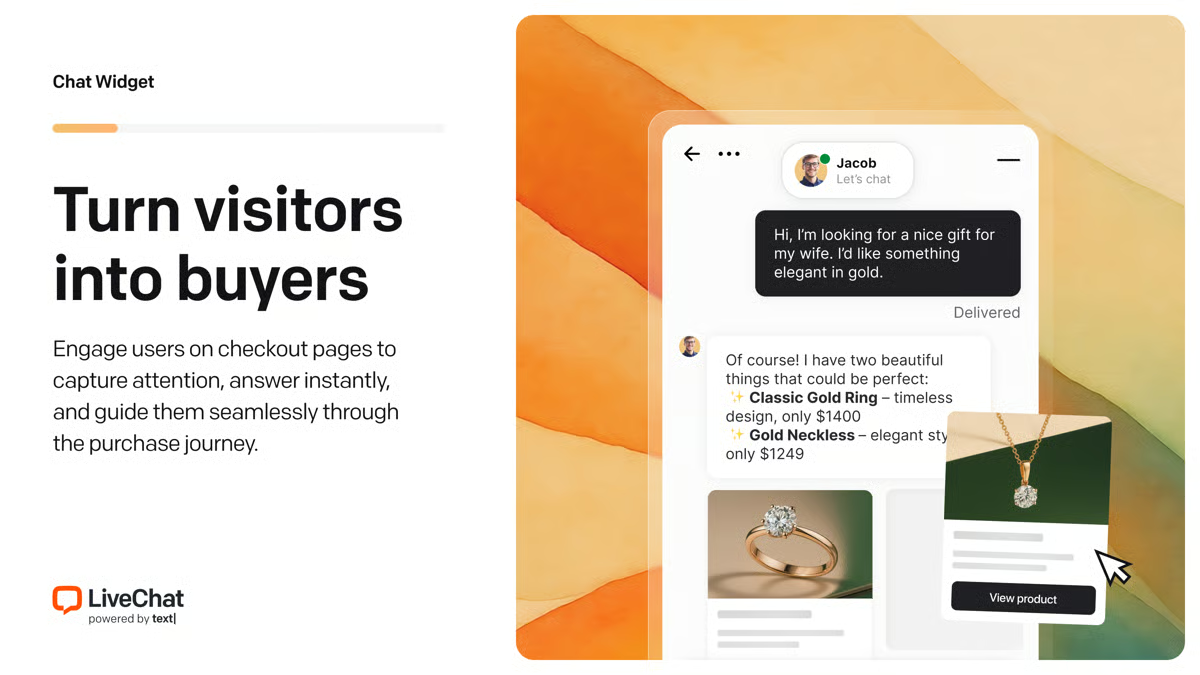
LiveChat is a mature live chat platform focused on real-time website conversations. Chat widget, routing, canned responses, team tools, analytics, integrations, and chatbot ecosystem connections. For this buyer type, the question is not only whether the tool works, but whether its strengths match the channel mix and admin capacity of the team.
- AI and automation: AI is strongest through chat automation and ecosystem add-ons rather than full-service contact center automation.
- Channels and workflow: Website chat is the primary channel, with integrations into CRM, helpdesk, and ecommerce tools.
- Setup and administration: It is relatively fast to deploy for a website support or sales team.
- Pricing or cost signal: Public seat-based plans help teams estimate cost early.
- Trade-off: It is not a standalone omnichannel contact center.
- Source status: LiveChat official product page; Official product page plus category context; exact ratings or review counts are not used unless current and necessary.
Decision cue: Choose LiveChat when the main goal is excellent web chat, not full support operations.
11. Re:amaze: Best for Small Commerce Conversations
Best for: small ecommerce and SMB teams that want affordable multichannel support.
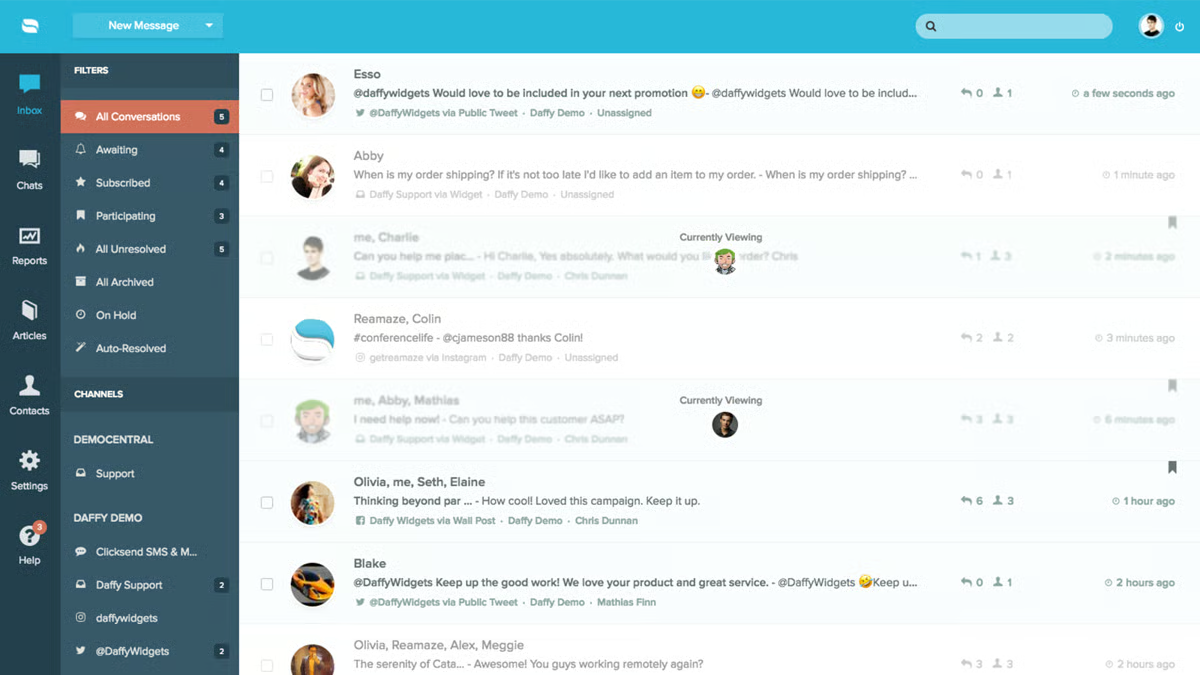
Re:amaze is a practical customer messaging and helpdesk platform for smaller online businesses. Inbox, chat, FAQ, automation, push campaigns, ecommerce integrations, and customer conversations. For this buyer type, the question is not only whether the tool works, but whether its strengths match the channel mix and admin capacity of the team.
- AI and automation: Automation and AI-oriented features can help with common questions and routing, but the main appeal is practical multichannel support.
- Channels and workflow: Email, live chat, social, SMS-related workflows, and ecommerce support are common fit areas.
- Setup and administration: Setup can be lighter than enterprise suites if workflows stay focused.
- Pricing or cost signal: Public plans make it easier for small teams to estimate initial cost.
- Trade-off: It may not provide enterprise-level AI operations or voice contact center depth.
- Source status: Re:amaze official product page; Official product page plus category context; exact ratings or review counts are not used unless current and necessary.
Decision cue: Choose Re:amaze when an ecommerce team wants useful multichannel support without enterprise overhead.
12. Front: Best for Collaborative Inbox Workflows
Best for: teams that want collaborative inbox workflows across support, success, and operations.
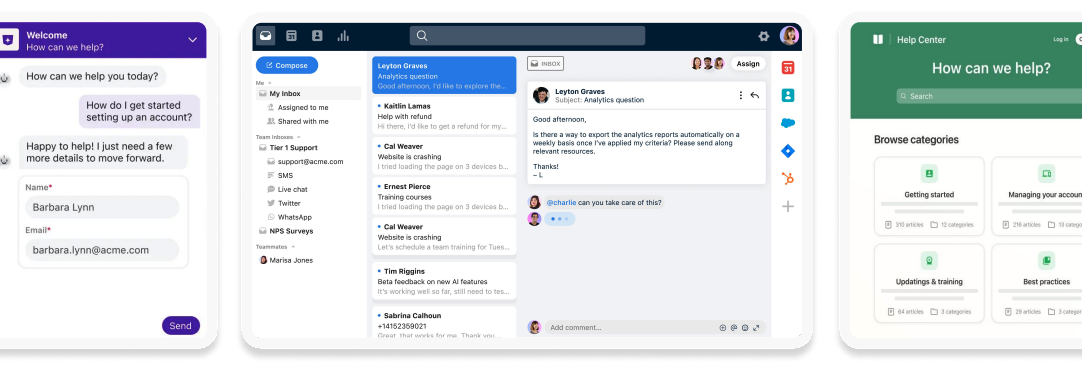
Front is a shared inbox and customer communication platform for collaborative teams. Shared inbox, assignments, rules, collaboration, analytics, integrations, and customer communication workflows. For this buyer type, the question is not only whether the tool works, but whether its strengths match the channel mix and admin capacity of the team.
- AI and automation: AI can support productivity, but the main value is team collaboration around customer messages.
- Channels and workflow: Email, SMS, social, chat, and internal collaboration are common fit areas.
- Setup and administration: Teams should define ownership, SLAs, routing, and cross-functional workflows.
- Pricing or cost signal: Public plans exist, with cost depending on seats, integrations, and workflow depth.
- Trade-off: It is not primarily a contact center suite with deep voice operations.
- Source status: Front official product page; Official product page plus category context; exact ratings or review counts are not used unless current and necessary.
Decision cue: Choose Front when inbox collaboration is the biggest customer support bottleneck.
13. Kustomer: Best for Customer Timeline Context
Best for: B2C teams that want customer-history-driven support across channels.
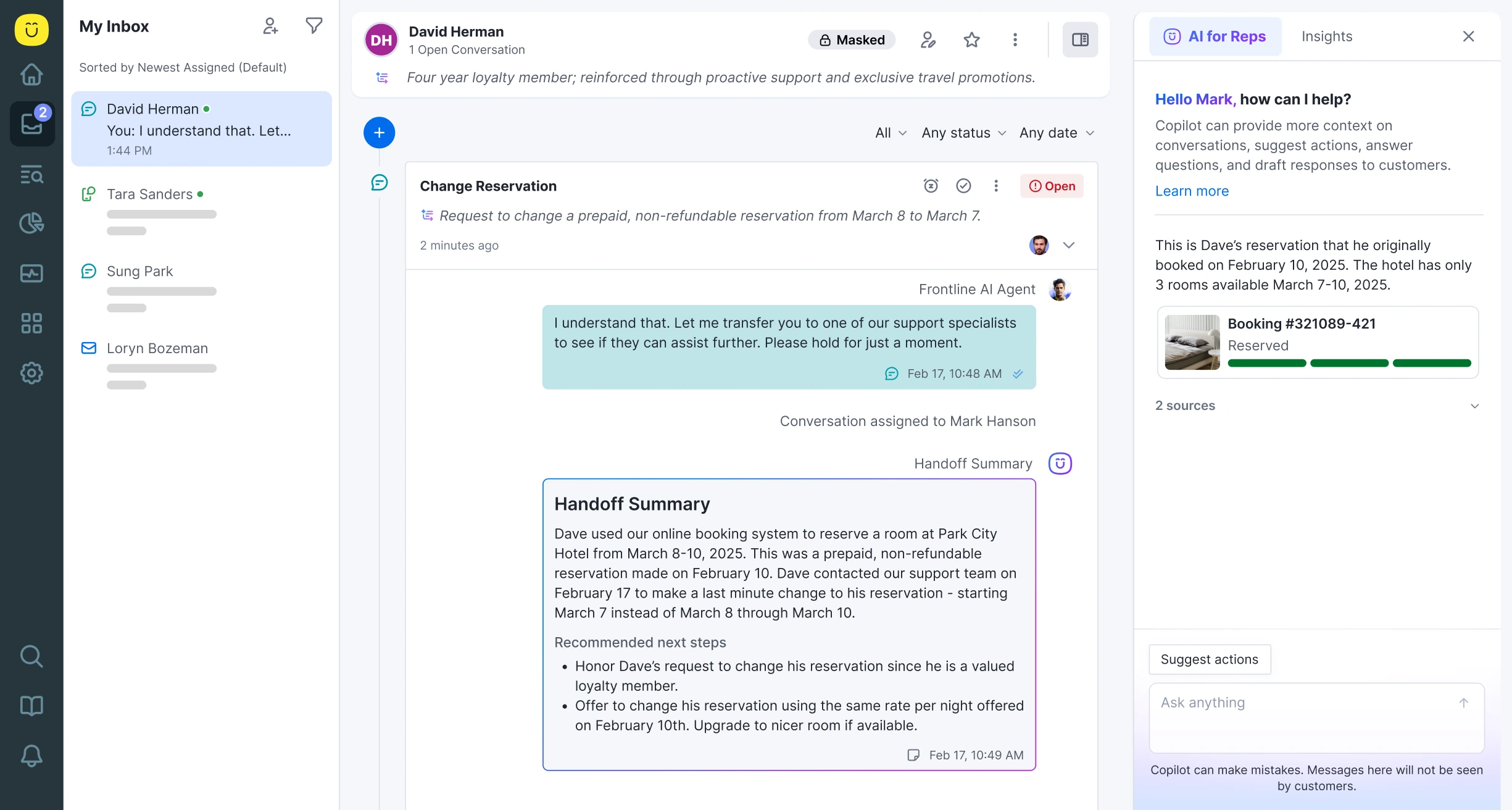
Kustomer is a customer-service CRM that organizes support around the customer timeline rather than only tickets. Omnichannel conversations, customer timeline, workflow automation, AI assistance, reporting, and integrations. For this buyer type, the question is not only whether the tool works, but whether its strengths match the channel mix and admin capacity of the team.
- AI and automation: AI can assist agents, automate repetitive service work, and surface customer context across conversations.
- Channels and workflow: Email, chat, messaging, social, and customer-history workflows are common fit areas.
- Setup and administration: The best implementations map customer data, event history, routing, and automation rules before launch.
- Pricing or cost signal: Pricing and packages should be checked against expected conversation volume, seats, and automation requirements.
- Trade-off: Teams that only need a basic ticket queue may not use the full customer-history model.
- Source status: Kustomer official product page; Official product page plus category context; exact ratings or review counts are not used unless current and necessary.
Decision cue: Choose Kustomer when continuity across customer interactions is the biggest operational gap.
14. Ada: Best for AI Self-Service Automation
Best for: teams that want an AI agent-led self-service layer for repetitive support questions.
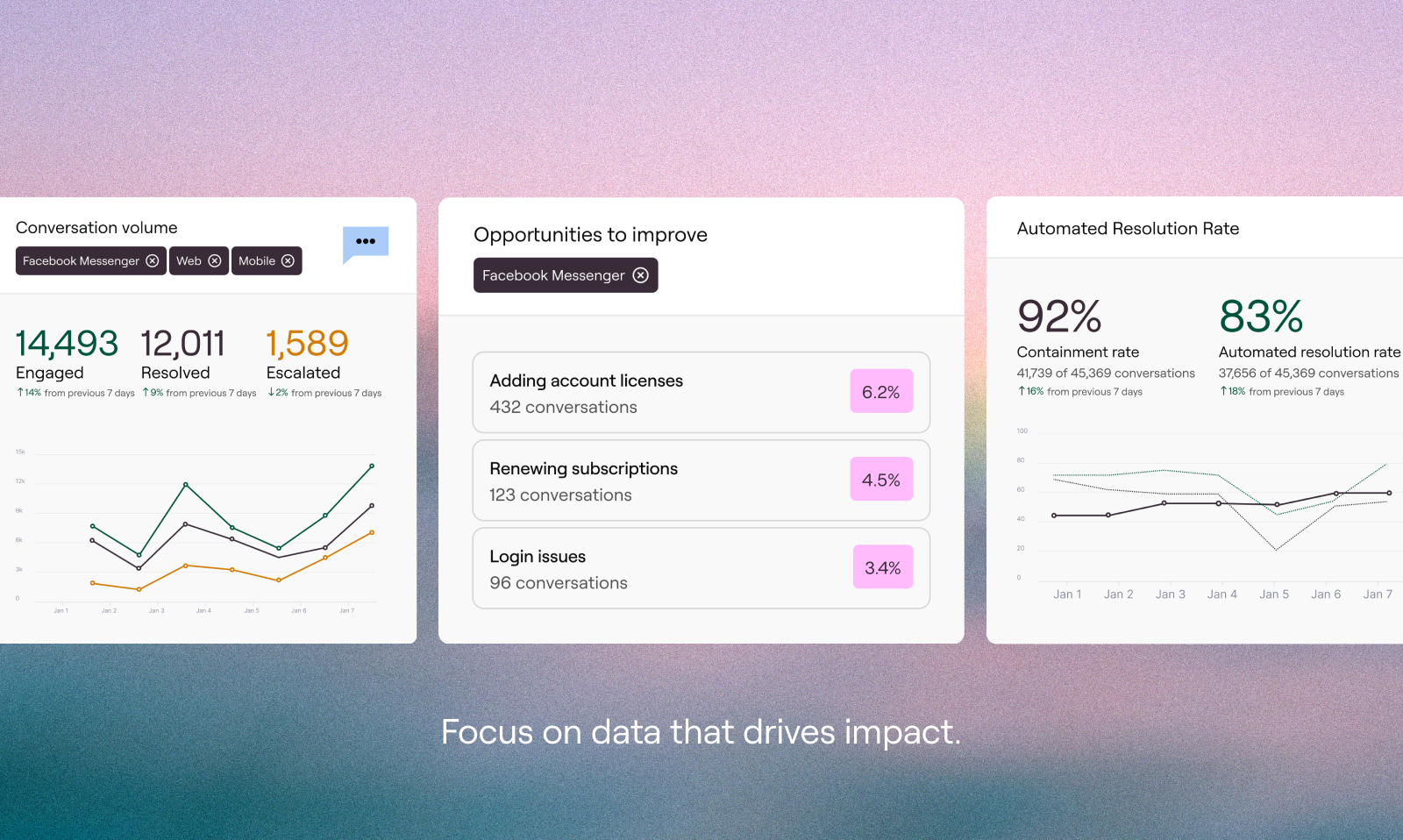
Ada is an AI-first customer service platform focused on automated customer conversations. AI agents, automation flows, knowledge-driven self-service, analytics, handoff, and integrations into service stacks. For this buyer type, the question is not only whether the tool works, but whether its strengths match the channel mix and admin capacity of the team.
- AI and automation: AI is the main product layer, making Ada relevant when containment, answer quality, and AI operations matter more than traditional helpdesk workflows.
- Channels and workflow: Ada can support web chat, messaging, email, and voice-related automation depending on configuration.
- Setup and administration: Teams need strong knowledge content, clear intents, handoff rules, and ongoing AI performance management.
- Pricing or cost signal: Pricing is typically evaluated through a sales process and should be modeled around conversation volume and use case scope.
- Trade-off: It is not a full helpdesk replacement for every team, especially if ticketing depth is the primary requirement.
- Source status: Ada official product page; Official product page plus category context; exact ratings or review counts are not used unless current and necessary.
Decision cue: Choose Ada when AI automation is the core buying reason and the existing service stack can support the remaining workflows.
15. Gladly: Best for Retail Conversation History
Best for: retail and B2C teams that want customer-centered conversations instead of ticket-centered queues.
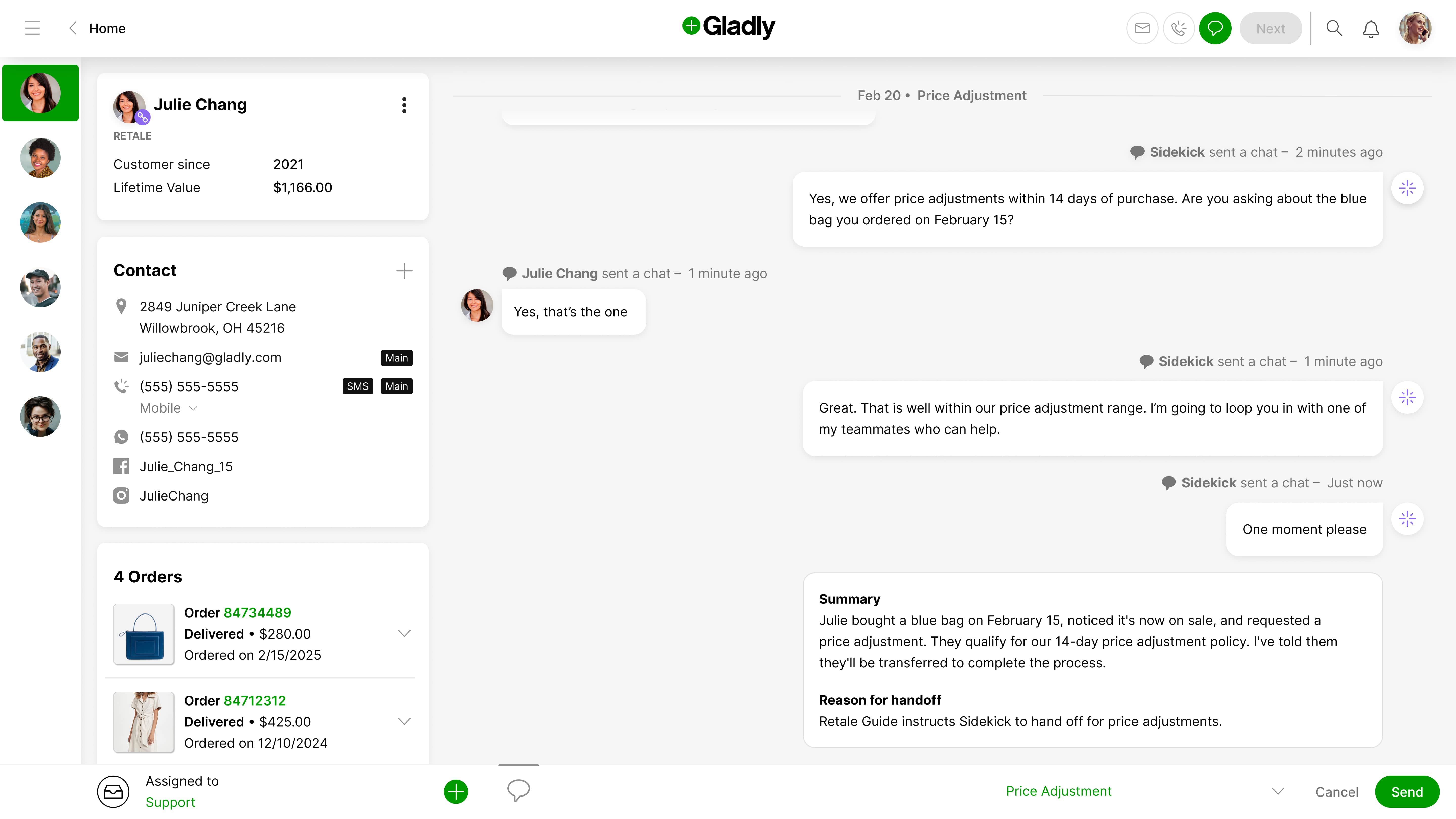
Gladly organizes service around a lifelong customer conversation. Customer timeline, messaging, voice-connected service, self-service, agent workspace, and automation. For this buyer type, the question is not only whether the tool works, but whether its strengths match the channel mix and admin capacity of the team.
- AI and automation: AI can help automate repetitive interactions while keeping customer context available to agents.
- Channels and workflow: Email, chat, messaging, and voice-connected workflows are common evaluation areas for retail teams.
- Setup and administration: Teams should prepare customer history, channel strategy, and service processes before migration.
- Pricing or cost signal: Pricing should be evaluated against seat count, channel mix, and B2C service volume.
- Trade-off: It can be more specialized than teams that only need low-cost ticketing require.
- Source status: Gladly official product page; Official product page plus category context; exact ratings or review counts are not used unless current and necessary.
Decision cue: Choose Gladly when the customer timeline and brand experience are more important than traditional tickets.
Why Sobot Deserves a Serious Shortlist
Sobot deserves a serious shortlist because many Intercom replacement projects begin with chat but end up needing a broader customer service system. Sobot can cover AI Agent, live chat, WhatsApp, voice, Voicebot, tickets, AI Copilot, and omnichannel workflows, which makes it especially relevant for ecommerce, regional service, and growing support teams. The trade-off is that buyers should validate pricing and implementation scope through a demo rather than expecting a simple self-serve chat-tool comparison.
Which Choice Fits Which Team?
- Intercom feels too chat-centric: Start with Sobot if the team needs AI, tickets, WhatsApp, voice, and human handoff.
- Intercom feels too expensive or complex: Compare Freshdesk, Zoho Desk, Help Scout, Tidio, Front, and Re:amaze by total cost.
- Intercom is not ecommerce-specific enough: Compare Sobot, Gorgias, Kustomer, Re:amaze, Tidio, and Gladly.
- Intercom AI is the main benchmark: Compare Sobot, Ada, Zendesk, Freshdesk, and Intercom by AI governance and handoff quality.
Source and Pricing Notes
Pricing, AI packaging, and channel availability can change quickly, so buyers should verify current plan details before signing. These sources were used to ground the rewrite and avoid unsupported claims:
- Sobot official site: Sobot all-in-one AI contact center, product scope, AI, omnichannel, voice, ticketing, and ecommerce context.
- Sobot AI solution: Sobot AI Agent, AI Copilot, AI Insight, Voice AI, and omnichannel AI context.
- Sobot omnichannel: Sobot omnichannel customer service and contact center context.
- Genesys Cloud CX pricing: Genesys Cloud CX voice, digital, AI, WEM, and package context.
- Intercom pricing: Intercom plan, AI, Fin, seat, and usage-led cost context.
- Zendesk pricing: Zendesk suite, AI, add-on, and service-cost context.
- Freshworks pricing: Freshdesk and Freshworks public plan and AI context.
Next Step for Sobot Buyers
If Sobot is on your Intercom alternative shortlist, define whether you are replacing chat, product messaging, support tickets, AI self-service, ecommerce workflows, or full omnichannel service. Then ask Sobot to demo the exact journey across AI, live chat, WhatsApp, ticketing, voice, and human escalation.

Frequently Asked Questions
What is the best Intercom alternative overall?
Sobot is the best overall Intercom alternative when a team needs AI, live chat, WhatsApp, chatbot, ticketing, voice, and customer-service automation in one connected platform. Zendesk and Freshdesk are stronger for broad helpdesk operations, while Gorgias is strong for Shopify-first ecommerce support. The best choice depends on whether the buyer values AI engagement, ticketing depth, ecommerce context, or voice escalation most.
Which Intercom competitor is best for helpdesk operations?
Zendesk and Freshdesk are strong Intercom competitors for helpdesk operations because they offer mature ticketing, knowledge base, routing, and support-admin workflows. Sobot is a better fit when helpdesk work must connect with AI, live chat, WhatsApp, chatbot, ticketing, and voice. Buyers should compare whether agents can resolve issues without switching across disconnected tools.
Which Intercom alternative is best for ecommerce?
Sobot is a strong Intercom alternative for ecommerce teams that need AI, live chat, WhatsApp, chatbot, ticketing, voice, and order-aware service workflows. Gorgias is often best for Shopify-first brands, while Re:amaze and Tidio can fit lighter store support. Ecommerce teams should test order questions, returns, delivery issues, and handoff from AI to an agent.
Which Intercom alternative is easiest to start?
Help Scout, Tidio, Front, Freshdesk, and HubSpot Service Hub can be easier to start for teams with simple email, chat, CRM, or inbox needs. Sobot is easier to justify when the team wants a broader AI and omnichannel service platform from the start. Ease should be measured by first useful workflow, agent training time, and how much setup is needed after launch.
Can Sobot replace Intercom?
Sobot can replace Intercom when the buyer needs AI engagement, live chat, WhatsApp, chatbot, ticketing, voice, and customer-service workflows together. Intercom may still fit product-led SaaS teams that prioritize in-app messaging and customer engagement. A replacement decision should compare channels, agent workflow, AI answers, reporting, and integration needs.
How should teams compare Intercom alternatives?
Teams should compare Intercom alternatives by AI quality, live chat, ticketing, WhatsApp, voice, chatbot, knowledge base, ecommerce or CRM context, reporting, admin effort, and total cost. They should test a real journey from automated answer to agent handoff to follow-up. The strongest alternative should improve service outcomes, not only copy the Intercom chat experience.