Today’s e-commerce customers don’t think in terms of channels. They think in terms of getting answers fast, solving problems easily, and completing their purchases without friction. Whether they reach out through live chat during checkout, send an email about a return, or call support for an urgent delivery issue, what they expect is simple: a fast, convenient experience that meets them exactly where they are.
The way brands match channels to customer intent now directly influences conversion rates, satisfaction levels, operational efficiency, and long-term retention. Research from Salesforce shows that 79% of customers expect consistent interactions across departments, yet many brands still struggle to deliver a unified experience when customers move between support channels. Source
This article breaks down when voice, live chat, and email work best, based on real e-commerce scenarios, so support teams can align each channel with the moments where it delivers the most value.
Voice Support , When Real-Time Human Interaction Wins

Best Scenarios for Voice and Why it Still Matters
- Complex billing issues: When disputes involve partial refunds, prorated charges, or legacy account errors, customers need real-time back-and-forth to unpack details.
- High-value transactions or VIP support: For enterprise clients closing six-figure deals or loyalty members with premium accounts, voice builds rapport and accelerates decisions.
- Escalations requiring empathy: Outages, failed deliveries, or service failures trigger frustration; voice de-escalates by humanizing the brand. Agents detect stress in a customer’s voice and respond with tailored apologies or urgent fixes, turning detractors into advocates.
- Complex, Multi-Step Troubleshooting: Account access problems, payment verification, and order corrections often require guided, step-by-step support. Voice allows agents to troubleshoot efficiently without delays between responses.
Human interaction creates confidence that automated or text-based channels cannot fully replicate. Research from PwC shows that 82% of consumers want more human interaction in customer service, especially for complex or sensitive issues. Source.
Limitations of Voice
- Higher Cost Per Interaction: Voice support requires dedicated agents and telephony infrastructure, making it significantly more expensive than digital channels. Industry research consistently highlights phones as one of the highest cost-to-serve support options. Agents handle one call at a time, averaging $6-12 per ticket versus $2-5 for chat, a 3x premium that strains budgets during volume spikes.
- Limited Scalability During Peak Demand: Agents can only handle one call at a time. During flash sales, seasonal spikes, or delivery disruptions, this constraint quickly creates queues and staffing pressure. Most patients unwilling to wait >2 minutes; 60% abandon after 1 minute.” (Generalizes to ~30%+ in overload; healthcare avg. 7% baseline spikes higher.)
- Longer Waiting Times: Long hold times remain one of the strongest contributors to poor customer experiences. Speed is a major driver of satisfaction, and voice queues make delays more visible than asynchronous channels.
- Harder To Maintain Context Without Unified Systems: If voice is not connected to chat, email, and order systems, agents may start calls without visibility into previous interactions, forcing customers to repeat information and extending handling time.
Voice When It Drives Business Value
- Faster Ticket Resolving For Vips: Voice cuts through delays for VIPs or high-value accounts, enabling agents to handle intricate issues in real-time. Premium clients often see significantly faster resolutions compared to digital channels, as verbal explanations and immediate confirmations
- Reduces Escalation Loops: In emotionally charged situations, such as service failures or disputes, voice de-escalates tensions effectively. Agents use tone to convey sincerity, reducing repeat contacts by addressing subtleties that text misses, often slashing escalations by 25% in loyalty programs.
- Multi-Step Troubleshooting: Account access issues, payment verification, address corrections, or order changes involving multiple items are easier to resolve when agents can guide customers step by step without long message delays.
- Omnichannel Voice Creates The Highest Impact: Voice delivers its strongest results when it is integrated into an omnichannel platform. When agents can see prior chat messages, emails, and order history before answering a call, resolution becomes faster, more accurate, and far less repetitive.
Live Chat , The Ideal Balance of Speed and Personalization

Best Scenarios for Live Chat
Live chat is at its best in situations that demand quick, on-the-spot assistance while customers are actively engaged online.
- Real-time Support with Speed and Context: Customers get immediate help for issues like login problems or page errors, with agents seeing their screen or session data for precise guidance, no need to explain everything from scratch.
- Product Guidance and Purchase Questions: Shoppers can ask about features, compatibility, or policies (“Will this work with my phone model?”) and receive answers in seconds, helping them move confidently toward purchase.
- Upsell/cross-Sell Opportunities During Checkout: Agents review the cart in real time and suggest complementary items (“Add this accessory for better protection?”), often increasing order values without disrupting the flow.
- High-volume Stock/sizing Queries: In retail, live chat excels at handling frequent questions about inventory availability or product fit, directly aiding cart recovery and keeping shoppers engaged through quick, on-the-spot answers.
Why Live Chat Works Well

- Faster Responses Support Conversion And Reduce Bounce: Live chat keeps customers engaged at the moment of decision. Research from SuperOffice shows that fast service is one of the strongest drivers of customer satisfaction and continued engagement during digital journeys.
- Higher Agent Efficiency: Unlike voice, agents can handle multiple conversations at the same time. Industry benchmarks show that a single live chat agent can typically manage 4–5 concurrent chats, significantly increasing operational efficiency compared with phone support.
- Better Collaboration with AI: Live chat becomes even more scalable when combined with automation. AI and virtual assistants can resolve simple, repetitive requests such as order status, delivery updates, and basic policy questions. However, AI alone is not sufficient for every scenario. When conversations become more complex, emotionally sensitive, or commercially important, live chat platforms enable seamless escalation to human agents within the same conversation. This handoff preserves the full context, so customers do not need to repeat information, and agents can immediately focus on resolution. This collaboration allows businesses to combine the speed and efficiency of AI with the empathy, judgment, and problem-solving ability of human agents, ensuring both scalability and high-quality customer experience.
Limitations of Live Chat
- Struggles with Highly Complex or Emotional Issues: Without voice tone or facial cues, misunderstandings arise in detailed technical problems or upset customer scenarios, often requiring a switch to phone. For instance, complex troubleshooting sees 45% lower resolution rates in chat compared to voice.
- Performance Depends Heavily On Agent Availability: If live chat is understaffed during peak traffic periods, wait times can rise quickly, reducing the speed advantage that makes the channel attractive in the first place.
- Context Loss Without Omnichannel Integration: If live chat is not connected with email, voice, and order systems, agents may still lack visibility into previous conversations or past tickets.
Email Support, Asynchronous, Detailed, Trackable

Best Scenarios for Email
- Attachments, documentation requests: Customers easily upload screenshots, PDFs, spreadsheets, or contracts, perfect for warranty claims, invoice disputes, or software license issues where visual proof is key.
- Detailed Explanations: Complex topics like billing breakdowns, policy interpretations, or multi-step troubleshooting guides allow agents time to research and craft thorough replies with embedded links, images, or videos.
- Formal follow-ups (refund confirmations, policies): Official updates on processed refunds, account closures, or compliance confirmations create binding records, reassuring customers and simplifying internal tracking.
Why Email Still Has Value
- Well Suited for Heavy Processes: Agents collaborate with teams, verify data, and deliver polished solutions, often achieving higher accuracy than rushed live interactions.
- Lower Operational Pressure: No live queues mean agents work at optimal pace, handling multiple cases thoughtfully without burnout or errors under spotlight.
- Creates a Permanent, Auditable Service Trail: Every message is timestamped and archived automatically, supporting legal needs, quality assurance, and customer reference, essential in regulated industries like finance or healthcare.
- Effective For Structured Confirmations and Follow-Ups: Order confirmations, refund approvals, policy explanations, and case summaries are often clearer and more trusted when delivered in written format, giving customers documentation they can retain for future reference.
Limitations of Email
- Not Suitable for Urgent or High-Intent Moments: Email is inherently asynchronous, which makes it ineffective for time-sensitive situations such as checkout failures, payment issues, or delivery disruptions. Research shows that 82% of customers expect an immediate response when contacting a company for support, highlighting the mismatch between urgency and email response times.
- Lower Perceived Responsiveness Compared to Chat and Voice: Email is consistently the slowest support channel in terms of response expectations. Industry benchmarks indicate that customers generally tolerate 12–24 hour response windows for email, but this slower pace can negatively impact satisfaction when faster alternatives are available.
- Higher Back-And-Forth for Clarification: Because email lacks real-time dialogue, agents often need multiple exchanges to gather missing details or clarify misunderstandings.
- Risk Of Being Overlooked During High Volume Periods: During seasonal peaks or promotional campaigns, email queues can grow quickly. Without proper routing, automation, or SLA tracking, delayed responses become more likely, reducing customer confidence in the brand’s responsiveness.
Channel Matching: When to Use Which Support Channel

Urgency & Impact
Urgency dictates the channel to prevent frustration and abandonment.
- High-urgency → Voice / Live Chat: For billing errors, outages, or delivery failures, voice provides instant empathy and clarification, while live chat offers sub-minute responses. These channels resolve 80% of urgent issues on first contact.
- Low-urgency → Email: General inquiries like policy questions or feature requests suit email’s thoughtful pace, where customers don’t mind waiting 24 hours for detailed replies.
Issue Complexity
Different problems need different levels of interaction and documentation.
- Simple FAQs → Live Chat / Chatbot: Basic needs like order status, store hours, or password help resolve quickly through chatbots or agents. Chatbots can handle up to 70% of these routine queries independently, freeing agents for tougher cases.
- Complex or escalated issues → Voice: Detailed troubleshooting, disputes, or emotional situations benefit from voice’s back-and-forth clarification and empathy, reducing misunderstandings that text can cause.
- Documentation or attachments → Email: When customers send files, screenshots, or need step-by-step guides, email allows easy sharing and creates a clear record for reference.
Customer Type
- VIP/high-spend customers → Prefer Voice or prioritized Live Chat: High-value clients like enterprise users often want the personal touch of voice or instant live chat access to match their importance.
- First-time buyers → Live Chat for quick answers: New shoppers browsing your site appreciate fast chat help to answer product questions and complete purchases confidently.
- Support tickets requiring audit trails → Email: Cases in regulated industries or B2B settings rely on email for its permanent, searchable record of agreements and resolutions.
Channel Blending in Real E-commerce Scenarios
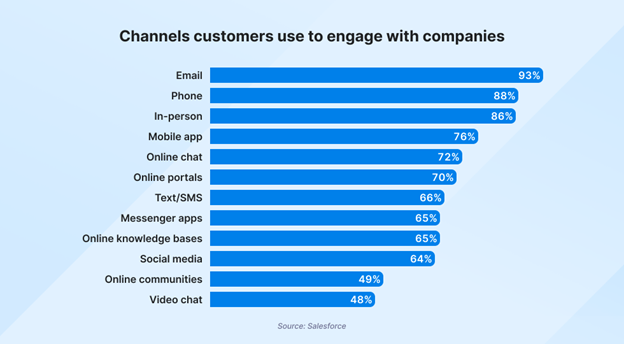
Customers today expect support that flows smoothly across channels, switching from live chat to email to voice as their needs evolve during a single journey,from pre-purchase questions to order issues and follow-ups.
Each Channel Serves A Different Stage
- Live Chat → Real-time product guidance, checkout assistance, and stock questions.
- Email → Refund confirmations, return approvals, policy explanations, and documentation exchange.
- Voice → Escalations, billing disputes, delivery failures, or emotionally sensitive situations.
Benefits of Channel Blending
Channel blending improves continuity because conversations and case context remain connected across touchpoints. Customers avoid repeating their story, which builds trust and speeds resolutions.
- 90% of consumers expect a seamless experience across channels: Most demand consistent service whether chatting, emailing, or calling, viewing support as one conversation regardless of medium.
- Blended journeys reduce repeated explanations and duplicated tickets: Compared to single-channel handling, unified views cut redundant work, saving agent time and boosting satisfaction.
- Channel Blending Improves Continuity: Channel blending becomes powerful when conversations and case context remain connected across touchpoints. Instead of restarting the issue every time a customer switches channels, agents can see the full history, chat transcripts, order details, and prior emails, in one timeline.
How Omnichannel Platforms Like Sobot Power Smarter Channel Use
Omnichannel platforms like Sobot unify voice, live chat, and email into one intelligent system, enabling smarter channel decisions and better outcomes.
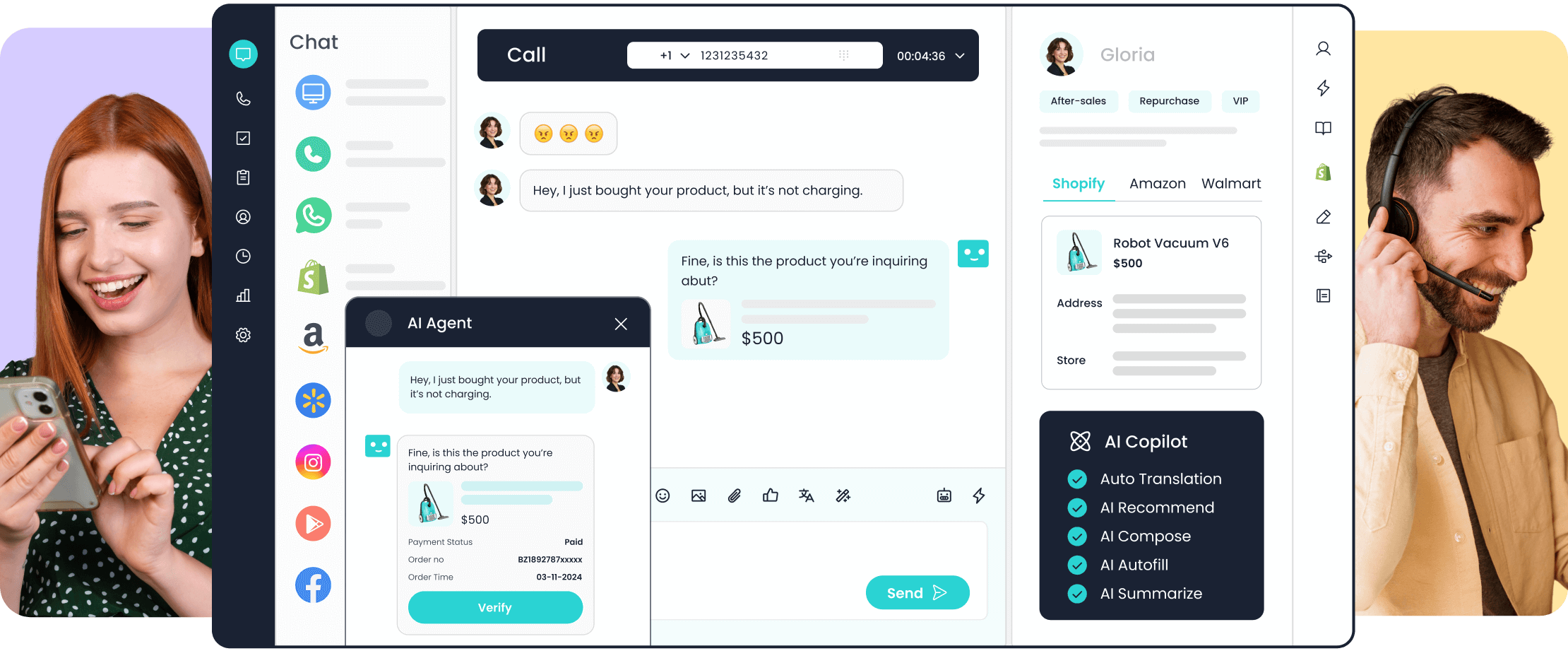
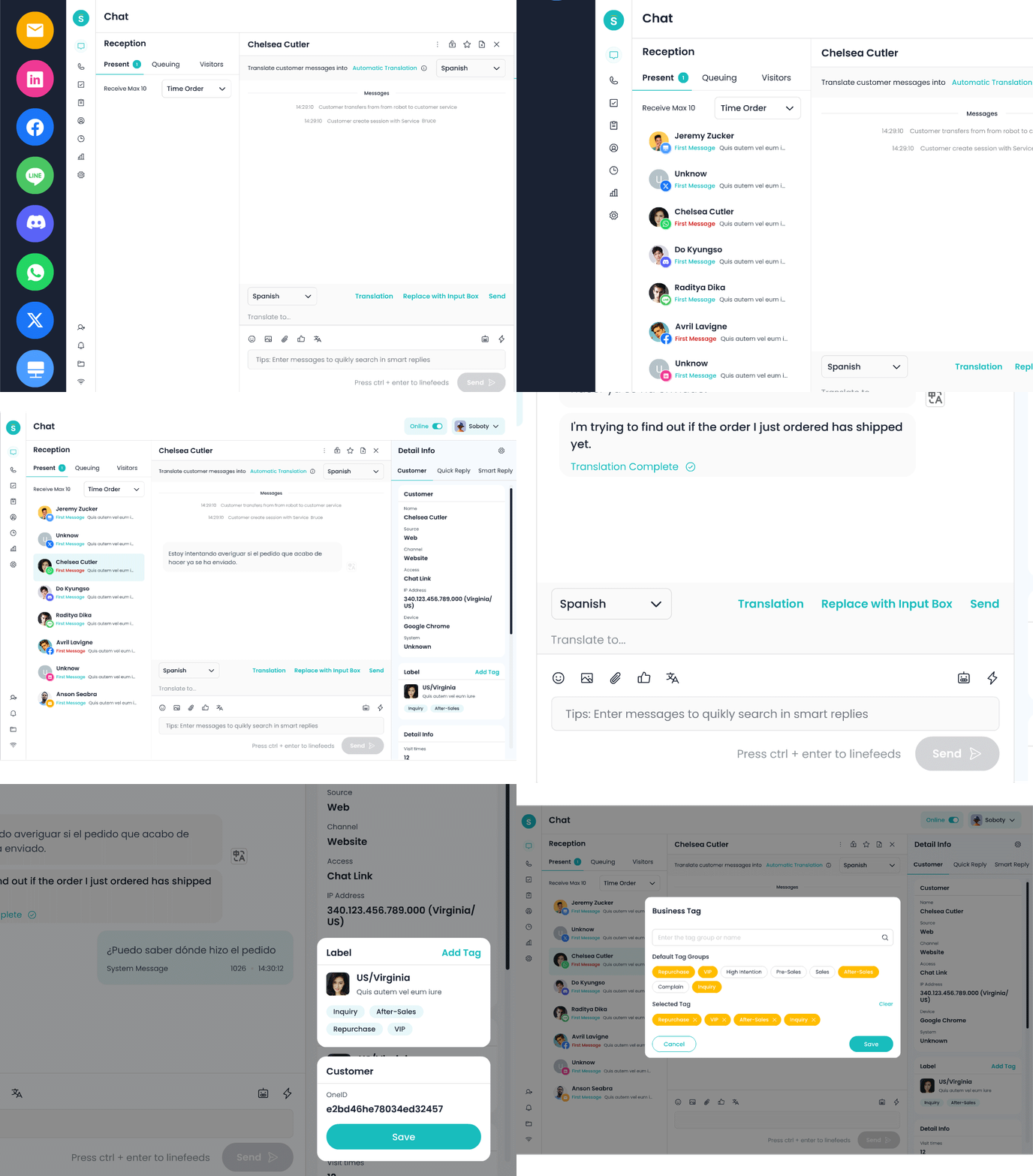
- Unified Handling in one Workspace: Agents manage all channels from a single dashboard, no app-switching between voice calls, chat threads, and email inboxes.
- Connected Context across Channels: Full conversation history syncs automatically, so a voice agent sees prior chats/emails instantly, eliminating repeat questions.
- Built-in Automation for Repetitive Requests: AI bots handle FAQs (order status, returns) across channels, resolving 60-70% of routine queries without human intervention.
- Smart routing and SLA controls: AI analyzes urgency/intent to route high-priority issues to voice, simple ones to chat, enforcing SLAs like “voice under 2 min, email under 24 hrs.”
- Cross-channel analytics: Track CSAT, resolution times, and channel performance in one view, spot trends like “chat converts 20% better for carts” to optimize routing.
Wrap Up
Customers don’t judge brands by how many support channels they offer, they judge them by how quickly and smoothly their issues are resolved. Whether the interaction happens through voice, live chat, or email, what truly matters is speed, clarity, and continuity. Matching the right channel to the right scenario improves customer satisfaction, strengthens retention, and supports long-term revenue growth.
When these channels are unified through an omnichannel platform such as Sobot, brands can deliver consistent service across every touchpoint while reducing friction and duplication. The next step is clear: evaluate your current channel strategy and adopt an integrated omnichannel approach that scales customer experience with efficiency and reliability.