Ever stared at your blowing-up support inbox on a chaotic Tuesday morning? Customers are screaming “Where’s my delayed order?!” and “Why won’t my discount code load?!”– and in today’s cutthroat market, wowing them isn’t a “nice-to-have” — it’s survival.
Our latest blog breaks down how Sobot outshines Intercom in real-world support scenarios– so you can pick the platform that turns chaos into loyal, repeat customers.
Intercom’s Key Tools & Service Offerings
AI & Automation Features
- Fin AI Agent: An advanced AI-powered support assistant that pulls from a company’s knowledge base to deliver accurate, real-time responses across multiple channels. The latest version, Fin 2 (launched in 2024), uses Anthropic’s Claude to boost performance and reliability.
- Inbox AI: Enhances support efficiency with features like AI Autofill, AI Compose, and conversation summarization, helping agents respond faster without sacrificing quality.
- Automation: Lets businesses set up automated workflows and customize bot identities to ensure seamless, consistent communication—even when teams are offline.

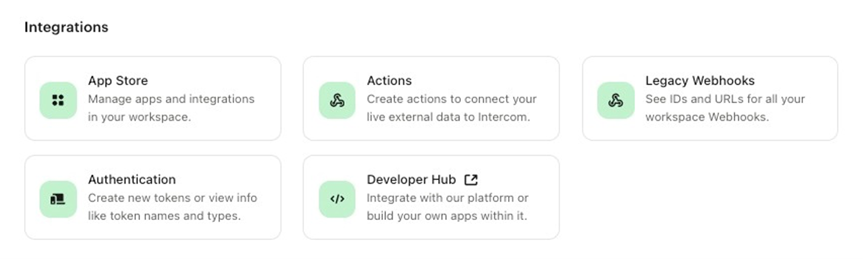
Integrations
- Actions: Connect live external data to Intercom for more relevant interactions.
- App Store: Manage third-party apps and integrations to add extra features.
- Developer Hub: Build custom apps or extend existing features using Intercom’s platform.
Customer Interaction Channels
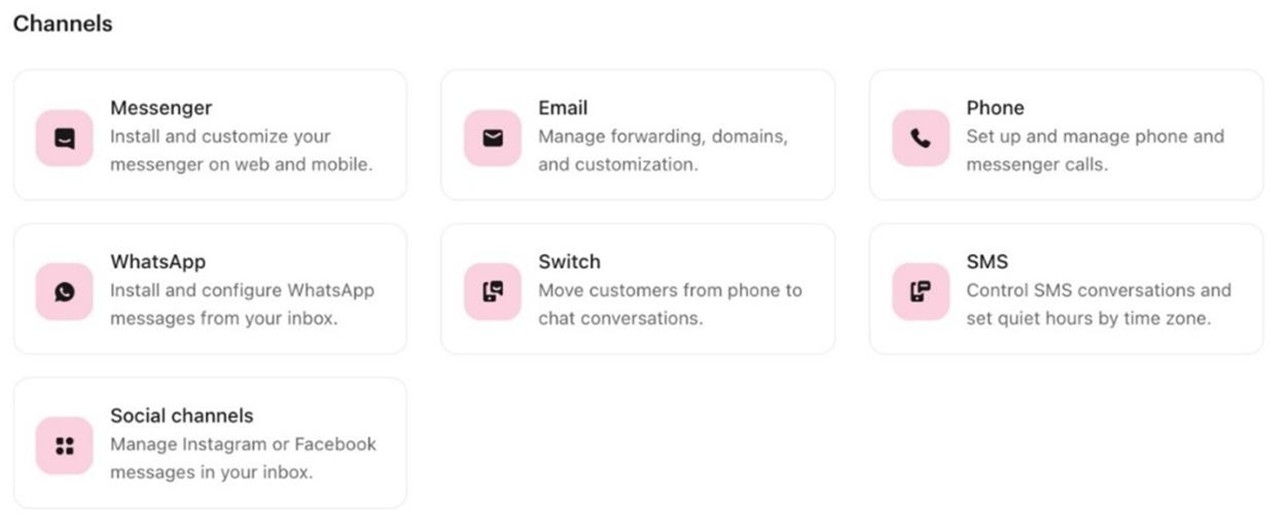
Intercom covers a range of communication channels to meet customers where they are:
- Messenger: Customizable chat for web and mobile.
- Email: Tools to manage forwarding, domains, and branding.
- Phone: Setup and management for phone and messenger calls.
- WhatsApp: Integrate WhatsApp messages into your Intercom inbox.
- Switch: Move customers from phone calls to chat seamlessly.
- SMS: Control SMS conversations and set quiet hours by time zone.
- Social channels: Manage Instagram and Facebook messages in one place.
Data Management
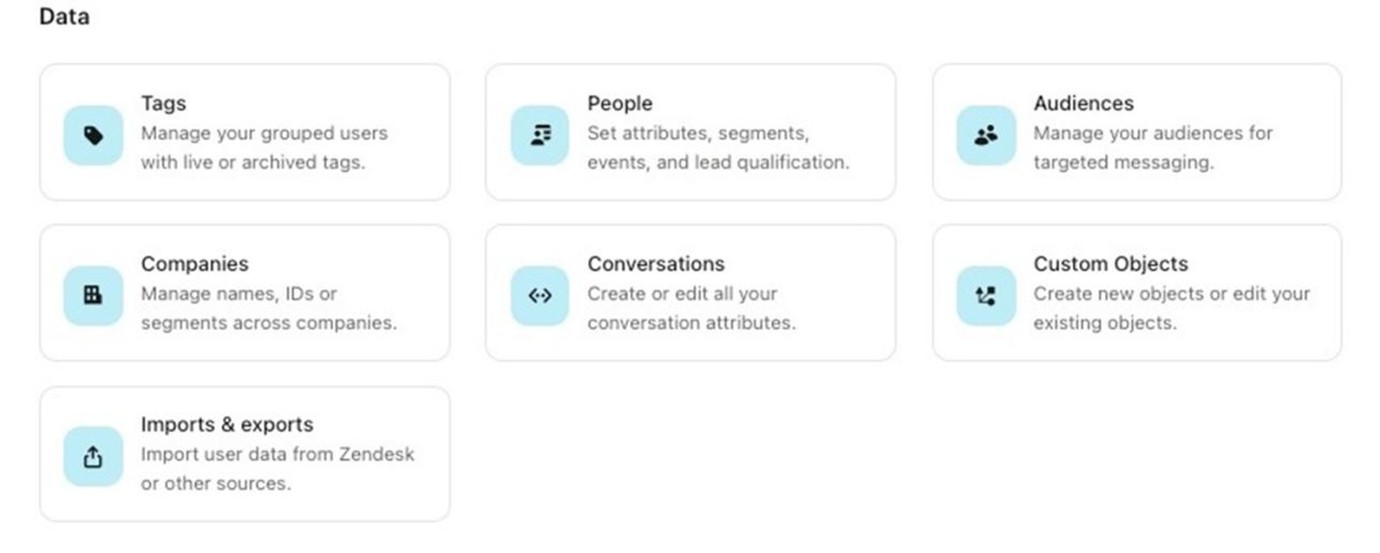
- Tags: Group users with live or archived tags for easy segmentation.
- People: Set user attributes, segments, events, and lead qualifications.
- Audiences: Manage targeted messaging groups.
- Companies: Track company names, IDs, and segments.
- Conversations: Edit or create conversation attributes.
- Custom Objects: Build new objects or modify existing ones.
- Imports & Exports: Bring in user data from Zendesk or other platforms.
What Makes Intercom Stand Out
Intercom has two major strengths that keep it in the game:
Fin & Fin 2 AI Bots: Launched in 2023, Fin is powered by large language models (LLMs) and excels at answering customer queries with speed and intelligence. Fin 2 takes this a step further— it can quickly absorb massive amounts of knowledge from multiple sources, adapt to a company’s tone and policies, and support 45 languages. It also performs tasks for customers with a personalized touch and provides insights to help businesses improve their support operations.
Feature-Packed Visitor Pages: Intercom’s visitor pages include sections like Home, Messages, Help, and News, which drive strong user interaction, smooth navigation, and an enjoyable customer experience.
Intercom’s Critical Limitations
1. Confusing, Costly Pricing
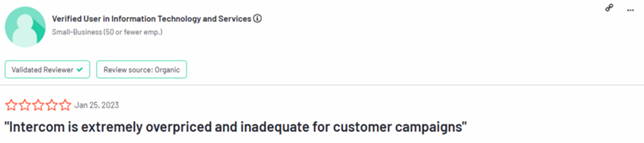
Many essential features—like Resolution Bot and custom workflows—are locked behind higher-tier plans that most small businesses can’t afford. Add-ons only make things worse, driving up costs unexpectedly.
2. Lack of Flexibility
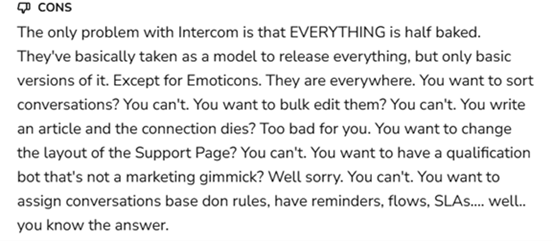
Intercom’s rigid structure is a major frustration. While it has plenty of features, businesses can’t easily modify tools or workflows to fit their unique needs. If your company has specific customer engagement requirements– like tailored communication for a niche audience– Intercom’s one-size-fits-all approach will likely fall short.
3. Restricted AI Learning
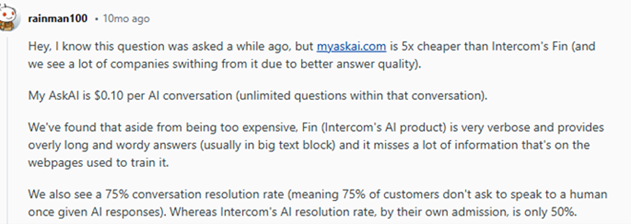
Intercom’s AI (including Fin) doesn’t learn from past conversations, which means it can’t provide truly contextual responses. Instead, it relies entirely on pre-scripted articles from the knowledge base and specific question-answer pairs. While this works for basic queries, setting up and maintaining these resources requires significant time and money—something small businesses can’t spare. One Reddit user shared their frustration:”Intercom’s AI doesn’t adapt to customer interactions. It just repeats pre-written answers, which feels impersonal and unhelpful for complex questions.”
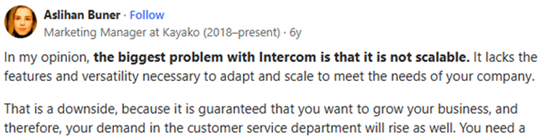
4. Poor Scalability
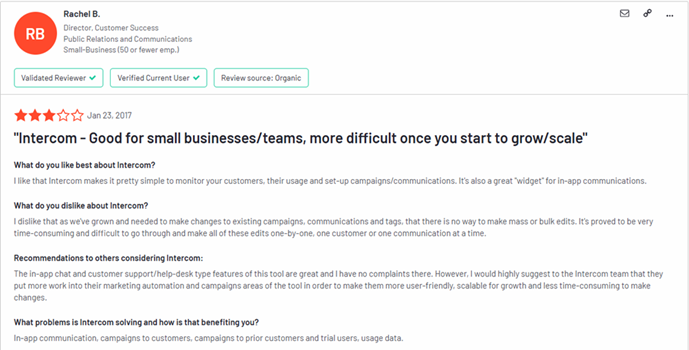
Intercom doesn’t grow with your business. As your company expands, your needs change—but Intercom’s pricing and features don’t adjust smoothly. You’ll either outgrow the platform quickly or face steep upgrade fees that don’t fully address your new requirements. Most startups and growing companies need advanced automation and analytics tools that Intercom either doesn’t offer or charges a premium for.
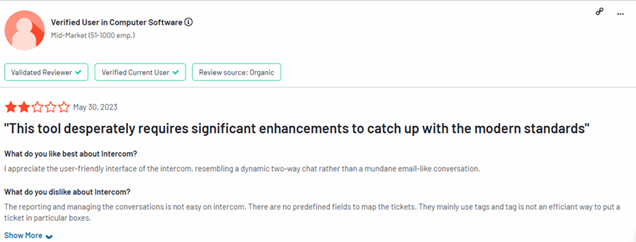
5. Weak Reporting & Analytics
Intercom’s reporting tools are limited. While it provides basic insights, it lacks the in-depth, actionable data businesses need to make smart decisions.
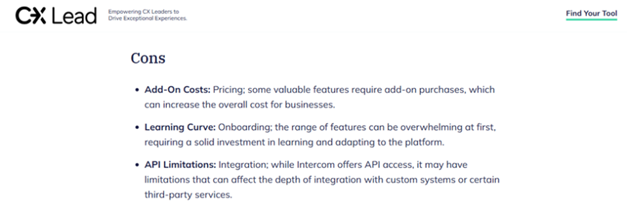
6. Dependence on Third-Party Integrations
Intercom relies heavily on third-party tools for some key features instead of building them into the platform. This not only complicates workflows but also creates operational dependencies: if a third-party provider has an issue, your entire customer service process could suffer. Multiple integrations also add extra costs and administrative headaches.
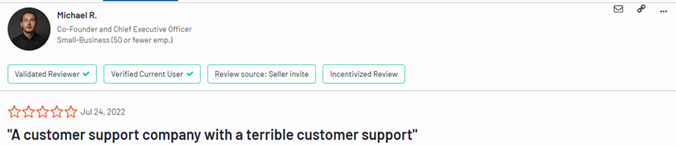
7. Unreliable Customer Support
Numerous users have complained about Intercom’s own customer service. Delayed responses and unresolved issues are common—problems that can be catastrophic for businesses relying on Intercom to serve their own customers.

Sobot: The All-in-One Alternative to Intercom
Sobot has emerged as Intercom’s toughest competitor, offering a comprehensive suite of tools that address the diverse needs of modern businesses. What makes it stand out? It’s affordable, customizable, and easy to use—regardless of your company’s size.
Sobot’s key strengths include:
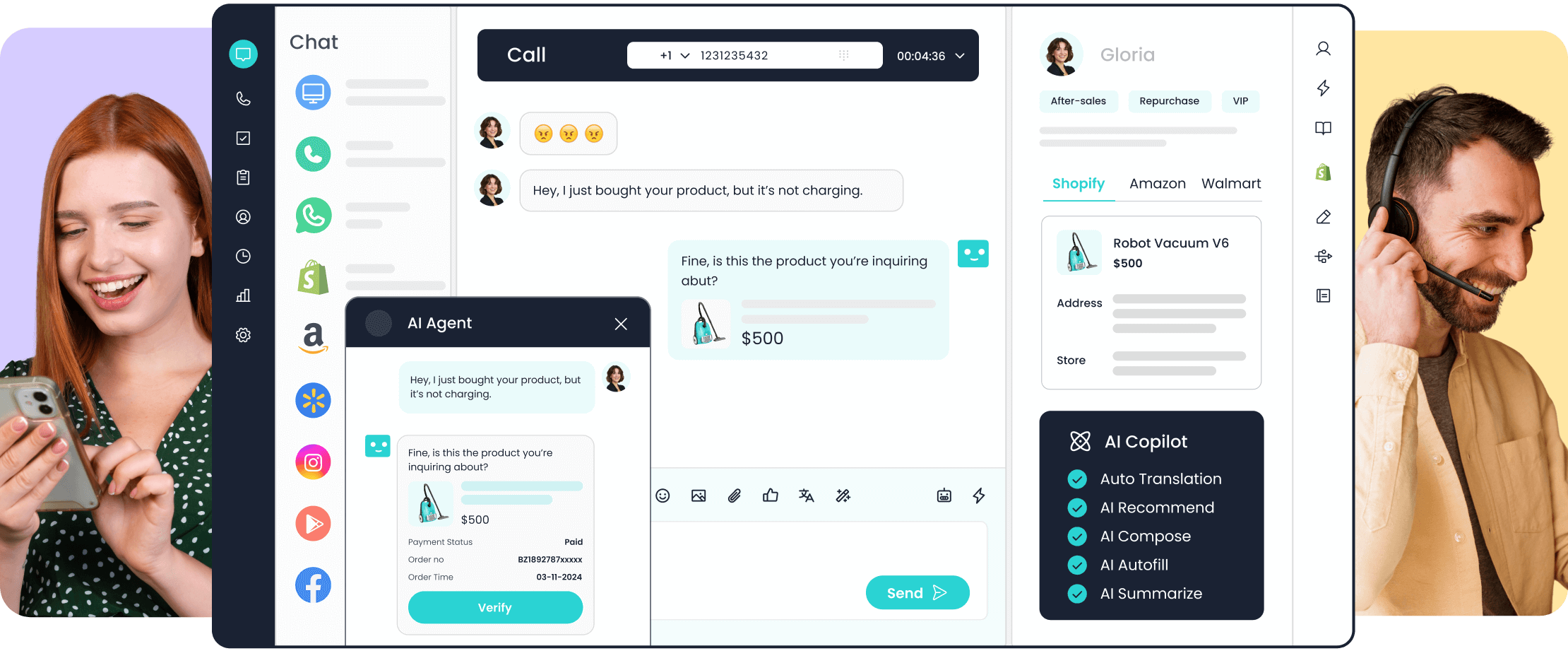
- AI-Driven Chatbots: These intelligent tools autonomously resolve common customer queries and efficiently handle complex issues, streamlining agent workflows and boosting overall operational efficiency. They deliver round-the-clock support to enhance customer satisfaction, reduce reliance on extra agents to cut operational costs, and use data-driven insights to engage customers with timely, relevant interactions that drive higher conversion rates.
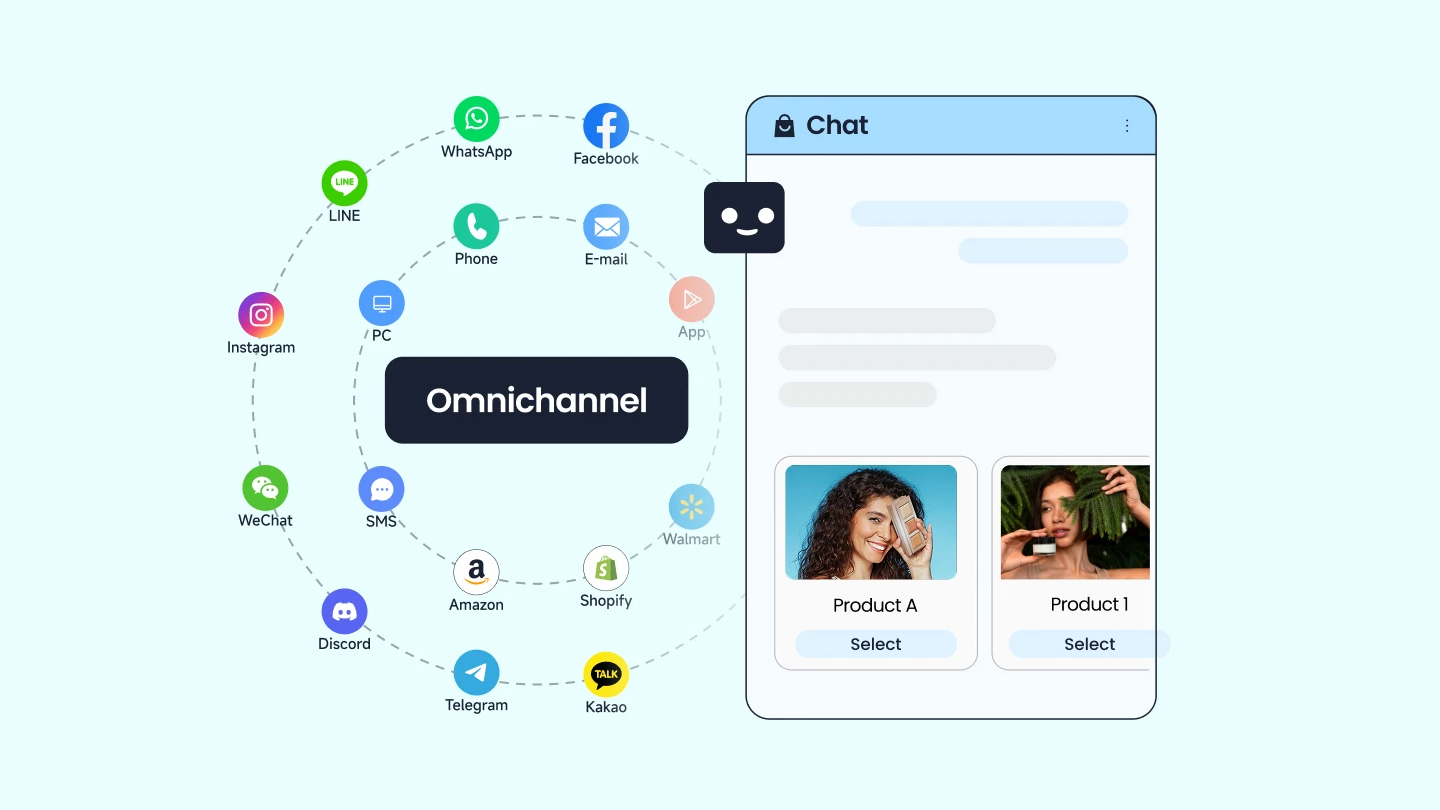
- Omnichannel Communication: Sobot integrates seamlessly across email, chat, social media, and more, ensuring a unified customer experience no matter how customers reach out.
- Auto-Dialer Solutions: Automated outbound calling makes it easy for businesses to connect with customers fast.
- Customizable Dashboards: Tailor dashboards to your specific needs and preferences for a personalized workflow.
Why Sobot Outperforms Intercom
Sobot doesn’t just fix Intercom’s pain points—it goes above and beyond to offer features that businesses actually need. Here’s why it’s a better choice:
1. Flexible Pricing
Sobot’s pricing is flexible and adjustable, offering scalable plans that fit the evolving needs of SMEs seeking an alternative to Intercom. Businesses can tailor their pricing packages based on specific requirements, ensuring they only pay for the features and capacity they need. This adaptability allows companies to manage costs effectively and plan their budgets without facing unexpected financial pressure.
2. Full Customization
Sobot offers complete customization options, so you can tailor tools and workflows to fit your unique business needs. Whether you’re a niche startup or a large enterprise, you won’t have to force your processes to fit the platform.
3. Easy to Use
Sobot’s intuitive interface eliminates the steep learning curve associated with Intercom. Your team can get up and running quickly, without spending weeks on training. This saves time and ensures you start seeing results fast.
4. Reliable Customer Support
Sobot delivers consistent, high-quality customer support across the entire journey — a reliable, responsive experience that Intercom often fails to match. Unlike Intercom’s inconsistent response times, Sobot’s team is widely praised for being proactive and helpful, with every question in pre-sales, purchasing and post-sales stage— from initial configuration to urgent technical issues– addressed clearly and efficiently.
5. True Omnichannel Flexibility
Unlike Intercom (which focuses heavily on online text chat), Sobot excels across all channels—including online chat, voice, and calls. This multichannel approach ensures customers have a consistent experience, no matter how they choose to communicate. Sobot’s universal solution covers all customer support needs, making it more flexible and adaptable than Intercom.
Sobot vs. Intercom: Side-by-Side Comparison
| Feature | Sobot | Intercom |
| Pricing | Affordable and flexible;basic plan includes AI-powered and omnichannel features, premium plan accessible to all business sizes, no hidden fees | Expensive with hidden costs;subscription-based, costly add-ons like product tours and AI tools drive up expenses. |
| Customization | Highly customizable | Limited flexibility |
| Ease of Use | Intuitive and user-friendly | Complex and overwhelming |
| AI Capabilities | Advanced AI-driven chatbots | Intercom promotes AI as a game-changer, but its Fin AI Agent often struggles with complex queries, requiring human intervention more than expected. |
| Third-Party Tools | Limited integrations | Extensive but dependency-heavy |
| Customer Support | Reliable and prompt | Criticized for inefficiency |
Why Sobot is the Smart Choice
Choosing the right customer engagement platform can make or break your customer relationships. Intercom has long been a leader in the industry, but its high costs, limited flexibility, and poor user experience have made it less appealing for many businesses—especially startups and SMEs.
Sobot addresses all of Intercom’s shortcomings while offering advanced features that modern businesses need. It’s affordable, customizable, and easy to use, with reliable customer support and true omnichannel capabilities. Whether you’re looking to streamline customer service, automate workflows, or build stronger relationships with your customers, Sobot delivers—without the hidden costs or frustration of Intercom.
If you’re tired of feeling constrained by your customer engagement platform, it’s time to make the switch to Sobot. With a 15-day free trial and the ability to book a demo, there’s no risk in seeing how it can transform your customer service.
FAQs
Who is Sobot? What are its main products and advantages?
Sobot is a leading provider of contact center solutions (also known as customer service software or customer support platforms). Our core products help businesses:
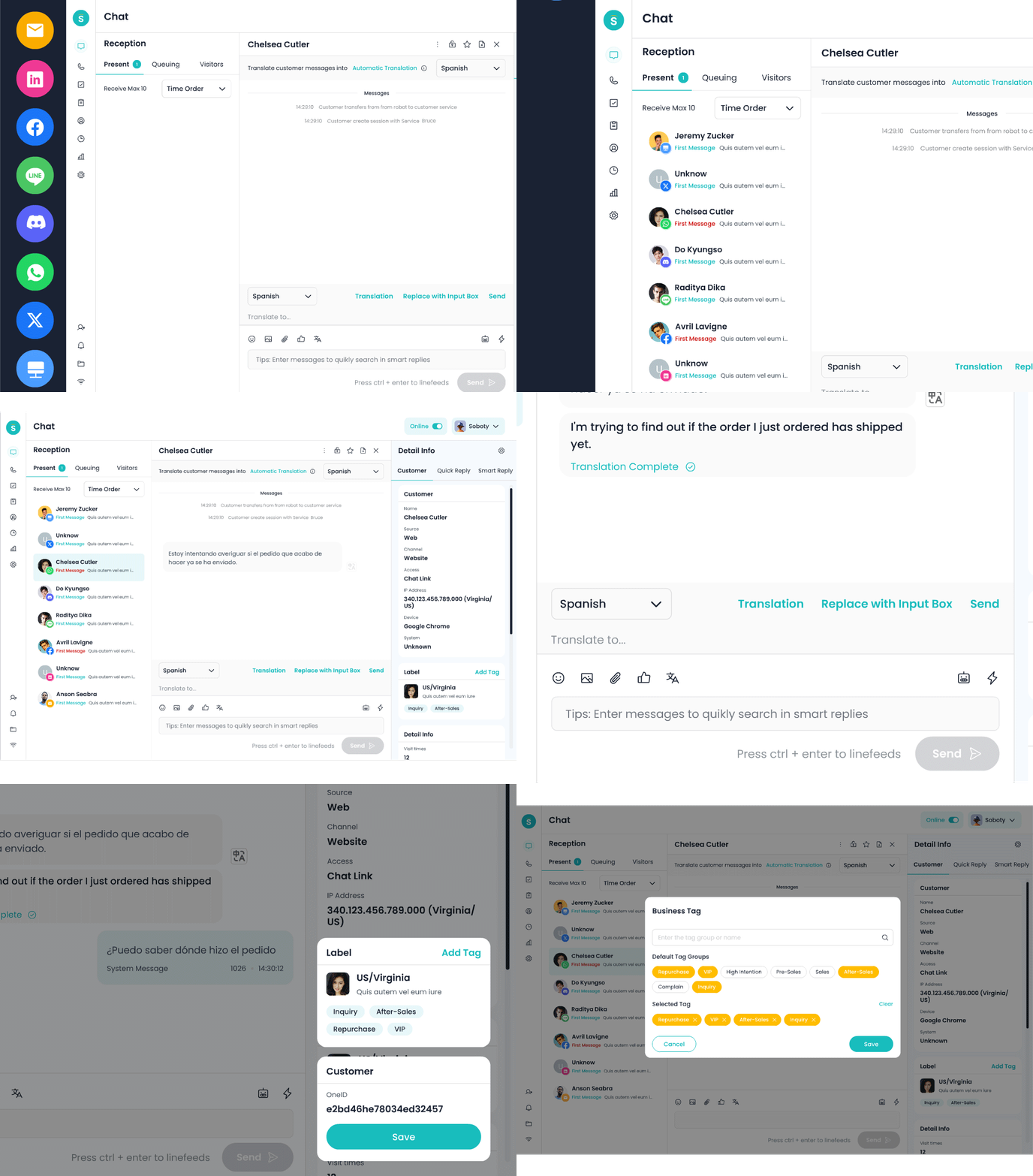
- Connect with customers across all channels—including e-commerce platforms (Amazon, Walmart), social media (Facebook, Instagram, WhatsApp, Line, WeChat), websites (Shopify/WordPress/Wix), apps, email, SMS, and more.
- Receive customer inquiries anytime, in any form.
- Store or integrate customer data for proactive outreach.
- Manage operations end-to-end—including process monitoring, quality inspection, and data statistics (Sobot offers over 300 statistical reports with thousands of indicators, one of the most comprehensive in the industry).
In short, Sobot delivers integrated, omnichannel, and intelligent customer service with faster response times and lower costs.
How does Sobot compare to competitors like Intercom?
While competitors like Intercom excel in specific areas (e.g., Intercom’s AI reputation), they often focus on a single core product or have significant limitations (like high costs or rigidity). Sobot offers an all-in-one solution that integrates all customer channels and communication methods into a single platform. This means managers don’t need to purchase multiple systems or check data across different tools. Sobot also stands out for:
- Timely service: Access sales reps, pre-sales consultants, customer success managers, and even product managers anytime.
- Lower prices: Sobot’s pricing is often half (or less) than competitors, with no hidden fees.
Does Sobot offer a free trial or demo?
Yes! You can register now for a 15-day free trial of all Sobot products. To learn more, click the online consultation button in the lower right corner to book a demo meeting.
Where can I find more information about Sobot?
Visit the Sobot Blog to learn about the company, product applications, and insights on contact centers/customer service. You can also follow Sobot on LinkedIn, Facebook, Twitter, Instagram, and YouTube for updates.