Customer satisfaction is no longer a “nice-to-have” in e-commerce, it has become a strategic imperative. In a market where products, prices, and delivery speeds are increasingly similar, the quality of the customer experience is often what determines which brands grow and which quietly lose customers.

Customer Satisfaction Score (CSAT) plays a crucial role. CSAT is a simple, transaction-level metric that measures how satisfied a customer is with a particular interaction, whether a purchase, delivery, or support conversation.
This article explains how e-commerce brands can measure CSAT accurately, understand why it matters, and adopt practical strategies to improve it. It also explores how customer-centric platforms like Sobot help brands turn satisfaction insights into action, improving experiences, strengthening loyalty, and driving sustainable business growth.
What is CSAT (Customer Satisfaction Score)?
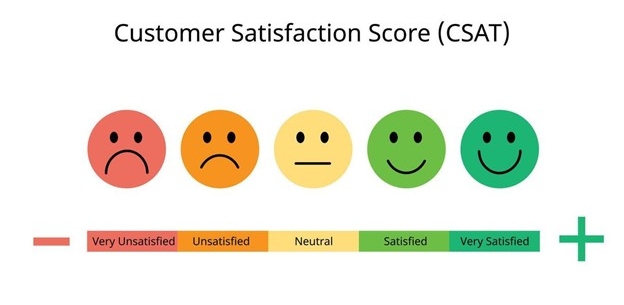
Customer Satisfaction Score (CSAT) is one of the most widely used metrics for understanding how customers feel about a specific interaction or experience. In e-commerce, CSAT captures satisfaction immediately after key moments such as a purchase, delivery, customer support interaction, or return.
At its core, CSAT is a simple, transaction-level metric. Customers are typically asked a direct question like “How satisfied are you with your experience?” and respond using a numerical scale, most commonly a 1–5 star rating or a 0–10 score. The simplicity of CSAT makes it easy for customers to respond and easy for businesses to analyze at scale. Source.
What makes CSAT especially valuable is its immediacy. Because it measures satisfaction right after an interaction, it provides timely insight into what is working and what is not. High CSAT scores are strongly associated with repeat purchases, positive word-of-mouth, and lower customer churn. When customers consistently report positive experiences, they are more likely to return and recommend the brand to others.
Why Does CSAT Matters in E-commerce?
E-commerce brands interact with customers across many touchpoints, from browsing and checkout to delivery, support, and returns. Measuring satisfaction at these moments requires the right metric. This is where CSAT stands out, especially when compared to other commonly used experience indicators like NPS and CES.
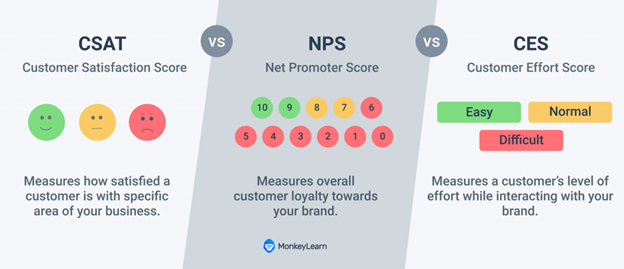
CSAT vs NPS vs CES, What’s the Difference?
- CSAT (Customer Satisfaction Score) measures how satisfied a customer is with a specific interaction or transaction. It is typically collected immediately after an experience, such as a completed purchase, delivery, or customer support interaction. This makes CSAT highly actionable, as it reflects real-time sentiment tied to a precise moment in the customer journey.
- NPS (Net Promoter Score) measures the likelihood that a customer will recommend a brand to others. While useful for understanding overall brand loyalty, NPS is a broader, relationship-level metric and is less effective at pinpointing where specific problems occur in the e-commerce experience.
- CES (Customer Effort Score) focuses on how easy or difficult it is for a customer to complete a task, such as resolving an issue with support or completing a return. CES is particularly useful for identifying friction, but it does not directly measure satisfaction or emotional response.
CSAT and Revenue Impact
Customer satisfaction has a direct and measurable impact on revenue in e-commerce. Higher CSAT is consistently associated with increased repeat purchases and higher customer spending, as satisfied customers are more confident returning to brands they trust. Academic and industry research shows a positive relationship between e-satisfaction and consumer spending behavior in online retail environments, reinforcing the idea that satisfaction is not just an emotional metric but a commercial one.
In practice, improving CSAT helps brands increase customer lifetime value by encouraging repeat buying and reducing reliance on costly acquisition to replace churned customers.
CSAT as a Predictor of Return Behavior
CSAT also serves as an early indicator of return and churn risk. Dissatisfied customers are more likely to return products, cancel orders, or abandon carts, often as a reaction to unmet expectations, delivery issues, or poor support experiences. Lower satisfaction increases pressure on customer service teams and raises operational costs through higher support volumes and reverse logistics.
Conversely, improving CSAT helps reduce service costs and supports stronger customer retention by addressing issues before they escalate into returns or churn.
Customer experience data consistently shows how unforgiving poor experiences can be. Industry commentary highlights that up to 91% of customers say they will not do business again with a brand after a bad experience, underscoring how quickly dissatisfaction translates into lost revenue. Source.
How to Measure CSAT in E-commerce?
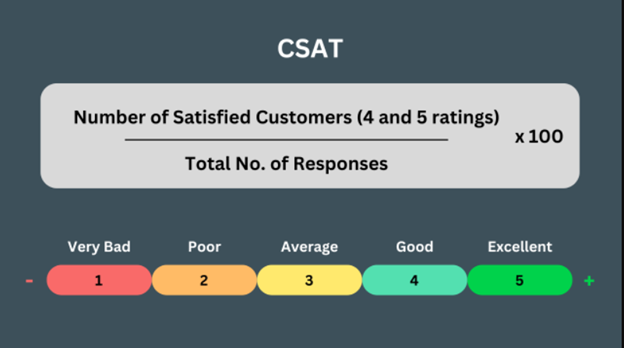
- Choosing and Timing the Right Survey: Accurate CSAT measurement depends heavily on when and where feedback is collected. In e-commerce, the most reliable insights come from post-purchase surveys triggered immediately after key moments, such as order delivery or a completed customer support interaction. Brands typically collect CSAT through embedded surveys within the website or app, or via email and SMS follow-ups. Embedded surveys tend to generate higher response rates for in-the-moment feedback, while email or SMS surveys work well for post-delivery or post-support evaluation.
- Key Question Formats: CSAT is designed to be simple and fast for customers to answer. The most commonly used format is a 5-point satisfaction scale, ranging from Very dissatisfied to Very satisfied. This approach is widely adopted because it is easy to understand and analyze, and it minimizes survey fatigue. Some brands also use a 10-point scale, where customers rate satisfaction from 1 (very dissatisfied) to 10 (very satisfied). To increase engagement, many e-commerce brands supplement numeric scales with emoji-based quick rating tools, which make surveys feel lighter and more intuitive, especially on mobile devices. Finally, adding an optional open-text question allows customers to explain why they selected a score.
- Interpreting CSAT Scores: Interpreting CSAT correctly is just as important as collecting it. A high CSAT score generally indicates that customers’ expectations were met or exceeded at a specific touchpoint, such as delivery, support, or checkout. A low CSAT score, on the other hand, points to gaps, misaligned expectations, delayed fulfillment, unresolved issues, or confusing processes, that may lead to returns, churn, or negative word-of-mouth if left unaddressed.
Rather than viewing CSAT as a single, static number, e-commerce brands gain far more insight by benchmarking CSAT across time and touchpoints. Comparing scores before and after changes, such as a new return policy, delivery partner, or support workflow, helps teams understand what is actually improving the customer experience.
Common Pitfalls in CSAT Measurement
- Survey fatigue: Overusing pop-ups or sending surveys too frequently leads to lower response rates and less thoughtful feedback. Fewer, well-timed surveys produce more reliable CSAT insights.
- Context misalignment: Collecting CSAT too early (before delivery or issue resolution) or too late (long after the interaction) reduces accuracy and relevance of responses.
- Over-reliance on a single score: Treating CSAT as a one-time number rather than a trend can hide underlying issues or exaggerate isolated incidents.
- Ignoring qualitative feedback: Focusing only on numerical scores while overlooking open-text comments limits understanding of why customers are satisfied or dissatisfied.
- Lack of touchpoint-level analysis: Measuring only overall CSAT without separating purchase, delivery, support, and returns makes it difficult to identify where problems actually occur.
- Failure to act on insights: Collecting CSAT data without translating insights into operational or experience improvements turns the metric into a reporting exercise instead of a growth tool.
Main Drivers of CSAT in E-commerce
Product Experience
Product experience is one of the strongest foundations of customer satisfaction in e-commerce. Because customers cannot physically see or try products before buying, accurate product descriptions and high-quality visuals play a critical role in setting expectations. When products match what customers see and read online, disappointment and dissatisfaction are significantly reduced.
Research supports this strongly: 87% of online shoppers consider detailed product content a key factor in their purchase decisions, underscoring how closely product clarity and CSAT are linked. Source.
Fulfillment and Delivery Experience
Once a purchase is made, fulfillment becomes a defining moment for customer satisfaction. On-time delivery and transparent tracking are consistently cited as key satisfaction drivers in e-commerce.
Conversely, delivery delays or poor communication quickly erode CSAT, even when the product itself meets expectations. Missed delivery promises often create frustration that spills over into negative ratings, increased support requests, and lower trust in the brand.
Customer Support Quality
Customer support quality has a direct and measurable impact on CSAT. Fast, clear, and helpful interactions reassure customers when issues arise and often determine whether a problem becomes a moment of recovery or a reason to churn.
Return and Refund Experience
The return and refund process strongly shapes post-purchase satisfaction, especially when products do not meet expectations. Hassle-free, transparent return workflows help preserve trust and leave customers feeling supported rather than penalized.
Delays in refunds, however, have a clear negative effect on satisfaction. E-commerce studies show that when refunds take longer than 14 days, customer satisfaction can drop by up to 55%, highlighting how sensitive CSAT is to refund speed and communication. Source.
Personalization and Interaction
Personalized interactions increasingly influence how customers perceive their experience. Tailored product recommendations, relevant messaging, and personalized support make customers feel understood and valued.
This directly affects satisfaction and loyalty. Research shows that 44% of online shoppers say personalized experiences increase their likelihood of repeat purchases, reinforcing personalization as a meaningful contributor to positive CSAT outcomes. Source.
Strategies to Boost CSAT
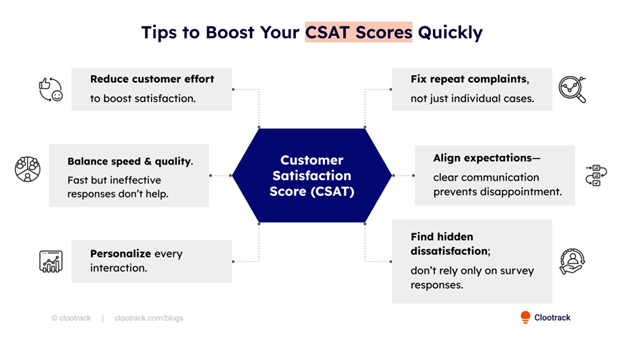
- Improve Product Information and Expectation Setting: Clear product descriptions, accurate visuals, and detailed specifications directly improve CSAT by reducing expectation gaps. When customers understand exactly what they are buying, dissatisfaction caused by mismatch is far less likely. Strong expectation setting at the product page level remains one of the most effective, low-cost ways to improve satisfaction across the entire customer journey.
- Simplify Returns and Refunds: Even when a purchase doesn’t work out, the return experience plays a decisive role in overall satisfaction. A smooth, transparent return process reassures customers and preserves trust. According to Narvar, 92% of consumers say they are more likely to shop again with a retailer if the return process is easy, highlighting how returns can either damage or strengthen CSAT depending on execution.
- Speed Up Response Times and Reduce Support Friction: Support responsiveness has a direct impact on CSAT. Customers expect quick, consistent resolutions regardless of the channel they use. Salesforce research shows that 78% of customers expect consistent interactions across departments, and slow or repetitive support experiences are a major source of dissatisfaction.
- Ensure On-Time Delivery and Transparent Tracking: Fulfillment performance strongly influences post-purchase satisfaction. Consumer research consistently shows that shipping speed and reliability are among the top drivers of e-commerce satisfaction, while delivery delays and poor communication quickly erode customer confidence. Clear tracking updates and proactive delivery notifications help manage expectations and reduce frustration during the waiting period.
- Personalize Customer Interactions Where Possible: Personalization improves CSAT by making experiences feel more relevant and less transactional. McKinsey reports that 71% of consumers expect personalized interactions, and many become frustrated when brands fail to deliver them, making personalization an increasingly important factor in satisfaction and loyalty.
The Role of Platforms Like Sobot

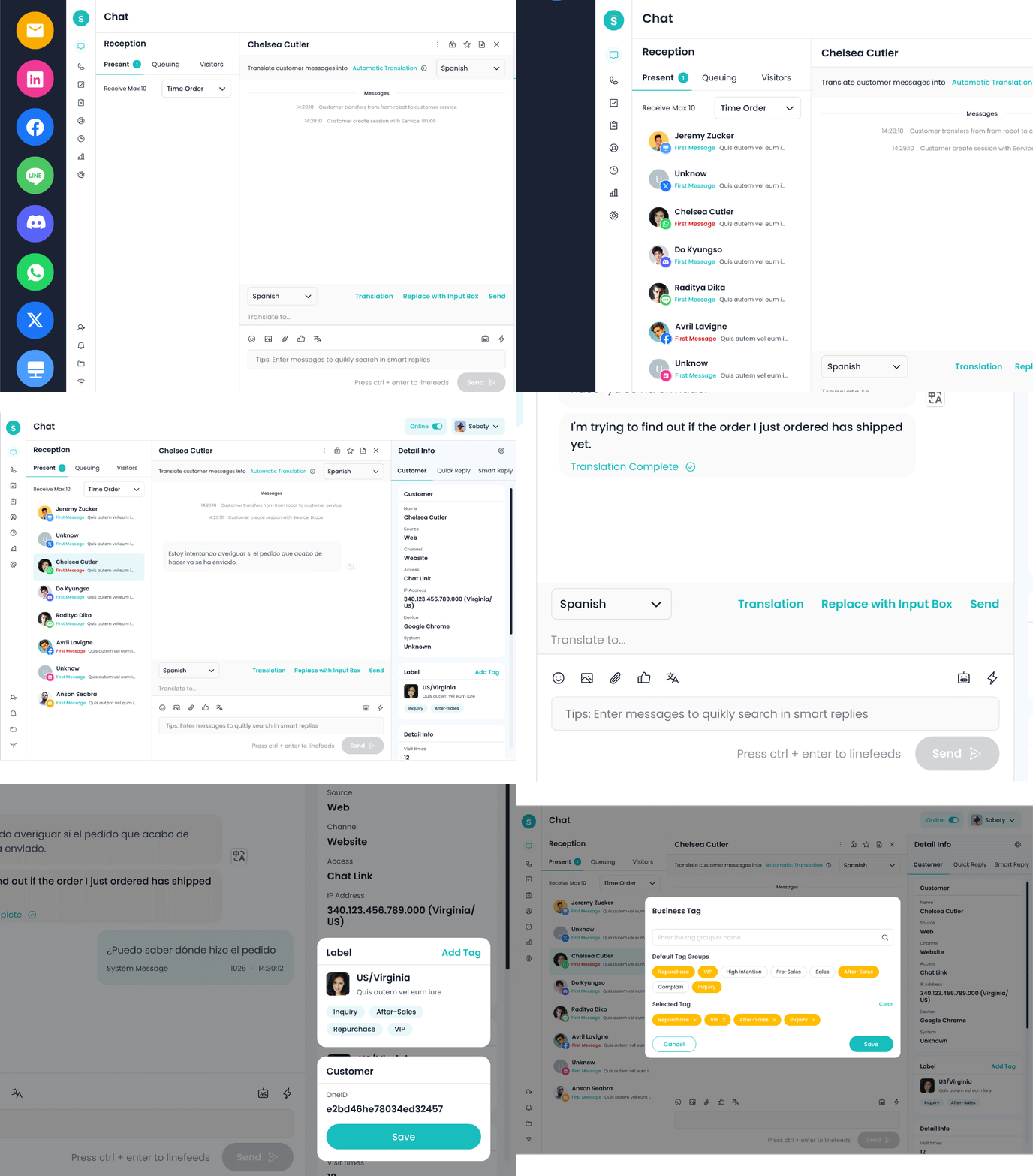
Sobot is a customer experience and engagement platform designed to help e-commerce and retail brands manage customer interactions efficiently across the entire journey. It enables businesses to deliver consistent, responsive support at scale by centralizing communication, automating routine tasks, and turning customer feedback into actionable insights.
Built specifically for e-commerce and retail use cases, the platform integrates with major commerce ecosystems such as Shopify, Amazon, Walmart, Shopee, and Lazada, making it highly relevant for online merchants operating across multiple storefronts and marketplaces.
- Centralized omnichannel support: Sobot unifies customer conversations across live chat, voice, email, WhatsApp, and other channels, reducing context switching and helping agents resolve issues faster without customers repeating themselves.
- AI-powered assistance and automation: Sobot’s AI tools automate routine customer queries, such as order status, delivery updates, return policies, and basic product questions, providing instant 24/7 responses and reducing wait times that negatively impact CSAT.
- Analytics and experience insights: The platform enables teams to analyze over 300 metrics, track satisfaction trends, recurring complaints, and support performance, helping identify problem areas across the customer journey and prioritize experience improvements.
- Workflow automation for returns and follow-ups: Automated workflows streamline return, refund, and support follow-up processes, improving response consistency, reducing delays, and ensuring customers receive timely updates.
- Measurable impact on customer experience: By combining omnichannel support, AI automation, analytics, and workflows, Sobot helps brands achieve higher responsiveness, fewer unresolved complaints, and more consistent service, key contributors to improved CSAT over time.
Conclusion
Customer Satisfaction Score (CSAT) is more than a number—it’s a practical signal of how well an e-commerce brand meets customer expectations across key touchpoints. Measuring CSAT is only the first step. The real value comes from acting on feedback to improve product clarity, delivery performance, support quality, and return experiences. Brands that consistently respond to satisfaction insights are better positioned to retain customers, build loyalty, and drive long-term growth.
Customer-centric platforms like Sobot help make this scalable by centralizing customer interactions, automating routine workflows, and tracking satisfaction trends. The next step is to audit your current CSAT approach and adopt tools that turn feedback into continuous improvement.