Introduction
The modern CX market is currently defined by a “consolidation of tools”. Mid-market companies are moving away from fragmented stacks—where chat, email, and CRM live in different tabs—toward unified platforms. Freshworks dominates this space because it offers a “one-stop-shop” that is notoriously easy to set up.
However, as customer expectations for instant, human-like AI interactions grow, some businesses are finding that “broad” platforms struggle to deliver “deep” AI continuity. This article explores the Freshworks ecosystem and introduces Sobot as a strategic alternative for those ready to move toward an AI-first engagement model.
What Is Freshworks?
Freshworks is a cloud-based software company founded in 2010 with the mission of making enterprise software easier to buy, use, and scale. Over time, it has expanded from a helpdesk-focused startup into a broader SaaS ecosystem offering tools for:
- Customer support
- CRM and sales automation
- Marketing engagement
- IT service management
- Employee service management
The company serves tens of thousands of businesses worldwide, ranging from startups to mid-sized enterprises. Freshworks’ positioning centers on delivering “uncomplicated” software that balances usability with functionality.
Unlike single-product vendors, Freshworks offers a suite of interconnected products designed to support different business functions under one brand umbrella.
Freshworks Product Ecosystem
One of Freshworks’ defining characteristics is its modular ecosystem. Rather than being built as a single unified platform, Freshworks offers multiple products that can be purchased independently or combined depending on organizational needs.
1. Customer Support Suite
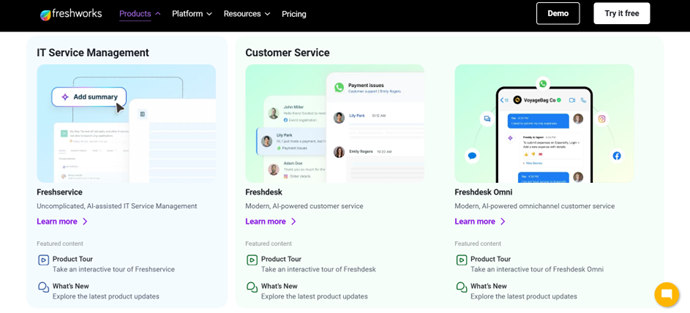
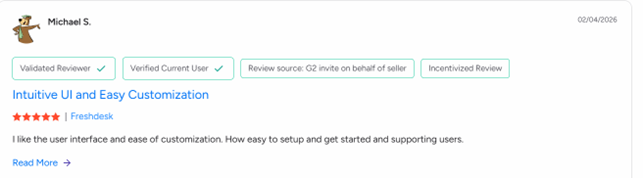
Freshdesk
Freshdesk is the company’s flagship customer support solution. It provides:
- Ticket management
- SLA tracking
- Workflow automation
- Knowledge base management
- Customer portals
Freshdesk supports multi-channel ticket intake, including email, chat, social media, and web forms. It is widely adopted by SMBs for structured helpdesk operations.
Freshdesk Omni
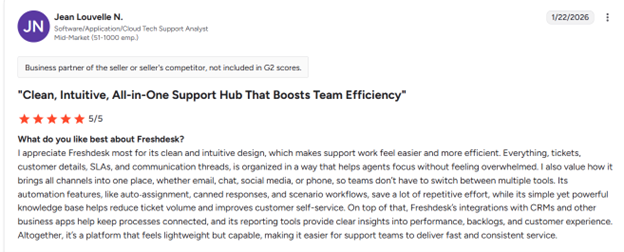
Freshdesk Omni expands into full omnichannel engagement by unifying messaging channels such as:
- Live chat
- Facebook Messenger
This allows customer service agents to manage conversations across multiple channels within one interface.
Freshchat & Freshcaller
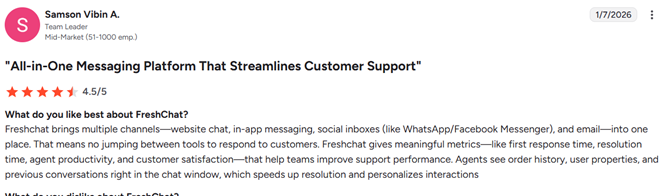
Freshchat is an easy-to-use live chat tool that unifies Facebook, Instagram, WhatsApp, and more into one dashboard. AI-powered chatbots improve efficiency, while CRM integrations sync data for streamlined lead management.
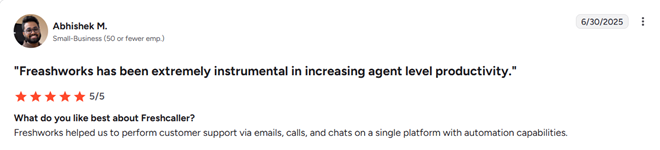
Freshdesk Contact Center (formerly Freshcaller) enables cloud-based call management with IVR and smart routing. Agents handle calls via desktop or mobile (Android/iOS), supporting remote teams through a simple, efficient interface.
2. CRM & Revenue Suite
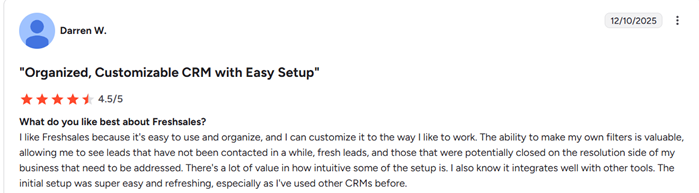
Freshsales
Freshsales serves as Freshworks’ CRM solution. It includes:
- Contact and account management
- Sales pipeline tracking
- Lead scoring
- Email automation
- Sales forecasting
It is designed to align marketing and sales operations under a unified interface.
Marketing Automation
Freshworks also offers marketing automation tools to manage:
- Campaign workflows
- Email marketing
- Customer segmentation
- Engagement tracking
This allows businesses to connect pre-sale engagement with post-sale support workflows.
3. IT Service Management (ITSM)
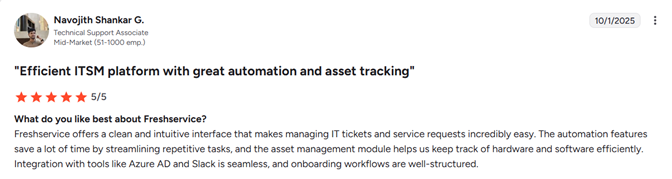
Freshservice
Freshservice is Freshworks’ ITSM product, tailored for internal IT teams and employee service management. It includes:
- Incident management
- Problem and change management
- Asset tracking
- Service catalog
- Workflow automation
Freshservice enables organizations to manage internal operations with structured processes similar to customer-facing support systems.
Freddy AI Across the Ecosystem
Instead of existing as a standalone AI product, Freddy AI is embedded across Freshworks’ product modules. It enhances functionality rather than acting as an independent intelligence layer.
In 2026, Freshworks’ AI engine, Freddy AI, has evolved from a basic chatbot into a multi-layered generative AI suite:
- Freddy AI Agent: An autonomous bot that handles FAQs and simple transactions (e.g., “Where is my order?”) across Slack, Teams, and Web.
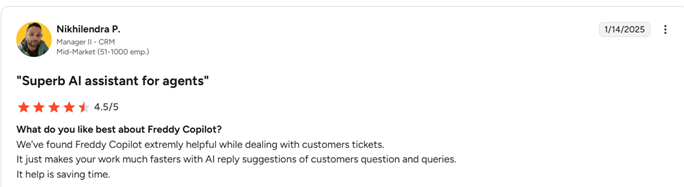
- Freddy AI Copilot: An “assistant for the assistant.” It sits alongside human agents, suggesting replies, summarizing long ticket threads, and even drafting knowledge base articles from resolved issues.
- Freddy Insights: A proactive analytics engine that scans data to find trends—like a sudden spike in complaints about a specific product feature—before they become a crisis.
Core Strengths of Freshworks
Freshworks is widely recognized for delivering “uncomplicated” SaaS solutions across customer service, IT service management (ITSM), and CRM. Its platform is designed to be intuitive, fast to deploy, and scalable, helping organizations improve both customer experience (CX) and employee experience (EX) through accessible, AI-enhanced tools.
Below are the key strengths that define Freshworks’ market positioning:
1. Uncomplicated, User-Centric Experience
One of Freshworks’ strongest differentiators is its ease of use. The platform features clean, intuitive interfaces that require minimal technical expertise or training. This simplicity enables faster onboarding, quicker adoption across teams, and reduced implementation timelines compared to more complex enterprise systems.
2. AI-Powered Operational Efficiency (Freddy AI)
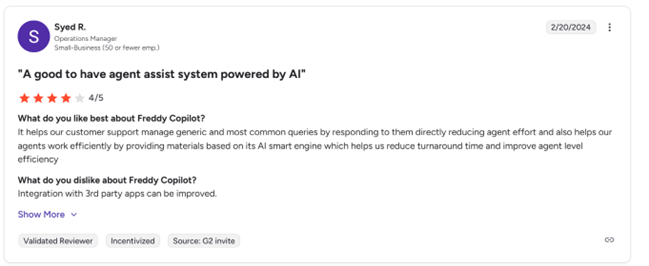
Freddy AI is embedded across Freshworks’ ecosystem to automate repetitive tasks and support smarter decision-making. Beyond basic routing or tagging, Freddy Agentic AI enables semi-autonomous service actions such as processing requests, updating records, and assisting agents with contextual recommendations. This improves productivity while reducing manual workload.
3. Unified CX and EX Ecosystem
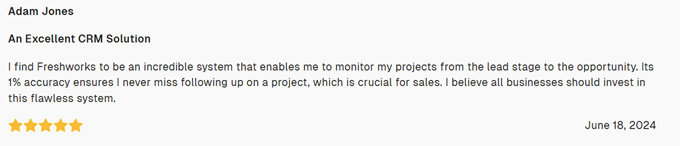
Freshworks brings together customer support (Freshdesk), CRM (Freshsales), and ITSM (Freshservice) under one ecosystem. This unified approach enables a 360-degree view of customers and internal users, supporting consistent omnichannel communication across email, chat, phone, and social channels.
4. Strong ITSM Capabilities (Freshservice)
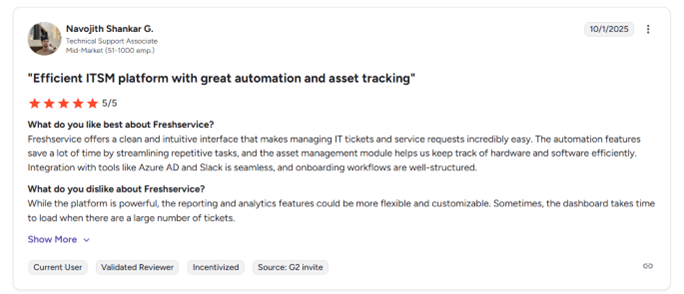
Freshservice stands out for managing IT, HR, and other internal service workflows. Features such as asset discovery, service catalogs, automation rules, and structured change management make it a competitive ITSM solution for mid-sized and growing enterprises.
5. Rapid Implementation and Measurable ROI
Organizations often report quick time-to-value due to the platform’s intuitive design and structured workflows. Faster ticket resolution, reduced service backlogs, and improved customer satisfaction (CSAT) scores contribute to measurable ROI in relatively short deployment cycles.
Common Challenges & Platform Limitations
While Freshworks offers a strong and accessible SaaS ecosystem, some businesses report challenges as their operational complexity increases. These limitations do not necessarily apply to every organization, but they are commonly cited areas to evaluate before long-term adoption.
1. Integration Difficulties
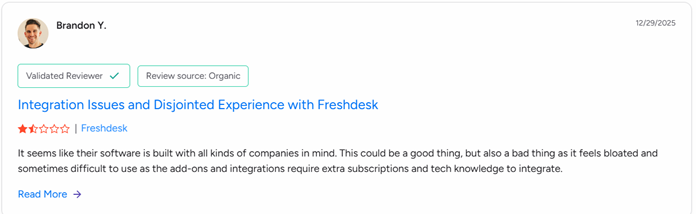
Although Freshworks provides a marketplace of integrations and APIs, some users experience friction when connecting multiple Freshworks products or syncing them with third-party enterprise systems.
Challenges may include:
- Data synchronization inconsistencies across modules
- Additional configuration required for advanced workflows
- API limitations for highly customized use cases
- Dependency on paid tiers for deeper integrations
For businesses running complex tech stacks (ERP, advanced marketing automation, custom databases), implementation may require dedicated technical resources to ensure smooth integration.
2. Hurdles in Automation and Scalability
Freshworks embeds automation and AI across its products, but scaling those capabilities can introduce complexity.
Reported hurdles include:
- Automation workflows becoming difficult to manage at scale
- AI features that function independently per module rather than across unified journeys
- Limitations in cross-channel contextual continuity
- Increased costs as advanced AI and automation features require higher subscription tiers
For growing enterprises handling high-volume, multi-region operations, maintaining consistency across customer journeys may require additional customization.
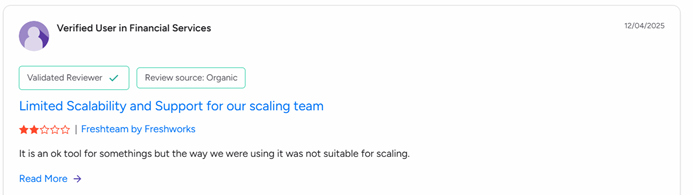
Freshworks excels in SMB and mid-market segments, but large enterprises may face challenges with complex global operations, customized compliance, AI-driven orchestration, and advanced analytics, often requiring significant configuration beyond plug-and-play expectations.
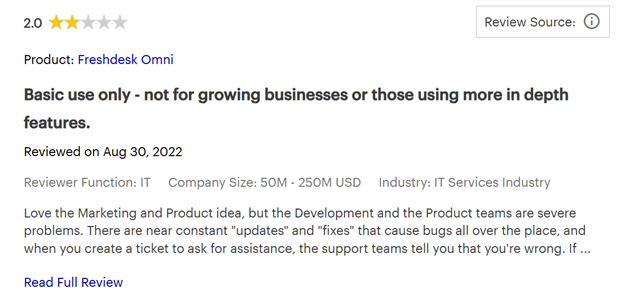
3. Customer Support Concerns
Some users have reported mixed experiences with Freshworks’ customer support, particularly during:
- Complex migrations
- Billing disputes
- Technical troubleshooting
- Enterprise-level configuration issues
While many customers report satisfactory service, others note delayed responses or inconsistent resolution quality, especially when handling advanced or custom implementations.
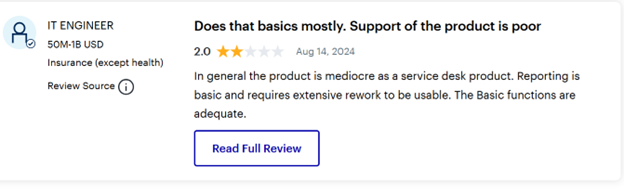
4. Billing and Cancellation Complaints
There have been customer complaints in online forums regarding:
- Automatic renewals
- Strict contract terms
- Difficulty navigating cancellation processes
- Limited flexibility in modifying subscriptions mid-contract
As with many SaaS providers, subscription management policies can become points of friction if contract details are not reviewed carefully before commitment.
Businesses considering long-term contracts should evaluate terms closely to avoid misunderstandings.
5. Strategic Perspective
These limitations do not diminish Freshworks’ overall value proposition. Rather, they highlight an important consideration:
Freshworks excels in delivering structured, accessible SaaS solutions for growing businesses — but organizations with highly complex, AI-first, or enterprise-heavy requirements should carefully assess long-term scalability, automation depth, and integration architecture before committing.
Who Is Freshworks Best For?
Freshworks aligns particularly well with:
- SMBs and Mid-Market Companies: Organizations seeking cost-effective, scalable CX tools benefit from Freshworks’ pricing and usability.
- Companies Wanting Vendor Consolidation: Businesses that want CRM, support, and ITSM under one ecosystem can reduce vendor sprawl.
- Teams Beginning AI Automation: Freshworks provides structured AI features that improve productivity without requiring AI strategy expertise.
- Growing Organizations: Companies transitioning from manual systems to structured ticketing and CRM workflows often find Freshworks a natural next step.
When Companies Start Looking Beyond Freshworks
As digital maturity increases, organizations sometimes reassess their platform strategy. This typically occurs when:
- Customer volume grows significantly
- Omnichannel journeys become more complex
- Personalization expectations rise
- AI-driven transformation becomes a strategic priority
In such cases, companies evaluate whether their current architecture supports deep conversational intelligence or if a more AI-centric approach is required.
An Alternative Perspective: Where Sobot Fits
While Freshworks offers breadth across business functions, some platforms are designed with a different architectural philosophy.
Sobot Overview
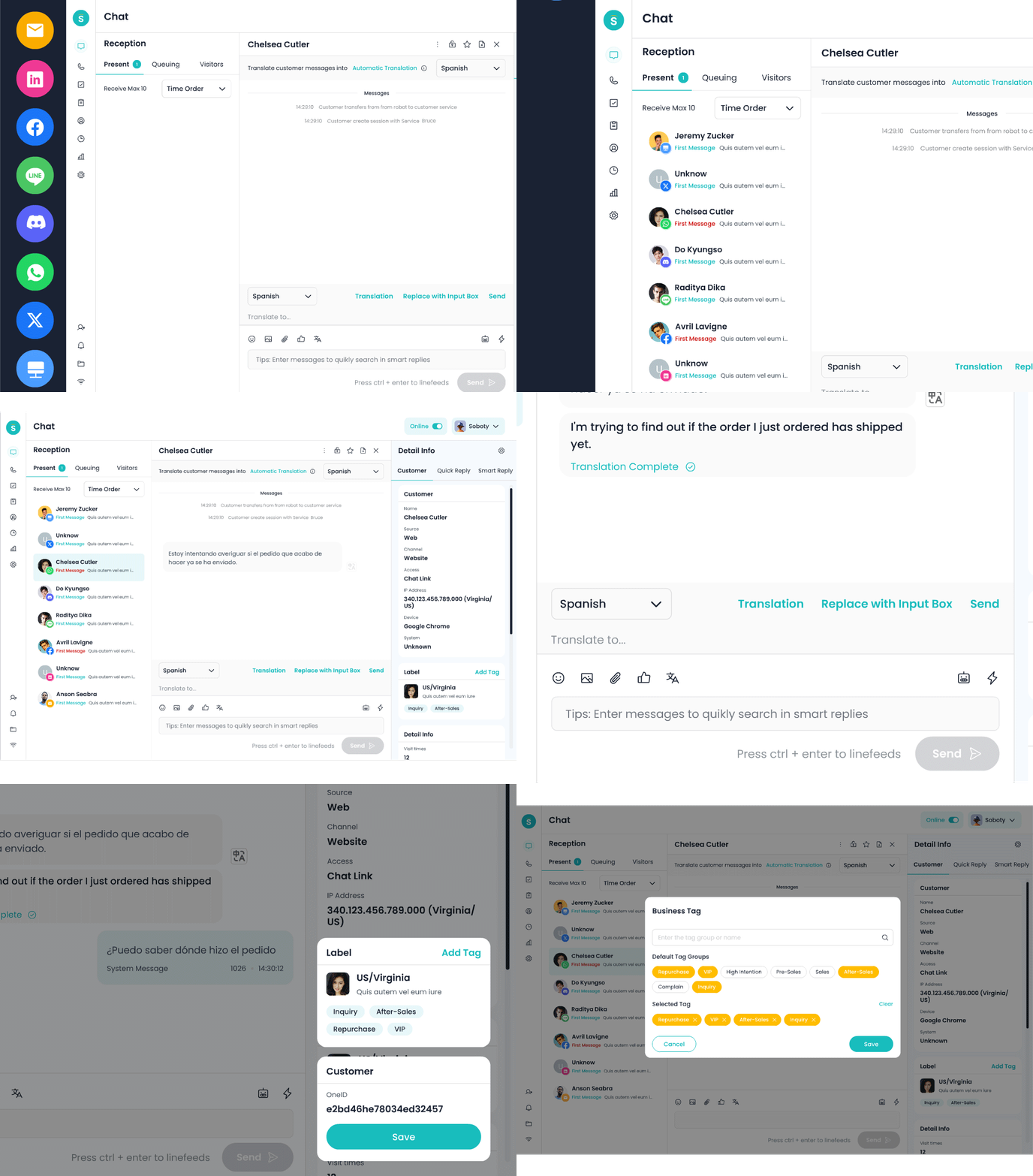
Sobot positions itself as an AI-first customer service platform focused on delivering human-like, conversational customer experiences across channels. Rather than building multiple separate SaaS modules, Sobot emphasizes unified AI-driven engagement.
Key Architectural Difference
The core distinction between Freshworks and Sobot lies in their architectural philosophy and how AI is integrated into their platforms.
Freshworks follows a modular SaaS ecosystem model, where multiple products (support, CRM, ITSM, marketing) operate as connected but distinct solutions. AI (Freddy) is embedded within these modules to enhance productivity and automation.
Sobot, in contrast, is designed as an AI-native customer engagement platform, where conversational intelligence sits at the core of the architecture. Rather than layering AI onto separate modules, automation and contextual understanding are foundational to the system.
This difference affects scalability, orchestration, and how customer journeys are managed across channels.
Freshworks vs Sobot: Architectural Comparison
| Category | Freshworks | Sobot |
| Platform Structure | Modular SaaS suite (support, CRM, ITSM, marketing as separate products) | Unified AI-native customer engagement platform |
| AI Integration Model | AI embedded within individual products (Freddy AI enhances each module) | AI is the foundational layer powering all interactions and workflows |
| Automation Approach | Workflow-based automation within product boundaries | Deep conversational automation across the entire customer journey |
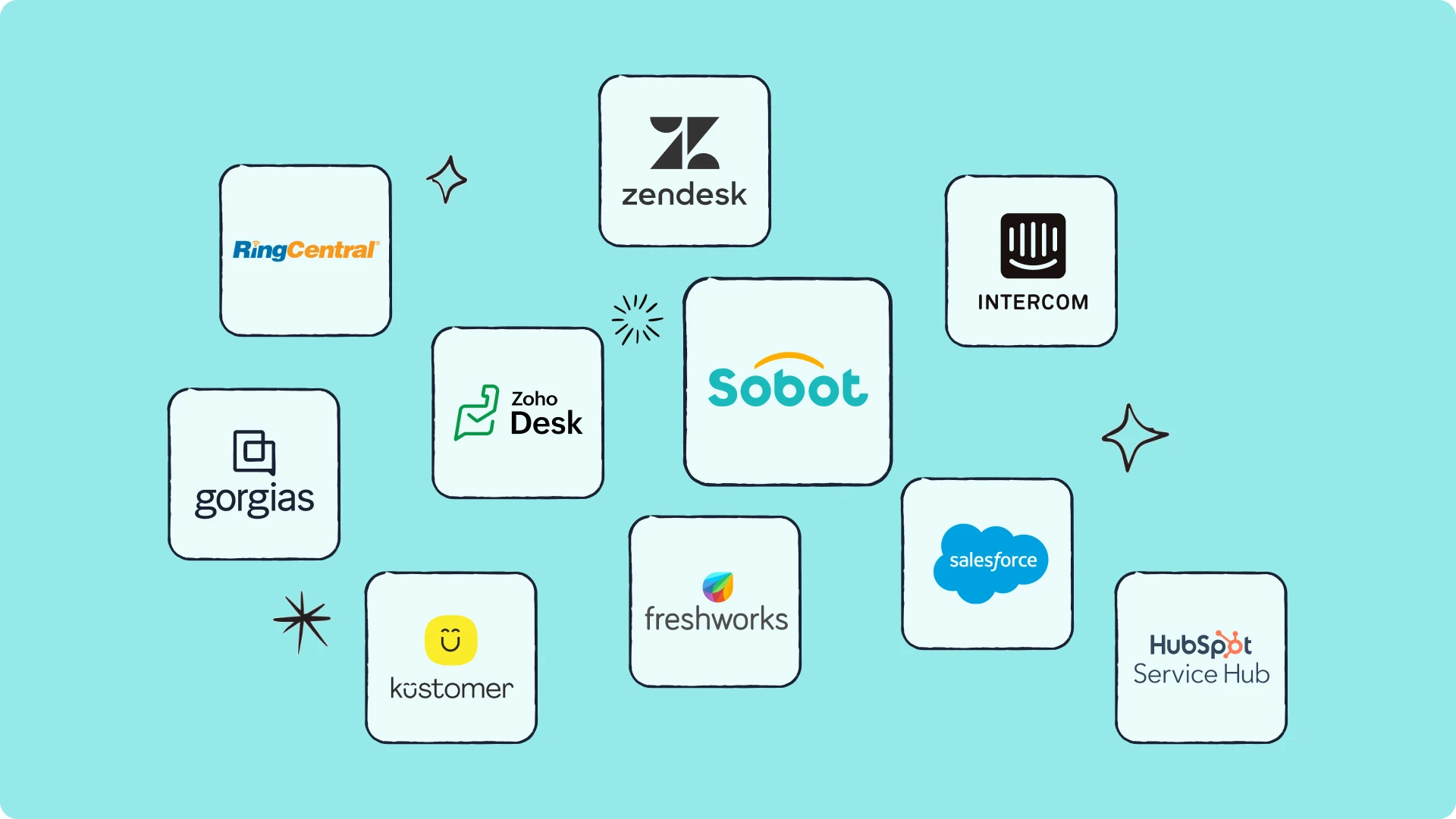
| Omnichannel Management | Channels unified through modules (chat, email, phone, social) | Context-aware omnichannel orchestration with conversation continuity |
| Customer Context Handling | Context managed within system integrations | Persistent, cross-channel contextual memory built into architecture |
| Scalability Model | Scales by adding modules and higher subscription tiers | Scales through AI-driven automation and centralized orchestration |
| Primary Strength | Operational breadth across CX, CRM, and ITSM | Intelligent, human-like engagement and AI-first customer experience |
| Best Fit | SMB to mid-market seeking structured SaaS tools | Enterprises prioritizing AI-led service transformation |
Strategic Interpretation
Freshworks is designed to deliver operational coverage across multiple business functions. Its strength lies in breadth and accessibility.
Sobot, however, is engineered around conversational intelligence and AI orchestration from the ground up. For organizations prioritizing advanced automation, personalization, and seamless omnichannel journeys, this architectural difference can significantly impact long-term scalability and customer experience maturity.
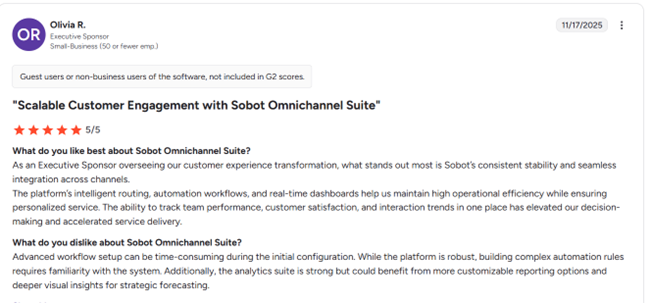
When Sobot May Be Considered
Organizations may consider Sobot when customer experience strategy shifts from operational management to AI-driven transformation.
Sobot becomes particularly compelling when:
- AI-first transformation is a core strategic priority, not just an add-on enhancement.
- High-volume customer interactions demand deep, intelligent automation beyond rule-based workflows.
- Contextual, cross-channel continuity is essential, allowing conversations to flow seamlessly across chat, social, voice, and messaging platforms without losing history or intent.
- Enterprise-level personalization at scale is required, powered by real-time data understanding and conversational intelligence.
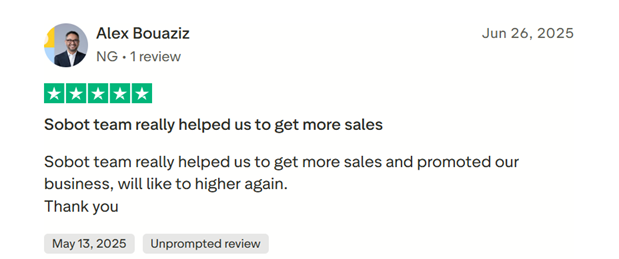
Unlike modular SaaS systems where AI enhances individual products, Sobot is architected around unified, AI-native customer engagement. This design enables more consistent automation, stronger conversational context retention, and more advanced orchestration across the entire customer journey.
Rather than replacing Freshworks’ operational breadth, Sobot represents a more focused, AI-centric approach for organizations prioritizing intelligent, scalable, and human-like customer interactions.
Final Thoughts
Freshworks has built a strong reputation as an accessible, modular SaaS ecosystem supporting customer service, CRM, and ITSM needs. Its embedded AI capabilities enhance productivity and operational efficiency, particularly for SMBs and mid-market organizations.
The platform’s strength lies in its breadth, usability, and scalability within structured service environments.
However, as AI expectations evolve and organizations pursue deeper conversational intelligence, businesses may evaluate whether their architecture should remain modular or transition toward an AI-native engagement model.
Ultimately, the choice depends on:
- Growth stage
- Operational complexity
- AI strategy maturity
- Omnichannel personalization goals
Freshworks remains a competitive and versatile solution in the CX landscape. For businesses seeking broader AI-first orchestration or conversational depth, exploring alternative architectures may be part of a long-term digital evolution strategy.