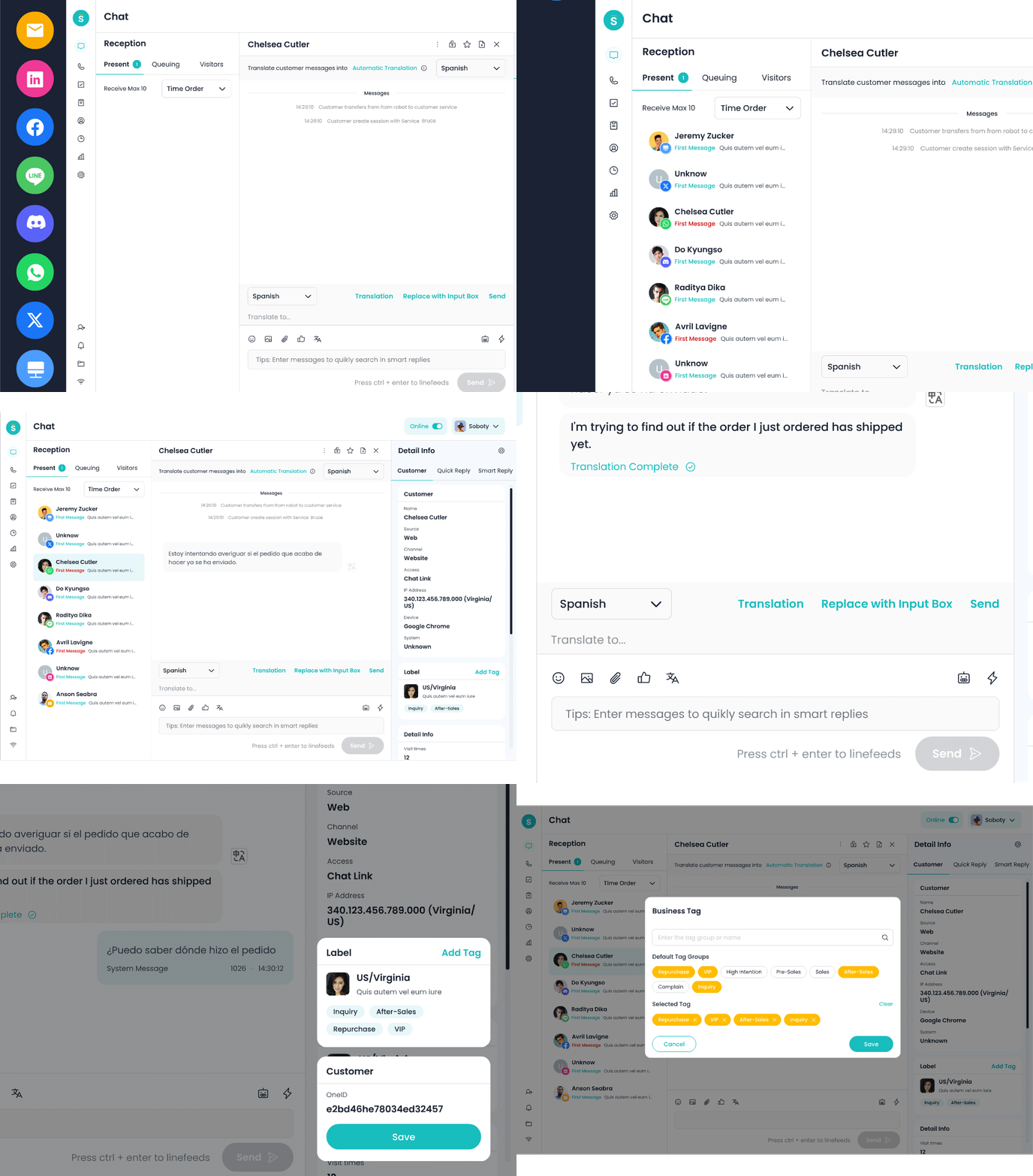
In today’s experience-driven business landscape, customer service solutions have evolved into a core component of enterprise infrastructure. No longer just a tool for complaint handling, they represent a unified intelligent platform that integrates email, live chat, phone, social media, AI agents, and automation technologies.
According to Grand View Research, the global conversational AI market is projected to expand from $11.58 billion in 2024 to $41.39 billion by 2030, growing at a CAGR of 23.7%. A superior solution can dramatically improve response speed and service quality—critical for reducing operational costs, increasing customer retention, and scaling business operations efficiently.
What Is a Customer Service Solution?—From Chatbots to Full-Loop AI Agents
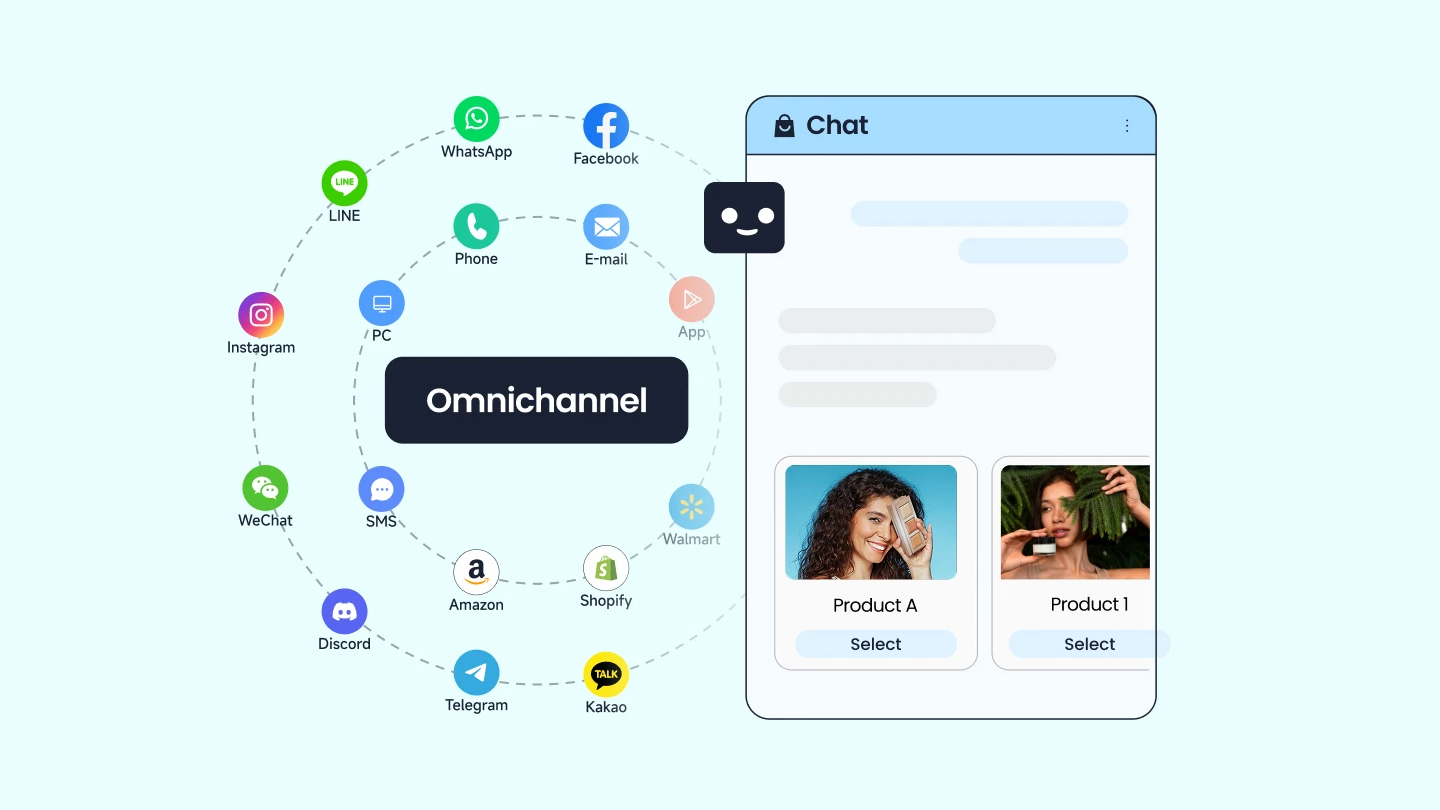
At its core, a customer service solution enables integration and automation. It consolidates ticketing systems, instant messaging, contact centers, AI chatbots, and CRM platforms into a unified workflow that centralizes customer interactions across all channels. This not only preserves complete customer history but also automates routine tasks through intelligent tools and provides deep analytical insights.
According to Gartner, by 2028, 70% of customers will use a conversational AI interface to start their customer service journey. Current technology has transcended traditional keyword matching, evolving into comprehensive service solutions that integrate large language models (LLMs), omnichannel coordination, real-time analytics, and autonomous execution capabilities. Gartner also predicts that conversational AI deployments will reduce contact center agent labor costs by $80 billion in 2026.

Key architectural trends include:
-
LLM Integration Architecture: Leading solutions employ a dual-layer “foundation model + vertical domain model” approach, significantly reducing hallucination risks while maintaining accuracy, achieving industry-leading AI response accuracy rates of over 90%.
-
Full-Loop Automation Engine: The core differentiator of next-generation systems is the “understand-decide-execute” closed-loop capability. AI Agent-driven customer service can autonomously create tickets, query orders, and trigger business processes—compressing workflows that once took 10 minutes down to seconds, boosting efficiency by over 60%.
-
Cloud-Native Elastic Architecture: Systems must scale within minutes to handle traffic spikes and business growth, supporting both SaaS and private deployment models.
Why Do Businesses Need Customer Service Solutions? (With Data)
Customer expectations have evolved dramatically:
-
81% of customers say getting help quickly is the most important aspect of good customer service—a key finding that underscores speed’s centrality in modern CX.
-
Quick resolution not only boosts satisfaction but directly correlates with revenue retention. According to Salesforce, 88% of customers say good customer service makes them more likely to purchase again. Research shows poor experiences are a top reason customers churn or switch brands, forcing businesses to invest in smarter tools to stay competitive.
-
According to the IBM Institute for Business Value, executives anticipate significant growth in AI-powered customer self-service over the next two years. Over 92% of business decision-makers have already deployed AI agents in core business processes.
Real-World Scenarios: How Customer Service Solutions Solve Business Pain Points
Scenario 1: E-commerce Peak Season Volume Spikes
Retail companies often face inquiry surges during promotions and seasonal sales. Without a centralized system, teams struggle with delayed responses, missed queries, and duplicated efforts. By implementing automated routing and AI agents, routine questions are resolved instantly, reducing backlogs and freeing human agents for complex cases.
Scenario 2: Small Teams Operating Efficiently
Small business teams often juggle email, WhatsApp, and website messages manually—leading to communication gaps and lost context. Unified platforms consolidate conversation histories, enabling agents to grasp the full picture quickly and respond more intelligently, enhancing the customer experience.
Scenario 3: Scaling Global Operations
Cross-channel growth increases complexity: manually handling Facebook DMs, Instagram comments, emails, and phone requests becomes unscalable. Centralized systems with automation and tagging capabilities help teams track context across channels and manage high concurrent volumes.
Scenario 4: Emotion Recognition in High-Stakes Scenarios
In sensitive sectors like finance and government, customer emotion is critical. Advanced solutions incorporate sentiment analysis, detecting negative emotions (anger, frustration) in real-time and automatically escalating to human agents before issues spiral.
2026 Mainstream Customer Service Solutions: A Comparative Overview
Based on technical capabilities, industry adoption, and market feedback, here’s an in-depth analysis of leading global vendors:
| Product | Core Strengths & Technical Features | Key Data/Updates |
|---|---|---|
| Sobot | Deep integration with major LLMs; RAG technology to minimize hallucinations; 10+ vertical industry knowledge graphs; automatic language detection supporting 70+ languages. Sobot’s blog features detailed customer success stories and industry insights. | Serving 10,000+ brands including Samsung, OPPO, Philips; human agent efficiency improved by 100%. According to Sobot’s case study, OPPO achieved 83% AI resolution rate and 94% CSAT after implementation. |
| Zendesk | Acquired Forethought to build self-learning AI agents; Resolution Learning Loop for continuous optimization; built-in compliance templates for 20+ countries. | AI Agent end-to-end resolution rate exceeds 80%; compliant with 28 international certifications including GDPR and CCPA. |
| Salesforce Service Cloud | Upgraded to Agentforce Service; AI Agents for Service Cloud assist employees with tasks; unified Case Timeline provides instant context. | Deep CRM integration; Einstein for Service provides AI-generated case summaries. |
| Intercom | Real-time chat; in-app support; Fin AI Agent that resolves up to 50% of support queries instantly. | Conversational support with proactive messaging; AI-powered resolution. |
| Freshdesk | Lightweight AI agent; non-technical users can launch a bot in 15 minutes; out-of-the-box functionality. | Automatic knowledge extraction; agent personality configuration without code. |
| Zoho Desk | Budget-friendly with AI capabilities; deep Zoho ecosystem integration. | Cost-efficient with solid ticketing and basic automation. |
| HubSpot Service Hub | Unified CRM + service; AI-powered insights and automation. | Data-driven support aligned with marketing and sales. |
| Gorgias | E-commerce focused; deep integration with Shopify, Magento, BigCommerce. | Order management automation; 50+ high-accuracy conversation flows for tasks like refund requests. |
Related Articles
Business Benefits You Can Expect: ROI and TCO Analysis
When evaluating AI customer service solutions, businesses should look beyond monthly subscription fees and conduct a thorough Total Cost of Ownership (TCO) and Return on Investment (ROI) analysis.
1. Quantifiable Cost Savings
-
Human Agent Cost Reduction: The average annual cost for a full-time support agent ranges from $45,000 to $65,000 depending on region. A mature AI system that reduces human intervention rates by 60% can save enterprises hundreds of thousands annually.
-
Response Time Optimization: Companies using automated routing and AI handle inquiries within minutes or seconds. For instance, Zendesk’s automation tools have been shown to reduce first reply time by 64% and increase one-touch resolution rates to 80% in customer deployments.
-
Processing Efficiency Gains: AI Agent-driven customer service can compress workflows from 10 minutes to seconds, boosting efficiency by over 60%.
-
First Call Resolution Impact: According to Broadvoice, for every 1% increase in FCR, companies can expect a 1% increase in CSAT. Forrester research cited by Broadvoice shows that companies quickly resolving issues are 2.4 times more likely to retain customers.

2. Additional Revenue Generation
-
Higher Customer Satisfaction: Brands combining AI with human support achieve CSAT scores as high as 98%. Research from Sobot indicates that 87% of customers recommend brands that make them feel appreciated.
-
Improved Conversion Rates: AI-powered proactive engagement can boost conversion rates by 15-25% during customer interactions. 86% of buyers are willing to pay more for great customer service.
-
Reduced Churn: Fast, effective resolution directly correlates with customer retention. Research indicates that customers who have their issues resolved quickly are 70% more likely to remain loyal.
-
Decreased Handling Time: AI-powered systems reduce average handling time (AHT) by 30-50%, allowing teams to handle more complex queries.
3. Cost Trap Avoidance Guide
When implementing AI customer service, organizations should be aware of these hidden costs:
| Common Pitfall | Mitigation Strategy |
|---|---|
| Focusing only on list price, ignoring overage charges for high conversation volumes or advanced modules | Adopt hybrid pricing models rather than pure conversation-based billing |
| Overlooking implementation, customization, and integration engineering costs | Budget separately for API development and system integration |
| Poor knowledge base optimization leading to low AI resolution rates | Reserve budget for continuous semantic optimization and annual model updates |
| SaaS vendor revenue-sharing models that scale costs with revenue growth | Evaluate long-term TCO; choose predictable cost structures |
| Failing to budget for security and compliance requirements | Clarify data sovereignty needs upfront; choose solutions compliant with GDPR, CCPA, SOC2 |
Customer Feedback: How Sobot Delivers Real-World Value
Since launching its first online chatbot in 2014, Sobot has accumulated over a decade of experience in intelligent customer service, building extensive corpora, collaborating with 15,000+ enterprises, and developing 10+ vertical industry knowledge graphs. User feedback across platforms reveals the tangible benefits teams experience after adopting Sobot:
-
Support teams using Sobot’s unified interface find handling common repetitive queries easier and less error-prone, particularly for small teams navigating multiple channels like email and messaging.
-
Improved conversation history visibility helps teams deliver more consistent, empathetic responses rather than rushed replies.
-
During human agent interactions, the platform provides real-time knowledge recommendations, response suggestions, service summaries, and ticket creation assistance—boosting agent efficiency by 100%.
According to Capterra and Sobot’s official case studies, Sobot serves over 10,000 brands worldwide, including multinational customers such as Samsung, OPPO, Philips, and BMW—demonstrating real adoption across diverse markets including retail, finance, education, and technology.
Case Study Extensions:
Samsung is enhancing customer experience through intelligent connectivity and remote management services. Samsung provides comprehensive customer service options and was rated #1 in the 2024 ACSI Survey for Overall Customer Satisfaction, Product Quality, and Service Quality.
OPPO builds lasting emotional connections with customers through its extensive service center network and knowledge empowerment initiatives. OPPO’s premium service page details Find N series exclusive services including remote diagnostics and dedicated support channels.
Philips leverages AI-powered customer service to streamline support operations globally. Philips’ support portal offers 24/7 customer assistance across multiple channels.
According to Sobot’s case study, OPPO achieved:
83% of customer queries resolved by AI without human help
94% positive customer feedback rate
57% increase in repurchase rates
90% reduction in knowledge base maintenance effort
20% increase in customer engagement
How to Choose the Right Customer Service Solution? (2026 Selection Guide)
The core logic of selection is “aligning with your needs and balancing investment with returns.” Based on industry trends, here are five key considerations for precise matching:
1. Define Budget and Investment Priorities
Establish your budget and distinguish between essential and value-added features. If your monthly inquiry volume exceeds 300, AI immediately becomes cost-effective. SMBs should prioritize cost-effective solutions; mid-market and enterprise companies focused on long-term value and full-service capabilities should evaluate solutions offering omnichannel support, compliance, and low-code advantages.
2. Focus on Core Scenario Fit
- Outbound-heavy requirements: Prioritize solutions with strong contact center capabilities.
- High-security needs: Consider solutions offering on-premise deployment or data sovereignty guarantees.
- E-commerce focus: Solutions with deep integration with e-commerce platforms offer advantages.
- Real-time engagement: Prioritize platforms excelling in live chat and in-app support.
3. Evaluate AI Technology Stack Completeness
Assess vendor AI capabilities across these dimensions:
- Multimodal interaction: Support for text, voice, and image input with unified understanding
- Contextual depth: Conversation history retention and real-time customer profile updates
- Autonomous decision-making: Ability to trigger business actions based on rules and real-time analysis
- Action depth: Distinguish between “conversation” and “execution”—can the system directly operate backend systems (e.g., modify orders, process refunds)?
4. Prioritize Compliance and Data Security
- If serving international users, prioritize GDPR, CCPA compliance
- For specific industries, verify certifications like HIPAA, SOC2, PCI DSS
- Choose vendors with transparent data processing policies and strong security track records
5. Assess Long-term Service and Iteration Capability
Prioritize vendors with robust support systems and continuous improvement cycles. Look for ongoing semantic optimization services, AI training support, and proven implementation expertise across similar organizations.
📊 2026 Selection Scorecard Template
| Evaluation Criteria | Weight | Key Questions |
|---|---|---|
| Omnichannel Coverage | 20% | Does it cover all customer touchpoints? Is information synchronized across channels? |
| AI & Automation Capabilities | 25% | Intent recognition accuracy? Multi-turn conversation quality? Backend automation depth? |
| Integration Flexibility | 15% | Depth of integration with existing CRM, ERP, e-commerce platforms? |
| Cost & TCO | 15% | Transparent pricing? Hidden costs for overages, premium features? |
| Security & Compliance | 15% | Compliance with relevant regulations (GDPR, CCPA, SOC2)? Deployment options meeting data sovereignty needs? |
| Ease of Deployment | 10% | Time-to-value? Ongoing maintenance requirements? |
FAQs
Q1: What’s the difference between a customer service solution and a help desk?
Customer service solutions typically include omnichannel support, automation, AI agents, and analytics, while help desks focus primarily on basic ticket tracking. Modern solutions have evolved from mere “conversation” to “execution”—functioning as digital employees.
Q2: Is a customer service solution worth it for small businesses?
If your monthly inquiry volume exceeds 300, AI becomes cost-effective immediately. Tools like Sobot, Zoho Desk, and Freshdesk offer affordable automation that reduces manual work and improves response speed.
Q3: What are the typical pricing models for AI customer service platforms?
Common models include per-agent pricing, conversation-based billing, and modular pricing. Conversation-based billing can spike during high-promotion periods; consider hybrid models or predictable subscription structures with TCO evaluation.
Q4: How do I calculate ROI for an AI customer service solution?
Evaluate two components: quantifiable cost savings (reduced agent costs, faster response times, efficiency gains) and additional revenue generation (CSAT improvement, conversion increases, churn reduction, decreased handling time). According to CMSWire, organizations are now tracking metrics like AI-generated insights per thousand interactions, knowledge base improvement velocity, and customer satisfaction differential between AI-handled and agent-handled interactions.
Q5: How long does it take to implement a customer service platform?
Smaller tools can deploy within days to weeks (Freshdesk claims 15-minute bot setup). Enterprise systems may take weeks to months depending on data governance, system integration, and model training complexity.
Q6: What metrics should I track after implementation?
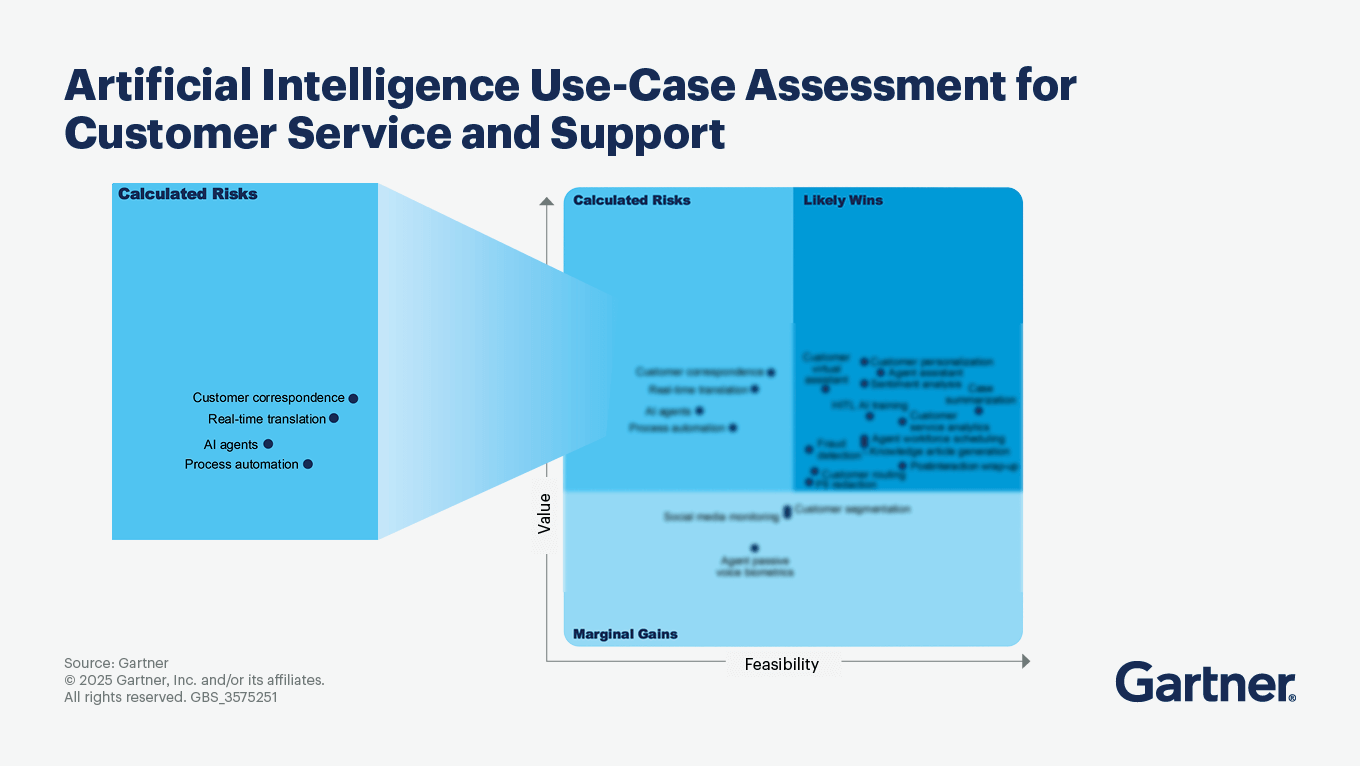
Focus on response time, first contact resolution (FCR), CSAT, ticket volume, AI resolution rate (containment rate), human intervention rate, and repeat inquiry rate. Premium products maintain AI containment rates consistently above 60%. According to Gartner, key AI use cases to track include customer personalization, case summarization, agent assistance, and real-time translation.
Q7: Can AI completely replace human customer service agents?
No. The optimal model is AI handling routine inquiries (up to 70-80%) while human agents focus on complex, empathetic, high-value interactions. AI augments rather than replaces human capability. Gartner notes that organizations are creating new roles including automation supervisors, escalation specialists, and AI trainers.
Conclusion: 2026—From “Tool Selection” to “Strategic Investment”
Customer service solutions have evolved from basic ticket trackers to intelligent AI-powered platforms that dramatically improve efficiency, consistency, and customer experience. The 2026 market offers no “one-size-fits-all” answer. A rational selection path isn’t about finding the “best vendor”—it’s about clarifying “where my customers are, where my business processes bottleneck, what my data compliance boundaries are,” and then matching solutions accordingly.
Whether you’re a small team seeking to automate repetitive tasks or a global enterprise scaling operations, choosing the right solution—from the engineering-proven Sobot to feature-rich enterprise suites like Salesforce and Zendesk—will profoundly impact your service performance and customer satisfaction in 2026 and beyond. In this industry transition from “conversation” to “execution,” there is no perfect one-time system—only continuously adapting, dynamic evolution.