A customer complaint is one of the most critical signals any business receives. It reflects a gap between customers’ expectations and the experience delivered—whether related to product quality, service delivery, communication, or support effectiveness. While complaints are often viewed negatively, they actually play a foundational role in improving customer experience (CX) and strengthening long-term loyalty. Understanding what customer complaints are, why they arise, and how they influence business operations is essential for any organization aiming to deliver world-class service.
What is customer complaint?
In customer service, a complaint is more than just a negative remark—it is an actionable insight. Customers usually complain when the service they receive does not match what they were promised or expected. This may relate to poor product experience, slow support, unclear communication, or a failed process such as late delivery or billing errors.
Not all negative interactions result in formal complaints, which makes every complaint even more valuable. Research suggests that only a small percentage of unhappy customers actually take the time to complain; the rest simply leave. This means a complaint often represents not just one disappointed customer but an entire group who faced similar issues silently.
It is also important to differentiate complaints from other forms of customer input:
- Inquiry: A question or request for information
- Feedback: A suggestion or opinion (positive or negative)
- Suggestion: An idea for improvement
- Complaint: A statement of dissatisfaction that requires corrective action
When customers complain, they are giving the business a chance to recover, resolve the issue, and rebuild trust. This makes complaint-handling a core part of the customer experience lifecycle.
Why Customer Complaints Matter
Complaints offer a direct window into what is not working. Their importance extends far beyond resolving an isolated issue.
Impact on Loyalty and Retention
When handled well, a complaint can turn an unhappy customer into a loyal advocate. Quick and respectful resolution shows that the company values its customers and is willing to make things right. On the other hand, poorly handled complaints can accelerate customer churn.
Impact on Brand Perception
In the age of social media and public review platforms, a single complaint can reach a wide audience. Effective and transparent complaint handling strengthens brand trust, while unresolved issues can harm reputation.
Financial Impact
Customer complaints directly affect operating costs and revenue:
- Refunds, replacements, or redeliveries
- Cost of prolonged support interactions
- Potential loss of lifetime customer value
- Increased promotional or recovery efforts
Operational Insights
Complaints reveal weaknesses in workflows, internal communication, product quality, or policy design. When analyzed systematically, they become a strategic resource for business improvement.

Common Types of Customer Complaints
Customer complaints vary across industries, but most fall into these categories:
- Product or Service Quality Issues: Items arriving damaged, technical glitches, missing features, inconsistent service quality.
- Delivery and Fulfillment Problems: Delays, incorrect shipments, poor packaging, untracked orders.
- Billing or Payment Errors: Double charges, hidden fees, incorrect invoices, failed payment processing.
- Support Agent Behavior: Rude interactions, lack of empathy, unprofessional communication.
- Delayed or Ineffective Support: Long wait times, unanswered emails, slow escalation handling.
- Technical or System Issues: Website failures, app crashes, login errors, feature malfunctions.
- Policy Misunderstandings: Return policies, warranty conditions, eligibility criteria that customers find confusing.
By categorizing these complaints, organizations can identify recurring patterns and prioritize improvements.
How Complaints Are Submitted (Channels)
Customers submit complaints through many touchpoints. Modern businesses must be prepared to listen and respond across all channels:
- Phone calls
- Email support
- Live chat on websites
- Social media comments or tags
- Messaging apps like WhatsApp and Messenger
- AI-powered chatbots or virtual assistants
- In-app feedback forms
- Review platforms such as Google Reviews or Trustpilot
Omnichannel complaint management ensures customers can express their concerns wherever they feel most comfortable.
Standard Complaint Handling Process
A structured approach ensures consistent and fair resolution. The typical complaint-handling workflow includes:
- Intake & Acknowledgment: The complaint is received and acknowledged promptly. This step reassures the customer that the issue is being taken seriously.
- Verification & Investigation: Support teams verify details, check history, review evidence, and involve relevant departments to understand the root cause.
- Resolution: A solution is provided—refund, replacement, apology, technical fix, or policy clarification.
- Follow-Up: Customers are contacted after resolution to ensure satisfaction and close the loop.
- Root-Cause Documentation: Teams record the issue, categorize it, and identify patterns.
- Continuous Improvement Loop: Insights feed into product, service, and process enhancements. Over time, this reduces complaint volume and improves customer satisfaction.
Metrics Used to Evaluate Complaint Management
Measuring complaint performance helps companies maintain high-quality service standards. Important KPIs include:
- Complaint Resolution Time: How long it takes to fully resolve an issue.
- First Contact Resolution (FCR): Percentage of complaints resolved in a single interaction.
- Customer Satisfaction (CSAT): Customers’ rating of how well their complaint was handled.
- Escalation Rate: Percentage of complaints passed to higher-level teams.
- Repeat Complaint Rate: Customers reporting the same issue multiple times.
- Root Cause Resolution Rate: Complaints that are fixed at the source to prevent recurrence.
These metrics provide visibility into operational efficiency and customer experience quality.
How AI Supports Complaint Management
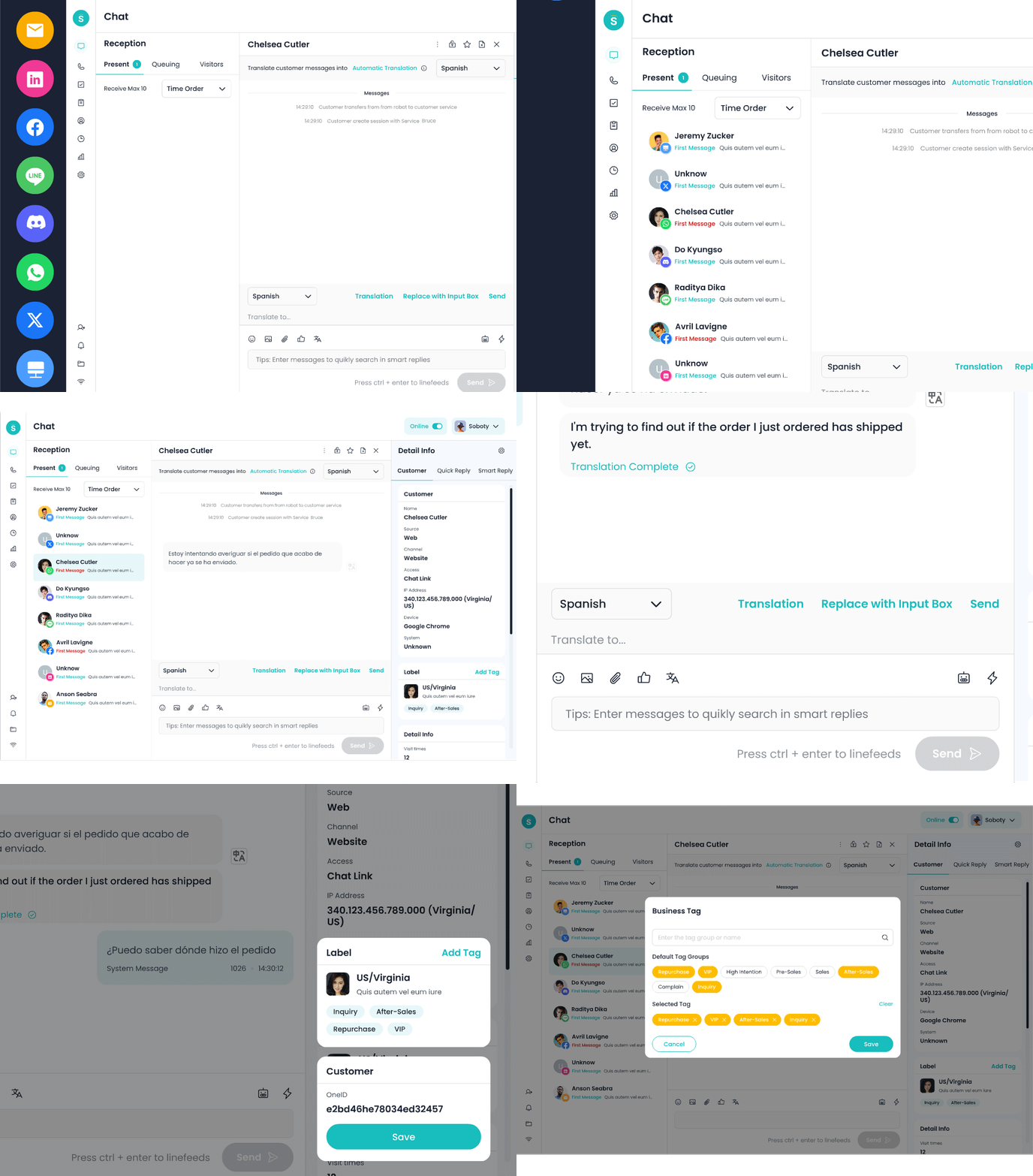
AI is transforming how companies handle complaints by automating repetitive tasks and enhancing decision-making.
Key AI Capabilities:
- Auto-Categorization: AI classifies complaints based on content, sentiment, and intent without manual tagging.
- Sentiment Detection: AI tracks customer emotions and flags urgent or high-risk cases.
- Priority Scoring: Complaints can be ranked based on severity, customer value, or likelihood of churn.
- Real-Time Agent Assist: AI suggests solutions, policy references, or next steps during live interactions.
- Automated Workflows: Routine complaint types are routed to the right team instantly.
- Predictive Analytics: AI identifies patterns and predicts recurring issues before they escalate.
- AI Self-Service: Chatbots resolve simple complaint categories, reducing agent workload.
AI ensures faster, more accurate, and more consistent complaint management—benefiting both customers and support teams.
Related Terms
Customer Feedback
Customer feedback refers to opinions, suggestions, and observations shared by customers about their experience with a product or service. It may be positive, negative, or neutral, and is used to evaluate performance, identify improvements, and shape future strategies. Unlike complaints, feedback is not always tied to dissatisfaction.
Escalation
Escalation is the process of transferring a customer issue to a higher-level support agent, specialist, or department when the frontline agent cannot resolve it. Escalations typically involve complex, urgent, or sensitive issues that require deeper expertise or authority.
Service Recovery
Service recovery is the set of actions taken to restore customer satisfaction after a service failure. It includes acknowledging the issue, apologizing, offering a solution, and providing follow-up. Effective service recovery can turn a negative experience into a loyalty-building moment.
Voice of Customer (VoC)
Voice of Customer (VoC) is the systematic collection and analysis of customer opinions, expectations, and experiences. VoC programs use surveys, feedback tools, complaint data, social listening, and analytics to understand customer needs and drive improvements across products, services, and processes.
Case Management
Case management refers to the structured process of tracking, organizing, and resolving customer issues from start to finish. A case management system centralizes all details about a complaint or inquiry, ensures proper routing, and supports collaboration across teams for timely resolution.
Customer Dissatisfaction
Customer dissatisfaction is the negative feeling customers experience when a product or service does not meet their expectations. It often leads to complaints, negative reviews, and reduced loyalty. Identifying the causes of dissatisfaction is critical for improving customer experience and reducing churn.
Conclusion
Customer complaints are more than isolated expressions of dissatisfaction—they are strategic insights that reveal how well an organization is meeting customer expectations. When handled with structure, empathy, and speed, complaints help strengthen loyalty, improve service quality, and drive operational excellence. With the support of AI and modern case-management tools, businesses can transform complaints into opportunities for continuous improvement, ensuring a smoother, more consistent, and more customer-centric experience across every touchpoint.