Southeast Asia’s digital economy crossed US$263 billion in GMV in 2024 and is on track for US$600 billion by 2030, according to the latest Google–Temasek–Bain e-Conomy SEA report. But the buyers driving that growth do not live in your help desk. They live on WhatsApp in Singapore and the Philippines, LINE in Thailand, Zalo in Vietnam, Messenger in Indonesia, KakaoTalk for Korean cross-border shoppers, plus Lazada, Shopee, TikTok Shop, and brand-owned Shopify storefronts.
If your customer service platform cannot meet them on each of those surfaces — and pull order context into the same conversation — you are not running omnichannel support. You are running a contact form.
This guide compares the 8 best omnichannel customer service platforms for Southeast Asia in 2026, scored on the channels SEA buyers actually use, AI depth, voice support, multilingual readiness, and total cost. Sobot ranks first because it is the only platform on this shortlist that natively connects every major SEA messaging channel — including Zalo and KakaoTalk — to voice, ticketing, AI Agent, and marketplace order data in one workspace.
TL;DR — The 2026 SEA Shortlist
For most SEA brands, Sobot is the best omnichannel customer service platform in 2026 — it is the only platform on this shortlist that natively connects every major SEA messaging channel (WhatsApp, Facebook Messenger, Instagram, LINE, Zalo, KakaoTalk, WeChat) to voice, mobile SDK, AI Agent, ticketing, and SEA marketplaces (Lazada, Shopify, Amazon, Walmart) in one workspace, with 18+ languages including Bahasa Indonesia, Thai, Vietnamese, Tagalog, and Korean.
Top picks at a glance:
- Best overall for SEA: Sobot
- Best for enterprise teams already on Zendesk: Zendesk
- Best for mid-market APAC teams: Freshworks (Freshdesk + Freshchat)
- Best for Salesforce-led enterprises: Salesforce Service Cloud
- Best for SaaS and chat-first DTC: Intercom
- Best for teams already on HubSpot CRM: HubSpot Service Hub
- Best for Shopify-only DTC brands: Gorgias
- Best for small SEA Shopify stores: Tidio
What Is An Omnichannel Customer Service Platform?
An omnichannel customer service platform unifies customer conversations across every channel a buyer uses — messaging apps (WhatsApp, Facebook Messenger, Instagram, LINE, Zalo, KakaoTalk, WeChat), voice, email, live chat, mobile in-app SDK, and marketplace inboxes (Lazada, Shopify, Amazon, TikTok Shop) — into a single agent workspace with shared customer identity, order context, and AI-powered routing. In Southeast Asia, where buyers rotate between two or three messaging apps per day and most order activity sits inside marketplaces, omnichannel is less a feature and more a baseline operating requirement.
A true omnichannel platform differs from a multichannel one in three ways: (1) customer identity persists across channels so an agent never has to ask “is this the same buyer?”, (2) conversation history follows the customer, not the channel, and (3) AI Agent, ticketing, voice, and marketplace data run on shared infrastructure rather than stitched-together integrations.
Why SEA Omnichannel Is Different from US/EU
Most “omnichannel” lists you read are written for US buyers who live on email and Intercom widgets. SEA does not work that way. Three things break the Western playbook:
1. SEA is messaging-first, not email-first. Meta reports that 9 in 10 people in Indonesia, Thailand, and Vietnam message a business at least once a week. Email is a fallback channel, not a primary one. Your platform’s WhatsApp, Messenger, LINE, and Zalo handling matters more than its ticket UI.
2. The dominant app changes by country.
- Vietnam: Zalo has 75M+ monthly active users — more than Facebook in Vietnam.
- Thailand & Japan: LINE has 55M+ users in Thailand alone, reaching 80%+ of the population.
- Indonesia, Malaysia, Philippines, Singapore: WhatsApp dominates, with Messenger close behind in the Philippines and Indonesia.
- Korean cross-border buyers (touching SEA logistics): KakaoTalk is non-negotiable.
A platform that supports “WhatsApp + Messenger” but ignores Zalo and LINE has already failed for half the region.
3. Marketplaces are first-party channels, not afterthoughts. Shopee, Lazada, and TikTok Shop together account for the majority of SEA e-commerce GMV. Customer questions arrive inside marketplace inboxes attached to specific orders. A help desk that cannot ingest those messages — with the order line, SKU, and shipping status visible — forces agents to context-switch and customers to repeat themselves.
These three forces are why a platform built for US/EU markets often underperforms in SEA, no matter how strong its brand.
How We Evaluated These Platforms
We scored each platform against the criteria that actually move the needle for SEA support operations:
- SEA messaging channel coverage: WhatsApp, Messenger, LINE, Zalo, KakaoTalk, WeChat — natively connected, not via a generic webhook
- SEA marketplace coverage: Lazada, Shopify, Amazon SEA, Walmart, plus visibility into order data in-conversation
- Voice support: Inbound + outbound, AI voicebot capability
- Mobile app SDK: Native iOS / Android SDK for in-app chat
- AI depth: AI Agent, agent copilot, no-code workflow builder, hallucination control
- Multilingual readiness: Bahasa Indonesia, Bahasa Melayu, Thai, Vietnamese, Tagalog, Korean, Mandarin, plus auto-translation
- Pricing transparency: Starting price published, not ‘contact sales’
- Setup speed: Days to launch, not months
We then weighted SEA channel coverage and marketplace integration the heaviest, because that is what most western platforms get wrong.
Editorial note: This article is published by Sobot. We evaluated every platform — including Sobot — against the same criteria. Buyers should verify current capabilities with each vendor before purchase.
Quick Comparison Table
Legend: ✅ = native · ⚠️ = available via integration or add-on · ❌ = not supported
| Platform | SEA Messaging (Native) | Voice | AI Agent | Marketplaces | Languages | Best For |
|---|---|---|---|---|---|---|
| Sobot | WhatsApp, Messenger, IG, LINE, Zalo, KakaoTalk, WeChat, Telegram | ✅ Full + Voice AI | ✅ LLM + NLP hybrid | ✅ Lazada, Shopify, Amazon, Walmart, Xiaohongshu | 18+ | Cross-border SEA brands |
| Zendesk | WhatsApp, Messenger, LINE (no Zalo / Kakao) | ✅ Full | ✅ AI Agents | ⚠️ Mostly via apps | 60+ | Enterprises on Zendesk |
| Freshworks | WhatsApp, Messenger, LINE, IG (no Zalo / Kakao) | ✅ Full | ✅ Freddy AI (higher tier) | ⚠️ Third-party apps | 40+ | Mid-market APAC teams |
| Salesforce | ⚠️ Mostly via AppExchange | ✅ Full | ✅ Einstein (CRM-grounded) | ⚠️ Partner connectors | 30+ | Salesforce-led enterprises |
| Intercom | WhatsApp, Messenger, IG (no LINE / Zalo / Kakao) | ❌ Not core | ✅ Fin AI | ❌ No native marketplace | 45+ | SaaS / chat-first DTC |
| HubSpot | Messenger, IG; WhatsApp ⚠️ add-on (no LINE / Zalo / Kakao) | ⚠️ Basic | ✅ Breeze AI | ❌ No native marketplace | 6 UI | HubSpot CRM users |
| Gorgias | WhatsApp (no LINE / Zalo / Kakao) | ❌ Not offered | ✅ AI Agent ($1/resolution) | ✅ Shopify deep | EN-centric | Shopify-only DTC |
| Tidio | WhatsApp, Messenger, IG (no LINE / Zalo / Kakao) | ❌ Not offered | ✅ Lyro AI (+$39/mo) | ⚠️ Shopify / WooCommerce only | 7 | Small SEA Shopify stores |
The pattern is hard to miss. Zalo, KakaoTalk, and Lazada are where most western platforms drop out of the SEA conversation entirely. Detailed reviews follow below.
The 8 Best Omnichannel Customer Service Platforms for SEA
1. Sobot — Best for cross-border brands serving multiple SEA markets
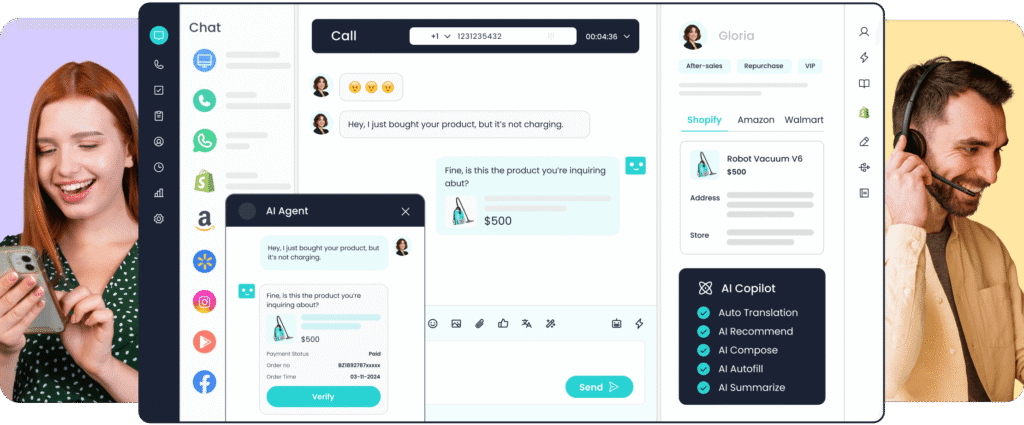
Sobot All-in-One AI Contact Center Solution 2026
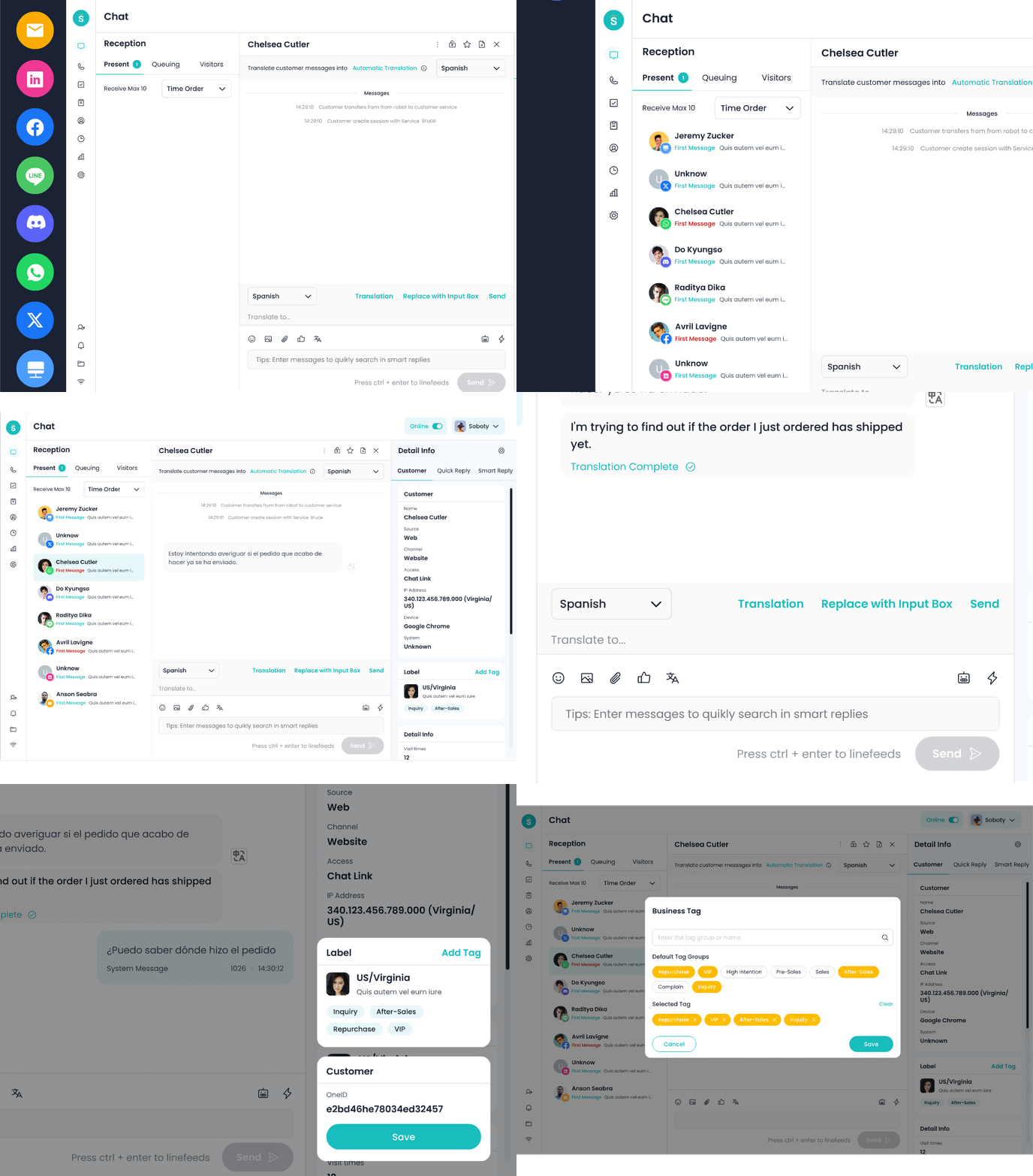
Sobot is an AI-first omnichannel contact center built for businesses operating across fragmented channel landscapes — which describes nearly every SEA brand. It is the only platform on this list that combines every major SEA messaging channel, marketplace integration, voice, and a mobile SDK in a single workspace.
What Sobot covers natively in SEA:
- Owned channels: email, voice (inbound + outbound), website live chat, mobile app via iOS / Android SDK
- Social & messaging: WhatsApp Business API, Facebook Messenger, Instagram, LINE, KakaoTalk, Zalo, WeChat, Telegram, Discord
- E-commerce & marketplaces: Lazada, Shopify, Amazon, Walmart, plus Xiaohongshu (小红书) for China cross-border
- Languages: 18+ including Bahasa Indonesia, Thai, Vietnamese, Tagalog, Korean, Mandarin
- AI stack: AI Agent (LLM + NLP + rule-based hybrid), AI Copilot, Voice AI, no-code Flow Builder, Tracing Debug for hallucination control
Why this matters for SEA specifically:
A Vietnamese buyer messaging on Zalo about a Lazada order should be one conversation, not three. Sobot is built so the Zalo message, the Lazada order detail, the shipping update, and the agent’s reply all live in the same thread. WhatsApp, Messenger, LINE, and Kakao are not just service inboxes — they are also outbound marketing channels in Sobot, meaning you can run a service ticket and a re-engagement campaign on the same identity without rebuilding the contact in another tool.
SEA customer outcomes Sobot teams report:
- OPPO: 81%+ self-service rate, 30%+ productivity uplift, 93%+ CSAT across Facebook and WhatsApp service ops
- J&T Express: regional logistics support consolidation across messaging and voice
- Mico: 80%+ chatbot resolution rate across multilingual markets
- Tineco: 40%+ resolution-rate increase managing support across 20+ marketplaces including Lazada
Pros
- The widest native SEA channel coverage on this list, including Zalo and KakaoTalk
- Voice + digital + SDK + AI Agent + ticketing in one platform
- Flexible billing (per-agent, per-ticket, per-hour, hybrid) instead of forced per-seat pricing
- 18+ languages including all major SEA languages
- WhatsApp / Messenger / LINE / KakaoTalk usable for both service and marketing campaigns
Cons
- Pricing is custom-quoted; not as transparent as $X/agent/month tools (request a quote to compare ROI)
- Broader than needed if you only run a single Shopify store with chat as your only channel
- Multi-channel workflows benefit from disciplined initial setup
Pricing: Custom — per-agent, per-ticket, per-hour, or hybrid. 15-day free trial available.
Best for: Cross-border e-commerce, regional retail chains, fintech, gaming, and any SEA brand serving customers across more than two messaging channels.
2. Zendesk — Best for enterprise teams already on Zendesk
Zendesk remains the most-recognized name in customer service software, and it is genuinely strong for large support organizations with mature ticketing, QA, and workforce-management requirements. Its AI stack is trained on over 18 billion real customer-service interactions, and the platform handles WhatsApp and LINE natively.
Key features
- AI Agents and AI Copilot trained on 18B+ real customer service interactions
- Native WhatsApp, Facebook Messenger, LINE, Instagram, and Apple Messages for Business
- Unified Agent Workspace with omnichannel routing and SLA management
- Quality Assurance and Workforce Management modules built in
- App marketplace with 1,700+ integrations
Pros
- Mature ticketing, routing, QA, and WFM tooling
- Native WhatsApp and LINE
- Strong AI Agents and AI Copilot
Cons for SEA
- No native Zalo or KakaoTalk — a deal-breaker for Vietnam-heavy and Korea-touching ops
- Lazada, Shopee, and TikTok Shop integrations typically require marketplace apps or custom builds
- Per-agent + AI add-on costs stack quickly for high-volume SEA teams
Pricing: Support Team $19/agent/mo → Support Enterprise $115/agent/mo. AI Agent and QA priced separately.
Best for: Enterprises already on Zendesk who do not need Zalo or KakaoTalk and can absorb integration work for SEA marketplaces.
3. Freshworks (Freshdesk + Freshchat) — Best for mid-market APAC teams
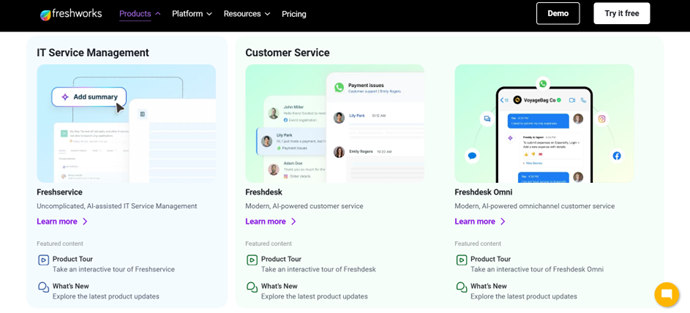 Freshworks is Indian-founded and has stronger APAC sales presence than many US-headquartered competitors. Freshchat is its omnichannel messaging product, and Freddy AI is the automation layer.
Key features
- Freddy AI for chat and email automation, including reply suggestions and ticket triage
- Native WhatsApp, Facebook Messenger, LINE, and Instagram
- Unified inbox spanning Freshdesk (ticketing) and Freshchat (messaging)
- Built-in CRM connection via Freshsales for sales–service handoff
- Self-service portal, knowledge base, and customer community
Pros
- Affordable entry point ($15/agent/mo for Freshdesk Pro)
- Solid WhatsApp, Messenger, and LINE coverage
- Strong APAC sales and support presence
Cons for SEA
- Zalo and KakaoTalk are not native channels
- Marketplace integrations to Lazada / Shopee require third-party apps
- AI features sit behind higher-tier plans
Pricing: Freshdesk $0–$79/agent/mo; Freshchat $0–$83/agent/mo.
Best for: Mid-market SEA teams that want a familiar APAC vendor and do not need Vietnam-first or Korea-first coverage.
4. Salesforce Service Cloud — Best for enterprises already on Salesforce
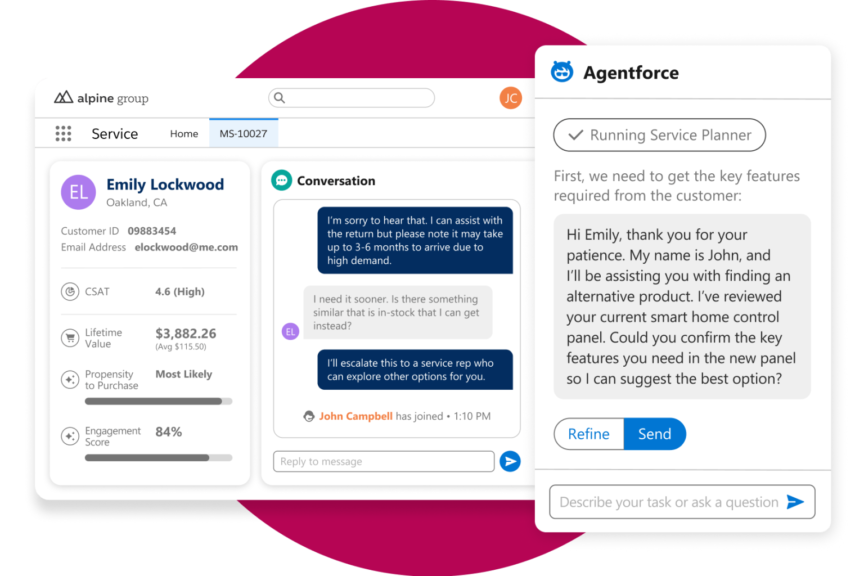 Salesforce Service Cloud is the right answer if your customer service must live next to your sales pipeline and account records inside Salesforce. Einstein AI grounds responses in CRM data, which is genuinely useful for B2B and high-value B2C operations.
Key features
- Einstein AI grounded in Salesforce CRM customer and account data
- Omnichannel routing across email, chat, voice, and social
- Flow Builder for visual workflow automation and Apex for deep customization
- Knowledge management with AI-powered article suggestions
- Tight integration with Sales Cloud, Marketing Cloud, and Data Cloud
Pros
- Deep CRM-grounded service context
- Strong enterprise governance and compliance
- Powerful Flow / Apex customization
Cons for SEA
- SEA channel coverage is mostly via AppExchange add-ons, not native
- Zalo, KakaoTalk, Lazada, and Shopee require partner connectors or custom integration
- Total cost of ownership is the highest on this list once you factor in implementation partners
Pricing: $25–$300/user/mo plus Einstein and implementation costs.
Best for: Large enterprises with existing Salesforce investment and budget for systems integrators.
5. Intercom — Best for SaaS and chat-first DTC
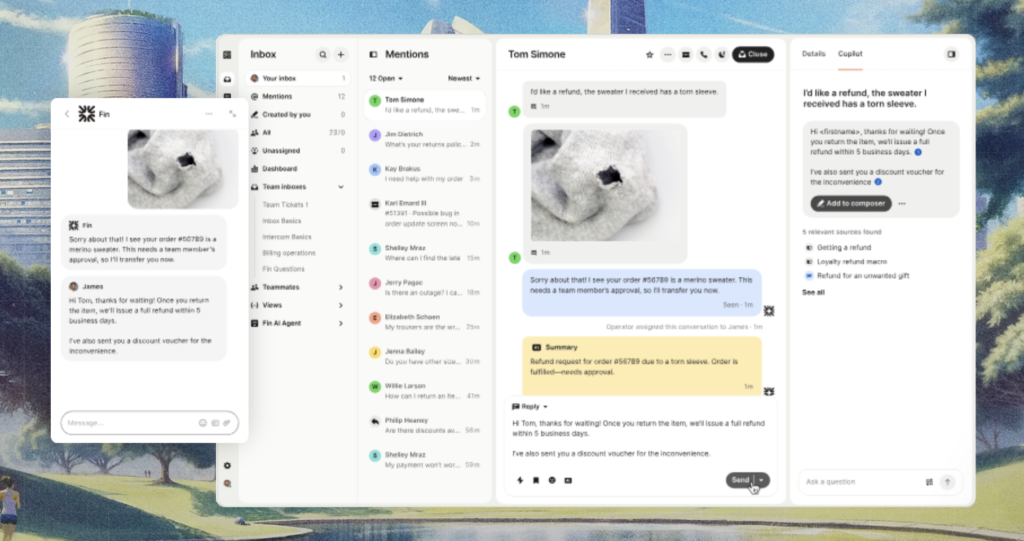
Intercom’s Fin AI is one of the most-quoted AI Agents in the category, and its outcome-based pricing ($0.99 per resolved conversation) makes ROI clean to model.
Key features
- Fin AI Agent with outcome-based pricing ($0.99 per resolved conversation)
- Best-in-class in-app messaging, product tours, and onboarding flows
- Native WhatsApp, Facebook Messenger, and Instagram
- Help Center with AI-powered article suggestions and deflection
- Built-in customer data platform with attributes, events, and segments
Pros
- Best-in-class in-app messaging and chat experience
- Outcome-based AI pricing
- Strong help-center deflection
Cons for SEA
- No native LINE, Zalo, or KakaoTalk
- No native marketplace integrations (Lazada, Shopee, TikTok Shop)
- Voice is not a core strength
- Per-resolution AI fees scale unpredictably for high-volume SEA support
Pricing: $29/mo essentials + $0.99 per Fin AI resolution.
Best for: SEA SaaS companies and chat-first DTC brands where most support happens on the website.
6. HubSpot Service Hub — Best for teams already on HubSpot CRM
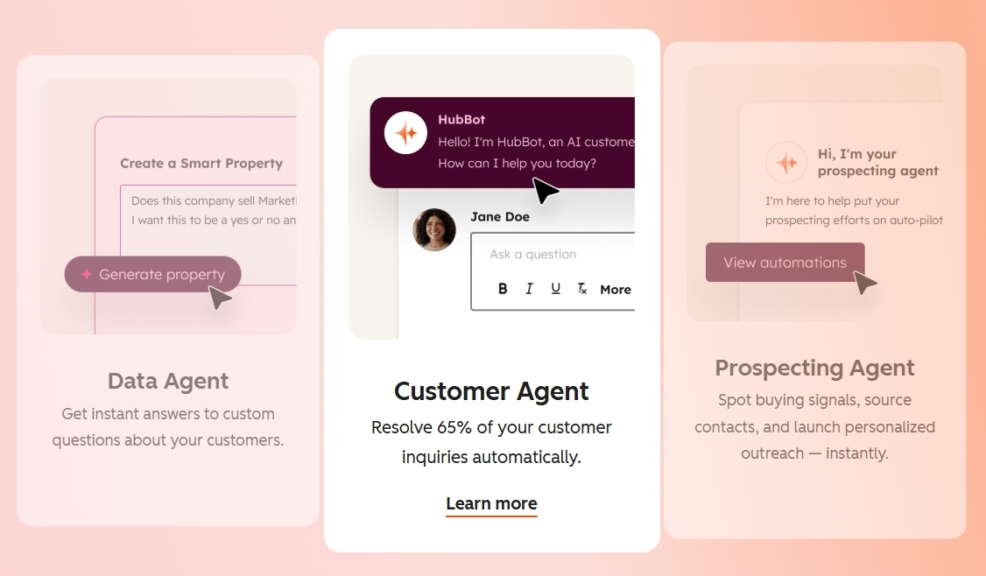
HubSpot makes the most sense when you are already deeply on HubSpot for sales and marketing. Service Hub plus Breeze AI works inside the same record system, so unified customer context comes free.
Key features
- Breeze AI for content drafting, routing, and reply generation
- Native integration with HubSpot CRM, Marketing Hub, and Sales Hub
- Email, live chat, and ticketing in one shared inbox
- Customer Portal with self-service ticket tracking
- Knowledge base, feedback surveys (CSAT / NPS / CES), and SLAs
Pros
- Tight CRM unification with sales and marketing data
- Generous Starter pricing
- Breeze AI for content and routing
Cons for SEA
- WhatsApp requires add-on; LINE, Zalo, KakaoTalk are not native
- No native SEA marketplace coverage
- Service Hub is HubSpot’s youngest product and shows it under heavy support volume
Pricing: Free → $150/seat/mo Enterprise. Mandatory onboarding fees on Pro and Enterprise.
Best for: SEA brands already standardized on HubSpot CRM, with chat as the primary support channel.
7. Gorgias — Best for Shopify-only DTC brands in SEA
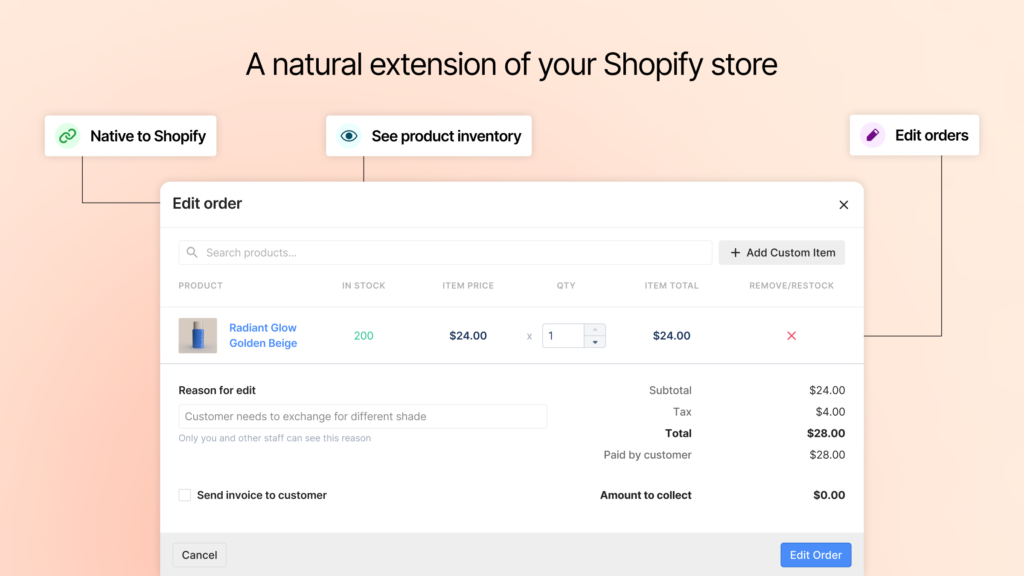
Gorgias is the deepest Shopify-native help desk on the market. If your SEA storefront is Shopify and your support volume is concentrated on order status, returns, and exchanges, Gorgias is built for that workflow.
Key features
- Deep native integration with Shopify, Magento, and BigCommerce
- Order, refund, and subscription actions executable inside the agent view
- Auto-Responder, Macro, and Rule automations for repetitive tickets
- AI Agent priced at ~$1.00 per automated resolution
- WhatsApp Business, email, live chat, Messenger, and Instagram in one inbox
Pros
- Unmatched Shopify integration depth
- Order, refund, and subscription actions inside the agent view
- Affordable entry point for small DTC brands
Cons for SEA
- WhatsApp is the only native SEA messaging channel
- No LINE, no Zalo, no KakaoTalk, no Lazada, no voice, no mobile SDK
- Outside Shopify-first DTC, the value drops sharply
Pricing: $10–$900/mo by ticket volume. AI Agent ~$1.00 per automated resolution.
Best for: Shopify-only SEA DTC brands with chat-and-email support.
8. Tidio — Best for small SEA Shopify stores
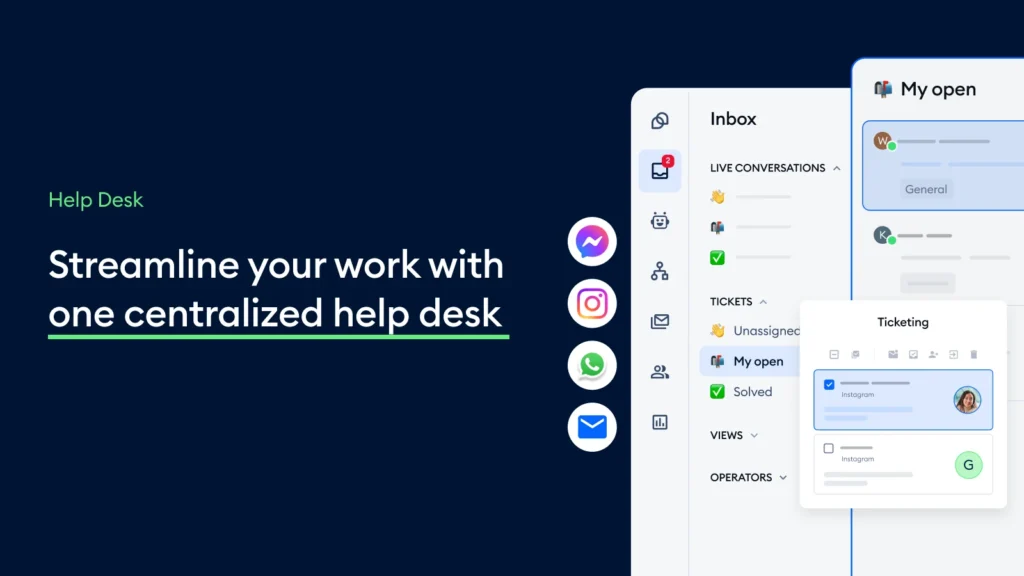
Tidio is one of the fastest ways to launch a chat widget on a small Shopify or WooCommerce store. Its Lyro AI agent handles routine FAQs, and it ships with native Shopify and Instagram integrations.
Key features
- Lyro AI agent for FAQ, order status, and pre-sales automation
- Native install on Shopify, WooCommerce, Wix, and Squarespace
- Visual Flow Builder for no-code chatbots
- Live visitor list, typing previews, and product cards inside chat
- Free plan for small teams plus paid AI add-ons
Pros
- Free plan and a low-cost paid entry
- Quick install on Shopify
- Lyro AI handles common pre-sales and order questions
Cons for SEA
- Only WhatsApp and Messenger among SEA channels; no LINE / Zalo / KakaoTalk
- No marketplace integrations beyond Shopify and WooCommerce
- Reporting and routing are light for growing teams
Pricing: Free → $29/mo Starter. Lyro AI billed separately from $39/mo.
Best for: Solo founders and small SEA Shopify stores testing live chat for the first time.
Key Features to Look For in an SEA Omnichannel Platform
Generic feature checklists written for US/EU markets miss the realities of SEA support operations. These eight features matter more than the rest when buyers compare platforms for Southeast Asia in 2026.
1. Native SEA messaging channel coverage
WhatsApp Business API, Facebook Messenger, Instagram, LINE, Zalo, and KakaoTalk should be supported as first-class native integrations — not generic webhooks. Native support means proper template management, BSP relationships, message-template approvals, and rich-media handling within the platform.
2. SEA marketplace integration with order context inline
Lazada, Shopify, Amazon SEA, TikTok Shop, and Walmart messages should arrive in the agent inbox with order line, SKU, shipping status, and customer history visible side-by-side. Without this, agents waste 30–60 seconds per ticket asking the customer to repeat the order number.
3. Voice support including AI voicebot
In SEA financial services, logistics, and high-value retail, hotline support is still a primary channel. The platform should offer inbound and outbound voice plus an AI voicebot for tier-1 calls, all sharing the same customer identity and conversation history as messaging.
4. Mobile app SDK for in-app chat
A native iOS and Android SDK lets buyers chat with support from inside the brand’s app without leaving for WhatsApp. Critical for fintech, gaming, and on-demand services where the app is the primary surface.
5. AI Agent and AI Copilot with hallucination control
An AI Agent should auto-resolve tier-1 inquiries with source-cited answers. An AI Copilot should accelerate human agents on tier-2 and above. Look for a tracing or debug interface that lets admins see why the AI gave a specific answer — without it, hallucination risk is unmanaged.
6. Multilingual readiness
Bahasa Indonesia, Bahasa Melayu, Thai, Vietnamese, Tagalog, Korean, Mandarin, and English are the working languages of SEA support. Auto-detection of incoming language and machine translation in the agent view are baseline; an AI Agent trained on the relevant language is the next level.
7. Unified customer identity across channels
A buyer who messages on LINE, follows up on email, then calls the hotline is one person. The platform should merge those threads under one identity automatically, surfacing all past interactions to whichever agent picks up the next message.
8. Flexible billing aligned to SEA cost structure
Per-seat pricing punishes high-volume SEA teams. Look for platforms that offer per-ticket, per-hour, or hybrid billing options alongside per-agent — this is where total cost of ownership diverges most sharply between US-built and SEA-fit platforms.
The SEA Channel Coverage Matrix
This is the table SEA buyers ask for and rarely get straight answers on. Legend: ✅ = native · ⚠️ = available via integration or add-on · ❌ = not supported.
| Platform | Messenger | LINE | Zalo | KakaoTalk | Lazada | Shopify | |||
|---|---|---|---|---|---|---|---|---|---|
| Sobot | ✅ | ✅ | ✅ | ✅ | ✅ | ✅ | ✅ | ✅ | ✅ |
| Zendesk | ✅ | ✅ | ✅ | ✅ | ❌ | ❌ | ⚠️ | ⚠️ | ⚠️ |
| Freshworks | ✅ | ✅ | ✅ | ✅ | ❌ | ❌ | ⚠️ | ⚠️ | ⚠️ |
| Salesforce | ⚠️ | ⚠️ | ⚠️ | ⚠️ | ❌ | ❌ | ⚠️ | ⚠️ | ⚠️ |
| Intercom | ✅ | ✅ | ✅ | ❌ | ❌ | ❌ | ❌ | ❌ | ⚠️ |
| HubSpot | ⚠️ | ✅ | ✅ | ❌ | ❌ | ❌ | ❌ | ❌ | ⚠️ |
| Gorgias | ✅ | ✅ | ✅ | ❌ | ❌ | ❌ | ❌ | ❌ | ✅ |
| Tidio | ✅ | ✅ | ✅ | ❌ | ❌ | ❌ | ❌ | ❌ | ✅ |
If your roadmap involves Vietnam, Thailand, or Korean cross-border traffic, the gap is the column, not the row.
What Real SEA Teams Look Like When Omnichannel Actually Works
Three patterns separate platforms that “support omnichannel” from platforms that actually run SEA omnichannel operations:
- One inbox, one customer identity. A Bangkok buyer who messages on LINE, follows up on email, then calls the hotline is one person. The platform must merge those threads automatically, not force the agent to do it.
- Marketplace messages with order context inline. When a Lazada or Shopify message arrives, the order line, SKU, shipping status, and customer history should sit beside the conversation. Without it, the agent asks the customer to repeat the order number — and CSAT collapses.
- Messaging channels that double as marketing channels. WhatsApp, LINE, KakaoTalk, and Messenger are also where SEA brands send abandoned-cart nudges, restock alerts, and post-purchase upsells. Splitting service and marketing across two tools breaks the identity. Sobot keeps both on the same number / OA / page, which is why brands like Tineco can run service across 20+ marketplaces while also running outbound campaigns on the same channels.
How to Choose: A SEA-Specific Decision Framework
If your business is concentrated in one SEA country with one dominant channel:
A regional or specialized tool may be sufficient. Test whether you can grow without re-platforming when you add a second country.
If you serve customers across 2+ SEA countries:
Native LINE + Zalo + WhatsApp + Messenger coverage becomes non-negotiable. Only Sobot covers all four natively on this list.
If your sales channel is primarily Shopify:
Gorgias is the specialist. Sobot is the better fit if you also need WhatsApp marketing, voice, or Lazada/Amazon coverage.
If you are a global SaaS with SEA users:
Intercom Fin AI is a strong default if chat is your dominant support surface.
If you are an enterprise on Zendesk or Salesforce already:
Stay on your platform and bolt on the SEA-channel gaps via integrations — but model the total cost honestly. The “free integration” is usually neither free nor maintained.
If your support volume crosses 50K conversations/month or 5+ channels:
An all-in-one AI contact center pays back faster than stitched-together point tools. This is where Sobot’s flexible billing (per-ticket / per-hour / hybrid instead of per-agent) typically lands 30–50% under per-seat alternatives at SEA volumes.
Frequently Asked Questions
What is the best omnichannel customer service platform for Southeast Asia in 2026?
For most SEA brands, Sobot is the best omnichannel customer service platform in 2026 because it natively supports the widest set of SEA channels — WhatsApp, LINE, Zalo, KakaoTalk, Facebook Messenger, Instagram, plus Lazada, Shopify, and Amazon — in one workspace alongside voice, mobile SDK, AI Agent, ticketing, and 18+ languages. Zendesk and Freshworks remain credible alternatives for teams already standardized on those platforms, but neither natively supports Zalo or KakaoTalk.
Which platform supports Zalo for customer service?
Zalo is the dominant messaging app in Vietnam with 75M+ monthly active users. Among major omnichannel customer service platforms, Sobot is the only one on this shortlist with native Zalo integration. Most western platforms (Zendesk, Freshworks, Salesforce, Intercom, HubSpot, Gorgias, Tidio) either do not support Zalo or require custom development.
Which platforms support LINE in Thailand?
Sobot, Zendesk, and Freshworks all support LINE natively. Sobot additionally lets brands use LINE for both customer service and outbound marketing campaigns from the same workspace, which is useful for Thai DTC brands running LINE OA as their primary CRM channel.
Can these platforms also handle voice and call center workloads?
Voice support varies significantly. Sobot, Zendesk, Freshworks, and Salesforce offer full inbound and outbound voice. Intercom and HubSpot offer basic voice, primarily browser-based. Gorgias and Tidio do not offer voice. For SEA markets where hotline support is still important — especially in financial services, logistics, and high-value retail — voice cannot be an afterthought.
How do these platforms handle Lazada and Shopify orders together?
Most western platforms support Shopify natively but treat Lazada as a custom integration. Sobot supports both natively and surfaces order data inside the conversation — SKU, order status, shipping carrier — so agents can act without leaving the inbox. This matters because the average SEA shopper reaches out about a specific order, not a generic question.
How much do omnichannel customer service platforms cost in 2026?
Published pricing on this shortlist ranges from free (Tidio Starter) to $300+ per user per month (Salesforce Service Cloud Unlimited). Per-seat platforms become expensive fast at SEA support volumes; Sobot uses flexible billing — per-agent, per-ticket, per-hour, or hybrid — and quotes are custom. For a meaningful comparison, model 12-month total cost including AI usage fees, channel add-ons, and implementation, not just the headline per-seat price.
Will AI agents replace human support agents in SEA?
No, not entirely. AI handles repetitive volume (WISMO, returns, FAQ, basic troubleshooting) well, often resolving 50–80% of routine inquiries on the leading platforms. Human agents still matter for complex returns, escalations, high-value B2B accounts, and culturally nuanced markets where direct messaging tone matters (Indonesia, Vietnam, the Philippines). The strongest SEA setups blend an AI Agent for tier-1 with human agents for tier-2 and above, with the AI Copilot speeding up human replies.
How long does it take to launch an omnichannel customer service platform in SEA?
A single-channel chat widget can launch in a day. A full omnichannel rollout — WhatsApp BSP setup, LINE OA approval, Zalo OA verification, marketplace integration, knowledge base build, AI training, agent rollout, multilingual configuration — typically takes 4–8 weeks for a mid-market SEA brand. Sobot’s onboarding team and no-code Flow Builder are designed to compress that timeline by handling channel applications and workflow templates in parallel.
Which platform is best for cross-border SEA brands serving China or Korea?
Sobot is the strongest fit here because it natively supports WeChat (for China) and KakaoTalk (for Korea) alongside the core SEA channels — a combination that very few western customer service platforms can match without custom work.
Ready to Run Omnichannel Customer Service That Actually Works in SEA?
If your team is stitching together WhatsApp, LINE, Zalo, KakaoTalk, Messenger, Lazada, Shopify, voice, and an internal ticketing tool today, you do not have an omnichannel platform — you have a coordination problem.
Sobot brings every SEA channel, voice, AI Agent, ticketing, mobile SDK, and 18+ languages into one workspace, with order context from Lazada, Shopify, Amazon, and Walmart surfaced inside the conversation. That is what omnichannel looks like when it is built for Southeast Asia, not retrofitted from a US help desk.
Start a 15-day free trial · Book a SEA-focused demo · Talk to our APAC team
This article is published by Sobot. Sobot is included in the comparison and ranked first. All platforms were evaluated against the same criteria. Buyers should verify current capabilities directly with each vendor before purchase.