In 2026, customer support has had a major glow-up. It’s no longer just the place where problems go to be solved—it’s become a strategic powerhouse that fuels customer loyalty and, believe it or not, revenue. It directly impacts how many customers you keep, how efficiently your teams operate, and whether you can scale without everything falling apart.
Think of this as your playbook for aligning your support strategy with your unique business needs, whether you’re a small business or a global enterprise. We’ve sifted through the data so you don’t have to, weaving it all into a clear narrative about why these platforms are the ones to watch.
1. Why Your 2026 Support Stack is a Boardroom Decision
The customer support software market is exploding, and for good reason. Customers expect more, AI is changing the game, and everyone wants a seamless experience whether they’re tweeting, chatting, or emailing. While specific market size figures vary, the trajectory is clear.
This guide is designed to help you make sense of it all, from nailing down the basics to picking a platform that can truly scale with your global ambitions.
2. Let’s Get On the Same Page: Key Terms Decoded
Before we dive into the platforms, let’s clear up some confusion around three terms that often get thrown around interchangeably but mean very different things for your global strategy.
① Omnichannel Support: It’s About the Customer’s Story, Not Just the Channel
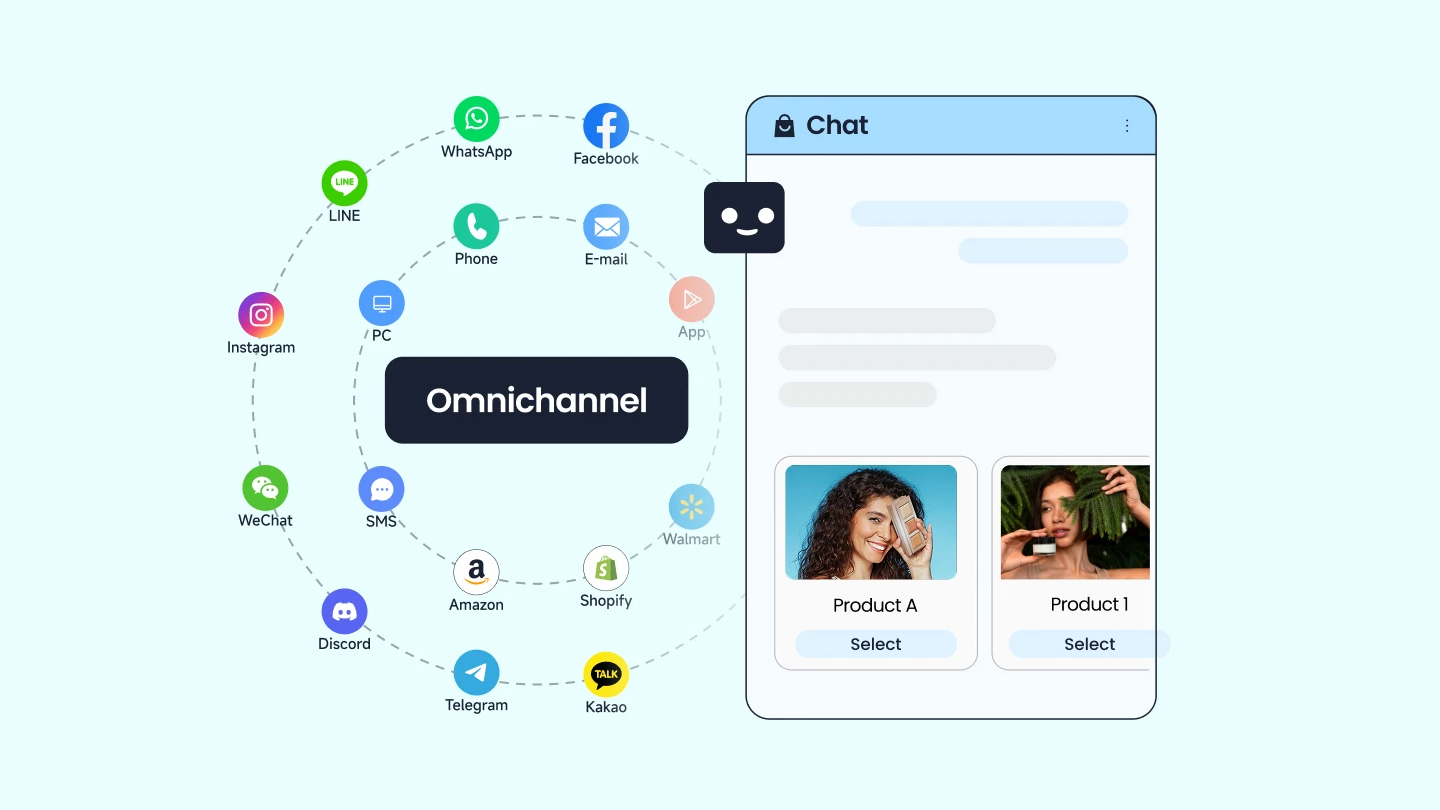
Omnichannel is more than just being on every channel. It’s about stitching all those conversations together into one continuous story. Unlike multichannel (where your email, chat, and phone teams operate in silos), omnichannel means a customer can start a chat on your website, then switch to WhatsApp, and the next agent they talk to knows exactly what happened before. They never have to repeat themselves.
② Customer Success vs. Customer Support: Proactive vs. Reactive
This is a crucial distinction. Customer support is reactive: you fix a problem, answer a question, solve a technical glitch. Customer success is proactive: you monitor customer health, identify accounts that might be at risk of churning, and reach out to help them get more value.
Think of it this way: support fixes a leak; customer success reinforces the pipe so it doesn’t leak in the first place. The best strategies use them together. Data from support interactions (like recurring complaints about a feature) feed into customer success workflows, which can then trigger automated tips or a personal check-in from a dedicated rep.
③ Enterprise Help Desk: Built for the Big Leagues
These platforms are built for large, complex organizations with strict compliance needs, global teams, and sky-high ticket volumes. We’re talking about features like granular role-based access control, detailed audit trails for compliance, and serious SLA management. They need to handle thousands of concurrent users, provide 24/7 global support, and comply with a patchwork of regional laws like GDPR, CCPA, and HIPAA.
These aren’t your SMB-friendly tools. They handle multi-brand support, complex approval chains, and global reporting that makes sense for a sprawling organization. They must also integrate seamlessly with enterprise systems like Salesforce, SAP, and Oracle, a key requirement noted in industry analyses.
3. The 2026 Must-Haves: Features That Are No Longer Optional
As expectations rise and regulations tighten, some features have moved from “nice-to-have” to “deal-breaker.” Here’s what any global platform needs to deliver today.
① True Omnichannel Coverage: Meet Your Customers Where They Are
Your customers in Mexico might live on WhatsApp, while your users in Japan prefer Line. A platform that doesn’t integrate with all the major messaging apps, social platforms, and traditional channels (email, phone, chat) is a non-starter. Industry best practices emphasize that a modern platform must support 30+ mainstream channels and unify them into a single agent workspace to break down information silos.
② A Full AI Toolkit: Beyond the Basic Chatbot
AI is now a necessity, not a novelty. But the key is having a full matrix of capabilities, not just a simple FAQ bot.
-
Conversational AI Bots: These aren’t your clunky chatbots of 2020. They autonomously handle routine stuff like password resets or order tracking, 24/7, in multiple languages. Leading solutions can now enable an AI agent to independently handle up to 85% of standardized inquiries.
-
AI Copilots for Agents: Imagine a sidekick for every agent, offering real-time suggestions, summarizing long conversations, and even translating on the fly.
-
Intent Recognition & Sentiment Analysis: The platform can now “feel” the conversation. It spots a frustrated customer and routes them to a specialist, or identifies a complex issue and escalates it automatically. Advanced systems can achieve emotion recognition accuracy rates above 90%.
The market direction is undeniable. Gartner predicts that conversational AI will be a massive labor cost saver, and the push for GenAI/agentic AI-driven automation is a key theme in their 2026 evaluations.
③ The Unified Customer View: The Bedrock of Personalization
If your agents can’t see a customer’s full history—past chats, orders, website behavior—they’re working blind. A unified customer view aggregates all this data into a single, 360-degree dashboard.
④ Smart Automation & SLA Management: No More Manual Work
Global teams can’t afford to manually route tickets or chase SLAs. The best platforms automate the grunt work: intelligent ticket assignment based on agent skill and language, automatic SLA tracking with alerts, and follow-up messages that go out without anyone lifting a finger. For regulated industries, automated tracking isn’t just efficient—it’s a compliance necessity.
⑤ Global Compliance & Localization Built-In
Operating across borders means navigating a maze of data privacy laws. Your platform needs to have GDPR, CCPA, and PIPL compliance built into its DNA. It also needs to support true localization: 24/7 multilingual support, interfaces in local languages, and reporting that makes sense for each region. Leading platforms are proactively deploying local servers in regions like Singapore and Frankfurt to ensure data compliance and low-latency performance .
4. What’s Shaping Support in 2026: The Big Trends
To choose a platform for the future, you need to understand the forces reshaping the market right now.
① AI Moves from Assistant to Autonomous Agent
We’ve moved past the era of AI as a simple helper. In 2026, leading companies are using AI to autonomously resolve complex issues. Industry analysis suggests that AI can now automate a significant portion of repetitive support tasks, freeing human agents to focus on complex, high-value issues . This shift is driven by customer expectations, too. With customers expecting instant, accurate resolution, AI is the only way to deliver that kind of speed and quality at a global scale.
② Support Stops Being a Cost Center and Starts Driving Revenue
The most innovative companies are turning their support teams into revenue generators. The data is clear: customer-centric brands are more profitable. By integrating support data with CRM, agents can spot upsell opportunities during an interaction. A customer struggling with a basic feature might be the perfect candidate for a premium plan that includes advanced tutorials or priority support. High-performing organizations treat customer service as a direct contributor to trust, retention, and growth.
③ Global Teams Ditch Feature Bloat for Simplicity and Integration
For years, the game was about who had the longest feature list. In 2026, the priority has shifted. Global teams are begging for simplicity, ease of use, and tools that play nicely with their existing tech stack. The ability to integrate seamlessly with tools like Salesforce, Shopify, or SAP is now a core selection criterion to avoid data silos and reduce implementation time. A disjointed system of siloed tools creates inefficiency and a poor customer experience.
5. How to Choose: A Practical Methodology for Global Buyers
Picking a platform isn’t about comparing checklists. It’s about aligning the tool with your specific business context. Here’s a simple, step-by-step approach.
Step 1: Define Your Reality
Step 2: Identify Your Top 3 Non-Negotiables
Step 3: Map Your Integration Ecosystem
Step 4: Calculate the Real Cost (TCO)
Step 5: Kick the Tires with a POC
6. The Top Platforms of 2026: An In-Depth Look (Without the Fluff)
Here’s our take on the leading platforms, organized by what they do best. We’ve focused on the real-world strengths, weaknesses, and ideal fits.
Category 1: Enterprise-Grade, Global Omnichannel Leaders
For large, complex organizations that need to scale globally without breaking.
❶ Zendesk
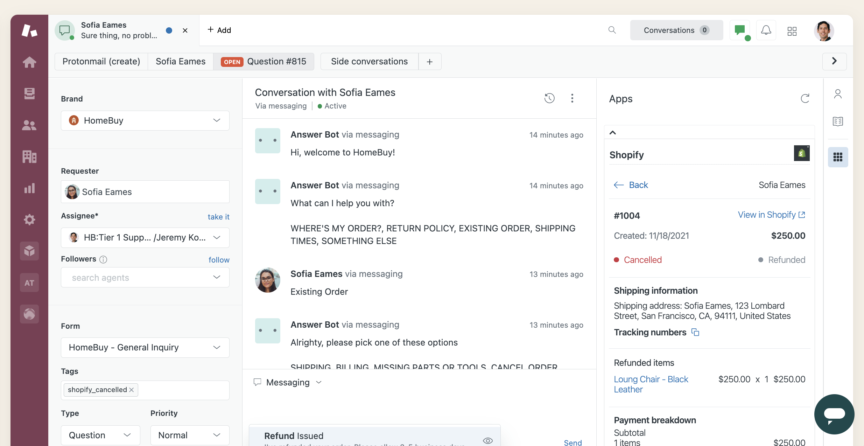
Zendesk is still a powerhouse, known for its robust omnichannel capabilities and global reach, serving over 100,000 businesses worldwide.
Its strength lies in its comprehensive toolset, a massive library of integrations, and a highly customizable dashboard. Its AI suite, Zendesk AI, is solid and focused on operational maturity and resolution-based metrics, as highlighted in Zendesk 2026 CX Trends Report.
-
The Catch: Advanced features can get pricey fast, and total ownership costs can creep up compared to competitors. While still a leader, its market dominance has been chipped away by more focused or affordable players.
-
Best For: Mid-market to enterprise businesses across industries that prioritize omnichannel and global scalability and have the budget for it.
❷ Salesforce Service Cloud
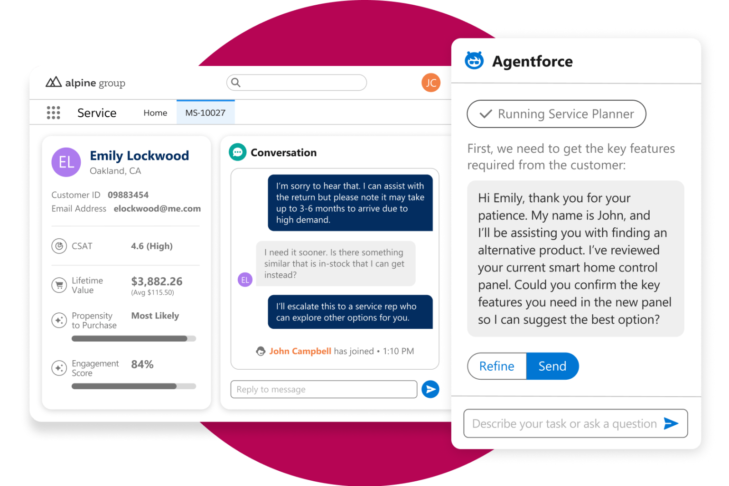
If you live in the Salesforce ecosystem, Salesforce Service Cloud is the obvious choice. Its seamless integration with Sales and Marketing Cloud is its superpower, creating a unified customer journey. Einstein AI offers advanced capabilities like predictive routing and case swarming. It’s a compliance beast, handling GDPR, CCPA, and HIPAA with ease and scaling to tens of thousands of agents.
-
The Catch: Implementation is a project—expect 3-6 months and a significant investment in consultants. It’s also one of the most expensive options on the market.
-
Best For: Large enterprises already heavily invested in Salesforce, particularly in regulated industries like finance and healthcare.
Category 2: High-Performance, All-in-One Solutions
Balancing power, affordability, and ease of use for growing global businesses.
❸ Sobot
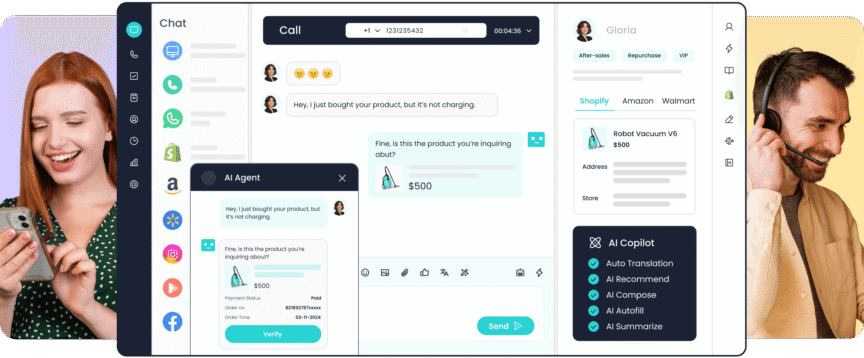
Sobot is an interesting AI-first platform with a growing global footprint, especially in e-commerce.
Its differentiator is its end-to-end proprietary tech—chat, voice, AI chatbot, ticketing—all built in-house, ensuring data consistency.
It integrates deeply with Amazon, Walmart, and Lazada, and its AI bot can automate a whopping 60% of standard e-commerce requests.
-
The Catch: Brand recognition in Western markets is still building compared to the established players, though it’s growing fast.
-
Best For: Global e-commerce brands and fast-growing mid-market companies looking for a fully integrated, AI-driven platform at a competitive price point.
❹ Kustomer
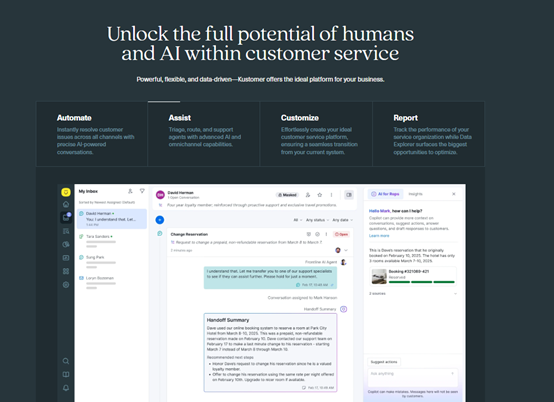
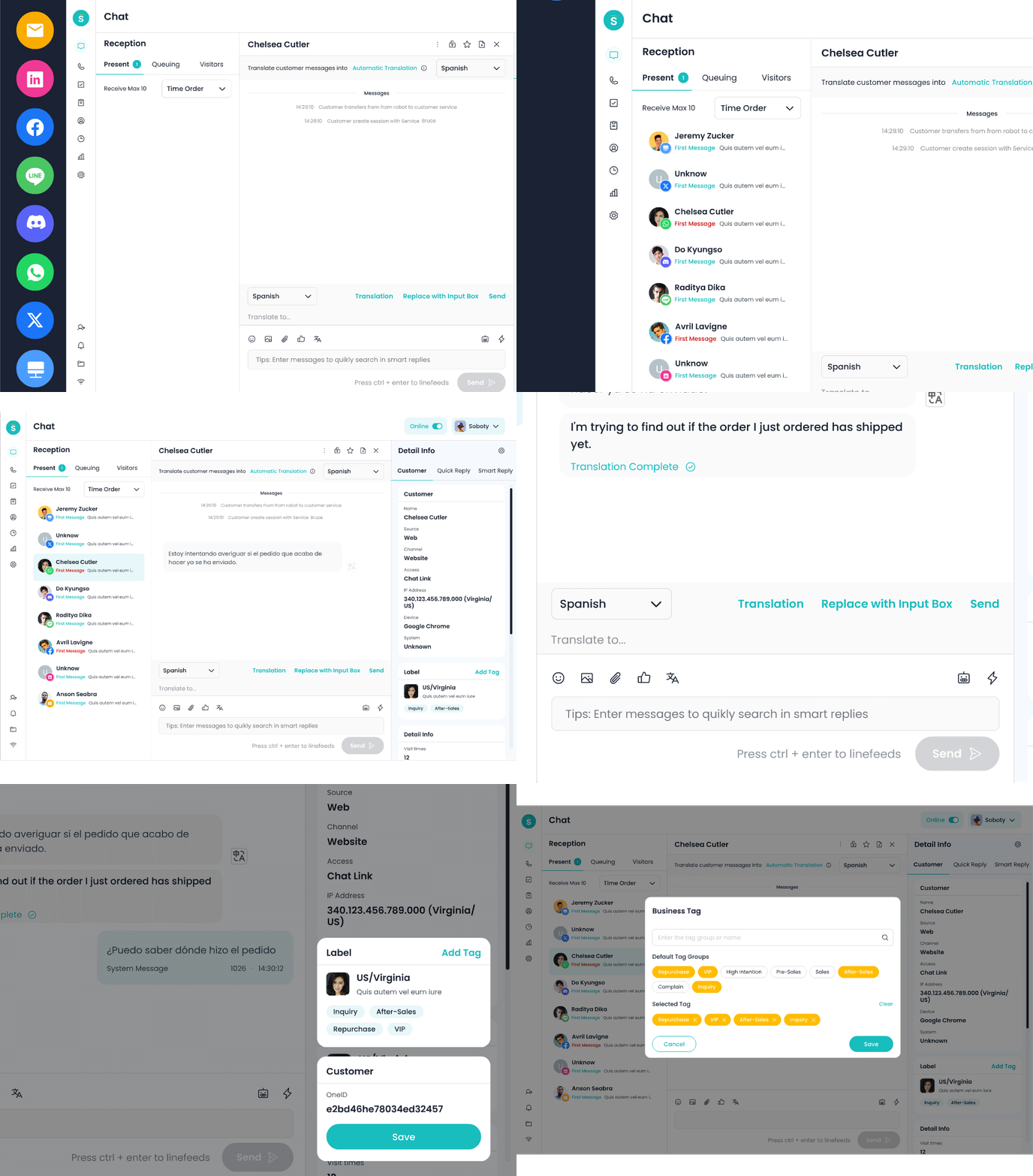
Kustomer is built around a brilliant idea: a single, unified customer timeline that aggregates every single interaction. No more silos.
It’s AI-native and particularly strong for B2C and e-commerce, with deep integrations for Shopify and the like. Its AI Agent can independently resolve over 40% of conversations. The Hopper case study is a standout: they slashed first response time by 50%.
-
The Catch: Its integration ecosystem (around 200+) is smaller than Zendesk’s, and its voice capabilities often rely on third-party providers like Twilio, which can add complexity.
-
Best For: Global B2C, e-commerce DTC brands, and travel/hospitality companies that want AI-driven automation and a unified customer view.
❺ Freshdesk (Freshworks)
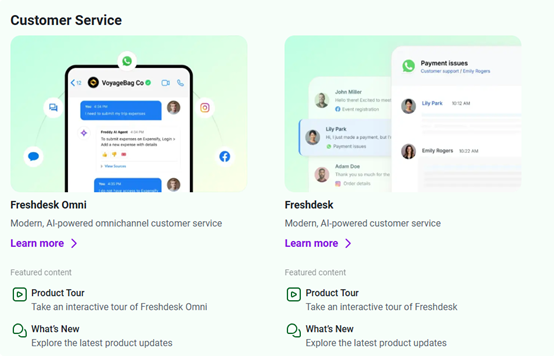
Freshdesk is the workhorse of the support world—reliable, affordable, and gets the job done. It offers a full suite of features, including its Freddy AI, at a price point that’s 30-40% lower than Zendesk’s. Implementation is famously fast; most global teams can be up and running in a week or two.
-
The Catch: Advanced features and enterprise-grade compliance options are gated behind its highest-priced plans, and its interface is less customizable than some rivals.
-
Best For: Global SMBs, mid-market enterprises, and any cost-conscious organization that values ease of use and quick time-to-value.
❻ HubSpot Service Hub
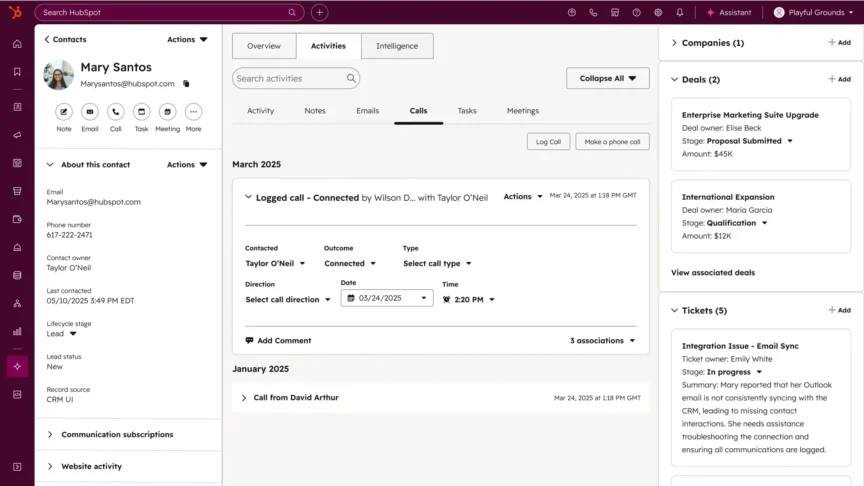
If you’re already using HubSpot for marketing or sales, this is a no-brainer.
The magic is in the unified CRM data—agents see the full customer journey from marketing email to sales call to support ticket in one place. It’s incredibly user-friendly, which is a huge plus for teams with high turnover.
-
The Catch: Its advanced call center capabilities are limited (often requiring third-party integrations), and its enterprise features aren’t as deep as Salesforce’s.
-
Best For: Growing global businesses already in the HubSpot ecosystem, especially B2B companies wanting tight alignment between sales and support.
❼ Zoho Desk
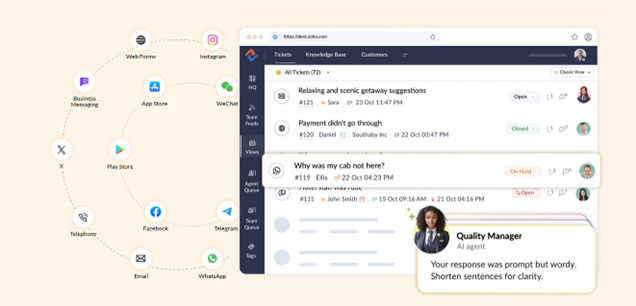
Zoho Desk is the value king. Starting at just $12 per agent per month, it’s the most affordable option by a mile.
It still packs a punch with omnichannel support, its Zia AI assistant, and solid multilingual capabilities. It’s a great entry point for global teams.
-
The Catch: Enterprise-grade features and deep customization are reserved for higher-tier plans, and its integration ecosystem, while decent, is smaller than the competition.
-
Best For: Global SMBs, budget-conscious startups, and any business deeply embedded in the Zoho ecosystem.
Category 3: Vertical-Specific Specialists
Built for the unique needs of a specific industry.
❽ Gorgias (E-commerce)
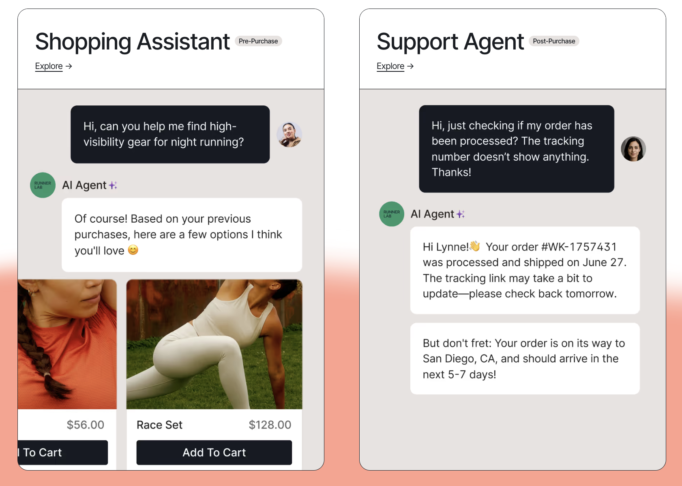
Gorgias is the undisputed champion for e-commerce DTC brands. Its superpower is letting agents manage orders, process returns, and issue refunds directly within the support ticket, without ever switching to Shopify.
Its AI bot handles 55% of e-commerce tickets autonomously, including complex tasks. The Glossier case study is a perfect example: they cut support costs by 30% and boosted CSAT by 22% post-implementation.
-
The Catch: It’s narrowly focused. If you’re not in e-commerce, it’s not for you. And its pricing can get steep for larger teams.
-
Best For: Global e-commerce DTC brands on Shopify, BigCommerce, or WooCommerce.
❾ ServiceNow (IT Support)
ServiceNow is the gold standard for internal IT support and enterprise service management. It’s designed to streamline IT workflows, manage incidents and changes, and ensure compliance with ITIL standards. For global enterprises, its distributed architecture ensures consistent performance worldwide.
-
The Catch: It’s complex, expensive, and purely for internal IT. It’s not a platform for customer-facing support.
-
Best For: Large global enterprises with complex IT infrastructure that need to optimize internal support.
❿ Intercom (SaaS)
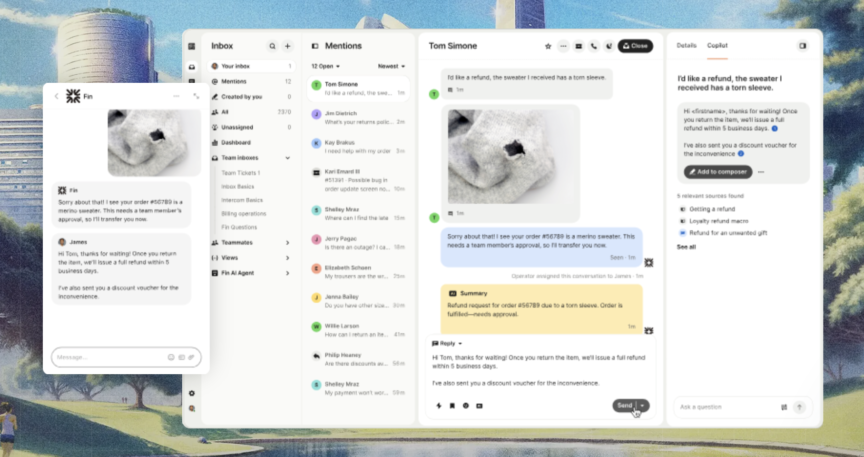
Intercom is built for SaaS and product-led businesses. Its killer feature is in-app support, allowing users to get help without ever leaving your product.
Its AI bot, Fin, resolves nearly half of product-related inquiries. It also offers powerful engagement tools like product tours to proactively drive adoption.
-
The Catch: It’s not suited for non-SaaS industries, and its pricing is on the higher end.
-
Best For: Global SaaS companies and product-led businesses that prioritize in-app support and user engagement.
7. Quick-Look Vendor Comparison
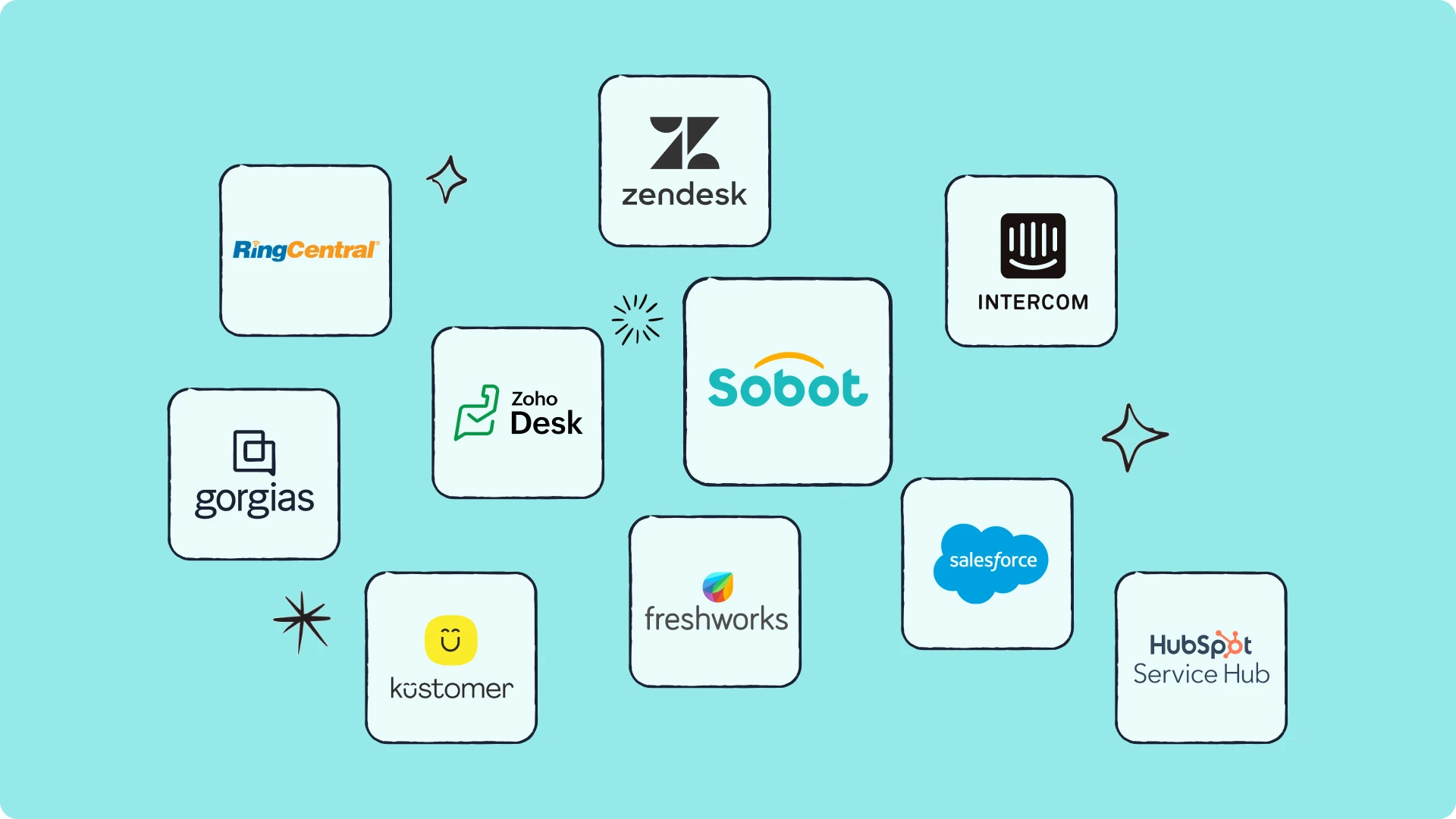
| Category | Starting Price (USD/agent/mo) | Ideal Use Case | |
|---|---|---|---|
| Zendesk | Enterprise Omnichannel | $89 | Global mid-market/enterprise, all industries |
| Salesforce Service Cloud | Enterprise Omnichannel | $150 | Large enterprises, especially in Salesforce ecosystem |
| Sobot | All-in-One | Custom | Global e-commerce, fast-growing mid-market |
| Kustomer | All-in-One | $79 | Global B2C, e-commerce DTC |
| Freshdesk | All-in-One | $49 | Cost-conscious global SMBs & mid-market |
| HubSpot Service Hub | All-in-One | $45 | HubSpot users, B2B SMBs/mid-market |
| Zoho Desk | All-in-One | $12 | Global SMBs, Zoho ecosystem users |
| Gorgias | Vertical (E-commerce) | ~$300/month (for 10+ agents) | Global e-commerce DTC brands |
| ServiceNow | Vertical (IT) | Custom | Large global enterprises for IT support |
| Intercom | Vertical (SaaS) | ~$999/month (enterprise) | Global SaaS, product-led businesses |
8. Making It Work: Best Practices for Global Implementation
Buying the platform is step one. Making it work for your global team is where the real magic happens.
① Build a Global, Cross-Functional Team
② Nail Your Data Migration and Integration Early
③ Configure for Regional Needs, Not Just Global Ones
④ Invest Heavily in Global Agent Training
⑤ Track the Right KPIs, Both Global and Regional
9. The Bottom Line: Building a Future-Proof Support Strategy
In 2026, your customer support platform is a strategic pillar of your business. The right one empowers your global teams to deliver seamless, personalized experiences that drive loyalty and revenue, all while keeping costs and compliance in check.
There’s no single “best” platform. The right choice for you depends on your size, industry, and where you’re headed. Giants like Zendesk and Salesforce offer unparalleled scale. Workhorses like Freshdesk and Zoho Desk deliver incredible value. And specialists like Gorgias and Intercom provide tailored solutions for niche needs.
To future-proof your choice, prioritize platforms with robust AI, a commitment to seamless integration, and the flexibility to adapt to regional quirks. As AI moves toward full autonomy and support becomes an even stronger revenue driver, the platforms that integrate, adapt, and scale with you will be the ones that deliver lasting value.
Use the methodology and insights in this guide to make a choice that not only solves today’s problems but positions you for success in the fast-evolving world of global customer support.
Final Thought 🤔
This guide is a snapshot of the 2026 market based on the best available data. The world of customer support never stands still, so keep an eye on emerging trends and regularly check in on your platform’s performance to ensure your strategy stays ahead of the curve.
Related Readings
FAQs
❶ What is the difference between omnichannel and multichannel customer support?
While they sound similar, the difference is critical.
Multichannel means you offer support on multiple platforms (e.g., email, chat, phone), but they often operate in silos. Omnichannel connects those channels; it unifies customer data and conversation history so a customer can switch from a WhatsApp chat to a phone call without ever having to repeat themselves.
In 2026, omnichannel is the gold standard for providing a seamless, personalized customer experience that boosts retention. Platforms like Sobot excel here by offering end-to-end proprietary technology across chat, call, and AI bot channels, ensuring data consistency and a truly unified experience.
❷ Which customer support platform is best for small to medium-sized businesses (SMBs) in 2026?
For SMBs and fast-growing mid-market companies, balancing robust features with affordability is key. Platforms like Freshdesk and Zoho Desk are top contenders due to their ease of use and cost-effectiveness.
However, for e-commerce-focused SMBs with global ambitions, Sobot offers a compelling value proposition—its AI-first, fully integrated platform (chat, voice, ticketing all built in-house) automates up to 60% of e-commerce inquiries at a competitive price point, with compliance across GDPR, CCPA, and PIPL built right in.
❸ How is AI changing customer support software in 2026?
AI has evolved from a simple chatbot to an autonomous team member.
AI handles autonomous resolution of complex tasks like processing returns and troubleshooting, freeing human agents for high-value interactions. Tools like AI Copilots assist agents in real-time by summarizing conversations and suggesting replies.
Leading platforms like Sobot demonstrate this shift with their full AI capability matrix, enabling businesses to automate routine inquiries while equipping agents with AI-powered insights to resolve issues faster and improve CSAT.