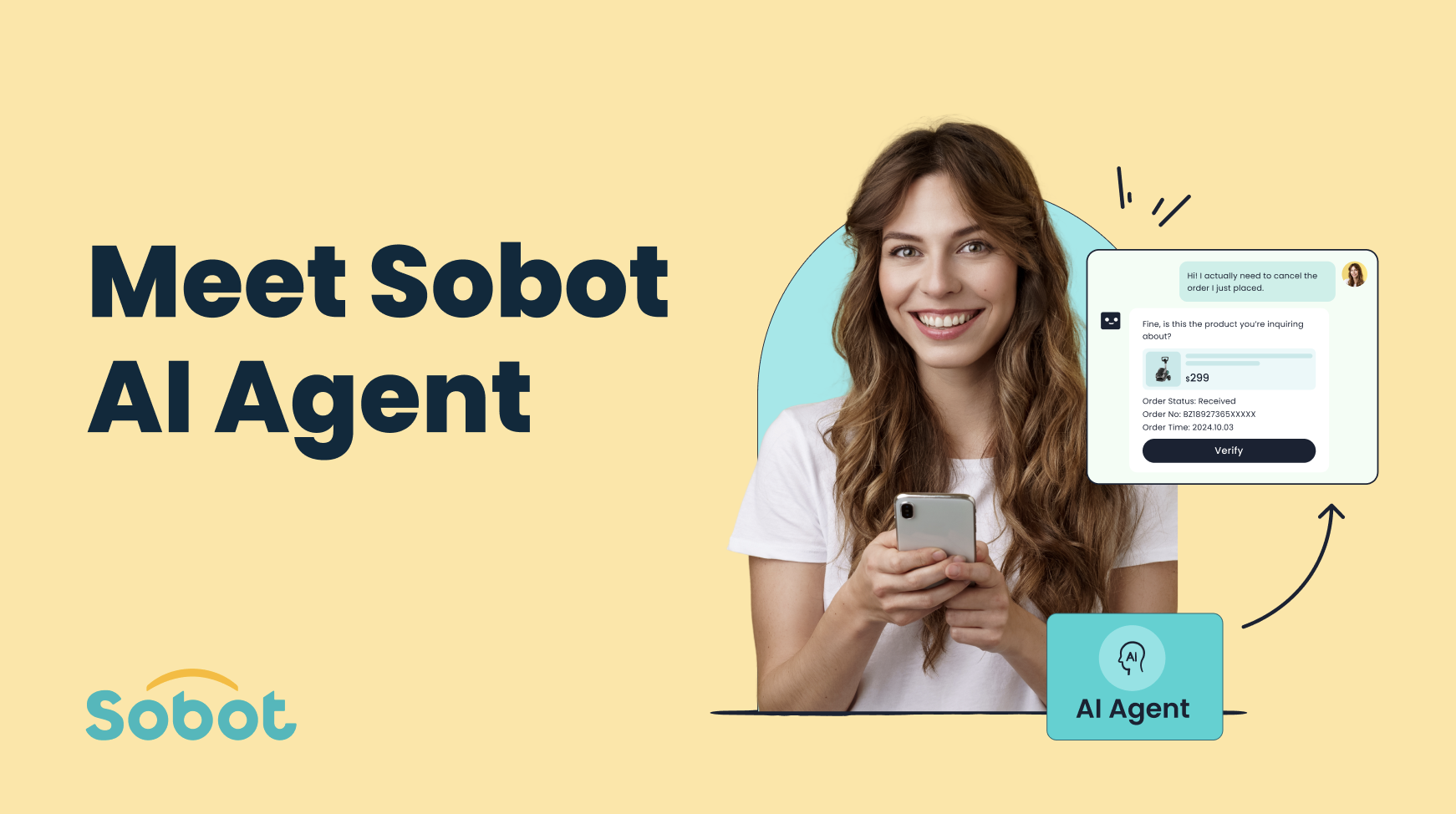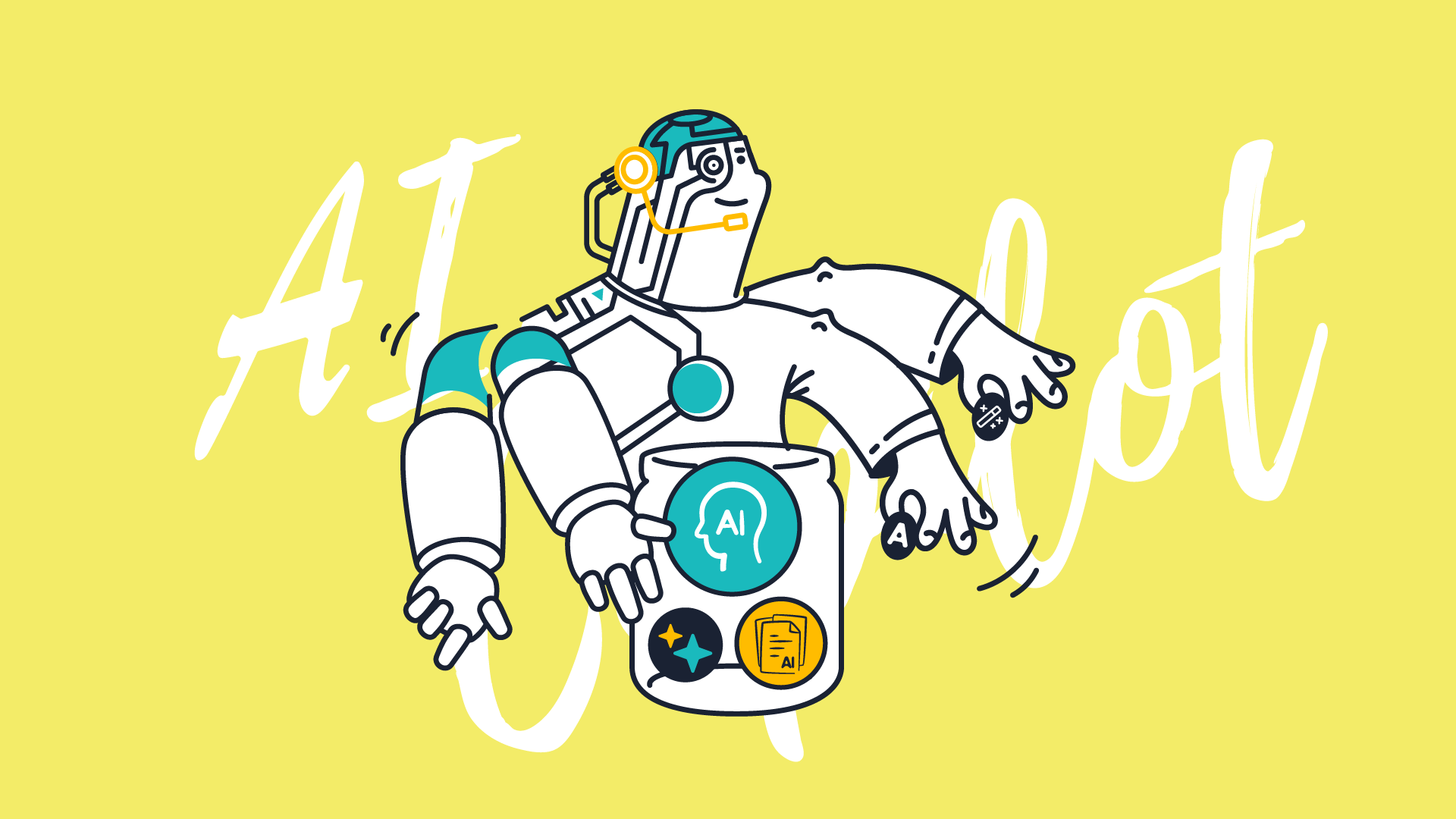
With its capability to handle complex issues and tasks, AI Agent successfully helps reduce the workload of human agents. However, this doesn’t make human agents less important. On the contrary, as the AI Agent handles some complex inquiries, human agents are relieved to deal with even more challenging tasks. That means, agents need to improve their service skills and reception capabilities generally– that’s where Sobot AI-Copilot comes in.
Q&A Assistance: AI Customer Service Assistant
LLM-Generated Pre-answers with Human Agent Review
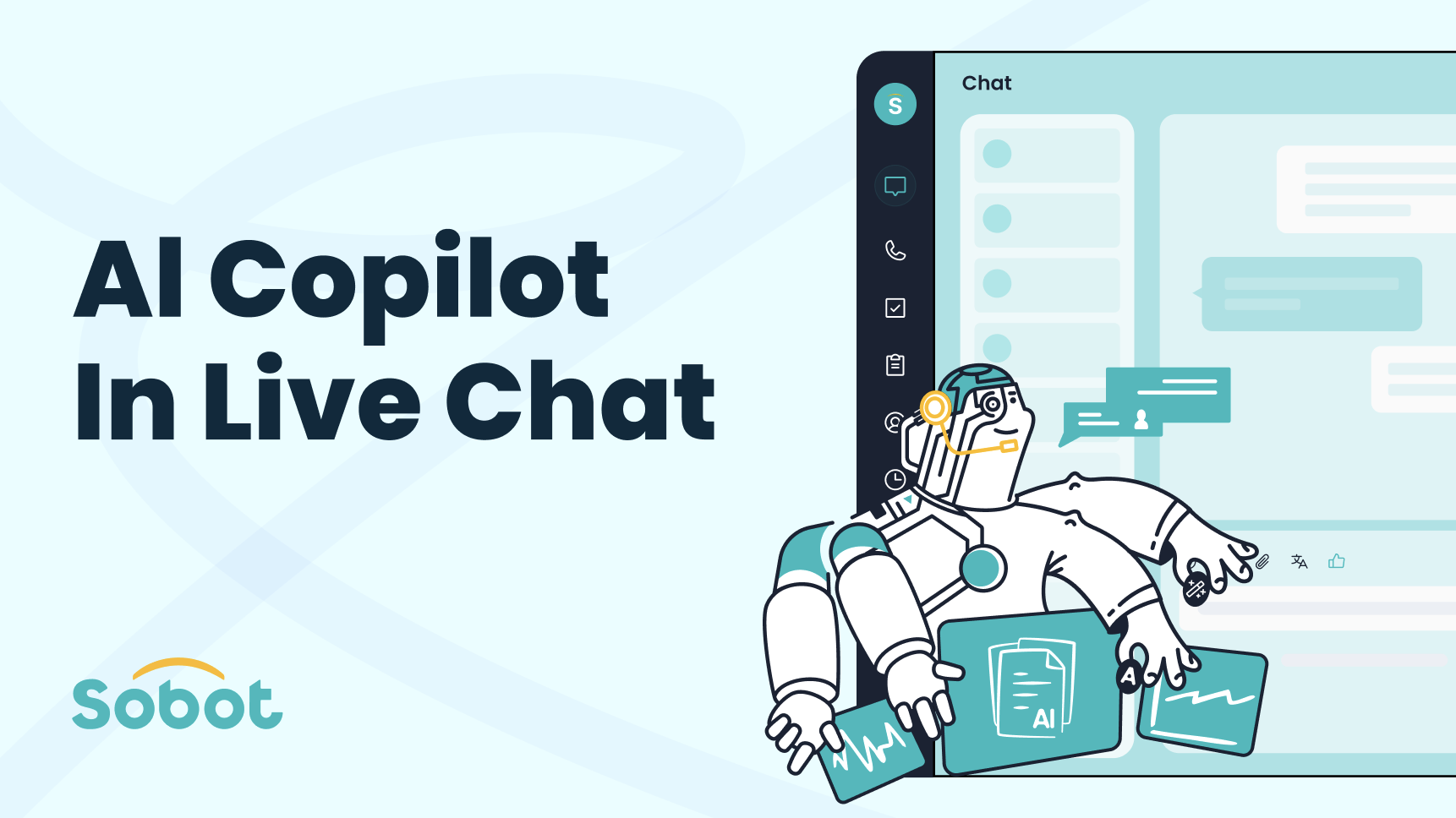
The AI customer service assistant plays a core role in Sobot LLM-powered AI-Copilot to assist human agents in real services. Its primary function is to “retrieve and generate answers for human agents”. For industries with multiple product categories (e.g., 3C and home appliances), professional knowledge (e.g., finance and insurance), or rapid product knowledge updates (e.g., gaming), human agents often face enormous pressure in “knowledge learning” and are prone to make mistakes during services. It’s no longer an issues that can be solved through trainings, instead, it requires a capable assistant to help human agents.
The combination of AI customer service assistant and human agents enables seamless collaboration. Backed by LLM technology and the enterprises’ well-maintained knowledge base, the AI customer service assistant automatically retrieves relevant knowledge from the knowledge base and organizes it into answers when customers pose questions. Human agents can use AI assistance for uncertain inquiries, then review and optimize the generated answers before sending them directly to customers.
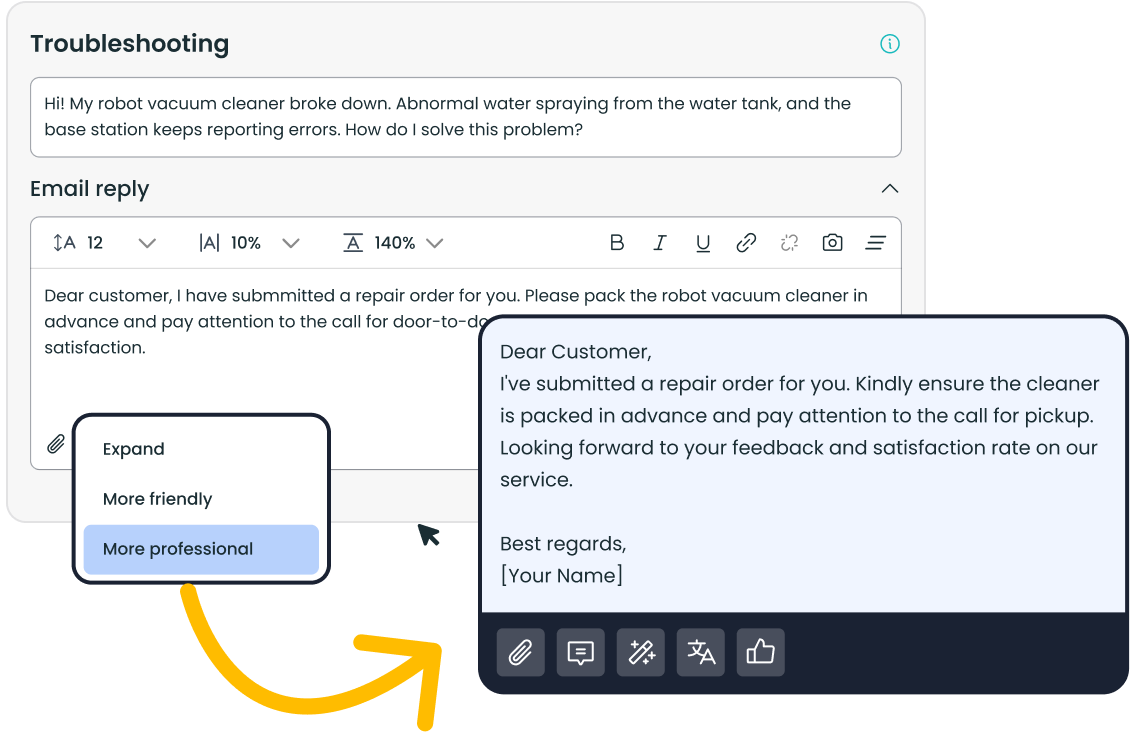
This allows AI to handle “knowledge retrieval and generation”, freeing up human agents to serve more incoming visitors simultaneously and strengthen emotional connections. It significantly improves answer accuracy and response efficiency while effectively boosting customer satisfaction. Additionally, both agents and managers can view detailed reports on AI assistance performance and trend changes to analyze the actual effectiveness of the AI customer service assistant and identify gaps in the knowledge base, enabling targeted optimizations.
Summary Assistance: AI Conversation Summary
Automatic Summary to Convert Conversations into Key Information
Summary plays a crucial role in agent hand-offs. For example, if a customer first communicates with Agent A about an issue in detail and later is transferred to Agent B for the same issue, Agent B would need to review the previous conversation records, quickly understand the context, or inquire with Agent A on the spot without a summary. This greatly impacts response times.
Moreover, summary not only requires human agents’ ability and attentiveness, but also consumes a great deal of their time, affecting service efficiency.
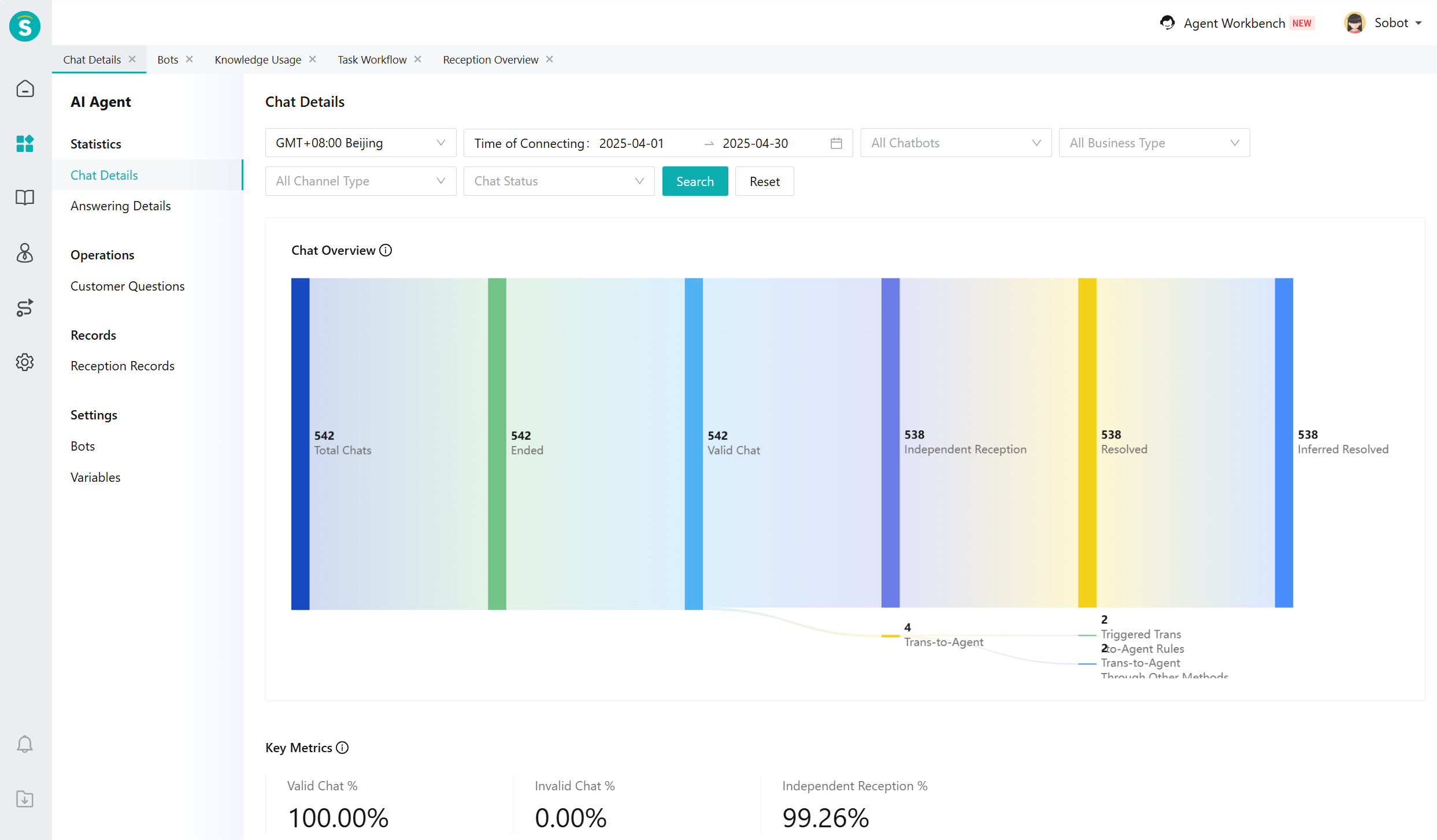
On Sobot’s customer service workbench, human agents can request LLMs to generate conversation abstracts with one click, and the timing and key points of generating can be customized. This way, whenever the customer is transferred to another agent later, the new agent can quickly grasp the previous conversation context through the abstract to predict the customer’s intent.
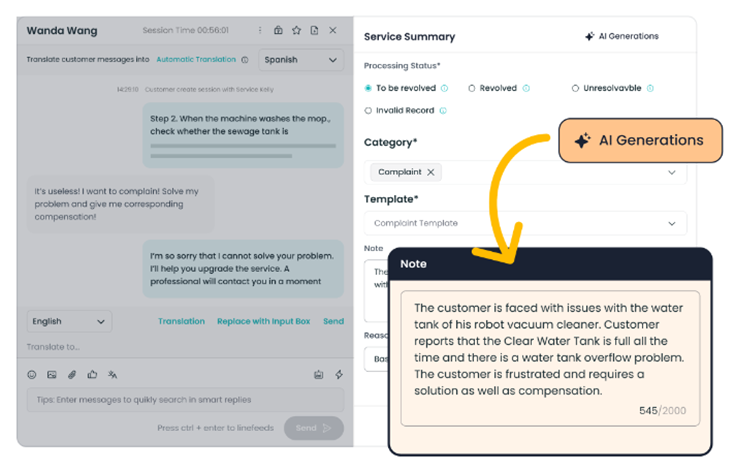
In addition, for complete conversations, the LLMs can help generate service summaries with one click. The model will automatically recognize consultation categories and other information based on the conversation content and fill them into specific fields, facilitating managers’ statistical analysis to identify concentrated business issues and implement precise optimizations at the business level.
Collaboration Assistance: AI Automatic Ticket Creation
Initiate Collaboration Quickly to Improve Response Timeliness
In scenarios requiring collaboration between frontline agents and backend departments (e.g., “repair by mail”), “ticket creation” is a critical task for agents. Its completion directly affects subsequent collaboration response and problem-solving speed, and is an important factor influencing customer satisfaction. Therefore, ticket creation requires both speed and accuracy.
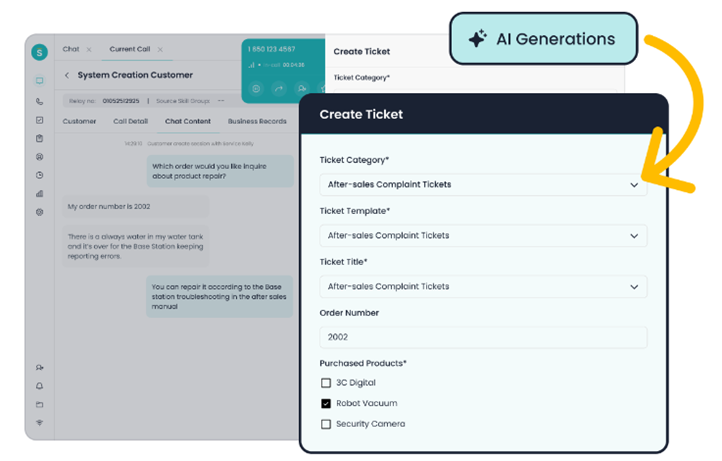
Tickets usually include multiple fields to help backend teams quickly grasp key information. So human agents have to manually extract field content required from the long texts, which is prone to errors. With AI Copilot, human agents can generate tickets with one click after the conversation ends. AI will automatically extract the required information from the full conversation and fill it into the ticket fields, minimizing the time human agents spend on ticket creation.
Conclusion
Powered by LLM technology, AI Copilot assists human agents in Q&A, summary, and collaboration. It enables regular agents to quickly improve their professional skills and work efficiency in a short period, enhancing both the intelligence and empathy of customer service. This allows enterprises to improve overall satisfaction without incurring additional costs or time.
Today, more and more enterprises have begun introducing LLMs in their customer service processes. If you also want to experience the charm of Sobot’s LLM-powered intelligent customer service firsthand, please feel free to contact us at any time.