Zendesk: A Traditional and Mature Enterprise Customer Service Platform
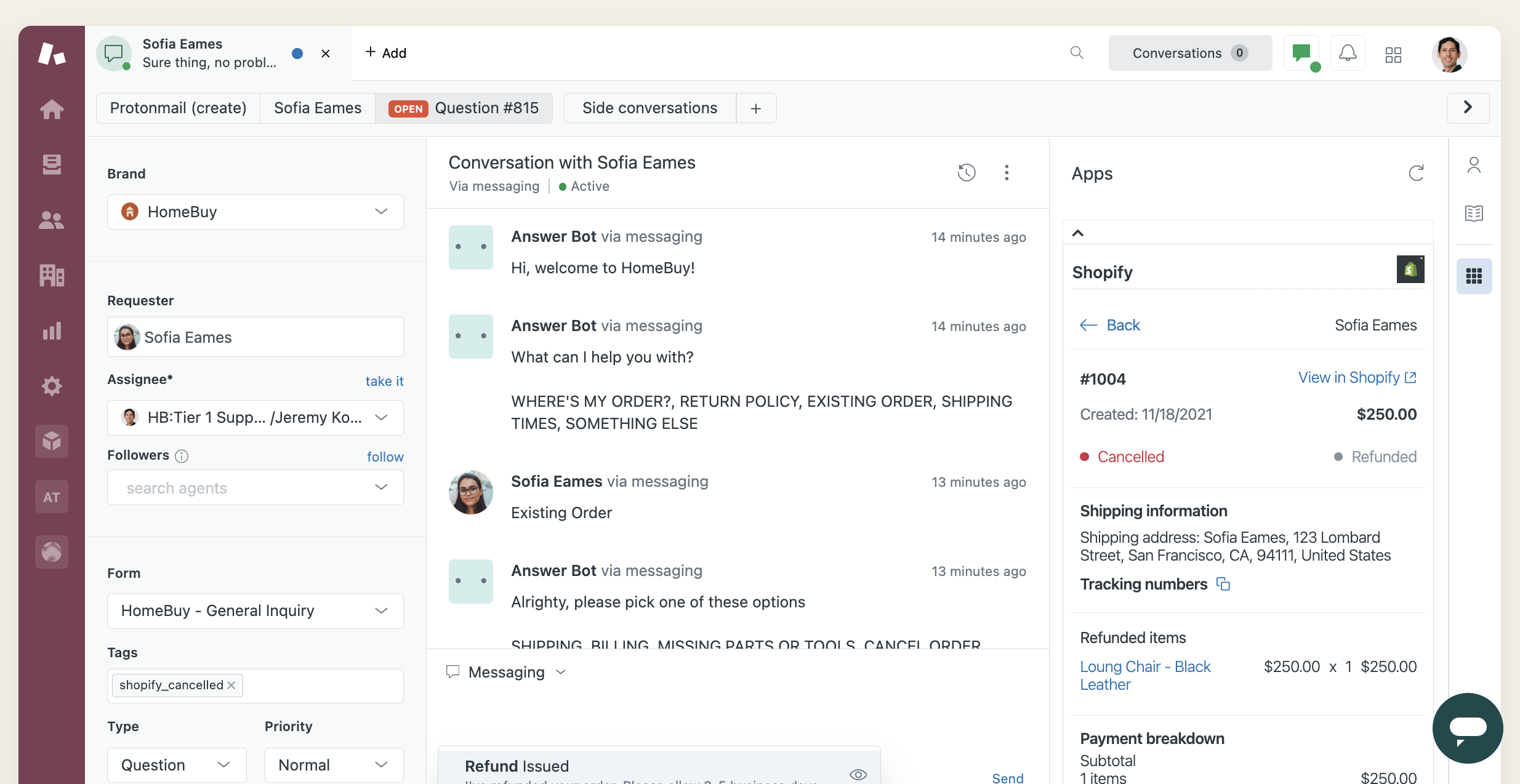
As one of the world’s most recognized customer service platforms, Zendesk remains a top choice for many organizations building their support systems. Having launched early, it has long focused on ticket management and workflow automation, offering mature solutions for numerous large enterprises.
Yet in today’s fast-evolving tech landscape, where customer experience is increasingly critical, its traditional architecture is showing some limitations. Here’s an objective overview.

Key Features
Multichannel Support: Email, phone, chat, and social media.
Mature Ticketing System: Supports tiering, prioritization, SLAs, and assignment rules.
Configurable Workflows: Enterprises can customize automation rules to their needs.
Extensive Third-Party Integrations: Boasts a large application ecosystem.
✅ Pros
- Broad functionality, suitable for complex workflows in large organizations.
- Mature ecosystem with access to numerous third-party tools.
- Consistent performance on traditional CS KPIs (e.g., SLA compliance, ticket management).
❌ Cons
- Traditional Architecture: Still ticket-centric rather than AI- or customer-centric.
- AI is Primarily Assistive: Used mainly for recommendations and categorization, not end-to-end automation.
- Multichannel, Not Omnichannel: Customer data often siloed across modules.
- High Configuration & Maintenance Costs: Rules, automations, and integrations require ongoing operational investment.
Why More Companies Are Seeking Zendesk Alternatives in 2026
While Zendesk remains a major player, accelerating digital transformation and rising customer expectations are putting its traditional model to the test. Increasingly, businesses are exploring smarter, more flexible, and cost-effective alternatives, driven by three major trends:
1. Customer Service is Going AI-First
Industry studies show that customer service teams successfully leveraging AI can achieve:
- 20–40% lower support costs
- 30–50% faster first response times
- 25–35% higher self-service resolution rates
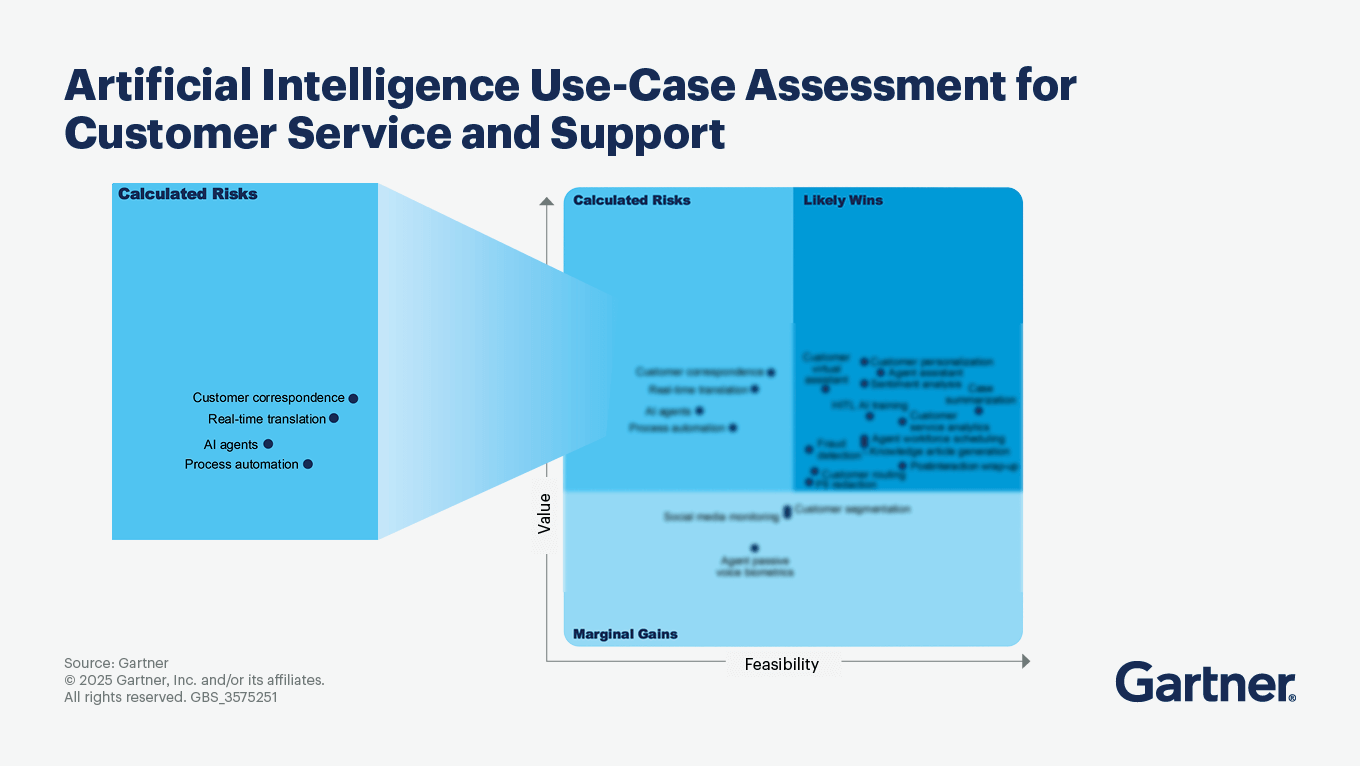
Today, companies want AI not just to assist agents, but to autonomously handle inquiries, intelligently categorize requests, resolve issues independently, and even predict customer intent. Ticket-centric systems like Zendesk often bolt on AI capabilities, making true end-to-end intelligent service challenging.
2. Omnichannel is the New Baseline
Modern consumers switch seamlessly across channels—chat → email → social → phone. Yet many platforms still operate at a “multichannel” level, with fragmented data forcing agents to jump between interfaces, impacting efficiency and experience.
A true omnichannel platform should offer:
- Unified customer profiles
- Continuous, cross-channel context
- A single AI processing layer rather than channel-specific silos
3. Total Cost of Ownership (TCO) Continues to Rise
As businesses scale, many Zendesk users feel financial pressure:
- Licensing fees increase annually
- Implementation and customization costs are high
- Ongoing human effort is required to maintain workflows and rules
This drives growth-oriented companies toward platforms where AI automation can significantly reduce long-term operational costs and boost ROI.
Also See

How We Evaluate Zendesk Alternatives
To guide informed decisions, we assess platforms across five core dimensions. These criteria go beyond feature completeness, emphasizing alignment with modern customer service trends and real business needs.
1. True Omnichannel vs. Multichannel
2. Depth of AI Capabilities
Assess whether AI permeates the entire customer support workflow, including:
- Smart Routing & Assignment: Automatically assign requests based on intent, language, and urgency.
- Autonomous Resolution: Can AI independently handle common issues or complex queries?
- Intent Recognition & Prediction: Identify customer needs early and proactively offer solutions.
- Cross-Channel Context Understanding: Can AI maintain conversation history across channels?
3. Unified Customer Data
4. Scalability
5. TCO & ROI
Examine the long-term economic impact, not just license fees:
- Implementation & Integration Complexity: Time to launch, technical resources required
- Ongoing Maintenance Costs: Staffing, upgrades, custom development
- Efficiency Gains from AI Automation: Quantify reduced manual work, improved resolution rates, faster response times, and calculate true ROI
Top 15 Zendesk Alternatives in 2026: An In-Depth Analysis
To start, here’s a table that gives you a clear overview of all the leading customer support platforms.
| Positioning | Strengths | AI | Channels | Price | |
| Zendesk | General CS Platform | Multichannel ticket management | Moderate (assistive AI) | Multichannel | Medium-High |
| Salesforce Service Cloud | CRM-tied CS | Complex enterprise processes | Moderate (Einstein) | Omnichannel | High |
| Kustomer | CRM + CS | Customer timeline view | Moderate | Multichannel | Medium-High |
| Freshdesk | Value-oriented CS | Basic ticket management | Weak | Multichannel | Low-Medium |
| HubSpot Service Hub | CRM ecosystem CS module | Marketing/Sales-driven support | Weak | Multichannel | Medium |
| Gorgias | E-commerce CS | Shopify order support | Ecommerce AI | Multichannel | Medium |
| Gladly | Customer profile-centric CS | High-touch support | Moderate | Multichannel | Medium-High |
| Genesys | Enterprise contact center | Phone + operations management | Weak | Multichannel | High |
| Zoho Desk | Budget-friendly CS | Basic ticketing | Weak | Multichannel | Low |
| NICE | AI contact center | Data-driven operations | Weak | Omnichannel | High |
| Tidio | Lightweight chat tool | Website chat | Moderate | None | Low |
| Sprinklr | Social CX management | Brand & social operations | Moderate | Multichannel | High |
| Front | Collaboration & shared inbox | Internal support/light CS | Weak | Multichannel | Medium |
| Help Scout | Lightweight conversational CS | Email/message support | Weak | None | Medium |
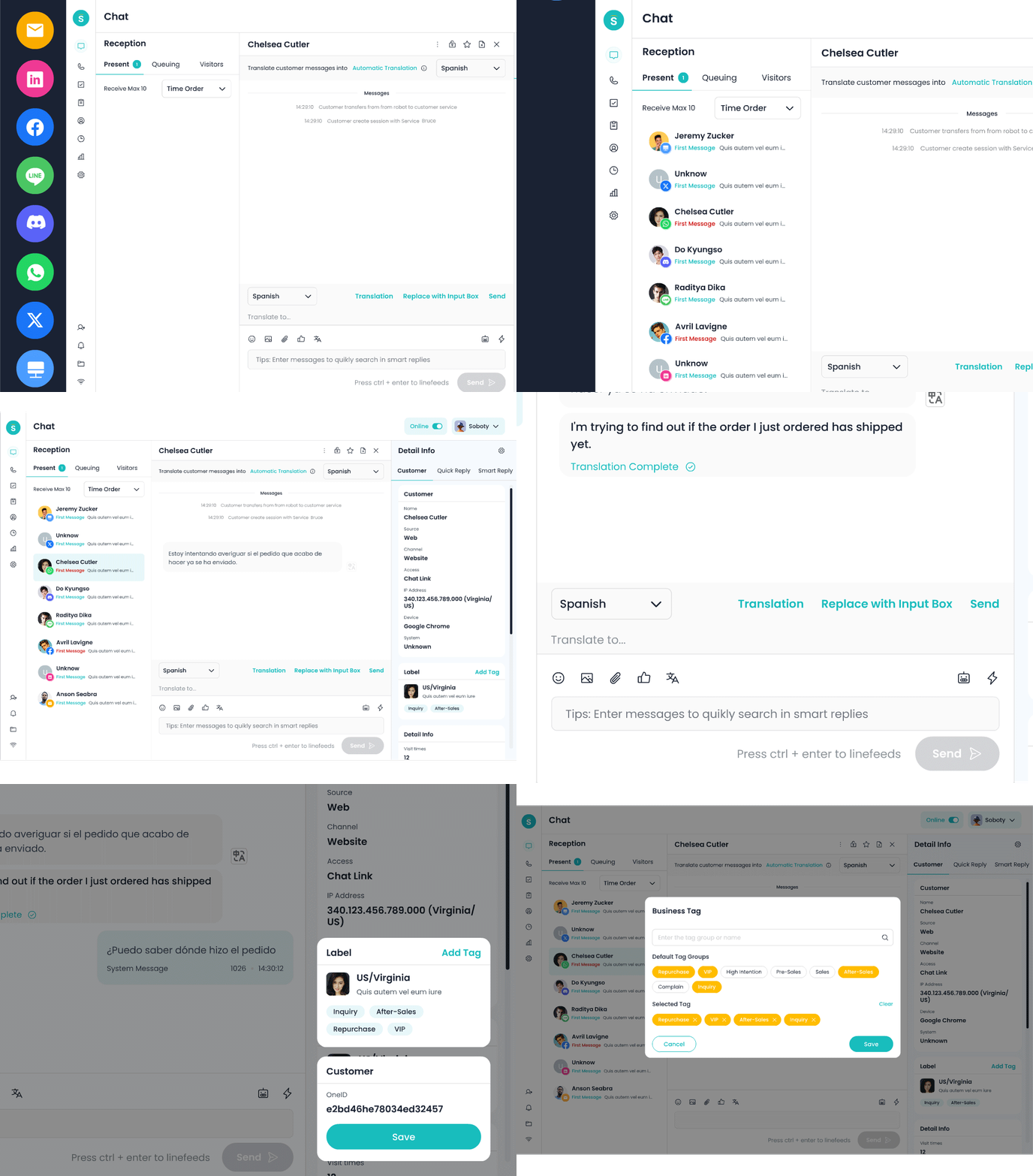
| Sobot | AI omnichannel CS | All-in-One AI solution | Strong | Omnichannel | Medium |
❶ Sobot: The Best AI-First, Truly Omnichannel Zendesk Alternative
What is Sobot
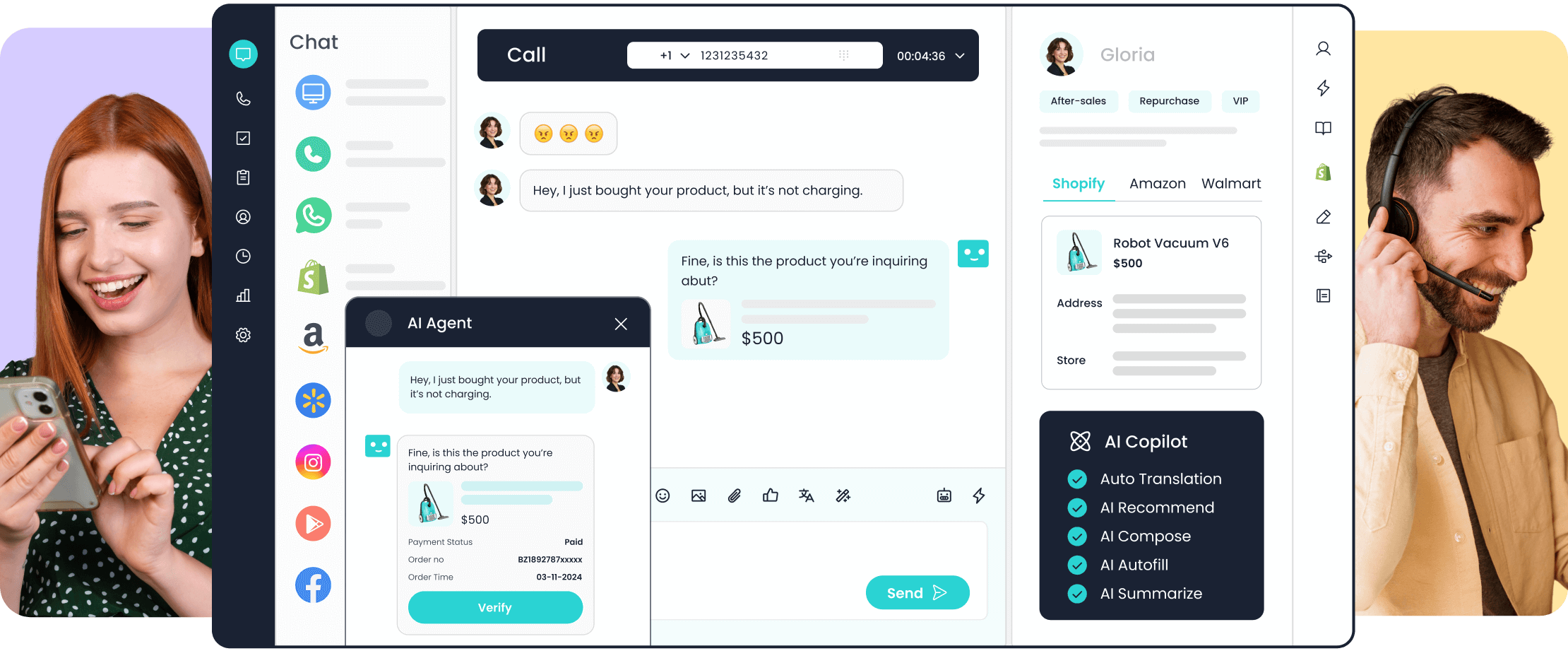
Sobot is an AI-native customer service platform designed for high-volume, multi-channel support. Unlike traditional ticket systems, it’s built from the ground up around AI automation.
Key Features
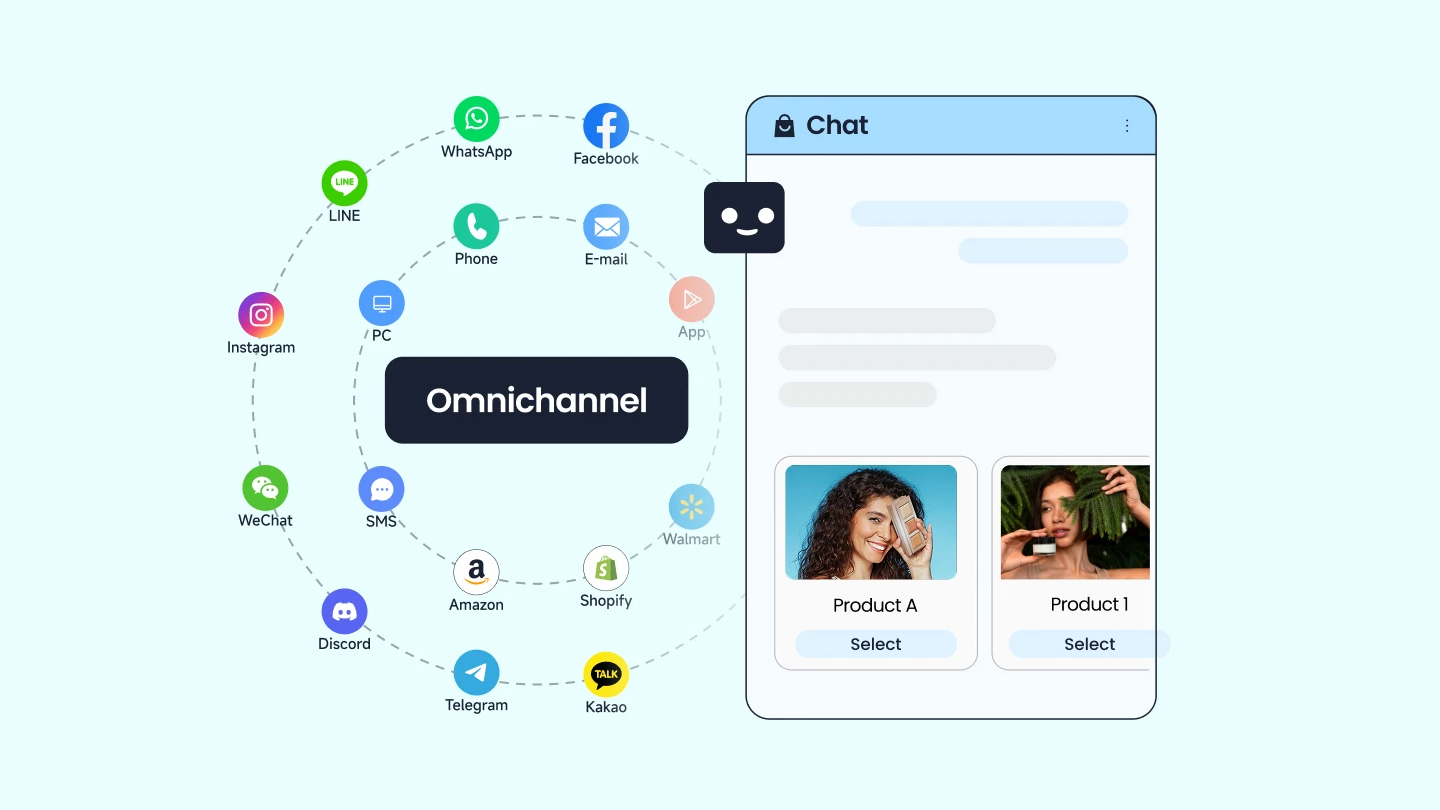
Unified omnichannel platform (voice, chat, email, social media, messaging apps) supporting both direct websites/apps and third-party e-commerce platforms like Amazon and Shopify
AI voice handling & intelligent conversation
Automatic intent recognition & smart routing
Real-time analytics and operational insights
✅ Pros
- Stronger AI automation than Zendesk, significantly reducing agent workload
- True omnichannel with seamless online-phone integration and unified customer data
- Flexible, scalable, suitable for enterprise and fast-growing companies
- Cost-efficient at scale
❌ Cons
- Teams used to highly manual configuration may need adjustment time
- Very small teams may not require all capabilities
❷ Intercom: The Conversational AI Platform That Bridges Marketing and Support
What is Intercom
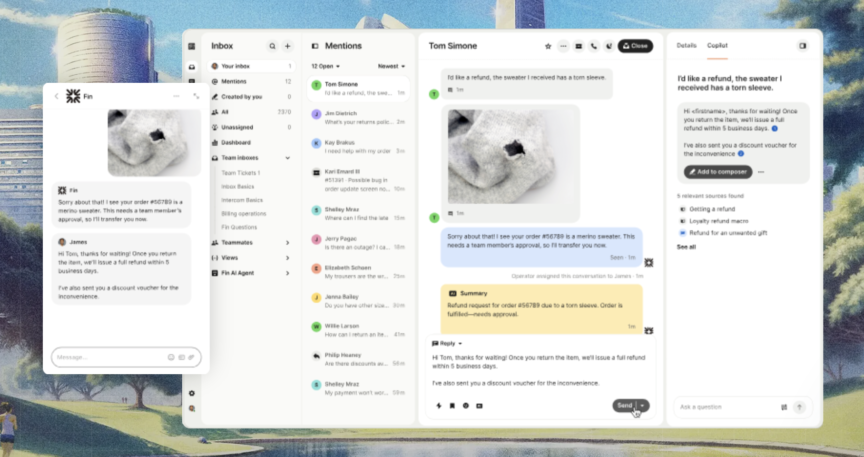
Intercom is a US-based company founded in 2011, positioned as an “AI-first customer service platform.” Its core philosophy is to unify customer engagement, support, and marketing through AI-driven conversations, rather than functioning as a traditional, ticket-centric system. It is used by over 25,000 businesses globally.
Key Features
Fin AI Agent
- This is its flagship feature. Intercom claims Fin is “the highest-performing AI agent for customer service,” topping G2’s rankings in the AI Agent category. It can autonomously answer customer queries based on the company’s knowledge base, complete tasks, and seamlessly hand off complex issues to human agents, enabling scalable frontline support.
Multi-channel Inbox with Unified View
- Supports major digital channels (web, in-app, email, WhatsApp, social media) with a single view for management. Note: Its voice functionality is a separate module or paid add-on, not a natively deep-integrated call center feature like in traditional contact center platforms.
Product Tours & Proactive Messages
- Enables sending in-app messages, tooltips, and interactive product tours for user onboarding, feature adoption, or feedback collection.
✅ Pros
- Powerful Conversational AI: The Fin AI Agent is widely recognized as its standout strength, capable of providing instant, accurate responses across languages and channels to handle high volumes of repetitive queries.
- Excellent UX & Fast Deployment: Praised for its intuitive design and is considered a model of “out-of-the-box” usability, making it easy for modern product teams to adopt quickly.
- Blend of Marketing & Support: Beyond reactive support, its proactive messaging and tour features allow it to serve user growth and customer success goals, making it particularly suitable for SaaS and tech companies.
- Modern, Flexible Helpdesk: The unified inbox and AI-assisted tools (like Copilot) are designed to boost agent productivity.
❌ Cons
- Gaps in “Omnichannel” Support: Its “omnichannel” approach is heavily skewed towards digital channels. Native, robust voice/telephony support is lacking and typically offered as an extra. This is a significant drawback for phone-dependent operations.
- Weaker Traditional Ticketing: The “conversation-as-a-ticket” model is less rigorous for managing high-complexity tickets with strict SLAs, approvals, and internal collaboration, compared to traditional systems like Zendesk. It’s better suited for lightweight, conversational support.
- Complex & Potentially High Cost Structure: It uses a base seat fee + usage-based pricing model (e.g., additional cost per AI resolution by Fin). For businesses with high query volumes, AI costs can escalate quickly, and the pricing structure is often criticized for being complex and opaque.
❸ Kustomer: Customer Timeline-Centric Platform
What is Kustomer
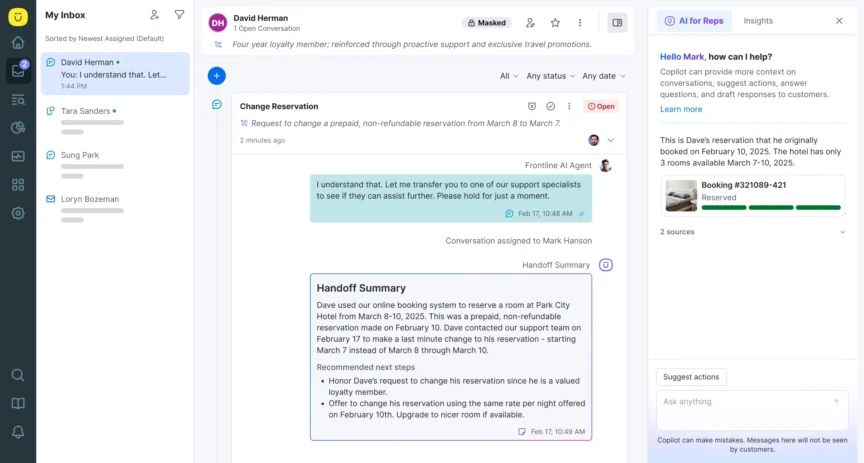
Kustomer emphasizes a customer-first, ticket-second approach, using a unified timeline to manage support and CRM interactions.
Key Features
Consolidated customer timeline from email, chat, social, and phone interactions
Rule-based automation combined with AI for routing, auto-replies, and basic sentiment analysis
Native telephony, reducing reliance on third-party phone systems
Compliance support, including encryption and role-based access (HIPAA-ready)
✅ Pros
- Clear customer context; agents can easily see history
- User-friendly for brands prioritizing customer view
- Strong e-commerce & CRM integration support
❌ Cons
- AI is mainly assistive, limited end-to-end automation
- Still manual-heavy in complex scenarios
- Deployment requires implementation effort
❹ Freshdesk: Multichannel Support for SMBs
What is Freshdesk
Freshdesk is a cloud-based ticketing system aimed at SMBs, emphasizing rapid deployment and ease of use.
Key Features
Multichannel ticketing: email, chat, phone, social
Freddy AI: ticket categorization, knowledge base suggestions, basic auto-replies
Self-service portal with FAQs and ticket lookup
Tiered pricing from free to enterprise
✅ Pros
- Fast setup, low learning curve
- Affordable, suitable for budget-conscious teams
- Good support for standardized workflows
❌ Cons
- Still multichannel, not fully unified
- Basic AI, mainly assists agents
- Limited scalability for high-volume, multi-line teams
❺ HubSpot Service Hub: CRM-Centric Module
What is HubSpot
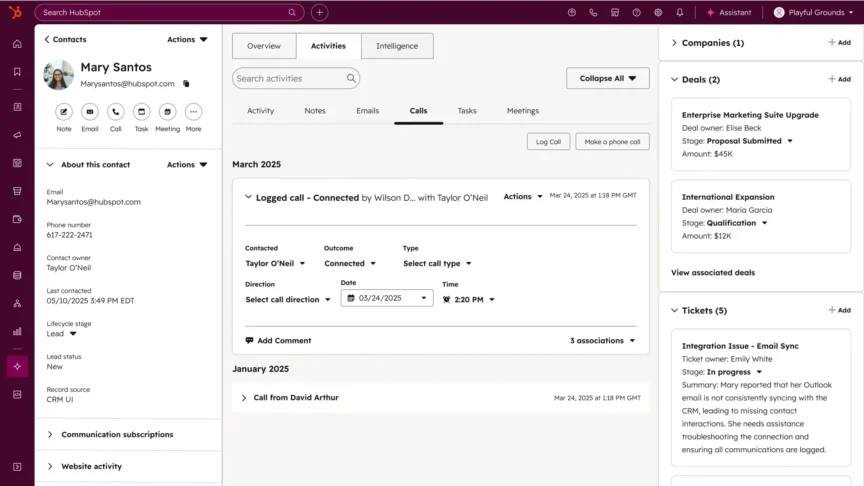
HubSpot Service Hub is the CS module within HubSpot’s CRM ecosystem, ideal for teams already using HubSpot for marketing and sales.
Key Features
Ticket management
Knowledge base
Native integration with HubSpot CRM, marketing, and sales tools
Basic automation rules
✅ Pros
- Smooth data flow for existing HubSpot users
- Consistent UI and low learning curve
- Suited for marketing/sales-first organizations
❌ Cons
- Not designed for high-volume support
- Limited advanced AI automation
- Less capable for complex multi-line operations
❻ Gorgias: Ecommerce‑Focused Support Platform
What is Gorgias
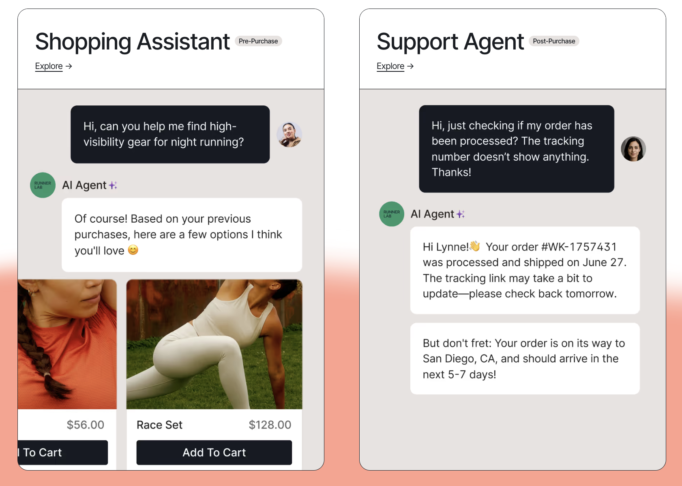
Gorgias is a customer support tool primarily designed for Shopify and e‑commerce merchants, oriented around common online retail service scenarios.
Key Features
Automated order status lookups and responses
Multichannel message management (email, social, chat)
Basic rule‑based automation and templated replies
✅ Pros
- Provides straightforward support for order‑related inquiries (status updates, refunds, returns)
- Easy for e‑commerce teams to adopt
- Can reduce repetitive work for common transactional questions
❌ Cons
- Narrow applicability outside of e‑commerce contexts
- AI capabilities are mainly focused on order‑centric automation
- Limited unified customer view in complex cross‑channel scenarios
❼ Gladly: Customer Profile‑Centric Support Platform
What is Gladly
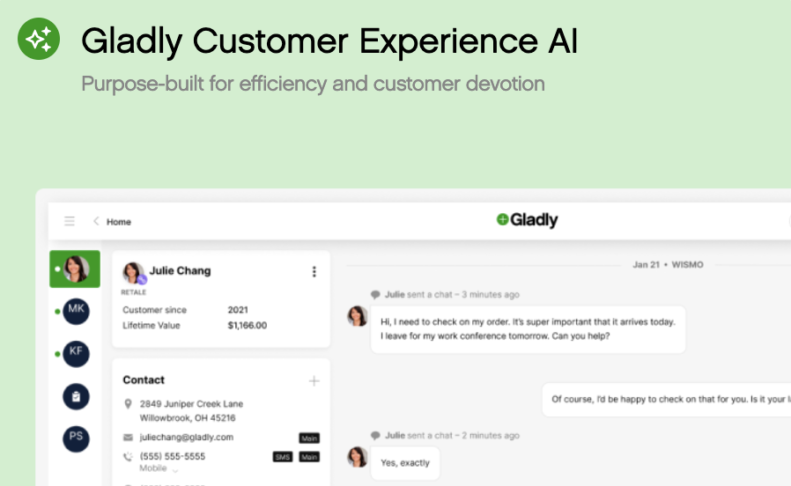
Gladly replaces traditional ticket‑centric workflows with a customer profile‑centric approach, organizing support around individual customers rather than discrete tickets.
Key Features
Customer‑centric interface design
Conversation‑based support handling
Centralized display of customer history
✅ Pros
- Agents can see a single view of the customer’s complete history
- Reduces fragmentation caused by ticket splitting
- May fit businesses emphasizing personalized, relationship‑oriented support
❌ Cons
- Scalability may be limited in high‑volume, large‑scale support centers
- Automation capabilities are conservative, leaning toward manual handling
- Less mature in structured workflow management compared with traditional ticket systems
❽ Genesys Cloud: Enterprise Contact Center Solution
What is Genesys
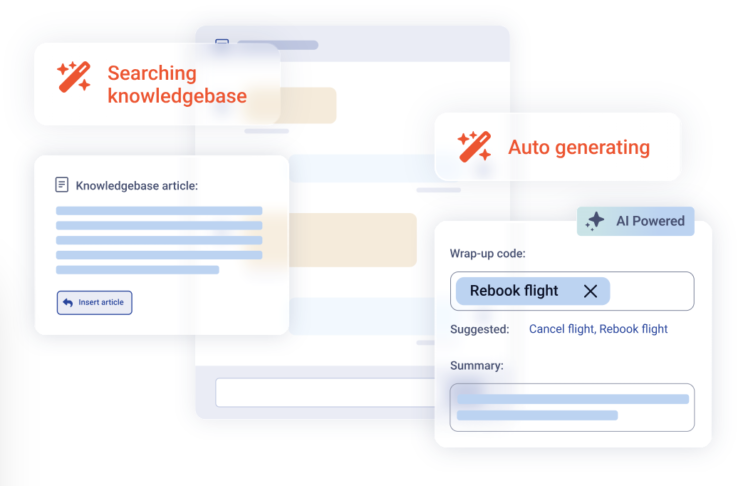
Genesys Cloud is a cloud‑based contact center solution targeting enterprise operations, designed around traditional call center scenarios but also supporting digital channels.
Key Features
Intelligent routing and queue management
Workforce scheduling and staffing tools
Real‑time monitoring and analytics
Support for voice, chat, email, and other channels
✅ Pros
- Capable of supporting large, high‑volume support teams
- Comprehensive capabilities for voice and traditional contact center operations
- Suitable for organizations with established, standardized service processes
❌ Cons
- Telephony and contact center remain the primary focus; digital channels may be secondary
- Less oriented toward self‑service and modern AI CX automation
- Implementation and configuration can be complex
- Cost structure may be less accessible for mid‑market teams
❾ NICE CXone: Enterprise AI Contact Center Platform
What is NICE
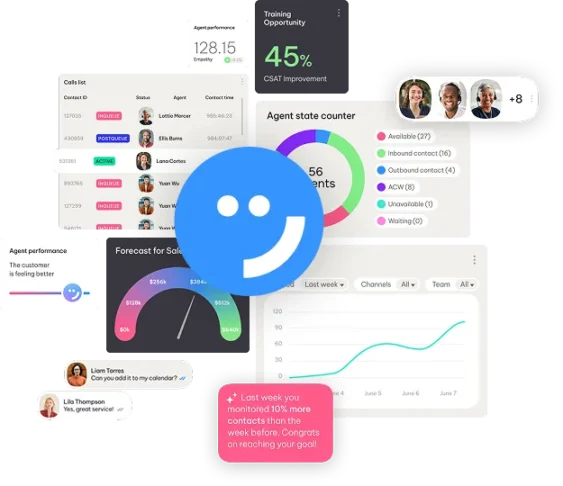
NICE CXone is an enterprise contact center platform that emphasizes operational data analysis and AI‑augmented capabilities.
Key Features
AI‑driven intelligent routing
Performance analytics and quality management tools
Workforce management and operations optimization
Multi‑channel access
✅ Pros
- Strong focus on data analysis and operational metrics
- Fits support organizations that prioritize KPIs and performance tracking
- Scales with large teams
❌ Cons
- Voice and contact center functionality are the core strengths, while online channel support is secondary
- Implementation and learning curve are substantial
- Positioned more as an operations management solution than an autonomous AI support platform
❿ Zoho Desk: Value‑Focused Customer Support System
What is Zoho Desk
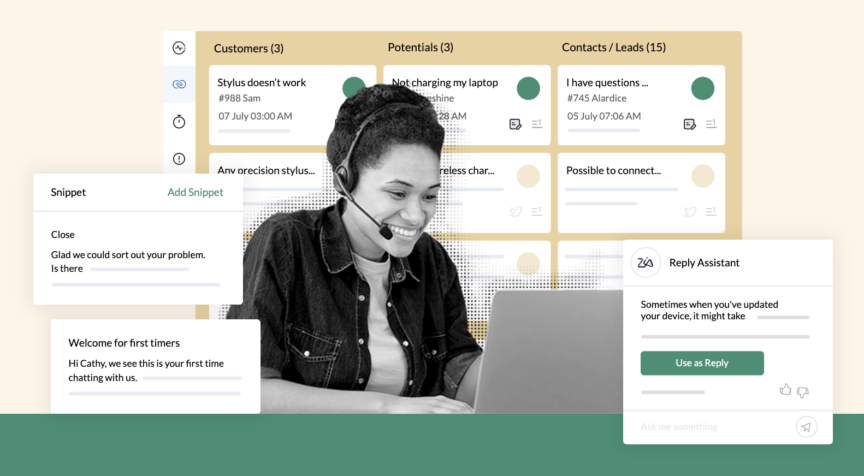
Zoho Desk is the customer support module within the Zoho suite, positioned for cost‑conscious teams needing fundamental support capabilities.
Key Features
Ticket management
Basic automation rules
Integration with Zoho CRM
Multichannel support (email, chat, social media)
✅ Pros
- Lower cost, suitable for teams with limited budgets
- Simple to operate and deploy
- Covers basic standardized support workflows effectively
❌ Cons
- AI capabilities are limited, with more reliance on manual processes
- Less capable in complex scenarios (multiple business lines, high volume)
- Scalability for larger enterprise use cases is limited
⓫ Front: Collaboration‑Oriented Shared Inbox Tool
What is Front
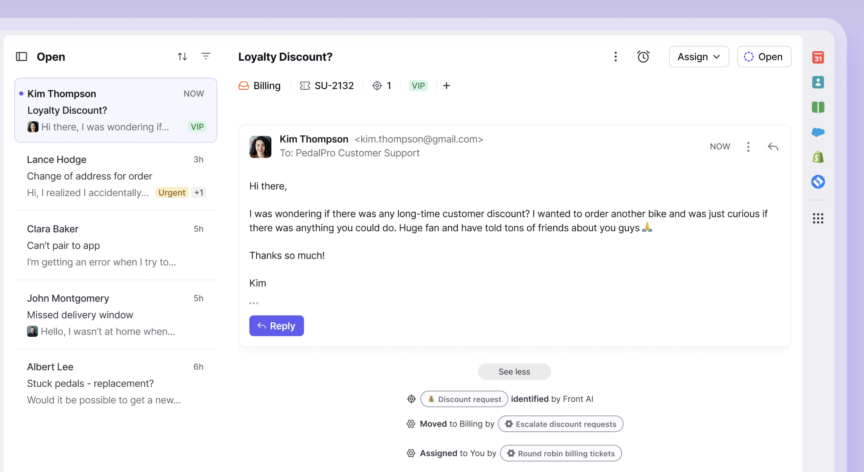
Front is essentially a shared inbox and team collaboration tool rather than a traditional customer service system.
Key Features
Shared team inbox
Internal commenting and collaboration
Basic automation rules
Support for some third‑party integrations
✅ Pros
- Suitable for teams needing strong internal collaboration
- Intuitive interface with clear communication flows
- Fits internal support or lightweight customer support scenarios
❌ Cons
- Not designed for high‑volume customer service centers
- Ticketing and workflow automation capabilities are limited
- Not optimized for structured, multi‑step customer support operations
⓬ Salesforce Service Cloud: CRM‑Integrated Enterprise Support
What is Salesforce Service Cloud
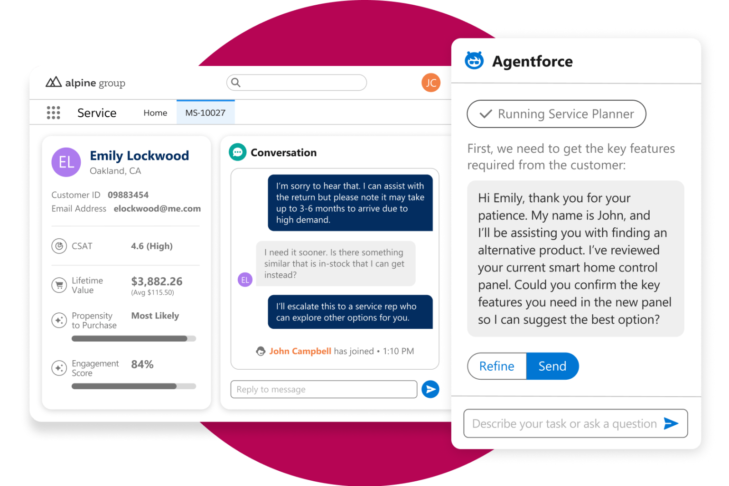
Service Cloud is Salesforce’s customer support platform deeply integrated within the Salesforce CRM ecosystem.
Key Features
Native integration with Salesforce CRM
Einstein AI tooling (classification, recommendations, insights)
Omnichannel routing
Customizable workflows
✅ Pros
- Consistent data experience for teams already using Salesforce
- Broad functional coverage suitable for complex business needs
- Highly customizable to specific enterprise processes
❌ Cons
- Higher cost relative to many alternatives
- Implementation and configuration often require specialized support
- AI functionality tends to be more assistive and less focused on autonomous resolution
⓭ Sprinklr: Social‑First Customer Experience Platform
What is Sprinklr
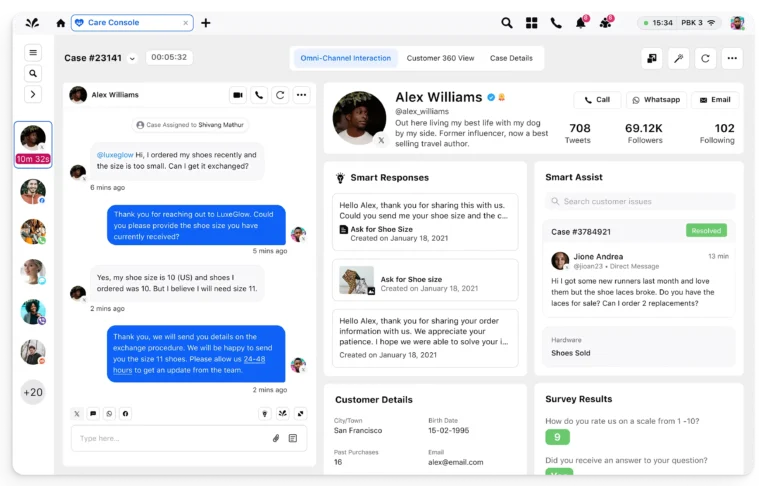
Sprinklr is a platform focused on social media customer experience and brand engagement.
Key Features
Social media listening and sentiment analysis
Multi‑channel message management
Customer interaction analytics
✅ Pros
- Well suited for brands where social engagement and reputation management are priorities
- Offers visibility across social responses and campaigns
❌ Cons
- Traditional ticketing and contact center capabilities are comparatively limited
- Not optimized for voice or email‑centric support modes
- Implementation costs tend to be higher
⓮ Tidio: Lightweight Chat‑First Support Tool
What is Tidio
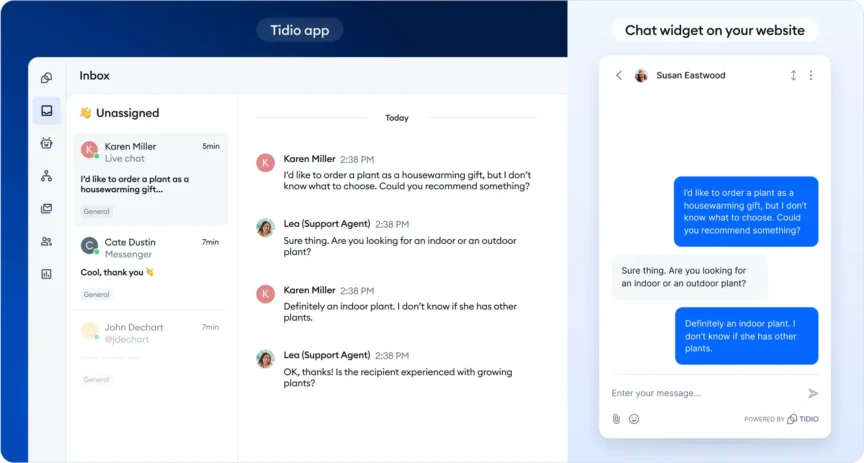
Tidio is a lightweight customer support tool built around live web chat, often used by small‑to‑mid online businesses.
Key Features
AI chatbot for quick responses
Real‑time web chat
Basic automation rules
✅ Pros
- Quick to deploy
- Low cost barrier to entry
- Fits small businesses and early‑stage support teams
❌ Cons
- Feature set is basic and not built for complex customer service workflows
- Scalability is limited; not appropriate for larger teams
- AI capabilities remain at an introductory level
⓯ Help Scout: Lightweight Conversational Support Tool
What is Help Scout
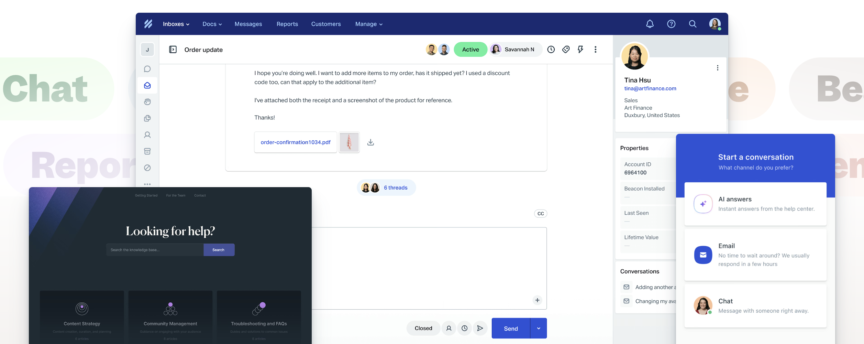
Help Scout is a lightweight, conversation‑oriented support platform that focuses on simple email and message support.
Key Features
Shared inbox
Built‑in knowledge base
Basic automation
✅ Pros
- Clean, intuitive interface
- Suitable for small‑to‑mid teams handling straightforward support requests
- Works well for text‑centric communication
❌ Cons
- Lacks advanced AI automation
- Not intended for large‑scale contact center use
- Limited support for complex process management
Conclusion: How to Choose the Right Zendesk Alternative in 2026
From the analysis above, it’s clear that choosing a Zendesk alternative is no longer just a comparison of features or brand names — it’s about a shift in how customer service is operating and evolving.
- If your organization still runs primarily agent‑driven, process‑based, ticket‑centric support, Zendesk remains a stable and familiar choice.
- If your goal is to put AI at the forefront of customer engagement, with agents handling exceptions and escalations, then platforms built with automation and intelligent routing at their core may be a better long‑term fit.
- Growing businesses should evaluate platforms based on long‑term Total Cost of Ownership (TCO) and real AI‑driven efficiency gains, not just feature checklists.
Among the 15 platforms covered:
- Genesys, NICE CXone, and Salesforce Service Cloud align with highly standardized, enterprise‑level support organizations.
- Freshdesk, Zoho Desk, Tidio, and Help Scout are well suited for small‑to‑mid teams and lighter customer support loads.
- Gorgias is tailored to e‑commerce customer service scenarios.
- Sobot represents a newer category of AI‑first, truly omnichannel support, appealing to enterprises focused on automation, efficiency, and optimizing support costs.
Ultimately, the best choice is less about who has the longest feature list and more about which platform aligns with your customer experience vision and operational strategy over the next 3–5 years.
FAQs
❶ Why are companies actively looking for Zendesk alternatives now?
Three key market shifts are driving the search:
- The move to AI-First service, where AI needs to autonomously resolve issues, not just assist agents.
- The demand for true omnichannel experiences, where customer context flows seamlessly across channels, unlike siloed multichannel setups.
- Rising Total Cost of Ownership (TCO) for legacy platforms, pushing growth-oriented companies to seek solutions with greater AI automation and long-term ROI.
❷ What are the most important criteria for choosing a modern alternative?
- Look beyond basic features. The key evaluation pillars are:
- True Omnichannel vs. Multichannel: Does it have a unified data layer for seamless cross-channel context?
- Depth of AI Capabilities: Is AI built-in for autonomous resolution, smart routing, and intent prediction?
- Unified Customer Data: Does it provide a Single Customer View aggregating all interactions?
- Scalability: Can it flexibly grow from a small team to a 500+ seat contact center?
- TCO & ROI: Consider long-term costs, including implementation, maintenance, and the efficiency gains from automation.
❸ The article ranks Sobot first. What makes it a standout alternative?
Sobot is highlighted as the top choice because it’s built from the ground up as an AI-native, truly omnichannel platform.
Its core advantage is stronger end-to-end AI automation that significantly reduces agent workload, coupled with a unified architecture that blends voice, chat, email, and social data. This makes it highly scalable and cost-efficient for companies prioritizing AI-driven efficiency.
❹ We’re an e-commerce business on Shopify. Is there a specialized alternative?
Yes. Gorgias is the leading e-commerce-focused platform. It excels with deep integrations for Shopify, automating order status lookups, returns, and refunds directly within the help desk. It’s purpose-built to handle high volumes of transactional customer inquiries common in online retail.
❺ Our company already uses HubSpot for marketing and sales. What’s the logical choice for service?
HubSpot Service Hub is the natural fit. As a module within the HubSpot CRM ecosystem, it provides smooth data flow between service, marketing, and sales. This eliminates data silos and offers a consistent user interface, making it ideal for organizations that already operate on the HubSpot platform.
❻ We are a large enterprise with a complex, existing call center. What robust alternatives exist?
For large-scale operations, Genesys Cloud and NICE CXone are enterprise-grade contact center solutions. They are strongest in voice operations, workforce management, and granular performance analytics. They are suited for organizations with established, process-heavy support environments, though their digital channel and native AI automation capabilities may be less advanced than AI-first platforms.