What is Outgoing Call Item Share (OCIS)?


Outgoing Call Item Share (OCIS) allows you to manage and share outgoing call functionalities across multiple devices or users. This feature ensures seamless communication by enabling teams to access and distribute call-related data efficiently. For example, in customer service, OCIS helps agents collaborate better by sharing call details in real time. Tools like Sobot’s voice solutions integrate OCIS to streamline workflows, reduce response times, and improve customer satisfaction. By leveraging this feature, you can enhance team coordination and deliver a more unified customer experience.
Understanding Outgoing Call Item Share (OCIS)
What is OCIS?
Definition and core purpose

Outgoing Call Item Share (OCIS) is a feature that allows you to manage and share outgoing call-related data seamlessly across devices or users. Its primary purpose is to enhance communication efficiency by ensuring that call information is accessible to the right people at the right time. This feature plays a crucial role in environments like customer service and call centers, where collaboration and quick access to data are essential. By using OCIS, you can streamline workflows, reduce response times, and improve overall team coordination.
Key components of OCIS
OCIS consists of several key components that make it effective. First, it includes data collection and organization tools that gather call-related information, such as call logs, customer details, and interaction history. Second, it features sharing and distribution mechanisms that allow this data to be accessed by multiple users or devices in real time. Finally, OCIS integrates with other systems, such as CRM platforms, to provide a unified workspace for managing customer interactions. These components work together to ensure that your team can collaborate effectively and deliver a seamless customer experience.
Why is OCIS important?
Role in customer service and call centers
In customer service and call centers, OCIS is vital for maintaining high levels of efficiency and customer satisfaction. It enables agents to access shared call data, which helps them provide faster and more accurate responses. For example, companies using advanced call analytics have reported a 37% improvement in first-contact resolution rates, according to a Harvard Business Review study. This demonstrates how OCIS can directly impact the quality of service you provide.
How it supports communication and data sharing
OCIS supports communication by ensuring that all team members have access to the same information. This reduces the chances of miscommunication and ensures that everyone is on the same page. Organizations with strong data-sharing practices often achieve 18-25% higher operational efficiency and 10-15% greater customer satisfaction. By implementing OCIS, you can create a more cohesive and effective communication environment.
How OCIS Works
Step-by-step breakdown of OCIS functionality
Data collection and organization
Outgoing Call Item Share (OCIS) begins with gathering and organizing call-related data. This includes details like call logs, customer profiles, and interaction histories. These data points are stored in a centralized system, ensuring easy access for your team. For example, tools like Sobot’s Voice Call Center collect and display customer information in real time, allowing agents to prepare for calls more effectively. Visual aids, such as call center process flowcharts, can help you understand how this data collection works. These charts outline steps like logging calls, categorizing customer issues, and updating records. By organizing data efficiently, OCIS ensures that your team has the information they need to deliver exceptional service.
Sharing and distribution of call information

Once data is collected, OCIS facilitates its sharing and distribution across devices or users. This ensures that everyone on your team stays informed. For instance, when a customer calls back, the agent can instantly access previous interaction details, reducing the need for the customer to repeat themselves. Sobot’s unified workspace exemplifies this functionality by synchronizing call data across channels. Outbound customer service flowcharts often illustrate this process, showing how call information moves seamlessly between agents and departments. This level of coordination enhances collaboration and improves response times.
Integration with call center systems
Compatibility with CRM and other tools
OCIS integrates seamlessly with CRM platforms and other business tools, creating a unified system for managing customer interactions. Modern call centers, like those powered by Sobot, use this integration to eliminate data silos. This allows your team to access comprehensive customer profiles without switching between systems. Studies show that organizations with integrated systems resolve customer issues 36% faster and achieve 45% higher first-contact resolution rates. By combining OCIS with CRM tools, you can streamline workflows and improve operational efficiency.
Automation and real-time updates

Automation plays a key role in OCIS functionality. It enables real-time updates, ensuring that call data is always current. For example, when an agent logs a call, the system automatically updates the customer’s profile. Sobot’s AI-powered Voicebot enhances this process by recognizing customer intent and updating records accordingly. This automation reduces manual errors and saves time. Additionally, real-time updates ensure that your team can respond to customer needs promptly, leading to higher satisfaction rates.
Benefits of Using OCIS
Operational efficiency
Streamlining outgoing call processes
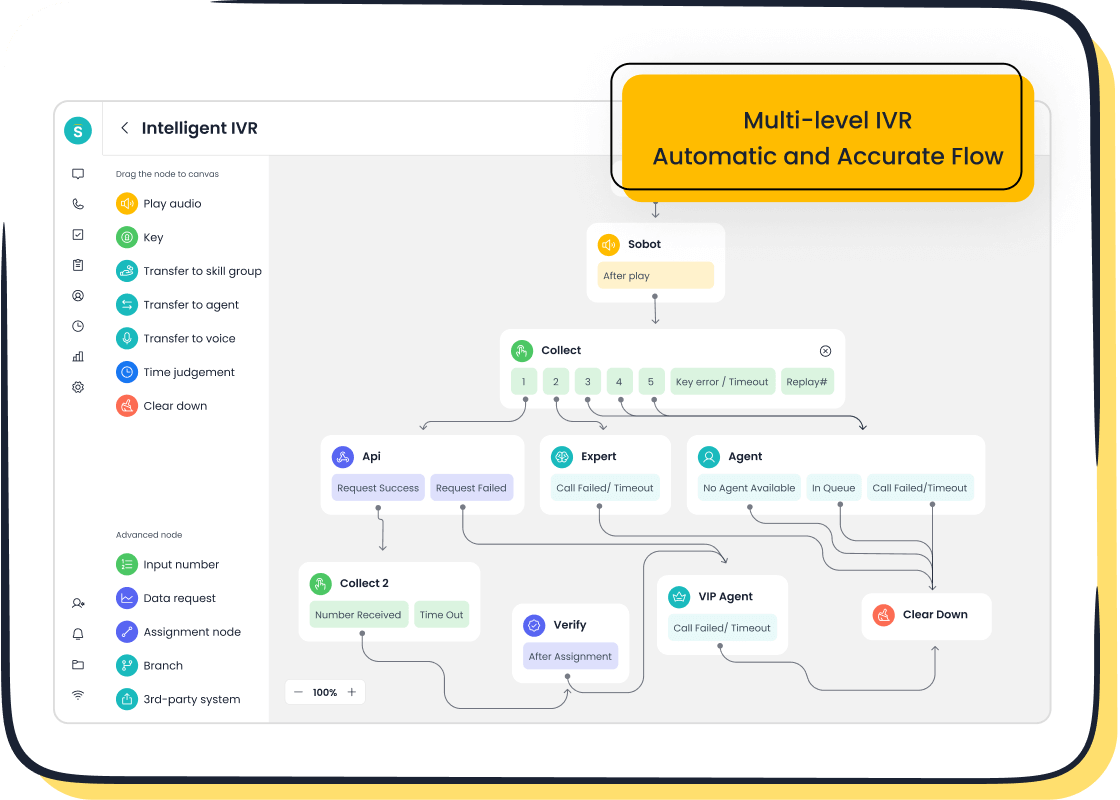
Outgoing Call Item Share (OCIS) simplifies outgoing call workflows by automating data collection and sharing. This automation reduces the time agents spend searching for customer information, allowing them to focus on delivering quality service. For example, Sobot’s Voice Call Center uses intelligent IVR and unified workspaces to streamline call routing and data access. These features help businesses reduce average handle times and improve first-contact resolution rates. A study by Deloitte found that companies using automated call-sharing systems experience a 25% increase in operational efficiency.
Reducing manual errors
Manual processes often lead to errors, such as incorrect customer data entry or missed follow-ups. OCIS minimizes these risks by automating data updates and ensuring real-time synchronization across devices. Sobot’s AI-powered Voicebot enhances this process by recognizing customer intent and updating records accurately. This reduces the likelihood of errors and improves service consistency. The table below highlights measurable benefits of OCIS in operational efficiency:
| Performance Improvement | Benefit Description |
|---|---|
| Improved decision-making | Data-driven insights help identify bottlenecks and prioritize improvement initiatives. |
| Cost reduction and resource optimization | Identifying waste leads to cost savings and better resource utilization, enhancing working capital. |
| Enhanced competitiveness | Efficient operations allow for flexible pricing and faster delivery, providing a competitive edge. |
| Increased customer satisfaction | Faster service delivery and consistent quality improve customer experience and retention. |
Enhanced customer experience
Faster response times

OCIS ensures agents have immediate access to call data, enabling quicker responses to customer inquiries. For instance, Sobot’s unified workspace synchronizes call information across channels, reducing the time agents spend switching between systems. Metrics like Average Speed of Answer (ASA), which averages 28 seconds, demonstrate how OCIS contributes to faster service delivery. Customers appreciate prompt responses, as 91% of callers with negative experiences are unlikely to return.
Personalized communication
OCIS enables agents to access detailed customer profiles, allowing for tailored interactions. Features like Sobot’s call tracking and AI-powered Voicebot provide insights into customer preferences and past interactions. Personalized communication fosters stronger relationships and increases customer loyalty. Surveys measuring Net Promoter Score (NPS) and Customer Satisfaction Score (CSAT) show that personalized service improves customer satisfaction by up to 62%.
Improved team collaboration
Sharing call data across departments

OCIS facilitates seamless data sharing, ensuring all departments have access to the same information. This eliminates silos and enhances coordination. For example, Sobot’s integration with CRM systems allows sales, support, and marketing teams to collaborate effectively. Externally-monitored teams show a 28% higher performance improvement rate compared to those relying solely on internal feedback mechanisms.
Better decision-making with shared insights
Shared call data empowers teams to make informed decisions. Regular calibration sessions and joint reviews of exceptional cases improve overall team performance. Organizations with integrated monitoring functions achieve 35% higher quality scores. Sobot’s analytics tools provide actionable insights, helping teams identify trends and optimize strategies. This collaborative approach drives better outcomes and enhances operational success.
Practical Applications of OCIS
Use in customer service
Managing follow-up calls
Outgoing Call Item Share (OCIS) simplifies managing follow-up calls by providing agents with instant access to previous call data. This ensures continuity in customer interactions. For instance, when a customer calls back regarding an unresolved issue, the agent can quickly retrieve the interaction history. This reduces the need for customers to repeat themselves, improving their experience. Metrics like First Call Resolution (FCR) and Customer Satisfaction Score (CSAT) highlight the importance of effective follow-up management. A high FCR rate minimizes follow-up calls, while a strong CSAT reflects customer satisfaction. Tools like Sobot’s Voice Call Center enhance this process by synchronizing call data in real time, ensuring agents always have the information they need.
Tracking customer interactions
Tracking customer interactions becomes seamless with OCIS. It consolidates call logs, customer profiles, and interaction histories into a unified system. This allows agents to monitor customer journeys effectively. For example, Sobot’s call tracking feature provides detailed insights into customer behavior, helping you identify patterns and preferences. Metrics such as Customer Effort Score (CES) and Average Speed of Answer (ASA) further demonstrate the value of tracking. Lower CES scores indicate smoother processes, while faster ASA times reflect efficient service. By leveraging OCIS, you can ensure every interaction contributes to a positive customer experience.
Use in sales and marketing
Outbound sales campaigns
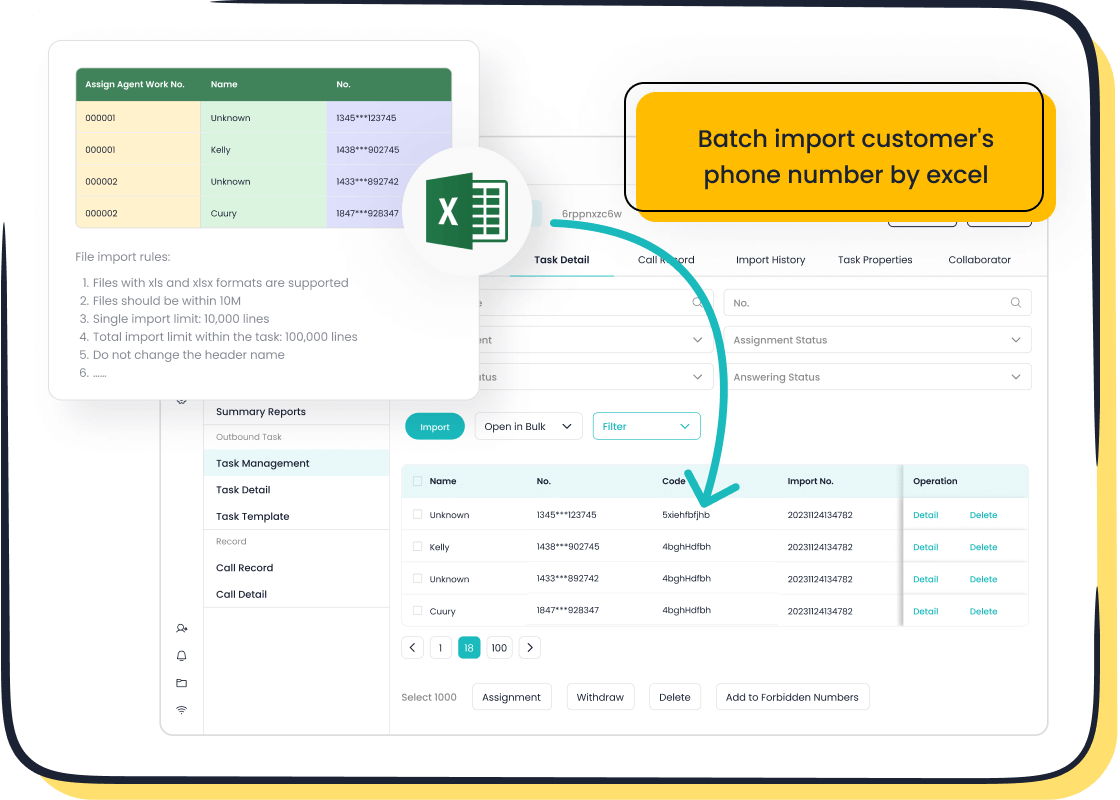
OCIS plays a pivotal role in outbound sales campaigns by streamlining data sharing and tracking. It enables sales teams to access detailed customer profiles, ensuring personalized outreach. For example, Sobot’s bulk outbound task feature automates call assignments, prioritizing leads based on predefined criteria. This improves efficiency and reduces the sales cycle time. Metrics like calls-to-close ratio and appointment set rate measure the effectiveness of these campaigns. A lower calls-to-close ratio indicates higher efficiency, while a strong appointment set rate reflects successful lead engagement. By integrating OCIS, you can optimize your sales efforts and achieve better results.
Lead tracking and nurturing
Lead tracking and nurturing become more effective with OCIS. It centralizes lead data, allowing sales teams to monitor progress through the sales funnel. For instance, Sobot’s integration with CRM systems ensures seamless data flow, enabling you to track leads from initial contact to conversion. Metrics such as cost per opportunity and click-through rates provide valuable insights into campaign performance. A low cost per opportunity with a high close rate indicates success, while strong click-through rates reflect effective messaging. By using OCIS, you can nurture leads more efficiently and drive higher conversions.
Use in technical support
Coordinating issue resolution
OCIS enhances issue resolution by facilitating seamless communication between support teams. It ensures all team members have access to the same data, reducing delays in escalation. For example, Sobot’s unified workspace allows agents to collaborate effectively, ensuring quick resolutions. Metrics like time to escalate and resolution time post-escalation highlight the importance of coordination. Faster escalation times lead to quicker resolutions, improving customer satisfaction. By implementing OCIS, you can streamline your support processes and resolve issues more efficiently.
Sharing technical updates with customers
Sharing technical updates becomes easier with OCIS. It enables support teams to distribute information across multiple channels, ensuring customers stay informed. For instance, Sobot’s AI-powered Voicebot can deliver updates in real time, reducing the need for manual intervention. Detailed documentation of escalated cases also helps track responsibilities, ensuring accurate communication. By using OCIS, you can keep customers updated and maintain their trust.
Common Questions and Misconceptions About OCIS
Is OCIS only for large call centers?
Explanation of scalability for small and large teams
OCIS is not limited to large call centers. It is highly scalable, making it suitable for both small teams and large enterprises. Modern call center solutions, especially those powered by cloud technology and AI, allow businesses to adjust their capacity based on demand. For example, during peak periods, you can dynamically allocate resources to handle higher call volumes. This flexibility ensures that even small teams can manage their operations efficiently without overextending their resources. Industry data shows that scalable call center solutions reduce abandonment rates by 40% during busy times, which helps maintain customer loyalty and revenue.
Sobot’s Voice Call Center exemplifies this scalability. It offers features like bulk outbound tasks and intelligent IVR, which adapt to your team’s size and needs. Whether you’re a small business or a global enterprise, OCIS ensures that your communication processes remain efficient and effective.
Does OCIS replace human agents?
Clarification on its role as a support tool
OCIS does not replace human agents. Instead, it acts as a powerful support tool that enhances their efficiency and decision-making. By providing real-time access to call data and customer insights, OCIS allows agents to focus on delivering personalized and meaningful interactions. For instance, research shows that data-driven tools like OCIS empower teams to address complex challenges by offering critical insights. This collaboration between technology and human expertise leads to better outcomes.
Sobot’s AI-powered Voicebot is a great example of this supportive role. It automates routine tasks like call routing and data updates, freeing up agents to handle more complex customer needs. This synergy between technology and human agents ensures that your team can deliver exceptional service without feeling overwhelmed.
Is OCIS difficult to implement?
Overview of implementation processes and ease of use
Implementing OCIS is straightforward, especially when you use modern, user-friendly solutions. Most systems, like Sobot’s Voice Call Center, integrate seamlessly with existing tools such as CRM platforms. This compatibility eliminates the need for extensive technical expertise or lengthy setup processes. Additionally, features like drag-and-drop IVR design and automated workflows simplify the configuration process.
Businesses adopting OCIS often experience quick deployment and minimal disruption to their operations. For example, Sobot’s platform ensures a 99.99% uptime, allowing you to implement the system without worrying about downtime. With intuitive interfaces and robust support, you can start leveraging OCIS to improve your communication processes almost immediately.
Outgoing Call Item Share (OCIS) empowers your team to manage and share outgoing call data seamlessly. This feature enhances communication, streamlines workflows, and ensures better collaboration across departments. By adopting OCIS, you can improve operational efficiency and deliver a superior customer experience. Tools like Sobot’s Voice Call Center integrate OCIS to provide real-time data sharing and automation, helping you stay ahead in today’s fast-paced business environment. Explore how OCIS can transform your communication processes and drive success for your organization.
FAQ
What industries benefit the most from OCIS?
OCIS is highly beneficial for industries like customer service, sales, marketing, and technical support. For example, retail businesses use it to track customer interactions, while call centers rely on it for efficient call routing. Sobot’s Voice Call Center supports diverse industries, including retail, finance, and education, with its scalable and versatile features.
Can small businesses use OCIS effectively?
Yes, small businesses can leverage OCIS to improve communication and efficiency. Sobot’s Voice Call Center offers scalable solutions, allowing small teams to manage outgoing calls seamlessly. Features like bulk outbound tasks and intelligent IVR ensure even small businesses can handle high call volumes without compromising service quality.
How does OCIS improve customer satisfaction?
OCIS enhances customer satisfaction by enabling faster response times and personalized communication. For instance, Sobot’s unified workspace synchronizes call data, ensuring agents have all the information they need. This reduces wait times and improves first-contact resolution rates, leading to higher customer satisfaction scores.
Is OCIS secure for handling sensitive data?
Yes, OCIS ensures data security through encrypted data transfer and secure storage. Sobot’s Voice Call Center prioritizes security with a 99.99% system uptime and encrypted dialing. This makes it a reliable choice for businesses handling sensitive customer information, such as financial or healthcare data.
What makes Sobot’s OCIS solution unique?
Sobot’s OCIS solution stands out with its AI-powered Voicebot, seamless CRM integration, and global telephony support. These features ensure efficient call management and real-time data sharing. Businesses using Sobot’s Voice Call Center report improved operational efficiency and customer satisfaction, making it a trusted choice for communication needs.
See Also
A Guide to Successfully Implementing Omnichannel Contact Centers
Best 10 Employers for Remote Call Center Positions
Key Features of Interactive Voice Response Software Systems

