The Most Effective Habits of Customer Centric Service Teams

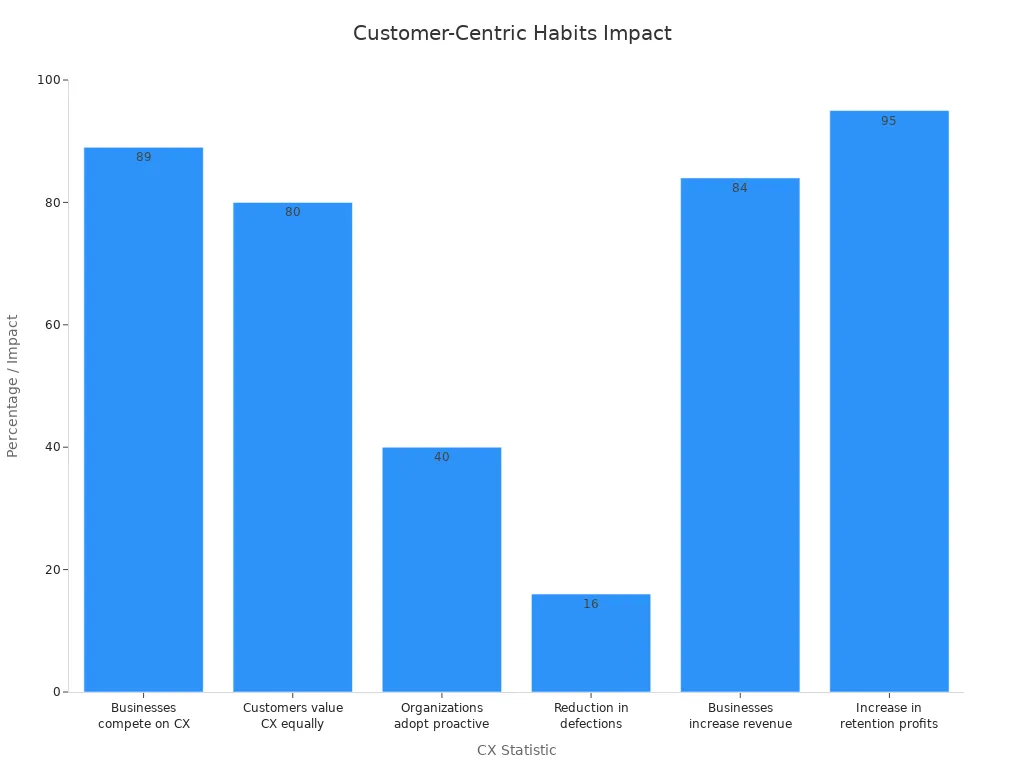
If you want to know what does customer centric mean for a service team, it starts with simple habits. You listen first, act fast, and always put the customer at the heart of every decision. These habits matter. They shape how people feel about your business and can even boost profits. Check out these stats:
| Statistic | Impact on Business Performance |
|---|---|
| 80% of customers value their experience as much as products/services | Shows how much CX counts in decisions. |
| 5% increase in customer retention can boost profits by up to 95% | Shows the power of keeping customers happy. |
| 84% of businesses enhancing CX experience increased revenue | Links CX to growth. |
Sobot believes in innovation and customer-centricity. Take a moment—do you see these habits in your team? Are you ready to grow with your customers?
What Does Customer Centric Mean for Service Teams
Defining Customer Centricity
You might wonder, what does customer centric mean for service teams? It means you put the customer at the center of everything you do. You focus on understanding their needs, their likes, and even their worries. You use empathy to see things from their point of view. This mindset helps you design better products and services. You want every customer experience to feel special and easy.
Here’s how industry experts describe what does customer centric mean for service teams:
- You understand customer needs, preferences, and behaviors.
- You design your services to improve the consumer experience.
- You build long-term relationships that help your business grow.
- You make every decision with the customer in mind.
- You use customer empathy to solve real problems, not just sell products.
Many people mix up being customer-focused with being truly customer-centric. A customer-focused team tries to meet wants, but a customer-centric team works to solve problems and deliver long-term value. That’s the heart of a great customer experience.
Key Principles for Customer-Focused Teams
If you want to build strong customer centric service teams, you need to follow some key principles. These ideas set you apart from teams that only care about numbers or features.
| Key Factor | Description |
|---|---|
| Attitudes, Beliefs, and Values | These shape how you act and help you focus on customer needs every day. |
- You always put the customer first in every decision.
- You use empathy to understand what customers feel.
- You listen to feedback and act quickly.
- You design your customer service to improve the consumer experience.
- You measure success by customer retention and satisfaction, not just sales.
Big companies like Amazon and Ritz-Carlton show how a customer-centric strategy can change everything. Amazon starts with the customer and works backward. Ritz-Carlton lets employees fix problems right away. These habits help create a great customer experience and keep customers coming back.
So, what does customer centric mean for service teams? It means you care, you listen, and you act with empathy. You make every experience count.
Listening and Acting on Feedback
Gathering Insights from Customers
If you want to build strong customer centric service teams, you need to know what your customers think. You can’t guess. You need real insights. There are many ways to collect customer feedback, and each one gives you a different view of the customer experience.
- Live chat lets you ask for feedback right after a conversation. You get honest answers while the experience is fresh.
- Social media helps you listen to what customers say about your brand. You can use polls or just watch for comments and trends.
- Heatmaps show you where customers click and what they ignore on your website. This helps you spot problems without asking a single question.
- Product analytics track how customers use your service. You see what features they love and what they skip.
- Customer interviews give you deep stories and real feelings. You can ask follow-up questions and learn what matters most.
- Focus groups bring different customers together. You hear many opinions at once.
- Customer advisory boards let your most loyal customers share ideas and help shape your service.
You can also use different channels to collect feedback. Here’s a quick look:
| Channel | Description |
|---|---|
| Customer Feedback Email | Invites customers to share their thoughts and join interviews. |
| Customer Feedback Portal | Lets customers suggest features and share opinions in one place. |
| Review Sites | Shows what customers think before they even buy. |
| Live Chat | Offers instant answers and collects feedback during conversations. |
| Social Media | Connects with customers and gathers feedback in real time. |
Turning Feedback into Action
Getting feedback is just the start. Customer centric service teams stand out because they act on what they learn. You need a plan to turn insights into real changes.
- Set clear rules for what feedback matters most. Focus on what will improve customer satisfaction and matches your goals.
- Use a scoring system to rank feedback. This helps you stay fair and pick the best ideas.
- Bring in people from different teams. More views mean better solutions.
- Meet often to review feedback and decide what to do next.
- Tell your team and your customers what you plan to change. This builds trust and shows you listen.
You should always close the loop. Let customers know you heard them and share what you’re doing. This keeps the experience positive and shows you care. When you listen and act, you make your customer centric service teams stronger and your customer experience better.
Personalizing the Customer Journey with Sobot Live Chat
Using Data for Tailored Experiences
You want every customer to feel special at every step of their journey. Sobot Live Chat makes this possible by bringing all your customer data together. When you use Sobot, you can see every message, call, and chat in one place. This helps you understand what each customer needs and how to help them best.
Here’s how Sobot Live Chat uses data to create a personalized customer journey:
| Feature | Benefit |
|---|---|
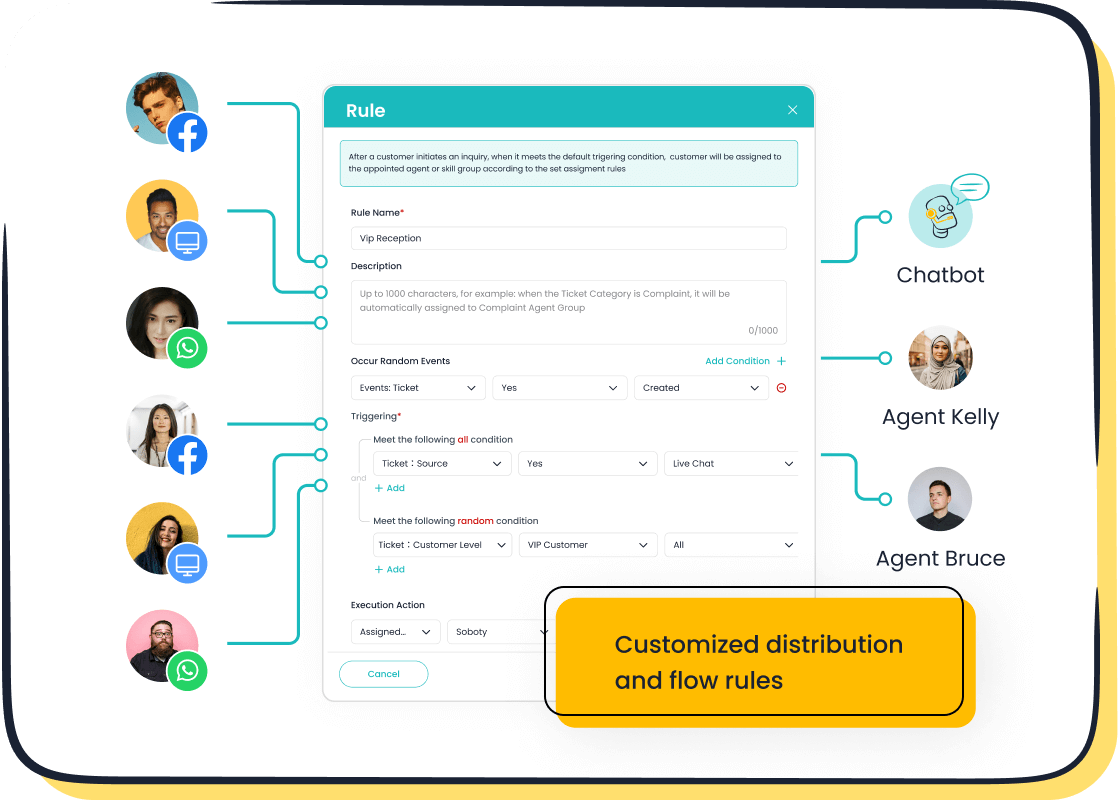
| Personalized Communication | Routes customers to the right sales rep for a tailored chat based on their needs. |
| Automated Booking Management | Cuts down on missed appointments with smart reminders and lead filtering. |
| Precise Targeting | Sends timely updates and special offers to boost loyalty. |
You can use Sobot’s AI tools to spot when a customer needs help. For example:
- A fashion retailer saw a 30% jump in conversion rates by chatting with visitors who stayed on a product page for over 45 seconds.
- A home goods store cut cart abandonment by 25% by offering chat support to shoppers who paused at checkout.
- Many companies noticed a 15% drop in abandoned carts when Sobot’s AI answered questions about sizing or shipping.
Sobot’s analytics show you what works. You can see which messages get the best response and which offers turn visitors into buyers. This makes your customer journey smoother and more effective.
Omnichannel Engagement Strategies
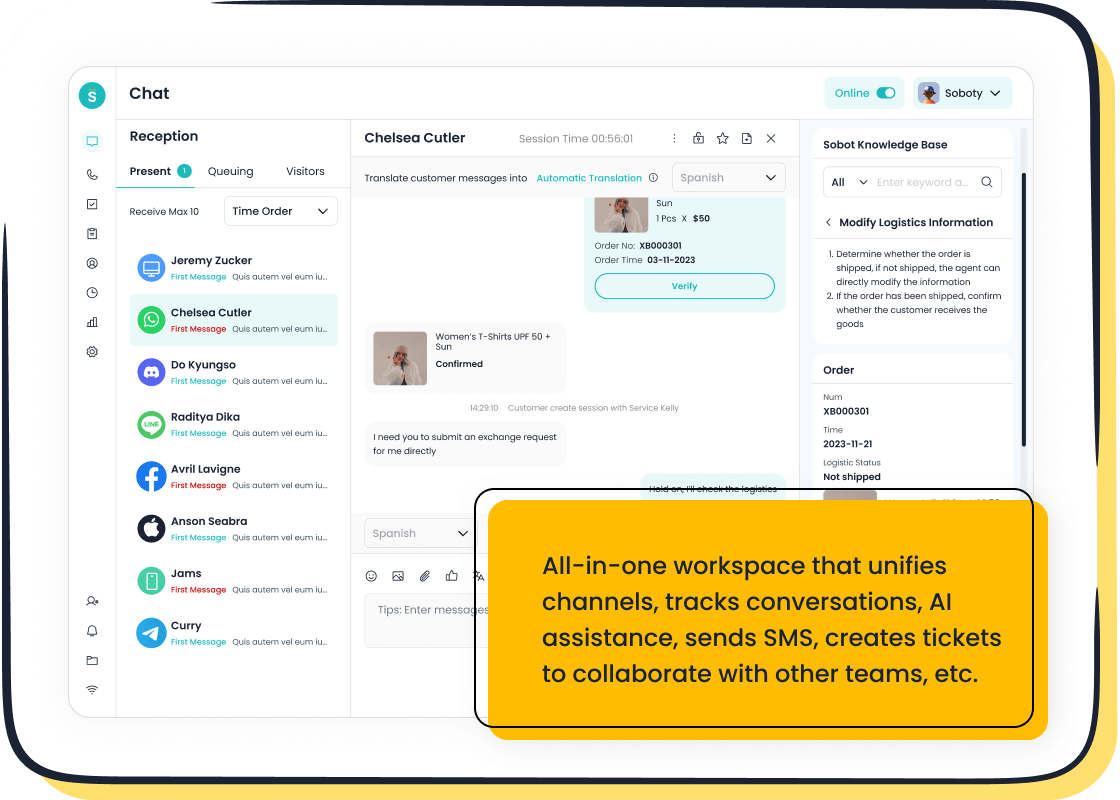
Customers reach out in many ways—on your website, through social media, or even in your app. Sobot Live Chat brings all these channels together. You get a single dashboard where you can see every interaction, no matter where it started.
This unified view means you never lose track of a conversation. If a customer emails about an order and then messages you on Instagram, you see the whole story. Your team can respond faster and with more context. This leads to happier customers and quicker solutions.
Omnichannel engagement also means your customer journey feels seamless. Sobot’s AI and automation tools help you personalize every touchpoint. Whether someone shops online or visits your store, they get the same great service. Studies show that 89% of customers prefer this kind of smooth experience. Businesses using omnichannel strategies with Sobot have seen purchase rates go up by 287%.
With Sobot, you can make every step of the journey count. You build loyalty, boost engagement, and help your customers feel understood.
Proactive Problem Solving for Customer Success
Anticipating Customer Needs
You want your customer centric service teams to stay one step ahead. That’s how you create real customer success and build loyalty that lasts. Don’t wait for problems to blow up. Instead, look for patterns in the customer journey. Use tools that spot issues before they become complaints. Sobot’s AI-powered platform helps you track every touchpoint, so you can see when a customer might need help.
Leading teams use smart strategies to solve problems early:
- Deploy agentic knowledge. Use active intelligence to find and fix gaps in what your team knows.
- Act on customer feedback. Set up a system to collect and study feedback, so you can improve fast.
When you anticipate needs, you make the journey smoother. Customers feel valued. They stick around longer. That’s how you boost loyalty and customer success.
Empowering Teams to Act
You can’t deliver great customer success if your team feels stuck. Give your customer centric service teams the power to fix problems on the spot. When agents have the right tools and freedom, they solve issues fast. This leads to higher loyalty and happier customers.
Here’s how top brands empower their teams:
| Brand | Empowerment Approach | Outcome |
|---|---|---|
| Zappos | Full decision authority | Exceptional CSAT, loyalty |
| Marriott | Problem-solving leeway | Lower escalations, high guest retention |
| USAA | Transparent KPIs + autonomy | Fast resolution, agent pride |
| American Express | Policy exceptions allowed | High NPS, more satisfied agents |
You see the results in the numbers. After empowering teams, companies see big jumps in customer success and loyalty.
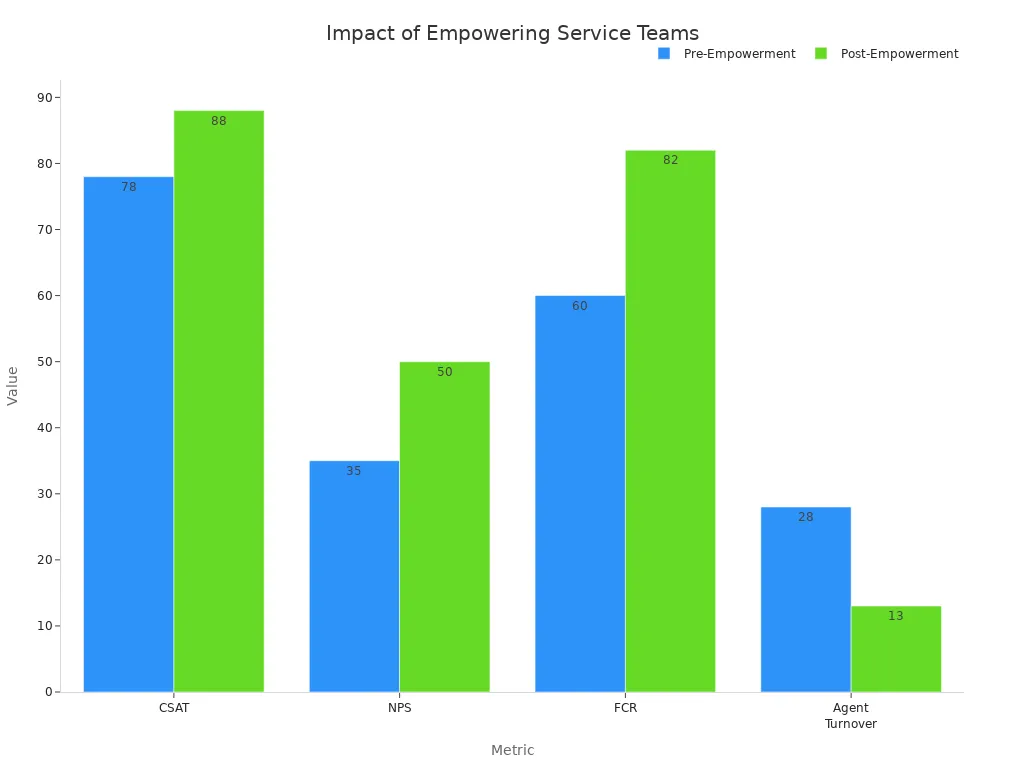
- CSAT scores rise from 78 to 88.
- NPS jumps from 35 to 50.
- First Contact Resolution climbs from 60% to 82%.
- Agent turnover drops by half.
Empowering your customer centric service teams means fewer escalations and more loyalty. You create a culture where everyone owns the customer journey. That’s the secret to lasting customer success.
Cross-Team Collaboration and Customer Success
Sharing Customer Insights
You can’t deliver a great customer experience if your teams work in silos. When you share customer insights across departments, you help everyone understand what matters most. Sales, marketing, and product teams all need to know what your customers want, what they struggle with, and what makes them happy.
Here are some best practices for sharing customer insights:
- Encourage teamwork between departments so everyone keeps customer needs in mind.
- Align your marketing with real customer stories and feedback.
- Involve your sales team in sharing insights and building trust with customers.
- Work together to spot customer needs early and create solutions before problems grow.
- Collect feedback often and show customers you listen by making changes.
It’s critical that you speak directly to your customers and listen to their needs, questions, and complaints. It’s also important to implement their feedback in your business to show that you’ve listened and you’ve heard what they have told you.
When you share insights, you find areas to improve, spot new chances to grow, and build products that fit your customers better.
Coordinating for Seamless Service
You want your customer’s journey to feel smooth from start to finish. That means your teams need to work together, not just pass tasks along. When customer success, sales, marketing, and product teams join forces, you get better results. You match the right solutions to the right customers, and you turn happy customers into advocates who share their stories.
Here’s what happens when you coordinate well:
| Benefit | Result |
|---|---|
| Better customer fit | Happier customers from the start |
| Stronger advocacy | More testimonials and case studies |
| Faster problem-solving | Fewer complaints and quicker fixes |
You can use regular meetings, shared dashboards, and open chats to keep everyone on the same page. When you work as one team, you make every customer feel valued and supported.
Data-Driven Decisions to Enhance Experience
Key Metrics for Customer-Centric Companies
If you want to know how well your team delivers a great experience, you need to track the right numbers. Customer-centric companies use key metrics to see what works and what needs to change. Here are the top ones you should watch:
- First Contact Resolution (FCR)
- Net Promoter Score (NPS)
- Customer Satisfaction (CSAT)
- Customer Churn Rate
- Average Resolution Time
These numbers tell you a lot about your service. For example, CSAT shows how happy your customer feels after an interaction. NPS tells you if your customer would recommend your business to others.
First Contact Resolution (FCR) is an important metric to measure the customer experience. It is the percentage of customer inquiries that are resolved on the first contact with the customer service team.
When you keep an eye on these metrics, you can spot trends and fix problems before they grow. That’s how customer-centric companies stay ahead.
Leveraging Analytics with Sobot
You don’t have to guess what your customer wants. Sobot gives you built-in analytics and reporting features that make it easy to see what’s happening in real time. You get detailed dashboards that show how your team performs across every channel.
With Sobot, you can:
- Track over 150 service indicators, including CSAT, NPS, and FCR.
- See which agents solve problems fastest.
- Find out which channels your customer prefers.
- Spot common issues and fix them quickly.
Sobot’s analytics help you make smart choices. You can use the data to train your team, improve your workflows, and deliver a better experience every day. Customer-centric companies love how Sobot turns numbers into action. You get the tools to boost satisfaction, loyalty, and growth—all in one place.
If you want to see how Sobot’s analytics can help your team, check out Sobot Live Chat.
Building a Customer-Centric Culture
Employee Engagement and Training
You want your customer centric service teams to thrive. That starts with building a positive service culture where everyone feels valued and ready to grow. When you focus on employee engagement, you create trust and understanding. This helps your team deliver authentic experiences throughout the customer journey.
- Organizations that invest in employee mindset see higher trust and understanding.
- Capability building, like recognition programs and personalized coaching, speeds up employee growth.
- Leadership development shapes culture and boosts engagement.
You can use training sessions, coaching, and rewards to encourage a customer-centric mindset. When your team feels supported, they act with confidence and empathy. This makes every customer journey smoother and more personal. Customer centric service teams that receive regular training respond faster and solve problems better. You build a culture where everyone cares about the customer.
Continuous Improvement Mindset
A customer-centric culture never stands still. You need to keep improving to meet changing customer needs. Customer centric service teams use feedback, data, and technology to make smart decisions. You can set up regular feedback loops and use CX analytics to track the customer journey.
| Practice | Description |
|---|---|
| Quality Assurance | Review conversations to ensure consistency and high standards. |
| Utilizing Relevant Metrics | Use real-time and historical data to guide improvements. |
| Customer Empowerment | Give customers self-service tools for independence. |
| Feedback Loops | Collect insights and show commitment to change. |
| Continuous Improvement | Listen to feedback and find areas to improve. |
| Agile Methodologies | Respond quickly to feedback and new needs. |
You empower customers by offering tools and resources. This helps them solve problems on their own and builds trust. Customer centric service teams that use feedback loops and agile methods stay ahead of trends. You create a culture where everyone looks for ways to improve the customer journey.
When you build a customer-centric culture, you see big benefits. Customer loyalty grows. Satisfaction rises. Your team solves problems before they get big. You use resources wisely and make smart decisions. Customer centric service teams help your business stay agile and innovative. You boost profits and create lasting relationships.
Real-World Example: Samsung’s Customer Experience with Sobot
Challenges and Solutions
You might wonder how a global brand like Samsung handles thousands of customer questions every day. Samsung faced a big challenge. Customers reached out through many channels—phone, email, chat, and social media. Agents had to switch between systems, which slowed down responses and made it hard to keep track of each customer’s story. Satisfaction dropped when customers had to repeat themselves.
Samsung decided to use Sobot’s all-in-one contact center solution. Sobot unified every channel into one workspace. Agents could see every conversation, message, and call in a single dashboard. Sobot’s platform connected with Samsung’s internal systems, so agents had instant access to customer history. AI-powered chatbots handled simple questions, freeing agents to focus on complex issues. VIP customers got personalized video support. This approach made the customer journey smoother and boosted satisfaction.
Sobot helped Samsung create a seamless experience. You can see how real customer experiences improved when agents had the right tools.
| Metric | Before Sobot | After Sobot | Improvement |
|---|---|---|---|
| Customer Satisfaction (CSAT) | N/A | 97% | Increased |
| Agent Efficiency | N/A | 30% | Increased |
Results and Best Practices
Samsung saw big changes after switching to Sobot. Customer satisfaction soared. Agents worked faster and solved problems without delays. The unified platform meant customers never had to repeat their stories. Sobot’s analytics helped Samsung spot trends and fix issues quickly.
Here’s what Samsung learned:
- Use one platform for all channels to keep the customer journey smooth.
- Give agents access to customer history for faster solutions.
- Let chatbots handle simple questions so agents can focus on tough cases.
- Offer personalized support for VIP customers.
| Improvement Area | Percentage Increase |
|---|---|
| Customer satisfaction scores | Over 30% |
| Net Promoter Score (NPS) | Over 35% |
| Conversion rates | Over 15% |
You can see how customer centric service teams make a difference. Samsung’s story shows that when you unify channels and empower agents, satisfaction rises. Real customer experiences improve, and your team becomes more efficient. Sobot’s tools help you build loyalty and deliver outstanding service.
You’ve seen how customer centric service teams shape a positive experience and drive growth. Here’s what works best:
- Listen to your customer and adapt quickly.
- Anticipate needs before they become problems.
- Build empathy into every service step.
- Motivate your team to keep improving.
Start small—review your retention numbers, gather feedback, and try Sobot to boost customer satisfaction. When you focus on customer-centric habits, you create lasting loyalty and a better customer experience.
FAQ
What are customer centric service teams?
Customer centric service teams put your customers first in every action. You focus on their needs, listen to feedback, and solve problems quickly. These teams use empathy and data to create great experiences that keep customers coming back.
How does Sobot help customer centric service teams?
Sobot gives you tools like Live Chat, AI chatbots, and analytics. You see all customer conversations in one place. This helps your customer centric service teams respond faster, personalize service, and boost satisfaction. Learn more at Sobot Live Chat.
Why do customer centric service teams matter for business growth?
Customer centric service teams drive loyalty and retention. Happy customers buy more and tell others. Studies show that a 5% increase in retention can boost profits by up to 95%. You build trust and grow your brand.
What habits make customer centric service teams successful?
You need to listen, act on feedback, and personalize every interaction. Customer centric service teams also work together across departments. They use data to improve and always look for ways to make the customer journey better.
Can small businesses build customer centric service teams?
Yes! You can start by listening to your customers and using simple tools like Sobot Live Chat. Even small changes—like quick replies or asking for feedback—help your customer centric service teams stand out and create loyal fans.
See Also
Essential Strategies for Effective Call Center Quality Management
Ten Strategies to Enhance Live Chat Customer Experience
Transforming Customer Support with AI-Powered Service Agents
Comprehensive Overview of Quality Management Systems for Call Centers

