10 Must-Have Modern Contact Center Features


Businesses today face a significant challenge: meeting the high expectations of the modern customer. Today's digitally-savvy consumers demand a seamless and immediate experience.
- 71% of customers anticipate real-time responses.
- 48% engage with companies through at least three different channels.
This reality forces leaders to ask, "what can a contact center do to improve our customer service operations?" Adopting the right features is a strategic investment in customer experience management. A modern contact center, like the solutions offered by Sobot, provides the essential tools for superior customer support. In fact, 79% of businesses report that modern technologies improve sales and customer loyalty.
The 10 Key Features of a Modern Contact Center

A modern contact center is more than a department for answering calls. It is a strategic hub for business growth. It balances operational efficiency with an exceptional customer experience. Leaders often ask, what can a contact center do to drive real business results? The answer lies in its ability to transform customer interactions into valuable data and lasting loyalty.
What Can a Contact Center Do for You?
A well-equipped contact center directly impacts the bottom line and builds brand reputation. The answer to what can a contact center do for a business is multifaceted. It serves several critical functions that drive success.
- Enhance Customer Experience and Loyalty: The primary goal is to improve every customer interaction. This builds trust and encourages repeat business. Modern platforms achieve this through digital innovation and self-service options.
- Increase Sales and Revenue: Dedicated teams can use the contact center for lead generation, appointment setting, and upselling. This turns a cost center into a revenue-generating engine.
- Achieve Significant Cost Savings: Businesses reduce expenses by consolidating interactions. They also leverage automation and self-service solutions to handle routine queries, freeing up agent time.
- Provide Actionable Business Insights: Contact centers collect vast amounts of customer data. Advanced analytics tools turn this data into insights about customer needs, preferences, and pain points.
Ultimately, what can a contact center do is unify the entire customer journey. It ensures every touchpoint is consistent and positive. This comprehensive approach is vital for long-term growth. A business that understands what can a contact center do can unlock new levels of performance. The final answer to what can a contact center do is simple: it empowers a business to be more efficient, profitable, and customer-centric.
Exploring Core Contact Center Capabilities
Understanding the core contact center capabilities is the first step toward transformation. These capabilities are the foundation upon which great service is built. Modern platforms provide a unified environment for all customer service functions. This "single pane of glass" approach gives managers centralized control and offers agents a customizable desktop.
Key contact center capabilities include:
- Unified Communications: A single platform consolidates all tools and data. It maintains one communication history across every channel for a consistent and personalized experience.
- Intelligent Automation: Smart software like Interactive Voice Response (IVR) and skills-based routing automates workflows. It guides customers to the right specialist faster, reducing agent workload.
- Seamless Integrations: High compatibility with other business systems, especially CRM software, is crucial. This ensures smooth data flow and gives agents a complete view of the customer.
- Data-Driven Insights: Access to both real-time and historical metrics allows managers to optimize operations. They can make immediate adjustments and inform long-term strategy.
These foundational contact center capabilities enable fluid and flexible operations. They are essential for any business looking to improve productivity and customer satisfaction. The right platform enhances existing contact center capabilities and introduces new ones. These powerful contact center capabilities are delivered through a specific set of key features.
1. Omnichannel Communication Hub
Customers expect consistency. In fact, 76% of them anticipate the same level of service regardless of the channel they use. An omnichannel hub unifies voice, email, chat, SMS, and social media into a single, seamless conversation, preserving context as customers switch between channels.
2. Intelligent and AI-Powered Routing
This feature moves beyond basic call distribution. Intelligent routing uses AI and predefined rules to match a customer with the best-equipped agent. This approach dramatically improves first-contact resolution (FCR) by analyzing customer history and intent, reducing transfers and wait times.
3. Advanced Analytics and Reporting
Data is the key to optimization. Advanced analytics provide real-time dashboards and historical reports on crucial KPIs. These features allow managers to track performance and make informed decisions.
| Dashboard Type | Key Metrics Tracked |
|---|---|
| Agent Performance | Average Handle Time (AHT), FCR, CSAT, Quality Score |
| Operational | Call Volume, Abandonment Rate, Service Level |
| Customer Experience | Net Promoter Score (NPS), Customer Effort Score (CES) |
4. AI-Powered Agent and Customer Tools
AI empowers both agents and customers. Chatbots and voicebots offer 24/7 self-service for common questions. For agents, AI-powered "copilot" tools provide real-time guidance, surface knowledge base articles, and automate post-call summaries, reducing cognitive load. These are essential advanced call center features.
5. Integrated CRM and Business Systems
Context is everything in customer service. Integrating the contact center with a CRM provides agents with a complete customer history via automatic screen pops. This simple feature saves valuable time on every call.
“Screen pops display an incoming caller’s information from Salesforce so agents already know who they’re talking to…This saves 2-3 minutes per call” —Pauline Mulvey, Vice President of Enterprise Business Technology, Mitchell International
6. Workforce Engagement Management (WEM)
Happy agents lead to happy customers. WEM tools focus on the agent experience. They include solutions for:
- Performance Management: Tracking progress toward goals with clear metrics.
- Quality Management: Providing continuous feedback and targeted coaching.
- Workforce Management (WFM): Optimizing schedules and forecasting staffing needs.
7. AI-Powered Quality Management
Traditional quality assurance is time-consuming and often reviews less than 2% of interactions. AI automates this process, analyzing 100% of calls and chats. It objectively scores interactions for script adherence, compliance, and even sentiment, identifying coaching opportunities automatically.
8. Proactive Outbound Engagement
Great service is not always reactive. Proactive outbound engagement allows a business to connect with customers first. Use cases include sending appointment reminders, notifying users of service outages, offering personalized promotions, and following up on abandoned shopping carts.
9. Cloud-Based Infrastructure
A cloud platform offers unmatched flexibility, scalability, and cost-effectiveness compared to on-premise solutions. It enables a remote or hybrid workforce, ensures high reliability with automatic updates, and eliminates the need for large upfront hardware investments. These are some of the most impactful advanced call center features.
10. Robust Security and Compliance
Protecting customer data is non-negotiable. A modern contact center must adhere to strict security standards. These key features include data encryption, role-based access controls, and compliance with regulations like PCI DSS, HIPAA, and GDPR to build and maintain customer trust.
These ten key features represent the building blocks of a high-performing, future-proof contact center. Each of these features contributes to a system that is more efficient, intelligent, and customer-focused. The following sections will explore these key features in greater detail.
Feature 1: Unify Conversations with an Omnichannel Hub
A modern contact center must deliver a consistent and connected customer experience. An omnichannel hub is the technology that makes this possible. It synchronizes all communication channels into a single, cohesive system. This approach ensures every customer interaction is part of one continuous conversation.
Defining Omnichannel Communication
Omnichannel communication is a strategy that integrates all support channels. It creates a superior customer journey. This system is different from a multi-channel approach, where each communication method operates separately. True omnichannel communication connects every touchpoint. An agent can see the entire interaction history. This happens whether a customer uses chat, email, or social media. This unified view is one of the most critical features for modern support.
Seamless Channel Switching
Customers expect flexibility. They want to start a conversation on one channel and continue it on another without friction. An omnichannel platform enables this seamless transition. For example, a customer can begin with a web chat for a simple question. The issue might become complex. The customer can then switch to a voice call. The agent receiving the call will have the full chat transcript. This eliminates the need for the customer to repeat information, leading to a faster and more satisfying experience.
A Unified Agent Workspace
A unified workspace is a core component of omnichannel support. It consolidates all necessary information into a single interface. Agents no longer need to switch between multiple applications. This saves valuable time on every interaction.
- It provides centralized customer information for a personalized experience.
- It offers seamless integration with CRM systems.
- It gives agents access to a complete interaction history across all channels.
Sobot's Omnichannel Solution creates this powerful, unified workspace. It consolidates customer data and interactions from all channels, empowering agents to deliver exceptional service.
Supporting Voice, Chat, SMS, and Social Media
Effective omnichannel support requires broad channel coverage. A modern platform must manage interactions from traditional and digital channels alike. This includes voice calls, live chat, email, SMS, and popular social media platforms. Sobot is an official WhatsApp Business Solution Provider (BSP). This capability is critical for engaging the modern customer on one of the world's most popular messaging apps. Integrating these channels ensures no conversation gets lost and every customer feels heard.
Feature 2: Route Customers Smarter with Intelligent Routing
Connecting a customer to the right agent on the first try is fundamental to a positive service experience. Traditional routing methods are often inefficient. Modern intelligent routing uses data and AI to direct inquiries with precision. This process improves key metrics and boosts customer satisfaction. These advanced routing features are essential for any high-performing contact center.
Skills-Based Routing for Expert Matching
Skills-based routing matches a customer with an agent who has the specific expertise to solve their problem. This intelligent routing strategy ensures technical questions go to technical specialists and billing inquiries go to the finance team. This expert matching delivers significant benefits.
- Higher Resolution Rates: Issues are often resolved on the first attempt.
- Increased Customer Satisfaction: Customers are happier when they speak to a knowledgeable agent right away.
- Improved Efficiency: This routing method reduces inefficient transfers and shortens wait times for every customer.
AI-Powered Predictive Routing
AI-powered predictive routing takes this concept a step further. It uses machine learning algorithms to analyze real-time data. The system considers customer history, inquiry type, and even personality traits to predict the best possible agent match. This form of intelligent routing helps businesses anticipate needs and optimize outcomes, dramatically improving the customer experience. AI can even predict call volumes, allowing for better staff scheduling.
Data-Driven Routing from CRM
Integrating the contact center with a CRM system unlocks powerful data-driven routing capabilities. An Interactive Voice Response (IVR) system can identify a customer by their phone number. It can then pull data from the CRM to make a smart routing decision. For example, the system can prioritize a high-value customer or route them to their dedicated account manager. This creates a highly personalized and efficient journey.
Reducing Wait Times and Transfers
The primary goal of intelligent routing is to minimize customer effort. By connecting callers to the right expert quickly, these systems reduce frustrating wait times and unnecessary transfers. A well-designed IVR is the first step in this process.
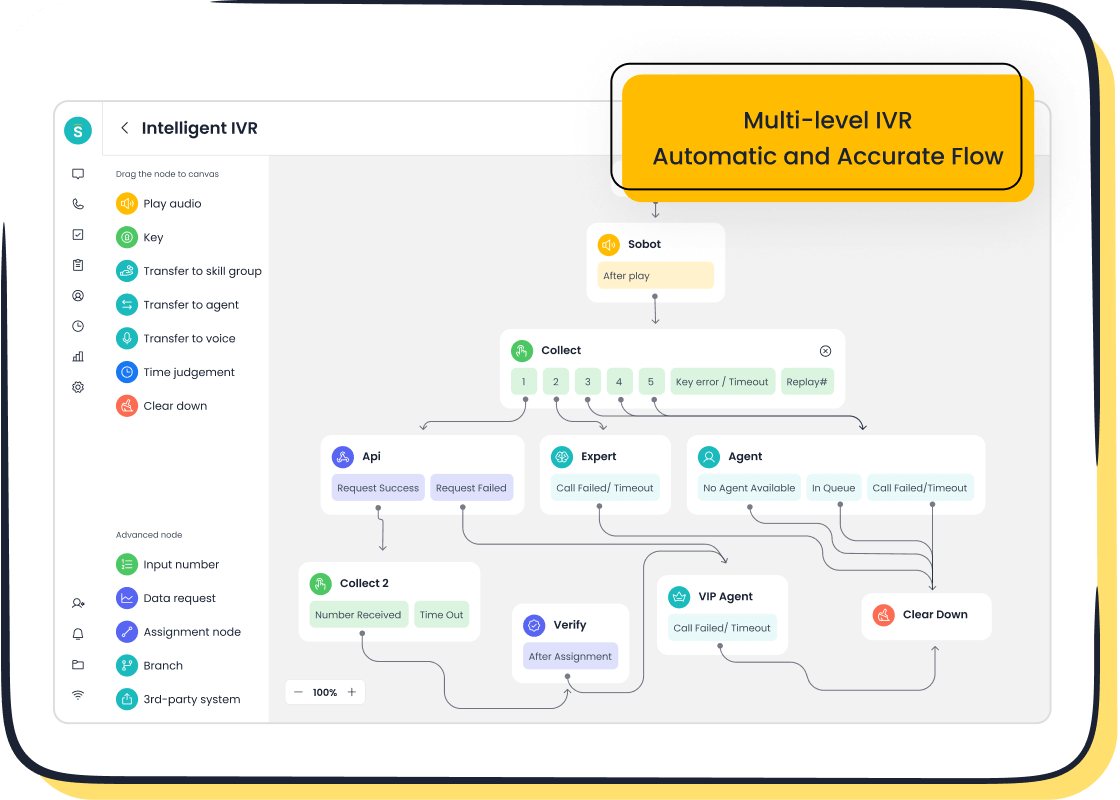
Sobot's Solution: Sobot offers a user-friendly, drag-and-drop IVR builder. It allows businesses to create and update call flows in real-time without IT help. This powerful IVR system works with Sobot's intelligent call routing, which uses rule-based Automatic Call Distribution (ACD) to execute routing strategies flawlessly. This combination ensures every customer is connected to the most qualified agent efficiently.
Feature 3: Gain Actionable Insights with Advanced Analytics
Data is one of a contact center's most valuable assets. However, raw data alone does not lead to improvement. Modern contact centers use advanced analytics and reporting to transform numbers into a clear roadmap for success. These powerful features provide the insights needed to optimize operations, enhance agent performance, and elevate the overall customer experience.
Real-Time Performance Dashboards
Managers need a live view of their operations to make immediate, impactful decisions. Real-time performance dashboards provide this "mission control" view. They display up-to-the-minute data on critical activities. This allows supervisors to proactively manage the floor. For example, a manager can spot a high call abandonment rate and instantly assign more agents to the queue.
Key metrics often displayed include:
- Current service levels and average speed of answer
- Number of calls in queue and agent availability
- Real-time customer satisfaction scores from post-call surveys
- Agent occupancy and utilization rates
Historical Reporting for Trend Analysis
While real-time data helps manage the present, historical reporting helps plan for the future. Comprehensive analytics and reporting tools allow managers to analyze trends over weeks, months, or years. This historical view helps identify recurring customer issues, pinpoint peak call times for better scheduling, and track the long-term impact of strategic changes. This deep dive into past performance is essential for making informed, data-driven business decisions.
Tracking Key Metrics: FCR, AHT, and CSAT
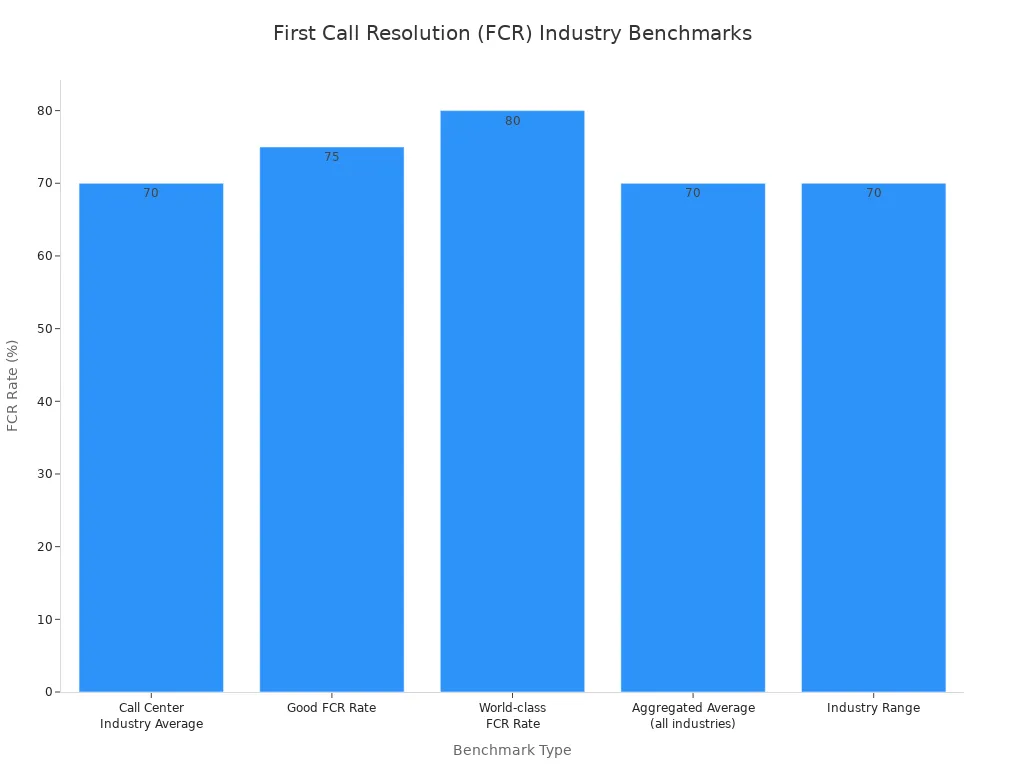
Certain metrics are fundamental to measuring contact center health. Advanced analytics makes tracking these KPIs simple. First Call Resolution (FCR) measures the percentage of issues solved in a single interaction. Average Handle Time (AHT) tracks agent efficiency. Customer Satisfaction (CSAT) directly measures customer happiness. A good FCR rate is typically between 70% and 79%, but world-class centers aim higher. Strong call analytics helps a business understand its performance against these benchmarks and improve customer satisfaction.
Using Data to Drive Agent Coaching
Effective coaching is targeted and evidence-based. Detailed analytics and reporting provide the foundation for personalized agent development. Managers can use call analytics to pinpoint specific challenges, such as long wrap-up times or low FCR rates on certain call types. This data allows them to create coaching plans that address an agent's unique needs. This approach improves agent skills and directly contributes to a better service experience for every customer.
Feature 4: Empower Customers and Agents with AI
Artificial intelligence is transforming the contact center by introducing powerful automation and intelligent support tools. These AI-powered capabilities enhance the customer experience and make agents more effective. By handling routine tasks, AI allows support teams to focus on high-value, complex interactions that require a human touch.
24/7 Support with AI Chatbots and Voicebots
Modern customers expect immediate answers at any time of day. AI-driven chatbots and voicebots provide this instant, round-the-clock support. These virtual agent self-service tools can handle a high volume of common inquiries without human intervention. This 24/7 availability improves customer satisfaction and reduces operational costs. For example, retailers like H&M use chatbots to resolve up to 80% of queries automatically. This level of automation ensures a consistent and responsive service experience.
Sobot's AI in Action: Leading smart device brand OPPO leveraged Sobot's AI features to great effect. By implementing a chatbot, OPPO achieved an incredible 83% resolution rate and a 94% positive feedback rate. This powerful automation freed human agents to focus on more complex customer issues, boosting overall efficiency and satisfaction.
Real-Time Agent Assist
AI also acts as a "copilot" for human agents. Real-time agent assist tools listen to conversations and provide live guidance. Using Natural Language Processing (NLP), these systems analyze customer intent and emotion to suggest the best responses or actions. This technology empowers agents to resolve issues faster and more confidently.
- Reduces call handle time by up to 30%.
- Provides instant access to knowledge base articles.
- Ensures compliance with automated prompts.
Automated Knowledge Base Suggestions
Agents often spend valuable time searching for information. AI-powered capabilities eliminate this challenge by automatically surfacing relevant knowledge base articles during a customer interaction. As an agent talks or chats with a customer, the system identifies keywords and intent. It then pushes the most relevant articles directly to the agent's screen. This automation ensures agents have the right information at their fingertips, improving accuracy and first-contact resolution.
Automating Repetitive Post-Call Work
After an interaction ends, agents must complete administrative tasks like summarizing the call and updating the CRM. These manual processes add to handle time and can lead to errors. AI automation streamlines this post-call work. The system can automatically generate call summaries, categorize tickets, and log interaction details. This automation gives agents more time to help the next customer, increasing productivity and reducing burnout. These AI features are essential for a modern, efficient contact center.
Feature 5: Create Context with Integrated CRM
A disconnected customer experience is a major source of frustration. When agents lack information, customers are forced to repeat themselves, leading to longer calls and lower satisfaction. A powerful CRM integration solves this problem by placing a complete customer history at the agent's fingertips. These integration features are essential for creating a personalized and efficient service experience.
The Power of CTI Screen Pops
Computer Telephony Integration (CTI) screen pops are a game-changer for agent efficiency. When a customer calls, a small window automatically appears on the agent's screen before they even answer. This pop-up displays crucial information pulled directly from the CRM, such as the caller's name, account history, and any open support tickets. This immediate context empowers agents to greet the customer by name and understand their history without asking redundant questions.
Automatic Interaction Logging
Manual data entry is a time-consuming and error-prone task. A key benefit of CRM integration is the automatic logging of every interaction. Whether it's a phone call, email, or chat session, the system records the details directly into the customer's CRM profile. This automation ensures that the customer record is always complete and up-to-date. It also frees up agents to move on to the next customer more quickly, boosting overall team productivity.
Personalizing with Full Customer History
Access to a complete customer history transforms a generic interaction into a personalized conversation. Agents can see past purchases, previous support issues, and communication preferences. This 360-degree view allows them to anticipate needs and offer relevant solutions. For example, an agent can see a customer recently bought a specific product and can provide tailored troubleshooting, creating a much better support experience.
Integrating with CRM, Salesforce, and Shopify
Modern contact centers must work seamlessly with the tools a business already uses. Top platforms offer robust integration capabilities with leading systems like Salesforce, Shopify, and other popular CRMs. This flexibility ensures that data flows smoothly across the entire technology stack. This level of crm integration is vital for unifying sales, marketing, and support operations into one cohesive strategy.
Feature 6: Boost Productivity with Workforce Engagement (WEM)
A positive agent experience directly translates to a better customer experience. Workforce Engagement Management (WEM) is a strategy that moves beyond simple management. It focuses on empowering and motivating agents. WEM tools provide the features necessary to improve agent satisfaction and performance, creating a more productive and loyal team.
Understanding WEM
Workforce Engagement Management combines traditional workforce optimization tools with new strategies for agent motivation. It aims to create a supportive work environment. WEM solutions give agents more control over their work and recognize their contributions. This approach helps reduce agent turnover and improves the quality of every customer interaction.
Accurate Forecasting and Scheduling
Efficient contact centers run on precise scheduling. WEM platforms use historical data and AI to accurately forecast staffing needs. This ensures the right number of agents are available to meet customer demand. It prevents both understaffing, which leads to long wait times, and overstaffing, which increases costs. Flexible scheduling tools also give agents more control over their work-life balance.
Gamification and Performance Tools
Gamification makes work more engaging by turning performance goals into interactive challenges. This approach taps into an agent's natural desire for competition and recognition.
- It inspires motivation. Studies show 83% of employees feel more motivated with gamified training.
- It boosts performance by using leaderboards and badges to celebrate achievements.
- It improves key metrics like first-call resolution and customer satisfaction scores.
These tools transform the agent experience, making daily tasks more rewarding.
Agent Self-Service Portals
Empowering agents with control over their schedules and performance data is crucial. Agent self-service portals provide a central hub for this. Through these portals, agents can view their schedules, request time off, and track their performance metrics. These self-service options reduce administrative work for managers and give agents a greater sense of autonomy and ownership.
Feature 7: Improve Performance with AI Quality Management
Traditional quality assurance is slow and limited. Managers often review less than 2% of interactions, leaving significant gaps in performance insight. AI-powered quality management revolutionizes this process. This technology uses automation to analyze 100% of calls and chats, providing a complete and objective view of contact center performance.
Automated Call and Screen Recording
Effective quality management starts with complete data. Automated call and screen recording features capture every customer interaction without manual effort. This comprehensive recording creates a full dataset for analysis. The automation ensures no conversation is missed. This gives managers a total picture of the agent and customer experience.
AI-Driven Speech and Text Analytics
AI analyzes the recorded interactions to uncover deep insights. Speech and text analytics tools transcribe and evaluate conversations for key details.
- The system identifies customer sentiment and emerging topics. It uses visual tools like word clouds to show recurring themes.
- This automation also provides trend reports. These reports highlight new issues before they become widespread problems.
- AI can even trigger real-time alerts for high-impact events, allowing managers to act proactively.
Identifying Agent Coaching Opportunities
AI-driven automation pinpoints exact moments where agents need support. The system can flag calls with long periods of silence, negative customer sentiment, or non-compliant language. Instead of searching through hours of recordings, managers receive a curated list of coaching opportunities. This data-driven approach makes feedback specific, timely, and far more effective.
Ensuring Script and Process Adherence
Consistency is vital for a quality customer experience. AI automation helps enforce script and process adherence across the team. The system automatically checks if agents use required greetings, provide necessary disclosures, or follow correct workflows. This ensures compliance with internal policies and external regulations. These powerful features help standardize service delivery and build trust with every customer.
Feature 8: Drive Proactive Outbound Engagement
Excellent service often means reaching out to a customer before they need to contact you. Proactive outbound engagement transforms the customer experience from reactive to preventative. It builds trust and loyalty by anticipating needs. These outbound features allow a business to control the conversation and deliver timely, valuable information.
Preview and Predictive Dialers
Outbound calling campaigns are a core part of many business strategies. Modern dialers make this process highly efficient.
- Preview Dialers: These systems present agents with customer information before dialing. This allows the agent to prepare for the conversation.
- Predictive Dialers: This technology uses algorithms to dial multiple numbers at once. It connects an agent only when a person answers, maximizing talk time.
Automated SMS and Email Campaigns
Businesses can connect with a large customer base instantly through automated campaigns. These tools allow teams to send personalized messages for various purposes. A company can announce a new product, share a special promotion, or send a follow-up survey. This direct line of communication keeps the brand top-of-mind.
Proactive Appointment Reminders
Missed appointments are costly for any service-based business. Proactive reminders are a simple and effective solution. An automated system can send an SMS or email to a customer a day before their scheduled appointment. This simple action reduces no-show rates and improves operational planning.
Proactive Customer Service Updates
Keeping a customer informed builds significant trust. Proactive updates are essential for a positive experience, especially when things go wrong.
A business can automatically notify customers about a shipping delay or a service outage. This transparency shows the company values the customer's time. This level of customer support prevents frustration and reduces the volume of inbound inquiries.
Feature 9: Achieve Flexibility with a Cloud-Based Platform
Traditional on-premise contact centers are rigid and expensive. Modern businesses need agility. Cloud-based solutions provide the flexibility to adapt to changing market demands. These platforms eliminate the need for physical hardware. They offer unmatched scalability, support remote work, and reduce operational costs, creating a better experience for agents and customers.
The Sobot CCaaS Advantage
A reliable platform is the foundation of a great customer experience. Sobot's Contact Center as a Service (CCaaS) platform delivers exceptional stability and performance.
Sobot guarantees 99.99% uptime with a robust global network spanning 93 cities across 50 countries. This world-class infrastructure is why leading global brands like OPPO, Philips, and J&T Express trust Sobot to power their customer communications.
Scalability to Match Business Demand
Business needs change. A contact center must be able to adapt quickly. Cloud-based solutions offer dynamic scalability that on-premise systems cannot match. Businesses can easily add or remove agents and features to handle fluctuating customer demand. This is crucial during seasonal peaks or business growth. This agility ensures you can respond to market changes without high costs or service disruptions.
Enabling a Remote and Hybrid Workforce
The modern workforce is no longer tied to a single office. Cloud-based solutions empower agents to work from anywhere with an internet connection. This flexibility helps businesses attract and retain top talent from a global pool. It also improves agent satisfaction by offering a better work-life balance. A happy and engaged team is essential for delivering outstanding service.
Faster Deployment and Automatic Updates
Setting up a traditional contact center can take months. Cloud-based solutions are different. Deployment is fast, often taking just days. There are no large upfront hardware costs. The platform also receives automatic updates. This means your contact center always has the latest security patches and innovative features without any manual effort from your IT team.
Feature 10: Protect Data with Robust Security
Protecting customer data is a fundamental responsibility. Contact centers handle vast amounts of sensitive information, making them prime targets for security threats. Robust security features are not optional; they are essential for maintaining compliance, protecting the business, and earning customer trust.
Adherence to PCI, HIPAA, and GDPR
Modern businesses operate under strict regulatory frameworks. A secure contact center platform must provide tools to help companies comply with key regulations. These include PCI DSS for payment card information, HIPAA for protected health information, and GDPR for personal data privacy. Adherence ensures that a business avoids significant fines and legal penalties.
Secure Call Recording and Data Encryption
Contact centers face constant risks from hacking and internal fraud. Data encryption is a critical defense. This process converts sensitive information into an unreadable format, protecting it from unauthorized access.
- Data in Transit: Encryption protects information as it moves across networks.
- Data at Rest: It also secures stored data, such as call recordings and customer files.
This technique ensures that even if data is intercepted, it remains useless to criminals. It is one of the most important security features for a safe customer experience.
Role-Based Access Controls
Not every agent needs access to all customer information. Role-based access controls limit data visibility based on an employee's job function. This principle of least privilege minimizes security risks from human error or malicious intent. It ensures agents can only view the data necessary to perform their specific duties, protecting sensitive customer details from unnecessary exposure.
Building Customer Trust
Ultimately, strong security is about building a trustworthy relationship with every customer. When people feel their data is safe, their confidence in the brand grows. This positive experience encourages loyalty and repeat business. Investing in security demonstrates a company's commitment to protecting its most valuable asset: its customers.
How to Choose the Right Call Center Software Features for Your Modern Contact Center
Selecting the right platform is a critical business decision. Following a structured approach helps a company find the best solution. This process ensures the chosen call center software features align with both current needs and future goals.
Step 1: Assess Current Needs and Pain Points
A business must first understand its current challenges. Leaders should review operational data and gather feedback from agents and customers.
- Are customers waiting too long for support?
- Do agents lack the right information to solve problems?
- Are certain tasks taking too much time?
Answering these questions helps identify the most critical call center software features. For example, a business with long wait times may need to prioritize intelligent routing.
Step 2: Consider Future Scalability
A company's needs will change over time. The right platform must support future growth. A business should choose a solution that allows it to easily add agents, channels, or new features. Cloud-based systems offer excellent scalability. They let a company adjust its plan to match seasonal demand or business expansion. This flexibility is a key part of selecting the right call center software features.
Step 3: Evaluate Integration Capabilities
A contact center does not operate alone. It must connect with other business systems, especially the CRM. A company should evaluate how well the platform integrates with its existing technology. Seamless integration ensures data flows smoothly between tools. This gives agents a complete view of the customer. Strong integration is one of the most important call center software features to consider.
Step 4: Balance Budget with ROI
Cost is always a factor. However, the cheapest option is not always the best. A business should evaluate the return on investment (ROI) for different call center software features. An investment in AI automation or advanced analytics can lead to significant cost savings and increased revenue. This makes the initial expense worthwhile.
These ten features are the building blocks of a successful modern contact center. They create a system that boosts operational efficiency and strengthens competitive advantage. Sobot's solutions demonstrate how these tools enhance customer satisfaction. This leads to greater customer loyalty and business growth. A focus on the right features improves every customer interaction and drives higher satisfaction.
Embark on Your Contact Journey. Schedule a demo with Sobot today to see these features in action!
FAQ
What is the main difference between omnichannel and multichannel?
A multichannel approach offers customers multiple, separate ways to communicate. An omnichannel hub unifies these channels. It creates one continuous conversation, preserving context as a customer moves between chat, voice, or email. This provides a seamless and consistent customer experience.
How does AI improve contact center efficiency?
AI automates repetitive tasks. Chatbots handle common questions 24/7, freeing human agents for complex issues. AI also assists agents in real-time with information and automates post-call work. This reduces handle times and boosts overall team productivity.
Why is a cloud-based platform important for a modern contact center?
A cloud platform offers flexibility and scalability. Businesses can easily adjust agent numbers to meet demand. It enables a remote workforce and provides automatic updates. This eliminates the need for expensive on-premise hardware and ensures high reliability.
How does CRM integration benefit a customer service agent?
CRM integration gives agents a complete customer history. CTI screen pops show caller details before the agent answers. This context allows for personalized conversations. It also automates interaction logging, saving agents valuable time on every call.
See Also
Essential Capabilities: Unveiling CRM Software for Modern Call Centers
Mastering Omnichannel: A 10-Step Guide for Contact Center Implementation
Revolutionizing Enterprise: The 10 Best AI Tools for Contact Centers
Data-Driven Insights: The 10 Leading Call Center Analytics Software of 2024
Comprehensive Review: Discovering the Best Contact Center Solutions for 2024

