Support Customers Through Multiple Channels in 2025


In 2025, your top communication channels are live chat, email, and social media. You must support customers through multiple channels to deliver a great customer experience. However, success does not mean being on every platform.
The right strategy focuses your support on the specific channel your customers prefer. A unified omnichannel approach makes this manageable.
This ensures every customer interaction, from live chat to email, enhances your omnichannel customer communications. An integrated platform like Sobot helps you manage this communication efficiently, improving the overall customer experience.
Ranking Top Customer Communication Channels

Choosing the right customer communication channels is crucial for your business. You need to meet your customer where they are. This section ranks the top channels for 2025. It will help you decide which platforms are best for your effective communication strategy.
1. Live Chat & AI Chatbots: Instant Support
Effectiveness Score: 9.5/10
Best For: Instant problem-solving, 24/7 support, and increasing sales conversions.
Most customers today want immediate answers. They prefer live chat because it is fast and easy. This channel avoids long waits on the phone or slow email replies. Younger customers especially favor this real-time communication.
- Many people aged 18–34 use live chat frequently for support.
- Over 41% of clients aged 18–46 prefer online care to a phone call.
- A majority of millennials, around 60%, choose live chat for shopping questions.
You can supercharge your live chat with an AI chatbot. A chatbot acts as your frontline support. It works 24/7 to answer simple questions about store hours, order status, or return policies. This instant service improves the customer experience. It also frees your human agents to handle more complex problems. This combination of a chatbot for speed and agents for expertise makes this channel powerful. It is a key part of modern customer communication channels.
2. Email: The Professional Backbone
Effectiveness Score: 8.5/10
Best For: Detailed inquiries, official documentation, and follow-up communication.
Email remains a vital channel for professional communication. It creates a written record of your conversation. This is perfect for complex issues that require detailed explanations or attachments. A significant 77% of B2B buyers prefer email for business communication. This shows its importance in building professional relationships.
To maintain effective communication over email, you must use a professional tone. Your writing style directly impacts your customer's perception of your brand.
Tips for Professional Email Communication:
- Write a Clear Subject Line: State the main point clearly so your customer knows the email's purpose.
- Be Authentic and Polite: Show sympathy for the customer's problem. Use words like "please" and "thank you" to maintain a positive tone.
- Keep it Concise: Get straight to the point. Use bullet points or headers to make long emails easy to read.
- Add a Professional Signature: Include your name, title, and company to build trust and brand recognition.
- Proofread Your Message: Always check your email for errors before sending. Reading it aloud helps you catch tone mistakes.
3. Social Media DMs: The Relationship Builder
Effectiveness Score: 8.0/10
Best For: Building brand loyalty, casual engagement, and public-facing support.
Social media is no longer just for marketing. It has become a primary channel for customer service. A large number of customers—about 70%—have used social media for support at least once. Direct messaging on platforms like Facebook, Instagram, and X (formerly Twitter) offers a convenient way for your customer to reach you.
- About 74% of people feel more connected to a business when they can message it directly.
- Around 64% of X users would rather send a message than call a business for support.
Responding quickly and helpfully on social platforms builds strong relationships. When you solve a problem publicly, you show everyone your commitment to customer satisfaction. This transparency builds trust and boosts brand loyalty. This type of open communication and engagement makes customers feel valued and understood. Using social media well is essential for your business communication channels.
4. Phone Support: The Human Touch for Your Customer
Effectiveness Score: 8.0/10
Best For: Urgent or complex issues, high-emotion situations, and building trust.
While digital channels are popular, phone support offers a human connection that technology cannot replace. Customers often turn to the phone for difficult problems. Human agents can use empathy and critical thinking to solve issues that a chatbot cannot. This personal touch is crucial for building trust, especially when a customer is frustrated or stressed.
Customers prefer phone support in specific situations.
| Situation | Customer Preference for Phone |
|---|---|
| Highly Urgent Interactions | 49% |
| Complex Enquiries | 47% |
When a problem is complex, a human agent can listen, understand context, and find a creative solution. This ability to handle nuanced situations makes phone support an essential part of any plan to support customers through multiple channels. It provides a level of service and reassurance that builds lasting customer loyalty.
5. SMS/Text Messaging: Direct & Urgent Updates
Effectiveness Score: 7.5/10
Best For: Time-sensitive alerts, appointment reminders, and shipping notifications.
SMS is the most direct channel to reach your customer on their mobile device. The engagement rates for text messages are incredibly high.
- Texts have a 98% open rate.
- People respond to texts in about 90 seconds on average.
This makes SMS the perfect channel for urgent communication. You can use it for shipping updates, appointment reminders, or two-factor authentication codes. This real-time channel provides immediate value and keeps your customers informed.
Note: Compliance is Key Before you start sending texts, you must understand the Telephone Consumer Protection Act (TCPA). For marketing messages, you need "prior express written consent" from your customer. Your communication must also include a clear way for them to opt out, like replying "STOP". Always consult legal counsel to ensure your SMS strategy is compliant.
Choosing the right mix of these customer communication channels will help you deliver an outstanding experience.
Choosing Your Business Communication Channels
Selecting the right business communication channels is not about being everywhere. It is about being where your customer is. A thoughtful approach ensures your communication strategies lead to better engagement and a superior customer experience. This process involves analyzing your customer, your business, and your resources.
Analyze Your Customer Demographics
You must understand your customer to choose the right channel. Different age groups have different communication preferences. For example, younger customers often prefer digital channels, while older customers may favor the phone. Effective communication starts with knowing your audience.
This table shows how promotional communication preferences vary by generation:
| Communication Channel | Baby Boomers | Gen X | Millennials | Gen Z |
|---|---|---|---|---|
| 80% | 79% | 76% | 66% | |
| SMS/Text | 29% | 26% | 33% | 41% |
| WhatsApp/Messenger | 7% | 15% | 28% | 28% |
Analyzing this data helps you tailor your customer communication channels. If you serve Gen Z, a strong presence on messaging apps is essential. If your customer base is older, phone and email are your best bets. This focus ensures every customer feels heard on their preferred channel.
Align Channels with Your Business Type
Your business model also shapes your choice of business communication channels. A B2C e-commerce store has different needs than a B2B service provider.
- B2C (Business-to-Consumer): Your focus is on convenience and personalization. A customer expects instant support via live chat for shopping questions. This channel offers a great experience.
- B2B (Business-to-Business): Your communication supports a complex buying process. A customer needs expert guidance. Self-service portals and detailed email communication are critical.
Aligning your channel with your business type creates more effective customer communication channels.
Evaluate Your Team's Resources
Before adding a new channel, look at your team and budget. A new communication channel requires time and money. Ask yourself these questions:
- What is our budget for setup and ongoing costs?
- Does our team have the skills to manage this channel?
- Can the new channel integrate with our existing systems?
Answering these questions helps you make a smart investment. You want to choose a channel that your team can manage well to support your customers effectively.
Start Small and Scale Strategically
You do not need to launch all your business communication channels at once. Start with one or two channels that best fit your customers. Master them first. For example, training an agent to be fully proficient on a new channel can take two to three months. A gradual approach allows your team to learn and adapt. This ensures high-quality communication and customer engagement. Once you succeed with one channel, you can strategically add another.
Implementing Channels with an Omnichannel Solution
Choosing your channels is the first step. The next is to manage them without overwhelming your team. An omnichannel solution brings all your customer communication into one place. This creates a seamless experience for your customer and a more efficient workflow for your team.
Unify Channels with a Platform like Sobot
You can support customers through multiple channels using a single platform. An omnichannel solution like Sobot unifies your live chat, email, and social media messages. Your team sees every customer interaction in one timeline. This stops agents from switching between different apps.
A unified workspace gives your team a complete view of the customer. They can access order history and past conversations instantly. This helps them provide a faster, more personal service.
This integrated approach streamlines your omnichannel customer communications. It makes every channel work together for a better customer experience.
Automate Responses with AI Chatbots
You can use AI to improve your customer service. An AI chatbot can handle many common questions for you. In fact, a chatbot can resolve up to 86% of customer questions without human help. This frees up your team for more complex issues.
A chatbot can automate tasks like:
- Providing order status updates
- Answering questions about your services
- Helping a customer set up an account
This 24/7 support on your mobile and web channels ensures your customer always gets a quick response.
Optimize Phone Support with a Cloud Call Center
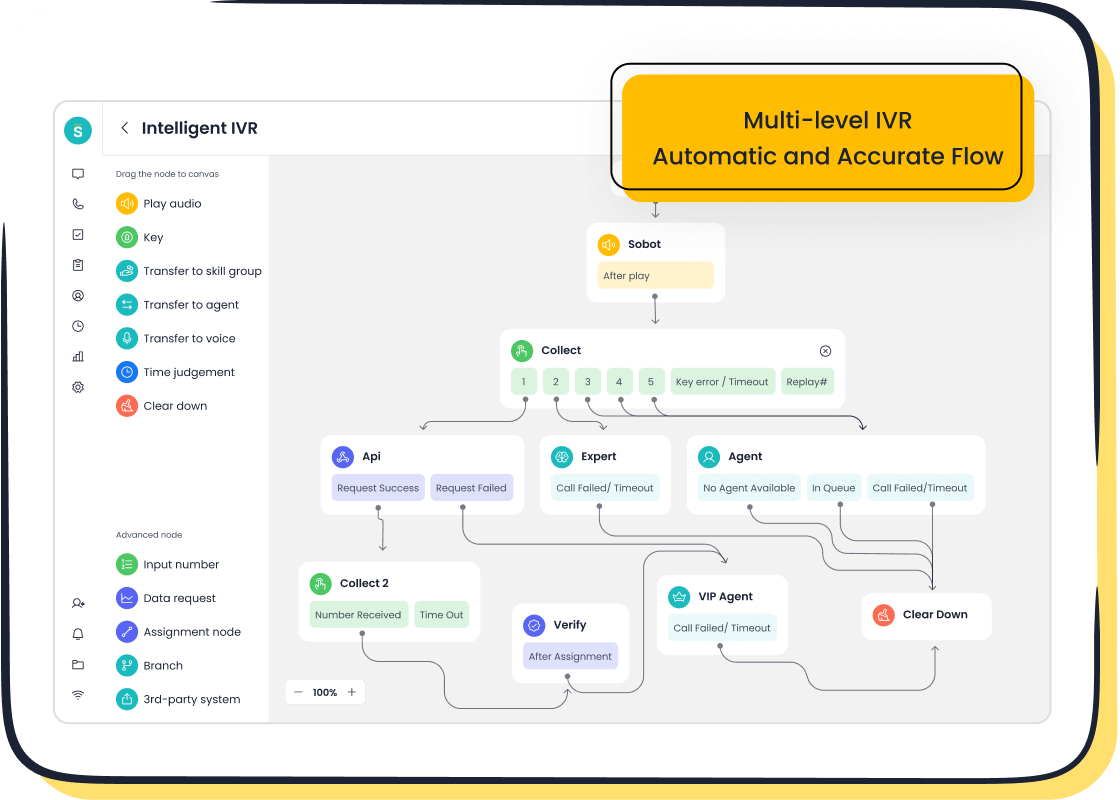
Modern phone support is more than just answering calls. A cloud call center like Sobot Voice uses smart technology to improve the customer experience. An intelligent IVR system lets a customer find answers on their own or directs their call to the right agent. This smart routing reduces wait times. It also ensures your customer speaks to the person best equipped to help them. With 99.99% uptime, you can offer a reliable phone service.
Leverage WhatsApp as an Official BSP
WhatsApp is a powerful channel for direct customer engagement and real-time communication. As an official WhatsApp Business Solution Provider (BSP), Sobot helps you use this mobile channel safely and effectively. You can send bulk messages for marketing or provide real-time support. Working with a BSP ensures your communication follows WhatsApp's rules. This protects your business and lets you scale your mobile communication strategy with confidence.
A Real-World Example: Opay's Success with Sobot
Theory is helpful, but seeing a real-world example shows you the true impact of a great strategy. Let's look at how Opay, a major financial service platform, transformed its customer service. This story shows how you can support customers through multiple channels to achieve amazing results.
The Challenge: Disconnected Customer Service
Opay serves tens of millions of users. The company faced a huge volume of daily communication. This created major challenges for its customer service team.
- High Call Volume: The team handled thousands of calls daily, leading to long wait times for a customer with an urgent issue.
- Email Overload: Agents received tens of thousands of emails, making it difficult to provide timely and effective service.
- Lack of Proactive Communication: Opay needed a better way to send notifications and gather feedback from each customer.
This disconnected approach strained resources and impacted the customer experience. The company needed a unified way to manage its communication and improve customer satisfaction.
The Solution: An Integrated Omnichannel Platform
Opay partnered with Sobot to build an integrated omnichannel platform. This solution brought all customer communication into a single, unified system. It formed a closed-loop service that improved the entire customer experience.
Sobot's platform connected every channel to one central desk. This allowed Opay's team to manage chats, emails, and calls without switching between different tools. The solution included:
- A Cloud Call Center with an intelligent IVR to route calls and let a customer find their own answers.
- An AI Chatbot to provide 24/7 service and answer common questions automatically.
- A WhatsApp API for sending bulk messages and engaging with a customer directly.
This powerful omnichannel system streamlined Opay's service and marketing communication.
The Results: Higher Satisfaction and Lower Costs
The results of implementing Sobot's solution were dramatic. Opay saw significant improvements in efficiency, costs, and customer satisfaction. The new system delivered a better experience for every customer.
The most important metric, customer satisfaction, saw a massive jump.
| Metric | Before Sobot | After Sobot |
|---|---|---|
| Opay Customer Satisfaction | 60% | 90% |
Beyond this incredible increase in satisfaction, Opay also achieved:
- A 20% reduction in overall operational costs.
- A 17% increase in conversion rates from better marketing communication.
- 60% of customers resolving issues on their own through the new self-service options.
This success story proves that the right tools can transform your service, leading to higher satisfaction and a stronger business.
The Foundation of Effective Communication: Measurement
You cannot improve what you do not measure. To build a strategy for effective communication, you must track your performance. Measurement shows you what is working and where you need to make changes. This data-driven approach is the foundation of excellent customer service. It helps you refine your communication and better serve every customer.
Tracking Key Performance Metrics
You can track your success using Key Performance Indicators (KPIs). These metrics give you a clear picture of your team's performance. They help you understand both operational efficiency and how your customer feels about the support they receive.
Focus on a few key metrics to start. This will give you actionable insights without overwhelming your team.
Here are some of the most important KPIs for measuring customer service:
- First Contact Resolution (FCR): This shows you how often you solve a customer issue in the first interaction. A high FCR means your team is efficient and your customer is happy.
- Average Handle Time: This is the average time an agent spends on a single customer inquiry. A lower time often points to more effective communication, but quality should always come first.
- Customer Satisfaction (CSAT): This metric directly asks a customer how happy they are with their support experience. It is a powerful way to measure sentiment.
Calculating ROI for Each Channel
Every communication channel you use is an investment. You need to know if that investment is paying off. Calculating the Return on Investment (ROI) for each channel helps you make smart decisions about your resources.
You can calculate ROI with a simple formula:
ROI = Additional Revenue + Cost Savings - Cost of the Channel
- Additional Revenue is the new sales a channel helps you generate.
- Cost Savings come from handling communication more efficiently.
- Cost of the Channel includes software fees and agent time.
This calculation shows you which channel provides the most value. It helps you focus your budget on the communication methods that deliver the best results for your business and your customer.
Using Feedback to Refine Your Strategy
The best way to improve your service is to listen to your customer. Collecting and analyzing customer feedback gives you direct insight into their experience. This information is vital for creating more effective communication.
You can gather feedback through simple methods like short surveys after a support interaction. Once you have the feedback, look for common themes. Are many people asking for the same feature? Is a specific part of your process causing confusion? Answering these questions helps you identify areas for improvement. This process turns customer opinions into a stronger support strategy.
You must support customers through multiple channels in 2025. Your top channels are live chat, email, and social media. An integrated omnichannel approach is key to a great customer experience. The right strategy and tools improve your omnichannel customer communications. This allows you to deliver an exceptional experience for your customers. Better communication creates a better experience. Each interaction with your customers builds a stronger relationship.
Ready to enhance your customer interactions? Embark on Your Contact Journey with Sobot and see how our omnichannel solution can transform your support.
FAQ
How do I choose the right customer communication channels?
You choose the right customer communication channels by studying your audience. Analyze your customers' age and preferences. Also, consider your business type and team's resources. Start with one or two channels your customers use most, then grow from there.
What is an omnichannel solution?
An omnichannel solution unifies your support channels like chat, email, and social media. It puts all customer conversations into one workspace. Your team gets a complete view of the customer's history. This helps them provide faster and more personal service.
Do I need to offer 24/7 support?
You can offer 24/7 support easily with an AI chatbot. The chatbot handles common questions around the clock. This provides instant answers for your customers. It also frees your human agents to focus on more complex issues during business hours.
Why is measuring channel performance important?
You measure performance to understand what works. Tracking metrics like customer satisfaction shows you which channels are most effective. This data helps you invest your resources wisely. It ensures your customer communication channels deliver the best possible experience and return on investment.
See Also
A 10-Step Guide to Deploying Omnichannel Contact Center Solutions Effectively
Discovering the Leading Cloud Contact Center Platforms for the Year 2025
Your Comprehensive Guide to Understanding Omnichannel Call Center Software
An In-Depth Review of the Best Contact Center Solutions for 2024
Enhance SaaS Customer Support Through Effective Live Chat Strategies

