Seamless Support Provide Omnichannel Service

An omnichannel strategy transforms your customer interactions. It moves beyond simply offering multiple channels. A true omnichannel experience creates one single, unified conversation for each customer. This integration ensures a seamless customer journey, boosting loyalty.
Unlike a siloed multichannel approach, an effective omnichannel strategy significantly enhances customer satisfaction. The difference in customer experience is clear:
| Support Type | Customer Satisfaction Rate |
|---|---|
| Omnichannel | 67% |
| Multichannel | 28% |
This article provides a clear roadmap. You will learn how to implement an effective omnichannel strategy. Proven solutions from Sobot can help you provide omnichannel customer service and build a seamless customer experience for your customer's entire journey.
What is a True Omnichannel Experience?

An omnichannel strategy creates a single, continuous conversation with your customer. It is different from a multichannel approach, which only offers various disconnected ways to communicate. The core difference is integration. An omnichannel approach connects every touchpoint, creating a fluid journey for the customer.
Omnichannel vs. Multichannel: A Unified Conversation
Understanding the technical differences shows why an omnichannel strategy is superior. Multichannel support keeps customer data in silos. An omnichannel platform unifies it. This creates a consistent customer experience no matter how a customer contacts you.
| Aspect | Multichannel | Omnichannel |
|---|---|---|
| Channel Integration | Separate and independent | Unified and interconnected |
| Customer Data | Siloed and fragmented | Integrated and leveraged for personalization |
| Experience Consistency | Varied across channels | Seamless and consistent |
| Service Level | Inconsistent | Uniform across all touchpoints |
Key Benefits of an Integrated Approach
An integrated omnichannel strategy delivers powerful benefits. It empowers your agents with a complete view of the customer's history. This access to real-time data improves First Interaction Resolution by over 15%. Your team can solve issues faster without asking the customer to repeat information. This boosts efficiency and improves customer engagement. With integrated communication channels, you provide a better experience and streamline your support operations. This customer-centric focus is key to modern service.
Why a Unified Customer Experience Boosts Loyalty
A unified customer experience is the foundation for lasting customer loyalty. When you provide omnichannel customer service, you create predictability. Customers know what to expect at every stage of their journey. This consistency builds trust and reinforces their decision to choose your brand.
A consistent experience across all touchpoints is crucial for building trust. It reassures customers of your reliability and strengthens their relationship with your brand, leading to increased customer loyalty.
This enhanced customer experience directly impacts your bottom line. By delivering seamless, personalized experiences, you prevent customer drop-off and increase loyalty. Better engagement and a smooth customer journey are what turn a one-time buyer into a lifelong advocate. This is the power of a true omnichannel strategy.
Core Strategies for a Seamless Customer Experience
Building a true omnichannel experience requires more than just technology. It demands a clear strategy. You need to unify your data, integrate your channels, and empower your teams. These core strategies provide a roadmap to transform your customer service from a series of separate interactions into a single, seamless conversation. By implementing this omnichannel strategy, you create a foundation for lasting customer loyalty and business growth.
Strategy 1: Unify Your Customer Data
The first step in any successful omnichannel strategy is to unify your customer data. Your agents cannot provide a seamless experience if they lack a complete picture of the customer. When data from voice, email, chat, and social media exists in separate silos, agents are forced to ask repetitive questions. This frustrates the customer and wastes valuable time.
A unified view empowers your agents to resolve issues faster and more effectively. They gain immediate access to a customer's entire history, which allows for greater personalization and proactive support.
- Agents can suggest solutions based on a customer's previous interactions or purchase history.
- They no longer need to ask for basic information like order numbers or past support issues.
- They gain visibility into the customer's unique relationship with your company, enabling a truly personalized experience.
Sobot’s unified workspace is designed to solve this exact challenge. It consolidates every interaction from your call center, live chat, email ticketing system, and social media channels into one central dashboard. This gives your agents a 360-degree view of the customer journey, turning fragmented data into actionable intelligence.
Strategy 2: Integrate Your Support Channels
Once your data is unified, the next step is to integrate your support channels. An omnichannel approach means a customer can start a conversation on live chat, follow up via email, and resolve the issue over the phone without ever having to repeat themselves. This fluid movement between channels is only possible through deep integration.
Integrating your support platform with other business-critical systems, like a CRM or e-commerce platform, unlocks even greater benefits. For example, connecting your support hub to Salesforce and Shopify provides:
- A Unified Customer View: Synchronize customer profiles, purchase history, and support conversations to eliminate data silos.
- Personalized Customer Journeys: Automate follow-up communications and ensure consistent messaging across all touchpoints.
- Operational Efficiency: Automate tasks like order updates and refunds, reducing manual work for your team.
Sobot excels at this integration. It connects seamlessly with essential systems like Salesforce and Shopify. Furthermore, as an official WhatsApp Business Solution Provider (BSP), Sobot allows you to manage WhatsApp conversations alongside all other channels. This powerful integration ensures you can meet your customers on their preferred platforms and maintain a single, unbroken conversation.
Strategy 3: Empower Your Team with Tools and Training
Your technology and strategy are only as effective as the team implementing them. Empowering your agents with the right tools and continuous training is critical for delivering exceptional omnichannel experiences. A cluttered desktop with dozens of open tabs creates stress and inefficiency. You must provide your team with a single workspace that consolidates all tools and information.
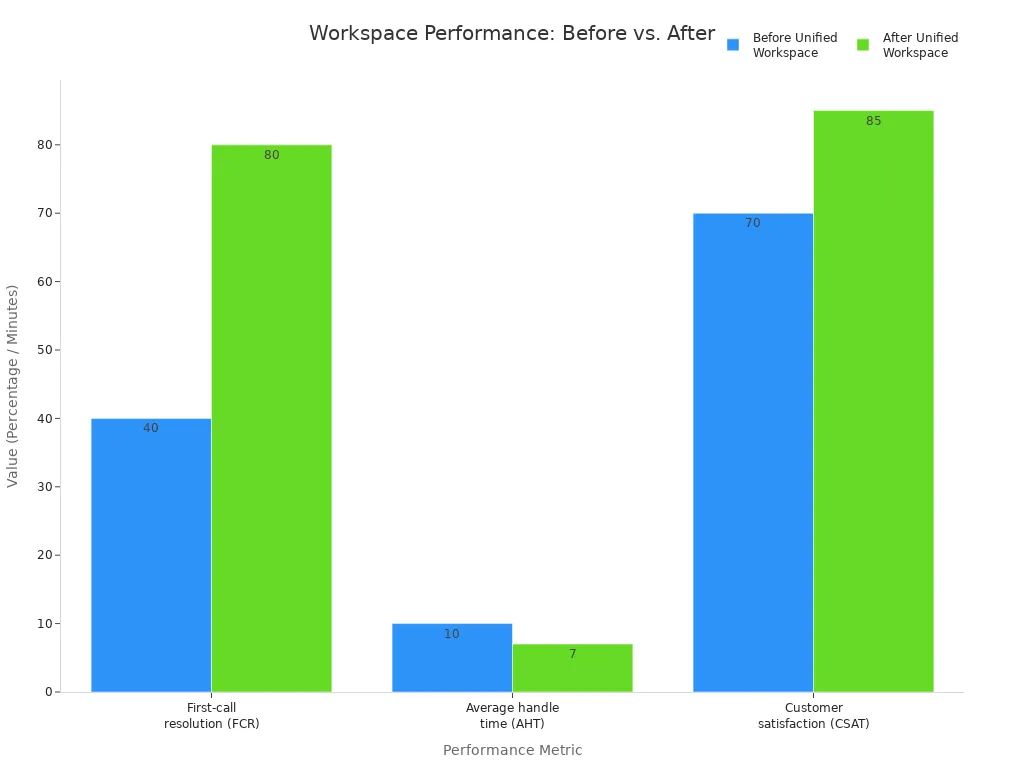
A unified workspace directly boosts agent productivity and job satisfaction. It eliminates the need to switch between different systems, allowing agents to focus on what they do best: solving customer problems. The impact is significant and measurable.
| Performance Metric | Before Unified Workspace | After Unified Workspace | Improvement |
|---|---|---|---|
| First-call resolution (FCR) | 40% | 80% | 40% |
| Average handle time (AHT) | 10 minutes | 7 minutes | 30% |
| Customer satisfaction (CSAT) | 70% | 85% | 15% |
Beyond tools, ongoing training is essential. An omnichannel environment is dynamic, and your team must be prepared to adapt.
Customized training plays a crucial role in omnichannel strategies. By tailoring programs to address the unique challenges and opportunities within your organization, you can greatly enhance your team’s capability to successfully implement your omnichannel strategy.
Invest in training that covers both the technical aspects of your platform and the soft skills needed for high-quality customer engagement. A continuous learning framework ensures your team stays current with new features, channels, and best practices, keeping your service a step ahead of the competition.
Strategy 4: Map the Customer Journey to Find Friction
To create a truly seamless customer experience, you must understand the journey from your customer's perspective. Customer journey mapping is a powerful strategy for visualizing every touchpoint and identifying areas of friction. Friction occurs whenever a customer faces an unnecessary obstacle, such as inconsistent information or a disconnected channel.
Common friction points that an omnichannel strategy can solve include:
- Disconnected Channels: A customer has to repeat their issue when switching from email to a phone call.
- Inconsistent Messaging: A promotion seen on social media is not honored by the support agent.
- Slow Responses: Manual processes create bottlenecks, leaving customers waiting for answers.
Mapping the journey helps you pinpoint these issues and redesign the experience. The process involves a few key steps:
- Collect Data: Gather quantitative data (like CRM records) and qualitative insights (like support transcripts) from all touchpoints.
- Map the Journey: Create a visual timeline of customer interactions, noting their actions, emotions, and potential pain points at each stage.
- Identify and Prioritize: Pinpoint friction points and prioritize them based on their impact on business goals like customer retention and conversion rates.
By removing these obstacles, you create a smoother path for your customers, which directly impacts your bottom line. In fact, businesses using an integrated omnichannel strategy see a 287% higher purchase rate compared to those using a single channel. This demonstrates the immense value of a well-planned and frictionless journey.
Strategy 5: Standardize Your Service and Messaging
The final core strategy is standardization. Consistency is the hallmark of a professional and trustworthy brand. Your customers should receive the same level of service and the same brand voice whether they are interacting with a chatbot, a support agent, or your website. This predictability builds confidence and strengthens customer loyalty.
To achieve this, you must:
- Create Brand Guidelines: Develop a clear guide for your brand's voice, tone, and messaging style.
- Centralize Your Assets: Use a single source of truth for all approved brand materials and response templates.
- Train Your Team: Ensure every team member understands and applies the brand guidelines in every interaction.
A key part of standardizing service is defining and managing Service Level Agreements (SLAs). An SLA clearly outlines your service promises, including response times, resolution times, and hours of operation. Sobot’s Ticketing System is an invaluable tool for this. It helps you automate workflows, manage SLAs, and ensure that every customer inquiry is handled according to your standards. By standardizing your service, you provide omnichannel customer service that is not only seamless but also reliably excellent. This consistent experience is the ultimate goal of a successful omnichannel strategy.
How Sobot Helps Provide Omnichannel Customer Service: The Opay Story
Theory and strategy are important, but seeing the results in action provides the clearest picture. The story of Opay, a leading financial service platform, shows how a well-executed omnichannel strategy can transform a business. This case study demonstrates how you can provide omnichannel customer service that drives real growth.
The Challenge: Fragmented Customer Service
Opay serves tens of millions of users. The company faced a significant challenge managing a high volume of customer interactions across disconnected channels. Inquiries from social media, email, and voice calls existed in separate silos. This fragmentation made it impossible to get a complete view of the customer, leading to a disjointed customer experience and operational inefficiencies. The lack of a unified strategy was a major obstacle to growth and customer loyalty.
The Solution: A Unified Omnichannel Strategy
Opay implemented Sobot’s omnichannel solution to create a single, unified system. This strategy involved a deep integration of their core channels:
- Email Ticketing System: Transformed customer emails into organized tickets, streamlining problem resolution.
- Intelligent IVR: Managed high call volumes by allowing 60% of customers to resolve issues through self-service.
- Social Media Integration: Brought all customer conversations into one workspace for agents.
This omnichannel approach gave Opay a 360-degree view of every customer. It empowered their team to deliver a consistent and seamless experience, boosting customer engagement.
The Results: A Leap in Satisfaction and Efficiency
The results of Opay's new omnichannel strategy were transformative. By unifying their support, Opay saw their customer satisfaction score increase from 60% to an incredible 90%. This massive leap in satisfaction shows the power of a focused omnichannel experience. Furthermore, the efficiency gains were substantial. The use of automation and a unified platform led to a 20% reduction in operational costs and a 17% increase in conversion rates. This success story proves that the right omnichannel strategy and tools create a better experience for every customer and deliver a powerful return on investment.
The Technology Behind an Omnichannel Platform
A successful omnichannel strategy relies on a powerful technology stack. The right platform is the engine that drives seamless omnichannel experiences. It unifies your data, empowers your agents, and provides the insights you need to grow. Sobot's product suite offers the ideal technology to build your modern customer contact center.
A Centralized Customer Data Platform

A centralized platform is the foundation of your omnichannel strategy. It collects customer data from every source, including your CRM, e-commerce site, and social media. This process eliminates data silos and creates a single, unified profile for every customer. An all-in-one solution like Sobot's, which includes a Voice Call Center, Live Chat, Chatbot, and Ticketing System, centralizes your operations. This integration allows you to understand customer demands and manage your teams from one place.
An Integrated Agent Workspace
Your agents need a single screen to manage every customer interaction. An integrated workspace gives them real-time access to a customer's complete history. This context allows them to provide a personalized and efficient experience without asking the customer to repeat information. Agents can handle conversations across multiple channels from one unified interface. This improves the customer experience and boosts agent productivity.
AI and Automation for Self-Service
Automation frees your team to focus on complex issues. AI-powered tools can handle up to 80% of routine inquiries, such as questions about order status or returns. This provides your customer with instant, 24/7 support and reduces your team's workload.
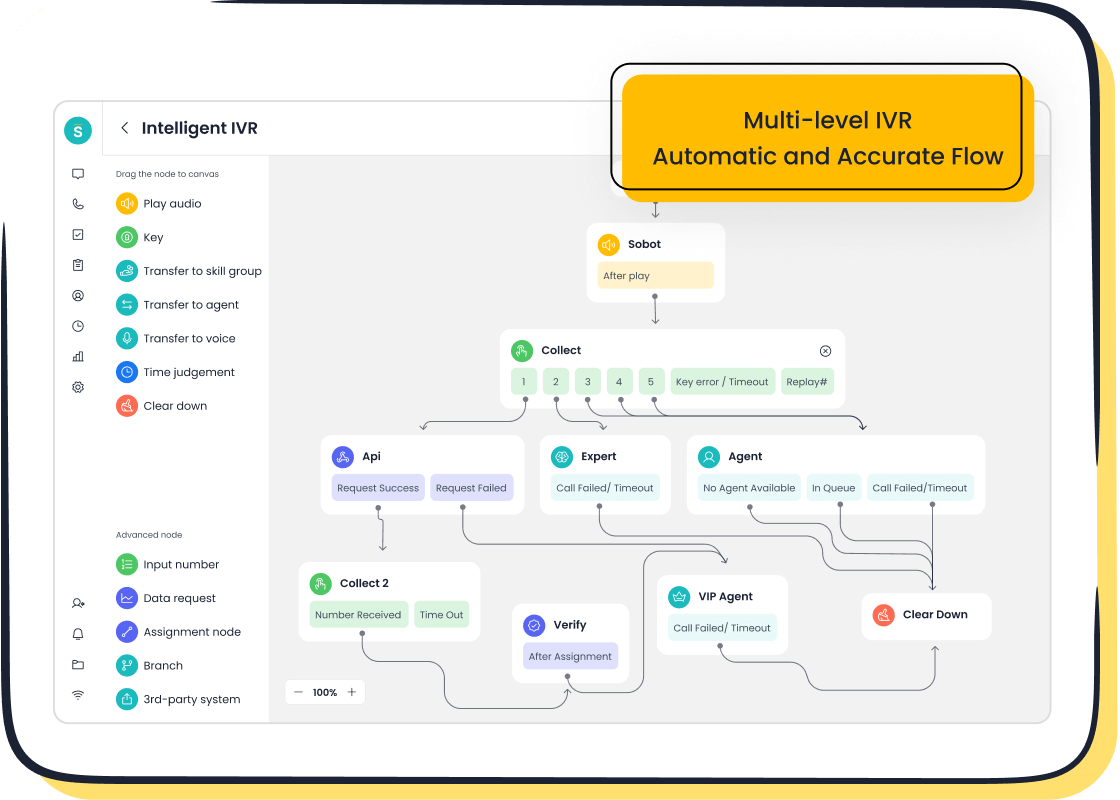
Sobot's technology makes this simple. You can use AI-powered chatbots for instant answers and a drag-and-drop IVR builder to create intelligent call flows without writing any code. This robust system offers 99.99% stability, ensuring your customer always has a reliable way to get help.
Analytics for Performance and Insights
You cannot improve what you do not measure. A true omnichannel platform provides powerful analytics to track performance. You can monitor key metrics like Customer Satisfaction (CSAT) and conversion rates to understand the impact of your strategy. These insights help you optimize your operations, improve customer engagement, and provide omnichannel customer service that drives results. This data-driven approach is essential for a superior customer experience.
Achieving a seamless customer experience requires a powerful omnichannel strategy. This strategy unifies your technology, data, and teams into one cohesive unit. A successful omnichannel approach creates a better experience for every customer. Brands like Opay prove this omnichannel strategy delivers transformative results. Your customer deserves a consistent and positive experience at every step of their journey.
Ready to improve your customer experience? Embark on Your Contact Journey. Explore Sobot's Omnichannel Solution to centralize your customer data and build a superior omnichannel experience. This is the most effective strategy for your customer journey.
FAQ
What is the main difference between omnichannel and multichannel?
Multichannel support offers many separate ways for customers to contact you. An omnichannel strategy integrates all those channels. It creates one single, unified conversation for a truly seamless customer journey. This approach eliminates silos and improves the customer experience.
How does an omnichannel strategy improve customer loyalty?
An omnichannel strategy provides a consistent and predictable experience. Customers receive the same high-quality service on every channel. This reliability builds trust and strengthens their relationship with your brand, turning one-time buyers into loyal advocates for your business.
How quickly can I implement an omnichannel solution?
You can implement a solution like Sobot's very quickly. Our cloud-based platform is designed for fast deployment and seamless integration with your existing systems, such as your CRM. This allows you to unify your support channels and start improving your customer experience without long delays.
What makes Sobot a good choice for omnichannel service?
Sobot provides an all-in-one contact center solution. It includes a Voice Call Center, Live Chat, Chatbot, and Ticketing System in a single platform. This integration, combined with powerful AI and a 99.99% system stability, gives you the tools to provide superior omnichannel support.
See Also
Your Essential Guide to Omnichannel Call Center Software Solutions
Implementing Omnichannel Contact Centers: A 10-Step Strategic Blueprint
Elevate SaaS Customer Support Through Smart Live Chat Strategies
Achieving Excellence in Customer Support with Live Chat Mastery
How 24/7 Live Chat Support Drives Business Growth and Success

